Titus Andronicus…A Shakespearean Bloodbath!

I had never seen it before.  I had never read it before. But I got cheap tickets to see Titus Andronicus Wednesday night at The Philadelphia Shakespeare Theater.

Not knowing anything about it, I took out my Penguin Collected Plays to read the editor’s introduction. Here’s what it said:

Titus Andronicus is a ridiculous play. This gallimaufry of murders, rape, lopped limbs, and heads baked in a pie, lavishly served with the rich purple sauce of rhetoric, may have been to the taste of the Elizabethans, but what is one to make of it to-day?”

Another comment I saw said to imagine it as if Shakespeare had written Pulp Fiction.

My god, what did I get myself into…all because of the lure of a $10 ticket.

The performance was electrifying. A group of seven actors who were engaging and competent, a dozen or so hand puppets, shadow-puppets, and lots and lots of blood presented what resembled a petite guigonol more than what we think of when we think of a Shakespearean play.

Some say that Hamlet is Shakespeare’s deadliest play, but it pales next to Titus, and the violence here is so much more gratuitous than the violence in the former play. To give you an idea, lying about the stage at the end of the last scene are an evil queen murdered by Titus,  her emperor husband murdered by Titus’ brother,  Titus’ daughter–who Titus kills shockingly by breaking her neck–and Titus himself. Yet the body count doesn’t even begin to describe the depravity.  The queen and emperor are dead, but only after Titus had fed them a pie made with the bones and entrails of the queen’s sons whom Titus has killed. He has slain these two sons because they  had raped his daughter, cut out her tongue, and cut off both her hands.

Had enough?  It is even stranger.  In an earlier scene, Titus is a broken man. His poor daughter sits next to him, unable to speak of or point at her attackers. Her husband has been murdered by the queen as well, and her two brothers (Titus’ sons) have been set up and charged with the crime.  In this particular scene, the queen’s henchman makes a deal with Titus.  He will return the sons to their father in exchange for his hand.  Titus chops off his hand and gives it to the man, who promptly returns with three bell jars, one containing Titus’ hand, the other two containing the heads of his sons.  As the scene ends, Titus leaves the stage with one of the containers that holds his son’s head, his brother (who has found Titus in this pitiful condition) carries the other, and his poor daughter, with no hands of her own, carries the container holding her father’s hand in her mouth. This is perhaps the only pitiful scene in the play because the rest is so “over-the-top” violent that it become cartoonish.  (I tried to count the number of dead, but kept losing track.  Not counting his twenty-one dead sons that Andronicus is returning to the family grave in Rome when the play begins, I come up with 14 corpses, three dismembered limbs and two beheadings. Geeesh!)

Titus Andronicus comes early in Shakespeare’s career. It is his first attempt at tragedy, and he was capitalizing on the Elizabethan penchant for these bloody, revenge tragedies.  And he was learning on the job. There seems to be little of the “interiority” in the characters, that self-awareness that will come later and that makes the characters of Hamlet, Macbeth, and Lear so human, and so tragic.  He is working through the language, the germs of genius are evident, but he has not yet the confidence to take the linguistic leaps that he demonstrates as early as a year later.

As I walked out of the theater, I mentioned to the usher that I couldn’t believe that I was chuckling and smiling after what I had just witnessed.  Maybe there IS something cathartic about it…but I don’t think so. Maybe it was the sheer boldness, the cleverness of the production, the wit of the design.  I don’t know.  I do know it was a very good night of theater and the Philadelphia Shakespeare Theater should be quite proud.

Later, when I got home I discovered that the play had  been made into a film by Julie Taymor, Titus. I vaguely remembered this now.  I guess it will be next on my movie list.  But then that poses a question: Why?
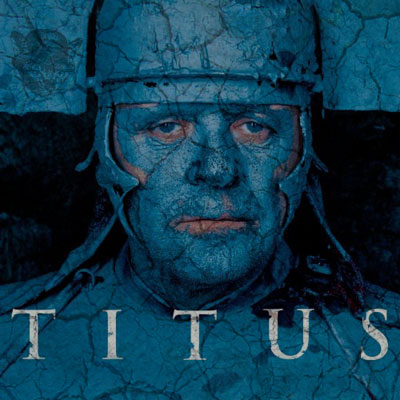
Why, in recent years, has there been a major motion picture by a major director? Why does a small local theater choose to do a Shakespeare play that very few people are aware of?  It had been all but forgotten until the mid-20th century when Peter Brooks famously staged it for the RSC with Vivian Leigh as the put-upon daughter, and then it took on a new life. In recent times, there have been many productions in the UK, in the US, in Japan, productions that emphasize the political…ones that emphasize the family dysfunction.  (Click here for an interesting article on the history of the play’s performances.)

But the question remains: why? Why has it been reborn in our time?

Have we become inured to violence? Completely desensitized?  Or does the extreme violence of the play now reflect our own violent world? Our own shattered realities?  I wonder about my own experience at the performance–the violence of the play was not upsetting or revolting; it was, in fact, silly–and I am a person who for the most part shies away from violence in the films and books that I choose. As I said, the production was cartoonish and even slapstick.  But then what does that say about us?

If  art is supposed to make us think beyond our initial reaction, then my experience with Titus Andronicus was a success.  I can’t get it out of my head.
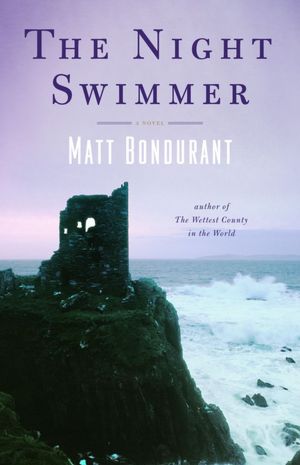
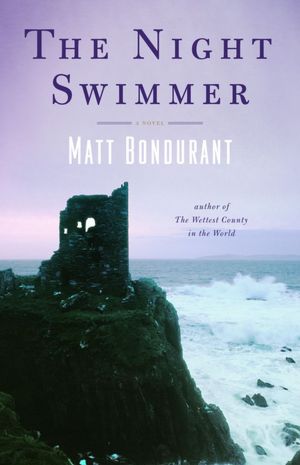
Book Review: The Night Swimmer by Matt Bondurant

A goat that walks on its hind legs…a woman who swims in the dangerously cold North Atlantic…hallucinogenics…two Irish pubs…a violent underworld…a blind goatherd…a dubious fiddler…9/11…an ancient tragedy.  These all are elements that come together in the magnificent novel The Night Swimmer by Matt Bondurant.

I wrote about this novel in an earlier blog; I had only been a few chapters in at the time and was focusing on the urge to live somewhere else. Indeed, the examination of this urge is part of the narrator’s train of thought. But I had no idea where this story was going and how vividly it would be told.

The novel is about an American couple who move to Ireland, when the husband wins a pub in the town of Baltimore in southwestern County Cork. The husband has aspirations of writing and feels that the pub will give him ample time and material to do something great. He certainly has both–but is unable to fashion anything with it.

The woman–the narrator–has an rare skin condition, a subcutaneous level of fat, that allows her to withstand extremely low water temperatures. She is an open sea swimmer and the move to Ireland allows her to revel in this activity, in water that is frigid and dangerous. She spends much of her time on Clear Island, where she swims and begins to attract the attention of the islanders as well as of a little goat that walks upright. The islanders are very suspicious of strangers–blow-ins they call them–and they are particularly concerned about this young woman who swims in their harbor. They are also going through some large shifts that threaten to change their centuries-old way of life.

As Elly, the narrator, spends more and more time on the island, she begins to feel, to a small degree, a part of the island–but she knows that this is a false feeling. She befriends a blind goat-herder and  learns of his heartbreaking personal tragedy, and then discovers a much larger tragedy that once wiped out an entire generation of islanders–except for two. She also begins to see that her marriage is not strong enough to withstand the battering that the move across the ocean occasions. She watches it erode and sadly understands why this is occurring.

The novel is many things–it is a domestic novel about marriage infused with a magical realism built on folk lore and village life.  It is a novel about enterprise and failure. About love and its withdraw. About the fear of strangers and the resistance to change. Elly attempts twice to swim to Fastnet Island–something no one has actually ever done–and in describing this momentous feat, Bondurant elevates his already lofty writing into something sublime.  Neither attempt is successful, but both are certainly memorable. In a whirling world of deep open-sea, hallucinogenic visions, and towering inspirations, Elly’s swimming anchors this already magnificent read.

Because of the epigraphs taken from the journals of John Cheever and the various allusions to him and his stories throughout The Night Swimmer, there have been the expected comparisons between the two. I find this a little wrong. For while the epigraphs from Cheever’s journals are appropriate and thoughtful,  and the thematic focus on dualities similar to that in Cheever’s own stories, the writing of The Night Swimmer seems so much fuller, fatter, more exuberant.  Cheever’s writing, for me, reflects the dessicated suburbias that he depicts, and reflects it in a much leaner style of writing.

In many ways I wish that the novel ended one chapter before it did. There is an epilogue of sorts, a tying-up of things, that I found unsatisfying. I would have rather left Elly on Clear Island, with both her and the reader trying to figure out the impact of what just happened, of where the future lies.

surf & books

I am losing my office in June which is overflowing with books and I don’t know where to put them. The beach sounds like the perfect place. Isn’t this cool.

Jo's avatarMOJOme

This was an IKEA idea! The largest open book shelf of the world in Bondi beach, Sydney, Australia. 30 Billy shelfs to sign the 30th anniversary of this Ikea piece. For one day everybody could take a book for a money donation to the Australian Literacy and Numeracy Foundation Institution.

I love marketing for a cause.

View original post

Ethical versus Moral

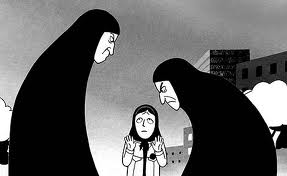
I had a conversation the other day with a woman who is teaching Marjane Satrapi’s  graphic-novel Persepolis. Our discussion revolved around the differences between ethics and morality. Neither of us are professional philosophers, but I like to think that we are thoughtful, intelligent people. And so, we must answer the questions: What is ethical? What is moral?

From the dictionaries I learned that morals are “a person’s standards of behavior or belief’s concerning what is and is not acceptable for them to do” and that ethics are “moral principles that govern person’s or group’s behavior.”

Yet that seems backwards to the way that I have always viewed it. I had viewed morals as being proscribed by a particular group and ethics as being a more personal, individual code of living.  Perhaps my association of “groups” with morals  is coming from the preponderance of fundamentalists–in all religions–who attempt to press their moral code on all. Ethics to me, on the other hand, is the system of right and wrong, just and unjust, developed individually.

Is this a case where I am just wrong, outright?

So, I went to a man who teaches philosophy. His distinction was this: ethics is a system of right and wrong behavior derived from rationality. Morals is a system derived from religious belief.  Yes, many times they overlap. But sometimes they do not.

Yup, that seemed to clear some things up.  And I didn’t seem completely off in my understanding.

For instance, according to the religious belief group in charge in the picture above, it is IMMORAL to listen to ABBA. (We are talking ethics and morals here, not musical discernment.) Yet it is hardly UNETHICAL to do so.

So think of the things that are proscribed by particular groups and weigh them in light of ethical or moral. For some, it is marrying outside one’s group (unethical or immoral?); for others, it is believing in evolution (unethical or immoral?); and still for others, it is having men and women sit on the same side of a room (unethical or immoral?).

In the States, we are going through an election season (doesn’t it always seem like an election season) and, in the political debate, social issues always seem to force their way to the top–or at least garner the most attention. Issues of sexuality, women’s reproductive rights, marriage get a lot of discussion.  Are these ethical issues or moral issues?  In a system that supposedly separates church from state, are the morals of a particular belief system muddying the ethics of a rational system?  In other words, I might not want to listen to ABBA but should you tell me I can’t?

I listened to a man speak two weekends ago who suggested that members of the U.S. Congress should read more poetry. He noted that the poet Adrienne Rich once called poetry, in all its ambiguity,  the “perfect antidote to moral certainty.” I keep thinking about that and worrying about governmental moral certainty.  Other governments have tried it–and it ain’t pretty.

It’s been a while since I read Persepolis or Persepolis 2, and I have never seen the film version. I remember both books as being quick reads, but I have lasting memories of them. Maybe, I’ll go through them again this weekend.

Movie Review: The Footnote: fathers and sons, parents and children

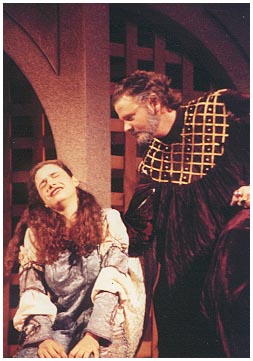
Juliet being bullied by her father

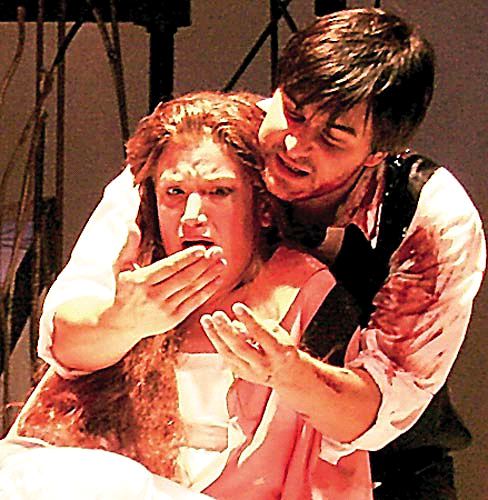
I have always been fascinated by the importance of parent/child relationships in Shakespeare. As school children, one of the first plays we read is Romeo and Juliet and aside from the love story, the second major story is Juliet’s relationship with her parents. The mother is cold and aloof and the father, while seemingly sensible in the beginning, shows himself an insensitive brute. Then there is Hamlet–a psychiatrist’s field-guide to dysfunctional parenting. In the histories, there is Henry IV, parts 1 and 2; the tragedies also give us King Lear–a tragedy of parenting if ever there were one; the romances give us The Tempest with the sorcerer Prospero manipulating his daughter’s–and everyone else’s–life. Throughout the canon, there are lovers blocked by parents, young nobles obeying the edicts of  fathers, and even a childless woman declaring what violence she would wreak on her children if she had them.

Hamlet berating his mother

And then I thought how much all of literature is tied in with this theme. From the earliest fairy-tales like Snow White, Cinderella, and Rumpelstiltskin to the Greek plays–where does one begin with Oedipus?–the dynamic between parent and child is in the foreground. As for the great epics: The Odyssey is really a tale of a son trying to find his father, as is its modern counterpoint, Ulysses,where “fatherless” Stephen is cared for by Bloom who mourns the death of his own infant son; and what is Paradise Lost but a father punishing his errant children?  In Great Expectations Pip is orphaned and raised by a beastly sister and her kind and understanding husband. In Huck Finn, Huck is trying to survive in spite of the obstacles that the disreputable Pap has put in his way. And even a modern potboiler like the Girl with the Dragon Tattoo trilogy is founded on several perverse father/child relationships.

Lisbeth Salander and her father from The Girl With the Dragon Tattoo

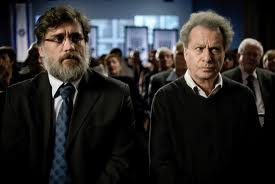
So I thought of all of this as I left the theater Sunday after watching The Footnote. An Israeli film, The Footnote follows a father and son, both Talmudic scholars through their strained relationship. The father’s career–rightly or wrongly–stalled early in its course. The son, on the other hand, is immensely successful. The film opens with an award ceremony where the son is being inducted into the Academy of Sciences. In his thank-you speech, the son focuses on what an inspiration and model his father was, but the father is so filled with envy, anger, and bile that he walks out of the theater.

Son and father from The Footnote

Later, the father receives a telephone call informing him that he has won the prestigious Israeli Prize, an award given by the President of Israel to an important scholar. The call is actually a mistake and was intended for the son who naturally has the same last name.  The son is informed of the mistake and told that he must be the one to tell his father. What ensues is riveting, heartwrenching, and sad.

The soured relationship between the two is echoed with the son’s strained relationship with his own adolescent child. At times, it seems the women are holding things in place, but I am not completely sure. There is a lot of dishonesty, a terrible lack of communication, and an underlying egoism that is poisoning the family dynamic.

The film is very good.  It is one of those films that you talk about long after, and think about much longer than that.

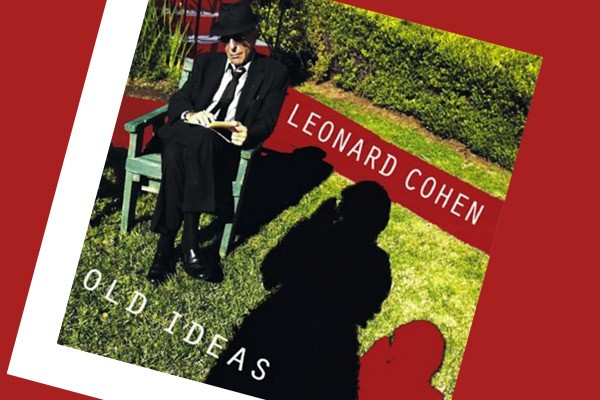
Sunday Music: Leonard Cohen Old Ideas

His voice is unmistakeable, his lyrics are second to none. And I’m not talking Dylan here. For nearly as long as Dylan has, Leonard Cohen has been creating incomparable songs–songs that deal with pain, sexuality, religion, the miscarriages of history, the ravages of love, and finality. And now at 77 years old, Cohen seems even more focused on the finality.

For instance, “Going Home,” the first song on his new album Old Ideas, is a description of a  “lazy bastard living in a suit” named Leonard. In the realization that he is “going home,” the fictional Leonard is wishing he had had a user’s manual for living, for living in defeat.

(If you know little about Leonard Cohen, you might be unaware that his manager did a “Bernie Madoff” on him and left him completely broke which is why he is touring the world and putting out new stuff at this stage in his life.  Unfortunately, he has to. Fortunately, it is still very good stuff.)

The music, like so much of Cohen’s work, is often just an understated support to Cohen’s enigmatic lyrics. Simple piano or guitar set up against the words.  At other times, the production  has beautiful, choir-like  singers (the Webb Sisters), whose voices are often in bright opposition to the darkness of his ideas. His work has frequently had the tenor of southern spirituals (cf. “Hallelujah”) and on this record, “Amen,”  “Show Me the Place” and “Come Healing” follow suit, while “Crazy to Love You” recalls the acoustic guitar work of Cohen’s early days.

But the music is ALWAYS secondary to the words.  How heartbreaking is a love song that begs “I know you have to hate me/But could you hate me less?” It is this heart-wrenching sadness, the jaded philosophy that makes Cohen so beguiling. And I find that in his old age, this jaded attitude is even more compelling–for underneath it all, there is something hopeful, poetically hopeful in the continuance of things. In a odd way, Cohen’s complaining about the world and its injustice implies that he wants to see it better, that it can be better, that it will be better.

Having Leonard Cohen’s voice in the world, having his striking words propped up by the most simple instrumentation, makes my world better. Hallelujah!

Barney McKenna–R.I.P.

So.  The mother-in-law of a fiddler I used to play with died last week. I went to  visit early Monday morning, but didn’t stay for the funeral.  When I got home, a friend called to say that he had just missed me at the church.  He also said–I thought –that the woman who died had been a relative of Barney McKenna, the great banjo player for The Dubliners.

Later in the week, I get another message from another friend that Barney McKenna had died earlier in the week.  Too weird.  I call my pal to tell him about the strange coincidence. Turns out that I had misheard his original message from the start.  The first friend knew about McKenna’s death and merely told me that Barney McKenna’s obituary was on the same page as the woman’s whose funeral I had just gone to.  There was no connection, no relation. Man, had I misheard.

A young Barney McKenna

One of the founding members of The Dubliners, Barney McKenna helped changed Irish music forever, moving it from the back rooms of O’Donahue’s pub on Merion Row to concert halls in the Europe and U.S.   With the original line up of Luke Kelley, Ronnie Drew, and Ciaran Bourke, Barney McKenna and the Dubliners were prolific and talented. In various incarnations and through changes of players, they played for more than 50 years.

As it happens, last week, McKenna was having tea at the kitchen table with a friend when he appeared to have “nodded off.”  If you gotta go–and we all have to–what a great a way to do it, place your chin on your chest and simply nod off.  Anyway, in memory of Barney McKenna, here’s a short clip of his playing in Germany sometime in the mid-90s.:

Midnight on Revolutionary Road in Paris, County Cork

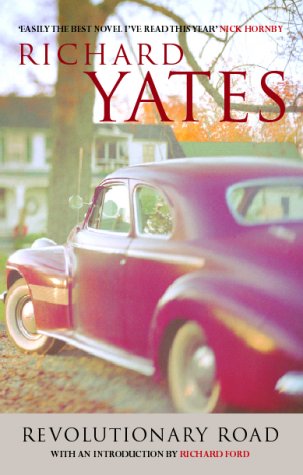
I am reading a book, The Night Swimmer by Matt Bondurant, where early in the novel, a young, successful couple have these yearnings to chuck it all and to move to Ireland.  They are intelligent and aware of the commonness of this trope–they intentionally nickname their street “Revolutionary Road” after the Richard Yates’ novel.  Earlier, before the dream of starting afresh in Ireland, the couple had wished to live in the time period when the novel Revolutionary Road takes place–a Cheever-esque world where pitchers of martinis and pyramids of cigarettes punctuated each evening. That glamorous “Mad-Men” world had not work out for them, but the dream of emigrating does: the husband wins a pub in County Cork, Ireland.  Needless to say, the paradise/excitement/vigor of the new life they imagined in this other world does not pan out they way it had in their dreams.  And like in Richard Yates’ novel, the marriage suffers more than greatly.

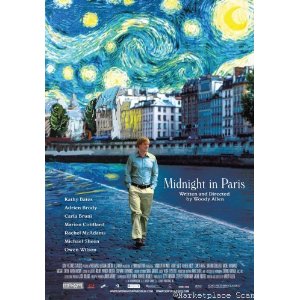
What is it about us that makes us often wish we were in some other place, some other time?  In Midnight in Paris,  Woody Allen wrestles with this question. The protagonist wishes he lived in 1920s Paris, but the 1920s woman he meets wishes she lived in the Paris of the 1890s?  And in fact, the life he is already experiencing in 2011 turns out to be full of promise. Why is this nostalgia for a world other than our own,  for an imagined place and an imagined time, so strong?  Is it  general among everyone?  Or only with a certain type of person?

I walked out to get a coffee today and on my walk home I cut down an alley.  Looking around me, I realized that I could have been walking in any foreign city with any foreign adventure around the corner.  I could have been in Paris, in Cork, but I was merely a short stroll from my own house. I took a picture with my phone.  The concept of a more exotic, romantic other place is just a whiff of smoke–it is always around us if we keep our eyes open.

Now it is often said that one doesn’t appreciated one’s home until one is separated from it. Joyce gave us a loving, photographic picture of Dublin, but only when he was writing in Switzerland and Paris.  Beckett too gives us an unnamed but undoubtedly Irish landscape in his novels and several of his plays and he too was across the sea.  But that is different than romanticizing a place one wishes for, a place that does not exist.  What Joyce and Beckett do is understand what they had left, see it without the distortion of being so close within. This is not the same as dream-manufacturing, as imagining a better world through the kaleidoscope of nostalgia and generalities.

Nevertheless, there are still many days when I wish I was somewhere else, when I don’t appreciate the vitality of the world around me. But in these daydreams, it seems that I am never working, that there is no concern about putting food on the table or where the next dollar is coming from–who wouldn’t find that attractive. And that’s what makes it all somewhat of a sham.

Versatile Blogger Award

It appears that this site has been nominated for a Versatile Blogger Award.  I am not really sure what that entails or what it requires or even what it means. But it is nice to think that someone out there is reading my scribblings.  The site was nominated by a lovely blogger at http://memyselfandela.wordpress.com/   Thank you, memyselfandela! She and her site are in the UK and the site features some of the most beautiful black-and-white photos usually accompanied by inspirational and thoughtful writing.  There is also a wide range of music videos –everything from Gershwin and Sting to Apocalyptica and Amy Winehouse–as well as cartoons, translations, and intriguing links.  When any of you get a moment, check her site out. And again, thank you memyselfandela for the nomination.

//

Part of the nomination process is that I have to list seven things about myself. Awkwardly, I say this:

1.   I own five guitars and a mandolin.

2.   I  had a dog named Max but he died.

3.   The first song I played to a sizable audience was Donovan’s “Atlantis.”  I was 17 years old and I’m sure I was sincere.

4.   I once had a pretty famous literary agent in Dublin. The last I heard from her, she was flying to Italy with the manuscript of my novel. That was sixteen years ago.

5.   For a very long time, I used to play in an Irish band.  It has become much more successful now that I’ve quit.

6.   When I was 18-years old I hitchhiked across the U.S.

7.    I was once on stage with Bob Dylan and the Band.  I sat on a folding chair behind towers and towers of speakers and could barely see a thing.

//

Another part of this process is that I have to list 15 blogging sites. I don’t read that many blogs regularly except for the ones I have on my blogroll and the various people’s blogs who “like” certain posts I put up.  I am not particularly comfortable doing this, but here goes:

http://memyselfandela.wordpress.com
http://therumpus.net/sections/blogs/rick-moody-blogs/
http://asjellis.wordpress.com
http://thephysicianspalette.com
http://dianebones.wordpress.com
http://romanzocoeva.wordpress.com
http://courtneygillette.com
http://johnesimpson.com/blog
http://therumpus.net
http://asjellis.wordpress.com
http://thewwaitingroom.wordpress.com
http://ellabalaert.wordpress.com
http://literaryman.com
http://consciousnessthoughts.wordpress.com
http://black47theband.blogspot.com/

Central Park in Spring…Poetry in April

Went up to NYC for two days. The weather was glorious. Bright sunny skies and comfortable 70-degree weather. Central Park was bustling–workers extending their lunches, children climbing rocks, skateboarders, bikers, and roller-bladers whizzing around. There were even some early sun-bathers stripped down to the bare essentials. Good energy all around–New York at its finest.

The reason I went up to New York was to attend the 10th annual “Poetry and Creative Mind” gala held at the Alice Tulley Hall at Lincoln Center on Thursday night.  Sponsored by the Academy of American Poets, the gala celebrates National Poetry month by presenting various writers, directors, and personalities to read two or three poems of their choosing.  Simply, the night was fun. The presenters were relaxed and entertaining, and the audience was appreciative and receptive.

The readers were Meryl Streep, Brook Shields, Diana Reeves, Colum McCann, Chip Kidd, Bill Keller, Terrence Howard, John Wesley Harding, Claire Danes and Tom Brokow.

Chip Kidd (Master of Ceremonies) dressed in an extraordinary red-and-white striped suit jacket, Kidd was humorous and quick. He handled a small mishap very well when he introduced out-going Academy president Tree Svenson who reached the podium and had to leave stage to retrieve the speech she had forgotten.  He also performed a skit based on his assertion that all Emily Dickinson poems can be sung to the tune of the “Yellow Road of Texas,” “Gilligan’s Island,” and the 1970 theme song for Pepsi.

Colum McCann. McCann’s National Book Award winning novel, Let the Great World Spin was a dramatic, emotional,  exciting portrait of New York City in 1974.  (see and hear McCann talk about the novel here: http://www.amazon.com/Let-Great-World-Spin-Novel/dp/0812973992/ref=sr_1_1?s=books&ie=UTF8&qid=1333815282&sr=1-1).

McCann recited “The Road Not Taken.” He said that instead of gifts for Christmas, he asks his children to memorize a poem and gave us one that he had asked them to memorize. It was “A Meeting” by Wendell Berry and dedicated to Frank McCourt. His poems all tended to celebrate “the road not taken.” They included Rukeyser’s “Then I saw What the Calling Was” and Amy Clampitt’s “Blueberrying in August.” He ended with the very powerful poem by Nikky Finney called “I Have Been Somewhere.”

Claire Danes, the actress, recited e.e. cummings’ “if up’s the word.”  The poem had been read at her wedding.  She then read  Frank O’Hara’s “Having a Coke with you.”  It was new to me–although I inherited O’Hara’s completed poems from my uncle–and it was such a wonderful love poem. Here it is:

“Having a Coke with You” by Frank O’Hara

Having a Coke with you
is even more fun than going to San Sebastian, Irún, Hendaye, Biarritz, Bayonne
or being sick to my stomach on the Travesera de Gracia in Barcelona
partly because in your orange shirt you look like a better happier St. Sebastian
partly because of my love for you, partly because of your love for yoghurt
partly because of the fluorescent orange tulips around the birches
partly because of the secrecy our smiles take on before people and statuary
it is hard to believe when I’m with you that there can be anything as still
as solemn as unpleasantly definitive as statuary when right in front of it
in the warm New York 4 o’clock light we are drifting back and forth
between each other like a tree breathing through its spectacles

and the portrait show seems to have no faces in it at all, just paint
you suddenly wonder why in the world anyone ever did them

I look
at you and I would rather look at you than all the portraits in the world
except possibly for the Polish Rider occasionally and anyway it’s in the Frick
which thank heavens you haven’t gone to yet so we can go together the first time
and the fact that you move so beautifully more or less takes care of Futurism
just as at home I never think of the Nude Descending a Staircase or
at a rehearsal a single drawing of Leonardo or Michelangelo that used to wow me
and what good does all the research of the Impressionists do them
when they never got the right person to stand near the tree when the sun sank
or for that matter Marino Marini when he didn’t pick the rider as carefully
as the horse

it seems they were all cheated of some marvelous experience
which is not going to go wasted on me which is why I am telling you about it.

John Wesley Harding –John Wesley Harding is the stage, folk-singing name of the writer, Wesley Stace. As Wesley Stace he read Thomas Wyatt’s  “They Flee from Me”  which he calls the greatest poem ever written. (I’m not sure I agree). For his second poem, he brought out his guitar and sang the poem, “The Examiners”–which is on his latest album.   He had seen it in a contest in the Times Literary Supplement and was immediately struck by it.  As he noted, the poem may have come in 3rd in the contest, but “numbers 1 and 2 weren’t being played on the stage at Lincoln Center.” Here he is singing “The Examiners”:

Terence Howard, the stage and screen actor, seemed the less comfortable of them all. He haltingly read Stanley Kunitz’s “The Layers,”  but then hit his mark with Rod McKuen’s “Gifts from the Sea.”  It was moving and lovely.  And to me a surprise.

Brooke Shields gave perhaps the best performance of all.  She first read “The Spoilsport”  by Robert Graves, then the very funny “Nostalgia” by Billy Collins and then Howard Nemerov’s “To David, About His Education.” Her delivery was relaxed and humorous and each of the poems themselves were both light and thoughtful.

Bill Keller said that the only reason he had been invited to read was that he had written a NYTimes article in which he said that Congress would be a much better governing organization if they read more poetry. (He said that maybe that would be better than the “Congressional prayer breakfasts” that so many like to boast about.) He cited the late Adrian Rich who once said that “poetry was the perfect antidote to moral certainty” and felt that that was something sorely need in present day Washington. He read three love poems, one each by Brad Leithauser, Kay Ryan, and Frederick Seidel. He ended with Stephen Dunn’s “Our Parents.”

Dianne Reeves. The great jazz singer showed that she can also sing the blues. In the middle of  the Gwendolyn Brooks “Queen of the Blues,” she sang the middle verses in  throaty, bluesy voice that wound back into the poem gently into the poem. It was the high point of the evening. She also read a humorous one about a woman’s hips and another about language and grammar by Kenneth Koch in which the elements of a sentence vowed their love ”until the destruction of language”

Tom Brokaw. Affable and charming, surprisingly his remarks fell flat and his poetry selections were not that memorable. He joked about having been placed between Reeves and Streep. Affable enough, but not that great a performance.

Meryl Streep is always regal, even when she is casual and comfortable. She read W.H. Auden “As I walked out one evening” and then Bishop’s “At the Fishhouses”–she flubbed her lines at the end, but the performance was still spell-bounding.  To atone for her slip-up, she then recited a Chinese poem, first in English and then in Chinese.  It seems that she can do anything.

There was a large reception at the end–one could see in through the glass walls and it looked fine and sumptuous–but it was for the performers and the higher-priced ticket holders only.  Instead I walked across the street and had a whisky and replayed the night in my head.