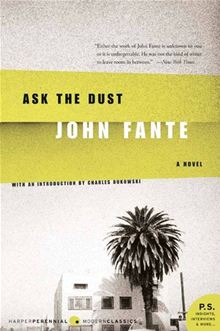
Book Review: Ask the Dust–Los Angeles, Obsession, and William Butler Yeats

Ask the dust

Ask the dust 3

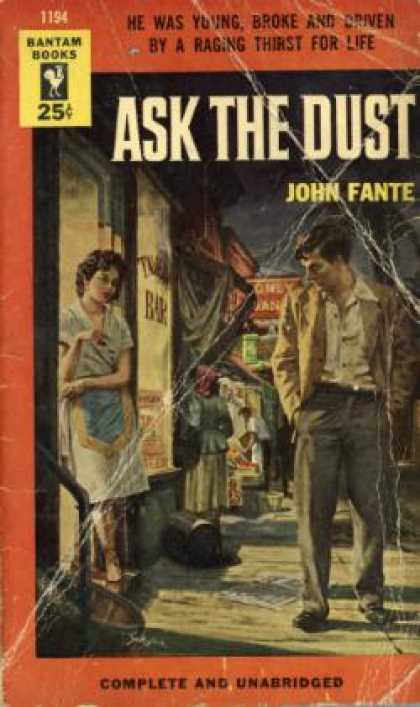
ask the dust 4One of those weird coincidences: I began reading John Fante’s 1938 novel Ask the Dust late this past Tuesday night. I didn’t get far–maybe three chapters–but the story of a young writer who had moved to L.A. from Colorado had grabbed me. Wednesday morning, I wake up early, check my messages and e-mails and a few blogs that I read. One of them–francescannotwrite–has a picture of the Disney Concert Hall at the top and a quote from Fante’s novel: “Los Angeles, come to me as I have come to you.” (Besides the weird coincidence of the novel, I also had, just a few weeks back, put the Disney Concert Hall on my computer as its wallpaper.) The blog-post offered some examples of the novel’s humor, its brief passages of romance, and its overall feeling of gloom. And then it segued into some extraordinary pictures of Vietnam.

Anyway, so I finish the novel and it was a good read, although one that left a few questions unanswered. Episodes where the act of writing were described were particularly memorable, for it is hard to put down on paper the art of ART. Most times, it comes off as stagy and overly dramatic. But the scenes where Fante gives us two or three paragraphs of Arturo Bandini in a “creative” groove are fun to read. For instance, here is Bandini–having sold two short stories for a handsome price–sitting down to begin his novel:

Out of my desperation, it came, an idea, my first sound idea, the first in my entire life, full-bodied and clean and strong, line after line, page after page. … I tried it and it moved easily. But it was not thinking, not cogitation. It simply moved of its own accord, spurted out like blood. This was it. I had it a last. Here I go, leave me be, oh boy do I love it. … big fat words, little fat words, big thin words, whee whee whee.

But primarily, Ask the Dust is about obsession. The hero, Arturo Bandini, self-conscious of his Italian heritage and full of fluctuating self hate, falls madly in love with Camilla Lopez, a Mexican waitress at a cheap coffee shop. The entire novel, his writing, his day to day living, his memories of home become wrapped around her–or around deliberately hating her. For the relationship is a strange sado/masochistic thing that yo-yos between love and hate, between tenderness and violence, but that never vascillates in its obsession. Camilla too has her obsessions and it is the thrust of the novel that they are not the same as Arturo’s.

I have always been attracted to obsession. I remember reading the novel Damage by Josephine Hart in one sitting and being floored by the destructive obsession of its characters. (I can still remember cancelling a lunch appointment because of my emotional exhaustion. The film version, by the way, tries, but does not do it justice.)

But mainly I think of obsession as a good thing…as a passion that forms and defines you. And in this I turn to Yeats. My favorite Yeats’ poem is “The Song of Wandering Aengus.” The poem tells of discovering a great passion…and of following it throughout one’s life. There is a sadness in it, but one tinged with hope, colored with the concept that chasing the obsession is more important than actually attaining it.yeats3
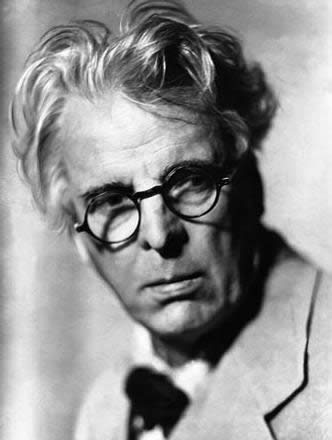
The Song of Wandering Aengus

by W. B. Yeats

WENT out to the hazel wood,
Because a fire was in my head,
And cut and peeled a hazel wand,
And hooked a berry to a thread;
And when white moths were on the wing,
And moth-like stars were flickering out,
I dropped the berry in a stream
And caught a little silver trout.
When I had laid it on the floor
I went to blow the fire a-flame,
But something rustled on the floor,
And some one called me by my name:
It had become a glimmering girl
With apple blossom in her hair
Who called me by my name and ran
And faded through the brightening air.
Though I am old with wandering
Through hollow lands and hilly lands,
I will find out where she has gone,
And kiss her lips and take her hands;
And walk among long dappled grass,
And pluck till time and times are done
The silver apples of the moon,
The golden apples of the sun.

And this is how, John Fante’s novel Ask the Dust leaves us. His Mexican girl has “faded through the brightening air” and, while he chases her through the foreboding desert, he is left to use her image, her memories, and his pain to create his next novel, to fashion his next work of art.

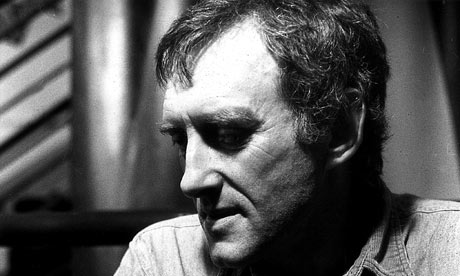
And so for something different on this snowy March day, here is a clip of the singer Christy Moore doing his version of Yeats’ poem. It never fails to bring a tear to my eye:
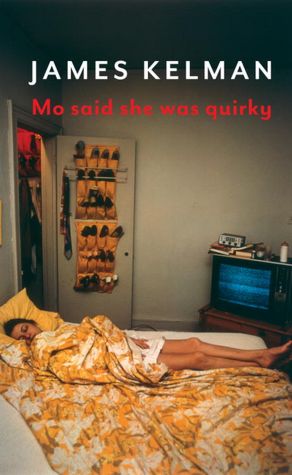
Book Review: Mo Said She Was Quirky by James Kelman

James Kelman

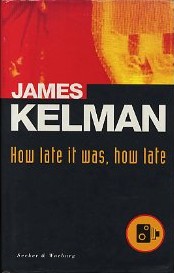
I first started reading James Kelman back in 1994 when his novel How Late It Was, How Late had just won the Man Booker Award. The novel was entrancing. Driven by a rough Glaswegian dialect that was musical, whimsical and earthy, the novel followed the Kafkaesque troubles of an ex-con who has been beaten, blinded and abandoned.  I remember the plot only faintly, but the language itself will stay with me forever. It was as if Samuel Beckett had plopped down into Glasgow, went on a long bender, and lived to tell the tale.

After that introduction, I read his short story collection, Busted Scotch. Again, while I enjoyed the stories, it was the language that remained. Lively, working-class language, filled with imaginative slang and time-born wisdom.

I remember being excited when I learned of his next novel, You Have to Be Careful In the Land of the Free when it came out in 2005. How wonderful, I thought, to hear that raspy, magical, glittering voice unleashed in the vastness of the Americas. But I was greatly disappointed.  Storyline was never his strong point, but here even the voice had faded. I was off Kelman for a while.

And I guess to my detriment, because Kelman’s next work was widely praised.  Kieron Smith, Boy was a story of an urban and lonely childhood and it was called both “magnificent and important.”  But I missed it and now it’s at the bottom of a long list of must reads.

But I did pick up Kelman’s latest novel, Mo Said She Was Quirky–mainly because of the intriguing title. And once again, the language is at the forefront. Once again we are in a Beckettian world of isolation and words. Yet, unlike anything he did before, in Mo Said She Was Quirky, Kelman’s lyrical speaker is a woman, Helen. The novel is told primarily in the first person, much an extended interior monologue. Other characters appear, but we see and hear them only through Helen’s eyes.

Helen works the night shift at a London casino, where she and her daughter have moved to get away from her no-account husband in Glasgow and where they now share a small, one-bedroom flat with her Pakistani lover, Mo.

In a cab on the way home one night, Helen stares at two homeless men stagger across the intersection in front of the taxi. One of the me stares intently into the cab and Helen recognizes him as her brother. This recognition begins her long night of self-examination, self-incrimination, and self-rationalization. Why is she here? Why is he there? How dysfunctional was her and her brother’s growing up or is this the state of all humanity? Helen is generous in her compassion and stingy with her self-pity. Many have it worse than she, she deliberates, and then realizes that misery, sorrow, and pain are  very relative and the fact that she has a hot shower and another person does not does not make her pain any easier or lighter to bear.

Completely knackered and unused to the night-shift, Helen, nevertheless, cannot sleep. Her mind races with memories of her brother, her damaged parents, her child, her ex, and the kind man she lives with, Mo. She waits until Mo and her daughter waken, watches them go off to school, and yet, still, she cannot sleep.  She thinks greatly about the differences between men and women, the posturing and bullying of those she has known, the favorites that her parents very obviously played. She thinks about racism and worries about Mo. She thinks of the urban jungle and worries about her daughter.

As night turns into day, as Mo takes her child to work, she grabs a few hours of rest but her mind is increasingly racing. And as it does we learn more why this simple-hearted woman is so fraught with worry about the future, so done-in by her present, and so haunted by her past.

I give Kelman a lot of credit for trying what he does so well in a woman’s voice. At times, Helen’s monologue seems to drag but at others it is riveting, revealling bits and bits of a single life and illuminating the mind of a  woman who lives in constant worry about the world around her–and the past that formed her.

I’m not really sure yet how I feel about Mo Said She Was Quirky. I do know that Kelman’s voice in it has me returning to reread How Late It Was, How Late. That’s the novel of his that I loved the most, and the others have yet to measure up.

Book Review: Sweet Tooth by Ian McEwan

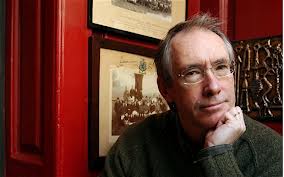
Ian McEwan

A lot of people I know do not like McEwan’s books.  However, I do very much. I find that his novels are both literary and very good reads.

McEwan’s novels are always well plotted, full of wonderful local color and specialized information that I did not know, and often times appeal to a particularly personal aspect of my life.  I remember very well and with great fondness the exact day that the novel Saturday takes place. (In fact I have written a piece about that particular day as well and am now shopping it around to place somewhere.) The novella On Chesil Beach is in many ways a modernization of the poem “Dover Beach” –a poem which also plays a crucial part in the ending of Saturday–and one on which I had based a short story a long while ago.  And despite the time period, Atonement is thoroughly post-modern in its attitude towards time and the historicity of events.

U.K. Cover of McEwan’s Sweet Tooth

McEwan’s new novel Sweet Tooth also plays with post-modernism in its narration. Indeed, the main character Serena Frome–a woman noted for her prolific reading habits–complains about the very type of novel that Sweet Tooth ends up being.

The time is the early 1970s, and Serena Frome is an intelligent young woman who goes off to Cambridge to study maths. It is right before the burgeoning of the women’s rights movement, and in fact, Serena is the only Cambridge female studying mathematics at the time. Yet she does not see herself as a trailblazing feminist, and in fact often  distances herself from many aspects of the movement’s agenda.

Yet feminism is not the crux on which this novel hangs. The Cold War is in full swing, and Frome has been recruited by an elderly Cambridge teacher who is also her lover for a position at MI5. Her task is to help wage battle on the cultural lines between the West and the Soviet Union. The government is worried that it is losing the cultural battle as more and more intellectuals, artists, and writers lean further and further left.  What it proposes is a plan to set up a false foundation that subsidizes writers with the idea that the intellectual community will see the country as supporting the arts and  with the added  hope that the writers’ work will fall more in line with its philosophies.

The mission is dubbed “Sweet Tooth” and Frome is given the job to bring in such a writer. She is to introduce herself as part of a panel that has recommended a young, upcoming writer and to offer him a stipend of two years salary to complete a novel.

Unfortunately, she also falls in love with the man.

Illustration: Satoshi Kambayashi/The Guardian
Taken from Guardian’s excerpt from Sweet Tooth

Like many Cold War tales, particularly when dealing with MI5, there are betrayals and mistrust.  There are thwarted love affairs, rogue agents, and a general sense of looking over one’s shoulder.  And in many ways, Serena is out of her depth.

The story is couched in the gestalt of the 70’s.  The IRA campaign in Northern Ireland is emigrating to England, the hippie movement is petering out while the establishment is growing its sideburns, and opposition to the war in Viet Nam is growing exponentially.  And all of these elements play a small role in Serena’s world.  Even McEwan’s buddy, Martin Amis, shows up to receive an award, along with Serena’s protege.

I was innundated with work (one reason I haven’t posted in three weeks), but had ordered Sweet Tooth from the U.K.  (It doesn’t come out in the U.S. until mid-November). And despite being behind in everything else, I picked up the novel and read it in two days. It is fast moving, intricately plotted, and enjoyable. I was told that the beginning was a little slugish and that one had to be patient before things got good, but I did not find this to be the case at all.

And I loved the ending, which put everything in perspective.

My only complaint is the cover of this edition–it is a bit cheesy and, with the title “Sweet Tooth,”  it  looks like the cover to some sort of  girls’  young-adult series, or worse some tarted up middle-class porn.  Don’t know what the people at Cape were thinking, but I think they blundered on this one.

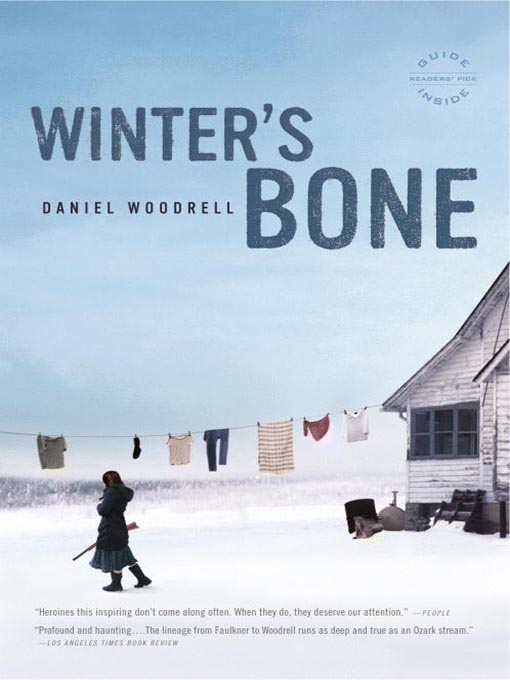
Book Review: Winter’s Bone by Darrell Woodrell–can you find a better heroine in all of literature?

I have a tendency to exaggerate, to think that whatever I have read, heard or seen lately and liked  is the BEST!  I am much more nuanced about things I dislike and usually soften the blows rather than exaggerate them.

But with Daniel Woodrell’s novel Winter’s Bone, I feel confident in stating what a truly fine book it is.

In fact, since I have read it, I have tried to think of a heroine in an American novel who matches Ree Dolly for grit, perseverance, wisdom and sheer moxie. These are the suggestions I have gotten so far:

1. Scarlett O’Hara in Margaret Mitchell’s Gone with the Wind (too spoiled, mercurial and self-centered)
2. Scout Finch in Harper Lee’s To Kill a Mockingbird (not really her story but her father’s–who, by the way, may be the best father in literature.)
3. Hester Prynne in Nathaniel Hawthorne The Scarlet Letter (interesting suggestion, but her props come from accepting her punishment and not revealing who the father of her child was, while letting the simpy Rev. Dimmesdale preach his sermons and fill himself with self-loathing. I don’t see her as a particularly active heroine.)
4. Katniss in Susan Collins The Hunger Games (must say, I don’t know enough about her, except that Jennifer Lawrence played both Katnis in the Hunger Games AND Ree Dolly in Winter’s Bone.)
5. Mattie Ross in Charles Portis’ True Grit (Mattie is a good second to Ree Dolly. Her challenges just don’t seem as daunting as Ree’s.)

Please feel free to add your own selections.

But my point is, I can’t remember any heroine–or any protagonist for that matter–who is so admirable in her refusal to not back down, in her persistence in doing what she must, and in her bravery in standing up to the very nasty forces that surround her.

In case you don’t know, Winter’s Bone is the story of Ree Dolly, a seventeen-year old girl who is raising her two younger siblings and caring for her catatonic, demented mother. Her meth-cooking father has just skipped bail and he had put up their hovel of a home as bond.  If he doesn’t show up for court, Ree and her family are out on the streets–or more realistically out in the fields of this very hardscrabble Missouri Ozarks setting.

Suffice it to say that her father is dead. And people aren’t real happy about Ree poking into their business. This is a community whose main economy and main diversion is crystal meth-amphetamine, and there are a whole lot of very, very nasty people.  No one talks. Talking creates witnesses.

In the course of her journey, Ree gets a truly horrible beating, she allies herself with her rough Uncle Teardrop (named such because of the three tears self-tattooed on his face), and finally proves her father’s death by sawing off his two hands (with a chain-saw from where he is sunken in a murky lake) and bringing the “identification” back to the authorities.

If it sounds gruesome. It is. But it is also one of those books that hooks you immediately and which you wish would go on forever. And it is all because of the character of Ree.  It is Ree that rises above all the violence, the poverty, the bleakness. But while Ree completes her quest at the end, while a few things begin to go right for her and her family, one is left feeling that in another five or ten years Ree will have turned into one of the many harridans that populate this mountain.  I hope not.

♦     ♦     ♦     ♦     ♦

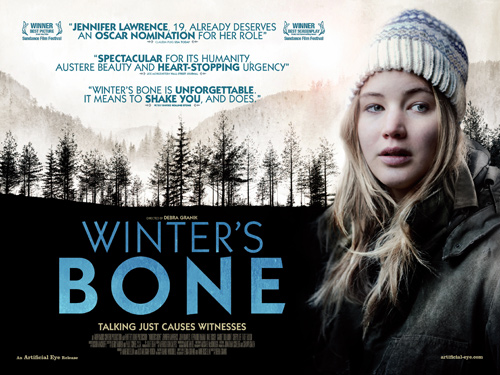
I read the novel for a film class I am teaching.  And so, I also had to show the film. As in all translations, there are various changes–her two brothers for some reason become a brother and a sister–and particular scenes are deleted.  Yet the film very much captures the spirit and the landscape of the novel.

Jennifer Lawrence is, at times, magnificent. There are moments when the camera captures the soft plumpness of her face adding even a greater vulnerability to this girl/woman who has to face such ordeals.  At other times, that softness works against her, straining our credibility that she is who she is supposed to be.

Not so with John Hawkes.  Hawkes, who was the soft-spoken hardware salesman in Deadwood–a similar world of extreme dirtiness and corruption, plays Teardrop perfectly. Hard as Ozark flint, creased and shaky, Hawkes captures the violence, the drug addled paranoia and stupor, and the family loyalty of these inbred mountain folk with studied truthfulness and credibility.  While Winter’s Bone is Lawrence’s movie, you don’t forget Hawkes for too long.

Jennifer Lawrence as Ree Dolly in Winter’s Bone.

John Hawkes as Teardrop in Winter’s Bone

Nothing, nothingness, and the world: a book review of Why Does the World Exist? by Jim Holt

I am reading about nothing.  Literally, about nothing.  I am reading about the concept of nothingness, and it’s a pretty difficult thing to get one’s head around.

Philosophers, theologians, mathematicians, and physicists have been puzzling the concept for a very long time, and it is quite a hot button in philosophical and scientific circles today.

In the West the concept of nothing is relatively new. 

In fact, it wasn’t until the mid-14th century that the idea of “zero” came to the West. And then, it came to us through accounting.  Something had to stand between asset and debit.

The East, however, had long dealt with nothingness not only in their mathematics but in their spirituality as well. For after all, attaining “nirvana” was equal to attaining nothingness, to achieving “emptiness.”

The Hindu word for this nothingness was sunya, which became in Arabic sefir, which came to Europe in the Middle Ages and is the root of our word “zero” and “cipher.”  And when it came to Europe, it came along with the rest of the Arabic numerals that we use today.

And yet what is nothing? There are many who say that no such thing exists.

The philosopher Henri Bergson tried to imagine nothingness. He simply kept subtracting all that he knew existed. However, when he reached the end he felt there was still something–his inner self which was doing all this subtracting. (An enlightened Buddhist would perhaps be able to extinguish that entity, but most of us cannot.) He concluded that imagining absolute nothingness is impossible.

Another philospher, Bede Rendell, saw that the failure in imagining nothingness is that after one had subtracted everything that was in the universe, one still had the space where those things once existed–a universe skin collapsed on itself.

The entire conversation is both intriguing and maddening, puzzling and wondrous.  (Sort of like in Alice in Wonderland when the Red King concludes that since nobody passed the messenger on the road, then nobody should have arrived first.)

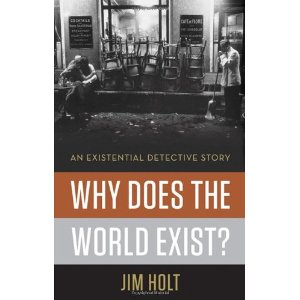
I am having this “conversation” with myself because of the book Why Does the World Exist?–An Existential Deterctive Story by Jim Holt.  Holt’s book, which is somewhat addressed to the lay reader (I can only imagine what a technical book on this subject might be like), springs from the question “Why is there Something rather than Nothing?” 

This question, I have learned, is one that has puzzled philosophers for aeons.

And when you get to the question of “something” and “nothing” you are led to the question of what “existed” in the universe before the “Big Bang” created the universe. The theologians have their answer. The scientists are not all that sure.  But they have their theories.

And both try to define or dismiss “nothing.”

All of which makes for fascinating reading.  Even the mathematical equations (which Holt has to explain to me or which I run to my resident philosopher/mathematician) are fascinating. For instance, his mathematical equation for absolute nothingness is

(X) ˜ (x=x)

and now seems to makes some sense to me. But it took a while for me to get to. (The equation means that X [the empty universe] is not where x = x [where something is something.]) He explains it much better and is  much more entertaining.

I am no philosopher or mathematician. My sense of the void, of nothingness–aside from my own existential angst and probings seeemingly hardwired in my soul–comes from Satre, Camus and Beckett.  And Holt brings these into the mix as well. (The cover of the book features a photograph of the Café de Flore, a favorite haunt of Sartre’s.) The book, in many ways,  is almost a primer of thinkers, ancient and new, and a wonderful introduction to the confluence of metaphysics, philosophy, literature and science.

And what  they ask is:  Why is there something rather than nothing?  Why is there a world?  A universe?

These are pretty big questions to roll around with and Holt’s book makes it a entertaining and informative  ride.

But to be truthful, I still don’t know the answer.

Reading, writing, and laughing with Anne Lamott

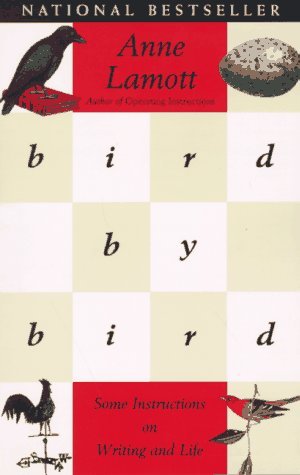
A woman I work with is teaching a course in Creative Writing that I will be teaching in January. She has assigned a book for her students to read: bird by bird: Some Instructions on Writing and Life by Anne Lamott.

And in a marvelous feat of procrastination, I decided to begin reading it as well–instead of the three other books that I need to be reading right now for the classes I am currently teaching.

And it was a good decision.  I have not yet completed it–but I have laughed through much of it.  Lamott has a voice–a way with words– that seems nurturing, real, wise and funny.

For instance: “We are a species that needs and wants to understand who we are. Sheep lice do not seem to share this longing, which is one reason why they write so very little.”
Where in the world did those “sheep lice” come from? But better yet, look at the next to the last word–“very.”  How perfect is “very” in this instance.

She gives us a bit of her own background, her bookish parents, her father the writer, her feelings of insecurity and isolation–the gist of many a writer’s baggage. And she gives us episodes from the writing courses she teaches.  Many of her students, it seems, don’t want to write, they want to be published. They want the fame, the riches, the sense of satisfaction that they believe they will attain when they are published.  And they are so wrong.  And yet, time and again in her courses questions about agents, editors and publishers  maddeningly outnumber questions about writing.  She tells them to try to get a refund on their tuition!

There are no special formulas, secret tricks, magic keys that will get you published, she tells them. And to illustrate that she tells this story:

My son, Sam, at three and a half, had these keys to a set of plastic handcuffs, and one morning he intentionally locked himself out of the house. I was sitting on the couch reading the newspaper when I heard him stick his plastic keys into the doorknob and try to open the door. Then I heard him say, “Oh, shit.” My whole face widened, like the guy in Edvard Munch’s Scream. After a moment I got up and opened the front door.

“Honey,” I said, “what’d you just say?”

I said, ‘Oh, shit,” he said.

“But, honey, that’s a naughty word. Both of us have absolutely got to stop using it. Okay?”

He hung his head for a moment, nodded, and said, “Okay, Mom.” Then he leaned forward and said confidentially, “But i’ll tell you why I said ‘shit.’ I said Okay, and he said, “Because of the fucking keys!”

There are no “fucking keys” that will get you in, she tells her students–and some get it and some don’t.

The best advice she says she ever received about writing–and which she passes on to her students–came from  the writer Natalie Goldberg.  When asked for the best possible writing advice, Goldberg picked up a pad of paper and mimicked the act of writing, page after page after page. The best advice?  Write and write and write and write.

So I am enjoying this book immensely but not necessarily for its writerly advice. I am enjoying Lamott’s voice, the natural flow of her words, the wise humor of her thought.

In describing, a person she does not like, whom she believes even God dislikes, she repeats this observation that a priest friend of hers passed on: “…you can safely assume you’ve created God in your own image when it turns out that God hates all the same people you do.”

How perfect.

Marvelous bodies…rebellious bodies and Winter Journal by Paul Auster

What a piece of work is a man! how noble in Reason!
how infinite in faculties!  in form and moving
how
express and admirable! in action how like an Angel!
in apprehension how like a god!  the beauty of the world,
the paragon of animals. and yet to me, what is

this quintessence of dust?

            Hamlet, Act II, Scene ii

And it’s true. The human body is an extraordinary piece of work, a marvelous machine inside and out. Just look at the accomplishments of this summer’s Olympic athletes–the speed, the agility, the grace, the strength.

And while most of us do not have–and never will– the bodies of an Olympian, we do have something very much in common:  our bodies will ultimately rebel against all of us.

I have spent the recent past with bodies that are failing to various degrees. My mother’s body–stricken with Parkinson’s disease for the past fifteen years–was continually at war with itself, the brain sending damaged impulses to the rest of her body. Uncontrollable tremors, catatonic staring, personality changes, rapid mood swing, fevers, chills, labored breathing–these were the mutinies that the disease in her body raised against its very host. And in the end, the disease won.

On a much lesser scale, my own body is now wearing down. Aches and pains are common enough, but then my knee screamed out, began to fail. So a surgeon goes in–part of the extra-ordinariness of that piece of work that is man!–and some things are cut out, scraped out and removed, damaged pieces all due to the passage of time, to the ordinary wear and tear.

And then, again, my body foments a small uprising against the surgery itself.  There are some complications after the surgery, some minor concerns with my leg.

And so for the first time in two weeks, I read a book.  A marvelous book and one that I enjoyed immensely.

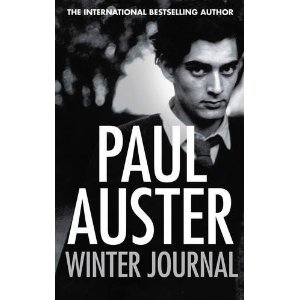
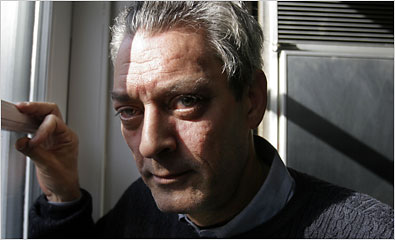
Paul Auster’s Winter Journal is a beautiful piece of writing–beautiful in the way that all of Paul Auster’s writing is beautiful: clear, intelligent, imaginative and clever.

The premise of the book–is it a novel, a memoir, a journal? the genres are often cloudy in Auster’s writing–is that on a particularly day, one month exactly to his 64th birthday, a writer sits down and writes a journal addressing his aging body.

The book is told in the second person–a technique I don’t particularly like but which here provides a close intimacy with the physical, emotional, and psychological body he is addressing. And yet there is a myriad of voices–a chorus of voices made up of the writer’s body at the various moments in his life

Throughout, the writer addresses his body in certain phases of his life. He examines the physical scars that have added up over an active boyhood: when he is five a playmate hits him in the head with a metal rake; when he is three-and-a-half he slides into a protruding nail and has much of his face ripped apart; as a ten year old baseball player he is smacked into by another player as he looks up to catch a ball and splits his head open.

But the scars are not only physical.  There is the death of his mother, the panic attacks, the cessation of driving after he and his family survive a near fatal car accident.

He remembers when as a little boy in a tub the wondrous surprise of an erection and as a grown man the various women he has loved both in late adolescence and in manhood.  He recounts the unshakeable love that he and his wife share. He remembers the exhaustion of producing a film in Dublin and the clarifying epiphany that metamorphosed him into a serious writer.  There are memories of women he has loved and men he admires.  Of situations, in Arles, in Dublin, in Brooklyn where he learned–and retained–a certain self-knowledge about himself.
And overall, it is the pleasure he remembers his body enjoying, much more than the pain.  When, at the age of five, he was hit by the rake, he was lying on the ground examining an ant-hill. And it is his boyhood fascination with those ants that he remembers more than the delivered blow which literally raked his head.  When he is cracked in the head by the fellow teammate, it is the joy of following an arcing baseball, of angling to bring it into one’s mitt that he remembers more than the bloodying crash.

And now at this juncture of his life,  it is always the pleasure not the pain that his aging body (and mind) remembers most clearly.

Winter Journal is –perhaps surprisingly–an uplifting book.  A man, growing old but not nearing what he calls “advanced old age,” seems somewhat content with the life that he has lived so far. There is still a boy’s joy with a winter snowstorm, a lover’s appreciation of his longstanding wife, a satisfaction with the things he has accomplished–and a recognition of the many that never made it to the age he is now approaching.

In many ways,  Winter Journal is a fine, fine book…a fine, fine way of looking at a life.


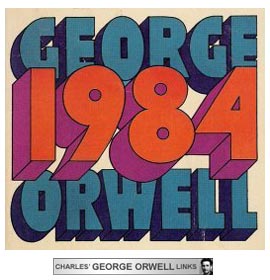
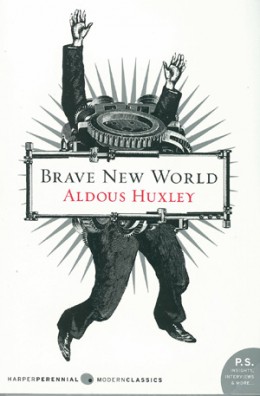
1984Brave New World…and Phillip K. Dick????

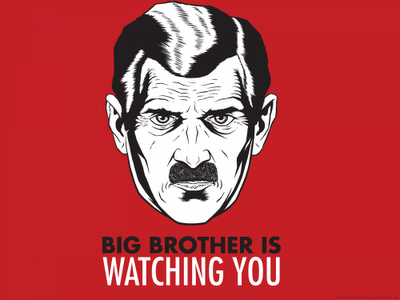
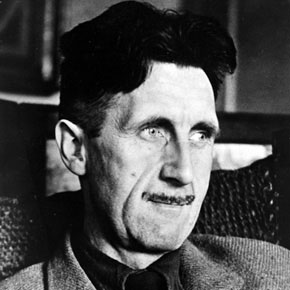
It is perhaps the most iconic novels of the 20th century.  George Orwell’s 1984 is the dystopian novels of all dystopian novels.  We all know the phrases “Big Brother,” “doublethink,” “thought-police”; their ominous overtones and insinuations are recognized even by those who have never read the book. The deadening conformity and mind-control that Orwell writes about are the fears often invoked by those who fear totalitarianism in any form–in governments or corporations.

Apple–now a mighty corporation in itself–famously advertised its new Macintosh computer by pitting itself against the corporate giants of the computer world in a magnificent television commercial that echoed the world of 1984–and Apple’s defiance to its conformity.  (The ad was seen only once on television during the American Superbowl and then subsequently was shown in theaters.)

The novel is bleak and that bleakness is broken only briefly by a wonderful love affair and the main character’s misplaced hope.  Indeed, my favorite image from the book is one that perfectly captures the grime, the incompetency, the substandard level of life, when Winston Smith, the protagonist, goes to unclog a sink in a neighbor’s apartment. As he looks at her, he notices the dust that has gathered in the lines of her face.  I always remember that–a pretty powerful image.

Orwell wrote his novel in 1948 (that’s really the only significance of the novel’s title: it’s the year he wrote it reversed). But nearly a quarter century earlier, another British writer also wrote a powerful dystopic novel: Aldous Huxley’s Brave New World.

And where Orwell’s world is one in which a film of oil lies on the gin and ready-made cigarettes fall apart in your hand and where sex is frowned upon (because one should really only love Big Brother), Huxley’s novel is the opposite.

Huxley saw his dystopia as a world in which people are perfectly happy–indeed where they are conditioned to be happy. There is no disgruntlement–people have been conditioned to accept and love their station in life. (A station that has been pre-decided by the artificial generation process.) Promiscuity is greatly encouraged and sex is varied and plentiful. And if for some reason, one might feel a little blue, there is SOMA, a mood-enhancing drug that is given out in vast quantities to all the classes.

The society works efficiently and happily. Yet Huxley sees the snake in the garden–the lack of freedom to be wrong, to be sad, to disagree. Even to be alone.  It is when a “savage” is brought back from a reservation in the southwestern part of the U.S. is the society and its beliefs challenged–but not for long.

♦     ♦    ♦    ♦    ♦    ♦

By the way, click here for a letter that Huxley wrote to Orwell upon first reading 1984. It is this very discussion of dystopia comprising great suffering or constant happiness:

Huxley to Orwell letter

♦     ♦    ♦    ♦    ♦    ♦

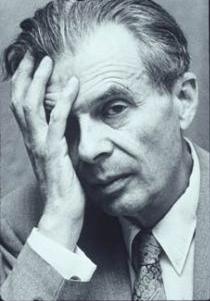
Aldous Huxley

I teach Brave New World as the first book of the new school year.  I will have thirty very bright 18-year-old students enrolled in my class. I know that half of them read 1984 last year with the one teacher they had. The other half did not. (And 1984 is such a great companion piece to any discussion of Brave New World.) So I assigned it as “summer reading.” But only to half of them. I looked for another “dystopian” novel to give the class that had already read Orwell’s novel.
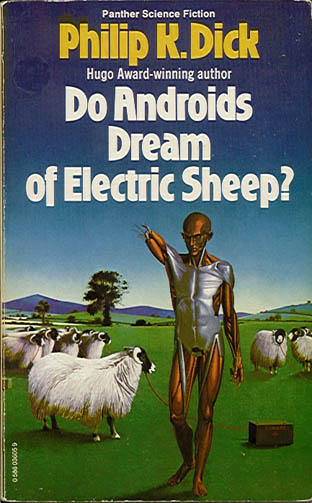
And so I assigned Phillip K. Dick’s Do Androids Dream of Electric Sheep?

Now, I have never been a big fan of science-fiction. I have just never gotten into it. In fact, I have never seen a Star Wars movie!

I’ve read some of the standards–Bradbury, Welles, Asimov, and, if we are stretching, Vonnegut.  But it’s something I just never made a connection with.

And Dick’s novel did nothing to change my mind!? Despite it being anointed a “classic” by so many and being the source for the beloved film, Blade Runner, it left me very flat.
Again we are dealing in a world different than our own–a post-apocalyptic earth where most of the able bodied people have emigrated to Mars.  Nuclear fallout from World War Terminus has made much of Earth inhabitable. The government’s enticement for people to emigrate is a free android that will work as their personal servants.

However, some of these androids have returned to earth and must be killed. And the only way to distinguish between the androids and the humans is the lack of empathy in the androids–a lack that can be tested.

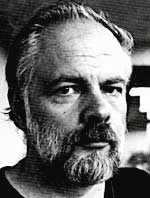
Phillip K. Dick

The plot, entails the main character, Rick Deckhard–an android bounty hunter–attempting to increase his bounty numbers so that he can buy some real animals, instead of the “electric sheep” he now owns. Animals, he feels, encourage empathy in humans.
I am not sure how I will squeeze this into our discussions of Brave New World and 1984.  I am not sure if it can be squeezed into dystopic literature.  Post-apocalpytic maybe–most of my kids have read or seen The Road and I am Legend–but it doesn’t really fit in with totalitarianism and its evils.

And then, maybe it won’t be all that important to the discussion anyway. Or better yet, maybe it’ll throw us all in a different direction completely.

Book Review: Disgrace by J. M. Coetzee

A new acquaintance of mine asked if I had ever read the book Disgrace by J. M. Coetzee.  I hadn’t, though I had read several others by the South African writer.  We talked about many things that morning, and, to be truthful, I had forgotten all about the book until about a week later, when a package arrived in the mail with a gift-wrapped book. Inside was a copy of Disgrace with the note: “I hope you enjoy this half as much as I did.”

And so I began.

Disgrace is the story of David Lurie, a 52 year-old, twice-divorced, white South African professor of Communications and Romantic poetry.  Quite early in the novel he is forced to resign from his university under the disgrace of having sex with one of his students.  As Lurie  rationalizes to himself, the sex itself was not rape, but it certainly wasn’t completely consensual.  He admits guilt but not contrition–which infuriates even those trying to help him.

In disgrace, hounded by reporters, and bereft of his job, Lurie leaves town and drives out into the eastern countryside of the Cape. There his daughter has some land where she raises flowers and kennels dogs.  He is there presumably to write an opera on Byron, Byron’s mistress Teresa, and her husband.  But it is not the most conducive area for such refined creation: it is a hard land and an area still simmering in the afterbirth of the post-apartheid era.

As Lurie settles into the rhythms of country-life, of physical labor and simple pleasures, even volunteering in an animal shelter, his life is once again shattered when he and his daughter are attacked by three men.  All the dogs are slaughtered, Lurie is doused in alcohol and set on fire, and his daughter is gang-raped (and impregnated) by the three men.  The very crime for which Lurie was censured has been visited trebly on his daughter.  The very world he has known–the power he has always arrogantly assumed for himself–has been violently wrenched away.

As both father and daughter try to come to terms with the horrors that have visited them, as they learn more and more about the identity of their attackers and their relations to people they know, and as they struggle with the essential character of each other’s personalities, Lurie comes to better realize the nature of the world around him.  His views on racism, on feminism, even on animal rights, must be examined and re-calibrated.  The world he has known is, simply, no longer.

I knew nothing of the book when I opened it. I thought it was contemporary, not published in 1999–a mere five years after the historic elections in which the African National Congress overwhelmingly won and from which apartheid’s demise can best be dated. The difficulties that Lurie has in understanding the new order, the distrust, fear and violence among the various peoples, even the “modernization” of the University all make better sense. (Lurie’s teaching of Communication is in itself ironic–Communication skills are what this country and its people are badly in need of.  An expert in the British romantic poets–those type of courses are considered fluff in the new university structure–Lurie teaches both Communications 101 and Communications 201. The one Romantic Poets course he teaches is a salve that the administration gives its older professors.) In many ways the novel is a reflection of the birth pangs of the new country: it is violent, bloody, and at times deadly.

Does everything get resolved?  Of course, not.  Is Lurie a better person at the end?  I’m not sure.  I think he is. Early in the novel when a tribunal is questioning Lurie on his womanizing, he states that he believes that every woman he has bedded has “enriched” him in some way.  The question at the end of the novel then must be  “has the violence and catastrophe that he has suffered also enriched him?”  Again, I don’t know. But he is a different man than he was at the beginning of the novel.

J.M. Coetzee

And while the summary of the plot seems rather dark, the novel itself is quick moving and understated.  It is a very subtle but easy read, and it sucks you into its disparate worlds–the urbane world of the university and the stark world of the South African countryside–quite easily.

And so much dovetails together within the novel: the womanizing man of letters writing about that grand literary womanizer Byron; the mirrored rapes; his evolving attitudes towards women underpinning his new understanding of animals; his role as both teacher and father. It all comes together seamlessly and wonderfully, not like a patchwork quilt, but a beautifully woven cloth–like the Ashanti patterned bedspread that Lurie’s daughter presents to the woman living on her land.

J.M. Coetzee won the Booker Prize for Disgrace in 1999, four years before winning the Nobel Prize for Literature in 2003. His writing is succinct and accessible. In many ways he is a quiet writer, not at all flashy. (Not surprising, considering that his dissertation was on Beckett.)  Intelligent, subtle, and layered, the writing is satisfying and rewarding from the very first, and ages richly with subsequent reading.

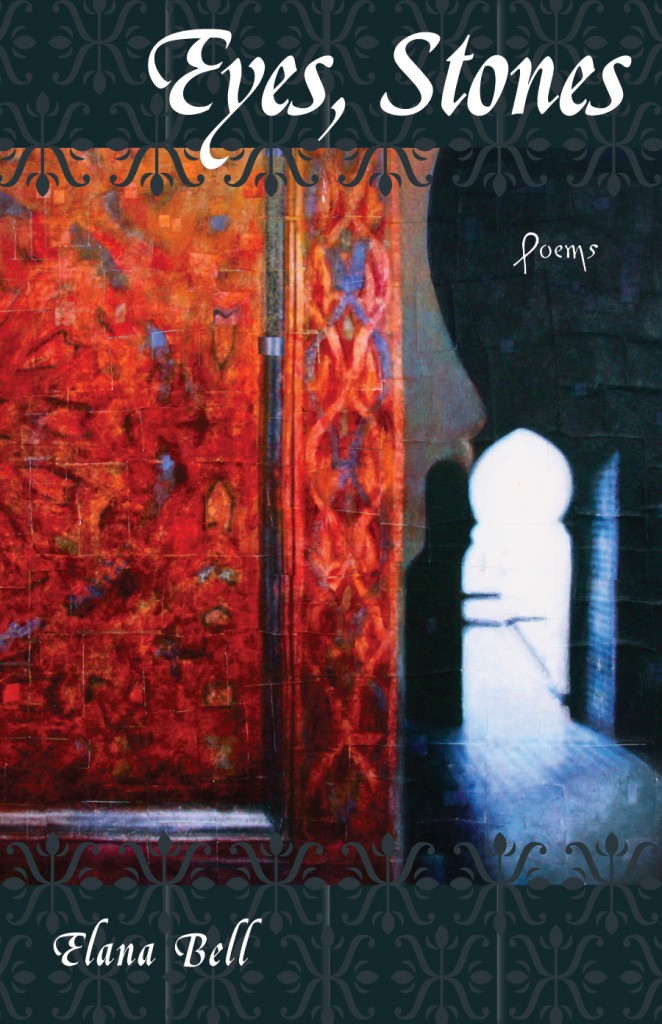
Book Review: Eyes, Stones by Elana Bell

Eyes, Stones–Elana Bell’s first collection of poetry and the winner of the 2011 Walt Whitman Award–is an extraordinary feat of poetry and clear-mindedness.  Each of these 40 small poems are dense explosions of beauty and clarity, encased in language that is both modern and antique, beautiful and brutal–much like the countries that she writes about.

In her poetry, Bell attempts to look and understand the worlds that are Palestine and Israel. She moves from biblical stories to modern events and much in between. Her topics range from the ancient relationship of Abraham and God, Sarah and Hagar, Ishmael and Hagar to the modern Holocaust, the Zionist movement, the 1968 Egypt-Israeli War, and the most recent Intifada.

But what is remarkable about these poems is that they don’t stink of politics, of nationalism, of self-righteousness.  They are simple poems that lay bare the simplicity of man’s pain, the artlessness of his troubles, the wonder of his existence. Often, in these poems one is unsure which side of the Israeli-Palestinian conflict Bell sits, her treatment is so even-handed.

Take for instance her poem “Naming the Day,” which is a composite both of those Jewish villages in Eastern Europe destroyed or made “Jew free” AND those Palestinian villages destroyed or evacuated during the 1948 Arab-Israeli war.

In “On a Hilltop at the Nassar Farm,” the speaker admires the Palestinian woman Amal:

Amal laughs with all her teeth and her feet
tickle the soil when she walks. She moves
through her land like an animal. She knows it
in the dark. She feeds stalks to the newborn
colt and collects its droppings like coins
to fertilize the field. Amal loves this land
and when I say land I mean this
exact dirt and the fruit of it.

Amal’s rough existence she compares with her own existence in the settlement that surrounds Amal’s land:

All around her land the settlements sprout like weeds.
They block out the sun and suck precious water
through taps and pipes while Amal digs wells
to collect the rain. I am writing this poem
though I have never drunk rain
collected from a well dug by my own hands,
never pulled a colt through
the narrow opening covered in birth fluid
and watched its mother lick it clean,
or eaten a meal made entirely of things
I got down on my knees to plant.

Yet Bell’s work does not rise from the guilt of the occupier.  It comes from a genuine love of the people–both Arab and Israeli–and a horror of the world that has evolved around them.  A particularly poignant poem, “In Another Country It Could Have Been Love,”  laments what could be between the two:


The next time I saw her, a rifle
strapped her shoulder. The tip
of it fingered my ribs, my hips
the inside of my thighs.
Cold metal instead of her hands,
her eyes.

Elana Bell herself is the granddaughter of Holocaust survivors, and as such, her examination of Jewish and Arab relationships is strikingly honest. She maintains an embracing love of the land through its many incarnations: biblical landscape and Zionist dream, modern nation and occupied territory.

In the end of the collection, she returns to Brooklyn where she lives. There she will “watch the Super Bowl…eat organic greens and make love on Saturday afternoon…[She will] listen to jazz in tight-packed clubs…and sleep on clean cotton sheets.” It is during this sleep, however, that the Mid-East comes to haunt her, to remove her from her comfort, and to tie her to the lands of her heritage.

Eyes, Stones won the 2011 Walt Whitman Award of the Academy of American Poets.  Five of her poems (along with her bio) are published on the Academy’s website. Check it out. She is a remarkable woman and a fine poet.