“Likes…and Dislikes”: something to think about

I’ve been reading a lot of Susan Sontag lately: her journals, her book Illness as Metaphor, and a slew of blog posts. One of these excerpted a journal entry in which Sontag not only analyzed why we humans like lists but that produced a list of her own likes and dislikes. Essentially, she was standing up for or against particular aspects of modern life. Most of us “jot down” lists, but this is probably the wrong phrase for this activity, because thinking about what one actually likes and dislikes is a more difficult thing to do than I first imagined, more involved than mere jotting. I know, because I tried.

2013 jpbohannon

© 2013 jpbohannon

At first I worried that making such a list bordered on the narcissistic. Who really cares what a person likes or dislikes? Do we make conscious decisions with any of this knowledge about other people? I doubt it, particularly in our day to day interactions.

But making such a list could be enlightening, for oneself. No one else needs to know. Sit down and think about the world and what you actually enjoy and what you find annoying, painful, sad.

However, if created lightly, without much thought, this list ends up sounding like the profile of some air-headed celebrity: “I like moonlit walks on the beach…, etc.” A far cry from the list Sontag created.

And to put any such a list out there is a bit risky…and again a bit self-involved.

I spent a good bit of time thinking about what I like–which writers and musicians, what art forms and what cities, what quirks of my own and what indulgences, what parts of everyday life and what special dreams. It was harder thinking of those things I didn’t like–the things I find annoying seemed petty when put on paper, seemed like too much kvetching, and was beginning to be forced.

So I put my list together and I worked hard at it and I decided it didn’t need posting, after all. It was good enough for me: “the examined life and all that.” Hah!

A good story … and a story of goodness

Adams Daramy

Adams Daramy
photo © 2013 Malvern Preparatory School

Last summer, an African student at my school asked me to help him with his college application essay.  I was surprised–I had never taught him, had never actually met him before, although I knew who he was.  He was very polite, wide-smiling, and serious about his studies.  When I read his essay, I knew why.

Adams Daramy was born in Sierra Leone during the height of its civil war, the brutal Blood Diamond wars.  By the age of six, he had witnessed mutilation and rape, had seen dead bodies in the street and children trained to kill, and had eluded mass killings and general thuggery. He had seen vultures pick at not-yet-dead bodies and had barely escaped being forced himself into the military.  He told me of the favorite intimidation tactic of the rebels–chopping the limbs off civilians–and how once he was forced to stand in one of two lines and how his line was spared, but the other were not.  And all this by the time he was six years old.

His mother, wisely, got him out of there.

Because of the wars, Sierre Leone had no infrastructure to process Adams’ coming to the United States, so Adams had to live for a year in the Ivory Coast.  He worked that year as a tailor’s apprentice, sending money back to his mother and learning still yet another language–the French spoken in the Ivory Coast. In his college essay, he described how wonderful it was having a morning coffee at a shop down the street before he went off to work.  He was now seven, the age when most of the children we know are taking their first steps off to school.

And yet, in his essay, he did not dwell entirely on the bad. He recalled how kite flying was a favorite activity in the coastal town of Abidjan and because of his tailoring skills, how he was able to make some wonderful and beautiful kites.  He was proud of them and smiled brightly when telling me. But mostly, he wrote about his mother. He wrote about her love, her sacrifices and her courage.

This was all in 2001.

Fast forward now to 2013.  Adams had made it to the United States and lived with an uncle who had also escaped the horror that was Sierre Leone.  He enrolled in a good prep school where he succeeded in academics, athletics, activities and service. For his senior year, his classmates elected him president of the Student Council.  And all this success–the academic challenges, the championships on the track and field,  the rewarding service, the broadening activities and the solidarity with his classmates–all this came about while he was working long hours as an aide in a retirement home, sending the money home to the mother he had not seen in 12 years.

Yesterday, Adams Daramy graduated from high-school.  For the past three months, his classmates have been working very hard fund-raising and pestering a sometimes intractable bureaucracy to enable Adams’ mother to travel to the United States and be present at her son’s graduation.  On June 3, his mother was denied a visa.  The offices of Representative Pat Meehan worked overtime to see if they could have that decision changed, though they offered little hope. On June 4, the decision was reversed and she could come. Now, intricate travel plans had to be quickly expedited.

At midnight, ten hours before Adams Daramy would graduate from a prestigious American prep school, he embraced his mother, Grace Sankoh.

It was the first time in twelve years he had seen the woman he had written about so lovingly in his college application essay.

As with all graduations, there were speeches and homilies, awards and recognitions yesterday.  But nothing spoke so loudly about goodness and hope and friendship and love than the reunion of Adams Daramy and his mother.

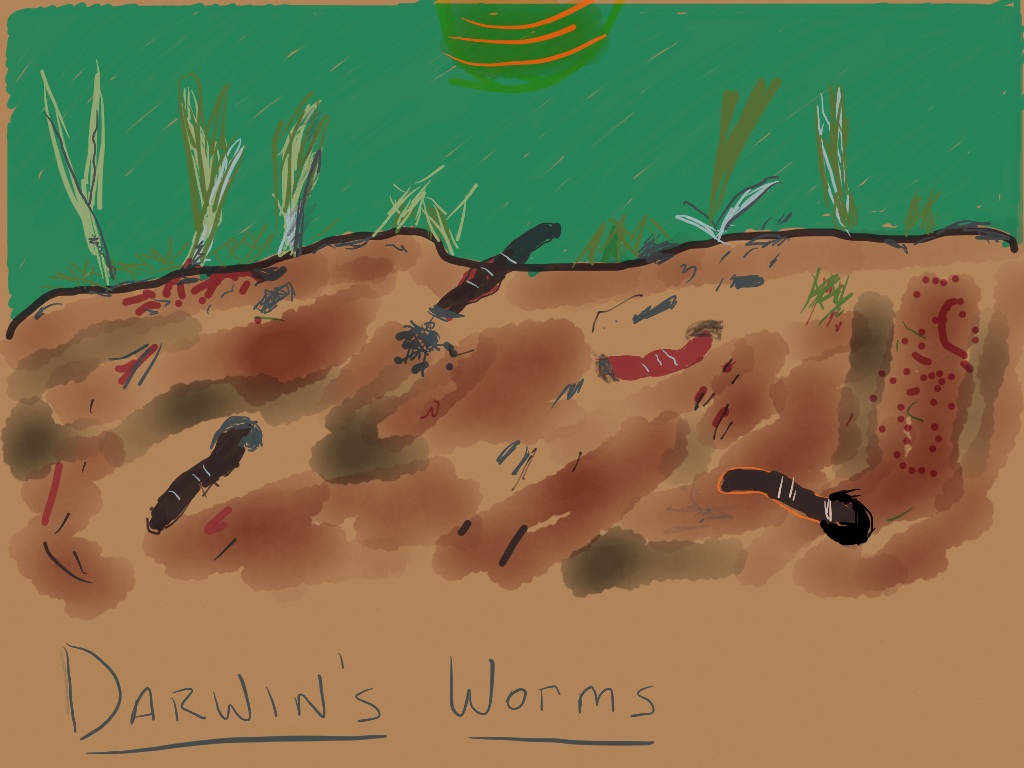
Book Review: Darwin’s Worms: On Life Stories and Death Stories by Adam Phillips

2013 jpbohannon

2013 jpbohannon

Adam Phillips begins his small book Darwin’s Worms with a story about the composer John Cage. Cage had attended a concert by a friend. In the program notes to the concert the friend had written that he hoped in some small way that his music helps to ease some of the suffering in our modern world. When Cage criticized this desire, the friend asked him if he didn’t think there was too much suffering in the world. “No,” replied Cage. “I think there is just the right amount.”

And so, Phillips writes, it is to remind us of and reconcile us to the fact that the amount of suffering in life is just the right amount that we turn to Darwin and Freud.

Darwin was very aware of the suffering in the natural world. Anticipating Freud on one level, he saw all organisms in a war for survival, thrust forward by an instinct to regenerate, adapting continually to a constantly changing environments. While the rest of his society were arguing, debating, proselytizing what it believed were the weightier implications of Darwin’s observations, Darwin studied the lowly earthworm, understanding its importance in the life of nature and, in turn, our own, (which he would argue is part of nature and not separate from). Flipping the usual symbolism on its head, removing the lowly worm from man’s symbolic last meal (“not where he eats, but where he is eaten”) and placing it at the continual meal that is life, Darwin points out that worms function in nature like plows, turning over soil and creating the soft and germinating loam that we take as the earth’s surface. As they struggle to survive (and “struggle” and “survival” are both key words in Darwin and Freud’s lexicon), worms leave behind shards of the past–that which they cannot digest–and form suitable soil for the plants that will provide for their future. Darwin states that:

“…it would be difficult to deny the probability that every particle of earth forming the bed from which the turf in old pasture land springs has passed through the intestines of worms.” That is a very large contribution to life on earth, powered simply by the worm’s instinctual drive to survive.

Later, Freud elaborated this drive, this instinct to survive and coupled it with its antithesis, the death instinct. At first, he termed them simply, the life instinct and the death instinct. Ultimately, he gave it the poetic designation of “Eros and Thanatos.” The life instinct is easy to understand. Man is driven to survive and to propagate. (“To be or not to be” becomes “to survive or not to be.”) The latter, however, the death instinct is a bit more difficult to get one’s head around. Freud believes that in the struggle to survive man also has a desire to cease that struggle–to stop the pain, if you will. However, the desire, says Freud, is also to be in control of that death. To make it part of one’s life story.

Later in the book, Phillips gives us passages from two separate biographies (“life stories”) of Freud. Both describe the same scene, Freud’s death (“death stories”). The scenes themselves are poignant, but what Phillips does with the passages is telling. In it, he shows Freud “controlling his death” the way that he thought all humans desired. In a way, it is a heroic portrait and an affirmation of Freud’s theories.

As Phillips concludes, in their work, both Freud and Darwin “ask us to believe in the permanence only of change and uncertainty… . to describe ourselves from nature’s point of view; but in the full knowledge that nature, by (their) definition, doesn’t have one.” In an work that analyzes mortality, death, and loss, Darwin’s Worms is a surprisingly upbeat and reassuring view of the world.

♦ ♦ ♦ ♦ ♦ ♦

Freud famously said that there are no such things as coincidences. But today as I opened my computer to begin writing this post about Darwin and Freud, the homepage on my computer opened to this New York Times article revealing the discovery of the fossil of a nearly complete skeleton of what is the earliest primate known, changing scientists’ time-line for the appearance of primates on earth by 8 million years, and giving credence to the growing theory that primates emerged first in Asia rather than Africa.
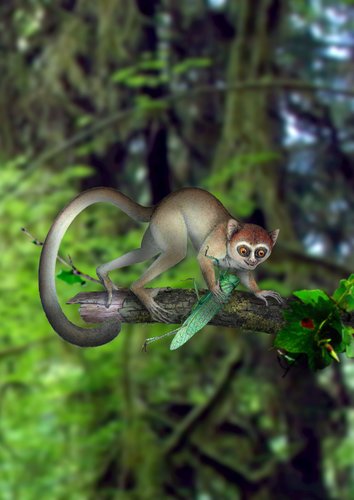
Xijun Ni/Chinese Academy of Sciences An artist's interpretation of a tiny primate that is thought to be the earliest known ancestor of nocturnal primates living today in Southeast Asia. from NYTimes 06/06/2013

Xijun Ni/Chinese Academy of Sciences An artist’s interpretation of a tiny primate that is thought to be the earliest known ancestor of nocturnal primates living today in Southeast Asia. from NYTimes 06/06/2013

How appropriate. Darwin would have been excited, for he saw great value in studying the simplest and earliest of life-forms, plankton, barnacles, and earthworms.


Movie Review: The 400 Blows by Francois Truffaut

400blows

HuluPlus is showing the entire “Criterion Collection” of classic films over the next 101 nights. My understanding is that the films remain available throughout that period, but a new one is added each night. This weekend I watched Francois Truffaut’s extraordinary debut film, The 400 Blows (1959). Shot in black and white with Hitchcockian lighting (Truffaut idolized Alfred Hitchcock and wrote the definitive study of him, Hitchcock), the film follows the plight of a young 12-year old boy as he moves from trouble in school to trouble at home to a juvenile detention center.

teacherfamily

francois_truffaut

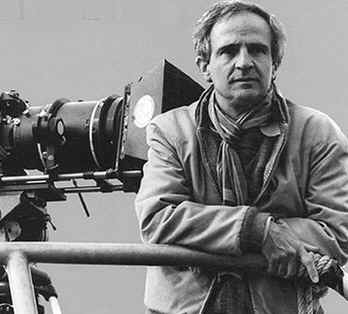
Francois Truffaut (1932-1984)

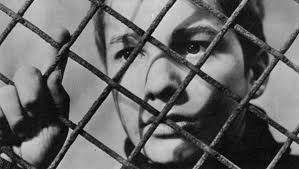
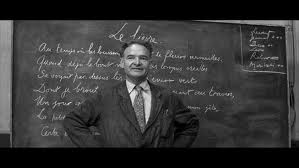
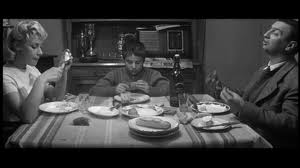
Young Antoine Doinel (Jean-Pierre Léaud) is scapegoated by his domineering teacher, brushed aside by his preoccupied parents, and disregarded by most of the world around him. The teacher has so stereotyped him that he cannot see the sensitive, impressionable boy within; his parents are bothered by his very existence. After several episodes involving both school and home, he runs away. His first night is spent in a vacant printing plant; his meal–a quart of milk that he has stolen. His next nights are spent hiding in a friend’s house where the two enjoy the freedom of the city–playing hooky from school, shooting pea-shooters at passersby from a tall window, smoking cigars, and going to the movies. (Indeed, movies are a big part of Antoine’s life as they were for Truffaut himself, on whose childhood this film is loosely based. Perhaps the happiest moment in the film is when Antoine and his parents go out on the town to see a movie. The boy is visibly entranced.)

After Antoine steals a typewriter from his stepfather’s office, he finds it difficult to hock, and so returns it. It is in returning it that he is caught by the night-watchman. His stepfather hands him off to the police where he is charged with theft and vagrancy. Antoine spends the night in a holding cell with a thief and three prostitutes, is transported with them to a larger jail, and then off to a juvenile “observation center.” While this is going on, we see his parents cede responsibility to the authorities; they have given up on him. (The scene of Antoine in the back of the police coach watching the bright lights of the Parisian night go flitting by is perhaps the most poignant in the film. When the camera closes in on Antoine’s usually stalwart face, there are big tears rolling down his cheeks.)

In the observation center, we learn more about Antoine’s life through his interviews with the center’s psychologist. Finally, during a soccer match, Antoine sneaks under a fence and escapes to the sea. The film ends with him on the beach, between ocean and land, staring enigmatically at the camera. We are left to wonder whether he stands there between childhood and adulthood? Between a life of crime and a life of productivity? Between a world of misery or a bit of joy?

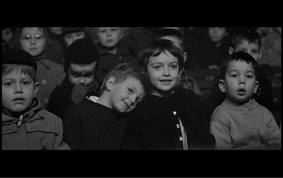
The performance of the 12-year old actor, Jean-Pierre Léaud, is unforgettable. More through his expressive face than his spoken words, he reveals a quiet strength developing around his innocence and fragility–the strength that will propel him forward rather than downward. In fact, Antoine is simply the featured child in a film with countless children’s faces–faces that are trusting and bruised, filled with elation and terror, marked by both wonderment and a premature world-weariness. Children in the classrooms, in movie theaters, in the playground, on city streets. There is a scene where a group of children are watching a puppet show. The camera stays focused for a good while on the varied and wonderful faces of the children watching. In a way, it is a heart-wrenching scene, for one cannot help but wonder, as we watch Antoine grapple with his fate, what will become of them all.childrn

Léaud continued working with Truffaut, making four other films with him and playing the same role, Antoine Doinel, in the progressing stages of his life. But it is in The 400 Blows that the young actor and his director most closely capture movie perfection.