Endings, beginnings, and start-overs

Before I began teaching at the school where I currently teach, I worked in an advertising agency. During the interview process at the school, the headmaster asked me what I thought would be the greatest difference. My answer was “Endings.”
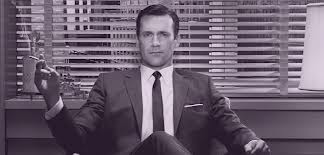
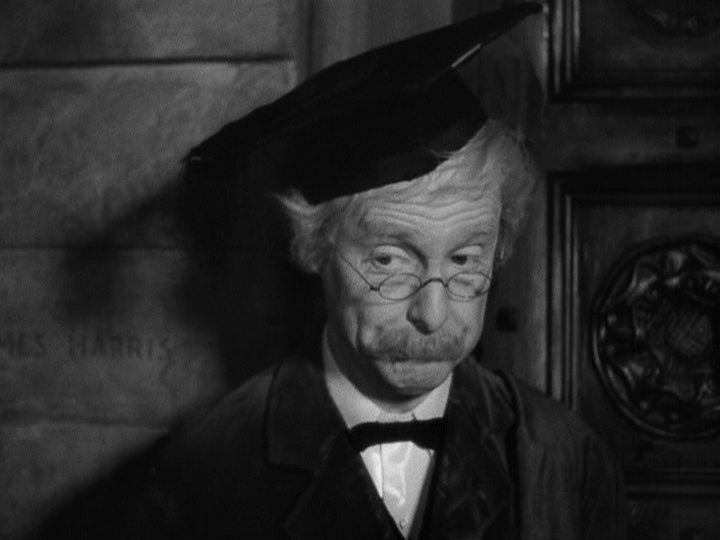
dandraper       mrchips

In the advertising world, it was not unusual for some print ad for which I had written copy  nine, twelve, eighteen months earlier needing to be re-tweaked  later. We are changing our direction, the headline is too “downtown,”  we want to downplay the price, emphasize the sponsor, etc., etc.  Things never were truly complete. They were signed-off on, yes. But they were never done with.

Teaching, however, is one of those professions where there are periodic endings, arbitrary endpoints where the slate is wiped clean, one can review what went right, rue what went wrong, and learn from both.

It is the end of May now, but I know that I and many of my colleagues are already plotting out projects and readings, weighing shifts in focus and shifts in technique, and (always on my part) constructing schemes to stay better organized in the upcoming school year.

And besides a chance to start anew, the end of a quarter, a semester, a school year offers a chance to bury the past and move forward. To begin again.

I used to have the Beckettian quote, Try Again, Fail Again, Fail Better, posted on the wall of my office. At the time, it was a personal mantra for me, for my own work. I was not thinking of teaching. This year it has become a buzzword/phrase throughout education.failbetter1
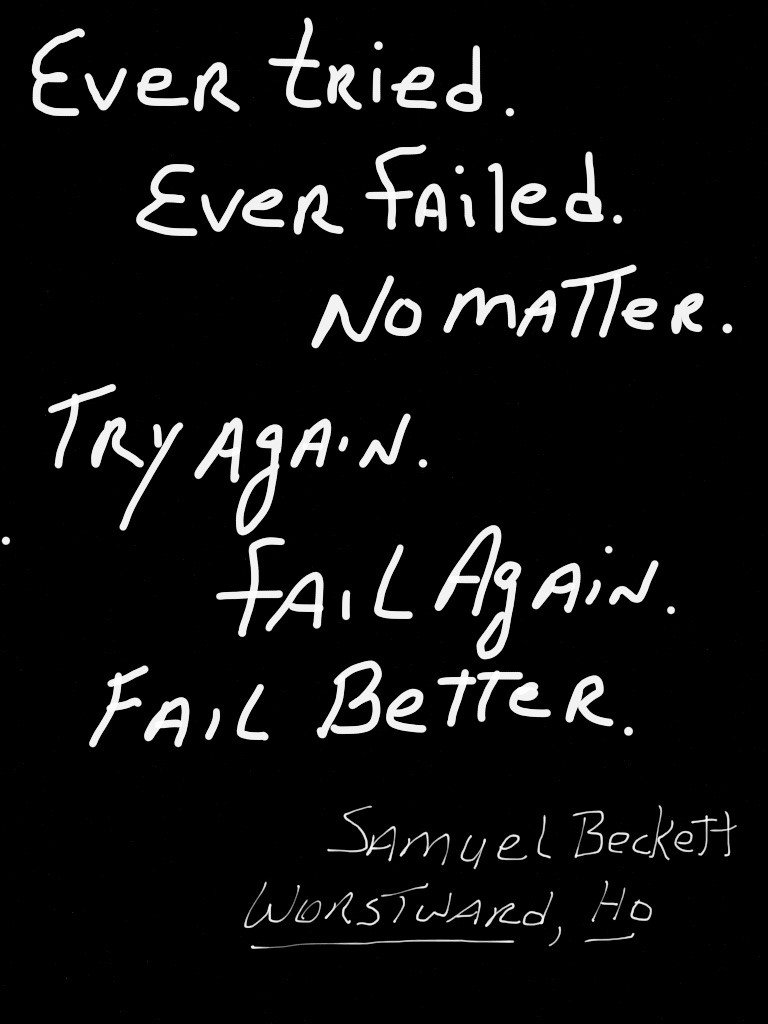
All over in print and on the web there are articles about the value of failing, about the necessity of failing, of the embrace of failing. And we as teachers know that as well as anyone–for ourselves, if not necessarily for our students.  For what is the end of each term but a chance to review our failings and resolve to “fail better” next time.

Now with the end of the school year, there is also the spate of “commencement speeches” that must be heard. Those talks given to graduating seniors in colleges and high-schools around the country that are especially inspiring, especially poignant, especially relevant.

David Foster’s Wallace’s commencement speech at Kenyon University has become legendary. For a long while it was shot all over the internet, and then capitalism took over and someone decided to release it as a book.  It has been abridged and made into a wonderful short film, This is Water. Like all great commencement speeches, this is wise, humorous, and relevant without falling into clichés. It emphasizes compassion and empathy, warns graduates of the sometimes benumbing world of adulthood, and charges them to make their world better by understanding it more tolerantly.

Lately, Neil Gaiman’s 2012 speech at the University of the Arts in Philadelphia has been parsed and tweeted, analyzed and blogged about. It has been highly criticized and highly praised. It is about creativity and about personal freedom. And, of course, at this time of year, it is all over the place and referenced almost every time you log on.

And even Jane Lynch, the wonderful actress who has appeared in so many of the Christopher Guest films and now stars in the television show Glee, even Jane Lynch keeps appearing in my in-box and my twitter feeds and blogs that I follow because of the inspiring speech she gave in 2012 to the women of Smith College.  It too is forthright and wise and commanding.

But it is the nature of graduation speeches to address an audience as they START OUT into something new.  One of the joys/perks of teaching is that one gets to START OVER.  My best and frequent companion these days is a 7-year old boy with whom I play a lot of games.  Often when something goes wrong for him in a game we are playing, he is the first to yell, “Start Over” (though just as often he simply  changes the rules!)  Who knew that the gaming-strategy of a 7-year-old is the same spark that keeps good teachers fresh, engaged and effective?
Book Review: Ancient Light by John Banville

Banville3Banville1Banville2

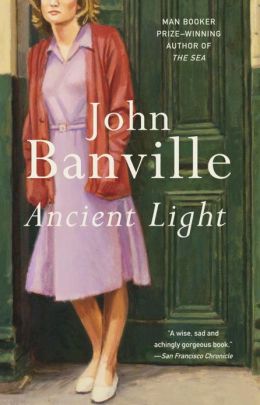
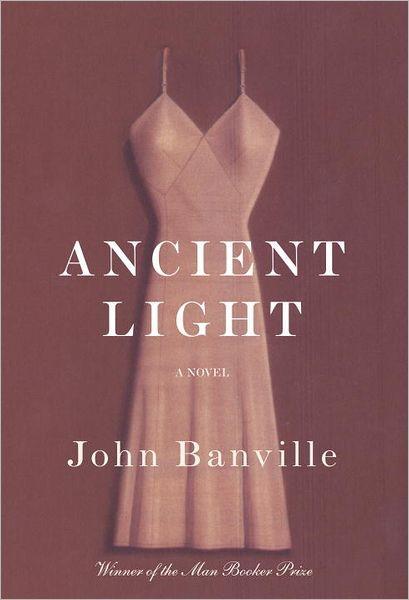
It seems appropriate that there are three book-covers for John Banville’s Ancient Light. For confusion–or perhaps”uncertainty” –is the appropriate word for the various threads that form the cloth of Banville’s novel. Weaving together three stories (at the very least), Ancient Light details the aging actor Alex Cleave’s misted memories and the challenges of his present life.

Particularly important in his mind are the affair he had when he was 15 with the 35-year old mother of his best friend, his daughter who killed herself in Italy ten years before the novel begins, and the young “movie-star”with whom he–a respected stage actor– is filming his first movie. And hovering in the background, drinking tea in the kitchen while Cleave writes these “memoirs” is his wife, Lydia, who is struggling with their daughter’s death in her own way.

So who are the women represented on the book covers? Is that Mrs. Gray, his first love standing in front of the shop? Or his daughter waiting impatiently for his arrival? Is that the actress Dawn Davenport’s slip? Or Mrs. Gray’s? Or his daughter’s? And who can that be dancing? Mrs. Gray and young Alex seems obvious. But could it also be the characters that Cleave and Davenport are playing in their film? Or his daughter and the mysterious man she was working for (and whose child she was carrying) when she flung herself into the rock-strewn sea?

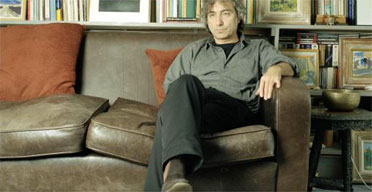
John Banville photogaph Derek Speirs for The New York Times, 2005

John Banville
photograph © 2005, Derek Speirs for The New York Times

That we can not be sure is part of the joy and wonder–and admiration–one feels in reading Ancient Light. Banville is an exquisite writer–and I do not use that word lightly. Character description, dialogue, setting, interior life–all are rendered with keenly sensitive language and thoughtfulness. At one point, the sky is the color of “wetted jute“; at another, it is described as “a layering of bands of clay-white, peach, pale green, all this reflected as a vaguely mottled mauve wash on the motionless…canal.” Some of the writing is heart-wrenching in its perfection; some is amusing. Here is Cleave describing a “researcher” sent by the movie company to help him with his role:

Billie, however, is obviously a native of these parts, a short pudgy person in, I judge, her middle to late thirties. She really is of remarkable shape, and might have been assembled from a collection of cardboard boxes of varying sizes that were first left out in the rain and then piled soggily any old way one on top of the other. The general effect was not improved by the extremely tight jeans she was wearing, and the black polo-necked jumper that made her large head look like a rubber ball set squarely atop those precariously stacked cartons.

Here is what the aging Alex has to say early about love:

I should like to be in love again, I should like to fall in love again, just once more.

He is aware of both the poignancy of those words and the sadness of the thought in the presence of his wife.

What Ancient Light is most surely about is the past. Cleave–believing he is nearing the end of his career–is enamored by it, by the love affair with Mrs. Gray (he notes the inexactness of this phrase) and by the death of his daughter.

Because I am getting old and the past has begun to seem more vivid than the present, he states, and then later, when he learns of what he mis-remembered, he concludes that often the past seems a puzzle from which the most vital pieces are missing.

When in Italy with Dawn Davenport he meets a mysterious Argentinian, (a ghost? his doppelgänger?) who over a bottle of wine says this too him:

“Even here,” he said, ” at this table, the light that is the image of my eyes takes time…to reach your eyes, and so it is that everywhere we look, everywhere, we are looking into the past.”

But the past is slippery for both Cleave and the memoir he is writing. He notices instances when the progression of time seems to slip, to miss a cog:

There are moments, infrequent though marked, when it seems that by some tiny shift or lapse in time I have become misplaced, have outstripped or lagged behind myself.

Cleave’s stories ultimately come together in subtle and satisfying ways. There are coincidences, but Cleave does not believe in coincidences. There are “apparitions,” though Cleave is reluctant to but wishes to believe in an afterlife. (Twenty years ago, Banville did write a novel Ghosts.) There is doubling and there are doubles. There is a subtle knowledge of and reference to Greek mythology, and a faint feeling that the ancient gods are still at work in the lives of these mortals. And it is all done in a lush, rich style that is the very antithesis of modernity’s spare and sparse writing.

John Banville is an author who writes intelligent and dense books that deserve a much wider readership. His novel The Sea won the Man Booker Prize (much to the dismay of critics who felt it wasn’t commericial enough.) And lately he has also been writing detective novels under the pseudonym Benjamin Black. And I just learned, when I mentioned Ancient Light to a friend that this novel is in fact the third of a loose triology featuring Alex Cleave, his wife Lydia and their daughter Cass.

I will have to hunt them down.

Movie Review: The Angels’ Share by Ken Loach

I had wanted to like The Angels’ Share. In fact, I wanted to love it. It had all the makings of a great film: a master artist in Ken Loach, a lovable though incompetent gang of petty criminals, Scotland both urban and rural, and a plot involving Scotch whisky.  It had won the Jury Prize at Cannes in 2012 and even featured that catchy old tune by The Proclaimers, “500 Miles.”  And yet something felt flat.

Robbie (Paul Brannigan) is a soon-to-be-father with severe “anger management” problems. He is before the judge on assault and battery charges against three thugs who spend much of the film trying to get revenge. (It’s a tribal feud that can be traced back to their fathers.)  His pregnant girlfriend, Leonie (Siobhan Robinson) is about to deliver, and her father and his brothers want Robbie out.  The father calls Robbie a “waste of space” and offers him £5000 to move to England and away from his daughter.  While prison probably would be safer for him, the judge orders him to 300 hours of “community service.”

“Your record is appalling. For much of your short life you have behaved like a thug,” proclaims the judge to Robbie, and then sends him out into the rough life again, where that same thuggery is waiting its turn to do him in.

It is there, in community service, that he meets his gang of co-workers: Mo (Jasmine Riggins), a kleptomaniac who was arrested walking out of a store with a giant Macaw and called the arresting officer a “grumpy twat”; Rhino (William Ruane), arrested for urinating and defacing the statues of public dignitaries; and Albert (Gary Maitland), a profoundly stupid man, who was arrested for disrupting public transportation (he drunkenly fell onto the rail tracks). For all of them, life  is hopeless; Robbie, alone, sees hope in his newborn son, Luke, albeit a hope tinged with fear that the world he knows will bring down his son as well.

Mo, Rhino, Robbie and Albert after their heist.

The “Master Criminals” of The Angels’ Share

Having to oversee this very  incompetent and hopeless crew is Harry (John Henshaw) who has the patience, humor and compassion to see what a sorry lot he must deal with and how the justice system–and society in general– is doing none of them a favor. After Harry drives Robbie to the hospital where his son is being born and where Robbie is refused entrance by Leonine’s family and brutally pummeled by her uncles, Harry tends to Robbie’s gashes and injuries, brings him home, and in bracing him up offers him a glass of whisky.

Harry and Robbie (John Henshaw and Paul Brannigan)

Harry and Robbie (John Henshaw and Paul Brannigan)

Robbie does not drink–he has enough problems without that–but he becomes intrigued with the whisky: the ratings, the histories, the auctions, the distilling process, and the distinctions. And he becomes very deft at rating and describing whisky.

It cannot be an accident that  “whisky,” a word that comes from the Scottish Gaelic uisge beatha, means “water of life,” for that is exactly what it becomes in The Angels’ Share.  For the plan that Robbie hatches–involving a cask of highly prized whisky–will become, for all of them, the chance for a better life…or a further descent into their downward spiral.

Ken Loach has been described as a social-realist director and his films routinely look at those whom society has written off.  His world is not the violent underbelly as portrayed by Guy Ritchie or the taut, impoverished world of Mike Leigh, but a world in which hope does exist and brightness and compassion. This is not to say that everything in Loach’s vision of Paul Laverty’s screenplay is Pollyannish–by no means, no.  Robbie and his mates live in a violent, bleak world. But Loach always tends to offer a glimmer of hope.

Certainly, The Angles’ Share has its own share of faults and inconsistencies, but it is a likeable film nevertheless.  I simply didn’t love it.

Watch and enjoy the trailer below:

Quote of the week #5: May 26, 2013

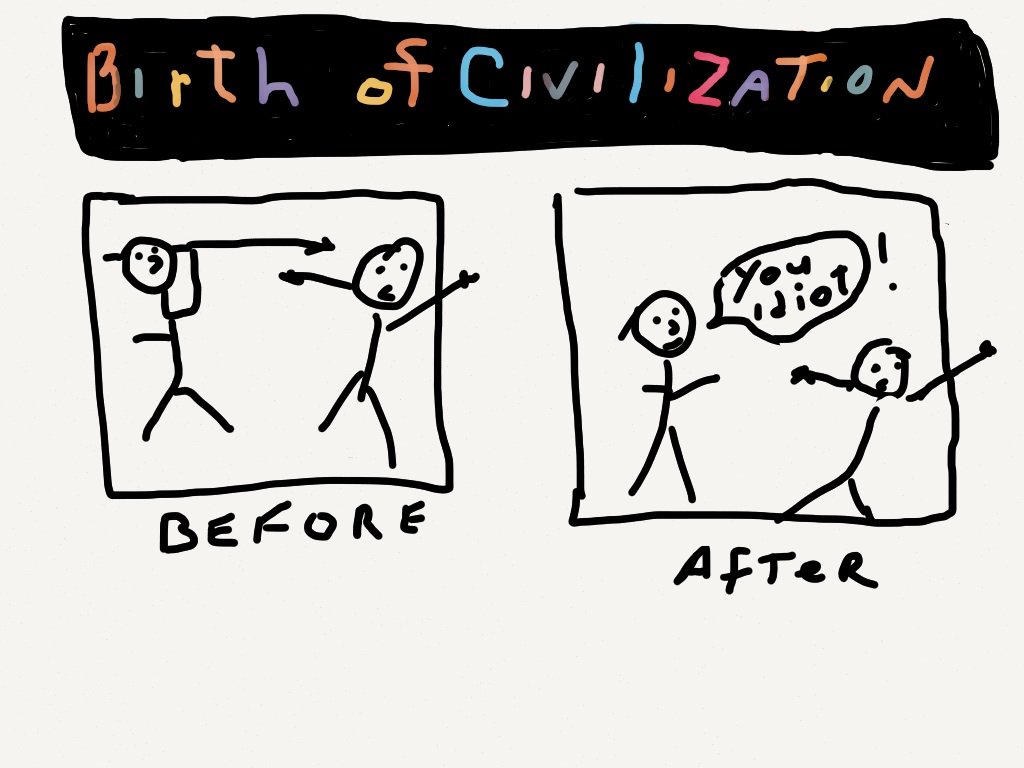
“The man who first flung a word of abuse at his enemy instead of a spear was the founder of civilization.”

Sigmund Freud (tweeted by @alaindebotton)

illustration 2013 by jpbohannon

illustration 2013 by jpbohannon

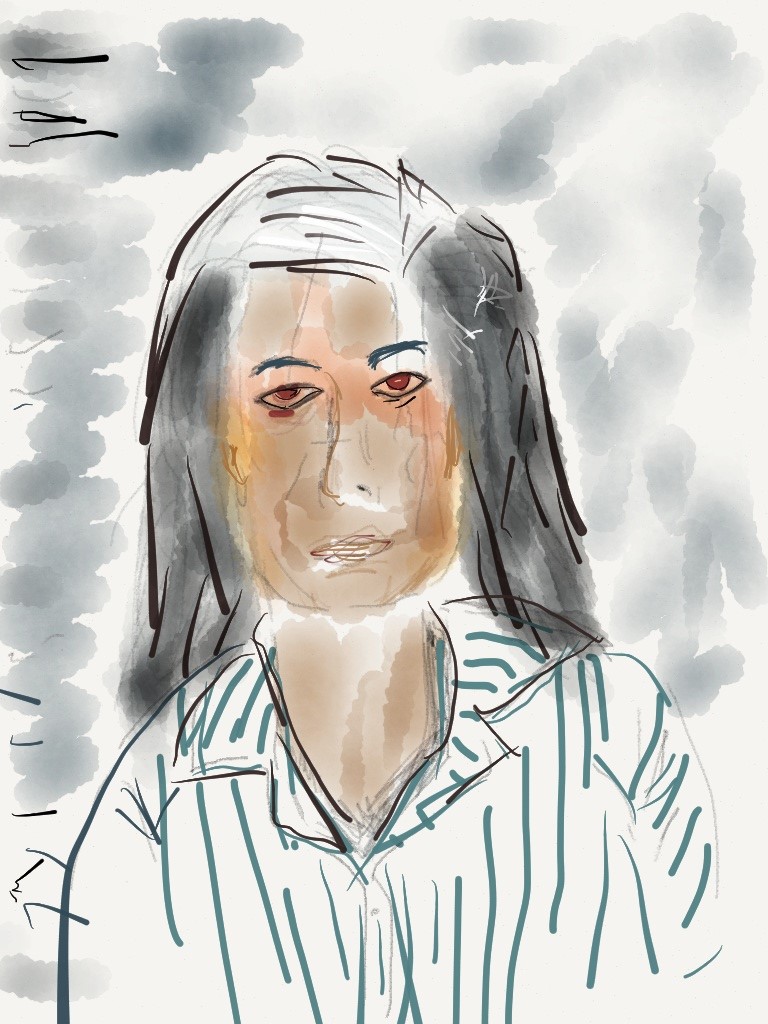
Book Review: Reborn: Journals and Notebooks 1947-1966 Susan Sontag

illustration by jpbohannon 2013

Susan Sontag (1933-2004)
illustration by jpbohannon 2013 (based on painting by Juan Bastos)

There is a danger in reading memoirs, diaries, journals. Certainly, there are times when our angels are shown to have feet of clay. Or other instances, when we weigh the turmoils and angst of a particular life with the end product that impelled you to read the memoir in the first place.

But with Sontag it is quite, quite different.

Next to even her young self, I feel so inadequate, so shallow, so wasteful of time.

Here is a young woman–14 years of age when the journals begin–embarking on a intellectual career that would put most of us to shame. Her reading lists, her “to-do” lists, her debates with herself, her analysis of events, readings, concerts and people she meets, her experiences, all are more fervent, more intelligent, more thoughtful in the years between her 14th birthday and her 30th, than mine have been for most of my life.

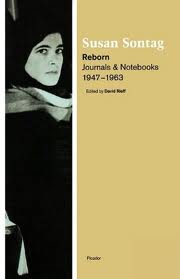
Susan Sontag bookcover

I teach a group of extremely bright 18-year old boys. They have great intelligence, and some are quite creative. But every so often they need to be reminded that their superior intelligence is frequently measured within the very small pond of our school.  Here’s what I read them from Sontag’s journal:

…Yet we do exist, + affirm that. We affirm the life of lust. Yet there is more. One flees not from one’s real nature which is animal, id, to a self-torturing externally imposed conscience, super-ego, as Freud would have it–but the reverse, as Kierkegaard says. Our ethical sensitivity is what is natural to man + we flee from it to the beast…

I ask them to describe the person who would write this in his or her personal journal.  And they are always far off…in both gender and age.  Sontag wrote this (a snippet of a much larger journal entry) two weeks after she had turned 17!  Already her depth of reading and understanding and active thoughtfulness is evident.

Immediately in this first volume of the journals, one meets a brilliant, thoughtful intelligence. She attended Berkeley at the age of 16, transfered to University of Chicago, married Phillip Reiff–a sociology professor–at 17, taught at the University of Connecticut when she was 19, and attended graduate school at Harvard, where she got her degree in philosophy and theology. And throughout these years, she recorded her thoughts and criticisms and interpretations, as well as her fears, her doubts and her insecurities.  As her marriage began to falter, she received a fellowship to Oxford and then moved to Paris. When she moved back to New York in 1959 (26 years old), her marriage was dissolved and she had gained custody of her son. Established in New York, she began teaching at various colleges, completed her first novel, The Benefactor, and witnessed her reputation as part of New York’s  intelligentsia begin to grow.

These are the years covered in the volume. Aside from the inquisitiveness, interpretation, and analysis of what she reads, sees and watches (she was a rabid film-goer), there is the struggle of understanding who she was. The marriage was unsatisfying, the lovers often hurtful, and in reading the journals we see a young woman trying to discover herself and come to terms with her own individuality, her own bi-sexuality, her own identity. There are times when one feels she is too hard on herself…when one wants to warn her, NO, this is going to end bad, but then again, one can’t.

Beginning when she was 14 and ending when she was 30, the journals are remarkable for their honesty and the peek into her rigorous mind.  But at the end, one is moved by the ever-going struggle between her sexuality and her intelligence, by the vulnerabilities and insecurities she reveals in her two major love affairs with Harriet Sohmers Zwerling  and Irene Fornés.  For her extraordinary mind struggled continually to understand the extraordinary pull of the flesh.

Her last two entries for 1963 read:

The intellectual ecstasy I have had access to since early
childhood. But ecstasy is ecstasy.

Intellectual “wanting” like sexual wanting.

♦     ♦     ♦     ♦     ♦     ♦

Reborn is the first of a proposed three volumes of journals. The next volume–As Consciousness Is Harnessed to Flesh– covers the years 1963 to 1964, when Sontag develops her reputation, her political activism, and her writing. It is now on my “to-read” list.

Quote of the week: #4 May 19, 2013

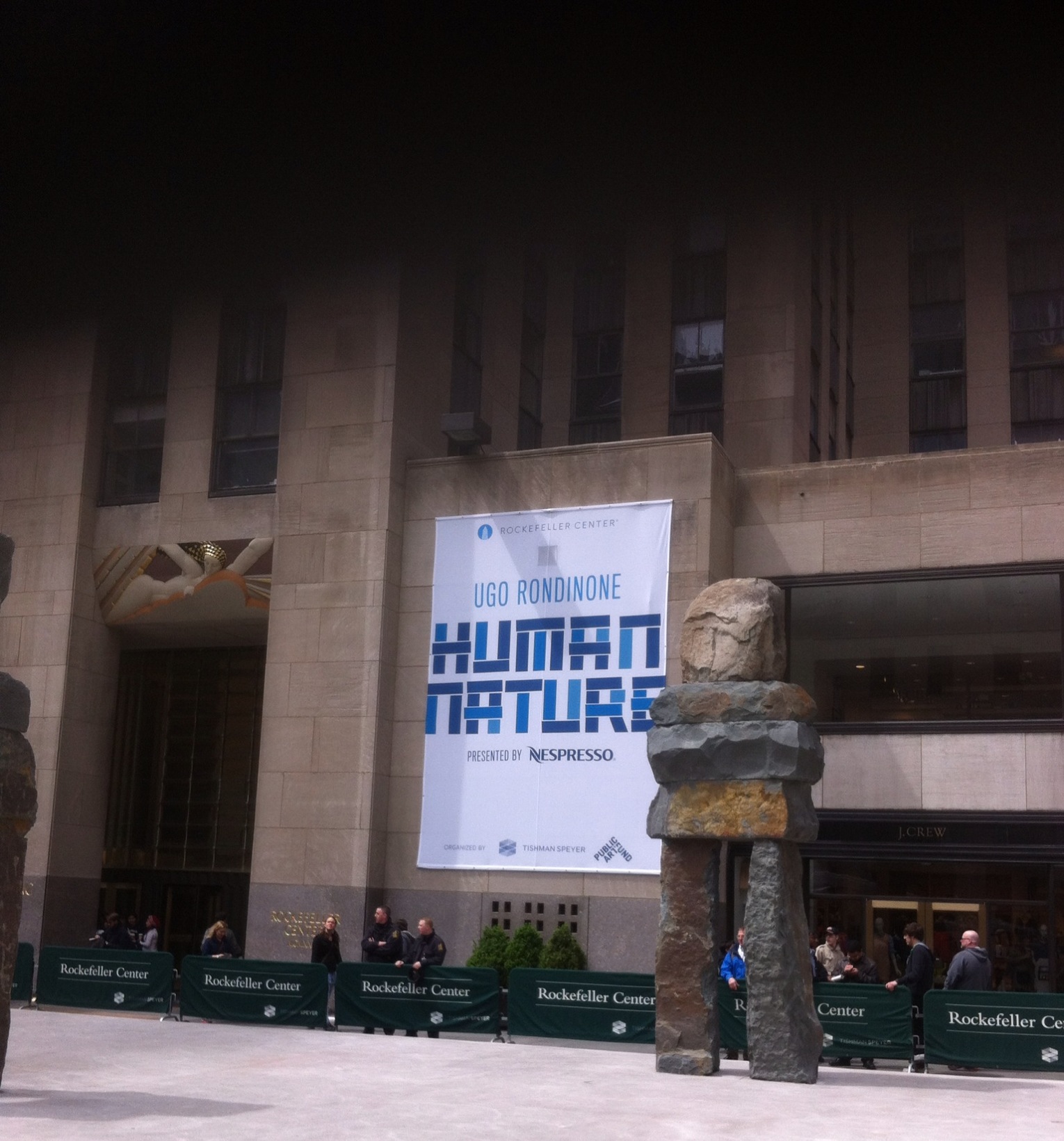
“…even in an era of touchscreens and interactive spectacle, it’s human nature to feel awed and inspired in the presence of a giant rock.”

Robin Cembalest,  Artnews. “The Gentle Giants of Rockefeller Center”

Ugo Rondinone's "Human Nature" Installation, Rockerfeller Center, NYC photo: 2013 jpbohannon

Ugo Rondinone’s “Human Nature” Installation, Rockerfeller Center, NYC
photo: 2013 jpbohannon

Ugo Rondinone's "Human Nature" Installation, Rockerfeller Center, NYC photo: 2013 jpbohannon
Ugo Rondinone’s “Human Nature” Installation, Rockerfeller Center, NYC
photo: 2013 jpbohannon

Movie Review: Something in the Air: Born Too Late

The actual title of Olivier Assayas’ new film is Après Mai–a reference to the months following the student and worker demonstrations of May 1968 in France.  And that, in many ways, is the focus of the film: young, sincere characters trying to maintain the commitments of 1968, but somewhat too young still to be a real part and unprepared for the crashing ordinariness of the life to come.

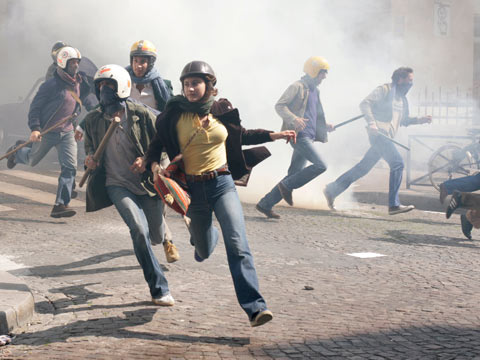
The film begins with high-school students’ listening to their teacher’s monotonous reading of Pascal’s Penseés. Within minutes of screen time, these same students are scrambling away from overzealous police dispelling a student demonstration.  The life of the classroom and their political/social/activist lives are much, much different. The teachers give them Pascal and they are reading Gregory Corso, Chairman Mao and listening to Phil Ochs.

Early riot scene in Something in the Air

Early riot scene in Something in the Air

I had a friend who was a student in Paris at that time in 1968.  When I asked her about it, she sort of shrugged.  “The only difference,” she said,  “was that afterwards we were permitted to call our professors tu rather than vous.

But for Gilles, Alain, Christine, Rachkam la Rouge, they want very much for the  spirit of May 1968 to be carried on, to be carried through.  They believe that May was not the climax but the beginning of the revolution. Stuck in their sleepy village outside of Paris, the students join political parties, pack debating halls, distribute the radical free-press, and organize guerrilla graffiti forays against the local establishment and police.  One of these night raids goes wrong and a guard falls into a coma when hit with a bag of cement mix.  The students decide to scatter.

Gilles (Clémont Métayer) and Christine (Lola Créton) hitch up with a radical collaborative on its way Italy where they become lovers and later part as she continues with the collaborative to make a film on Italian workers.

Christine and Giles on the road to Italy

Christine and Giles on the road to Italy

gilleschristine

Gilles (Clémont Métayer) and Christine (Lola Créton)

Gilles is torn in his radicalism–for his passion is art, and he is not convinced that his art must always serve the “cause.”  Alain (Felix Armand)  and Leslie (India Menduez), an American he meets in Rome,  go East to Afghanistan, he an artist and she a dancer looking for spirituality. Disillusioned over time, they all return to France, and ultimately to Paris.

But there is another story running through Gilles life.  Of course, in a story of a teenage-boy there needs to be friction between him and his father, a successful movie director.  While there is never dramatic conflict between the two, as he grows, Gilles is able to tell his father how superficial and wrong-headed he believes his film adaptations are.  (The father makes adaptations of George Simenon’s Maigret novels.)

But the more important sub-plot is about Gilles and his true love, Laure (Carole Combes).  When she first appears early in the film, there is a jarring film switch from the smokey riots of their village to an Edenic, woodsy scene. She has come to meet Gilles and is in flowing white and the sun illuminates both her and the shimmering foliage around her.  I felt however that I was in a 1970’s shampoo advertisement and that any minute I would hear Donovan singing “Wear Your Love Like Heaven.”

Gilles and Laure

Gilles and Laure

Laure is a bit more worldly than Gilles and his mates, and her wealthy bohemian parents are taking her to London, as the father is the light-man for a fledgling rock band. She is willowy and bright and airy and full of sunshine.  And she leaves a mark that even Christine knows she cannot undo.  Later, when his father informs him that she has returned, he ventures out to her parents’ chateau for a party.  Throughout the party, I was reminded of when the Stones had moved to the south of France in the early ’70s  and had worked on Exile on Main Street.  There was the same louche, blowsy freedom, the same drug use, the same music, the same comings-and-goings.

The party is important, though I am not positive how it ended.  Gilles leaves. Laure jumps from a burning building and that is it.

And then real life steps in.  Gilles is a “go-fer” for his father’s film company (although a left-wing broadsheet has begun using his drawings), Leslie abandons her “spirituality” and returns with her father to New York and Julliard,  Rackham le Rouge leaves the Trotskyites for inconsequential anarchism, and Christine discovers that the earnest leftism of the man she is living with and the collective they are part of does not carry forward to women.

Olivier Assayas–who wrote and directed–gives us a nostalgic film, a film that even looks from an earlier period. The colors, the lighting, the cutting, the soundtrack all capture a particular moment in time.  And the two leads, Créton and Métayer are likeable and familiar–we do care about them and their decisions.

Frequently in the film, we watch characters watching films–and these films within a film are rendered in wavering, sincere, gaudy, and innocent beauty.  (Perhaps part of that innocence is the knowledge in hindsight that much of it is not going to last.) Indeed, film and film-making is such an integral part of the story that now I am not sure if Apres Mai (Something in the Air) isn’t a dissertation on film of that era disguised behind a story of that era.

In the end, Gilles is working on a science fiction film in London that features giant lizards and Nazis (and Dolores Chaplin, the granddaughter of Charlie and Oona!); Christine’s collective is releasing its first commercial documentary on Italian workers (though free to workers’ unions) and Gille’s dad is still turning out the Maigret mysteries.  However, Apres Mai ends with a haunting, new wave, almost psychedelic clip of a willowy woman walking towards the camera.

We recognize her by the end.

♦     ♦     ♦     ♦     ♦     ♦

And for a treat, here’s the Stones live in 1972 doing “Tumbling Dice” from Exile on Main Street.

Adam Phillips: Promises, Promises: Essays on Psychoanalysis and Literature

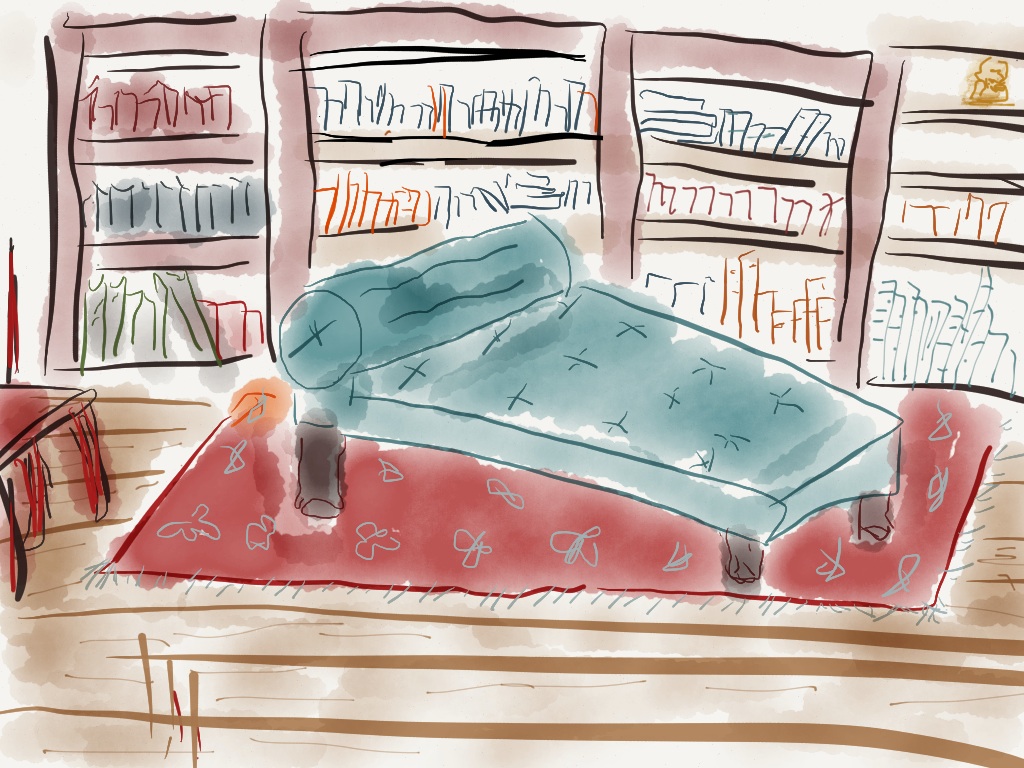
illustration by jpbohannon

illustration by jpbohannon, 2013

In the office of a colleague a while back I noticed a towering pile of books on the desk, as if he were re-arranging his book shelves or carting out old titles to a different location.  But no,  it was his “to read” pile, and it was impressive and imposing.

Among the authors gathered, there was one whom I had not heard of–Adam Phillips. A psychoanalyst by trade–specifically a children’s clinical psychotherapist–Phillips read literature at Oxford, specializing in the 19th century British romantics.  And as the “science” of psychoanalysis has always been symbiotically tied to literature,  a degree in literature seemed the perfect training ground.
Adam Phillips photo: Andy Hall

Adam Phillips
photo: Andy Hall

And so I decided to dive in.

Of Phillips’ seven or so titles, Promises, Promises: Essays on Psychoanalysis and Literature seemed a reasonable starting point. And, the frantic busyness at the end of the school term made a collection of independent essays more attractive and less of a task.
 

“As poets struggle to find a place in contemporary cultural reality, psychoanalysts, implicitly or explicitly,  are still promoting the poets as ego-ideals.”

Philips, “Poetry and Psychoanalysis”

The crux of Phillips’ essays is the mutual relationship between literature and psychoanalysis…and psychoanalysts’  established reverence for creative writers. Literature, according to Freud, gave birth to psychoanalysis and psychoanalysis often gives resonance to literature.

And so go his essays.

He begins with the essay “Poetry and Psychoanalysis” and brings in the young poet Keats–a former medical student–who famously stated that science ruined poetry when Newton reduced the rainbow to a prism.  Not so, Phillips says, for poetry (and you can read “creative writing” where Phillips says “poetry”) can do what the sciences cannot.  Indeed, much of his argument is that the science of psychoanalysis is bringing understanding to the vision of poetry.  Freud said, Phillips tells us, that the poets had long before discovered the unconscious, and that he only had devised a way to study it.

Phillips graciously gives way to “poetry” saying that the short history of psychoanalysis has been an attempt to study the unconscious that poetry reveals. And since both poetry and psychoanalysis–the “talking cure”–depend on language, and often, coded language, the two are intrinsically welded together.

And so he is off.

There are marvelous literary essays on Hamlet, Hart Crane, Martin Amis,  A.E. Housman and Frederick Seidel, all informed by an accessible shading of psychoanalytic theory, as well as masterful psychoanalytic pieces on Narcissism, Jokes, Anorexia and Clutter, informed by a broad knowledge of literature/poetry.  It is Phillips’ contention–his modus operandi, if you will–that the two disciplines can or should depend on each other for clarity.

Hamlet-and-skull-on-stampThe collection ends with the title piece, “Promises, Promises.”  In it, Phillips examines the “promise” that both literature and psychoanalysis offer. He writes:

“If we talk about promises now, as I think we should when we talk about psychoanalysis and literature, then we are talking about hopes and wishes, about what we are wanting from our relationship with these two objects in the cultural field.”

What does reading literature promise us?  What does analysis promise us?  Phillips contends that both promise us, to a degree, “the experience of a relationship in silence, the unusual experience of a relationship in which no one speaks.”  Of course, ultimately, the analyst must speak.  But it is in that silence that often we become “true to ourselves.”

Reading psychoanalytic theory can often be dry and dusty, but Phillips’ writing never is. Bringing in an encyclopedic knowledge of both creative literature and psychoanalytic literature (and, at times, arguing that there might not be a difference),  Phillips imaginatively and wittily plumbs past and current trends, canonical and esoteric literatures, clinical practice and private correspondence to bring to light his vision of psychoanalysis and literature’s potential and promise.

Quote of the Week: #3 May 12, 2013

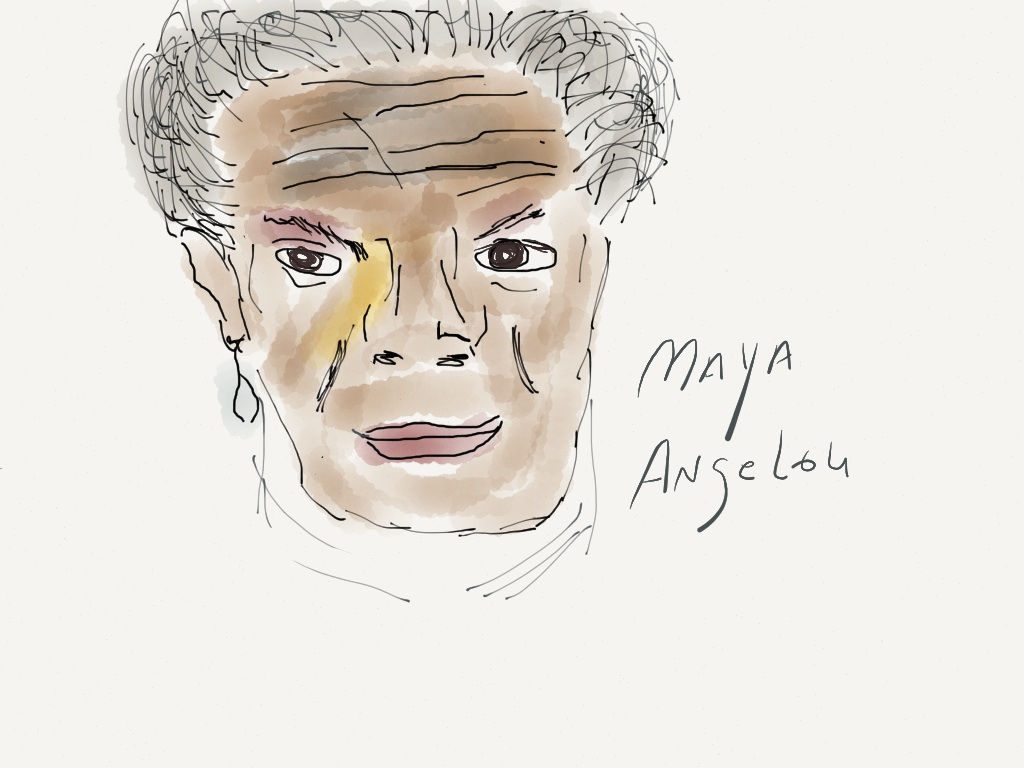
“Be certain that you do not die without having done something wonderful for humanity.”

Maya Angelou, Letter to her daughter

Maya Angelou 2013 jpbohannon

Maya Angelou
illustration by jpbohannon © 2013

Quote of the week: #2, May 6, 2013

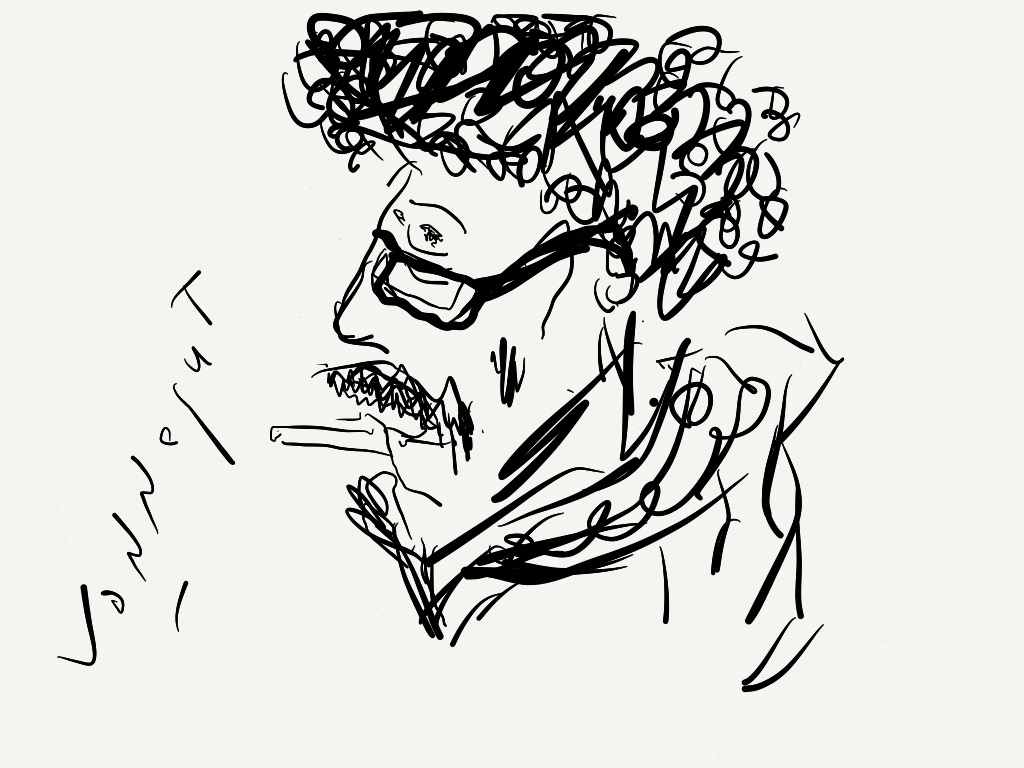
“…The arts are not a way to make a living. They are a very human way of making life more bearable. Practicing an art, no matter how well or badly, is a way to make your soul grow, for heaven’s sake. Sing in the shower. Dance to the radio. Tell stories. Write a poem to a friend, even a lousy poem. Do it as well as you possibly can. You will get an enormous reward. You will have created something.” — Kurt Vonnegut, Jr. A Man Without a Country, 2005

Kurt Vonnegut, 1922-2007. 2013 jpbohannon

Kurt Vonnegut, Jr., 1922-2007
illustration by jpbohannon © 2013