Thursday Music Review: Great music and then musings on greatness.

I went to see a band tonight down at a local pub, The Dark Horse, known more for soccer clubs and televised soccer games than for music. But some friends of mine are in this band and I had to see them.
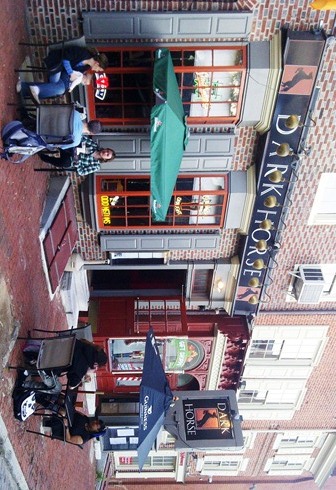
The Dark Horse Pub, Philadelphia, PA

I have played with two of the members before in an Irish band, but this new band, The Flashbacks, is just that …a flashback to several decades earlier.  The band started out as a Beatles cover band, but then expanded with a lot of Steely Dan, Yardbirds, Stones, Kinks, before settling into CSNY, Beach Boys, the Dead, Eagles, etc. (They tout themselves as the second British Invasion, but they cover a fair amount of  American bands as well.)

And the reason they can cover this music is that they are DAMN GOOD!  The harmonies are precise–three-part most of the time–and the musicianship is impeccable.  They are seasoned players who have, for the most part, known each other for a very long time and they play to each others’ strengths and build on it. The youngest member–Joe Manning–is just a pup compared to the others, (he wasn’t born when these guys first started playing together) but he is one of those wunderkinder who can play anything and play it with perfect beauty, wit and definition. If he had been alive forty-five years ago, they would have called him a god.

And so this got me to thinking….

There are an awful lot of very talented people out there. I could go see scores of really talented bands or individuals every night of the week in my city alone.  Multiply that by every other city, burg, town. How many great musicians are there in Dublin? Edinburgh? Berlin? London? Madrid? Cairo?  Innumerable.

I know very talented artists, amazing writers, magical poets, extraordinary designers who day in and day out work at their craft (or because of the ways of the world, work at their “day-job” and then work at their craft) and create wonderful pieces. I am sure you know similar people in your parts of the world. What separates these artists from those who’ve become household names?

Luck, certainly plays a role, but a very minimum one.  Being at the right place at the right time, meeting someone who can truly help, etc. are all fortunate but are not the thing that separates the very good from the great.  And mere technique is not sufficient–there are thousands of technically gifted people.

I believe it is focus, focus on one’s calling at the expense of all else.
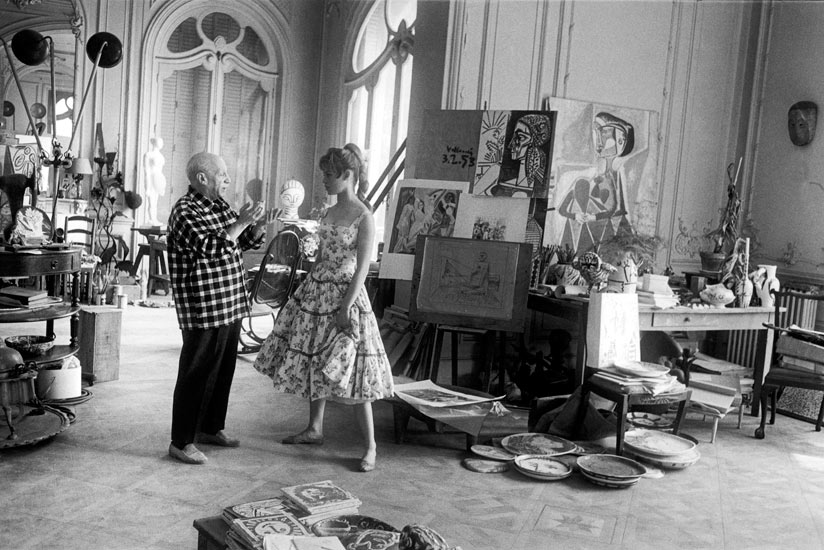
Picasso and Bardot. How great is that?
re-posted from http://weekendspast.com

I remember having a discussion with my father once. He was bemoaning the way that Picasso treated women, discarding them indiscriminately whenever it suited him. I argued that it was a symptom of his genius. (He challenged my assumption that Picasso was a genius.)  Genius, I said, uses everything it comes across. There is nothing else that matters but his or her art, his or her genius–other people and other people’s emotions included.

The conversation came up again this week, when someone remarked on seeing the television movie Hemingway and Gellhorn on what an unlikeable cad Hemingway actually was.  Again, it is all ego wrapped around his art…or maybe the opposite, all his art is wrapped around his ego.

The attitude can be summed up in the clichéd saying “It’s his (her) world, we’re just living in it.”
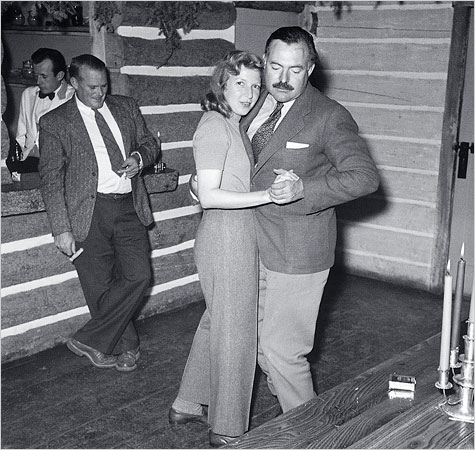
Hemingway and Gellhorn in Sun Valley, Idaho.

Who else has stepped on everyone to further their art–or in the furtherance of their art?  We could cite both Shelley and Byron, who stepped on and used everyone in their belief in their own genius and the entitlements it should deserve.

But this is not only in the arts.  Steve Jobs may have been a genius but he was hardly a likeable person. And Bobby Fischer, arguably the greatest chess player ever, became more than simply an egocentric genius. He became a misanthropic, hate monger.

Mozart–a man who could create entire operas in his head without touching an instrument–was certainly egocentric, almost to an infantile degree.

So what about all your acquaintances who are truly talented, gifted people? Is it that they are decent human beings whose company you enjoy, whose interest in you and others around them is obvious, that keeps them from reaching the pantheon of genius.

And would you have it any other way?  I know I wouldn’t!  I too much enjoy the people who are creating wonderful, beautiful things–like the middle-aged Flashbacks at The Dark Horse pub–and who are still wonderful human beings, interested in the world and the people around them.

The etymology of the word “amateur” comes from the word Latin word “amat” –to love. Whether one is paid or nor, celebrated or not, it is the love of doing, making, performing something that is good and beautiful that makes for a better world.

I’ll go see the Flashbacks, the next time they play!

A quibble with electronic publishing

I’m a little worried.

Just a little worried.

The majority of things I’ve had published are in print. They  haven’t earned me a fortune–five dollars here, twenty dollars there–but a least I have a copy of them. Actually, two copies of them, because most of the ” legitimate” small journals pay in copies. They publish your story, poem, essay and pay you with two copies of the issue in which you appear. Two copies placed with the others in a chest at the foot of my bed.

And then along comes the Internet. Instant gratification. Electronic submissions. Electronic responses. Usually much quicker than traditional ways.

The best story I think I’ve ever wrote was published on line. “Nadja and the Dream of Teeth” first appeared through the Dublin Writer’s Workshop in the journal The Electric Acorn.

Then it was published electronically by The Richmond Review (UK). The editor at The Richmond Review was wonderful. She asked questions, made good suggestions, and, overall, made me tighten things up.  All through e-mails. From across the pond. This was the internet at its best.

And then it appeared electronically. It was beautiful. Nice layout. Clean font. Well done. I was proud of the story and proud of its being out there.

Now several years later, the site is down. Just a blank white page. Try it. Google “Richmond review uk” and you’ll find the link.  And then a pure white page. Where is my story? Not there. Not archived. Nowhere. And it was a legitimate journal!

Sort of the same thing with another story– “Pierced.” Except the journal it appeared in didn’t disappear; it sold its domain name to a Japanese company. Try to find my story and you’ll be staring at a beautiful chrysanthemum surrounded by Japanese writing. I am pretty sure that it is not my story translated into Japanese.

So. No big deal. Two short stories that meant something to me but certainly not to anyone else. Vanished. Pouf! But what if this was important material? Is there a fear that important things might simply disappear after a given time?

I know the saying that nothing ever disappears in cyberspace, but will future researchers, historians, students all have the tools necessary to recover those things that have?

Granted there is much that is superfluous, so much that is ephemeral on the Web. Much of it–my own scribblings included– really doesn’t deserve a long shelf life. But, by caching materials away so easily are we also tossing away things of lasting value.  I don’t mean the works of a future Shakespeare or a document of “Declaration of Independence” import.  I mean things like the novelist Rick Moody’s music reviews on Rumpus or Margaret Atwood’s book reviews for The Guardian or the Scottish poet Robin Robertson’s powerful reading of “At Roane Head.”  My fear is that this stuff–which is important stuff, important aspects of our culture, glimpses into who we are–will someday disappear.  Without a trace.  Without record.

Is it the nature of blogging or on-line writing in general to be ephemeral? Is that what is the draw? Do we read it not expecting ever to go back to it.  I don’t know.

But it does worry me at times.

Clockwork Orange and City of Bohane

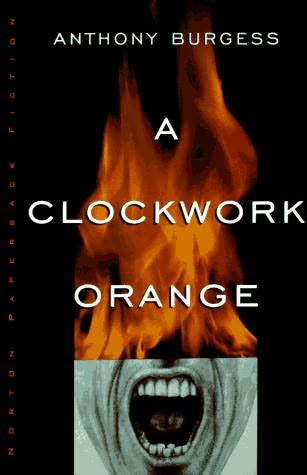
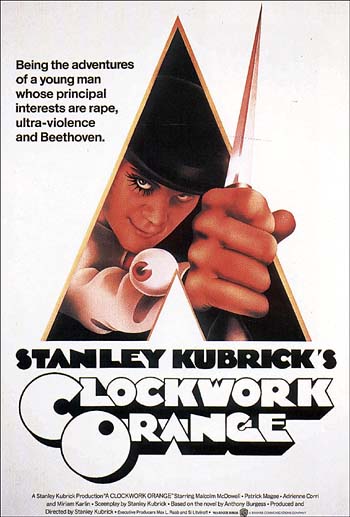
The Guardian had an article today noting the 50th Anniversary of Anthony Burgess’s A Clockwork Orange. Mind you, it is the anniversary of the book not Stanley Kubrick’s iconic movie, which has taken on a life of its own.

I first read the novel when I was seventeen. I read it a month later when I learned there was an edition with a glossary in the back. The glossary didn’t enhance the read that much; everything could be inferred from context  without too much trouble. (I had heard the glossary was only in the American edition, but I am not positive of that.) Anyway, what I remember most was the language: it was playful, edgy, smart, and alive. It was a mixture of joycean word play, street jive, cockney, rhyming, Slavic slang. And it was what set me off reading a lot of Burgess, from the Enderby novels to the majestic Napoleon’s Symphony to the various autobiographies.

The movie was another thing.  I was hitch-hiking across Canada from Vancouver to Toronto and winter was coming on a lot earlier than it came where I was from. It was only the last week of August, but we woke up under a thin sheet of snow in Regina.  Earlier, to stay out of the cold, and since nothing seemed to be coming along Canada’s Highway 1, we went into the town of Regina and bought tickets to see Kubrick’s A Clockwork Orange. It was very stylish and engrossing, with a narrative that I already knew.  I don’t remember now being struck by the ultra-violence. I do remember the music and the Skinner-like experiments and the tragic ending.  

But anyway, today, in their piece on the 50th anniversary of the book, the Guardian said this:

Fifty years ago today, Anthony Burgess published his ninth novel, A Clockwork Orange. Reviewing it in the Observer, Kingsley Amis called the book “the curiosity of the day.” Five decades later there is still nothing like it.

I beg to differ.

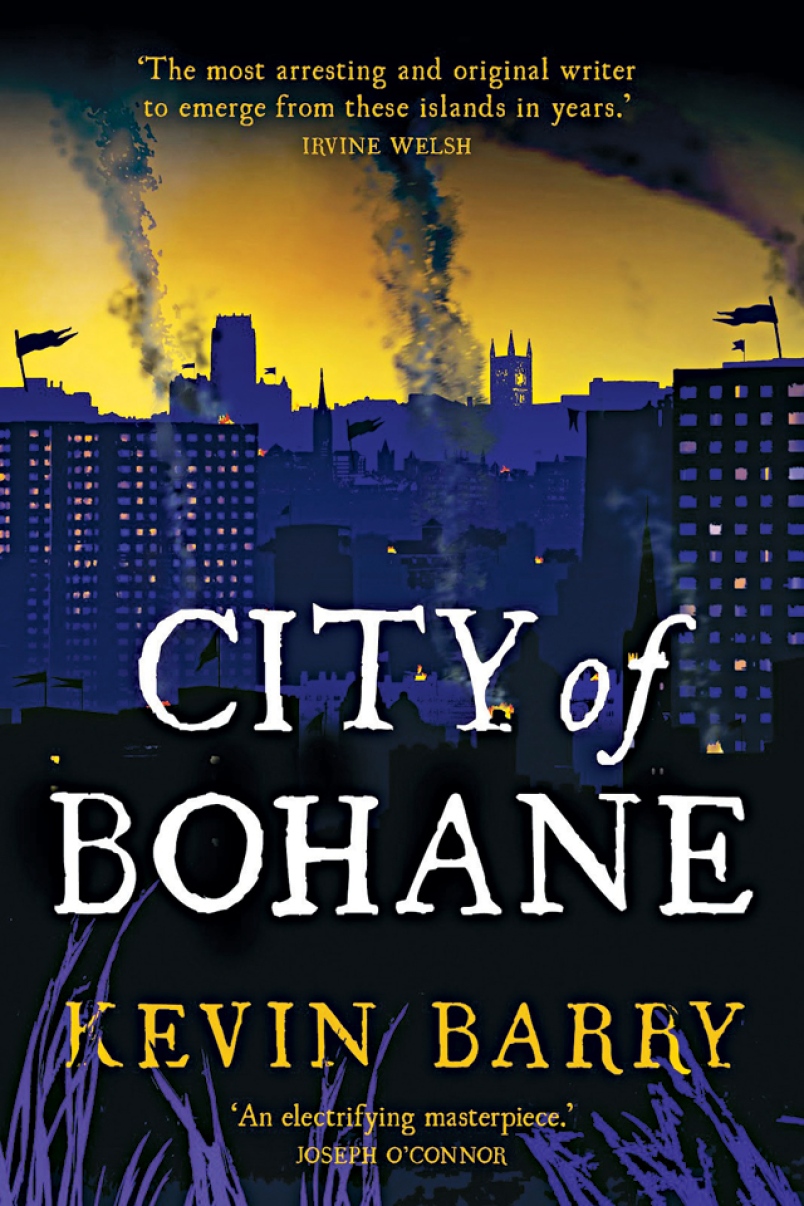
Kevin Barry’s first novel, The City of Bohane is channeling Burgess big time.  Set in a dystopian future, in what could be an unrecognizable Dublin of 2053, it is full of violence, sex, drugs, and turf wars. And again, the language  is at the forefront. Here is Barry describing DeValera Street:
[DeValera Street] leases are kept cheap and easy– bucksee enterprises appear overnight and fold as quick. There are soothsayers,. There are purveyors of goat’s blood cures for marital difficulties. There are dark caverns of record stores specialising in ancient  calypso 78s –oh we have an old wiggle to the hip in Bohane, if you get us going at all. There are palmists. There are knackers selling combination socket wrench sets. Discount threads are flogged from suitcases mounted on bakers’ pallets, there are cages of live poultry, and trinket stores devoted gaudily to the worship of the Sweet Baba Jay. There are herbalists, and veg stalls, and poolhalls. Such is the life of DeValera Street… .

Here again is Barry introducing Girly Hartnett, the 90-year old matriarch of the major family:

Here was Girly, after the picture show, drugged on schmaltz, in equatorial heat beneath the piled eiderdowns, a little whiskey-glazed and pill-zapped, in her ninetieth–Sweet Baba help us–Bohane winter, and she found herself with the oddest inclination.

I always found the world of A Clockwork Orange to be too sterile, too sharp-edged, even the thugs were dressed in sparkling white.  Bohane City is many things, but sterile it is not.  There is a richness of detail, texture, smell. Even in memory, Alex and his droogies seem too slick compared to the denizens of Bohane. For in this dystopic future, the world has not been re-shaped by technology–in fact, technology is surprisingly absent.  There is an elevated train, but no cars. Communication is done face-to-face…and at times angry-face-to-angry-face. Newspaper writers get their stories in pubs or brothels; the hunchback photographer pegs his developing photos in a morbid array across a room.  Although this is the future, it is not one overrun with gadgets!

The violence is real–but somehow not graphic. The economy runs on sex, alcohol, and drugs. There is an outer world, beyond the pale, but it doesn’t intervene, seemingly content to let Bohane run its own violent course.

And it is so, so visual.

Here’s a description of the major characters as they prepare for the momentous battle at the center of the novel:

“Logan Hartnett [the albino leader of the Bohane Trace] suavely walked the ranks and he offered his smiles and his whispers of encouragement. There was confidence to be read in the sly pursing of his lips, and atop a most elegant cut of an Eyetie suit he wore, ceremonially, an oyster-grey top hat.”

“Fucker Burke was bare-armed beneath a denim waistcoat and wore his finest brass-toed bovvers.”

“Jenni Ching carried a spiked ball on a chain and swung it over her head. She wore an all-in-one black nylon jumpsuit, so tightly fitted it might have been applied with a spray-can, and she smoked a black cheroot to match it, and her mouth was a hard slash of crimson lippy.”

“Wolfie Stanners, however, was widely acknowledged to have taken the prize. Wolfie was dressed to kill in an electric-blue ska suit and white vinyl brothel-creepers with steel toecaps inlaid. Four shkelps were readied on a custom-made cross-belt.”

[Macu–Logan’s wife–wore] “a pair of suede capri pants dyed to a shade approaching the dull radiance of turmeric, a ribbed black top of sheer silk that hugged her lithe frame, a wrap of golden fur cut from an Iberian lynx…and…an expression unreadable.”

My god, look at the attention to clothing–not futuristic, Buck Rogers’ one-pieces, but clothing that has been taken from a vibrant past.  It is as if the costume designers from Game of Thrones, Gangs of New York, and My Fair Lady got together to outfit the cast for this rumble.

And what City of Bohane also has that A Clockwork Orange doesn’t  is a love story.  Granted it is a story of disappointed love and jealous love and abandoned love, but the emotions of these characters are real and painful and poignant. For  while Logan Hartnett and his antagonist, the Broderick Gant, may have run the machinery of their town with brutality and violence, they are both bowed when set against the forces of love.

Now there’s something to pass on to Alex and his droogies!

surf & books

I am losing my office in June which is overflowing with books and I don’t know where to put them. The beach sounds like the perfect place. Isn’t this cool.

Jo's avatarMOJOme

This was an IKEA idea! The largest open book shelf of the world in Bondi beach, Sydney, Australia. 30 Billy shelfs to sign the 30th anniversary of this Ikea piece. For one day everybody could take a book for a money donation to the Australian Literacy and Numeracy Foundation Institution.

I love marketing for a cause.

View original post

Versatile Blogger Award

It appears that this site has been nominated for a Versatile Blogger Award.  I am not really sure what that entails or what it requires or even what it means. But it is nice to think that someone out there is reading my scribblings.  The site was nominated by a lovely blogger at http://memyselfandela.wordpress.com/   Thank you, memyselfandela! She and her site are in the UK and the site features some of the most beautiful black-and-white photos usually accompanied by inspirational and thoughtful writing.  There is also a wide range of music videos –everything from Gershwin and Sting to Apocalyptica and Amy Winehouse–as well as cartoons, translations, and intriguing links.  When any of you get a moment, check her site out. And again, thank you memyselfandela for the nomination.

//

Part of the nomination process is that I have to list seven things about myself. Awkwardly, I say this:

1.   I own five guitars and a mandolin.

2.   I  had a dog named Max but he died.

3.   The first song I played to a sizable audience was Donovan’s “Atlantis.”  I was 17 years old and I’m sure I was sincere.

4.   I once had a pretty famous literary agent in Dublin. The last I heard from her, she was flying to Italy with the manuscript of my novel. That was sixteen years ago.

5.   For a very long time, I used to play in an Irish band.  It has become much more successful now that I’ve quit.

6.   When I was 18-years old I hitchhiked across the U.S.

7.    I was once on stage with Bob Dylan and the Band.  I sat on a folding chair behind towers and towers of speakers and could barely see a thing.

//

Another part of this process is that I have to list 15 blogging sites. I don’t read that many blogs regularly except for the ones I have on my blogroll and the various people’s blogs who “like” certain posts I put up.  I am not particularly comfortable doing this, but here goes:

http://memyselfandela.wordpress.com
http://therumpus.net/sections/blogs/rick-moody-blogs/
http://asjellis.wordpress.com
http://thephysicianspalette.com
http://dianebones.wordpress.com
http://romanzocoeva.wordpress.com
http://courtneygillette.com
http://johnesimpson.com/blog
http://therumpus.net
http://asjellis.wordpress.com
http://thewwaitingroom.wordpress.com
http://ellabalaert.wordpress.com
http://literaryman.com
http://consciousnessthoughts.wordpress.com
http://black47theband.blogspot.com/