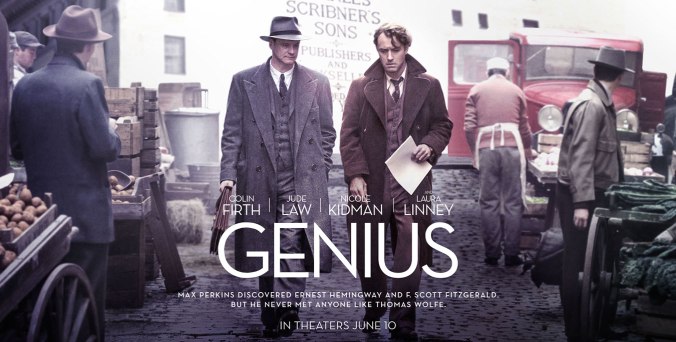
Movie Review: Genius, directed by Michael Grandage

filmposter

There is a scene towards the end of Michael Grandage’s film Genius where Scott Fitzgerald (played by Guy Pearce) is in Hollywood, drinking Coca-Cola and working hard on The Last Tycoon.  He has failed and given up on screenwriting, he is trying to keep his drinking in check, and he is hopeful for his new work. I mention this because it is the fourth time I have seen (or read about) this moment in the last two months. It is a pivotal point in Fitzgerald’s short life, and Fitzgerald and his world certainly seem to be “trending” these days. (A film version of The Beautiful and Damned is now in production; Z: The Beginning of Everything is airing now on Amazon; and Stewart O’Nan’s West of Sunset hit the shelves in the spring.)

Genius is about Fitzgerald’s world. He is only a minor figure — borrowing money, taking care of Zelda, scolding Thomas Wolfe for ingratitude.  Hemingway (Dominic West) also puts in a brief appearance and when he does, he seems the most pragmatic of the lot.

But Genius is not the story of these two giants of American letters. It is the story of their editor Max Perkins, and his overlarge, prolix client Thomas Wolfe.
firthlaw

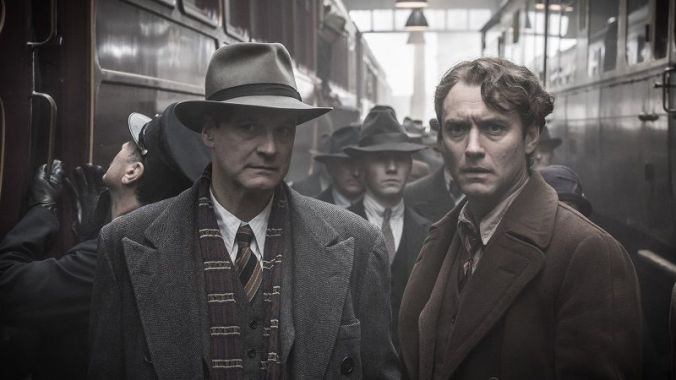
Colin Firth as Max Perkins and Jude Law as Thomas Wolfe in Michael Grandage’s Genius

Genius is based on A. Scott Berg’s book Max Perkins: Editor of Genius and concentrates primarily on his relationship with and molding of Thomas Wolfe. And while the book title implies that Perkins was the editor of men of genius, such as Fitzgerald and Hemingway, the film leaves one wondering whether it was Perkins who was the genius after all.

Wolfe (Jude Law) explodes into Perkins’ office at Scribner’s, expecting to have his manuscript rejected by yet another New York publisher. When Perkins (Colin Firth) informs him that they want to publish him, a very close and productive relationship begins.

Wolfe is overlarge in his personality and writing, and Jude Law plays this for all it’s worth, chewing up every scene he is in, which is the majority of the film. His gregarious, boiling over energy is in stark contrast to Perkins whom Colin Firth plays with reflective gravity and business-like rigidity. The contrast seems as if it would sabotage the relationship, but it does not.

There are other issues buried much deeper.

When Wolfe first comes to Scribner’s, he is being supported and promoted by his lover, Aline Bernstein (Nicole Kidman), who quickly becomes jealous of Perkins’ influence on and success with Wolfe. Perkins’ wife Louise (Laura Linney) also is concerned with the amount of time that her husband is spending with his new client; (He needs to spend time, Wolfe’s second novel is over 5000 pages long when he brings it to Perkins.) She counters his argument that only once in a lifetime comes such a writer as Wolfe with the fact that only once in a lifetime will he have his daughters around him.

His responsibility to Wolfe overrides her logic.

But it is hinted at that there is a deeper foundation to Wolfe and Perkins relationship. For Wolfe, Perkins has become a father-figure, replacing the father that he lost when he was a young man and who he has been writing about ever since through two very large novels. For Perkins, Wolfe was the son he never had.

And like many father-son relationships, there has to come a break, when the son feels he must strike out on his own. When Wolfe makes this break, we know it will not end well.

Genius is a wordy film, as any film about Thomas Wolfe needs to be. It is hampered, perhaps by scenes of writing and editing, scenes that never translate well to the screen, and by the melodrama of Wolfe’s and Bernstein’s affair.
Editing

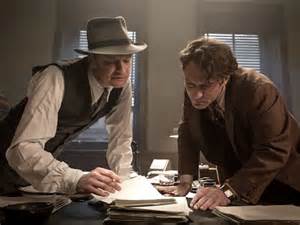
Perkins and Wolfe (Firth and Law) editing Of Time and the River

But it is an honest film, built on the back of Colin Firth’s nuanced, quiet performance. Allowing Law’s Wolfe to rage and celebrate and orate and revel, Firth’s Perkins builds a quiet portrait of a feeling man, conscientiously doing the job he loves and loving the man who is his job.


Filmed in a palate of brown and greys (contrasted brightly when Wolfe visits Fitzgerald in Hollywood), it is a film about words not images. About a man of so many, many words, Genius is a tragic view into the blistering comet that was Thomas Wolfe. More importantly, it is the story of Max Perkins, the man who burnished Wolfe’s blazing talent for the world to know and  remember.
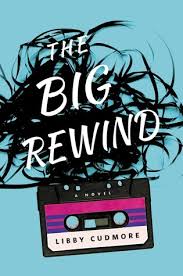


Book Review Monday: The Big Rewind by Libby Cudmore

It is hardly a new reindexvelation that the music of one’s youth is that which is most resonant throughout the rest of our lives. It is the soundtrack of our adolescent development, the rhythm of our initiation into love, into heartbreak, and who we are in the process of becoming.  And it sticks with us no matter how far beyond it we grow.

It is a conversation I frequently have with a colleague and friend. And though our references are often separated by a generation or two, there is enough overlap that we understand each other completely.

Libby Cudmore’s The Big Rewind is crafted around that very concept. The music throughout the novel –and there is a lot of it– is the underpinnings of both the solution of the murder mystery and the liberation of its protagonist, Jett Bennett.

Bennett, who had come to New York hoping to land a job in music journalism, feels very much a square peg in the ultra-hip(ster) world of Brooklyn. Her downstairs neighbor, KitKat, who is at the vortex of Brooklyn hipdom, has befriended her, but she dies in the first few pages, brutally murdered with a rolling pin.

And Bennett is the one who finds her.

Bennett had been bringing a mixed-tape to KitKat which had come in the mail and had mistakenly been delivered to her. Later, she “inherits” an entire box of KitKat’s mixed-tapes, music selected and arranged in such a way that Bennett believes they point to the identity of the killer.

And as she goes through KitKat’s tapes, she also re-discovers her own tapes and takes a journey through heartbreak and love and hope and despair. It is this music that will ultimately scattered the clouds that have been hanging heavily upon her.

Capturing the hipster world of Brooklyn, the basement night-clubs and the trendy brunch-eries,  the world of vegans and punks and poseurs, among those selling vinyl records and those selling pot-laced cupcakes, Cudmore gives us a fast pace mystery that is fun, nostalgic and wry.  Her eye for detail is unerring –given to us often with tongue firmly in her cheek. Irony is alive and well in Libby Cudmore.

c8809a83a670142d39ea1d5e581d018a

Libby Cudmore

And Bennett is a hero we can love. She is vulnerable, honest, and striving to understand herself. And she believes in her truth, for which she will fight. With her friend Syd, she immerses herself into the world of punk music and strippers, academia and neighborhood community, of fetishes and memory.  And she comes out okay.

There has been much written about The Big Rewind and comparing it to Nick Hornby’s High Fidelity.  And that is somewhat accurate. But whereas, Hornby’s novel is ultimately about his protagonist’s understanding his failures, successes and lost opportunities in love, The Big Rewind seems a little different. For one, it is a murder mystery and a fairly good one. And even after the solution seems evident, there are still enough issues yet to be resolved to keep the reader racing towards the end.

And that’s what I did. I began it somewhere over the Rockies on a red-eye flight to the East Coast and had it finished when I landed. It is that captivating.

I admit that much of the music, I did not know. Though there was still much that was familar. And many of Jett’s obsessions are understandable and familiar as well. At one point she plays Warren Zevon’s “Accidentally Like a Martyr” over and over again. I’ve done the same with the same song. (Both she, her friend Syd and I are serious Warren Zevon fans.) I know people who, like Jett, have had similar obsessions with the Cure and  the Smiths, and some who know even the more obscure bands, like the Clarks. (Very big in Western Pennsylvania.)

Libby Cudmore is a shrewd observer, and the world she creates for her protagonist is honest and real. The Big Rewind is well worth the read.

It’s like finding a vinyl Tom Rush in the sales-bin.


Book Review: West of Sunset by Stewart O’Nan

Sketches - 296

“American Dreamer” 2016 by jpbohannon

In the May 17th issue of The London Review of Books, the historian Michael Wood asked this question about two current jazz biopics–Miles Ahead and Born to be Blue:

“Why can’t we see early success as anything other than a burden?”

While he was talking about Miles Davis and Chet Baker, the subjects of the two films he was reviewing, there are scores of others to whom we can reference.

And probably no greater example is that of F. Scott Fitzgerald.

Always with high ambitions, Fitzgerald burst onto and into the literary scene in 1920 when he was merely 23 years old with his debut novel, This Side of Paradise. The first printing sold out in three days, but more importantly it allowed him to marry Zelda Sayer–who a year earlier had broken off their engagement when she considered he couldn’t support her in the style she was used to.  They married a week after publication.

The Fitzgeralds’s fame was as pyrotechnic as the ‘twenties themselves.  More than the fact that Fitzgerald’s stories  were regularly appearing  in the Saturday Evening Post and Collier’s (and were providing Scott with a very handsome income), their lives were the stuff of tabloids and gossip, of excess and extravagance.

d73a3dd6fb0b84a190cabfd946d81115

Scott and Zelda on the French Riviera/gettyimages

He was the King of “the Jazz Age” (a term that he coined) and Zelda was the Queen of the Flappers. Their escapades in New York, in Paris, in Rome, in the South of France were the stuff of legend. They burned brightly and largely.

In deed and in myth, the Fitzgeralds put the “roaring” into the “Roarin’ Twenties.”

But then like the decade itself, it all came to a crashing halt. Each of Fitzgerald’s subsequent novels were less and less successful. The Great Gatsby garnered little critical or commercial attention and Tender is the Night even less so. Beset by  financial problems–exacerbated by his alcoholism, deteriorating health, and Zelda’s mental instability–Fitzgerald focused on writing “commercial stories” for the drying-up magazine market. Ultimately he headed to Hollywood, contracted to write screenplays for MGM.

10589221-1-e1437674520633

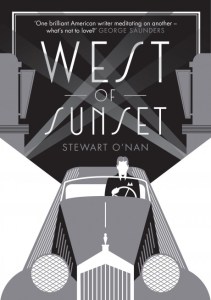
Cover of Stewart O’Nan’s West of Sunset

And it is here, just as he is about to leave for the West Coast, that Stewart O’Nan picks him up in West of Sunset, a poignant re-telling of Fitzgerald’s last three years.


It would not be a spoiler to say that the main character–F.Scott Fitzgerald–dies in the end. At 44 years of age. Nor to say that Dorothy Parker has the best lines (e.g. “She’s slept with everyone in Hollywood except Lassie.”) This is all common knowledge or is expected by anyone slightly aware of the literary world of the 20s and 30s.

But what is not commonly realized or considered or witnessed is the emotional pain, the loss of confidence and the genuine anguish that Fitzgerald suffered in those final three years of his life. This we glean from reading West of Sunset.  In O’Nan’s novel we see a Fitzgerald struggling financially–his wife’s sanitarium fees and his daughter’s tuition are constants–as well as struggling with the seeming inanity of Hollywood productions and his own demons. Getting a “screen-credit” is essential and far too often projects are cancelled, rewritten beyond recognition, or given to another writer–writers that a once confident Fitzgerald had looked down upon at the height of his career. (Ultimately, he ended up with only one screen credit.)

At first, I felt that O’Nan was taking the easy road.  Characters such as Hemingway and Bogart, both who enter the story early–are overlarge and don’t need much development. But they get it anyway. Bogart proves to be  a good friend though an enabler to Fitzgerald’s alcoholism. (Despite Fitzgerald’s having split Bogart’s lip in a fight long before the book begins.)  And Hemingway, enters the story early, asks a favor of Fitzgerald, and disappears, though never quite gone from Fitzgerald’s mind. We see the struggling and “washed-up” Fitzgerald, often wondering about Hemingway’s reaction to something he did or did not, to his successes and his screw-ups. The Hemingways and Bogarts, the Shirley Temples and Joan Crawfords, the Selzniks, Mankiewiczes, and Mayers, they are all extras, mere shades flitting by as Fitzgerald battles against the currents of rejection, failure,  physical weakness and his past. Even Sheilah Graham, the strongest and most able of those around him, could not get close enough to save him from himself.

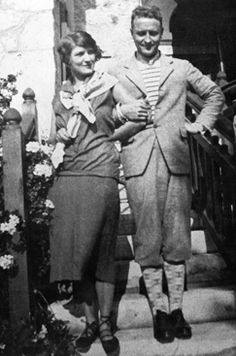
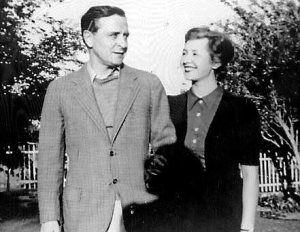
F. Scott Fitgerald and Sheila Graham

F. Scott Fitzgerald and Sheilah Graham/Princeton University Library

I anticipated –and enjoyed–the Hollywood gossip and the “inside” view of the golden days of the big studios, but what O’Nan has done so well in West of Sunset was to capture Fitzgerald as he struggled to deal with his wife Zelda’s madness, his daughter’s growing independence, his love affair with Sheilah Graham, and  his debilitating alcoholism. (It seems every time that Fitzgerald leaves Hollywood to visit Zelda back East, he returns either sick or beaten-up as a result of his excesses.)

In the end, the novel is not solely about a famous American artist who burned out and died early. That story is almost hackneyed. (Take your pick, David Foster Wallace, Robert Bolaño, John Kennedy Toole. The list goes on for much too long.)  Instead, it is a moving portrait of a man, a talented man, trying to keep his head above water while the world–and the fading hope of the American Dream– keeps dragging him under.

At times, O’Nan’s prose is evocative of Fitzgerald at his very best. The keen observations,  the golden descriptions, the accurate judgement is richly reminiscent of Fitzgerald’s writing. But O’Nan is no mere parodist, and West of Sunset is not a pastische. It is a wonderful novel–it would have been wonderful even if we didn’t know the protagonist so well.  As the writer George Saunders described the book, it is “one brilliant American writer meditating on another.” And that is very true.  O’Nan’s West of Sunset is intelligent, imaginative and thought-provoking. It is a novel that echoes in one’s mind over and over again.

•       •       •       •       •       •       •

This spring I have thought a lot about F. Scott Fitzgerald. I have taught Gatsby in three separate courses,  I have read Fitzgerald’s notebooks written during the last years of his life, and I have read Stewart O’Nan’s West of Sunset. (This all sounds more deliberate than it actually was–more coincidence than good planning.)

So much has Fitzgerald and Zelda and Sheila Graham, and Gatsby and Daisy and Nick Carraway been on my mind these days, that I have come to see our spring itself as a mirror of Fitzgerald’s career. Spring 2016 started out unseasonably warm in March, with records high temps, middled off in April, and has been abysmally cold and wet through most of May. It has followed the arc of Fitzgerald’s life.

However, the exception is that after his death, both he and his works have skyrocketed in estimation and entered the pantheon of American Literature.

Who knows what this summer will bring.

Book Review: My Brilliant Friend by Elena Ferrante

courtyard

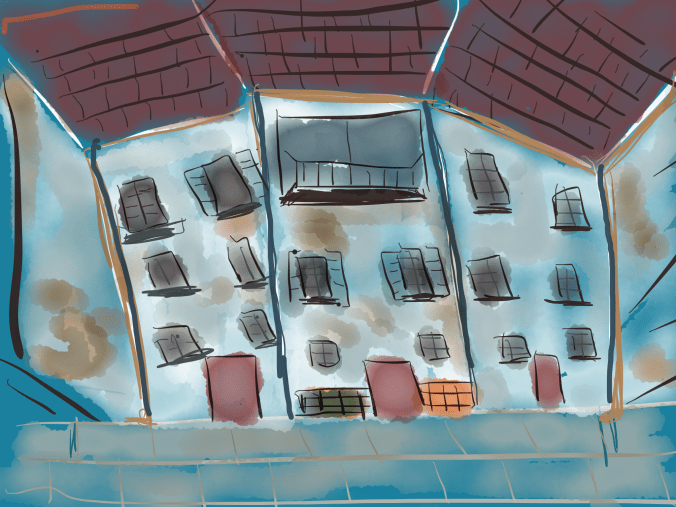
“Cellar Window in the Courtyard” –illustration 2016 by jpbohannon

The English translation of Elena Ferrante’s L’amica geniale has been given the title My Brilliant Friend and for much of the book  we believe it to be a reference to Lila Cerullo, the daughter of the shoemaker and the much-admired friend of the narrator Elena Greco (known as Lenù). And indeed, the phrase fits, for Lila is a precociously wise, driven, and independently thinking little girl. (The novel spans the two girls’ lives from six to sixteen.) And yet, much later in the book, when Lila is being fitted for a wedding dress, it is she who utters the phrase, calling the quieter, less assured Lenù “my brilliant friend.”  Much to Lenù’s delight.

But close readers come to understand this much earlier in the novel. Through the first two-thirds of the book we are caught up in Lenù’s appreciation, competition, and admiration of her friend Lila. Lenù is telling the story of HER BRILLIANT FRIEND.  But gradually we realize that the novel is actually the story of Lenù, the story of her friendship with Lila, and the decisions the SHE ultimately makes not to be dragged down into the social stagnation that is their poor Neapolitan neighborhood. (Lenù is telling us this story as a 60-year old woman living in Turin after Lila’s son has called from Naples to say his mother has disappeared.)

That Lila is brilliant there is no doubt. She excels in grade school–always edging out her friend Lenù and everyone else–and wins the admiration of all the teachers. She is fierce and brave and sure of herself. Meanwhile, Lenù is like most every youngster, tentative, unsure of herself, and uncomfortable in her ever-changing body. Even after Lila has quit schooling at the age of twelve, she continues to learn and tutors Lenù in Latin and in Greek and sharpens Lenu’s mind with logic and politics and philosophy.

And while Lila finally succumbs to the fate circumscribed by the neighborhood courtyard, Lenù knows that her schooling–an “occupation’ that none of her neighbors or friends or family see the value of–is her only way to break beyond the poverty, the dirt, the violence.

And by this point we see that the novel is Lenù’s Icarus moment, her attempt to fly, to soar higher than those before her. We leave her “on the cliff’s edge,” as she begins to realize at Lila’s wedding the cords that the neighborhood could tie her down with.  We readers had also hoped that her friend Lila would join her, but she cannot. At least for now.

Elena Ferrante may be the most written about novelist of the past five years. She is reviewed in the mainstream press and in literary journals. She is both critically and popularly acclaimed.  And she is “anonymous”–no one knows her true identity. (Despite a mid-March break through, that cited a Florentine history professor who has denied that she is Ferrante.)  This mystery certainly has added to her cachet. And has added to the millions of words written about her.

And yet, even if there were no “mystery,” Ferrante would stand out. Her writing is more than masterful–the narrative is a driving, relentless tour of childhood, filled with incisive details–both external and internal–and a realistic understanding of human fears, desires, needs and ambitions. My Brilliant Friend–the first of Ferrante’s four Neapolitan novels–follows the girls from six to sixteen, and captures exquisitely and perfectly, the pain and joy and dread and hopes of young children in a way that is unmatched in my reading.

Yet, like life itself when looking backwards, those ten years that Ferrante chronicles seem to fly by and are finished before we know it…or are ready for it.

I facetiously wrote to a friend that I found My Brilliant Friend “disappointing”: my great disappointment was that the 330-page novel was over so quickly.  I wanted it not to end.

I will take a breather…and then begin the second volume.


Quote #57: “Then the big elm shot up ahead…”

“Elm Tree” illustration 2016 by jpbohannon

 “Then the big elm shot up ahead, lying in wait for them at the bend of the road, and he said between his teeth: ‘We can fetch it; I know we can fetch it–‘”
                                                        Edith Wharton, Ethan Frome

Book Review: Honeymoon by Patrick Modiano

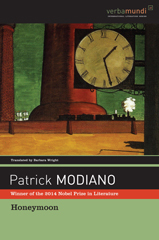
Honeymoon

Book Cover for Honeymoon by Patrick Mondiano

It is perhaps a sad testimony to how parochial my reading has become.  There was once a time where I knew almost every Nobel Prize for Literature winner–would have yearly bets with colleagues and follow the London odds makers’ short lists.  And while my knowledge was primarily eurocentric/american, I was an early reader of the Egyptian Naguib Mahfouz before he won and I understood that his time was eminent and important. (My sister, after a trip to Egypt, had turned me on to him. I don’t know how, but she brought me back two uncorrected proofs of his novels.)

But again, I am increasingly ignorant of the world’s literature.

Which is why discovering Patrick Modiano is such a wonderful treat. The French Modiano is the 2014 Nobel Prize for Literature winner. And until a New Yorker review of his most recent novel, I had not heard of him nor his winning. Lately, I must have my head very deeply buried in the sand.

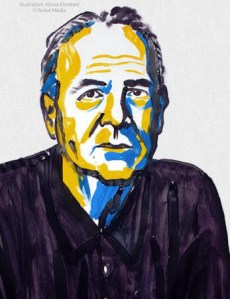
patrick-modiano-illustration

Patrick Modiano illustration by Niklas Elmehed © Nobel Media

Honeymoon (published in 1990 in France/1995 in the U.S.) is the novel I decided to start out on. The language is direct, bare and sparse–reminding me much of the first half of Camus’ The Stranger. But the story is intricate and convoluted, told in such an honest style that makes the intricacies and coincidences of life seem matter-of-fact.

There are two stories that braid themselves around two middle and connected ones. On the first page the narrator discovers that a woman in the hotel in Milan where he is staying has committed suicide.  He then learns that he had known her once decades when she and her husband had picked him up hitchhiking and had taken him in and cared for him for several days.

This coincidence sets the man on a quest–of sorts. After his wife and his business partner (her lover) drop him off at the airport where he is to fly to Rio de Janeiro for business, he disappears. He takes a plane back to Milan and then returns to Paris, where he goes to ground and hides in the outer arrondissements.

His purpose is to make sense of the woman’s suicide, of her life.

We find that he has been obsessed with this couple for a long time, ever since his youth, long before the knowledge of her death. He has taken numerous notes, cut out clippings, and prepared to write a memoir of the couple, and so he tells us of their hardships and trials during the Nazi occupation of France.

While we at the same time are following his exploits in the Parisian neighborhoods, aware of his wife’s comings and goings, and preparing for a new life in his rougher world.

All the plot threads, in a way, revolve around a single newspaper clipping from the 1940s searching for the woman who suddenly went missing when she was sixteen years old. (From what I have learned, the actual clipping is what sent Modiano himself to fashion his story.) She had simply stepped out of the Metro and  moved from one world–a constricting and dangerous world in Nazi occupied Paris–to another. Her abrupt relocation parallels the narrator’s who moves from his bourgeoise life as a documentary filmmaker married to a high-fashion model to an uncertain world in the boondocks of Paris, seeking for understanding of the couple who once showed him much kindness.

I said that I had started out on Patrick Modiano by selecting Honeymoon It is only a starting point. I look forward to picking up another.


Book Review: Talk by Linda Rosenkrantz

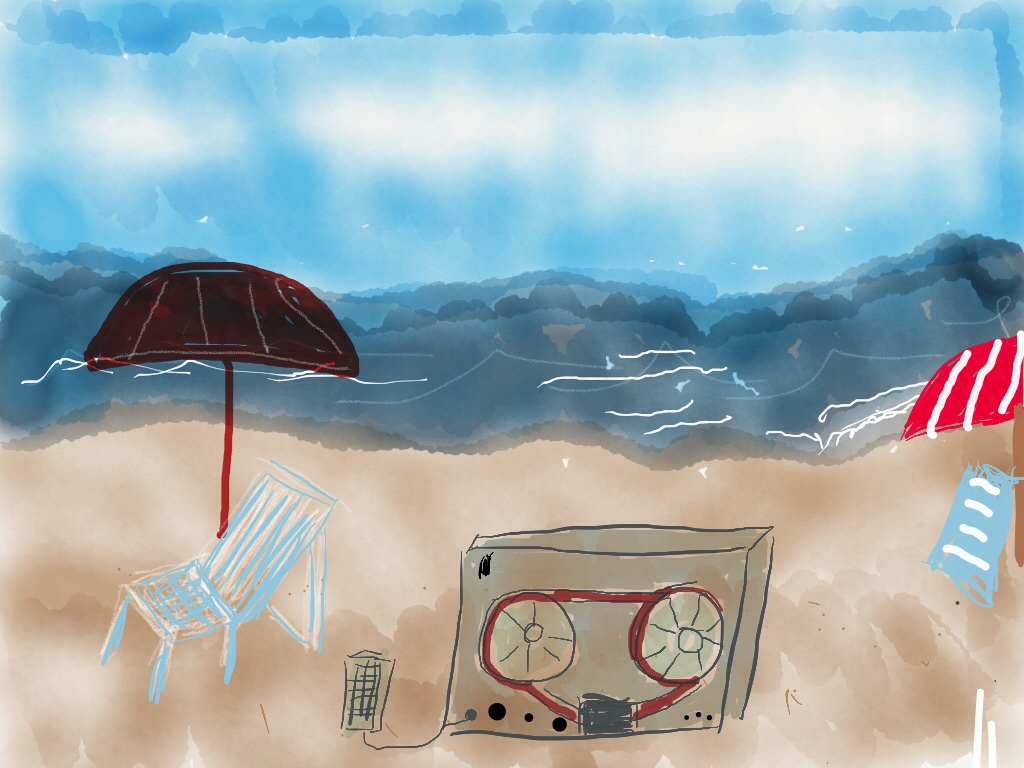
Recording on the beach illustration 2015 by jpbohannon

Recording on the beach
illustration 2015 by jpbohannon

In the introductory material to the New York Review of Books‘ re-issue  of this 1968 novel, the writer Stephen Koch states that Linda Rosenkrantz was the precursor of “reality tv” with this inventive, unusual work. He says that Rosenkrantz’s technique, far more than anticipating reality television, was even the precedent for everything from Friends to Broke Girls. 

His latter assertion, he bases on the fact that this novel deals with two “twenty-something” women and one male talking about relationships, hopes, dreams, and reality. Before Rachel, Monica and Ross dished, Rosenkrantz’s characters were doing the same.

And before Snooki and the “Situation” shared more than we wanted to know about their adventures at the Jersey Shore, Rosenkrantz’s kids were already at it.

And how she did it was that she took a tape-recorder (they were very bulky in the mid-1960s) everywhere she went one summer, on the beach, in the shore-houses, at clubs.

Cover of NYRB's  re-issue of Linda RosenKrantz's Talk

Cover of NYRB’s re-issue of Linda Rosenkrantz’s Talk

The concept sounded wonderful. Rosenkrantz took her tape recorder and recorded her friends as they made dinners, basked on the beach, drove to clubs, and packed and unpacked.

At the end of the summer, she had more than twenty-five characters speaking the truth–or at the very least speaking. And they speak a lot.

Thankfully, she winnowed the twenty-five down to three: Vincent, a gay male painter; Emily, a struggling actress with a drinking problem; and Marsha, who has a “serious” job in New York, and who is the anchor of the novel. All of it is supposed to take place against the background of New York’s edgy art scene, with Warhol the subject of more than one name drop. (At the time, Rosenkrantz was editor of Sotheby’s Auction magazine and was quite cognizant of all the goings on in the art world at the time.)

The three are all at the shore. They are all in therapy. And they share their therapeutic insights with us. And on top of it all, there is an odd love triangle.

Emily loves Marsha. They are the best of friends and Marsha tries to nurture Emily through her psychiatric problems and her drinking. Vinnie understands Emily more than he understands Marsha, but Marsha is madly in love with him despite knowing he is gay. (And there are hints that Vinnie might also be in love with Marsha, but… .)

Take these three people, have their conversations recorded, and then transcribe them in a novel may have worked 50 years ago, but it does not work today. The psychoanalysis is juvenile, the relationships are sophomoric, and the conversations–for the most part–are deadening.

Koch was right when he said Talk was the precursor to reality television. He just didn’t tell us that it was the precursor of all that was inane, self-indulgent, and titallating about the genre. Talk might have been ground-breaking in 1968, but in the 21st century, it doesn’t even work as anthropology.

Imagine sitting on a towel on the beach next to these three people, discussing their analysis, their love lives and more. It would be enough for me to hope for a rip tide.