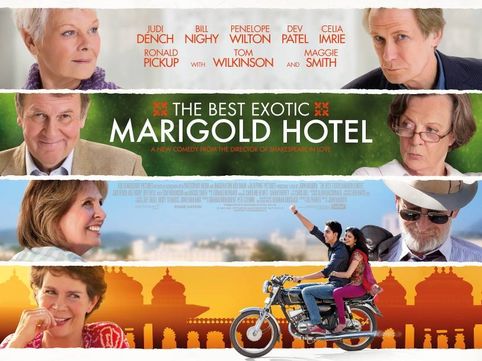
A handful of retirees move to India because elder-care is cheaper there and recent events have altered their vision of what their lives would be like back home in England. And so separately they move to the Best Exotic Marigold Hotel, advertised for the beautiful and the elderly… a hotel which is still in the early stages of reconstruction.
I wanted to like this film very much.
Afterall, there were magnificent actors:
Judi Dench
Bill Nighy
Maggie Smith
Tom Wilkerson
Dev Patel
Celie Imrie
Penelope Wilton
Ronald Pickup
There were touching and interesting stories:
• A gay man returning to find an ex-love he believed he had ruined
• A widowed woman trying to be responsible for herself for the first time in forty years
• Young lovers being thwarted by a mother’s demand on arranged marriage
• A decent husband battered by an over-demanding, narrow-minded wife
• A woman wanting one last try at romance
• A man wanting one last try at romance
• Another woman wanting one last try at romance
• A bigoted woman going to India for a hip replacement because she can’t wait for the NHS
• A couple who lost everything in bad investments
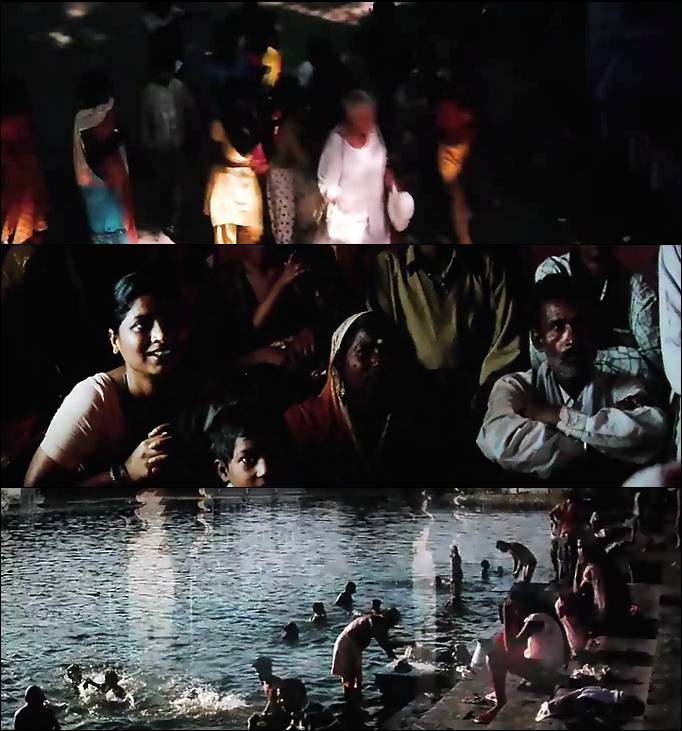
And there was extraordinary photography and marvelous settings.
And yet, it all seemed too much…it all seemed to run together. The film couldn’t seem to decide whether it wanted to be a mad-cap comedy, a fish-out-of-water study, a sentimental love story, a heart-breaking love story, a droll study of old imperialists visiting a once held colony, a humorous clash of cultures. It seem to need a tighter focus.
There is a point made in the film that India is a barrage on the senses; sounds, smells, tastes, sights, textures all come crashing upon the visitor in a way that is often overwhelming. This seems to describe The Best Exotic Marigold Hotel as well. There was just much too much.
This is, without a doubt, the most enjoyable movie I’ve seen in a long time.
Two men, from vastly different backgrounds, form a relationship that is simply a delight to watch.
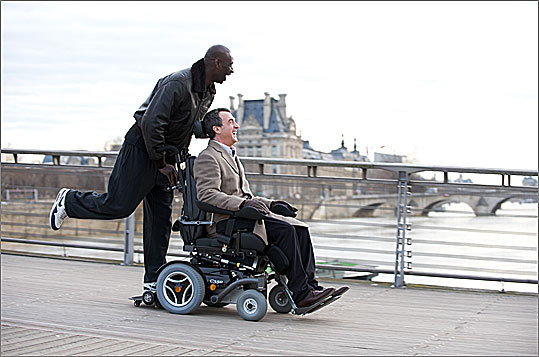
François Cluzet plays Philippe, a very wealthy business magnate who is now a quadriplegic after a para-gliding accident. Omar Sy plays Driss, a Senegalese thug who lives in the Parisian projects and who becomes Cluzet’s live-in nurse.
The story line is predictable. Driss gets the job, bristles initially at some of its requirements, is overwhelmed by the luxuries of his new world, and rubs up against the expectations of his new boss. Phillipe, on the other hand, admires his new nurse’s honesty and his love of life. By movie’s end, they are very close and very good for each other.
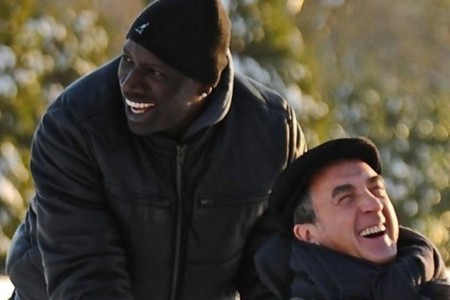
So if the plot is predictable, what is it about the movie that has made the second most popular movie in the history of France film-making? It is the perfect combination of Omar Sy’s over-the-top acting and Cluzet’s subtlety. Cluzet, because of the physical handicaps of his character, must do all his acting through his face–and his enjoyment of Sy’s infectious joie de vivre is more than obvious.
Sy, on the other hand, dances, mugs, flirts, mimics, and roars laughing–in the rarefied environs of salon receptions, opera boxes, and art galleries.
Driss “pimps” Philippe’s motorized wheel chair so it can go 12 km/hr; he joyfully shares with Cluze the joints he is always carrying around; and in the end, he makes him face his greatest fear.
The chemistry between the two actors (and the two characters) is more than charming, and Sy’s relationships with the people around him–Philippe’s household staff, Philippe’s daughter and her boyfriend, his own extended family in the projects–are both comical and touching, as well.
Based on a true story, Intouchables shows two men, from worlds as different as possible, becoming better human beings because of the presence of each other.
In writing about the film, it is all too tempting to give in to cliché: It is a buddy movie like no other, a “feel-good” comedy, a lovely entertainment. But the clichés should not take away from the truth. Intouchables is in fact a very good film and thoroughly enjoyable from the beginning to the end
As I walked out of the theater I immediately texted a friend to tell him to be sure to get down to see it before it leaves the theaters. I can’t remember when I last enjoyed a movie as much.
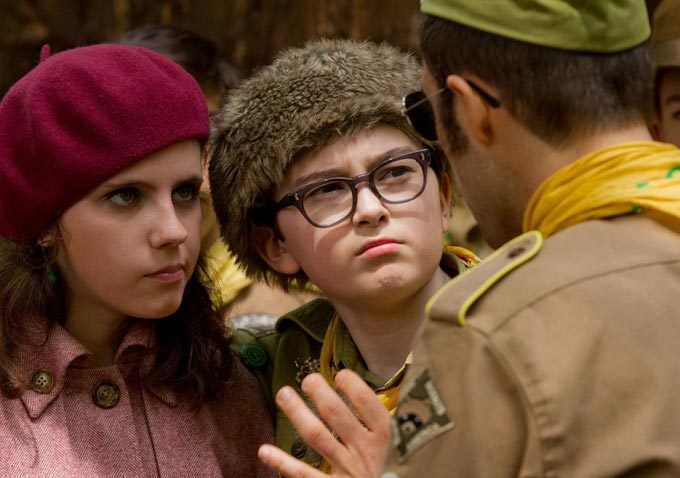
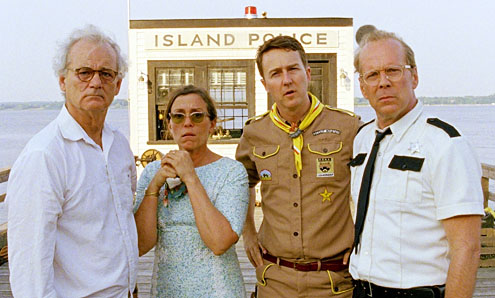
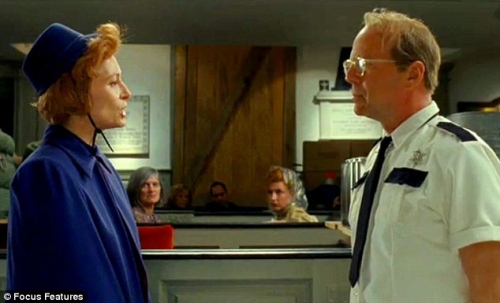
There are some real heavy weights here: Bill Murray (can there be a Wes Anderson movie without him?), Frances McDormand, Tilda Swinton, Bruce Willis, Ed Norton, Bob Balabay, Jason Schwartzman, Harvey Keitel. And yet Wes Anderson’s delightful, quirky, warm-hearted movie is completely stolen by the two young stars who play 12-year-old runaways.
Jared Gilman plays Sam, an iconoclastic, orphaned Khaki Scout who is not liked by any of the other scouts. Kara Hayward plays Suzie, the disturbed and angry daughter of Bill Murray and Frances McDormand. For over a year, after Sam saw Suzie playing a raven in a local production of Benjamen Britten’s children’s opera Noye’s Fludde, the two have been planning to escape their unhappy lives.
When Sam escapes his Scout camp, the authorities are alerted. When Suzie is discovered missing, everything goes into overdrive.
As the two twelve-year-olds make their way through rugged country–Sam is an extraordinary Scout–we get to witness one of the most beautiful, innocent, and real love stories. Maybe the most intense love is that one that is first felt when you are twelve years old? It certainly is for them.
Yet the real world, in the guise of hurricanes, adulterous unhappy parents, foster parents, social services, man-scouts, and a lonely policeman, comes crashing in on them.
This is a comedy, so everything ends well. But the journey towards that ending is filled with all the anguish and hope of being in love at 12 years old; it is defined by that feeling of being too small against the world while believing that one’s unique love will protect you from everything. In many ways, it is perfect. (One reviewer said that it was made by the 12-year old Wes Anderson, so perfect is the point of view.)
The two young stars are extraordinary. They are playing children who are precious, treading in the murk of real life, battered by injustices and misunderstandings that are too big for them to withstand, and roiled by all the passions of first love. And they play it perfectly.
And aside from the two kids, and the A-list group of adults, the set designers, graphic artists, and cinematographers are also front and center in the film.
From the quirky credits and the Bishop’s loopy house to the book covers on the adventure stories that Suzie reads and the watercolors that Sam paints, everything pops with an fresh palate of color and tone and liveliness. You are aware of the filming–not in an obtrusive way but in a way that stuns and delights you. This is not cinema verite; it is very aware of its artfulness and it succeeds at it.
The natural setting is gorgeous–our two runaways have found Eden–and the sets are filled with color and eccentricity. While the island New Penzance is based on Fishers’s Island, NY, I am not sure where it was actually filmed. But it is romantic–in the original sense of the word–and sublime.
I have enjoyed all of Wes Anderson’s films, but am often left with a sense of emptiness, with a sense that surfaces were barely scratched and characters hardly born. Moonrise Kingdom is different. While not a character study, by any definition, it is a beautiful study of original love, love that is pure and scary and wonderful and all of that.
It used to be when I thought of Scandinavia, I thought of crystal-blue fjords, aromatic forests, statuesque blondes, and a palatable wholesomeness.
That’s before Stieg Larson gave us his girl with the dragon tattoo, and Jo Nesbø, his various riffs on Scandinavian violence. Now when I think of Scandinavian, it seems a place of outrageous torture, imaginative violence, and not a little repressed fascism.
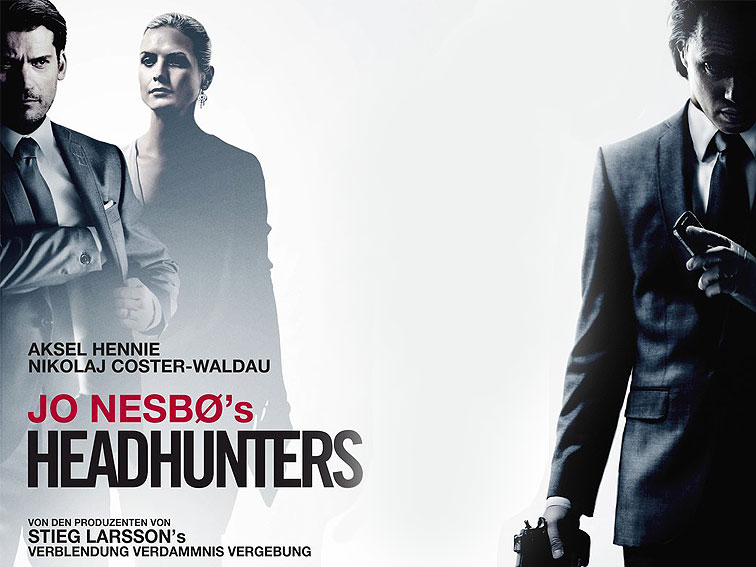
Headhunters (Hodejegerne) is Mortin Tyldum’s adaptation of Jo Nesbø’s slick, stylish novel of a professional headhunter who is also a major art-thief.
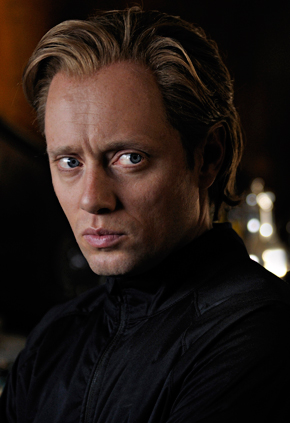
Roger Brown (played by Aksel Hennie who has a striking resemblance to a young Christopher Walken) is a very successful headhunter–he brings talent to very powerful and influential corporations. In interviewing potential clients, he discovers their routine, the artworks they own, and whether they have a dog. In this way, he is able to case his next heist in the luxury of his offices. Roger tells us that he is only 1.6 meters tall (about 5’3″) and that he has to “compensate.” He does this by buying his stunningly beautiful wife (Synnøve Macody Lund ) everything he thinks she desires: A house right out of the glossiest of architectural magazines, expensive and rare jewelry, an art gallery to run. He can afford none of this–which is why he must steal art, and even that income is proving to be too little.
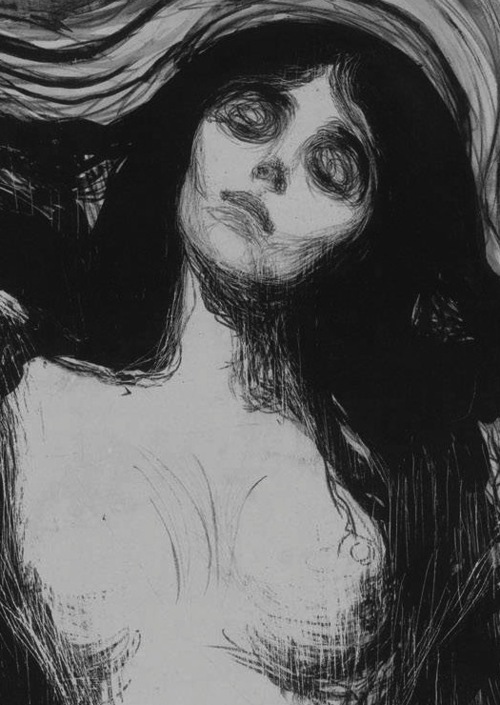
We begin by seeing him steal a lithograph by Munch. (Is it just me or is Munch the most stolen artist of our time? I don’t know how many versions of The Scream have been stolen in the past thirty years.) Anyway, the print that he steals is called “The Broach” but it looked very much like one of Munch’s Madonna paintings.
Munch’s lithograph “Madonna”
But even the Munch is not enough to silence Roger’s creditors, so he has to go after a really big score–a long lost Rubens that is in the apartment of a man who he is recruiting for a major position. In the interview, we learn that the man, Clas Greve, (Nikolaj Coster-Waldau) is a former mercenary, a world expert at tracking people and deposing of them–aha, the plot is setting itself up. He is also ruthlessly ambitious. We also soon learn that he is sleeping with Roger’s wife.
I will not spoil how it all plays out except to say that there is an enormous amount of bloodletting and creative violence. We move from Roger’s sleek house to Appalachian-like cabins, where the patina of civilization has been long ripped off.
Headhunters is very taut, fast moving, and exciting. It works very well as a slick thriller, a clever heist movie, with surprising twists and tense, rapid moments. It also aspires, it seems, to be a good-old-fashion “slasher movie.” This is where it fails. The blood is overdone.
And along with trying to be a heist movie, a thriller, a slasher-movie, it also makes periodic stabs at being comedic. There are very fat twin cops protecting Roger’s hospital room who bungle everything–although their very large size might be what saves Roger’s life. There is a nonsensical bit with a Russian prostitute and Roger’s partner in crime (which has to be introduced for a technical reason, but it is mostly nonsensical and more irrelevant than essential.) Heist, thriller, slasher, comedy–perhaps Tyldum is trying to juggle too many balls at once.
In truth, however, Headhunters is a very good way to spend an hour and forty minutes. Fast-paced, handsome, and clever, if it does nothing else, it is sure to drive more people to reading Jo Nesbø. And that’s a good thing.
I have been going through a noticeable streak of coincidences lately. In a particular ten days to two weeks, I will repeatedly see, hear, read about something that I hadn’t noticed or thought of in a long time. It might be a friend who has moved away…a movie I hadn’t seen in decades…a book that I had forgotten that suddenly is being cited everywhere.
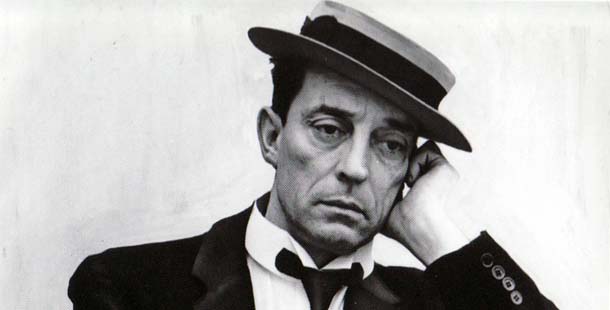
Anyway, this week it has been Harold Lloyd and Buster Keaton. I knew who Keaton was, had always preferred Chaplin, but respected his enormous role in the history of movies. I knew little about Lloyd except for his famous clock scene.
And now Keaton seems to be everywhere. I wonder if, like so many things in modern culture, it is simply Keaton’s turn to be the object contemporary interest. (Contemporary interest has a very short life and while it might be Keaton in 2012, the focus could as easily turn to Jacques Tati for 2013, or Mack Sennett by July.) Who knows when it will be Lloyd’s turn?
Film connoisseurs have long praised Keaton. Orson Welles called his The General “the greatest comedy ever made…and perhaps the greatest film every made.” And Roger Ebert called Keaton “arguably the greatest actor-director in the history of movies.” Lloyd’s reputation is not as high-flying. Part of this came from Lloyd’s demanding such a prohibitive price for television broadcast of his films–and so his work is generally less known than either Chaplin or Keaton.
One of his most famous scenes is this:
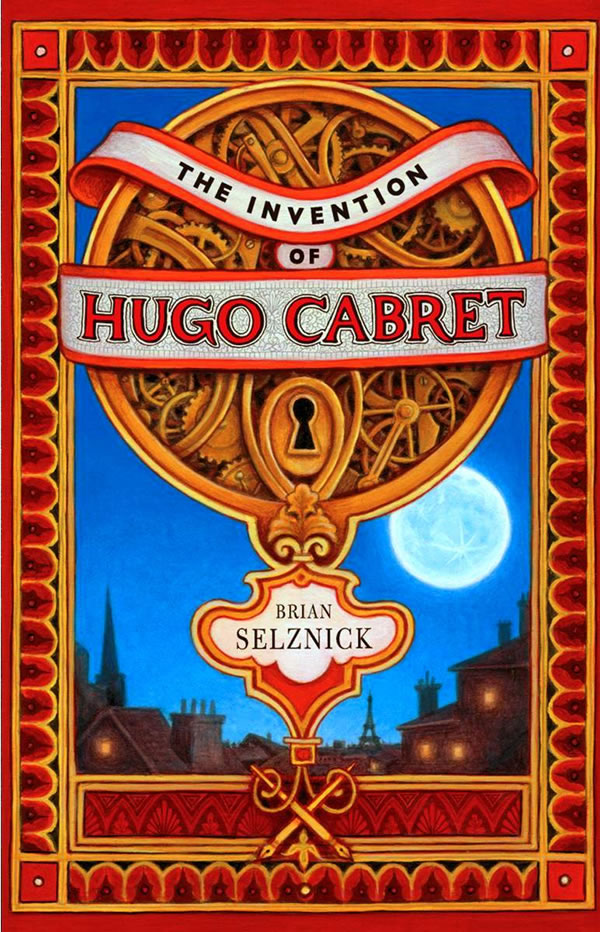
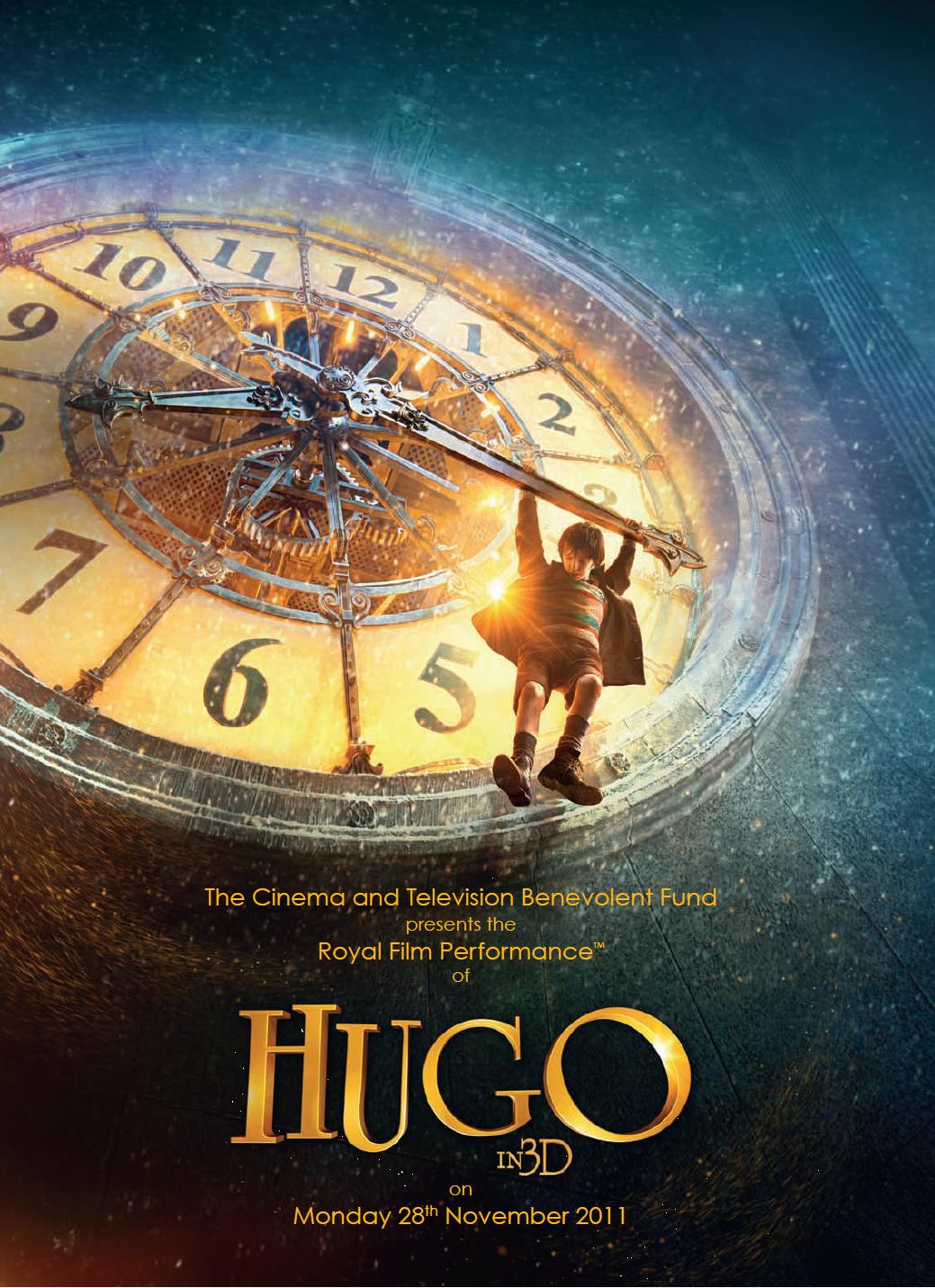
Indeed this scene is very obviously alluded to in the 2011 film Hugo, based on the Brian Selznik book The Invention of Hugo Cabret.
In the story, the young boy Hugo lives in the clock tower of a Parisian train station in the 1930s. During the course of the film, he sneaks his new friend Isabelle into a movie house. She has never seen a motion picture before and the film they watch is Harold Lloyd’s Safety Last! with its famous “hanging from the clock” scene.
Later on, young Hugo himself must escape some danger by hanging from the clock hands and moving along to safety. In a story that is basically about the birth of cinema, the nod to Lloyd’s iconic clock scene is both appropriate and deserved.
A photo of Lloyd hanging from the clock is in the book. And the film clip is shown in the movie.
And this is where the coincidences really start!
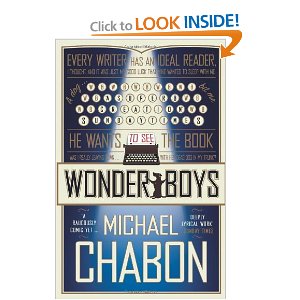
On Friday, I am in a coffee shop, minding my business and reading the novel The Wonder Boys by Michael Chabon. Two guys in the table next to me are having a friendly argument and the argument is about Harold Lloyd’s hanging from the sprung clock. The one guy is insisting that the actor is Buster Keaton; the other insists it is Harold Lloyd. I am especially proud of myself for not inserting myself into the discussion–as is often my wont.
Yet it goes further. About an hour later, I am still reading and I come to a passage in the novel where the narrator introduces one of his writing students to his wife who has left him the day before and who he–and the student–have followed to her parents’ house, in a slap-stick sort of way that would have made these early film directors proud.
“This is James Leer. From workshop.”… “The movie man,” she said. “I’ve heard about you.” “I’ve heard about you, too,” said James. I thought for a moment that she might ask him about Buster Keaton, one of her idols. but she didn’t.
Did I just read that right? “I thought…she might ask him about Buster Keaton“? Okay, simple coincidence. An hour after overhearing the Lloyd/Keaton conversation, but a simple coincidence.
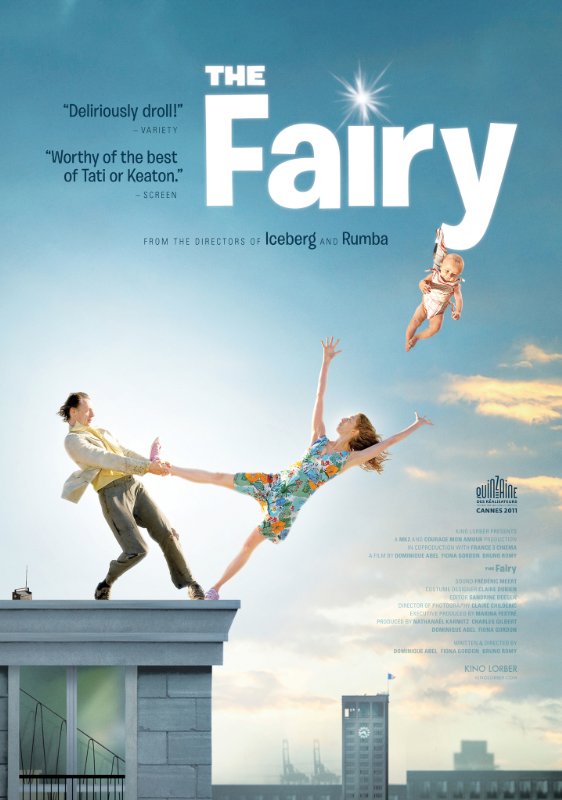
So it is Tuesday, and exams are over, and I am getting out of work around 11:15. I check to see what is playing, because I particularly love going to the movies when rest of the world is at work. There is a film called The Fairy (le fee) with an enchanting poster that I know nothing about. I go online to read what it is about. Here’s what they say to begin with:
The Belgian-based trio of Dominque Abel, Fiona Gordon and Bruno Romy (The Iceberg) write, direct and perform absurdist comedies in the tradition of Buster Keatonand Jacques Tati. The Fairy is a candy-colored romp set in Le Havre—a non-stop string of hilarious sight gags and madcap chases.
More Keaton. It’s as if he’s following me…or I unconsciously am following him. Even the movie poster alludes to its Keatonesque qualities.
So I am off to see The Fairy this afternoon. Off to see slapstick and physical humor from this Belgian trio, but I hope that it rises above that. The slapstick of Keaton and Lloyd and Chaplin, as well, was always more than pratfalls. It always said something true about the human heart. Something important about all of us.
Happy St. Patrick’s Day to one and all. It is glorious here–70 degrees and sunny when we usually have grey skies and sleet.
Here’s something to get you talking.
Twenty Greatest Irish Movies from the past 25 years:
20. Cal (1984) –young IRA man falls in love with older woman (Helen Mirren) whose husband , a Protestant cop, had been killed by IRA. Good movie. Better novel.
19. Once (2006) — sweet story, sweet players, sweet music. And the ending is perfect.
18. The Secret of Roan Inish (1994)–Beautiful story and a hauntingly beautiful Eileen Colgan
17. The General (1998)–Brendan Gleeson as Dublin crime boss
16. The Guard (2011)–Brendan Gleeson/Don Cheadle
15. Hunger (2008) — Michael Fassbender as Bobby Sands
14. The Snapper (1993)–Colm Meany in the 2nd of the Barrytown Trilogy by Roddy Doyle
13. The Boxer (1997)–Daniel Day-Lewis
12. The Butcher Boy (1997)–Good film of a great novel. And Sinead O’Connor as the Virgin Mary!
11. The Dead (1987) — Angelica Huston’s greatest moment.
10. Breakfast on Pluto (2005) — Cillian Murphy’s breakout role…as a transvestite in war-torn Belfast and London.
9. The Van (1996) –Colm Meany and the Irish World Cup victory. Last of the Barrytown Trilogy.
8. The Field (1990) — Richard Harris. Powerful and tragic.
7. Some Mother’s Son (1996)–Helen Mirren in a story of the hunger strikers
6. Waking Ned Devine (1998)–Ian Bannen/David Kelly
5. Into the West (1992) — Two boys and a horse. Gabriel Byrne, David Kelly
4. In the Name of the Father–Daniel Day Lewis/Peter Postlethwaite
3. Michael Collins (1996) –Liam Neeson/Alan Rickman
2. The Commitments (1991)–Hardest Working Band in the World! 1st of the Barrytown Trilogy. Great music, fun story.
1. My Left Foot (1989) –Daniel Day-Lewis. Simply wonderful. Beautiful, funny, inspiring..
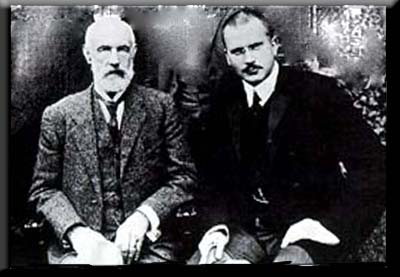
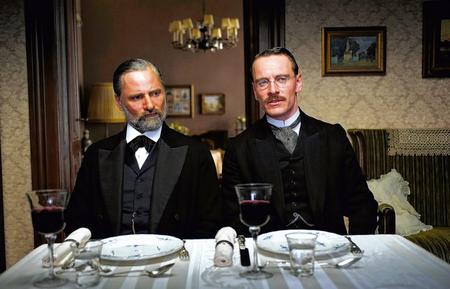
After many missteps and thwarted plans, I finally got to see A DangerousMethod. I don’t know how accurate it was–though it seemed so– but to watch Freud and Jung working together, fencing with each other’s ideas and techniques, is intriguing. History usually sets them in direct opposition to each other–and they saw themselves that way as well after their infamous break–but I see them as simply taking and following two different paths. Jung deals with humanity at large, with myths and archetypes; Freud with the individual, with the conscious and the sub-conscious.
The film is marvelous, hinting at what Jung is about to discover, what he begins to question about Freud; marvelous with Sabina Spielrien talking about anima and animus to Jung, arguing eros and thanatos with Freud; and ominous with the small undertones of the fomenting friction between Jewishness and Aryanism: Wagner’s Siegfried and Spielrien’s Judaism, Jung’s dream of an apocalypse coming from the north and washing Europe with blood, Freud’s concern that his work will be disparaged as the perversity of Jewish doctors.
Jung, it seems, had to break with Freud, just as the son has to break with the father. In fact, Jung’s father complex with Freud seemed quite evident. Although we are dealing with a film and the demands of drama and a story-arc, Jung seems much more fragile than I had imagined. The film ends with his seeming quite shattered–which historically he was–but it was still surprising to see such a towering figure so broken.
All in all, I loved it…and it is sending me to find the book it was based on by John Kerr, plus anything at all on Sabina Spielrien–a relatively forgotten figure in the beginnings of psychoanalysis.
"Here is my secret. It is very simple: It is only with the heart that one can see rightly; what is essential is invisible to the eye.."- Antoine de Saint Exupéry
 A handful of retirees move to India because elder-care is cheaper there and recent events have altered their vision of what their lives would be like back home in England. And so separately they move to the Best Exotic Marigold Hotel, advertised for the beautiful and the elderly… a hotel which is still in the early stages of reconstruction.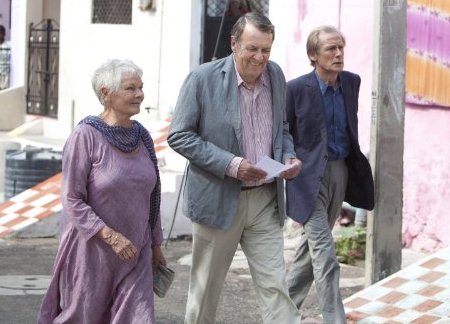

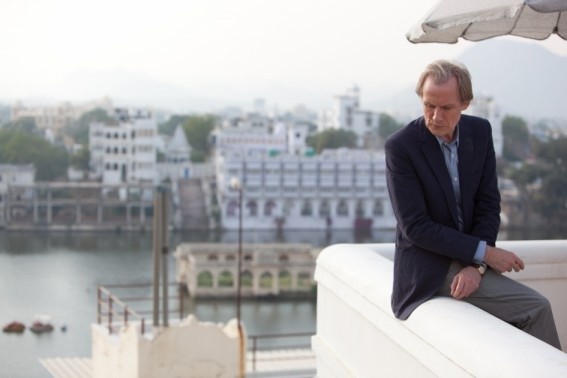 And yet, it all seemed too much…it all seemed to run together. The film couldn’t seem to decide whether it wanted to be a mad-cap comedy, a fish-out-of-water study, a sentimental love story, a heart-breaking love story, a droll study of old imperialists visiting a once held colony, a humorous clash of cultures. It seem to need a tighter focus.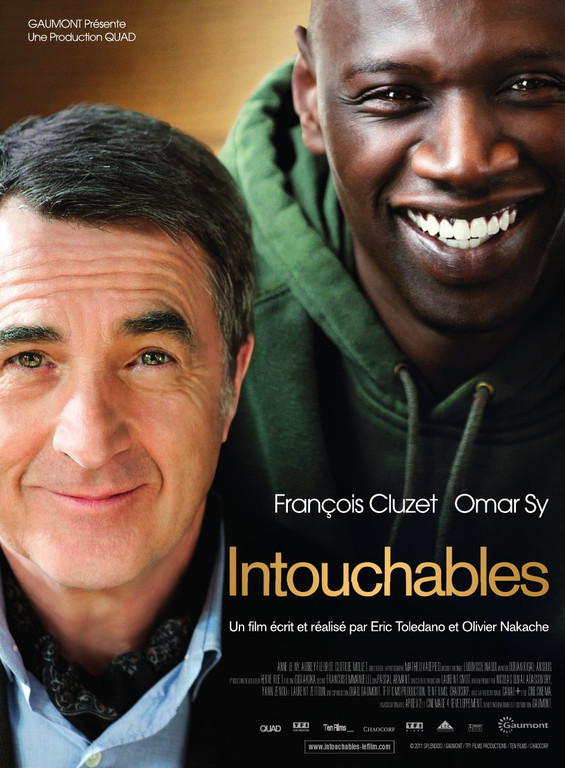

 j. p. bohannon