Movie Review: To Rome with Love, written and directed by Woody Allen

With an over-sized brace on my knee, a bottle of Vicodin in my pocket and a set of “just-a-bit-too-tall” crutches, I limped down to the corner, grabbed the 57 Bus on 4th street, and rode it to Walnut where I hobbled over to the theater to see Woody Allen’s latest film, To Rome with Love.

I used the word “hobble” intentionally because that was what Woody Allen seemed to have done with this collection of slight stories set in Rome, the eternal city. He took several disparate tales and hobbled them into some sort of unity– a whimsical investigation of fame and celebrity, set under the bright Roman sun. (It is noteworthy, that very few scenes take place after sunset–there is the finale on the Spanish steps and a cheesy storm-scene in the Roman Baths. The rest is filmed beautifully in the bright Italian sun.)

There are four basic stories:
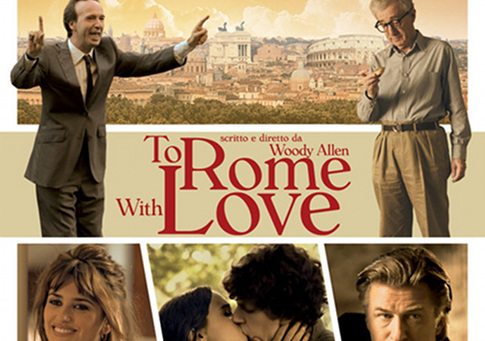
♦ a young architect with dreams of greatness and confused romanticism is being advised by the pedestrian man he will become.

♦ a funeral director with a magnificent operatic voice can only sing in the shower.

♦ a newly wedded bride is seduced by a celebrated actor, an incompetent hotel thief, and her newly educated husband.

♦ a middle-class man becomes famous for no reason at all.

Each story is successful to varying degrees.  And each has its own charm…to varying degrees.

Alec Baldwin plays the elder architect watching his younger self stumble through a risky affair. Woody Allen himself plays a retired opera impresario trying to get the shy mortician to sing on stage. The Italian actress, Alessandra Mastronardi,  plays the timid newlywed who is bedazzled by her favorite actor. And Roberto Benigni plays the hapless man who becomes–for no reason at all–the most famous man in Rome.  The stories are not connected but move from one to another easily.

Allen has proven before that no one makes a location look as attractive as he can, and here again, he does for Rome what he has previously done for Paris, Barcelona, London, and–most readily–New York.  He also proves that he has the ability to get wonderful performances from his actors.  Alec Baldwin is all self-effacing and snarky wisdom; Penelope Cruz seems to be channeling those  mid-century Italian film stars–Sophia Loren and Gina Lollabrigida; Benigni is permitted to clown with little restraint; and even the young actors–Jesse Eisenberg, Greta Gerwig, and Ellen Page–are given room to breathe into their roles.  On screen, Allen, reprises the role he has played forever–the neurotic, death-fearing, nebbish.  But perhaps the most extraordinary performance is that by the great, internationally-acclaimed tenor, Fabio Armilato, who plays a man who can only sing in the shower and who gamely lets Allen place him in several showers throughout the film.

Allen has long proclaimed his love of European movies–he famously dabbled in Bergman-esque type films in the late 1970s–and earlier this summer he listed four Italian movies that he felt influenced him profoundly. Two were by the director Vittorio de Sica (The Bicycle Thief and Shoeshine), one by Michelangelo Antonini (Blow-up) and one by Federico Fellini (Armacord). He stated that these films changed the way stories could be told, a narrative arc very similar to that which he would use in many of his own films.

He quipped about his love of European film: “I wanted nothing more than to be a foreign film director, but, of course, I was from Brooklyn which is not a foreign country.”

And yet, while To Rome with Love is an entertaining two hours, it is much less substantial than the four films he had referenced. Even as a comedy, it lacks a certain gravitas.

No, by no means is To Rome with Love a hearty, four-course Italian meal–and maybe it is not meant to be.

Simply, it is a lovely four-scoop of gelato. And sometimes that’s all you need to get you through a Saturday afternoon.

If you haven’t seen the trailer, here it is:
Book Review: The Reader by Bernhard Schlink

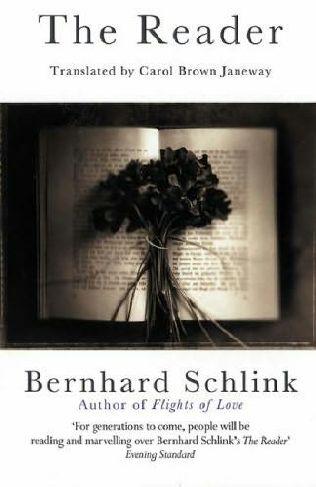
Cover of Bernhard Schlink’s book.

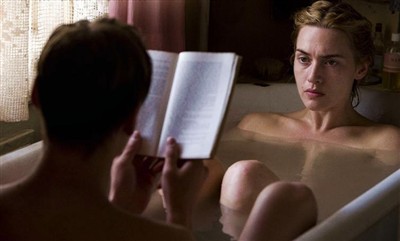
A scene from Stephen Daldry’s film, The Reader

The old question of the book and the movie: Can a film ever do a novel justice?  Or should we look at them as entirely separate works of art and not make the comparison at all?  Just the parameters of a roughly  two hour viewing experience seriously limits what a film maker can do with his source, a source that usually comprises a multi-hour/multi-day experience for a reader.

Certainly there are films that are more successful than others in capturing the essence of a novel. And just as certain there are real travesties. But the successes are such because they capture the spirit of the novel rather than getting lost in trying to relate every detail.  I am thinking of Mike Nichols Catch-22 based on the Joseph Heller novel.  The film works because it perfectly captures the inanity of bureaucracy, the numbness of war, and the black humor of Heller.  It is a large novel, non-linear in its arc, and Nichols captures its essence without getting bogged down in trying to capture every character and sub-plot.

I saw the film The Reader when it was released in 2008 and only got to reading the book in 2012. (I had two friends who refused to see the film because they had loved the novel so much.)  Regardless, it was a compelling film with a maddening and dramatic twist.  A young school boy (Michael) has an affair with a older woman who insists that he reads to her every time before they have sex.  He reads her all the classics–The Odyssey, War and Peace, etc. But she seems oddly aloof, and at the end we realize why. The boy, on the other hand, grows into an unfeeling man, and his coldness and inaction when needed is what is infuriating.

The novel–by its very nature–is quite different. First, it is much more internal, narrated by the boy who often questions and analyzes his own thoughts and his own actions. There are ruminations on the ethical choices made by ordinary citizens during the Holocaust, on the responses of the following generations on the actions of their own mothers and fathers. (These scenes take place in 1966, two decades after the war.) And yet while the narrator weighs, dissects, conjectures about these ethics, his own actions–many years after the war–must also be examined.  His coldness, his lack of human kindness, his decision not to act is all quite similar to that which he condemns in the female guards who are on trial in the second half of the novel.

When Hannah (the older woman) confesses to a crime she did not commit rather than reveal a secret she is much more ashamed of, she is given life imprisonment. Michael has information that could acquit her that he does not reveal.

To me, the ending is insignificant, despite the attempt to redeem Michael. Yes, he does reach out to Hannah, he does realize his own hardness, and he does try to do right.  But it is all too late. I had grown to dislike him so much by then that his redemption was all but impossible for me.

Most of the details of the plot remained the same from  book to  film but the internal voice was missing–or at least adulterated. The novel also starts out quite erotic which simply cannot be captured adequately on film with the same impact–words seem always more intimate and immediate than soft-lit actors and actresses.

The old question of book and movie?  In the case of The Reader, both.  They are two different things, two very good experiences, two separate ways of engaging a reader/viewer.

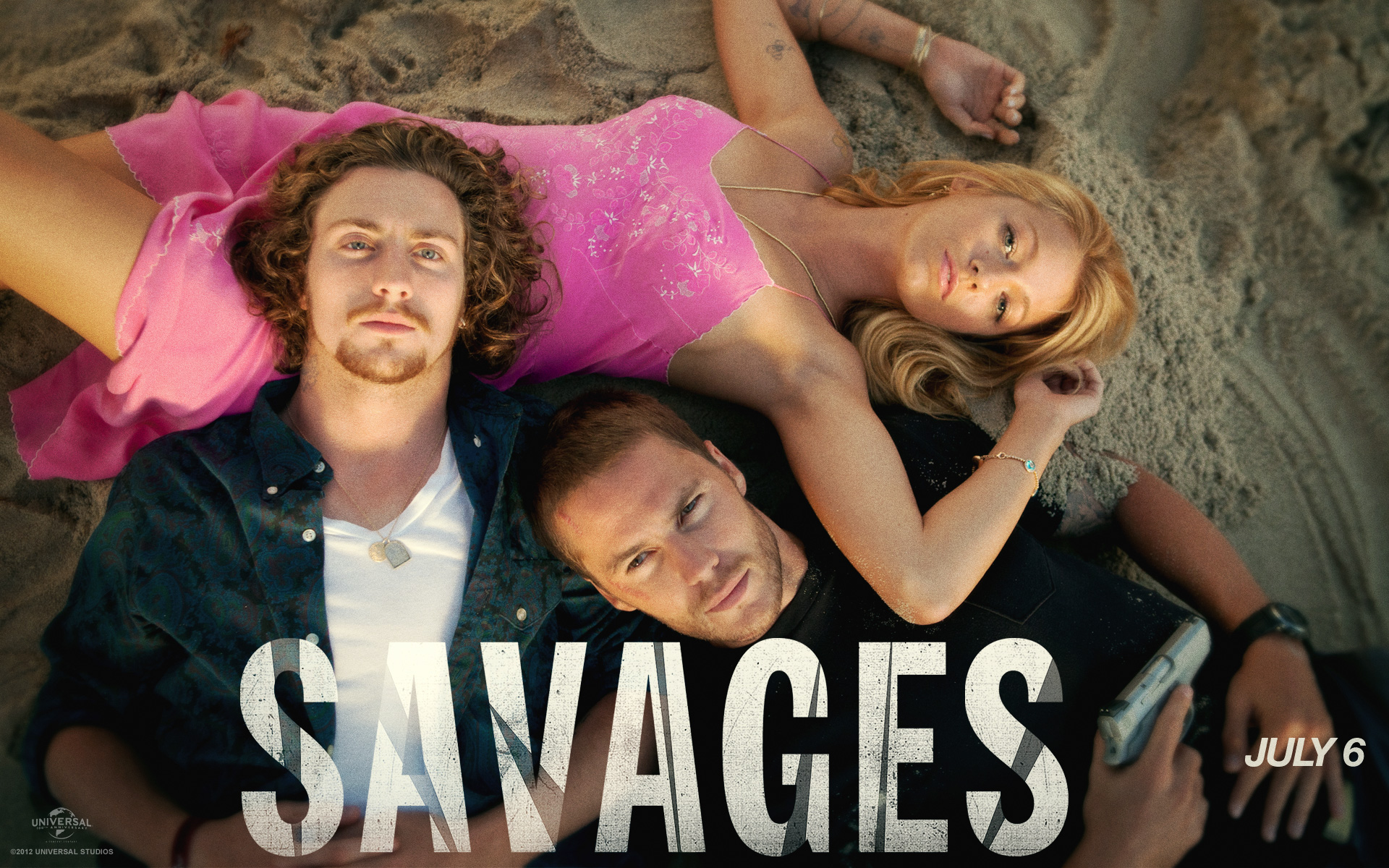
Movie Review: Savages directed by Oliver Stone

There are three important times when someone refers to someone else as “savages” in Oliver Stone’s film of the same name. The movie begins with a computer/video of a Mexican drug cartel beheading six men. The video has been sent as a warning to a young veteran of the Iraq and Afghanistan wars who with his partner has built an extraordinarily successful pot growing business in Southern California. After he sees the video, he mutters “savages.”

When his idealistic partner returns from global activisim, they have two very different responses to the cartel’s offer. The vet wants to go in hard; the idealistic partner wants to give them everything and get out of the dope industry–they have enough money to last several lifetimes.

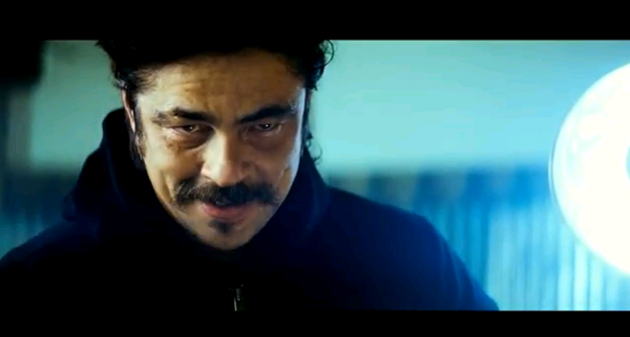
They also share the love and favors of one girl, O (for Ophelia). As the cartel stalks the trio, the cruelest of the Mexican cartel (Benicio Del Toro) notices the sexual arrangement of the three and calls them “savages.”

And finally, while walking on a beach in Indonesia, O notes that they have returned to nature, that they have become “savages.”

So the movie offers three definitions of the word “savage”:

1. utter cruelty
2. perceived perversion
3. stripped of civilization’s “refinements”

One knows what one is getting with an Oliver Stone film. Edgy cutting, great story, conspiracy, violence, magnificent cinematography and award winning performances. From JFK to Platoon to Born on the Fourth of July, his films have also had a political bent, examining modern society–sometimes controversially–with all its warts exposed and its naked emperors revealed.

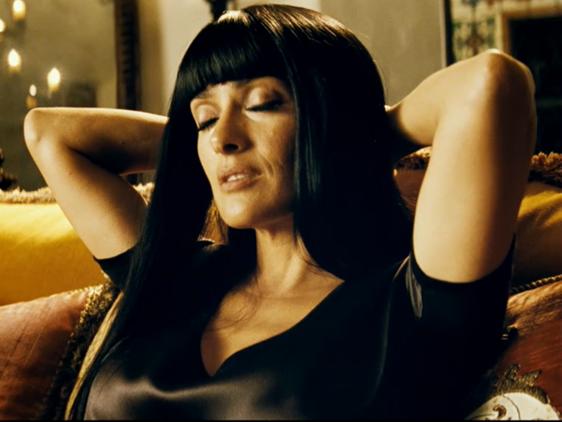
The story, based on the novel by Don Winslow, pits the two independent pot growers Ben and Chon against a powerful Mexican cartel led by Selma Hayek. There are betrayals, murders, kidnappings, and thefts–and there are conversations about love and parenting and trust. There is corrupt law enforcement (what would an Oliver Stone film be without it), horrible violence, and magnificent scenery.

In the end, what we have is an enjoyable film where the loveable “bad guys” have to outwit both the despicable “bad guys” and the corrupted “good guys.” We have seen this before but that doesn’t detract from the film at all. It is a plot that always seems to work for me. In fact, after seeing the film one might make a favorable reference to Butch Cassidy and the Sundance Kid–a film about two other loveable outlaws. Except the comparison is ruined because Ophelia herself makes the analogy early in the film. That is my only complaint–Oliver Stone should be more subtle than that.

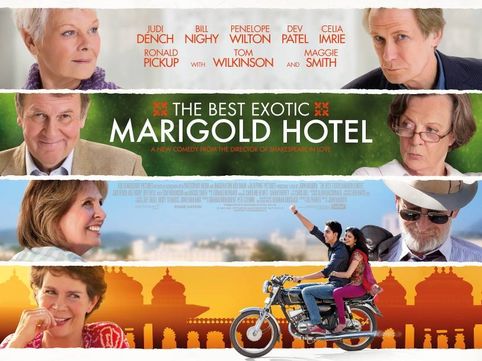
Movie Review: The Best Exotic Marigold Hotel…meh

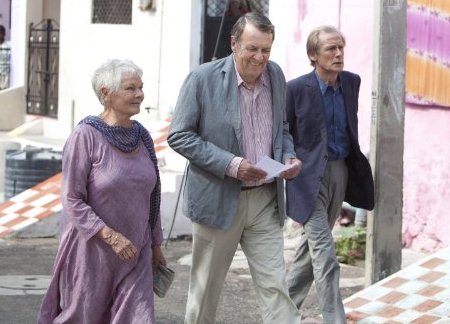
A handful of retirees move to India because elder-care is cheaper there and recent events have altered their vision of what their lives would be like back home in England.  And so separately they move to the Best Exotic Marigold Hotel, advertised for the beautiful and the elderly… a hotel which is still in the early stages of reconstruction.

I wanted to like this film very much.

Afterall, there were magnificent actors:

 Judi Dench
Bill Nighy
Maggie Smith
Tom Wilkerson
Dev Patel
Celie Imrie
Penelope Wilton
Ronald Pickup

There were touching and interesting stories:

• A gay man returning to find an ex-love he believed he had ruined
• A widowed woman trying to be responsible for herself for the first time in forty years
• Young lovers being thwarted by a mother’s demand on arranged marriage
• A decent husband battered by an over-demanding, narrow-minded wife
• A woman wanting one last try at romance
• A man wanting one last try at romance
• Another woman wanting one last try at romance
• A bigoted woman going to India for a hip replacement because she can’t wait for the NHS
• A couple who lost everything in bad investments

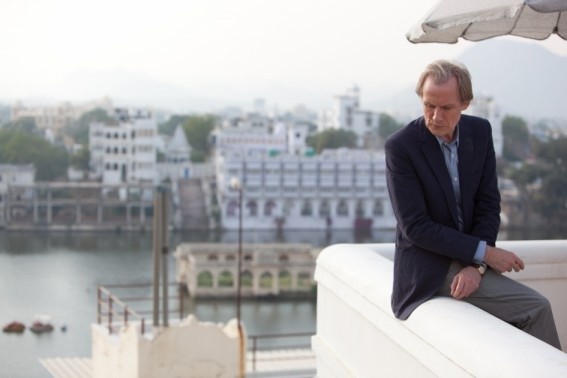
And there was extraordinary photography and marvelous settings.

And yet, it all seemed too much…it all seemed to run together.  The film couldn’t seem to decide whether it wanted to be a mad-cap comedy, a fish-out-of-water study, a sentimental love story, a heart-breaking love story, a droll study of old imperialists visiting a once held colony, a humorous clash of cultures. It seem to need a tighter focus.

There is a point made in the film that India is a barrage on the senses; sounds, smells, tastes, sights, textures all come crashing upon the visitor in a way that is often overwhelming.  This seems to describe The Best Exotic Marigold Hotel as well. There was just much too much.

Did I enjoy it?  Yes, it was enjoyable.

Will I forget it? Yes, it is forgettable.

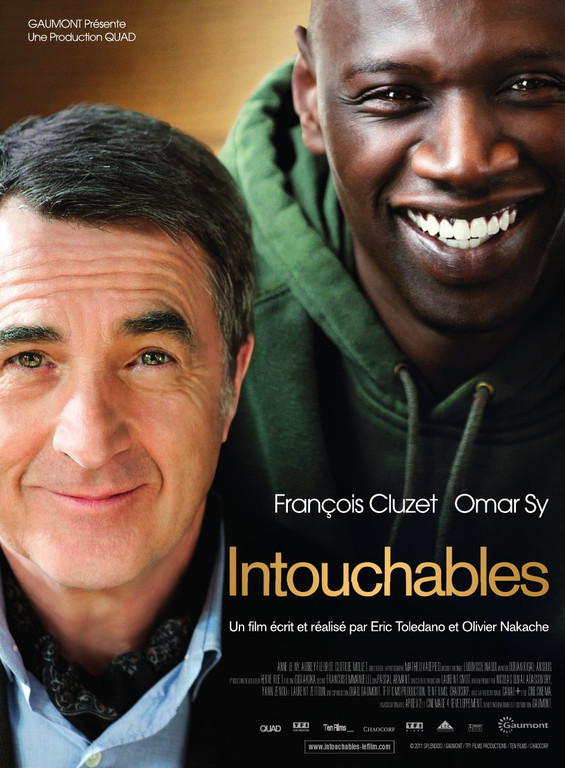
Monday Movie Review: The Intouchables

This is, without a doubt, the most enjoyable movie I’ve seen in a long time.

Two men, from vastly different backgrounds, form a relationship that is simply a delight to watch.

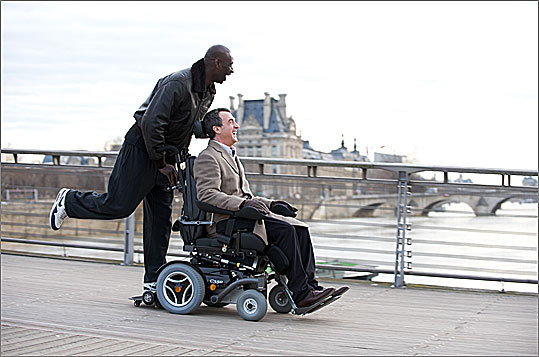
François Cluzet plays Philippe, a very wealthy business magnate who is now a quadriplegic after a para-gliding accident.  Omar Sy plays Driss, a Senegalese thug who lives in the Parisian projects and who becomes Cluzet’s live-in nurse.

The story line is predictable. Driss gets the job, bristles initially at some of its requirements, is overwhelmed by the luxuries of his new world, and rubs up against the expectations of his new boss. Phillipe, on the other hand, admires his new nurse’s honesty and his love of life. By movie’s end, they are very close and very good for each other.

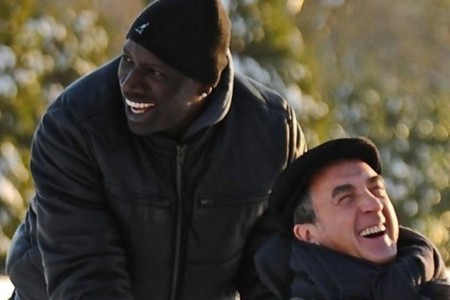
So if the plot is predictable, what is it about the movie that has made the second most popular movie in the history of France film-making? It is the perfect combination of Omar Sy’s over-the-top acting and Cluzet’s subtlety.  Cluzet, because of the physical handicaps of his character, must do all his acting through his face–and his enjoyment of Sy’s infectious joie de vivre is more than obvious.

Sy, on the other hand, dances, mugs, flirts, mimics, and roars laughing–in the rarefied environs of salon receptions, opera boxes, and art galleries.

Driss “pimps” Philippe’s motorized wheel chair so it can go 12 km/hr; he joyfully shares with Cluze the joints he is always carrying around; and in the end, he makes him face his greatest fear.

The chemistry between the two actors (and the two characters) is more than charming, and Sy’s relationships with the people around him–Philippe’s  household staff, Philippe’s daughter and her boyfriend, his own extended family in the projects–are both comical and touching, as well.

Based on a true story, Intouchables shows two men, from worlds as different as possible, becoming better human beings because of the presence of each other.

In writing about the film, it is all too tempting to give in to cliché:  It is a buddy movie like no other, a “feel-good” comedy, a lovely entertainment.  But the clichés should not take away from the truth.  Intouchables is in fact a very good film and thoroughly enjoyable from the beginning to the end

As I walked out of the theater I immediately texted a friend to tell him to be sure to get down to see it before it leaves the theaters. I can’t remember when I last enjoyed a movie as much.

Movie Review: Lola versus…boredom and apathy

I just don’t care.

That was my dominant emotion while watching Lola versus.  As this young 29-year old battles an aborted romance, the tightrope of clubbing, parental micro-managing, and the demands and restraints of friendship, I never once was on her side.  I  wasn’t against her, mind you. I just didn’t care.

Lola’s story begins with a dream sequence. (Usually not a good sign!)  She is doing yoga on the beach when wave after wave of trash washes up. Her conclusion-on her 29th birthday–is that she must learn to make her way through all the shit that life throws at her.

And then she is awakened by her boyfriend bringing her a cake and blowing a birthday horn in her ear.

Very quickly, the boy proposes, wedding plans get over-complicate, a “quirky” female friend and a “platonic” male friend celebrate, and the fiancé calls over the engagement. I guess this is the crap that life is throwing at her.

The rest of the film deals with her coping…and moping.

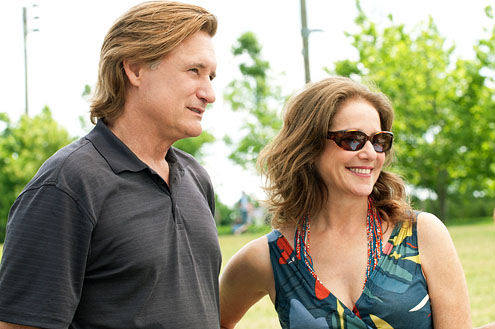
In fact, the only times when there seems to be any energy in the film is when Lola’s parents are in screen.  They are played by veterans Bill Pullman and Debra Winger, and I often wondered what they where doing in this movie, or why they signed on in the first place.

  Lola herself is played by Greta Gerwig and Luke, the man who dumped her, by Joel Kinnaman.  Kinnaman will be vaguely familiar as the lead detective in the U.S. television series The Killing, while Gerwig is a bright, intelligent actress who still has not found a decent movie for her to star in. (Perhaps, Woody Allen will be able to tap in best to her talents in To Rome with Love, in which she stars.)

The film was co-written by Zoe Lister Jones, who also plays the quirky girl-friend Alice who acts as a foil to Lola’s moodiness.  Lister seems infatuated with the script she wrote and seems to find her lines clever and hilarious when in fact they are less than sophomoric and sadly trite.

Even New York seems tired.  There is no depth–of New York excitement or of urban alienation–to any of the location sites and the interiors are often a confused jumble of …interiors. One is never quite sure if one is in Lola’s, Alice’s, Henry’s or Luke’s place.

Lola is working on her PH.D. dissertation which concerns silence in 19th-century French literature. (And of course there are the shots of an anguished Lola in front of a laptop, unable to move forward because of the devastation in her love life.) When the subject of her dissertation is introduced there are some clever moments of silence–in a restaurant, in a college meeting, on the street. But, one finishes the film wishing there was more…silence that is.

Movie Review: Moonrise Kingdom

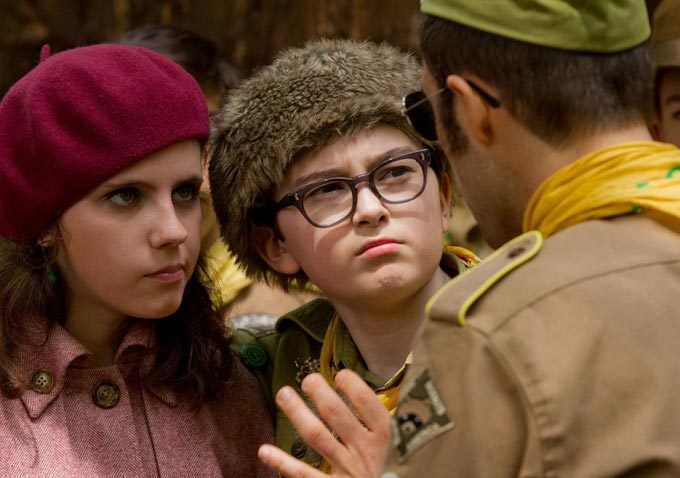
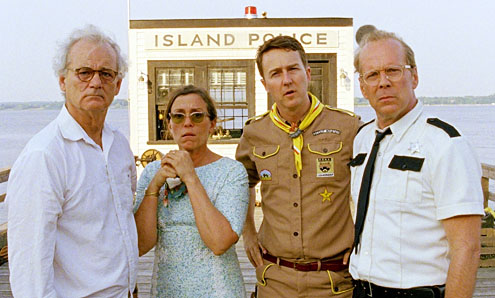
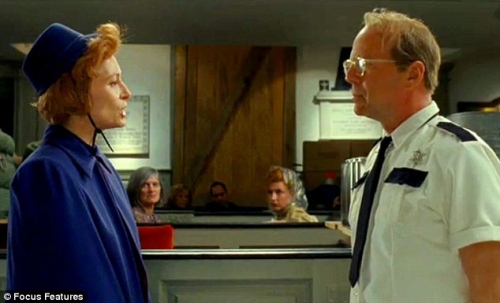
There are some real heavy weights here:  Bill Murray (can there be a Wes Anderson movie without him?), Frances McDormand, Tilda Swinton, Bruce Willis, Ed Norton, Bob Balabay, Jason Schwartzman, Harvey Keitel.  And yet Wes Anderson’s delightful, quirky, warm-hearted movie is completely stolen by the two young stars who play 12-year-old runaways.

Jared Gilman plays Sam, an iconoclastic, orphaned Khaki Scout who is not liked by any of the other scouts. Kara Hayward plays Suzie, the disturbed and angry daughter of Bill Murray and Frances McDormand.  For over a year, after Sam saw Suzie playing a raven in a local production of Benjamen Britten’s children’s opera Noye’s Fludde, the two have been planning to escape their unhappy lives.

When Sam escapes his Scout camp, the authorities are alerted.  When Suzie is discovered missing, everything goes into overdrive.

As the two twelve-year-olds make their way through rugged country–Sam is an extraordinary Scout–we get to witness one of the most beautiful, innocent, and real love stories.  Maybe the most intense love is that one that is first felt when you are twelve years old?  It certainly is for them.

Yet the real world, in the guise of hurricanes, adulterous unhappy parents, foster parents, social services, man-scouts, and a lonely policeman, comes crashing in on them.

This is a comedy, so everything ends well. But the journey towards that ending is filled with all the anguish and hope of being in love at 12 years old; it is defined by  that feeling of being too small against the world while believing that one’s unique love will protect you from everything.  In many ways, it is perfect. (One reviewer said that it was made by the 12-year old Wes Anderson, so perfect is the point of view.)

The two young stars are extraordinary. They are playing children who are precious, treading in the murk of real life, battered by injustices and misunderstandings that are too big for them to withstand, and roiled by all the passions of first love.  And they play it perfectly.

And aside from the two kids, and the A-list group of adults, the set designers, graphic artists, and cinematographers are also front and center in the film.

From the quirky credits and the Bishop’s  loopy house to the book covers on the adventure stories that Suzie reads and the watercolors that Sam paints, everything pops with an fresh palate of color and tone and liveliness.  You are aware of the filming–not in an obtrusive way but in a way that stuns and delights you. This is not cinema verite; it is very aware of its artfulness and it succeeds at it.

The natural setting is gorgeous–our two runaways have found Eden–and the sets are filled with color and eccentricity.  While the island New Penzance is based on Fishers’s Island, NY, I am not sure where it was actually filmed. But it is romantic–in the original sense of the word–and sublime.

I have enjoyed all of Wes Anderson’s films, but am often left with a sense of emptiness, with a sense that surfaces were barely scratched and characters hardly born. Moonrise Kingdom is different.  While not a character study, by any definition, it is a beautiful study of original love, love that is pure and scary and wonderful and all of that.

Sunday Movie Review: Headhunters

It used to be when I thought of Scandinavia, I thought of crystal-blue fjords, aromatic forests, statuesque blondes, and a palatable wholesomeness.

That’s before Stieg Larson gave us his girl with the dragon tattoo, and Jo Nesbø, his various riffs on Scandinavian violence.  Now when I think of Scandinavian, it seems a place of outrageous torture, imaginative violence, and not a little repressed fascism.

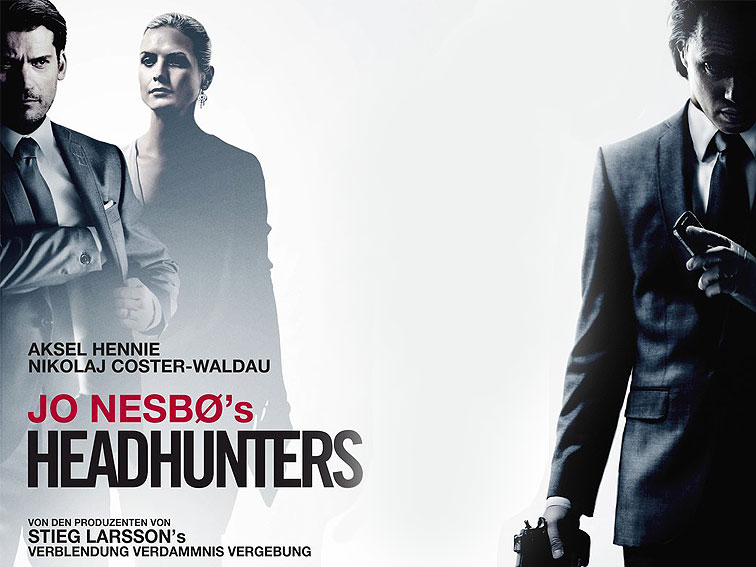
Headhunters (Hodejegerne) is Mortin Tyldum’s adaptation of Jo Nesbø’s slick, stylish novel of a professional headhunter who is also a major art-thief.

Roger Brown (played by Aksel Hennie who has a striking resemblance to a young Christopher Walken) is a very successful headhunter–he brings talent to very powerful and influential corporations.  In interviewing potential clients, he discovers their routine, the artworks they own, and whether they have a dog.  In this way, he is able to case his next heist in the luxury of his offices. Roger tells us that he is only 1.6 meters tall (about 5’3″) and that he has to “compensate.”  He does this by buying his stunningly beautiful wife (Synnøve Macody Lund ) everything he thinks she desires: A house right out of the glossiest of architectural magazines, expensive and rare jewelry, an art gallery to run.  He can afford none of this–which is why he must steal art, and even that income is proving to be too little.

We begin by seeing him steal a lithograph by Munch.  (Is it just me or is Munch the most stolen artist of our time?  I don’t know how many versions of The Scream have been stolen in the past thirty years.)  Anyway, the print that he steals is called “The Broach” but it looked very much like one of Munch’s Madonna paintings.

Munch’s lithograph “Madonna”

But even the Munch is not enough to silence Roger’s creditors, so he has to go after a really big score–a long lost Rubens that is in the apartment of a man who he is recruiting for a major position.  In the interview, we learn that the man, Clas Greve, (Nikolaj Coster-Waldau) is a former mercenary, a world expert at tracking people and deposing of them–aha, the plot is setting itself up. He is also ruthlessly ambitious.  We also soon learn that he is sleeping with Roger’s wife.

I will not spoil how it all plays out except to say that there is an enormous amount of bloodletting and creative violence. We move from Roger’s sleek house to Appalachian-like cabins, where the patina of civilization has been long ripped off.

Headhunters is very taut, fast moving, and exciting.  It works very well as a slick thriller, a clever heist movie, with surprising twists and tense, rapid moments.  It also aspires, it seems, to be a good-old-fashion “slasher movie.”  This is where it fails.  The blood is overdone.

And along with trying to be a heist movie, a thriller, a slasher-movie, it also makes periodic stabs at being comedic.  There are very fat twin cops protecting Roger’s hospital room who bungle everything–although their very large size might be what saves Roger’s life.  There is a nonsensical bit with a Russian prostitute and Roger’s partner in crime (which has to be introduced for a technical reason, but it is mostly nonsensical and more irrelevant than essential.)  Heist, thriller, slasher, comedy–perhaps Tyldum is trying to juggle too many balls at once.

In truth, however, Headhunters is a very good way to spend an hour and forty minutes.  Fast-paced, handsome, and clever, if it does nothing else, it is sure to drive more people to reading Jo Nesbø.  And that’s a good thing.

Check out the trailer below:

Movie Review: The Fairy (Le Fée)

I went to the movies this afternoon.  There is something decadent about going to a 1:00 movie on a Wednesday afternoon.  The sky was blue, the sun was shining, the temperature was perfect.  And I wanted to sit in a dark theater.

There is something even more decadent about being the only person in the theater. It was like a private showing just for me!

Anyway, I went to see the movie The Fairy.  I really hadn’t known anything about it until Monday when I looked it up on-line. The on-line plot summary referenced Tati and Keaton (see yesterday’s post) and it looked solid enough, despite the twee title. Written and directed by the Belgium based trio of Dominique Abel, Fiona Grant, and Bruno Romy, it is very broad in its humor. It is both light and sweet, but it feels very amateurish, which it isn’t.  Abel, Grant and Romy are veteran comics, and are the acclaimed forces behind two other well-received films, Iceberg (2005) and Rumba (2008)

But The Fairy was slight.  The story is thin and much of the physical comedy has been done before.

Very early in the movie, Dom (Dominique Abel), a sad-sack concierge in a hotel in Le Harve is trying to eat a sandwich. He sits, turns on the TV, and goes for his first bite when the front bell rings. He clicks off the television, puts down his sandwich, and takes care of business.  This sequence repeats itself  four more times, with Dom’s frustration rising each time.

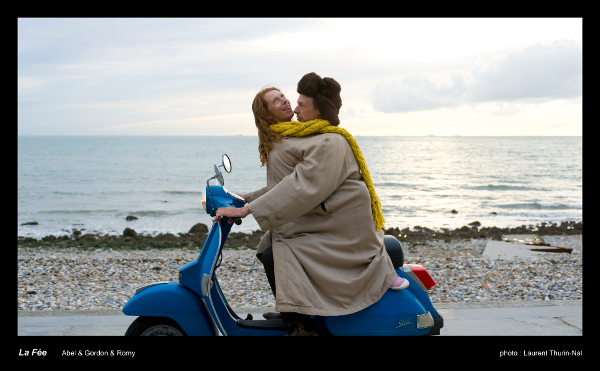
The last two interruptions were by Fiona (Fiona Gordon), a disheveled woman who takes a room in the hotel but only after announcing that she is a fairy and that Dom has three wishes.

Later, when Dom finally gets to his sandwich, he swallows the cap to his ketchup–which we knew was in the sandwich and which adds some comic tension to every interruption of Dom’s meal…will  he bite it now or not? It is Fiona who saves him.  She performs an unusual heimlich manuever by sitting him on the front desk and running across the room before head-butting him in the chest. The lid to the ketchup bottle comes flying out.

And the caliber of the physical comedy has been set.

It is as Dom lies recovering on the lobby floor that Fiona once again announces that Dom has three wishes.  He can only think of two: a motor scooter and a life time of free gas for it.

By the next morning, Fiona has delivered both.

Many of the gags have been done before: The valise that is holding a lap dog and which shuttles across the lobby floor…the falling down of several flights of steps…the turning a corner on a scooter and then reappearing with the driver chasing the riderless vehicle…the nearsighted waiter (Bruno Romy) who walks into things and repeatedly misses the table or the glass with his service…bumbling police.  For me, much of it felt old. I had seen much of the same in films from the ’20s and ’30s.

And while Dominique Abel’s mugging and pratfalls are amusing, it is Fiona Grant’s physicality that carries the movie.  She is a lithe as a ballerina (her bare feet seem as disfigured as a dancer’s) and as angular as a young Jerry Lewis (of whom she reminded me.) She runs awkwardly (there are several chase scenes reminiscent of the Keystone Kops) and dances more than oddly.  There is an underwater dance scene (where Dom impregnates her inside a giant clam shell) and a Marx Brothers’ style phone session.  And in it all, she is spectacular.

Perhaps the most amazing stunt is a late kiss. Dom and Fiona are being pulled away by two different groups of police. As they kiss, the police pull each of them away, but their lips remained locked. Finally, they are completely parallel to the ground, their bodies stretching in the air across a sizable space, holding each other up (I can only guess) with the force of their kiss while the police hold them by their lower legs.  If it the scene isn’t computer generated, it is truly a great physical stunt–incredibly strenuous while seeming so casual and perfect.

Throughout the film, Dom and Fiona repeat a conversation:

Fiona: Dom, have you thought of what your third wish will be?
Dom:   No.
Fiona:  Well take your time.”

This snippet occurs three or four times, but at the end, when Dom, Fiona and their baby walk into the sunset (having once more eluded everyone who is chasing them) and Fiona asks her question, we feel that Dom has already received his third wish–his very unusual family.

Overall, it wasn’t a wasted day. But The Fairy wasn’t the movie I was looking for.  Cute, inventive, and smile inducing.   It just seemed very old-hat.

Poetry on TV: The Song of Lunch by Christopher Reid

Farewell to long lunches
and other boozy pursuits!
Hail to the new age
of the desk potato, …

Sometimes, though, a man needs
to go out on the rampage,
throw conscientious time-keeping
to the winds,
kill a few bottles
and bugger the consequences.

Ah, I too miss those boozy lunches. I worked for more than a decade in an in-house advertising agency, and some of our Friday lunches were both epic and legendary.  But I ultimately left advertising for the more sedate, sober world of academia–or at least the more sedate, sober lunches of academia.

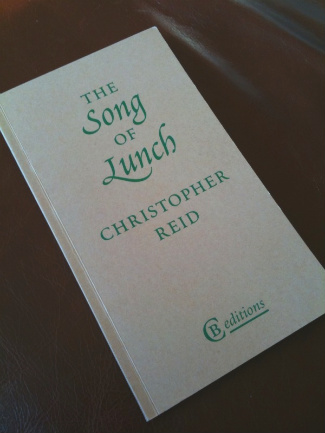
The man who is lamenting the lost tradition of long lunches above is the rather bitter and sarcastic subject of Christopher Reid’s The Song of Lunch. Yet on this particular day he sticks a note on his computer screen saying that he is headed out to lunch and that indeed it is going to be a long one.

Probably, unwisely, he has arranged to meet an ex-lover for lunch at one of their old haunts. He, a copy-editor at a famous publishing house; she, the wife of an extremely successful novelist, living in Paris. The novelist is also the man she left the narrator for.

He isn’t sure what he expects from this rendezvous but little of it goes the way he hopes.

Lunch has never been more poetic, or sexier, or frustrating.  The dance of tension and attraction between the two begins immediately.

There! she says, and smiles
Lips, eyes, eyebrows
and the new lines in her forehead
fill out the harmony.

Here! he replies.

She has just entered with “There” and he counters with “Here.”

He bemoans the fact that “their” restaurant has changed so much in the fifteen year interim: the menu features:

pizzas by the yard.
More pizzas than there should be.
And too much designer pizazz.

He turns it over:
choose the right wine
and have it ready breathing
for when she arrives.

There’s a mid-price Chianti,
which won’t come plump
in tight straw swaddling,

byt will do for auld lang syne.

In fact, it is for the “auld lang syne” that he is here, crumpled by the present, dashed in his literary hopes, and obsessed with a long-gone love.  This lunch is very much not the best idea of his.

But she on the other hand is charming.  Personable, open, interested, determined to enjoy the day.  But he cannot. When she asks about his life he goes on a rant about modern publishing:

Confessions of  Copy Editor ,
chapter 93.
It;s an ordinary day
in a publishing house
of ill repute.

Another moronic manuscript
comes crashing down the chute
to be turned into art.
This morning it was Wayne Wanker’s
latest dog’s dinner
of sex, teenage philosophy,
and writing-course prose.

In contrast, she is accepting and pleased with her life as:

Me? Oh, the good wife,
and loving mother.
That keeps me occupied.
I’ve no complaints.
And Paris is a fabulous city.
You really should visit.

(He has by the way, visited. Stalked her a while back but lost the nerve to ring the bell when he was at her door.)

Throughout the lunch, he observes her every move. He watches her daub her mouth with a napkin,  slice into her ravioli, ask the waiter for advice. And all of these observations are described in a rich language filled with a keen ache, for he remembers every whorl of her knuckles, every dilation of her pupil, every crinkle of her lips.

To deal with his ache, his confusion, his lust, he drinks.  Far too much.  Much more than she.

She had arrived at the lunch full of good will and charm, but his sarcastic, bitter demeanor pushes her away.

But, it is a narrative poem–it tells a story–so I won’t spoil the ending.

Now, in 2010, the BBC did something extraordinary.  Rather than digging in the vaults of the classics (there is an endless list of Dickens and Austen productions) or dramatizing the latest Scandinavian thriller or Scottish mystery, they decided to do something quite different.  They decided to dramatize a contemporary work of poetry.  And they did it well.

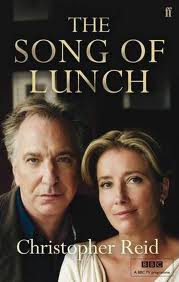
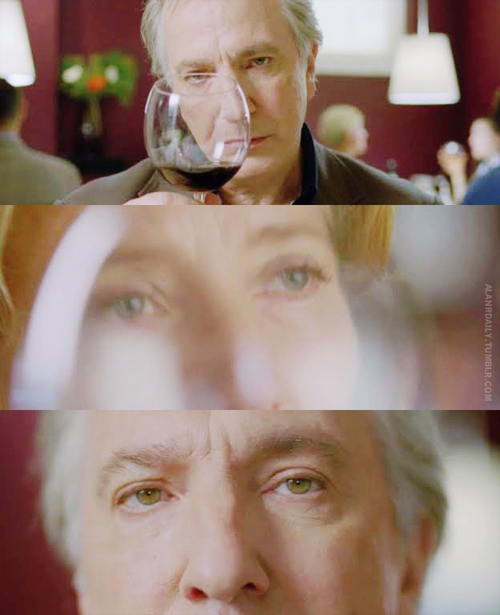
The BBC2’s production of The Song of Lunch–made to celebrate National Poetry Day in Britain– was genius simply in the choice of the actors.  Alan Rickman and Emma Thompson.  For who can better play a put-upon man, dour and drunken, and rising with lust and regrets better.  I cannot think of anyone else.  And Emma Thompson, literally shines in the role–literally that is. In one scene where Rickman is looking at her through his half empty wine glass she is glimmering.  There is a fresh aura of rightness about her that works in perfect contrast to the curmudgeonly Rickman.

The Song of Lunch is a strange one for me, for I saw the film production before I read the book.  In fact, it was BECAUSE of the dramatization that I got the book. “Making words come alive” is such a cliche, yet in this case it is very much true.  The tiny narrative of Reid’s is served quite well when animated by Rickman and Thompson.

I’ve read the poem several times now, finding something new to enjoy each time.  I You-tubed the BBC production and watched a few scenes, but the BBC came in and took certain “chapters” off, so one loses the continuum.

I do remember those long boozy lunches.  Though I wish at the time I was as observant as Christopher Reid.  His The Song of Lunch is as rich as the carpaccio and pumpkin ravioli that were ordered for appetizers and as heady as the grappa that finished the meal.