Sunday Book Review: Hitch-22: A Memoir by Christopher Hitchens

It is a cliché that one should never meet the writer’s that one admires–disappointment is surely to be the outcome.  Well, Christopher Hitchens is the exception to the rule.

I admire him even more having read his memoir.

As one of the most prolific and provocative essayists of the last thirty-odd years, Hitchens seemed to be everywhere–his journalist’s beat the places where injustice, cruelty, and war loomed most horribly.  From Belfast during the heights of the “Troubles,” to Argentina during the period of the “disappeared,” to Poland at the beginnings of the “Solidarity” movement, to Zimbabwe, Mogadishu, Romania, Cyprus, Iraq, and Iran, Hitchens brought his sensible eye and exquisite writing style to reveal to the world the frequent cruelty and inanity of world politics, exposing the greed and stupidity of many of the political leaders who claim to have the “peoples’ interests” at heart.

It is that principled, observant eye and the exquisite sense of writing that defines Hitchens memoir–for his biography is one of two sides: the principled, political advocate and the Oxford educated, man of letters. And the people he encounters come from both of these worlds as well.

On one hand, he is with a young Bill Clinton at Oxford when he infamously “did not inhale.”  (Hitchens says that is probably correct because Clinton was terribly allergic to smoke. However, he adds, he certainly consumed more than his share of the “brownies.”) He meets Margaret Thatcher when she is made head of the Tory party. (He immediately got in a disagreement with her and she smacked his bottom with rolled up program to terminate the discussion.)  He meets the vile General Videla of Argentina; the future first elected president of Iraq,  Jalal Talabani; the Cypriot president, Archbishop Makarios. He debates Western pundits and arranges lectures for some of the world’s most unsung champions of the people.

On the other hand, his closest friends are major lights of the British literary world: the novelists, Martin Amis and Ian McEwan, and the poet James Fenton.  His accounts of their times together rival any of the apocryphal stories of the Algonquin Table.  (My favorite line is the critic’s Clive James’ review of Pumping Iron, the documentary on body-building that introduced Arnold Schwarzneggger to the world.  James said that Schwarzenegger looked like “a brown condom stuffed with walnuts.”)

But what stands out in Hitch-22 is not the list of notables with whom Hitchens associated or fought against. It is the dedication to principle with which he lived his life.  As a young man he was a dedicated member of the International Socialist party and later became a dedicated member of the Labour Party. Both of these he jettisoned when he believed that the party had strayed from its principles–and he continually called them on it.

As he traveled from hot-spot to hot-spot, he began to trust the leaders of all these revolutionary movements less and less. Here’s what he says:

I eventually came to appreciate a feature of the situation that since helped me to understand similar obduracy in Lebanon, Gaza, Cyprus, and several other spots. The local leadership that are generated by the “troubles” in such places do not want there to be a solution. A solution would mean that they were no longer deferred to by visiting UN or American mediators, no longer invited to ritzy high-profile international conferences, no longer treated with deference by the mass media, and no longer able to make a second living by smuggling and protection-racketeering.

A bit cynical to be sure, but this is from a man who has entered the belly of the beast and refuses to swallow the muck he sees there.

Always an iconoclast, Hitchens attacks those he believes deserve it, no matter what their status or reputation. For example, early on, he admits that he felt separated from the rest of the world in November, 1963 for not mourning sufficiently  the assassination of the American president.   The sainted Jack Kennedy he condemns as a “high risk narcissist” for the game of chicken that he played with Russia over the Cuba missile crisis.  (This event  very likely sowed his interest in geopolitics.) He very famously debunked Mother Theresa and was called in by the Vatican to present a case against her when she was up for canonization. (This used to be called “The Devil’s Advocate,”  a position that the Vatican eliminated by the time Hitchens was called in. He jokingly said that he  must then be advocating for the devil, pro bono.)

Like any good thinker, Hitchens is not afraid to change his mind, to reconsider his position, when presented by new facts.

More than anything else, it is this life as a DELIBERATE THINKING HUMAN that impresses me more than anything else in his story. Hitchens considered the world around him with open, unprejudiced eyes, tried to make sense of it, and tried to expose what he saw as nonsense.

Hitchens died 15, December 2011, after a struggle with esophagal cancer.  His writings live on. I have two collections of his essays on hold at our public library.  I can’t wait to tackle them.

A footnote on The Sugar Frosted Nutsack by Mark Leyner

Despite my misgivings, I plowed ahead and finished The Sugar Frosted Nutsack by Mark Leyner.  My original appraisal was unchanged. I felt it was infantile, too enamored with its own cleverness, and pointless. It wasn’t a pleasant read–the effort in no way equaled the payoff.

However, I did notice something that I hadn’t before.  I was proofreading what I had written last week about the novel on a different platform. The tablet had shrunk the margins so that the text ran narrow like a newspaper column.  I had originally quoted this text:

“What subculture is evinced by Ike‘s clothes and his shtick, by the non-Semitic contours of his nose and his dick, by the feral fatalism of all his looney tics–like the petit-mal fluttering of his long-lashed lids and the Mussolini torticollis of his Schick-nicked neck, and the staring and the glaring and the daring and the hectoring, and the tapping on the table with his aluminum wedding ring, as he hums those tunes from his childhood albums and, after a spasm of Keith Moon air-drums, returns to his lewd mandala of Italian breadcrumbs?

But in the “newspaper column” format the passage ran quite poetically like this:

“What subculture is evinced by Ike‘s clothes and his shtick,
by the non-Semitic contours of his nose and his dick,
by the feral fatalism of all his looney tics–
like the petit-mal fluttering of his long-lashed lids
and the Mussolini torticollis of his Schick-nicked neck,
and the staring and the glaring and the daring
and the hectoring, and the tapping on the table
with his aluminum wedding ring, as he hums
those tunes from his childhood albums
and, after a spasm of Keith Moon air-drums,
returns to his lewd mandala of Italian breadcrumbs?

There is a rhyme scheme to the passage, a rhythm that I had missed when reading the prose. I went through the novel for similar riffs and they are a few but they are there for no intrinsic reason–they seem to occur only when Leyner is in a rhythm himself, apart from the needs or function of the novel.

It was fun to discover but it didn’t change my opinion.


printed books, personal libraries, cleaning out and French bookstores

by roboartemis. Found on deviontart.com

It seems I have always loved books, and in my lifetime have amassed quite a library. I find some sort of comfort in being surrounded by books, books on shelves, in piles on tables and floors.

In the past few years, though, I have had to thoroughly cull my shelves, for a variety of reasons.

Last year, I inherited about a thousand books from an uncle–he had promised me them ever since I was about nine years old–but after he died I simply couldn’t house them. I  already owned more than that myself and his simply were not going to fit. The two of us had had similar tastes and many of the same titles, so the duplicates  were easy to get rid of.  Others I gave to friends, even to non-readers. And the majority I gave to two used book sellers.

In 2004 I had ghostwritten a history of Ireland and part of my contract was that the publisher paid for any books I purchased while doing my research–I bought a lot. So I was able to make more room by donating about seventy-five of these titles to the Irish Center in Philadelphia.  They were hard to part with but I consoled myself in thinking that they are being read rather than simply sitting on my shelf. (I had ghostwritten a biography of Darwin as well but for some reason the publishers didn’t offer to pay for that research. I had far less books on Darwin than on Ireland.)

Now for any new reading, I turn more and more often to the public library, and I have begun buying some e-books, though only a handful.  I make an exception and still buy poetry regularly (kidding myself by rationalizing that these usually take up less space), and I have bought some non-fiction titles that I knew that I wanted to own, and would go back to time and time again. But novels generally come from the library now.  And that’s just as well.

We have all read the dire warnings about the demise of printed books. Such articles crop up almost weekly: The death of bookstores, the death of the author, the death of the novel (granted that one has been going around since long before the internet), etc. A friend of mine in Brooklyn passed along this article to me about how in France book sales are actually rising rather than being smother by digital devices. It makes for some interesting reading. Click on the picture below to read the piece:

Shoppers in La Hune, in Paris, which receives government help.Alice Dison for The New York Times 

So by the end, I went through an enormous amount of books and gave many, many away. (For 6 months I had to rent a storage shed to house my “inheritance” while I figured out what was going and what was not.) I didn’t like doing it, but I knew I had to.

And of course, that book that I hadn’t looked at in fifteen years, that had sat dusty on my shelves for so long.  As soon as I gave it away, I needed it for something or other!  Isn’t that how it always goes?

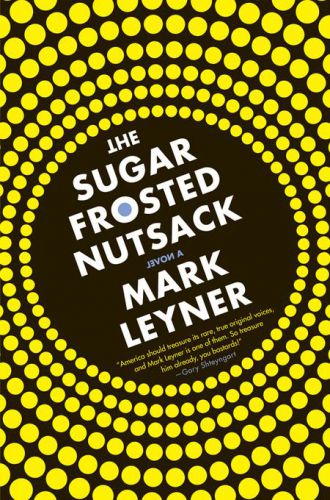
The Sugar Frosted Nutsack by Mark Leyner: When does one stop reading a book?

When is it time to stop reading a novel?  And why do I feel so guilty about it?

I decided today to go no further in Mark Leyner’s The Sugar Frosted Nutsack.  Was it bad?  No, it was quite entertaining?  Was it difficult?  No, not in the way say Joyce’s Finnegans Wake or DFW’s Infinite Jest is difficult.

To be truthful, it is simply a tiring read.

The title refers to poor Ike Karton, the “nutbag” as he is called in his neighborhood in Jersey City, New Jersey.  Here is his introduction (35 pages in):

“What subculture is evinced by Ike‘s clothes and his shtick, by the non-Semitic contours of his nose and his dick, by the feral fatalism of all his looney tics–like the petit-mal fluttering of his long-lashed lids and the Mussolini torticollis of his Schick-nicked neck, and the staring and the glaring and the daring and the hectoring, and the tapping on the table with his aluminum wedding ring, as he hums those tunes from his childhood albums and, after a spasm of Keith Moon air-drums, returns to his lewd mandala of Italian breadcrumbs?

So begins the story of Ike Karton, a story variously called throughout history Ike‘s Agony, T.G.I.F. (Ten Gods I’d Fuck), and The Sugar Frosted Nutsack. This is a story that’s been told, how many times? –over and over and over again, …”

Ike is a believer in a pantheon of Gods who have played havoc with the universe for billions of years.  Earlier we learn that

The Sugar Frosted Nutsack is the story of a man, a mortal, an unemployed butcher, in fact, who lives in Jersey City, New Jersey, in a two-story brick house that is approximately twenty feet tall. This man is the hero IKE KARTON. The epic ends with Ike’s violent death.  If only Ike had used for his defense “silence, exile, and cunning.” But that isn’t Ike. Ike is the Warlord of his Stoop.  Ike is a man who is “singled out.” A man marked by fate. A man of Gods, attuned to the Gods. A man anathematized by his neighbors. A man beloved by La Felina and Fast-Cooking Ali, and a man whose mind is ineradicably inscribed by XOXO. [these are the names of gods we’ve already met]. Ike’s brain is riddled with the tiny, meticulous longhand of the mind-fucking God XOXO, whose very name bespeaks life’s irreconcilable conntradictions, symbolizing both love (hugs and kisses) and war (the diagramming of football plays).

Are you tired yet?  I am…(but I have such a developed sense of guilt that I will probably return to it before the evening’s out.)

The  novel begins with the beginnings of the universe. This gaggle of gods arrive on a school-bus, blaring the Mister Softee jingle, like a bunch of college students “Gone Wild” on spring break.  Like the gods of other mythologies, they are petty and mischievous and promiscuous and quite often harmful to humanity. Now, they are living in the tallest (and most opulent) building in the world (now they are in Dubai, but they have had to move several times as humans keep building taller buildings.) Bored and propelled by their own machinations and relations they have become obsessed with Ike Kantor.

The novel plays with meta-fiction to a large degree. A sentence is repeated. Then the sentence that makes the repetition is repeated again including the original sentence. And again. And again.  It is tiring…and soon loses its cleverness.

But the book is not the theme of this post; it is is the decision to give up on one.  Why do some people (myself to be sure) feel a sense of obligation to finish a book once he or she has begun it?  Is it financial, in that you’ve invested fifteen bucks in a book you might as well get your money’s worth?  I don’t think so.

Is it something that happened to us when we were school children? Are we afraid that the nuns, headmasters, schoolmarms are going to rap our knuckles with a ruler for not completing our assignment?

Or is it respect for the artist?  Do we feel the need to stick with something, to see where it leads to, out of respect and admiration for the writer’s work?

I don’t know.

But I have a day and half free–so I’ll probably end up finishing it anyway.

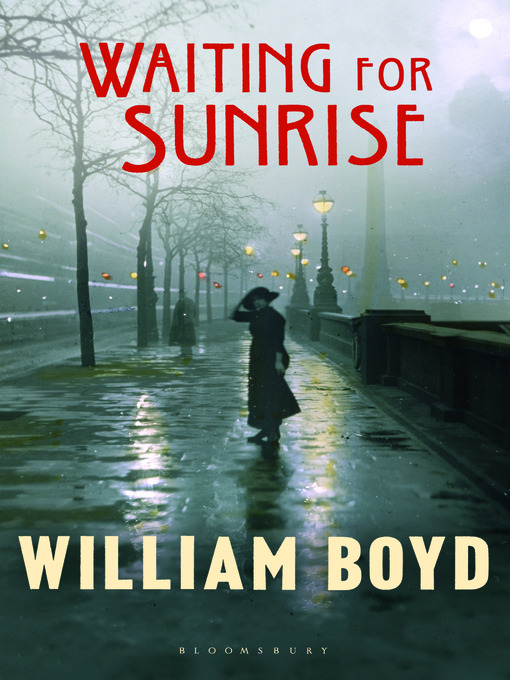
Sunday Book Review: Waiting for Sunrise by William Boyd

For ninety-percent of the novel Waiting for Sunrise by William Boyd, I was enthralled.

Vienna before the first World War, London on the eve of war, the no-man’s land between the trenches, neutral Geneva at the height of hostilities, London during zeppelin bombing raids. The settings are dramatic and richly drawn.

As was the plot: A young actor, following his famous father’s footsteps (if that’s not Oedipal enough for him, his mother catches him at his first experience at masturbation to boot), goes to Vienna to find a cure for a sexual condition–to Vienna, the center of the burgeoning new concept of psychoanalysis. Although he meets Freud himself, it is Freud’s English speaking neighbor who takes Lysander Rief on–and who successfully cures him.  And we know he is cured because his four month affair with the English bohemian Hettie Bull ends in a pregnancy and his arrest for rape by the Viennese authorities.

When two British diplomats arrange for Rief’s escape, they also arrange for his indenture to British intelligence.

Soon after Rief returns to London, his rescuers called in his debt and he is asked to enter Geneva via  the front lines. He is successful at his mission, survives seven bullet wounds, and completes the assignment that he had been ordered to finish.  And then he is given a second mission.

The action–of both the military and intelligence escapades and Rief’s romantic life–is riveting, fast paced and cleverly intertwined. Each character seems to be connected to another and no one is entirely innocent. And Rief’s inner-life is subtly and intelligently revealed. One learns much about military ordinance, psychoanalytic practices, the British class system and the early 20th-century British world of theater. And the information is never pedantic or overwhelming but richly woven into the plot.

Yet the solution of Rief’s intelligence mission and the resolution of his own personal quests seems to be lacking.  As the Novel wraps up and the various strands are pulled together, the story begins to limp rather than gain strength.  By the end, I felt I was reading a Hardy Boys’ Adventure. The solution was pat and somewhat anti-climactic.

I had been look forward to Waiting for Sunrise for several months and to be quite honest I enjoyed reading it very, very much. Until the end that is.  I was disappointed. It seemed that Boyd had simply decided to quit.

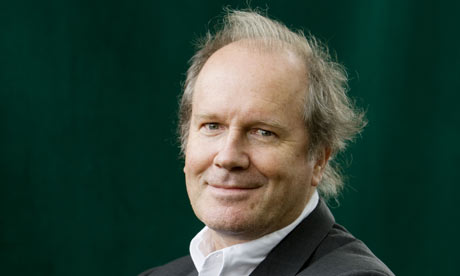
William Boyd

I like William Boyd very much. I feel he is greatly underrated among his contemporaries and is a wonderful stylist with a perfect ear for the nuances of an age.

I had previously read several Boyd novels and do not remember this falling off, this disappointment before. The novels all successfully re-create historic eras, describing its people, its culture, its ethos, its fears, all braced by an intelligent understanding and description of the scientific theories and advancements that are at that moment being born. For instance, Brazzaville Beach deals with mathematical chaos theory and the sociology of chimpanzees.  The New Confessions (modeled on Rousseau’s Confessions) also deals with World War I–as with Waiting for Sunrise–moves through Hollywood and Berlin, treats the horrors of World War II and then ends with the Hollywood Communist  trials, the whole while treating  us to the internal workings of the Hollywood film industry.  The Blue Afternoon (my personal favorite) is centered on the United States invasion of Manilla and its ultimate acquisition of the Philippines through the Treaty of Versaille and travels from Lisbon, Manilla and Los Angeles, from 1902 through the 1930s, while leading the reader through advancements in surgery and trends in architecture.

All of Boyd’s novels are rich with fascinating information, realistic period details, and memorable human stories. And all are vastly enjoyable and worthwhile.  Waiting for Sunrise, however, for me, ends a little too quickly and a little too weakly.

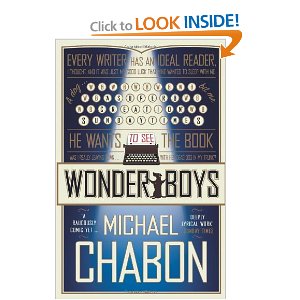
Tuesday Book Review: Wonder Boys by Michael Chabon

I read Wonder Boys last week.  I had read it previously, at least twenty years ago, and, boy, had I misremembered it.  As a younger man, I found inspiration in the “wunderkind” writing student and was fascinated by the famous writing teacher who is famously blocked with his novel (also called Wonderboys) that is going on past 2600 pages long.  This time around I did not have the same reactions.

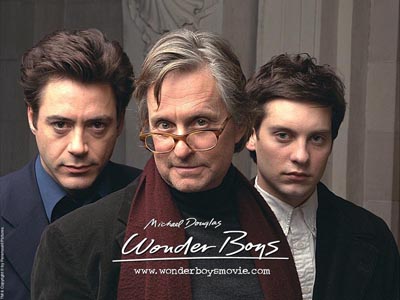
Part of the problem is also that I could not get the film adaptation out of my head– a film I had seen in the long interim between readings.  In the film, the famous writing teacher is played by Michael Douglas, his cynical, jaded literary agent by Robert Downey, Jr., and the fabulous writing student by Tobey Maguire.  And while I remember enjoying the movie greatly–and understand why marquee actors are used–I think  it was terribly miscast.

Grady Tripp is the dissolute writing teacher.  He smokes way too much dope, he is cavalier in his relationships, and he is always looking out to score. In the novel, he is over-large, a big hulking bear of a man.  In one scene, when he is spiraling into what might be a catastrophic relationship with a young student who rents a room in his basement, he notices his reflection in the mirror. He sees a middle-aged, bearish man slumped down over this young college girl as they slow dance together. It is a moment of self-awareness–aided by a large quantity of pills, dope, and alcohol enhanced by pounding adrenelain after a slapstick night of antics. The man he sees in the mirror no way is the stylish professor played by Michael Douglas.

The young writing student is a-social and painfully awkward which Tobey Maguire captures but he is not nearly dark enough. In the novel, James Leer is very dark, in a long overcoat of indeterminate material and age.  And Robert Downey Jr. did not match my vision either. I know that most people quibble with the casting of books they’ve read when they are made into movies.  And this is my quibble: the cast is too handsome.

But enough about the movie…

The novel starts out on a rollicking tear. On the night that the novel begins Grady Tripp finds a note from his wife saying she has left him, he picks up his agent and the transvestite he met on the plane, his mistress–Chancellor of the school and wife of his Department Chairman–tells him she is pregnant, he gets bit in the leg by a dog, and he is traveling around with a tuba, a dead dog, the coat Marilyn Monroe wore at her wedding to Joe DiMaggio and a student who may or may not be suicidal…or truthful.  It reminded me of John Irving at his best.

An academic farce, there are set scenes of college gatherings and festival lectures. There are Tripp’s musings on the requirements of good writing, his praise for James Leer’s young but promising work, and insights into a truly blocked artist–one who comes to no longer believe in the work he is doing.

The female characters, his wife, his mistress, the student living in his house, however, are very shallow–cardboard figures created for Tripp to act or react against.

Michael Chabon

That the novel famously echoes Chabon’s early writing life makes reading it this much later in his career offer its own rewards.  Like James Lear, the young student, Chabon received a book contract for The Mysteries of Pittsburgh when his writing professor–unknown to Chabon–passed the manuscript on to his own literary agent.  And like Grady Tripp, Chabon worked years on a follow-up novel–a novel that grew enormously large before he himself destroyed it.

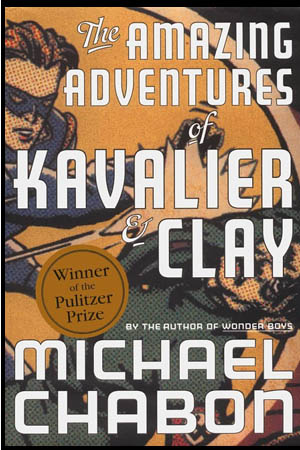
Since The Mysteries of Pittsburgh and Wonderboys, Chabon has continued to win great praise and loyal readership.  His novel, The Adventures of Kavalier and Clay won the Pulitizer Prize for fiction in 2000 and his 2007 novel The Yiddish Policemen’s Union won the Hugo, Nebula, Sidewise and Ignotus awards. (An aside–I was in Quebec city one week and needed something to read. There was primarily only French book stores. In one that I stepped into there was a small rack with about a dozen books written in English. It was there that I bought the Yiddish Policemen’s Union.)

And while his first novel–The Mysteries of Pittsburgh–and the novels following Wonderboys deal directly with Jewishness and Judaism, it is a very minor theme in Wonderboys.  There are touches of it when Tripp and James go visit his Korean ex-wife for Passover Seder and bumps against it when James’ own history is revealed, but it is not forefront in the novel.

Instead this is very much a novel about writing–or not writing as is Tripp’s case.  It is academic because it takes place on a university campus and deals with chancellors and professors and students and chairmen, but there is no scenes within a classroom. It tries to be a novel about love and contentment–but Tripp’s long road there, it is his third wife that leaves him and his tentative gestures towards his pregnant mistress are filled with doubt and fear.

All in all, though, Wonderboys is a wonderful read.  The beginning is peerless–quick moving, deft character sketches, and hilarious plotting. If the second-half seems to suffer from a bit of a hangover, it is because nothing could keep up with the original momentum. The novel must switch rhythms to mirror Grady Tripp’s more thoughtful musings, fears, and discoveries.

Do read Wonderboys or, if you want, rent the film.  Both are very enjoyable.  Just don’t do both too close together. And when you finish with those give Chabon’s other titles a try. Any of them are well worth the time spent.

Sunday Movie Review: Headhunters

It used to be when I thought of Scandinavia, I thought of crystal-blue fjords, aromatic forests, statuesque blondes, and a palatable wholesomeness.

That’s before Stieg Larson gave us his girl with the dragon tattoo, and Jo Nesbø, his various riffs on Scandinavian violence.  Now when I think of Scandinavian, it seems a place of outrageous torture, imaginative violence, and not a little repressed fascism.

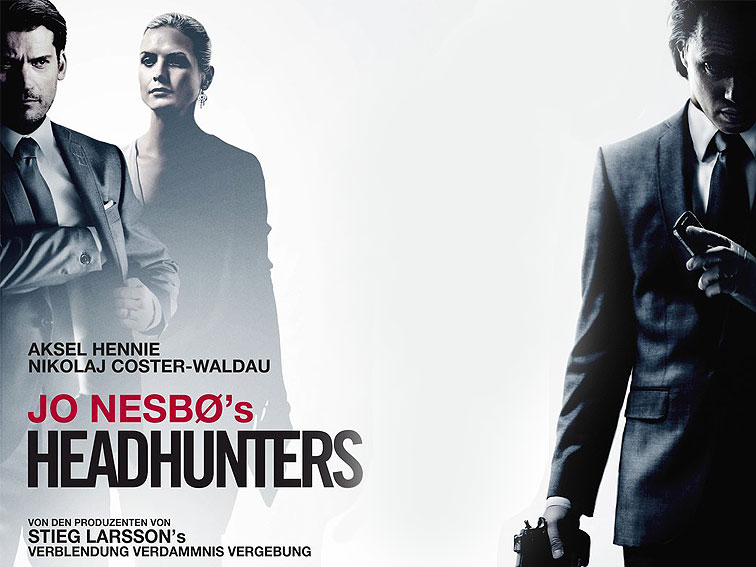
Headhunters (Hodejegerne) is Mortin Tyldum’s adaptation of Jo Nesbø’s slick, stylish novel of a professional headhunter who is also a major art-thief.

Roger Brown (played by Aksel Hennie who has a striking resemblance to a young Christopher Walken) is a very successful headhunter–he brings talent to very powerful and influential corporations.  In interviewing potential clients, he discovers their routine, the artworks they own, and whether they have a dog.  In this way, he is able to case his next heist in the luxury of his offices. Roger tells us that he is only 1.6 meters tall (about 5’3″) and that he has to “compensate.”  He does this by buying his stunningly beautiful wife (Synnøve Macody Lund ) everything he thinks she desires: A house right out of the glossiest of architectural magazines, expensive and rare jewelry, an art gallery to run.  He can afford none of this–which is why he must steal art, and even that income is proving to be too little.

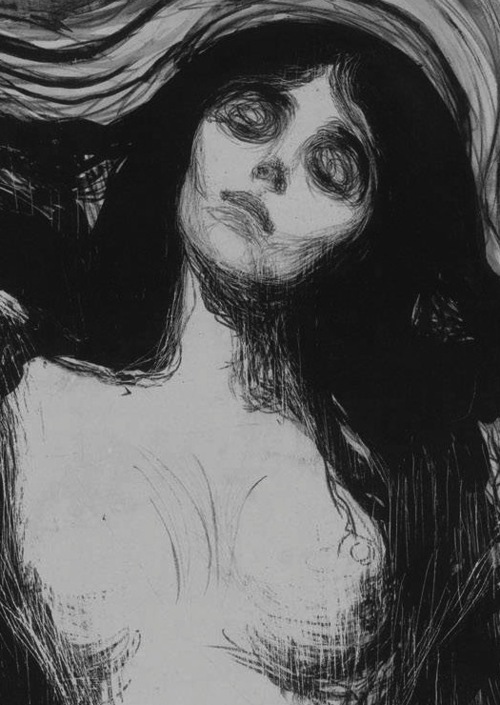
We begin by seeing him steal a lithograph by Munch.  (Is it just me or is Munch the most stolen artist of our time?  I don’t know how many versions of The Scream have been stolen in the past thirty years.)  Anyway, the print that he steals is called “The Broach” but it looked very much like one of Munch’s Madonna paintings.

Munch’s lithograph “Madonna”

But even the Munch is not enough to silence Roger’s creditors, so he has to go after a really big score–a long lost Rubens that is in the apartment of a man who he is recruiting for a major position.  In the interview, we learn that the man, Clas Greve, (Nikolaj Coster-Waldau) is a former mercenary, a world expert at tracking people and deposing of them–aha, the plot is setting itself up. He is also ruthlessly ambitious.  We also soon learn that he is sleeping with Roger’s wife.

I will not spoil how it all plays out except to say that there is an enormous amount of bloodletting and creative violence. We move from Roger’s sleek house to Appalachian-like cabins, where the patina of civilization has been long ripped off.

Headhunters is very taut, fast moving, and exciting.  It works very well as a slick thriller, a clever heist movie, with surprising twists and tense, rapid moments.  It also aspires, it seems, to be a good-old-fashion “slasher movie.”  This is where it fails.  The blood is overdone.

And along with trying to be a heist movie, a thriller, a slasher-movie, it also makes periodic stabs at being comedic.  There are very fat twin cops protecting Roger’s hospital room who bungle everything–although their very large size might be what saves Roger’s life.  There is a nonsensical bit with a Russian prostitute and Roger’s partner in crime (which has to be introduced for a technical reason, but it is mostly nonsensical and more irrelevant than essential.)  Heist, thriller, slasher, comedy–perhaps Tyldum is trying to juggle too many balls at once.

In truth, however, Headhunters is a very good way to spend an hour and forty minutes.  Fast-paced, handsome, and clever, if it does nothing else, it is sure to drive more people to reading Jo Nesbø.  And that’s a good thing.

Check out the trailer below:

A quibble with electronic publishing

I’m a little worried.

Just a little worried.

The majority of things I’ve had published are in print. They  haven’t earned me a fortune–five dollars here, twenty dollars there–but a least I have a copy of them. Actually, two copies of them, because most of the ” legitimate” small journals pay in copies. They publish your story, poem, essay and pay you with two copies of the issue in which you appear. Two copies placed with the others in a chest at the foot of my bed.

And then along comes the Internet. Instant gratification. Electronic submissions. Electronic responses. Usually much quicker than traditional ways.

The best story I think I’ve ever wrote was published on line. “Nadja and the Dream of Teeth” first appeared through the Dublin Writer’s Workshop in the journal The Electric Acorn.

Then it was published electronically by The Richmond Review (UK). The editor at The Richmond Review was wonderful. She asked questions, made good suggestions, and, overall, made me tighten things up.  All through e-mails. From across the pond. This was the internet at its best.

And then it appeared electronically. It was beautiful. Nice layout. Clean font. Well done. I was proud of the story and proud of its being out there.

Now several years later, the site is down. Just a blank white page. Try it. Google “Richmond review uk” and you’ll find the link.  And then a pure white page. Where is my story? Not there. Not archived. Nowhere. And it was a legitimate journal!

Sort of the same thing with another story– “Pierced.” Except the journal it appeared in didn’t disappear; it sold its domain name to a Japanese company. Try to find my story and you’ll be staring at a beautiful chrysanthemum surrounded by Japanese writing. I am pretty sure that it is not my story translated into Japanese.

So. No big deal. Two short stories that meant something to me but certainly not to anyone else. Vanished. Pouf! But what if this was important material? Is there a fear that important things might simply disappear after a given time?

I know the saying that nothing ever disappears in cyberspace, but will future researchers, historians, students all have the tools necessary to recover those things that have?

Granted there is much that is superfluous, so much that is ephemeral on the Web. Much of it–my own scribblings included– really doesn’t deserve a long shelf life. But, by caching materials away so easily are we also tossing away things of lasting value.  I don’t mean the works of a future Shakespeare or a document of “Declaration of Independence” import.  I mean things like the novelist Rick Moody’s music reviews on Rumpus or Margaret Atwood’s book reviews for The Guardian or the Scottish poet Robin Robertson’s powerful reading of “At Roane Head.”  My fear is that this stuff–which is important stuff, important aspects of our culture, glimpses into who we are–will someday disappear.  Without a trace.  Without record.

Is it the nature of blogging or on-line writing in general to be ephemeral? Is that what is the draw? Do we read it not expecting ever to go back to it.  I don’t know.

But it does worry me at times.

Summer Reading

Image

It is traditional in the U.S. for schools to give students a list of books to read during the summer.  The concept is twofold: one, keeping a student’s mind engaged while absent from most intellectual interaction; and two, trying to excite a student to the pleasure of reading.  So the trick is to find titles that are both stimulating and enjoyable and thoughtful.

So in the school I work at, the “Summer Reading List” has just been published. Here are the titles:

For 9th Graders:

The Hunger Games by Suzanne Collins
Enders’ Game by Orson Scott Card
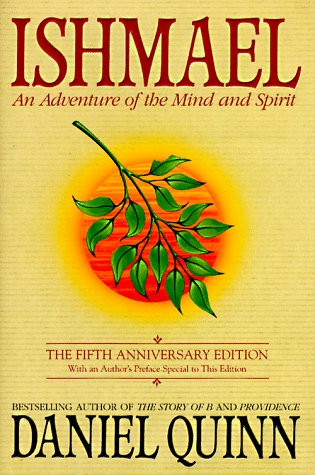
Ishmael: An Adventure of Mind and Spirit by Daniel Quinn

For 10th Graders:

Four mandatory short stories by Nathaniel Hawthorne and four other Hawthorne stories of the student’s choosing.
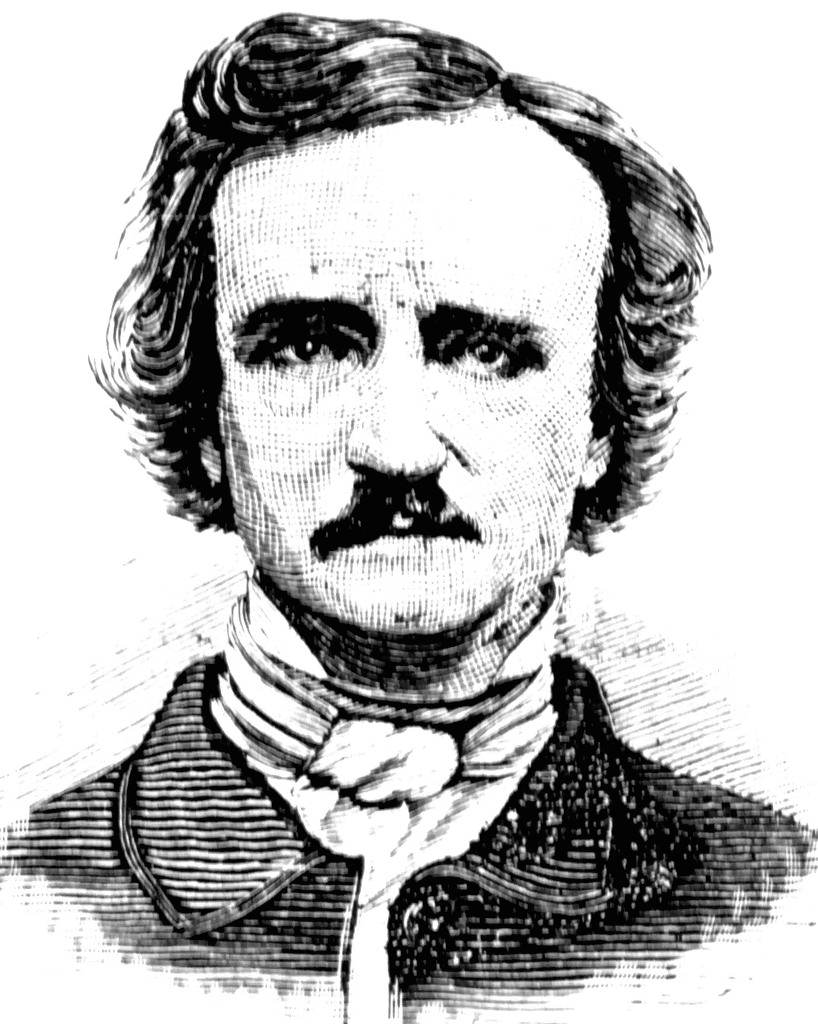
Four mandatory short stories by Edgar Allan Poe and four other Poe stories of the student’s choosing.

For 11th Graders:  There are two levels of books. The first level has a wide choice. They MUST read the first two and then choose ONE of the remaining six:

Don’t Look Now: Selected Stories of Daphne Du Maurier   by Daphne DuMaurier and Patrick McGrath
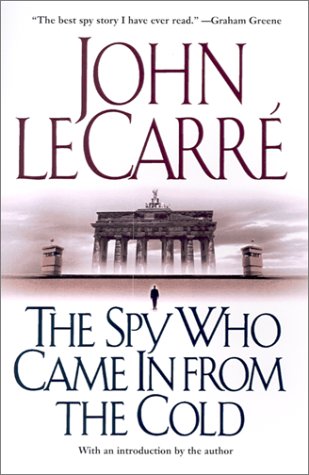
The Spy Who Came in from the Cold by John Le Carre

Here’s Looking at Euclid by Alex Bellos  (HOW GREAT A TITLE IS THIS!!!!!)
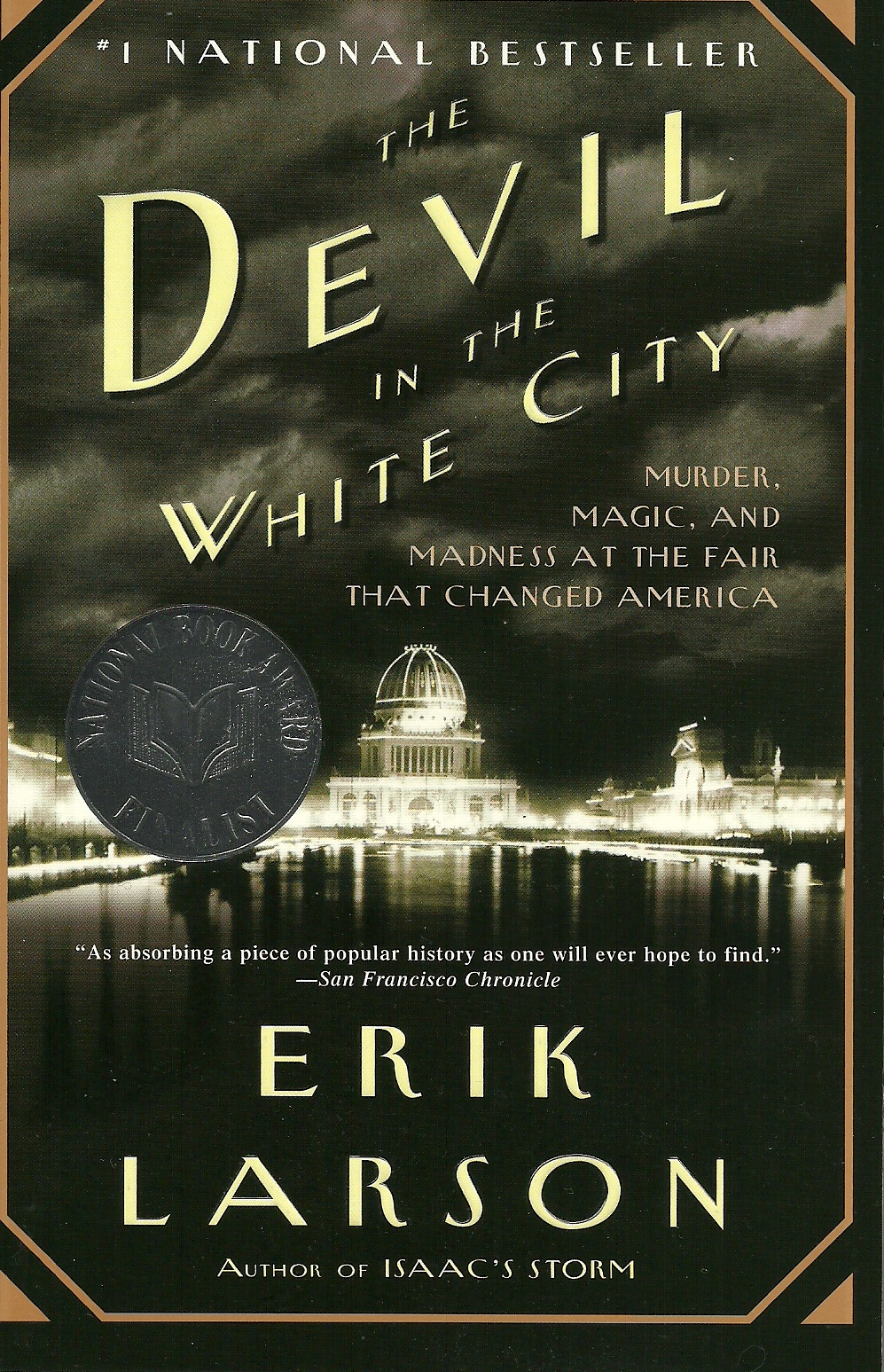
The Devil in the White City  by Erik Larson
The Omnivore’s Dilemma by Michael Pollan
Mutants: On Genetic Variety and the Human Body by Armand Marie Leroi
The Professor and the Madman by Simon Winchester
The Disappearing Spoon by Sam Kean

The other group of 11th graders read these:

Watership Down by Richard Adams
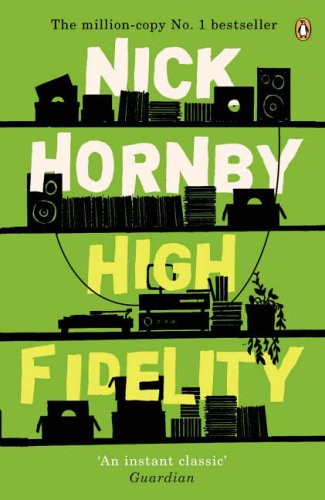
HIGH FIDELITY by Nick Hornby
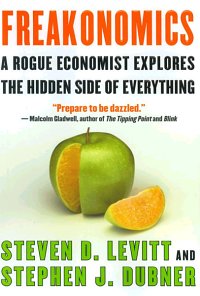
Freakonomics by Stephen Dubner and Steven Levit

Those in 12th Grade read:

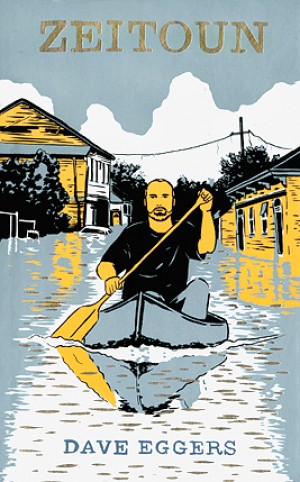
Zeitoun by David Eggers
Like You’d Understand Anyway by James Shepherd

Those in Advanced Placement 12th Grade have a large list to choose from. Some are mandatory and some are choice, but they end up reading 5 titles in all (and for one, reading the book AND watching the film.) They are:

Ragtime by E.L. Doctorow
The Wonder Boys by Michael Chabon
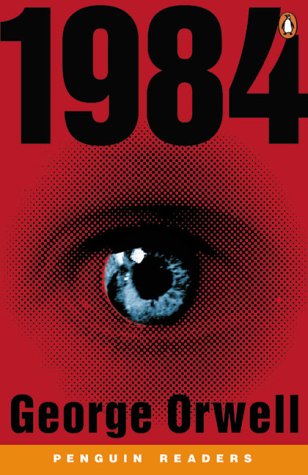
1984 by George Orwell
Do Androids Dream of Electric Sheep? by Phillip K. Dick
On the Beach by Nevil Shute
A Plague of Doves by Louise Erdrich
Brighton Rock by Graham Greene
Player Piano by Kurt Vonnegut
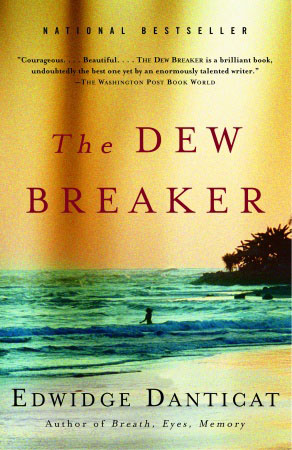
The Dew Breaker by Edwidge Danticat
Demian by Hermann Hesse
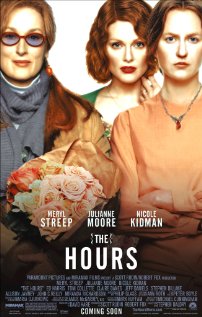
The Hours by Michael Cunningham
Obasan by Joy Kogawa

King Lear by William Shakespeare and the 1985 Akira Kurosawa film Ran
Educating Rita by Willy Russell and the1983 film by the same name
The House of the Spirits by Isabel Allende and the 1994 film by the same name
The Commitments by Roddy Doyle and the 1991 film by the same name
High Fidelity by Nick Hornby and the 2000 film by the same name
Equus by Peter Shaffer and the 1977 film by the same name
The Day of the Locust by Nathaniel West and the 1975 film by the same name
The Color Purple by Alice Walker and the 1985 film by the same name
Beloved by Toni Morrison and the 1998 film by the same name
The Good Earth by Pearl Buck and the 1937 movie by the same name
The Reader by Bernhard Schlink and the 2010 movie by the same name

I must admit, I haven’t read (or watched) all of these titles, but I have read most. It’s a pretty eclectic list…and certainly stimulating. I have my own favorites–Zeitoun for anger, The Commitments for fun, The Hours for tears, The Color Purple for the extraordinary… I could go on, but won’t.  Have fun. Choose something for yourself, if you have the time.

So whether it’s been one year since you’ve been out of high-school or fifty-one years, give the list a look over and maybe you’ll find something to get you through the hot summer days that are already well on their way.

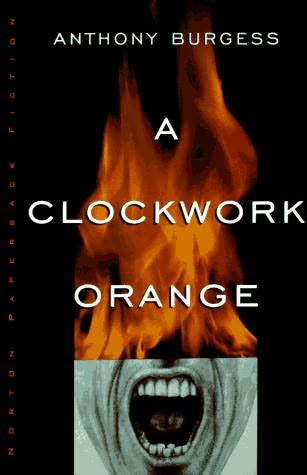
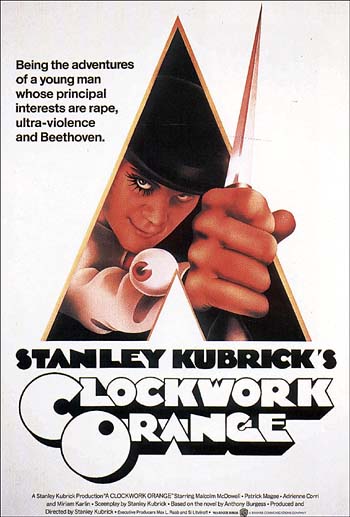
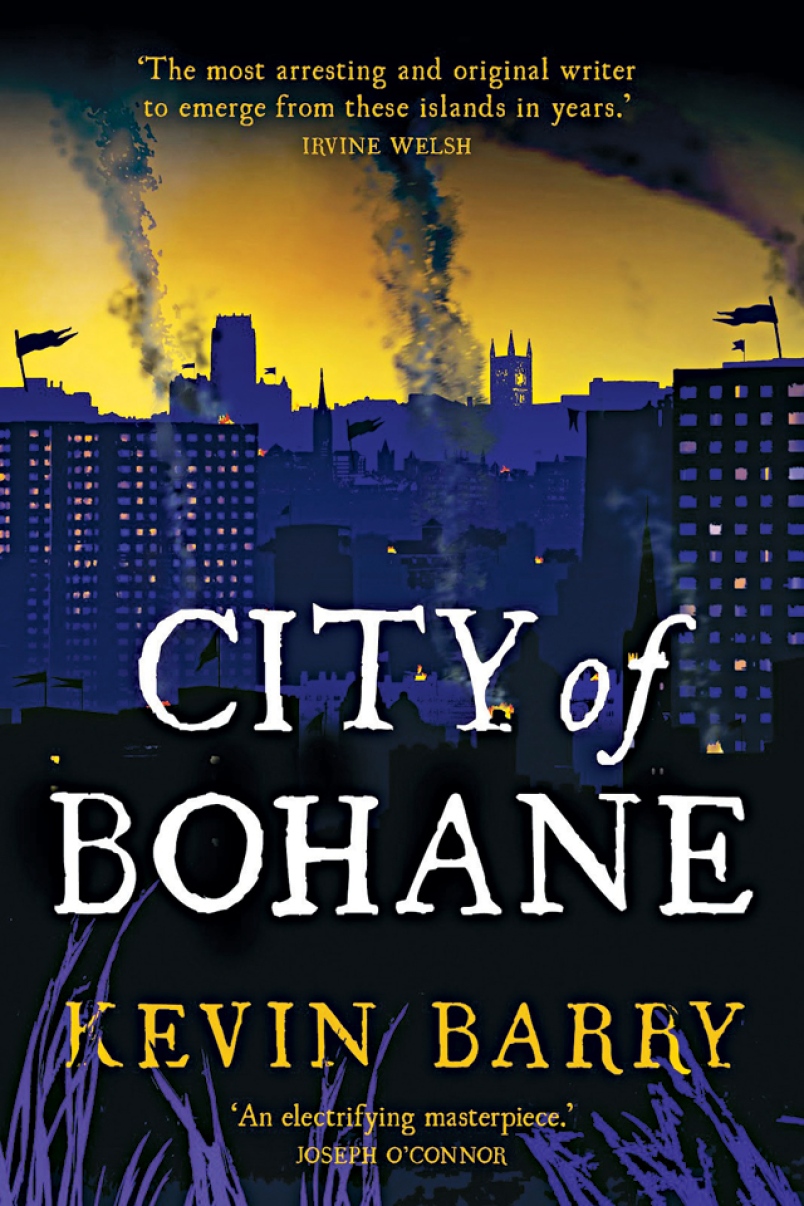
Clockwork Orange and City of Bohane

The Guardian had an article today noting the 50th Anniversary of Anthony Burgess’s A Clockwork Orange. Mind you, it is the anniversary of the book not Stanley Kubrick’s iconic movie, which has taken on a life of its own.

I first read the novel when I was seventeen. I read it a month later when I learned there was an edition with a glossary in the back. The glossary didn’t enhance the read that much; everything could be inferred from context  without too much trouble. (I had heard the glossary was only in the American edition, but I am not positive of that.) Anyway, what I remember most was the language: it was playful, edgy, smart, and alive. It was a mixture of joycean word play, street jive, cockney, rhyming, Slavic slang. And it was what set me off reading a lot of Burgess, from the Enderby novels to the majestic Napoleon’s Symphony to the various autobiographies.

The movie was another thing.  I was hitch-hiking across Canada from Vancouver to Toronto and winter was coming on a lot earlier than it came where I was from. It was only the last week of August, but we woke up under a thin sheet of snow in Regina.  Earlier, to stay out of the cold, and since nothing seemed to be coming along Canada’s Highway 1, we went into the town of Regina and bought tickets to see Kubrick’s A Clockwork Orange. It was very stylish and engrossing, with a narrative that I already knew.  I don’t remember now being struck by the ultra-violence. I do remember the music and the Skinner-like experiments and the tragic ending.  

But anyway, today, in their piece on the 50th anniversary of the book, the Guardian said this:

Fifty years ago today, Anthony Burgess published his ninth novel, A Clockwork Orange. Reviewing it in the Observer, Kingsley Amis called the book “the curiosity of the day.” Five decades later there is still nothing like it.

I beg to differ.

Kevin Barry’s first novel, The City of Bohane is channeling Burgess big time.  Set in a dystopian future, in what could be an unrecognizable Dublin of 2053, it is full of violence, sex, drugs, and turf wars. And again, the language  is at the forefront. Here is Barry describing DeValera Street:
[DeValera Street] leases are kept cheap and easy– bucksee enterprises appear overnight and fold as quick. There are soothsayers,. There are purveyors of goat’s blood cures for marital difficulties. There are dark caverns of record stores specialising in ancient  calypso 78s –oh we have an old wiggle to the hip in Bohane, if you get us going at all. There are palmists. There are knackers selling combination socket wrench sets. Discount threads are flogged from suitcases mounted on bakers’ pallets, there are cages of live poultry, and trinket stores devoted gaudily to the worship of the Sweet Baba Jay. There are herbalists, and veg stalls, and poolhalls. Such is the life of DeValera Street… .

Here again is Barry introducing Girly Hartnett, the 90-year old matriarch of the major family:

Here was Girly, after the picture show, drugged on schmaltz, in equatorial heat beneath the piled eiderdowns, a little whiskey-glazed and pill-zapped, in her ninetieth–Sweet Baba help us–Bohane winter, and she found herself with the oddest inclination.

I always found the world of A Clockwork Orange to be too sterile, too sharp-edged, even the thugs were dressed in sparkling white.  Bohane City is many things, but sterile it is not.  There is a richness of detail, texture, smell. Even in memory, Alex and his droogies seem too slick compared to the denizens of Bohane. For in this dystopic future, the world has not been re-shaped by technology–in fact, technology is surprisingly absent.  There is an elevated train, but no cars. Communication is done face-to-face…and at times angry-face-to-angry-face. Newspaper writers get their stories in pubs or brothels; the hunchback photographer pegs his developing photos in a morbid array across a room.  Although this is the future, it is not one overrun with gadgets!

The violence is real–but somehow not graphic. The economy runs on sex, alcohol, and drugs. There is an outer world, beyond the pale, but it doesn’t intervene, seemingly content to let Bohane run its own violent course.

And it is so, so visual.

Here’s a description of the major characters as they prepare for the momentous battle at the center of the novel:

“Logan Hartnett [the albino leader of the Bohane Trace] suavely walked the ranks and he offered his smiles and his whispers of encouragement. There was confidence to be read in the sly pursing of his lips, and atop a most elegant cut of an Eyetie suit he wore, ceremonially, an oyster-grey top hat.”

“Fucker Burke was bare-armed beneath a denim waistcoat and wore his finest brass-toed bovvers.”

“Jenni Ching carried a spiked ball on a chain and swung it over her head. She wore an all-in-one black nylon jumpsuit, so tightly fitted it might have been applied with a spray-can, and she smoked a black cheroot to match it, and her mouth was a hard slash of crimson lippy.”

“Wolfie Stanners, however, was widely acknowledged to have taken the prize. Wolfie was dressed to kill in an electric-blue ska suit and white vinyl brothel-creepers with steel toecaps inlaid. Four shkelps were readied on a custom-made cross-belt.”

[Macu–Logan’s wife–wore] “a pair of suede capri pants dyed to a shade approaching the dull radiance of turmeric, a ribbed black top of sheer silk that hugged her lithe frame, a wrap of golden fur cut from an Iberian lynx…and…an expression unreadable.”

My god, look at the attention to clothing–not futuristic, Buck Rogers’ one-pieces, but clothing that has been taken from a vibrant past.  It is as if the costume designers from Game of Thrones, Gangs of New York, and My Fair Lady got together to outfit the cast for this rumble.

And what City of Bohane also has that A Clockwork Orange doesn’t  is a love story.  Granted it is a story of disappointed love and jealous love and abandoned love, but the emotions of these characters are real and painful and poignant. For  while Logan Hartnett and his antagonist, the Broderick Gant, may have run the machinery of their town with brutality and violence, they are both bowed when set against the forces of love.

Now there’s something to pass on to Alex and his droogies!