Book Review: Disgrace by J. M. Coetzee

A new acquaintance of mine asked if I had ever read the book Disgrace by J. M. Coetzee.  I hadn’t, though I had read several others by the South African writer.  We talked about many things that morning, and, to be truthful, I had forgotten all about the book until about a week later, when a package arrived in the mail with a gift-wrapped book. Inside was a copy of Disgrace with the note: “I hope you enjoy this half as much as I did.”

And so I began.

Disgrace is the story of David Lurie, a 52 year-old, twice-divorced, white South African professor of Communications and Romantic poetry.  Quite early in the novel he is forced to resign from his university under the disgrace of having sex with one of his students.  As Lurie  rationalizes to himself, the sex itself was not rape, but it certainly wasn’t completely consensual.  He admits guilt but not contrition–which infuriates even those trying to help him.

In disgrace, hounded by reporters, and bereft of his job, Lurie leaves town and drives out into the eastern countryside of the Cape. There his daughter has some land where she raises flowers and kennels dogs.  He is there presumably to write an opera on Byron, Byron’s mistress Teresa, and her husband.  But it is not the most conducive area for such refined creation: it is a hard land and an area still simmering in the afterbirth of the post-apartheid era.

As Lurie settles into the rhythms of country-life, of physical labor and simple pleasures, even volunteering in an animal shelter, his life is once again shattered when he and his daughter are attacked by three men.  All the dogs are slaughtered, Lurie is doused in alcohol and set on fire, and his daughter is gang-raped (and impregnated) by the three men.  The very crime for which Lurie was censured has been visited trebly on his daughter.  The very world he has known–the power he has always arrogantly assumed for himself–has been violently wrenched away.

As both father and daughter try to come to terms with the horrors that have visited them, as they learn more and more about the identity of their attackers and their relations to people they know, and as they struggle with the essential character of each other’s personalities, Lurie comes to better realize the nature of the world around him.  His views on racism, on feminism, even on animal rights, must be examined and re-calibrated.  The world he has known is, simply, no longer.

I knew nothing of the book when I opened it. I thought it was contemporary, not published in 1999–a mere five years after the historic elections in which the African National Congress overwhelmingly won and from which apartheid’s demise can best be dated. The difficulties that Lurie has in understanding the new order, the distrust, fear and violence among the various peoples, even the “modernization” of the University all make better sense. (Lurie’s teaching of Communication is in itself ironic–Communication skills are what this country and its people are badly in need of.  An expert in the British romantic poets–those type of courses are considered fluff in the new university structure–Lurie teaches both Communications 101 and Communications 201. The one Romantic Poets course he teaches is a salve that the administration gives its older professors.) In many ways the novel is a reflection of the birth pangs of the new country: it is violent, bloody, and at times deadly.

Does everything get resolved?  Of course, not.  Is Lurie a better person at the end?  I’m not sure.  I think he is. Early in the novel when a tribunal is questioning Lurie on his womanizing, he states that he believes that every woman he has bedded has “enriched” him in some way.  The question at the end of the novel then must be  “has the violence and catastrophe that he has suffered also enriched him?”  Again, I don’t know. But he is a different man than he was at the beginning of the novel.
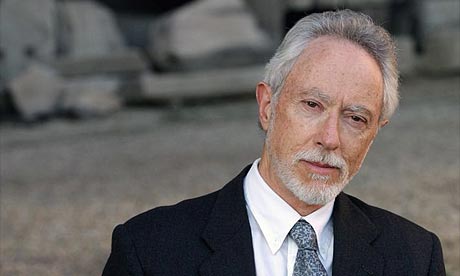
J.M. Coetzee

And while the summary of the plot seems rather dark, the novel itself is quick moving and understated.  It is a very subtle but easy read, and it sucks you into its disparate worlds–the urbane world of the university and the stark world of the South African countryside–quite easily.

And so much dovetails together within the novel: the womanizing man of letters writing about that grand literary womanizer Byron; the mirrored rapes; his evolving attitudes towards women underpinning his new understanding of animals; his role as both teacher and father. It all comes together seamlessly and wonderfully, not like a patchwork quilt, but a beautifully woven cloth–like the Ashanti patterned bedspread that Lurie’s daughter presents to the woman living on her land.

J.M. Coetzee won the Booker Prize for Disgrace in 1999, four years before winning the Nobel Prize for Literature in 2003. His writing is succinct and accessible. In many ways he is a quiet writer, not at all flashy. (Not surprising, considering that his dissertation was on Beckett.)  Intelligent, subtle, and layered, the writing is satisfying and rewarding from the very first, and ages richly with subsequent reading.

Book Review: Eyes, Stones by Elana Bell

Eyes, Stones–Elana Bell’s first collection of poetry and the winner of the 2011 Walt Whitman Award–is an extraordinary feat of poetry and clear-mindedness.  Each of these 40 small poems are dense explosions of beauty and clarity, encased in language that is both modern and antique, beautiful and brutal–much like the countries that she writes about.

In her poetry, Bell attempts to look and understand the worlds that are Palestine and Israel. She moves from biblical stories to modern events and much in between. Her topics range from the ancient relationship of Abraham and God, Sarah and Hagar, Ishmael and Hagar to the modern Holocaust, the Zionist movement, the 1968 Egypt-Israeli War, and the most recent Intifada.

But what is remarkable about these poems is that they don’t stink of politics, of nationalism, of self-righteousness.  They are simple poems that lay bare the simplicity of man’s pain, the artlessness of his troubles, the wonder of his existence. Often, in these poems one is unsure which side of the Israeli-Palestinian conflict Bell sits, her treatment is so even-handed.

Take for instance her poem “Naming the Day,” which is a composite both of those Jewish villages in Eastern Europe destroyed or made “Jew free” AND those Palestinian villages destroyed or evacuated during the 1948 Arab-Israeli war.

In “On a Hilltop at the Nassar Farm,” the speaker admires the Palestinian woman Amal:

Amal laughs with all her teeth and her feet
tickle the soil when she walks. She moves
through her land like an animal. She knows it
in the dark. She feeds stalks to the newborn
colt and collects its droppings like coins
to fertilize the field. Amal loves this land
and when I say land I mean this
exact dirt and the fruit of it.

Amal’s rough existence she compares with her own existence in the settlement that surrounds Amal’s land:

All around her land the settlements sprout like weeds.
They block out the sun and suck precious water
through taps and pipes while Amal digs wells
to collect the rain. I am writing this poem
though I have never drunk rain
collected from a well dug by my own hands,
never pulled a colt through
the narrow opening covered in birth fluid
and watched its mother lick it clean,
or eaten a meal made entirely of things
I got down on my knees to plant.

Yet Bell’s work does not rise from the guilt of the occupier.  It comes from a genuine love of the people–both Arab and Israeli–and a horror of the world that has evolved around them.  A particularly poignant poem, “In Another Country It Could Have Been Love,”  laments what could be between the two:


The next time I saw her, a rifle
strapped her shoulder. The tip
of it fingered my ribs, my hips
the inside of my thighs.
Cold metal instead of her hands,
her eyes.

Elana Bell herself is the granddaughter of Holocaust survivors, and as such, her examination of Jewish and Arab relationships is strikingly honest. She maintains an embracing love of the land through its many incarnations: biblical landscape and Zionist dream, modern nation and occupied territory.

In the end of the collection, she returns to Brooklyn where she lives. There she will “watch the Super Bowl…eat organic greens and make love on Saturday afternoon…[She will] listen to jazz in tight-packed clubs…and sleep on clean cotton sheets.” It is during this sleep, however, that the Mid-East comes to haunt her, to remove her from her comfort, and to tie her to the lands of her heritage.

Eyes, Stones won the 2011 Walt Whitman Award of the Academy of American Poets.  Five of her poems (along with her bio) are published on the Academy’s website. Check it out. She is a remarkable woman and a fine poet.

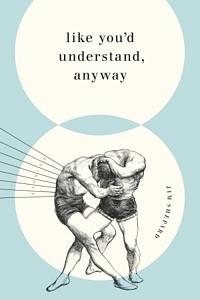
Book Review: Like You’d Understand Anyway by Jim Shephard

I don’t often read short story collections. My rhythms, I guess, are more geared towards the novel. And most of the short stories I read are in magazines or journals, not in collections where one follows the other. But I did pick up and read Jim Shepherd’s  Like You’d Understand, Anyway.

Someone once explained a short-story to me like this: imagine a brick wall is a person’s life. A short-story is just one of the bricks removed. We have little real knowledge of the bricks surrounding this one brick, just the one. solitary brick. Just this moment in a person’s life.  I don’t how accurate this is for all stories (it’s very Joycean) but I refer to it often.

Well, Jim Shephard’s stories are pieces not of a brick wall but from an extraordinary mural. The stories are all over the place and all over time.

There is a general fatalistic theme running through them, a feeling of being unprepared, unsuited, or even uninterested in facing the battles of life. And if that sounds like a very modern view of the world, it is.  Except Shepards’s characters are from all over history.

“Eros 7,” my particular favorite, is a sweet love story taken from the diary of a female cosmonaut in 1963, the early days of the  Russian-US space race.

“Hadrian’s Wall” is a sensitive look at young soldier in the Roman legion–lacking confidence and skill–as he is stationed in 2nd-century Britain.

There are stories that take place during the Chernobyl accident, during the French Reign of Terror, during an early ascent of the Himalayan peaks, during the 19th-century days of Australian exploration.

But there are also simple domestic stories. “Proto Scorpions of the Silurian” depicts a young man trying to deal with his overwrought parents who, in turn, are trying to cope with his mentally unbalanced brother. Another story,  “Courtesy for Beginnings,” shows a young boy who is terribly miserable at a horrible summer camp but who is forced to console his parents by phone who are also struggling with an unbalanced sibling.

But whether in Ancient Greece or modern Connecticut, each of these stories brings a modern sensibility of doubt, isolation and struggle. Each is a sensitive portrayal of a character far different than most of us, but very similar all the same.

Sunday Book Review: Hitch-22: A Memoir by Christopher Hitchens

It is a cliché that one should never meet the writer’s that one admires–disappointment is surely to be the outcome.  Well, Christopher Hitchens is the exception to the rule.

I admire him even more having read his memoir.

As one of the most prolific and provocative essayists of the last thirty-odd years, Hitchens seemed to be everywhere–his journalist’s beat the places where injustice, cruelty, and war loomed most horribly.  From Belfast during the heights of the “Troubles,” to Argentina during the period of the “disappeared,” to Poland at the beginnings of the “Solidarity” movement, to Zimbabwe, Mogadishu, Romania, Cyprus, Iraq, and Iran, Hitchens brought his sensible eye and exquisite writing style to reveal to the world the frequent cruelty and inanity of world politics, exposing the greed and stupidity of many of the political leaders who claim to have the “peoples’ interests” at heart.

It is that principled, observant eye and the exquisite sense of writing that defines Hitchens memoir–for his biography is one of two sides: the principled, political advocate and the Oxford educated, man of letters. And the people he encounters come from both of these worlds as well.

On one hand, he is with a young Bill Clinton at Oxford when he infamously “did not inhale.”  (Hitchens says that is probably correct because Clinton was terribly allergic to smoke. However, he adds, he certainly consumed more than his share of the “brownies.”) He meets Margaret Thatcher when she is made head of the Tory party. (He immediately got in a disagreement with her and she smacked his bottom with rolled up program to terminate the discussion.)  He meets the vile General Videla of Argentina; the future first elected president of Iraq,  Jalal Talabani; the Cypriot president, Archbishop Makarios. He debates Western pundits and arranges lectures for some of the world’s most unsung champions of the people.

On the other hand, his closest friends are major lights of the British literary world: the novelists, Martin Amis and Ian McEwan, and the poet James Fenton.  His accounts of their times together rival any of the apocryphal stories of the Algonquin Table.  (My favorite line is the critic’s Clive James’ review of Pumping Iron, the documentary on body-building that introduced Arnold Schwarzneggger to the world.  James said that Schwarzenegger looked like “a brown condom stuffed with walnuts.”)

But what stands out in Hitch-22 is not the list of notables with whom Hitchens associated or fought against. It is the dedication to principle with which he lived his life.  As a young man he was a dedicated member of the International Socialist party and later became a dedicated member of the Labour Party. Both of these he jettisoned when he believed that the party had strayed from its principles–and he continually called them on it.

As he traveled from hot-spot to hot-spot, he began to trust the leaders of all these revolutionary movements less and less. Here’s what he says:

I eventually came to appreciate a feature of the situation that since helped me to understand similar obduracy in Lebanon, Gaza, Cyprus, and several other spots. The local leadership that are generated by the “troubles” in such places do not want there to be a solution. A solution would mean that they were no longer deferred to by visiting UN or American mediators, no longer invited to ritzy high-profile international conferences, no longer treated with deference by the mass media, and no longer able to make a second living by smuggling and protection-racketeering.

A bit cynical to be sure, but this is from a man who has entered the belly of the beast and refuses to swallow the muck he sees there.

Always an iconoclast, Hitchens attacks those he believes deserve it, no matter what their status or reputation. For example, early on, he admits that he felt separated from the rest of the world in November, 1963 for not mourning sufficiently  the assassination of the American president.   The sainted Jack Kennedy he condemns as a “high risk narcissist” for the game of chicken that he played with Russia over the Cuba missile crisis.  (This event  very likely sowed his interest in geopolitics.) He very famously debunked Mother Theresa and was called in by the Vatican to present a case against her when she was up for canonization. (This used to be called “The Devil’s Advocate,”  a position that the Vatican eliminated by the time Hitchens was called in. He jokingly said that he  must then be advocating for the devil, pro bono.)

Like any good thinker, Hitchens is not afraid to change his mind, to reconsider his position, when presented by new facts.

More than anything else, it is this life as a DELIBERATE THINKING HUMAN that impresses me more than anything else in his story. Hitchens considered the world around him with open, unprejudiced eyes, tried to make sense of it, and tried to expose what he saw as nonsense.

Hitchens died 15, December 2011, after a struggle with esophagal cancer.  His writings live on. I have two collections of his essays on hold at our public library.  I can’t wait to tackle them.

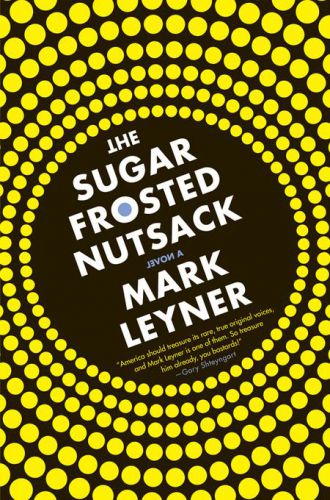
A footnote on The Sugar Frosted Nutsack by Mark Leyner

Despite my misgivings, I plowed ahead and finished The Sugar Frosted Nutsack by Mark Leyner.  My original appraisal was unchanged. I felt it was infantile, too enamored with its own cleverness, and pointless. It wasn’t a pleasant read–the effort in no way equaled the payoff.

However, I did notice something that I hadn’t before.  I was proofreading what I had written last week about the novel on a different platform. The tablet had shrunk the margins so that the text ran narrow like a newspaper column.  I had originally quoted this text:

“What subculture is evinced by Ike‘s clothes and his shtick, by the non-Semitic contours of his nose and his dick, by the feral fatalism of all his looney tics–like the petit-mal fluttering of his long-lashed lids and the Mussolini torticollis of his Schick-nicked neck, and the staring and the glaring and the daring and the hectoring, and the tapping on the table with his aluminum wedding ring, as he hums those tunes from his childhood albums and, after a spasm of Keith Moon air-drums, returns to his lewd mandala of Italian breadcrumbs?

But in the “newspaper column” format the passage ran quite poetically like this:

“What subculture is evinced by Ike‘s clothes and his shtick,
by the non-Semitic contours of his nose and his dick,
by the feral fatalism of all his looney tics–
like the petit-mal fluttering of his long-lashed lids
and the Mussolini torticollis of his Schick-nicked neck,
and the staring and the glaring and the daring
and the hectoring, and the tapping on the table
with his aluminum wedding ring, as he hums
those tunes from his childhood albums
and, after a spasm of Keith Moon air-drums,
returns to his lewd mandala of Italian breadcrumbs?

There is a rhyme scheme to the passage, a rhythm that I had missed when reading the prose. I went through the novel for similar riffs and they are a few but they are there for no intrinsic reason–they seem to occur only when Leyner is in a rhythm himself, apart from the needs or function of the novel.

It was fun to discover but it didn’t change my opinion.


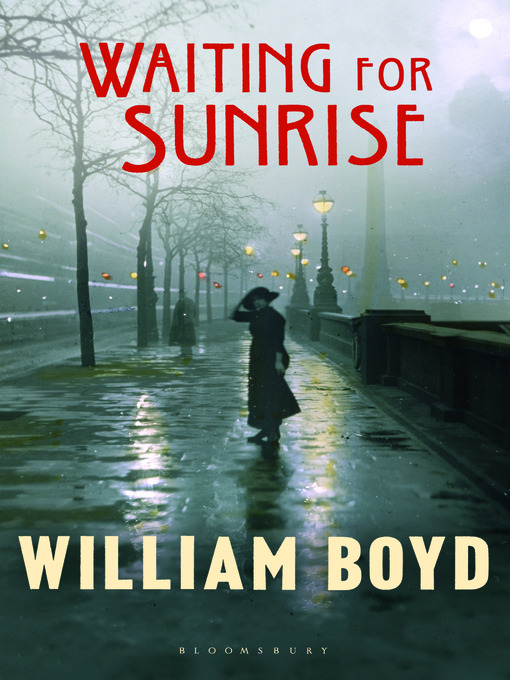
Sunday Book Review: Waiting for Sunrise by William Boyd

For ninety-percent of the novel Waiting for Sunrise by William Boyd, I was enthralled.

Vienna before the first World War, London on the eve of war, the no-man’s land between the trenches, neutral Geneva at the height of hostilities, London during zeppelin bombing raids. The settings are dramatic and richly drawn.

As was the plot: A young actor, following his famous father’s footsteps (if that’s not Oedipal enough for him, his mother catches him at his first experience at masturbation to boot), goes to Vienna to find a cure for a sexual condition–to Vienna, the center of the burgeoning new concept of psychoanalysis. Although he meets Freud himself, it is Freud’s English speaking neighbor who takes Lysander Rief on–and who successfully cures him.  And we know he is cured because his four month affair with the English bohemian Hettie Bull ends in a pregnancy and his arrest for rape by the Viennese authorities.

When two British diplomats arrange for Rief’s escape, they also arrange for his indenture to British intelligence.

Soon after Rief returns to London, his rescuers called in his debt and he is asked to enter Geneva via  the front lines. He is successful at his mission, survives seven bullet wounds, and completes the assignment that he had been ordered to finish.  And then he is given a second mission.

The action–of both the military and intelligence escapades and Rief’s romantic life–is riveting, fast paced and cleverly intertwined. Each character seems to be connected to another and no one is entirely innocent. And Rief’s inner-life is subtly and intelligently revealed. One learns much about military ordinance, psychoanalytic practices, the British class system and the early 20th-century British world of theater. And the information is never pedantic or overwhelming but richly woven into the plot.

Yet the solution of Rief’s intelligence mission and the resolution of his own personal quests seems to be lacking.  As the Novel wraps up and the various strands are pulled together, the story begins to limp rather than gain strength.  By the end, I felt I was reading a Hardy Boys’ Adventure. The solution was pat and somewhat anti-climactic.

I had been look forward to Waiting for Sunrise for several months and to be quite honest I enjoyed reading it very, very much. Until the end that is.  I was disappointed. It seemed that Boyd had simply decided to quit.

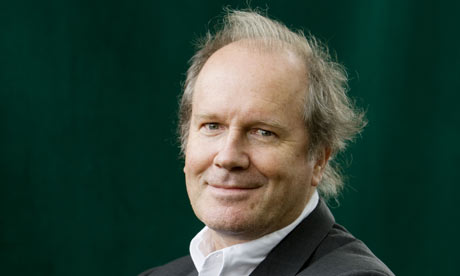
William Boyd

I like William Boyd very much. I feel he is greatly underrated among his contemporaries and is a wonderful stylist with a perfect ear for the nuances of an age.

I had previously read several Boyd novels and do not remember this falling off, this disappointment before. The novels all successfully re-create historic eras, describing its people, its culture, its ethos, its fears, all braced by an intelligent understanding and description of the scientific theories and advancements that are at that moment being born. For instance, Brazzaville Beach deals with mathematical chaos theory and the sociology of chimpanzees.  The New Confessions (modeled on Rousseau’s Confessions) also deals with World War I–as with Waiting for Sunrise–moves through Hollywood and Berlin, treats the horrors of World War II and then ends with the Hollywood Communist  trials, the whole while treating  us to the internal workings of the Hollywood film industry.  The Blue Afternoon (my personal favorite) is centered on the United States invasion of Manilla and its ultimate acquisition of the Philippines through the Treaty of Versaille and travels from Lisbon, Manilla and Los Angeles, from 1902 through the 1930s, while leading the reader through advancements in surgery and trends in architecture.

All of Boyd’s novels are rich with fascinating information, realistic period details, and memorable human stories. And all are vastly enjoyable and worthwhile.  Waiting for Sunrise, however, for me, ends a little too quickly and a little too weakly.

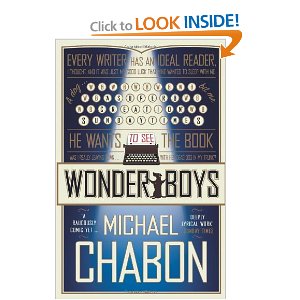
Tuesday Book Review: Wonder Boys by Michael Chabon

I read Wonder Boys last week.  I had read it previously, at least twenty years ago, and, boy, had I misremembered it.  As a younger man, I found inspiration in the “wunderkind” writing student and was fascinated by the famous writing teacher who is famously blocked with his novel (also called Wonderboys) that is going on past 2600 pages long.  This time around I did not have the same reactions.

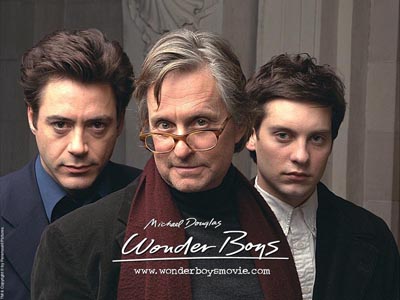
Part of the problem is also that I could not get the film adaptation out of my head– a film I had seen in the long interim between readings.  In the film, the famous writing teacher is played by Michael Douglas, his cynical, jaded literary agent by Robert Downey, Jr., and the fabulous writing student by Tobey Maguire.  And while I remember enjoying the movie greatly–and understand why marquee actors are used–I think  it was terribly miscast.

Grady Tripp is the dissolute writing teacher.  He smokes way too much dope, he is cavalier in his relationships, and he is always looking out to score. In the novel, he is over-large, a big hulking bear of a man.  In one scene, when he is spiraling into what might be a catastrophic relationship with a young student who rents a room in his basement, he notices his reflection in the mirror. He sees a middle-aged, bearish man slumped down over this young college girl as they slow dance together. It is a moment of self-awareness–aided by a large quantity of pills, dope, and alcohol enhanced by pounding adrenelain after a slapstick night of antics. The man he sees in the mirror no way is the stylish professor played by Michael Douglas.

The young writing student is a-social and painfully awkward which Tobey Maguire captures but he is not nearly dark enough. In the novel, James Leer is very dark, in a long overcoat of indeterminate material and age.  And Robert Downey Jr. did not match my vision either. I know that most people quibble with the casting of books they’ve read when they are made into movies.  And this is my quibble: the cast is too handsome.

But enough about the movie…

The novel starts out on a rollicking tear. On the night that the novel begins Grady Tripp finds a note from his wife saying she has left him, he picks up his agent and the transvestite he met on the plane, his mistress–Chancellor of the school and wife of his Department Chairman–tells him she is pregnant, he gets bit in the leg by a dog, and he is traveling around with a tuba, a dead dog, the coat Marilyn Monroe wore at her wedding to Joe DiMaggio and a student who may or may not be suicidal…or truthful.  It reminded me of John Irving at his best.

An academic farce, there are set scenes of college gatherings and festival lectures. There are Tripp’s musings on the requirements of good writing, his praise for James Leer’s young but promising work, and insights into a truly blocked artist–one who comes to no longer believe in the work he is doing.

The female characters, his wife, his mistress, the student living in his house, however, are very shallow–cardboard figures created for Tripp to act or react against.

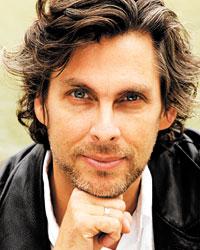
Michael Chabon

That the novel famously echoes Chabon’s early writing life makes reading it this much later in his career offer its own rewards.  Like James Lear, the young student, Chabon received a book contract for The Mysteries of Pittsburgh when his writing professor–unknown to Chabon–passed the manuscript on to his own literary agent.  And like Grady Tripp, Chabon worked years on a follow-up novel–a novel that grew enormously large before he himself destroyed it.

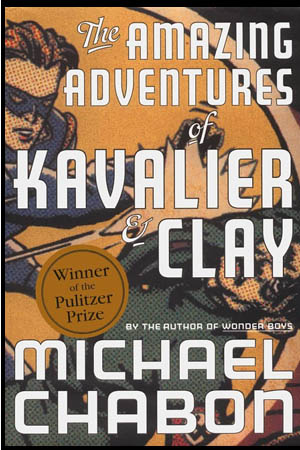
Since The Mysteries of Pittsburgh and Wonderboys, Chabon has continued to win great praise and loyal readership.  His novel, The Adventures of Kavalier and Clay won the Pulitizer Prize for fiction in 2000 and his 2007 novel The Yiddish Policemen’s Union won the Hugo, Nebula, Sidewise and Ignotus awards. (An aside–I was in Quebec city one week and needed something to read. There was primarily only French book stores. In one that I stepped into there was a small rack with about a dozen books written in English. It was there that I bought the Yiddish Policemen’s Union.)

And while his first novel–The Mysteries of Pittsburgh–and the novels following Wonderboys deal directly with Jewishness and Judaism, it is a very minor theme in Wonderboys.  There are touches of it when Tripp and James go visit his Korean ex-wife for Passover Seder and bumps against it when James’ own history is revealed, but it is not forefront in the novel.

Instead this is very much a novel about writing–or not writing as is Tripp’s case.  It is academic because it takes place on a university campus and deals with chancellors and professors and students and chairmen, but there is no scenes within a classroom. It tries to be a novel about love and contentment–but Tripp’s long road there, it is his third wife that leaves him and his tentative gestures towards his pregnant mistress are filled with doubt and fear.

All in all, though, Wonderboys is a wonderful read.  The beginning is peerless–quick moving, deft character sketches, and hilarious plotting. If the second-half seems to suffer from a bit of a hangover, it is because nothing could keep up with the original momentum. The novel must switch rhythms to mirror Grady Tripp’s more thoughtful musings, fears, and discoveries.

Do read Wonderboys or, if you want, rent the film.  Both are very enjoyable.  Just don’t do both too close together. And when you finish with those give Chabon’s other titles a try. Any of them are well worth the time spent.

Next Post

I thought this was an interesting post. She seems an intelligent and thoughtful writer, and I am going to try to track down her book.

phdincreativewriting's avatarph.d. in creative writing

As writers, we live double lives: lived once in the world of others, and again, in the quiet of our own minds. It takes a certain amount of will and courage to leave with regularity the circle of humanity in order to enact a kind of theft, which is one aspect of what the writing life seems to be.

Anne Germanacos is the author of the short story collection In the Time of Girls (BOA Editions). Born in San Francisco, she has lived in Greece for over thirty years. Together with her husband, Nick Germanacos, she ran the Ithaka Cultural Studies Program on the islands of Kalymnos and Crete, and taught writing, literature, and Modern Greek. She holds an MFA from the Bennington Writing Seminars. Her work has appeared in over eighty literary reviews and anthologies, including Dzanc’s Best of the Web 2009. She and her husband have four…

View original post 1,063 more words

Summer Reading

Image

It is traditional in the U.S. for schools to give students a list of books to read during the summer.  The concept is twofold: one, keeping a student’s mind engaged while absent from most intellectual interaction; and two, trying to excite a student to the pleasure of reading.  So the trick is to find titles that are both stimulating and enjoyable and thoughtful.

So in the school I work at, the “Summer Reading List” has just been published. Here are the titles:

For 9th Graders:

The Hunger Games by Suzanne Collins
Enders’ Game by Orson Scott Card
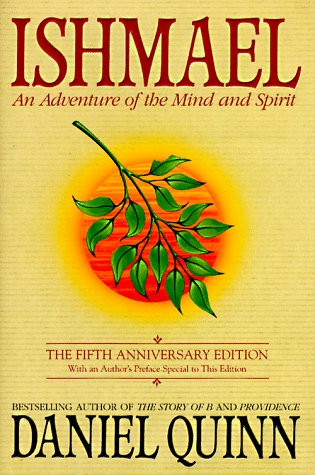
Ishmael: An Adventure of Mind and Spirit by Daniel Quinn

For 10th Graders:

Four mandatory short stories by Nathaniel Hawthorne and four other Hawthorne stories of the student’s choosing.
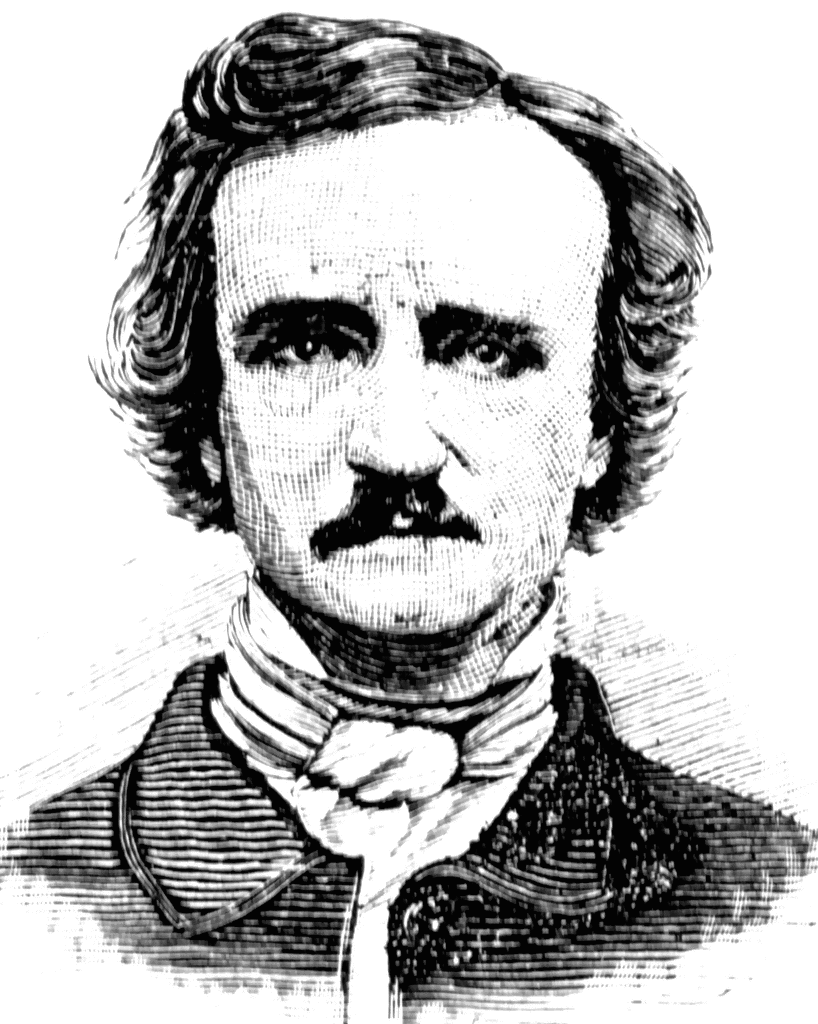
Four mandatory short stories by Edgar Allan Poe and four other Poe stories of the student’s choosing.

For 11th Graders:  There are two levels of books. The first level has a wide choice. They MUST read the first two and then choose ONE of the remaining six:

Don’t Look Now: Selected Stories of Daphne Du Maurier   by Daphne DuMaurier and Patrick McGrath
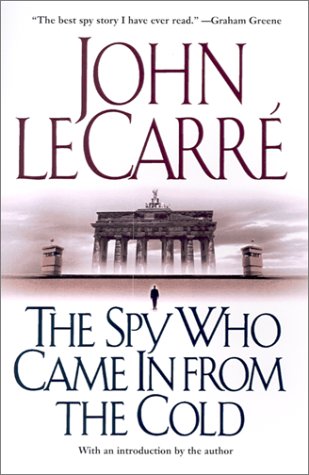
The Spy Who Came in from the Cold by John Le Carre

Here’s Looking at Euclid by Alex Bellos  (HOW GREAT A TITLE IS THIS!!!!!)
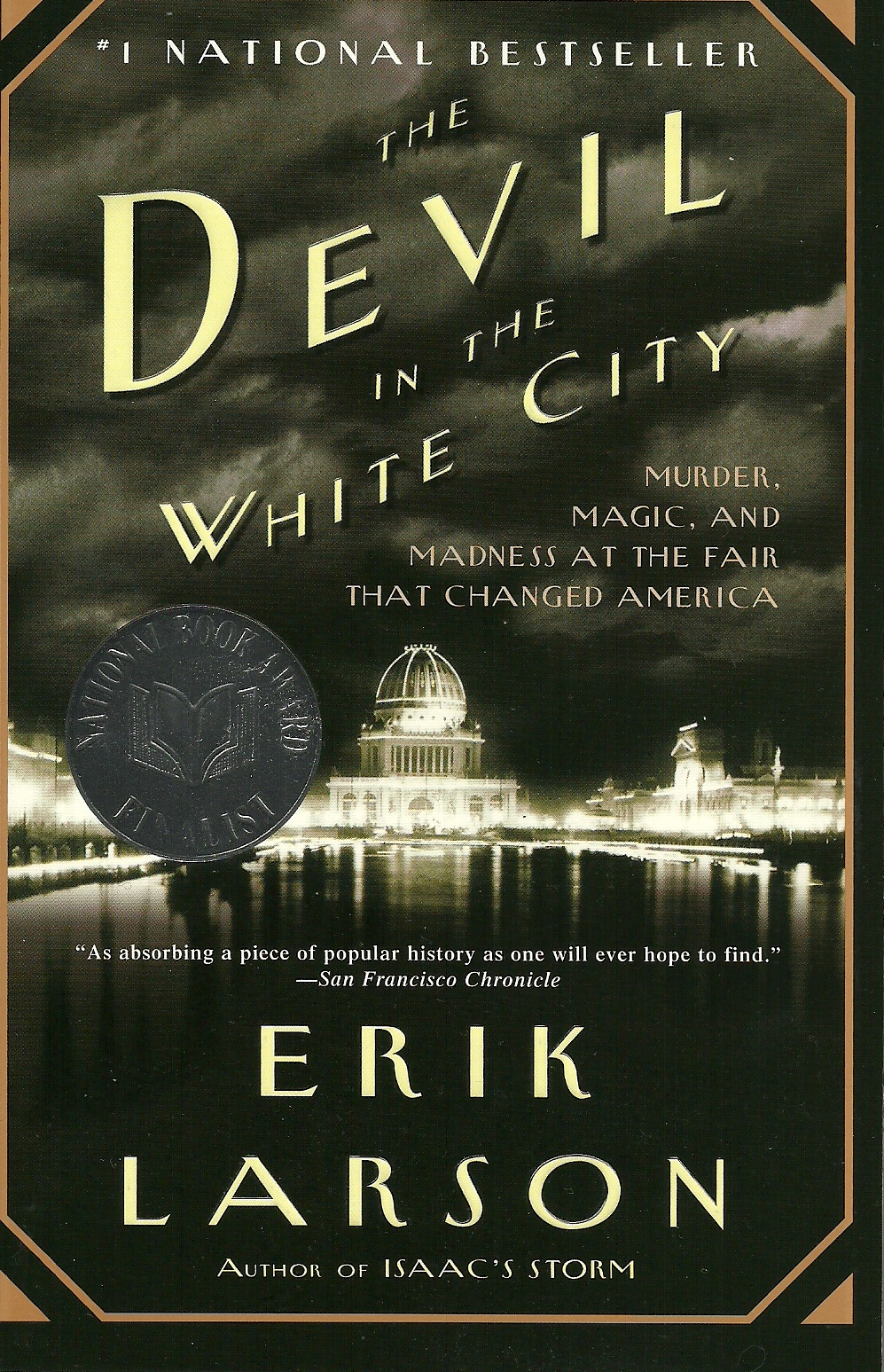
The Devil in the White City  by Erik Larson
The Omnivore’s Dilemma by Michael Pollan
Mutants: On Genetic Variety and the Human Body by Armand Marie Leroi
The Professor and the Madman by Simon Winchester
The Disappearing Spoon by Sam Kean

The other group of 11th graders read these:

Watership Down by Richard Adams
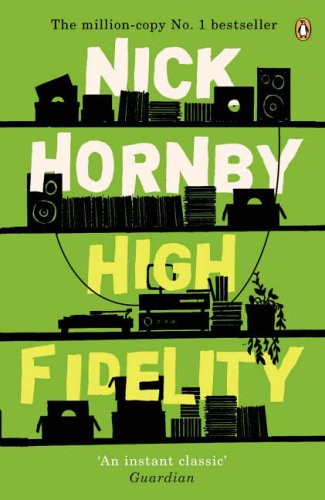
HIGH FIDELITY by Nick Hornby
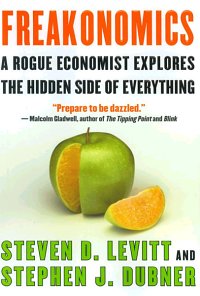
Freakonomics by Stephen Dubner and Steven Levit

Those in 12th Grade read:

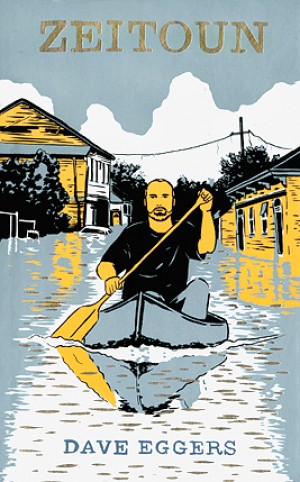
Zeitoun by David Eggers
Like You’d Understand Anyway by James Shepherd

Those in Advanced Placement 12th Grade have a large list to choose from. Some are mandatory and some are choice, but they end up reading 5 titles in all (and for one, reading the book AND watching the film.) They are:

Ragtime by E.L. Doctorow
The Wonder Boys by Michael Chabon
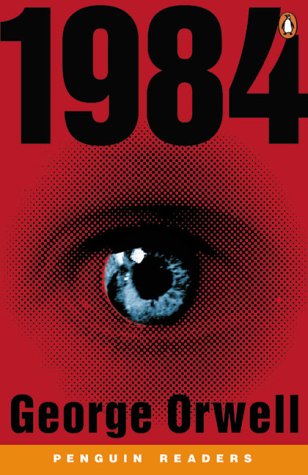
1984 by George Orwell
Do Androids Dream of Electric Sheep? by Phillip K. Dick
On the Beach by Nevil Shute
A Plague of Doves by Louise Erdrich
Brighton Rock by Graham Greene
Player Piano by Kurt Vonnegut
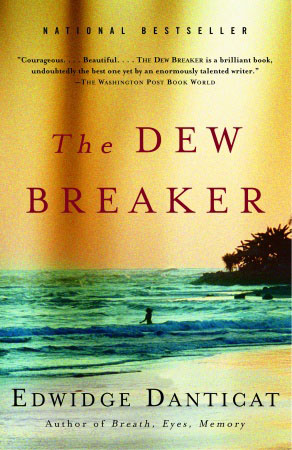
The Dew Breaker by Edwidge Danticat
Demian by Hermann Hesse
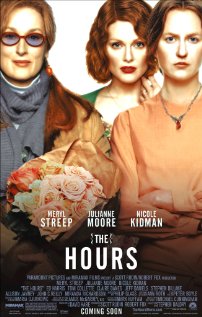
The Hours by Michael Cunningham
Obasan by Joy Kogawa

King Lear by William Shakespeare and the 1985 Akira Kurosawa film Ran
Educating Rita by Willy Russell and the1983 film by the same name
The House of the Spirits by Isabel Allende and the 1994 film by the same name
The Commitments by Roddy Doyle and the 1991 film by the same name
High Fidelity by Nick Hornby and the 2000 film by the same name
Equus by Peter Shaffer and the 1977 film by the same name
The Day of the Locust by Nathaniel West and the 1975 film by the same name
The Color Purple by Alice Walker and the 1985 film by the same name
Beloved by Toni Morrison and the 1998 film by the same name
The Good Earth by Pearl Buck and the 1937 movie by the same name
The Reader by Bernhard Schlink and the 2010 movie by the same name

I must admit, I haven’t read (or watched) all of these titles, but I have read most. It’s a pretty eclectic list…and certainly stimulating. I have my own favorites–Zeitoun for anger, The Commitments for fun, The Hours for tears, The Color Purple for the extraordinary… I could go on, but won’t.  Have fun. Choose something for yourself, if you have the time.

So whether it’s been one year since you’ve been out of high-school or fifty-one years, give the list a look over and maybe you’ll find something to get you through the hot summer days that are already well on their way.

“Before the World was Made”

“The Yale philosopher Shelly Kagan … manages to raise some interesting and subtle concerns about …notions relating to the question of what’s really bad about death, including this one: Why do we regard no longer existing (post-mortem nonexistence) as worse than not having existed before our births (prenatal nonexistence)? And are we wrong to do so?” 

“The Opinionator,” New York Times, May 16, 2012.

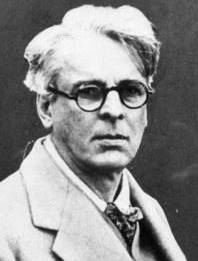
I love this question.  I have thought of it before, and it gives me comfort. For it makes perfect sense to me.  I wonder if Mr. Kagan is aware of the Yeats’ poem, “Before the World was Made.”  I would imagine he is. I know I thought of it right away when I read the article.

    Before the World was Made

If I make the lashes dark
And the eyes more bright
And the lips more scarlet,
Or ask if all be right
From mirror after mirror,
No vanity’s displayed:
I’m looking for the face I had
Before the world was made.

What if I look upon a man
As though on my beloved,
And my blood be cold the while
And my heart unmoved?
Why should he think me cruel
Or that he is betrayed?
I’d have him love the thing that was
Before the world was made.

For here, Yeats too is looking at what Kagan calls “prenatal nonexistence”–though Yeats prefers to think of it as “prenatal existence.”

Now Yeats is working in a spiritual cosmology quite different from that which the Yale philosopher is dealing with.  Yeats was always susceptible to spirituality and spiritualism…mysticism and the occult.  (Adrienne Rich famously called him a “table-rattling fascist.” Click here for Evan Boland’s essays on literary antagonisms.) Nevertheless, he was very much interested in concepts of a soul. He believed–through a complicated mythology of his own making, explicated in his book The Vision–in an individual, social, and civilization-wide reincarnation or continuance of the soul.  And so through this series of Yeatsian cycles we have it: a “pre-natal” AND “post-mortem” existence, as the philosopher says.

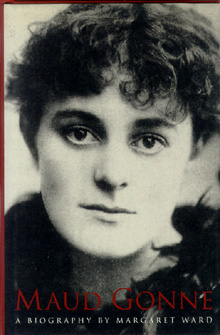
Maude Gonne

And yet, there is also something else going on in the poem that is not as deep, not as cosmic, not as “philosophical.” This is not a cosmic dance taking place in front of the mirror.  It is that old familiar dance of seduction and romance.  For who is the speaker sitting in front of her vanity? Has Yeats returned to musings on his old beloved Maude Gonne? Is he thinking of her daughter–to whom he once proposed having been rejected for the umpteenth time by Gonne? The poem was published in 1933 when Yeats was 68 years old.  The following year Yeats had the Steinach operation performed–a procedure of inserting animal glands into the body in order to increase testosterone production. Good old Yeats–he was now 68–was not giving up on this existence…and at this time was carrying on several romantic affairs with much younger women.

The poem itself appeared in the collection, The Winding Stair, and was one of twelve poems included in a section called “A Woman Young and Old.”  If the speaker is a woman where does she fit in that continuum?  Is this a young woman relatively new at the game?  Or a more experienced woman, who could look on any man “as though on my beloved”?

And what is it she would have him love?  What existed “before the world was made”?  For the philosopher Kagan, the answer is nothing.  For Yeats it is something large, something essential.

As an aside, I knew that Van Morrison had recorded a song version of the poem.  I also knew that Mike Scott and the Waterboys had just put out an album, An Appointment with Mr. Yeats, on which the poem appeard. But I just learned that Carla Bruni–the former first lady of France–had also recorded the song.  I don’t know why, but I find that amusing.  Anyway,  here’s Van the Man’s performance of Yeats’ “Before the World Was Made.”