Disney’s Folly, Snow White and Disneyland

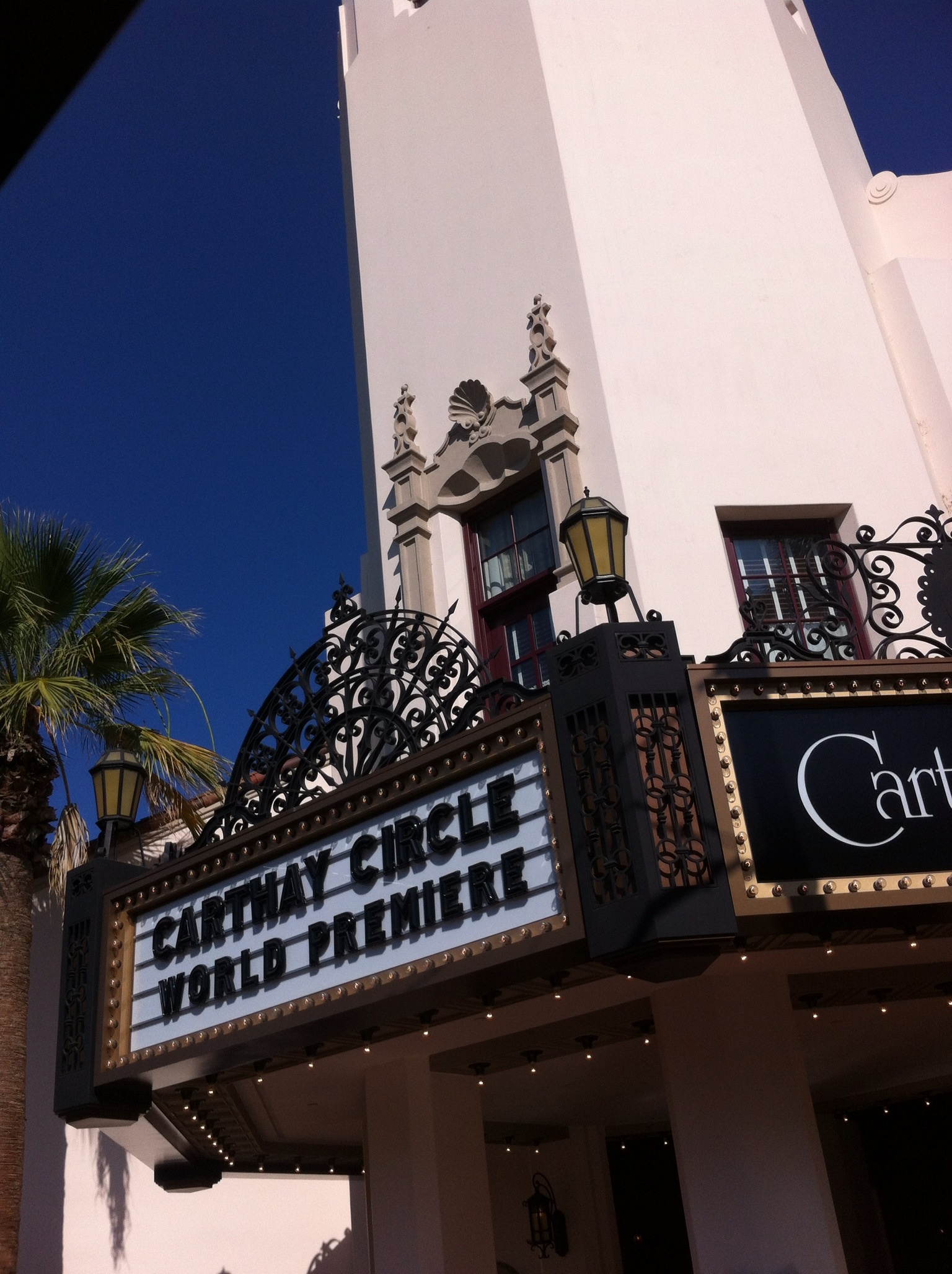
The Carthay Theater

The Carthay Circle Theater where Snow White and the Seven Dwarfs premiered on December 21, 1937

I’ve been in Southern California for the past two weeks, and yesterday I spent 14 1/2 hours in Disneyland. With a very energetic seven-year old. And I’m completely exhausted.

But I am sure of this: no matter what people say about the Disneyfication of things, one has to admit that everything they do is efficient and entertaining. And often awe-inspiring.

When Walt Disney came to California, he focused on making short animated films, primarily the Mickey Mouse and the Silly Symphonies cartoons. But in 1934, he decided to produce the first feature-length animated feature…much to the dismay of his brother and business partner, Roy Disney, and the delight of the Hollywood critics who called Disney’s project “Disney’s Folly.”

For what sensible person, it was thought, would sit through a 90 minute cartoon?

Disney mortgaged his house, brought artists in to train his animators, emphasized a European look for the artwork ensign design, and spent close to $1.5 million in 1937 dollars to get his feature,  Snow White and the Seven Dwarfs, completed.

If Snow White and the Seven Dwarfs hadn’t succeeded, most of us probably would never have heard of Walt Disney–except maybe for a few film students who might have studied his early cartoons.  Instead the film’s success, both among the public and the industry, allowed Disney to capitalize on success after success until the Disney brand became what would have been unfathomable to Disney itself.

The story of the making of Snow White and The Seven Dwarfs is well documented: the switch from a rollicking tale about the dwarfs to the romantic love story it became,  the metamorphosis of the Wicked Stepmother from a hare-brained slovenly witch to the sensuous, shapely queen that all boys of a certain age remember, the downplaying of the prince’s role in the plot–this is all a matter of history.
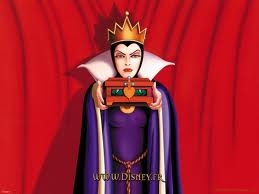
The wicked queen, witch, stepmother

The wicked queen, witch, stepmother

But no one would have cared about that history, if the film flopped.

On December 21, 1937, the film premiered at the Carthay Circle Theater. The premier, which was attended by all the Hollywood royalty—Judy Garland, Charlie Chaplin, Marlene Dietrich, Cary Grant, George Burns and many more were present—was an extraordinary success.  Outside the Carthay Circle Theater, 30,000 fans who couldn’t get tickets waited.  The NY Times led with the line, “Thank You, Mr. Disney” and Walt Disney and his Seven Dwarfs were on the cover of Time a week later. (Disney always saw the dwarfs as the centerpiece of his film.)
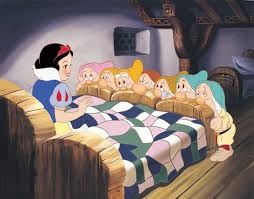
A shot the Walt Disney wanted badly in the film

A shot that Walt Disney wanted badly in the film

And the film made money. The numbers are staggering–within 15 months it had become the all time money making film ever–but more importantly Snow White and the Seven Dwarfs provided the seed money for what was to become the Disney Empire.

And so, as I trudged around Disneyland–visiting Radiator Springs and Ariel’s Undersea Adventure, as I watch Henson’s Muppets and a Broadway caliber Aladdin,  as I witness technological and creative boundaries pushed and optimized–I realize what an awful lot has blossomed from Disney’s hunch that people, yes, would sit through ninety minutes of animation.

By the way…

Did you know that Snow White and the Seven Dwarfs was the first film to release a “soundtrack” album as a separate entity?
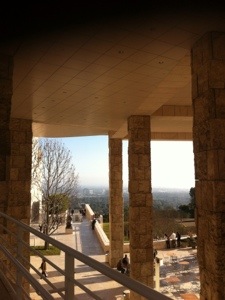
The Getty Museum, Los Angeles– “a work of art with a museum inside”

20130716-223355.jpgWhen I think of art museums, I think of urban spaces. In my experience, most large cities ensconce their major museums within the city landscape itself.  And often times, the buildings themselves are as impressive as the art they house: the majesty of the Louvre, the edgy hipness of the MOMA, the serenity of the capital’s Hirschhorn, the classical grandeur of Philadelphia’s Museum of Art, the modernity of the Tate. Yet, again, each is an urban creation, set upon city streets.

The Getty Center of Los Angeles, however, is something wonderfully different. To get there one must drive–as one always must in Los Angeles–along some congested stretch of highway ( the 405) and pull into a car park. From there you take a tram car 900 feet up a mountain and when you disembark at the mountaintop, you feel you have arrived on Olympus itself.

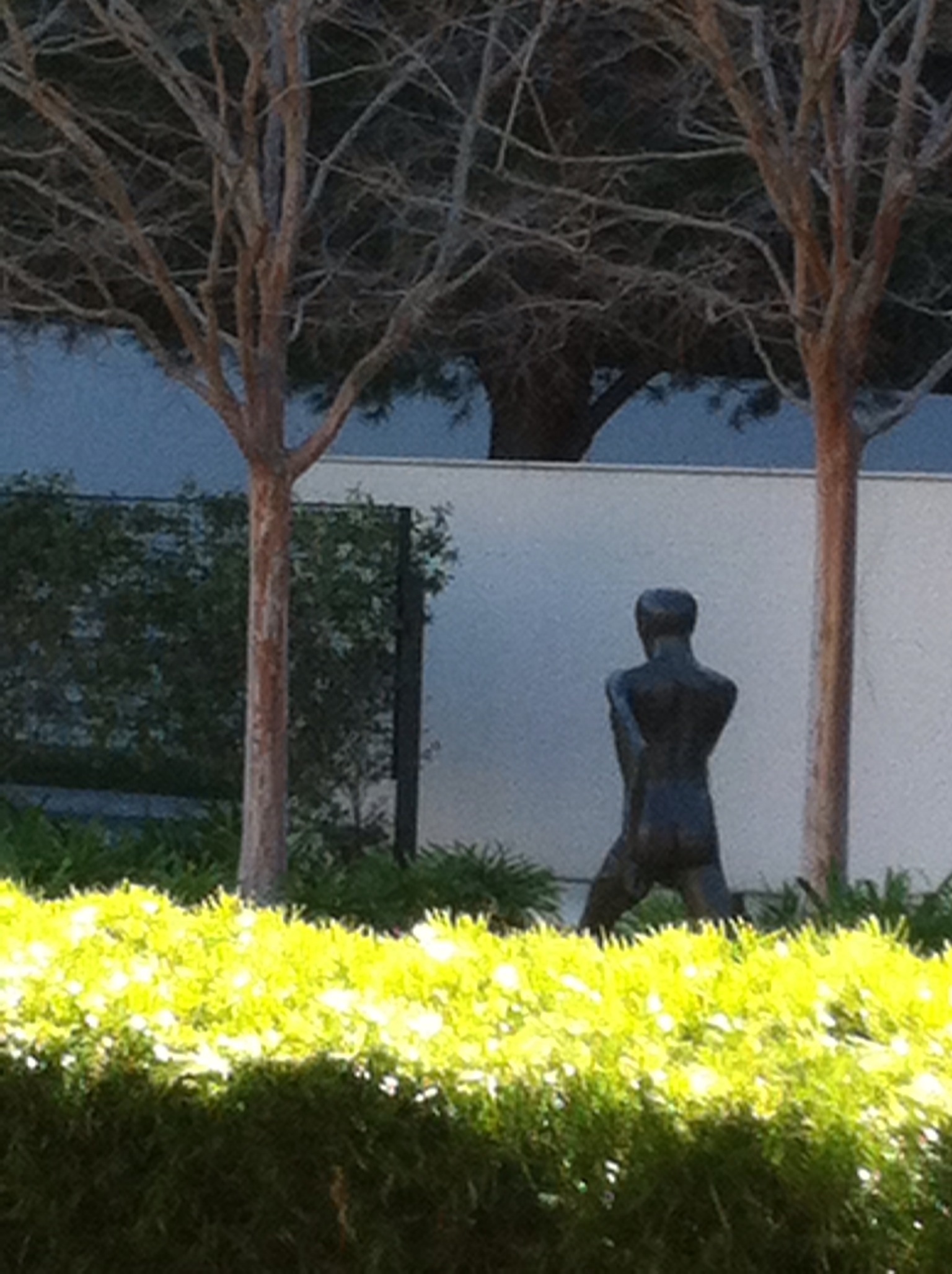
A sculpture "running" next to the tram car

A sculpture “running” next to the tram car

The museum is open-aired. As you move from wing to wing, from gallery to gallery, you walk into the California sunlight–the San Bernadino and San Gabriel Mountains stretching out to the east, the Pacific Ocean to the west, the blue sky all around you. The buildings are constructed in beautiful white block with striated stone quarried in Israel and Italy that mutates in color from brown to gold to sandstone in the changing light. Large panels of glass and open-air passageways further blur the distinction between outside and in. As one museum docent said, “People come here with the idea that they’re going to a museum with works of art on the inside, but they’re really visiting a work of art with a museum inside.”

image

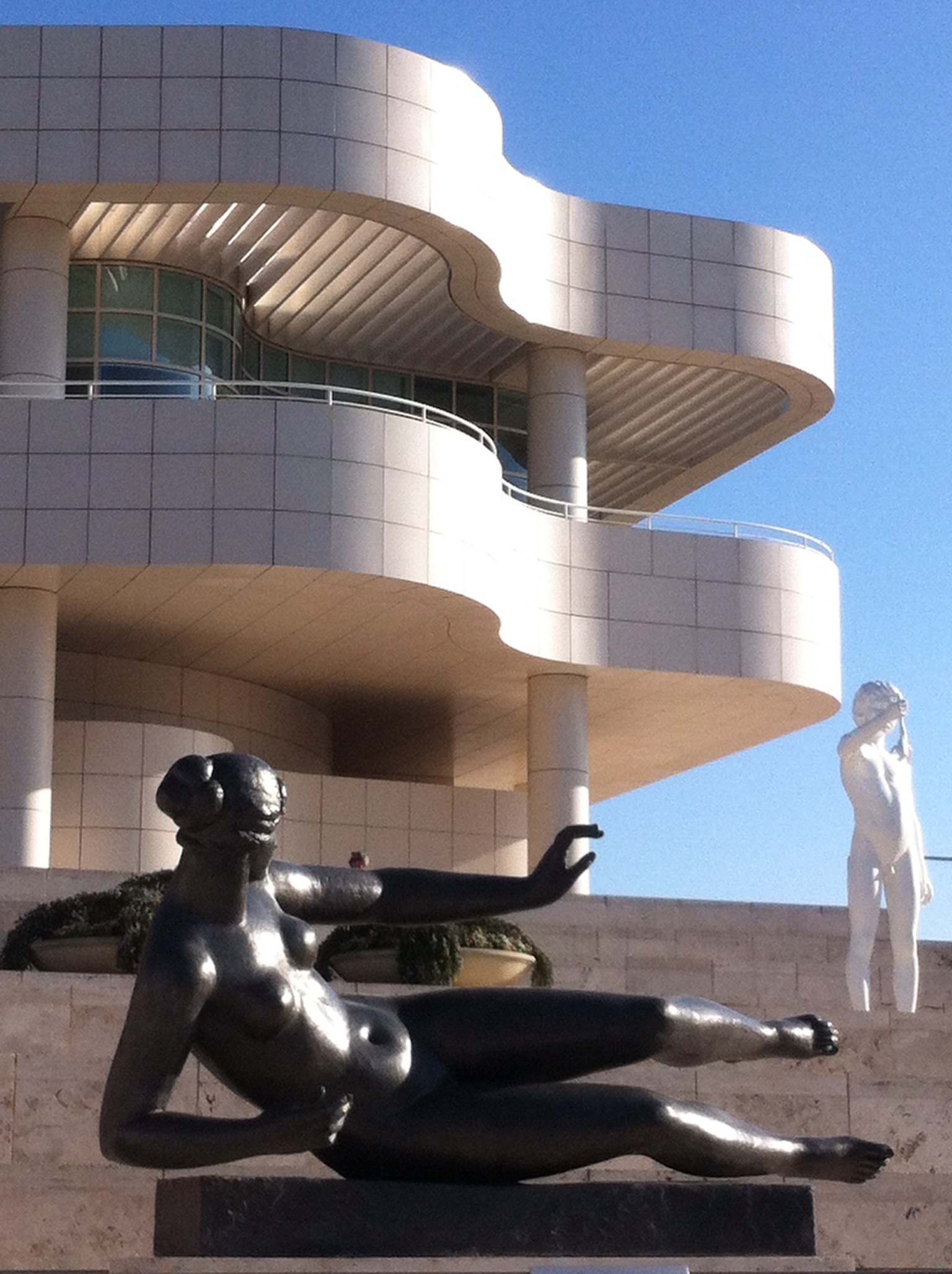
“Air” by Aristide Maillol

Sculptures both modern and contemporary are scattered throughout the grounds, so as you move from a special exhibition on Renaissance gardens to the Getty’s renowned permanent photography collection you must walk past Giocometti and Magritte and Henry Moore as well as Barbara Hepworth, Aristide Maillol and Charles Day.

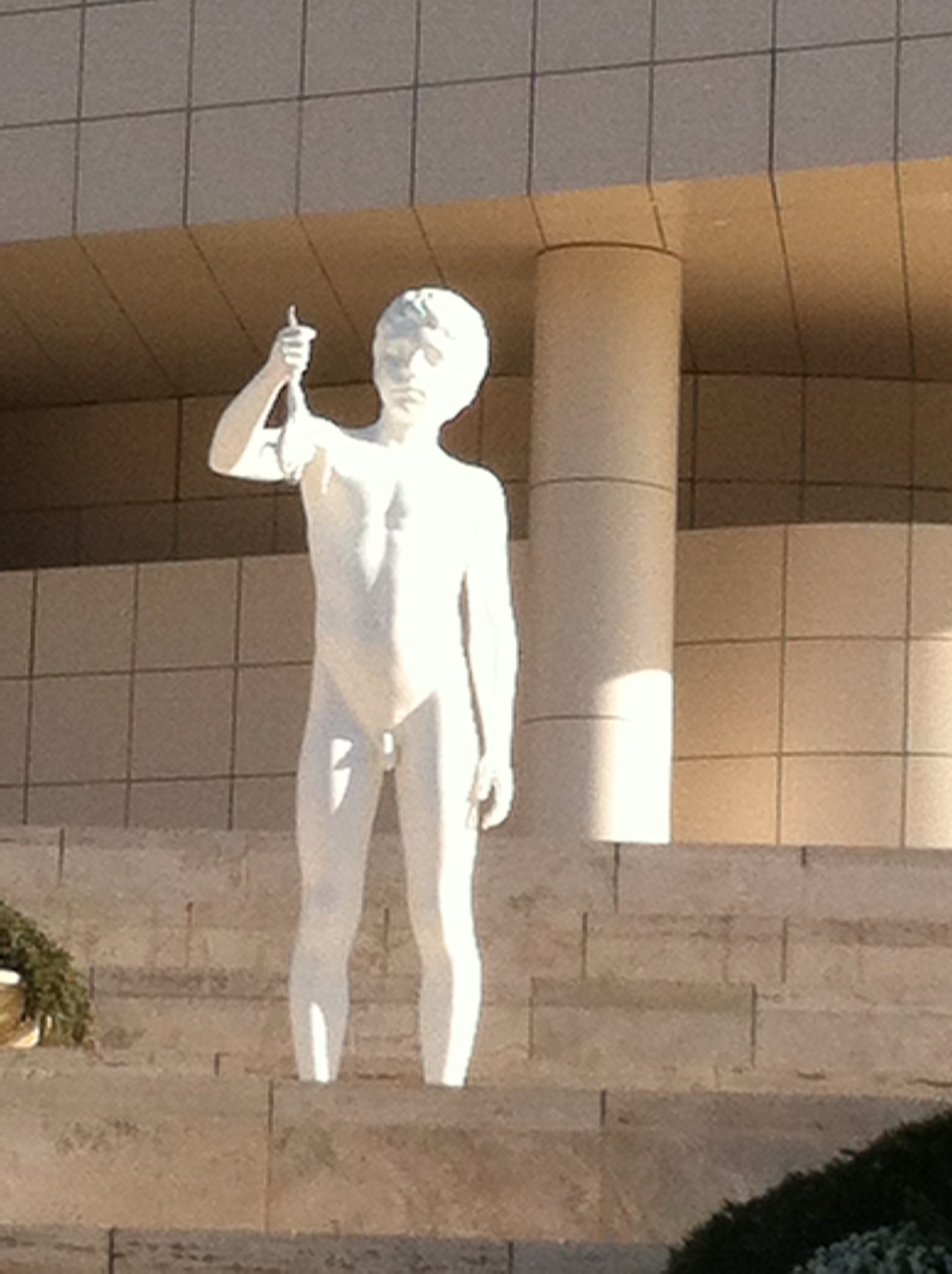
Boy with a Frog, by Alexander Day

“Boy with a Frog” by Charles Day

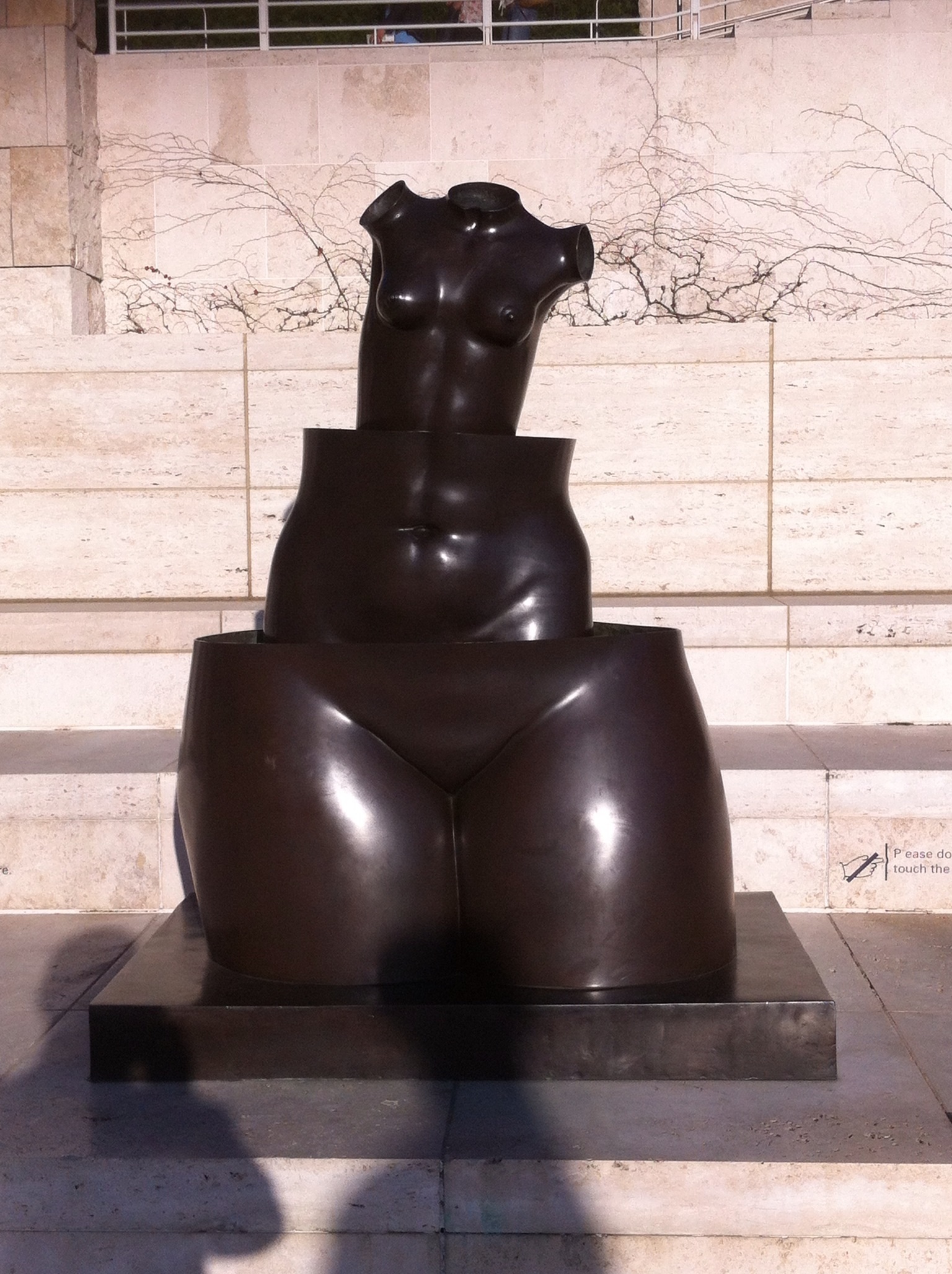
Torso of a woman by Rene Magritte

“Delusions of Grandeur” by Rene Magritte

The holdings –and the special exhibits–that the Getty museum houses are world-class and extraordinary. From Van Gogh’s Irises to Mapplethorpe’s photos, from Titian to Rembrandt to Monet, the Getty is a magnificent collection.

But I could spend the entire day there and never walk inside.

by the way…

In case I didn’t say, there is also extraordinary art inside:

image

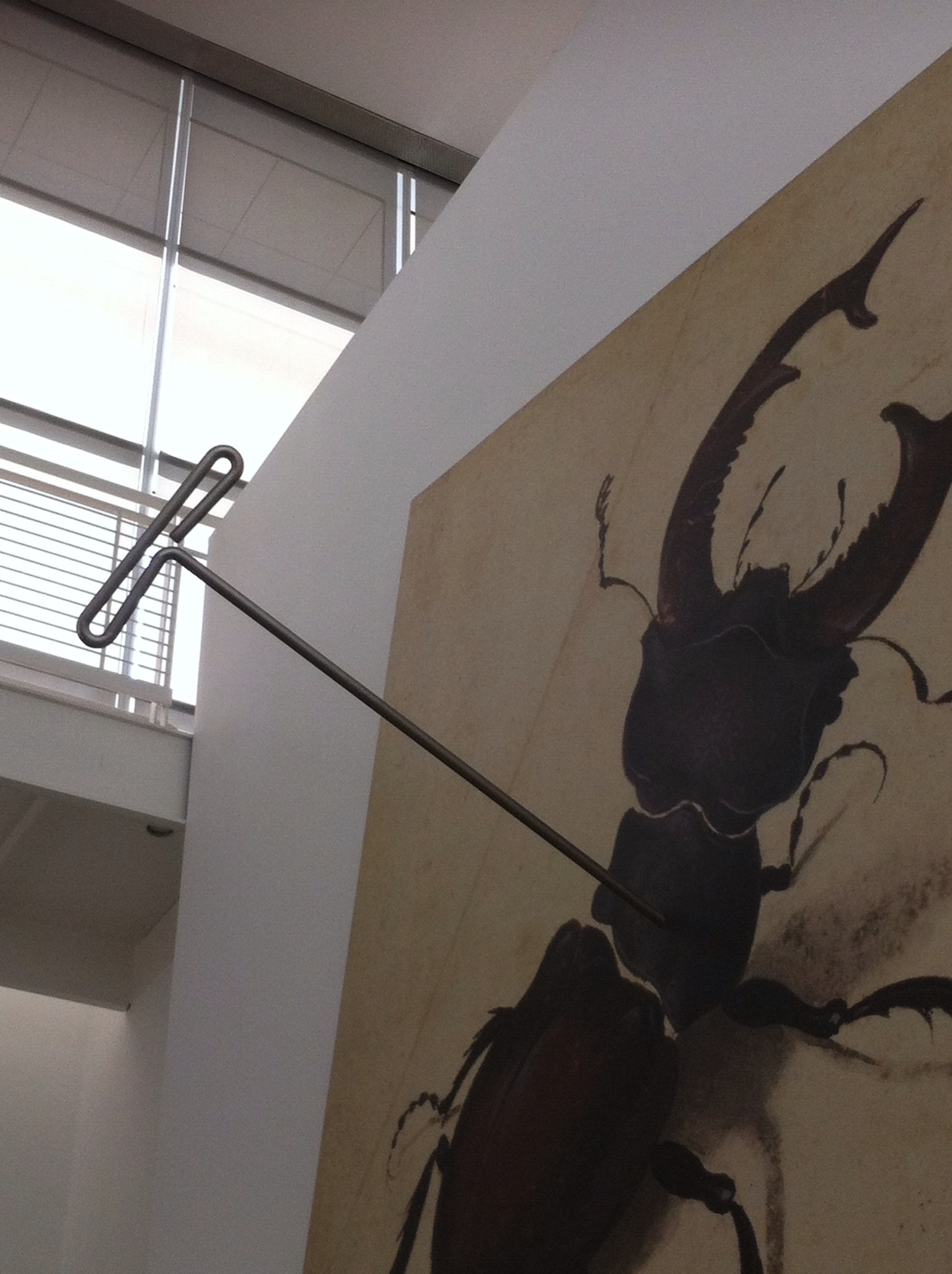
“Specimen (after Durer)” by John Baldessari

image

Quote of the week # 12: July 14, 2013

illustration 2013 jpbohannon

illustration 2013 jpbohannon

“After so many years, I’ve learned that being creative is a full-time job with its own daily patterns. That’s why writers, for example, like to establish routines for themselves. The most productive ones get started early in the morning, when the world is quiet, the phones aren’t ringing, and their minds are rested, alert, and not yet polluted by other people’s words. They might set a goal for themselves — write fifteen hundred words, or stay at their desk until noon — but the real secret is that they do this every day. In other words, they are disciplined. Over time, as the daily routines become second nature, discipline morphs into habit.

“It’s the same for any creative individual, whether it’s a painter finding his way each morning to the easel, or a medical researcher returning daily to the laboratory. The routine is as much a part of the creative process as the lightning bolt of inspiration, maybe more. And this routine is available to everyone.

“Creativity is a habit, and the best creativity is a result of good work habits.”

Twyla Tharp, The Creative Habit

Werner Herzog, Northern Liberties and my neighbors’ art

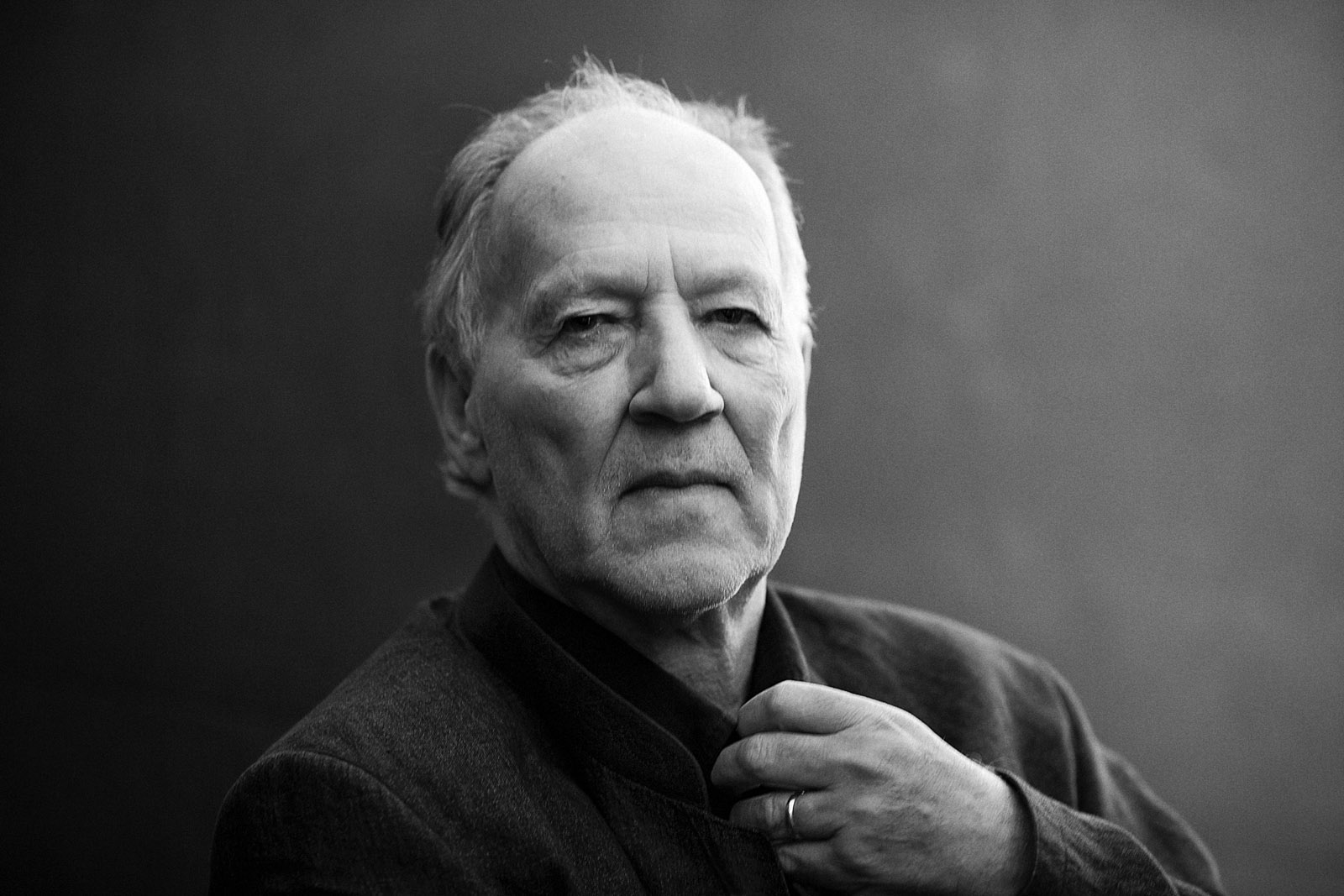
Werner Herzog photo Bil Zelman

Werner Herzog
photo Bil Zelman

So it is August last year and I’m with a group of people at a street fair on 2nd Street and we’re standing watching the children attempting to throw over-sized basketballs into undersized hoops. All of a sudden, the barker takes away one of the balls and points it to me. “Let’s give Werner Herzog a try,” he says.

Now, I’ve have been compared to a lot of people in my time–both as insults and as compliments–but I had never been compared to Werner Herzog before. We all had a laugh and promptly forgot about it…until this past Tuesday, that is.

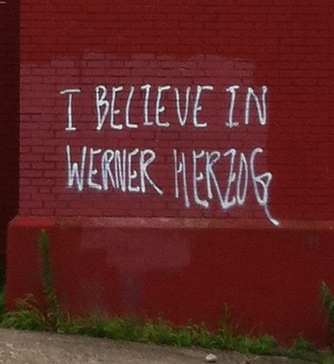
Anyway, I was walking down 3rd Street to my local when I passed the abandoned Ortlieb’s brewery at 3rd and Poplar. It is a derelict building with a lot of character but in really great disrepair, and nobody yet has taken the risk to convert it to anything. Anyway, I was surprised to see, yet again, a reference to the German film director: Brand new graffiti spray-painted on the brewery wall.

Newly Arrived Graffiti on the wall of the abandoned Ortlieb's brewery (3rd and Poplar).

Newly Arrived Graffiti on the wall of the abandoned Ortlieb’s brewery (3rd and Poplar).

What is the fascination with Herzog in my little neighborhood? I photographed it immediately.

♦ ♦ ♦ ♦ ♦ ♦

Philadelphia is very proud of its wall art–murals that dot the city–and visitors can now take one of several bus tours visiting the more spectacular ones. But in my neighborhood of Northern Liberties, the wall art is not necessarily all that official–but it is more than impressive. And so on Wednesday, I took my own little tour of just a one block by two block area, snapping whatever pieces I saw.

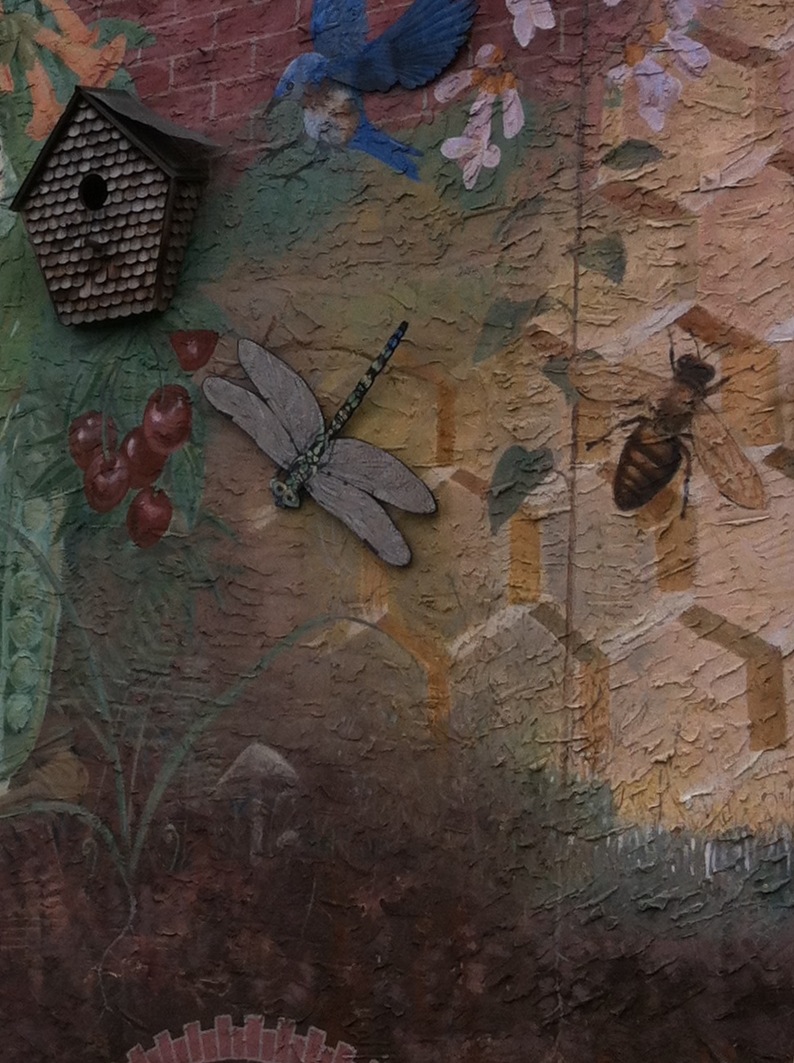
A half-block north of the Ortleib’s brewery is Liberty Lands Park. Its southern wall is Kaplan’s Bakery and the air is filled with the aroma of baking bread–bread that makes its way to many of the restaurants throughout the city. The wall is filled with a three-dimensional mural of birds and bees and a map of the land as it once was.

A half-block north of the Ortleib's brewery is Liberty Lands park.

A half-block north of the Ortleib’s brewery is Liberty Lands park.

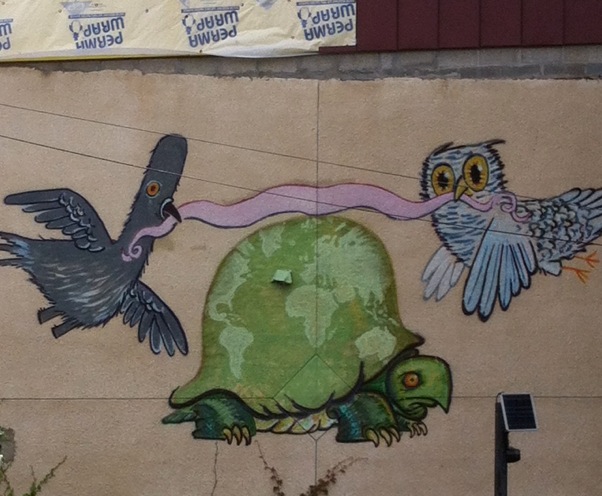
At the northeast corner of the park, where Bodine crosses Widley, there is a house where the owners have painted a interesting tale on their wall. The famous tortoise (looking a bit startled) is crossing the finish tape, held up by a pigeon and an owl. The hare is nowhere in the picture. Hah!

The Tortoise crossing the tape.

The Tortoise crossing the tape.

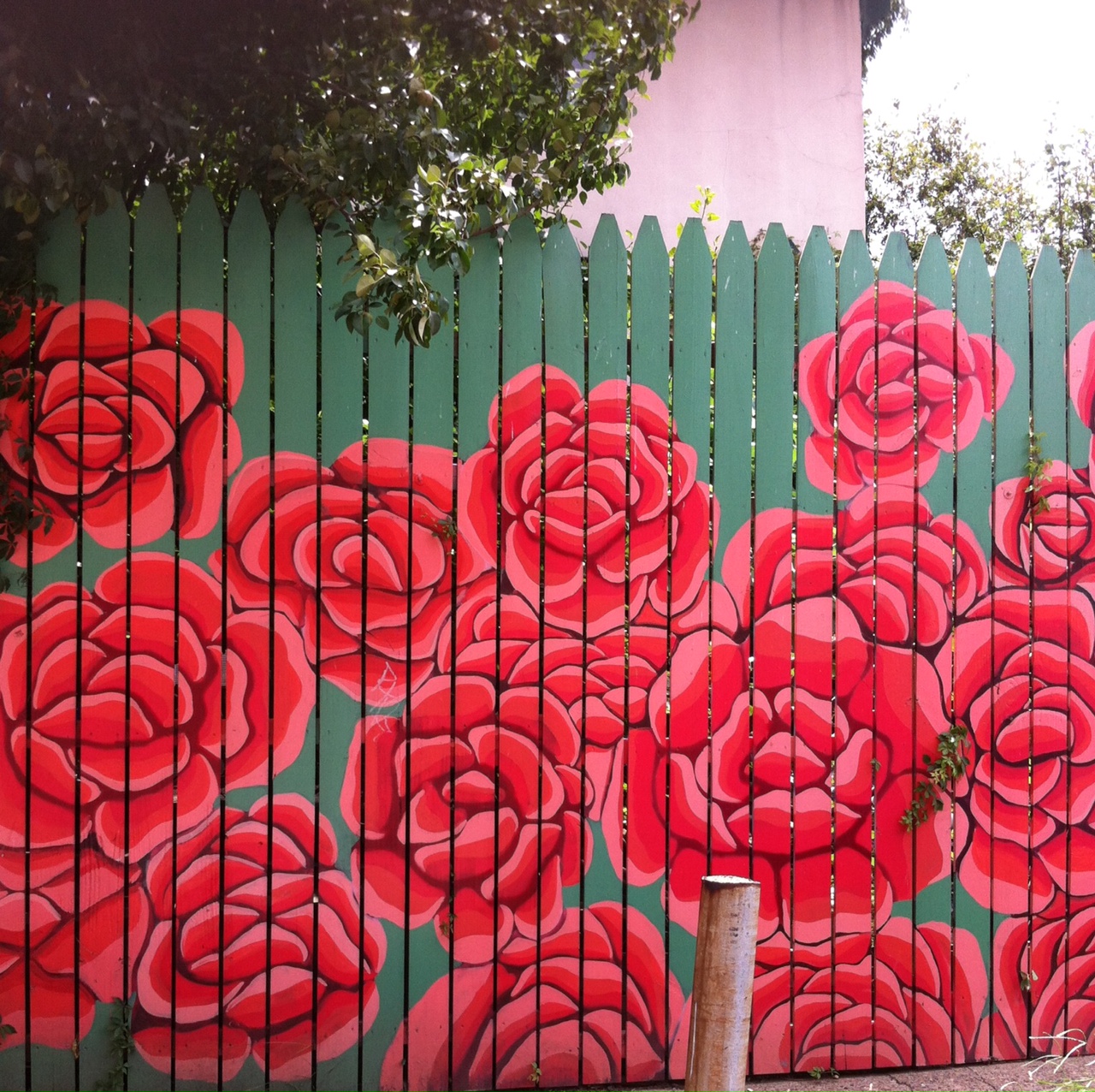
Immediately across the street, ten meters from the tortoise, a neighbor has painted his garden fence in lush roses.

A Garden Fence of Roses (Bodine and Wildey Sts.)

A Garden Fence of Roses (Bodine and Wildey Sts.)

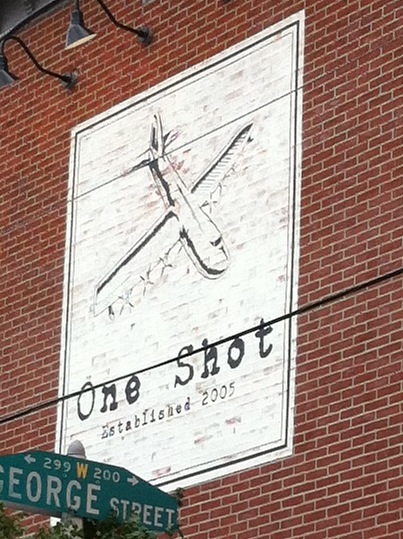
A block away in one direction, there is a coffee shop…

One Shot Coffee Shop

One Shot Coffee Shop

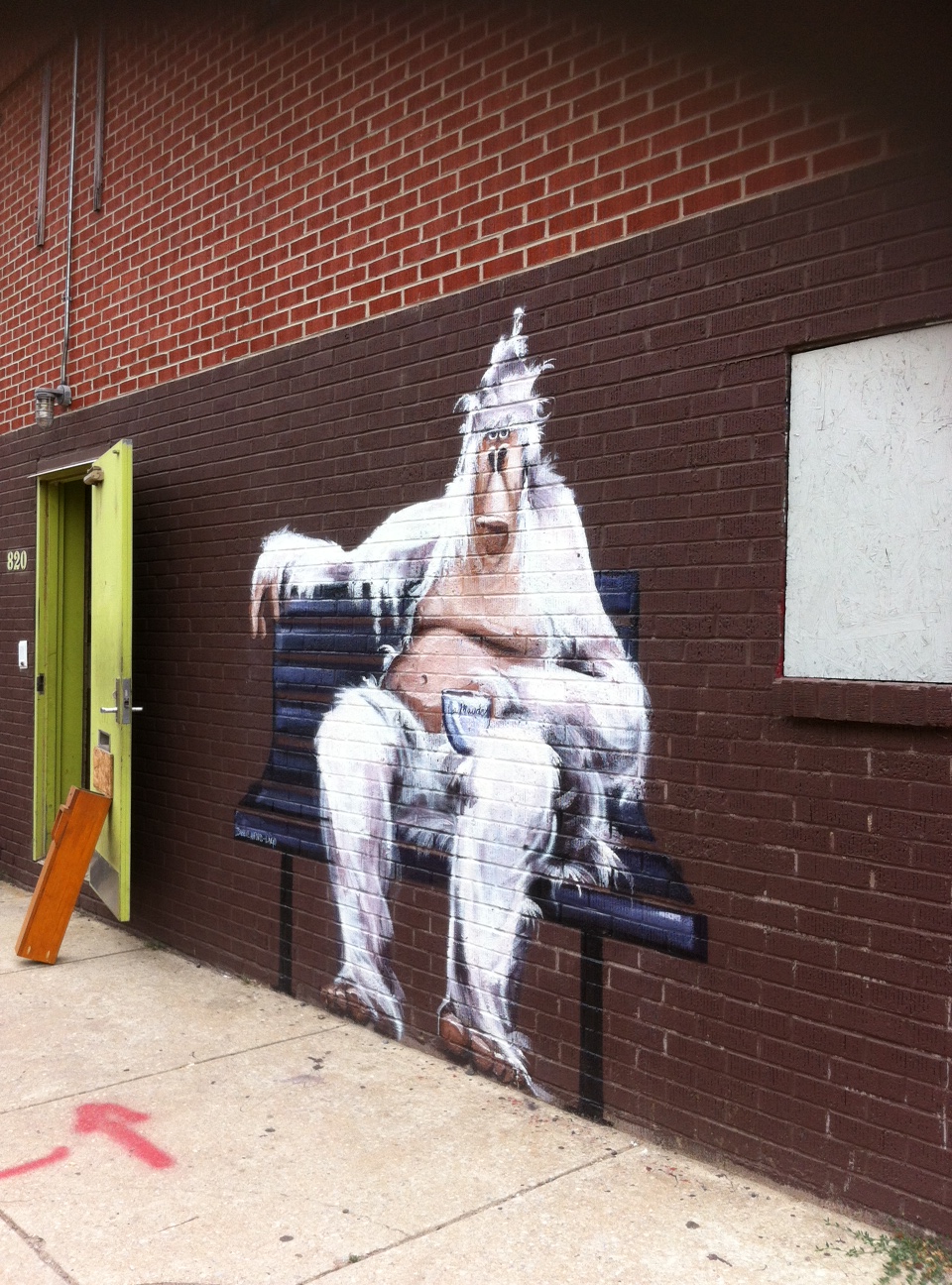
… and a block away in the other direction is GreenSaw, an environmentally-conscious design, architectural, construction firm that makes furniture, does remodeling, and sells DIY materials and supplies—all earth friendly and green. I guess that pleases the orangutan on the wall next to them:

4th Street between Poplar and Brown

4th Street between Poplar and Brown

Quote of the Week #11: July 7, 2013

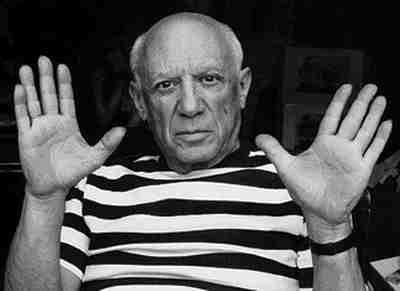
“My mother said to me, ‘If you become a soldier, you will be a general; if you become a monk, you’ll end up the pope.’ Instead, I became a painter and I wound up as Picasso.”

Pablo Picassopablo-picasso

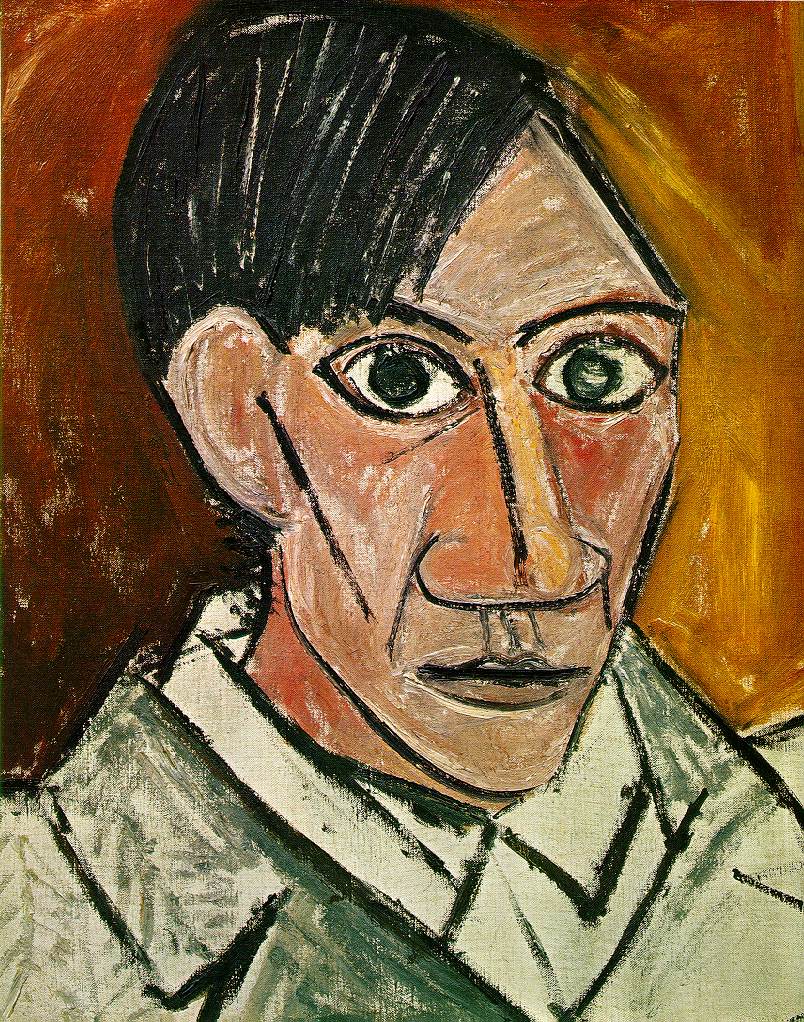
Self-Portrait (1907)

Self-Portrait (1907)

Book Review: Ed Ruscha’s Los Angeles by Alexandra Schwartz–“learning what I do not know”

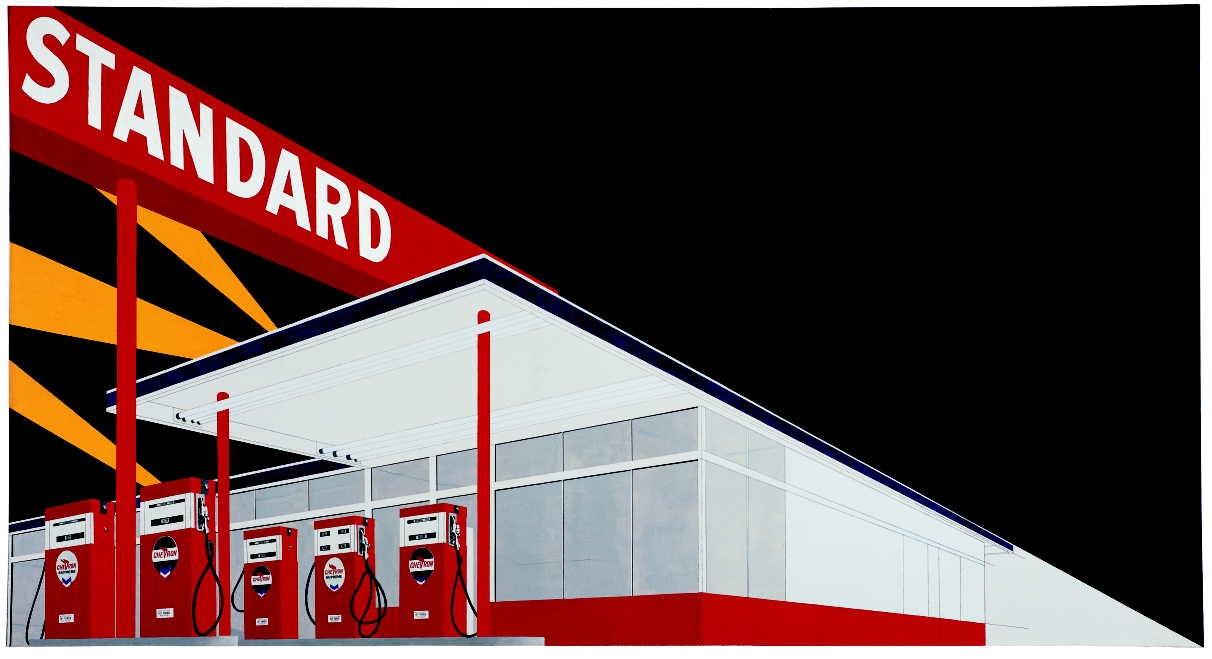
Standard Station, 1966, Ed Ruscha. (Park West Gallery)

Standard Station, 1966, Ed Ruscha. (Park West Gallery)

RuschasLAMITI received a book about six months ago as a gift: Ed Ruscha’s Los Angeles by Alexandra Schwartz.  At first I thought it was a travel guide, for I was headed to L.A. a few weeks later and I just assumed it was a book detailing the more out-of-the-way spaces to see.  Except that it was much too nice a book for a mere travel guide: small and compact with fine paper, hard-board covers and peppered with illustrations. I put it aside to read it at another time. (I have since spilled an entire cup of coffee on it in a place where food and drink was forbidden. Deserved bad karma!)

Anyway, boy was I wrong about the travel guide…and ignorant of an artist and a whole school of painting.

I had been completely unaware of Ed Ruscha–and of Los Angeles art.  And I was not alone. In fact, much of the book’s focus is how the Los Angeles’ school of Pop Art has always played the poor sister to New York’s more celebrated school.  And yet, unlike many cultural movements in which a western migration can honestly be traced, Pop Art in America seems not to have originated on the East Coast and worked its way across to California. Apparently, according to Schwartz, Pop Art seems to have arisen simultaneously in various parts of the country, reacting to and inspired by the same cultural influences.

In 1962, the Ferus Gallery in Los Angeles mounted an exhibit entitled “The New Painting of Common Objects.” The British critic, Lawrence Alloway–the man who coined the term “Pop Art”–cites it as being the first exhibit of American Pop Art.  In fact, the gallery–and its curator Walter Hopps–was the first to exhibit Warhol’s iconic Campbell Soup Can–arguably, the defining image of Pop Art–two months before it was shown in New York.  The list of artists at “The New Painting of Common Objects” exhibit included Lichtenstein, Dine and Warhol from the East Coast, Phillip Hefferton and Robert Dowd from the Mid-West, and Edward Ruscha, Joseph Goode and Wayne Thiebaud from the West. It was the nation’s introduction to Pop and a major stroke for the establishment of Pop Art in the country. This, and the fact that the respected art magazine ArtForum had its offices above the Ferus Gallery where the show was staged, would seem enough to move the spotlight onto the Los Angeles’ art world, but it wasn’t.  But New York is much too big a player. (Ultimately ArtForum moved there, as well.)

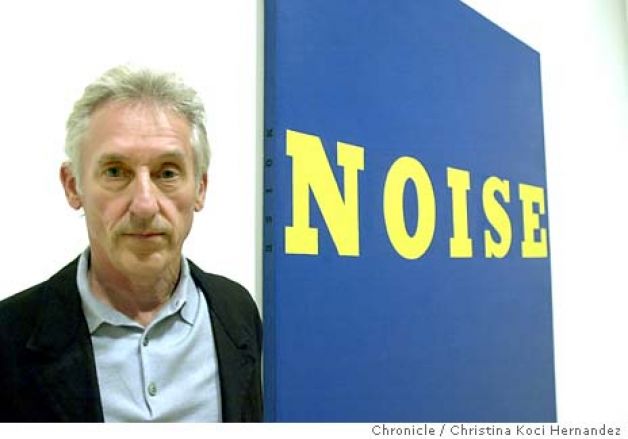
Ed Ruscha in front of Noise, 1966. Photo: CHRISTINA KOCI HERNANDEZ for San Francisco Chronicle

Ed Ruscha in front of Noise, 1966.
Photo: 2004 CHRISTINA KOCI HERNANDEZ for San Francisco Chronicle

Ruscha hit the L.A. scene young, having hitchhiked in from Oklahoma at the age of nineteen. He enrolled in what is now the California Institute of Arts and afterwards worked–like his contemporary Warhol–in advertising.   And like Warhol, his collages, his word-art, the signage and everyday objects, and his photographs greatly showed the influenced that advertising had on him.

Ruscha’s work is vibrant and fun, enigmatic and engaging, uncluttered and beguiling. Besides his artwork, he has created numerous books and films, and often collaborates with artists, writers and publishing houses on lay-out and cover designs. He still works and lives in Southern California.

To be truthful, the book, Ed Ruscha’s Los Angeles itself, however is a bit heavy going and academic at times. (It was published by MIT and was originally Schwartz’s doctoral dissertation). But nevertheless, it is a wonderful introduction to Ruscha’s art.

At least for me, for whom he was a completely new name. And one that I am enjoying discovering.

“Always learning, even if it’s simply that I do not know.”

Yes, Yes, Yes: Affirmation ala Molly Bloom

yes I said yes I will Yes.

Last Sunday was Bloomsday, the international celebration of James Joyce’s novel Ulysses.

Dublin had its usual extravaganza with crowds retracing Leopold Bloom’s wanderings and with women’s hats that rivaled those worn at major horse races (remember to bet it all on “throwaway.”) In New York, the complete novel was read outside writer Colum McCann’s tavern, aptly named Ulysses. And at Philadelphia’s Rosenbach Museum and Library, (where Joyce’s manuscript is housed) there was, beside the usual full reading, an unusual installation.

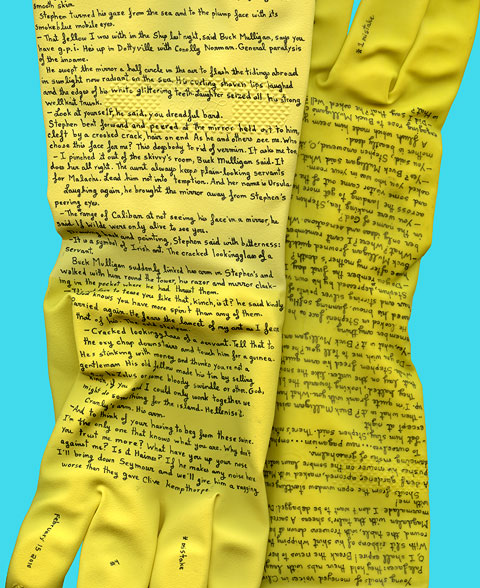
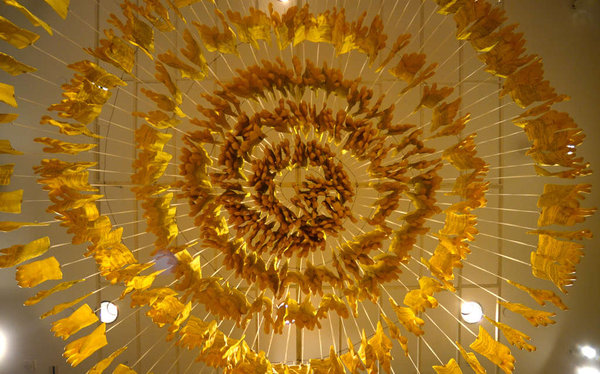
The artist, Jessica Deane Rosner, wrote out the entire text of the novel on 310 yellow, rubber, dish gloves and suspended them from the gallery ceiling in a very Joycean spiral. Rosner stated that it was Joyce who showed us that the things of everyday life–including the muck and the un-pretty–are the very essence of and inspiration for Art.

And so she used the mundane kitchen gloves to carry Joyce’s text–a text replete with the beauty of life’s mundane grime and natural effluences.

Jessica Deane Rosner’s Text of Ulysses on yellow rubber gloves.

Jessica Deane Rosner's Ulysses Glove Project suspended from ceiling of Rosenbach Gallery

Jessica Deane Rosner’s Ulysses Glove Project suspended from ceiling of Rosenbach Gallery

But that’s not what I want to talk about today. …

I want to talk about the last seven words of the novel, the strong affirmation that ended Molly Bloom’s long nighttime reverie in the early hours of June 17, 1904.

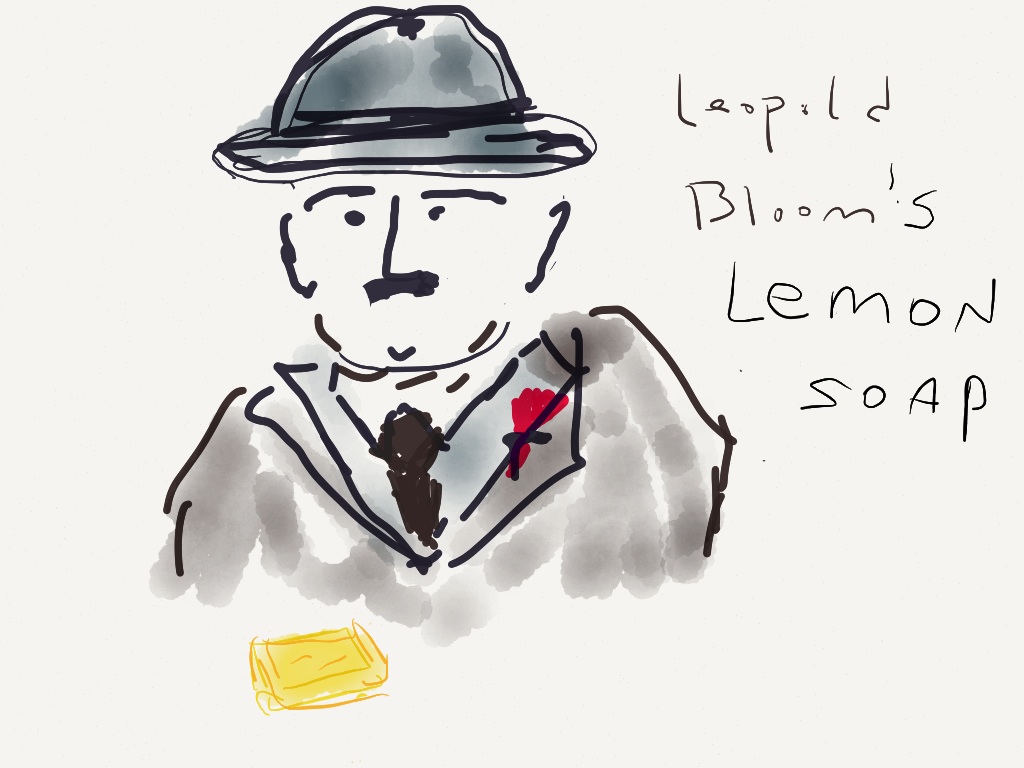
It is this affirmation, the “yes I said yes I will Yes” that makes Ulysses so important. For, if ever there was a modern Everyman, it is her husband, Leopold Bloom. Leopold the ridiculous, the schlump, the man she has cuckolded just hours before. Leopold the grieving, the masturbatory, the lecherous, the neighborly, the isolated, the humane, the persecuted. And to him–and he is each of us– Molly proclaims a resounding Yes!

And we all need to do more of the same. To say “Yes.”

illustration 2012 jpbohannon

illustration © 2012 jpbohannon

I have a good friend, Ken Campbell, who served thirteen long months in Vietnam before becoming one of the leading figures in the Vietnam Vets Against the War movement. This fall the two of us went together to see Samuel Beckett’s Endgame. I wallowed in the existential bleakness; he did not. He enjoyed the company. He had spent too long in Vietnam, wondering every night if he was going to live another day, and today he has no time for Beckett’s desperate vision.

He sides much more with Molly Bloom’s “Yes”!

So here’s to saying “yes.” Saying “yes” to all the myriad things and people that life places in front of us: like the noodle shop at 56th and 6th in NYC… the children’s fountain on the Ben Franklin Parkway…the surprise of 310 yellow rubber gloves hanging from an elegant ceiling.

Movie Review: Black, White + Gray: A Portrait of Sam Wagstaff and Robert Mapplethorpe 

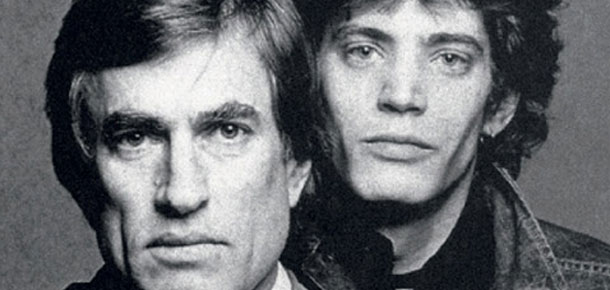
Sam Wagstaff and Robert Maplethorpe

Sam Wagstaff and Robert Maplethorpe

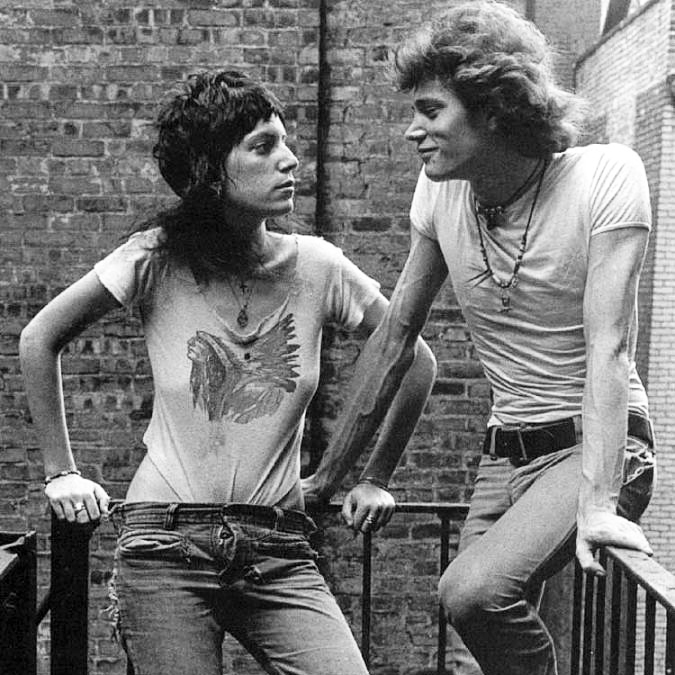
I discovered a documentary the other night called Black, White + Gray by James Crumb (2007). The blurb calls it a study of the relationship between the curator/collector Sam Wagstaff, the artist Robert Mapplethorpe, and the poet/singer Patti Smith. To be honest, however, it is really the story of Wagstaff, that touches greatly on his relationship with Mapplethorpe and to a much smaller degree with Smith, both for whom he was mentor and patron and friend. (In Mapplethorpe’s case lover and companion.) Consequently, it also deals with art, the business of art, the demimonde of gay life in the 1970s and 80s, and, of course, the scourge of AIDS.

patti smith robert mapplethorpe

patti smith robert mapplethorpe

Moving chronologically through Wagstaff’s life–and anchored by Patti Smith’s intelligent and honest and fond recollections–the film follows Wagstaff from his schooldays through his loathed time spent in advertising to his prominence in the art worlds of New York, Paris and London. Along the way, there are appearances on the Dick Cavett Show, press conferences, interviews with his friends and colleagues, and countless photographs, many taken by him or Mapplethorpe and many part of his historic collection.

Wagstaff was strikingly handsome, aristocratic, and intelligent. (Dominick Dunne called him one of the most handsome men he ever saw.) He was also gay, but closeted himself for much of the oppressive fifties and early part of his life. Not until his meeting with Mapplethorpe did it seem he grew comfortable with his homosexuality. As a curator, he embraced and pushed forward those artists and art forms that were still on the fringe, Minimalism, Earth Works, Conceptual Art, and, most importantly, photography. Wagstaff believed that photography was an ignored art and deserved to be elevated to the pantheon of “Fine Arts.”

Indeed, it is because of Wagstaff that photography holds the status that it does today. His relentless collecting, the exorbitant sums he paid, the continual praise and comments in the press, single-handedly hauled photography onto the main stage.

A few years before he died, Wagstaff sold his private collection of photographs to the Getty Museum in Los Angeles for the then unheard-of price of $5-million. It was testimony to how far he had brought photography to the forefront.

The interviews within the film are honest and intelligent. Many deal with his collecting, with his curating, and with his “vision.” Many deal (some negatively, some positively) with his relationship with Mapplethorpe. Dominick Dunne, particularly, gets much air time, and talks about Wagstaff in two of the worlds that he lived in–the socialite world and the gay world. And all is brought together by the reminiscences of Smith.

“Compartmentalized” is a word that often came up, and it seemed that Wagstaff was very good in ordering his life into separate and distinct components. But in the end, it was the gay world that did him–and so many others–in. It is easy to forget that at one point, AIDS was a scourge that was decimating much of the art world. The film ends with Wagstaff’s death, and then with Mapplethorpe’s, and then with a list of the many artists who have died of AIDS complications since.

It is a sobering ending. But then the credits role and are intersperse with clips from the many interviewees and once again we are reminded of the life, of the visionary man who rose so high in the world of art–and brought others with him .

We know much about Mapplethorpe’s life, and Patti Smith’s, greatly due to her wonderful memoir, Just Kids. James Crumb’s film Black, White + Gray adds greatly to our knowledge of that time and that world and the people who populated it. It’s worth while finding and fascinating viewing.

By the way…

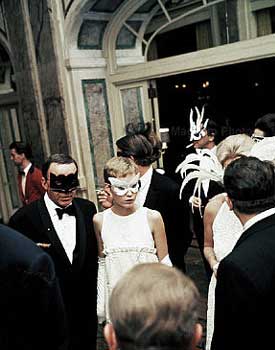
The title of the film, Black, White + Gray not only refers to the B&W Photography that Sam Wagstaff collected, cataloged, and often curated, or the shades of distinctions in the compartmentalized life that he constructed, but also to the momentous exhibited he staged at the Hartford Wadsworth Atheneum entitled “Black, White and Gray.” The exhibit, considered the first minimalist show, featured the work of Stella, Johns, Kelly, and Lichtenstein, among others. It was an extraordinary success, influencing fashion, Hollywood, advertising, and, of course, Truman Capote’s infamous Black and White Ball.

Frank Sinatra and Mia Farrow arriving at Truman Capote's Black and White Ball.

Frank Sinatra and Mia Farrow arriving at Truman Capote’s Black and White Ball.

https://i0.wp.com/media-cache-ak0.pinimg.com/192x/85/cf/f1/85cff11fb5bb99780ab77c77af4861d9.jpg

Andy Warhol at Truman Capote’s Black and White Ball without a mask.

Quote of the week: #4 May 19, 2013

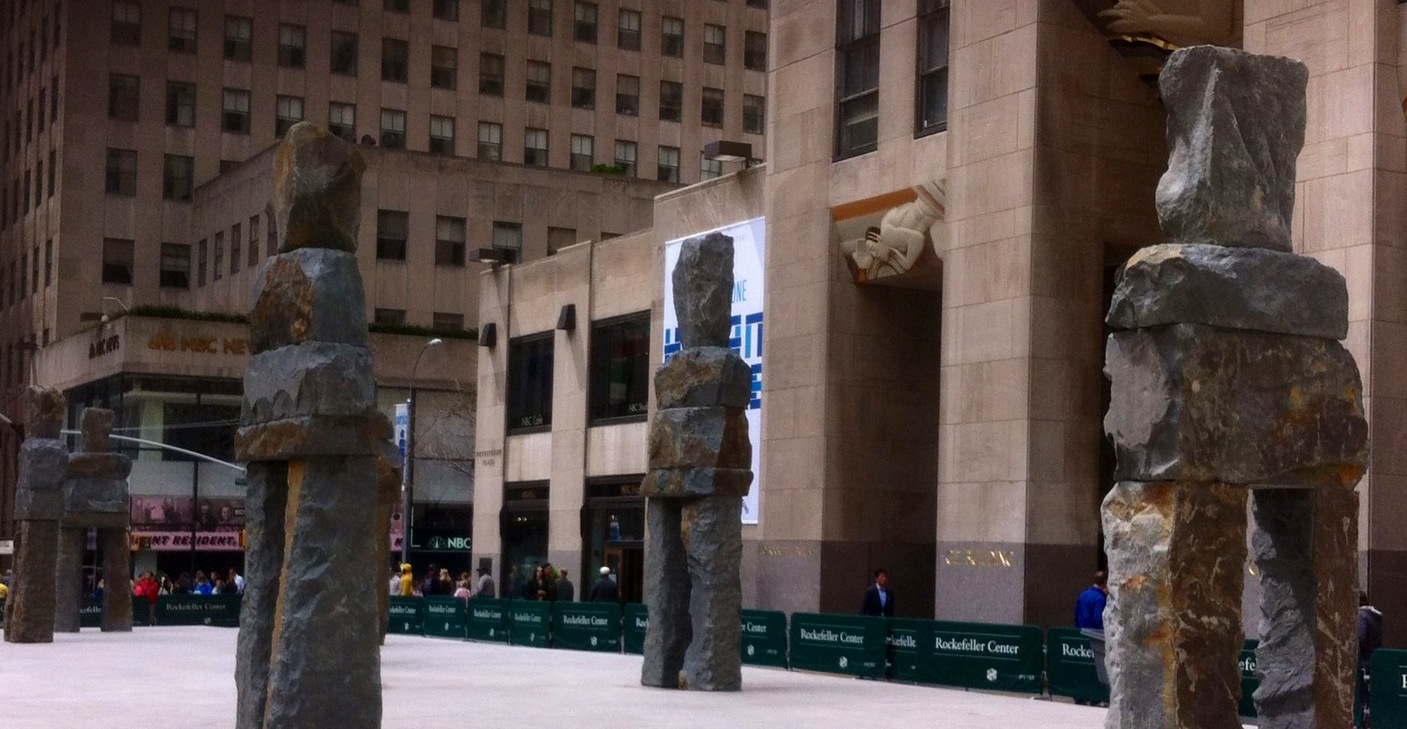
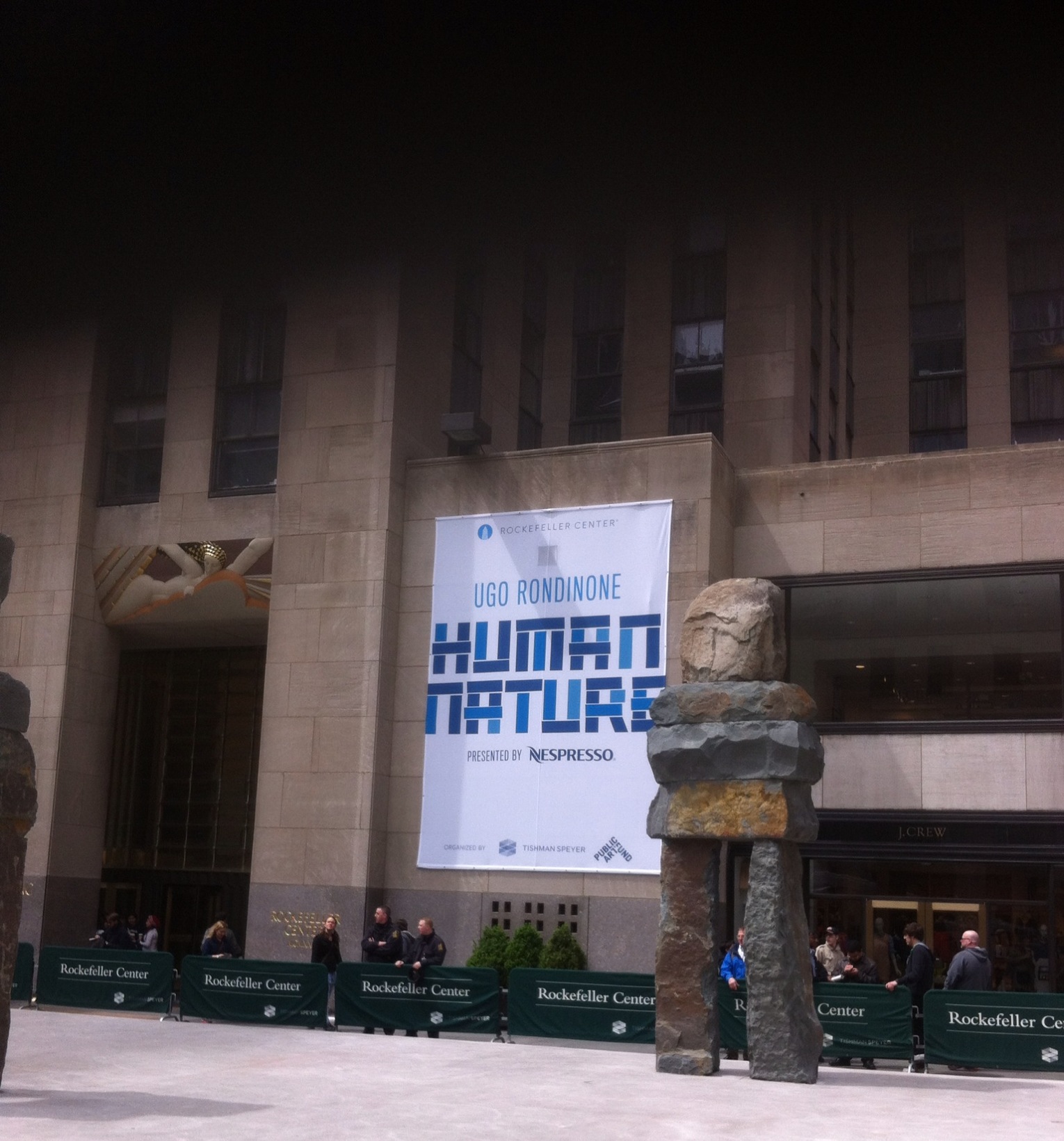
“…even in an era of touchscreens and interactive spectacle, it’s human nature to feel awed and inspired in the presence of a giant rock.”

Robin Cembalest,  Artnews. “The Gentle Giants of Rockefeller Center”

Ugo Rondinone's "Human Nature" Installation, Rockerfeller Center, NYC photo: 2013 jpbohannon

Ugo Rondinone’s “Human Nature” Installation, Rockerfeller Center, NYC
photo: 2013 jpbohannon

Ugo Rondinone's "Human Nature" Installation, Rockerfeller Center, NYC photo: 2013 jpbohannon
Ugo Rondinone’s “Human Nature” Installation, Rockerfeller Center, NYC
photo: 2013 jpbohannon

Movie Review: Something in the Air: Born Too Late

The actual title of Olivier Assayas’ new film is Après Mai–a reference to the months following the student and worker demonstrations of May 1968 in France.  And that, in many ways, is the focus of the film: young, sincere characters trying to maintain the commitments of 1968, but somewhat too young still to be a real part and unprepared for the crashing ordinariness of the life to come.

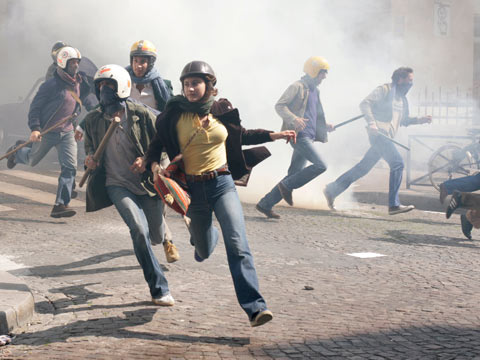
The film begins with high-school students’ listening to their teacher’s monotonous reading of Pascal’s Penseés. Within minutes of screen time, these same students are scrambling away from overzealous police dispelling a student demonstration.  The life of the classroom and their political/social/activist lives are much, much different. The teachers give them Pascal and they are reading Gregory Corso, Chairman Mao and listening to Phil Ochs.

Early riot scene in Something in the Air

Early riot scene in Something in the Air

I had a friend who was a student in Paris at that time in 1968.  When I asked her about it, she sort of shrugged.  “The only difference,” she said,  “was that afterwards we were permitted to call our professors tu rather than vous.

But for Gilles, Alain, Christine, Rachkam la Rouge, they want very much for the  spirit of May 1968 to be carried on, to be carried through.  They believe that May was not the climax but the beginning of the revolution. Stuck in their sleepy village outside of Paris, the students join political parties, pack debating halls, distribute the radical free-press, and organize guerrilla graffiti forays against the local establishment and police.  One of these night raids goes wrong and a guard falls into a coma when hit with a bag of cement mix.  The students decide to scatter.

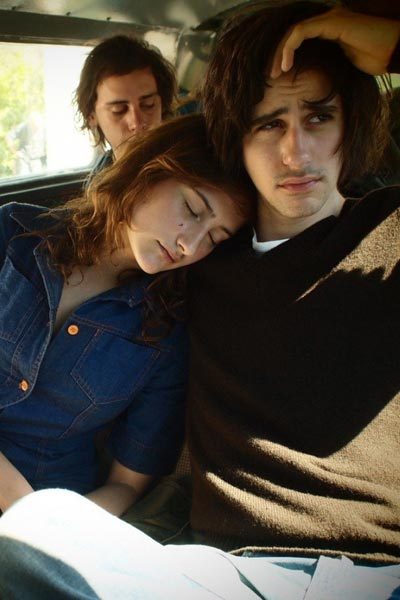
Gilles (Clémont Métayer) and Christine (Lola Créton) hitch up with a radical collaborative on its way Italy where they become lovers and later part as she continues with the collaborative to make a film on Italian workers.

Christine and Giles on the road to Italy

Christine and Giles on the road to Italy

gilleschristine

Gilles (Clémont Métayer) and Christine (Lola Créton)

Gilles is torn in his radicalism–for his passion is art, and he is not convinced that his art must always serve the “cause.”  Alain (Felix Armand)  and Leslie (India Menduez), an American he meets in Rome,  go East to Afghanistan, he an artist and she a dancer looking for spirituality. Disillusioned over time, they all return to France, and ultimately to Paris.

But there is another story running through Gilles life.  Of course, in a story of a teenage-boy there needs to be friction between him and his father, a successful movie director.  While there is never dramatic conflict between the two, as he grows, Gilles is able to tell his father how superficial and wrong-headed he believes his film adaptations are.  (The father makes adaptations of George Simenon’s Maigret novels.)

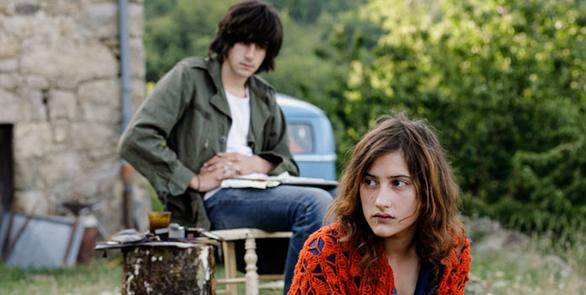
But the more important sub-plot is about Gilles and his true love, Laure (Carole Combes).  When she first appears early in the film, there is a jarring film switch from the smokey riots of their village to an Edenic, woodsy scene. She has come to meet Gilles and is in flowing white and the sun illuminates both her and the shimmering foliage around her.  I felt however that I was in a 1970’s shampoo advertisement and that any minute I would hear Donovan singing “Wear Your Love Like Heaven.”

Gilles and Laure

Gilles and Laure

Laure is a bit more worldly than Gilles and his mates, and her wealthy bohemian parents are taking her to London, as the father is the light-man for a fledgling rock band. She is willowy and bright and airy and full of sunshine.  And she leaves a mark that even Christine knows she cannot undo.  Later, when his father informs him that she has returned, he ventures out to her parents’ chateau for a party.  Throughout the party, I was reminded of when the Stones had moved to the south of France in the early ’70s  and had worked on Exile on Main Street.  There was the same louche, blowsy freedom, the same drug use, the same music, the same comings-and-goings.

The party is important, though I am not positive how it ended.  Gilles leaves. Laure jumps from a burning building and that is it.

And then real life steps in.  Gilles is a “go-fer” for his father’s film company (although a left-wing broadsheet has begun using his drawings), Leslie abandons her “spirituality” and returns with her father to New York and Julliard,  Rackham le Rouge leaves the Trotskyites for inconsequential anarchism, and Christine discovers that the earnest leftism of the man she is living with and the collective they are part of does not carry forward to women.

Olivier Assayas–who wrote and directed–gives us a nostalgic film, a film that even looks from an earlier period. The colors, the lighting, the cutting, the soundtrack all capture a particular moment in time.  And the two leads, Créton and Métayer are likeable and familiar–we do care about them and their decisions.

Frequently in the film, we watch characters watching films–and these films within a film are rendered in wavering, sincere, gaudy, and innocent beauty.  (Perhaps part of that innocence is the knowledge in hindsight that much of it is not going to last.) Indeed, film and film-making is such an integral part of the story that now I am not sure if Apres Mai (Something in the Air) isn’t a dissertation on film of that era disguised behind a story of that era.

In the end, Gilles is working on a science fiction film in London that features giant lizards and Nazis (and Dolores Chaplin, the granddaughter of Charlie and Oona!); Christine’s collective is releasing its first commercial documentary on Italian workers (though free to workers’ unions) and Gille’s dad is still turning out the Maigret mysteries.  However, Apres Mai ends with a haunting, new wave, almost psychedelic clip of a willowy woman walking towards the camera.

We recognize her by the end.

♦     ♦     ♦     ♦     ♦     ♦

And for a treat, here’s the Stones live in 1972 doing “Tumbling Dice” from Exile on Main Street.