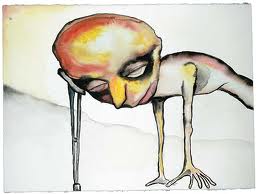
“Before the World was Made”

“The Yale philosopher Shelly Kagan … manages to raise some interesting and subtle concerns about …notions relating to the question of what’s really bad about death, including this one: Why do we regard no longer existing (post-mortem nonexistence) as worse than not having existed before our births (prenatal nonexistence)? And are we wrong to do so?” 

“The Opinionator,” New York Times, May 16, 2012.

I love this question.  I have thought of it before, and it gives me comfort. For it makes perfect sense to me.  I wonder if Mr. Kagan is aware of the Yeats’ poem, “Before the World was Made.”  I would imagine he is. I know I thought of it right away when I read the article.
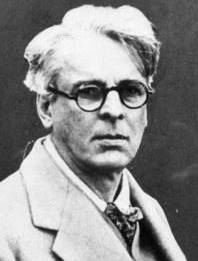
    Before the World was Made

If I make the lashes dark
And the eyes more bright
And the lips more scarlet,
Or ask if all be right
From mirror after mirror,
No vanity’s displayed:
I’m looking for the face I had
Before the world was made.

What if I look upon a man
As though on my beloved,
And my blood be cold the while
And my heart unmoved?
Why should he think me cruel
Or that he is betrayed?
I’d have him love the thing that was
Before the world was made.

For here, Yeats too is looking at what Kagan calls “prenatal nonexistence”–though Yeats prefers to think of it as “prenatal existence.”

Now Yeats is working in a spiritual cosmology quite different from that which the Yale philosopher is dealing with.  Yeats was always susceptible to spirituality and spiritualism…mysticism and the occult.  (Adrienne Rich famously called him a “table-rattling fascist.” Click here for Evan Boland’s essays on literary antagonisms.) Nevertheless, he was very much interested in concepts of a soul. He believed–through a complicated mythology of his own making, explicated in his book The Vision–in an individual, social, and civilization-wide reincarnation or continuance of the soul.  And so through this series of Yeatsian cycles we have it: a “pre-natal” AND “post-mortem” existence, as the philosopher says.
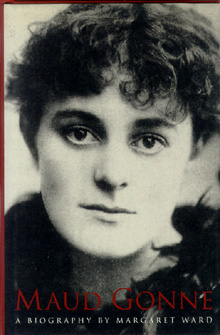
Maude Gonne

And yet, there is also something else going on in the poem that is not as deep, not as cosmic, not as “philosophical.” This is not a cosmic dance taking place in front of the mirror.  It is that old familiar dance of seduction and romance.  For who is the speaker sitting in front of her vanity? Has Yeats returned to musings on his old beloved Maude Gonne? Is he thinking of her daughter–to whom he once proposed having been rejected for the umpteenth time by Gonne? The poem was published in 1933 when Yeats was 68 years old.  The following year Yeats had the Steinach operation performed–a procedure of inserting animal glands into the body in order to increase testosterone production. Good old Yeats–he was now 68–was not giving up on this existence…and at this time was carrying on several romantic affairs with much younger women.

The poem itself appeared in the collection, The Winding Stair, and was one of twelve poems included in a section called “A Woman Young and Old.”  If the speaker is a woman where does she fit in that continuum?  Is this a young woman relatively new at the game?  Or a more experienced woman, who could look on any man “as though on my beloved”?

And what is it she would have him love?  What existed “before the world was made”?  For the philosopher Kagan, the answer is nothing.  For Yeats it is something large, something essential.

As an aside, I knew that Van Morrison had recorded a song version of the poem.  I also knew that Mike Scott and the Waterboys had just put out an album, An Appointment with Mr. Yeats, on which the poem appeard. But I just learned that Carla Bruni–the former first lady of France–had also recorded the song.  I don’t know why, but I find that amusing.  Anyway,  here’s Van the Man’s performance of Yeats’ “Before the World Was Made.”
Ethical versus Moral

I had a conversation the other day with a woman who is teaching Marjane Satrapi’s  graphic-novel Persepolis. Our discussion revolved around the differences between ethics and morality. Neither of us are professional philosophers, but I like to think that we are thoughtful, intelligent people. And so, we must answer the questions: What is ethical? What is moral?

From the dictionaries I learned that morals are “a person’s standards of behavior or belief’s concerning what is and is not acceptable for them to do” and that ethics are “moral principles that govern person’s or group’s behavior.”

Yet that seems backwards to the way that I have always viewed it. I had viewed morals as being proscribed by a particular group and ethics as being a more personal, individual code of living.  Perhaps my association of “groups” with morals  is coming from the preponderance of fundamentalists–in all religions–who attempt to press their moral code on all. Ethics to me, on the other hand, is the system of right and wrong, just and unjust, developed individually.

Is this a case where I am just wrong, outright?

So, I went to a man who teaches philosophy. His distinction was this: ethics is a system of right and wrong behavior derived from rationality. Morals is a system derived from religious belief.  Yes, many times they overlap. But sometimes they do not.

Yup, that seemed to clear some things up.  And I didn’t seem completely off in my understanding.

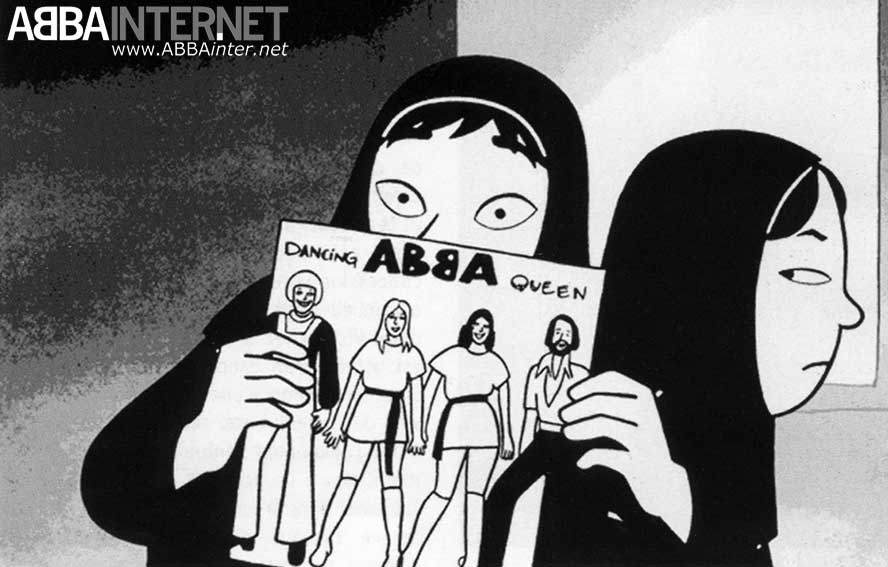
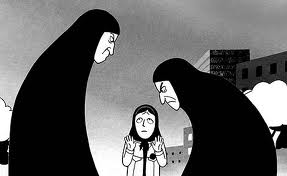
For instance, according to the religious belief group in charge in the picture above, it is IMMORAL to listen to ABBA. (We are talking ethics and morals here, not musical discernment.) Yet it is hardly UNETHICAL to do so.

So think of the things that are proscribed by particular groups and weigh them in light of ethical or moral. For some, it is marrying outside one’s group (unethical or immoral?); for others, it is believing in evolution (unethical or immoral?); and still for others, it is having men and women sit on the same side of a room (unethical or immoral?).

In the States, we are going through an election season (doesn’t it always seem like an election season) and, in the political debate, social issues always seem to force their way to the top–or at least garner the most attention. Issues of sexuality, women’s reproductive rights, marriage get a lot of discussion.  Are these ethical issues or moral issues?  In a system that supposedly separates church from state, are the morals of a particular belief system muddying the ethics of a rational system?  In other words, I might not want to listen to ABBA but should you tell me I can’t?

I listened to a man speak two weekends ago who suggested that members of the U.S. Congress should read more poetry. He noted that the poet Adrienne Rich once called poetry, in all its ambiguity,  the “perfect antidote to moral certainty.” I keep thinking about that and worrying about governmental moral certainty.  Other governments have tried it–and it ain’t pretty.

It’s been a while since I read Persepolis or Persepolis 2, and I have never seen the film version. I remember both books as being quick reads, but I have lasting memories of them. Maybe, I’ll go through them again this weekend.

Midnight on Revolutionary Road in Paris, County Cork

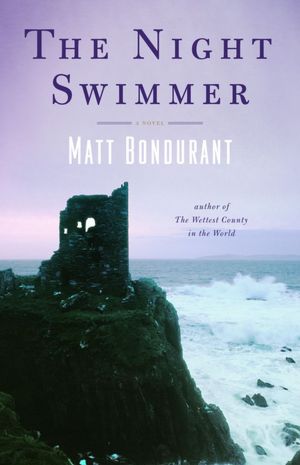
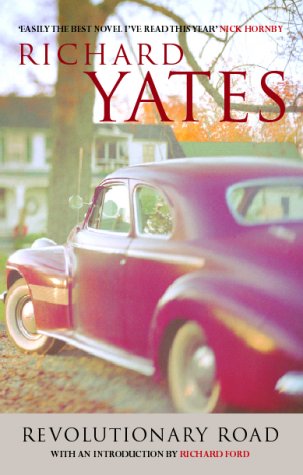
I am reading a book, The Night Swimmer by Matt Bondurant, where early in the novel, a young, successful couple have these yearnings to chuck it all and to move to Ireland.  They are intelligent and aware of the commonness of this trope–they intentionally nickname their street “Revolutionary Road” after the Richard Yates’ novel.  Earlier, before the dream of starting afresh in Ireland, the couple had wished to live in the time period when the novel Revolutionary Road takes place–a Cheever-esque world where pitchers of martinis and pyramids of cigarettes punctuated each evening. That glamorous “Mad-Men” world had not work out for them, but the dream of emigrating does: the husband wins a pub in County Cork, Ireland.  Needless to say, the paradise/excitement/vigor of the new life they imagined in this other world does not pan out they way it had in their dreams.  And like in Richard Yates’ novel, the marriage suffers more than greatly.

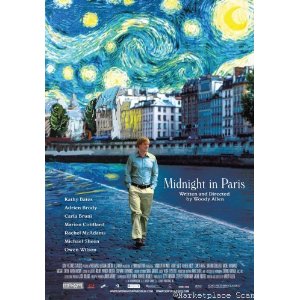
What is it about us that makes us often wish we were in some other place, some other time?  In Midnight in Paris,  Woody Allen wrestles with this question. The protagonist wishes he lived in 1920s Paris, but the 1920s woman he meets wishes she lived in the Paris of the 1890s?  And in fact, the life he is already experiencing in 2011 turns out to be full of promise. Why is this nostalgia for a world other than our own,  for an imagined place and an imagined time, so strong?  Is it  general among everyone?  Or only with a certain type of person?

I walked out to get a coffee today and on my walk home I cut down an alley.  Looking around me, I realized that I could have been walking in any foreign city with any foreign adventure around the corner.  I could have been in Paris, in Cork, but I was merely a short stroll from my own house. I took a picture with my phone.  The concept of a more exotic, romantic other place is just a whiff of smoke–it is always around us if we keep our eyes open.

Now it is often said that one doesn’t appreciated one’s home until one is separated from it. Joyce gave us a loving, photographic picture of Dublin, but only when he was writing in Switzerland and Paris.  Beckett too gives us an unnamed but undoubtedly Irish landscape in his novels and several of his plays and he too was across the sea.  But that is different than romanticizing a place one wishes for, a place that does not exist.  What Joyce and Beckett do is understand what they had left, see it without the distortion of being so close within. This is not the same as dream-manufacturing, as imagining a better world through the kaleidoscope of nostalgia and generalities.

Nevertheless, there are still many days when I wish I was somewhere else, when I don’t appreciate the vitality of the world around me. But in these daydreams, it seems that I am never working, that there is no concern about putting food on the table or where the next dollar is coming from–who wouldn’t find that attractive. And that’s what makes it all somewhat of a sham.

The difficulty of thinking…the ease of not.

Bertrand Russell once said that people would do almost anything to avoid having to think. And we do. Consider how we go through most of our days.  Rise, commute, work, commute, dine, sleep. Certainly there are vacillating degrees of how purposefully we interact with our own lives, but mostly, I would say, we do things by rote.  For the most part, the majority of us do not “live our lives deliberately” as Thoreau advised us to–we would make ourselves mad if we did–but what are we sacrificing?

Samuel Beckett wrote that the routine, the habit, the treadmill of our lives is a way of deadening the pain of existence (how wonderfully Beckettian!); breaking out of the routine, the habit, the treadmill is exciting and might mask the pain, but it is temporary and not without risks.  To think deliberately is indeed difficult. But it is what makes us who we are. Our thinking is what separates us from others, what individualizes us.  There is a second kind of truth in the Cartesian “I think therefore I am.”  It is not simply a statement of existence, but one of uniqueness as well, an emphasis on the “I.”  And if we choose not to think, are we waiving our individuality to become simply a part of the herd?

In politics, for example, do we think or do we react? Do we consider the world around us or do we merely accept what we have been trained to accept? Are we so entrenched in our “camps” that we allow their ideas to immediately become ours without the trouble of thinking? Do we even have a personal philosophy?  How many of us could state what it is?  What do we believe in?  When have we last THOUGHT about what we believe?

The avoidance of thinking is hardly a 21st-century phenomenon–it just seems easier to do these days.  The opportunities for distraction, the ease in which we can fill our lives with noise, makes it all too easy to avoid stopping to think.  And like most habits, once we have learned to “not think,” it becomes a very hard habit to break.

But again, what are we sacrificing?

I’m not sure, but I’ll think about it.