Movie Review: Barbara, The Lives of Others, and Paranoia

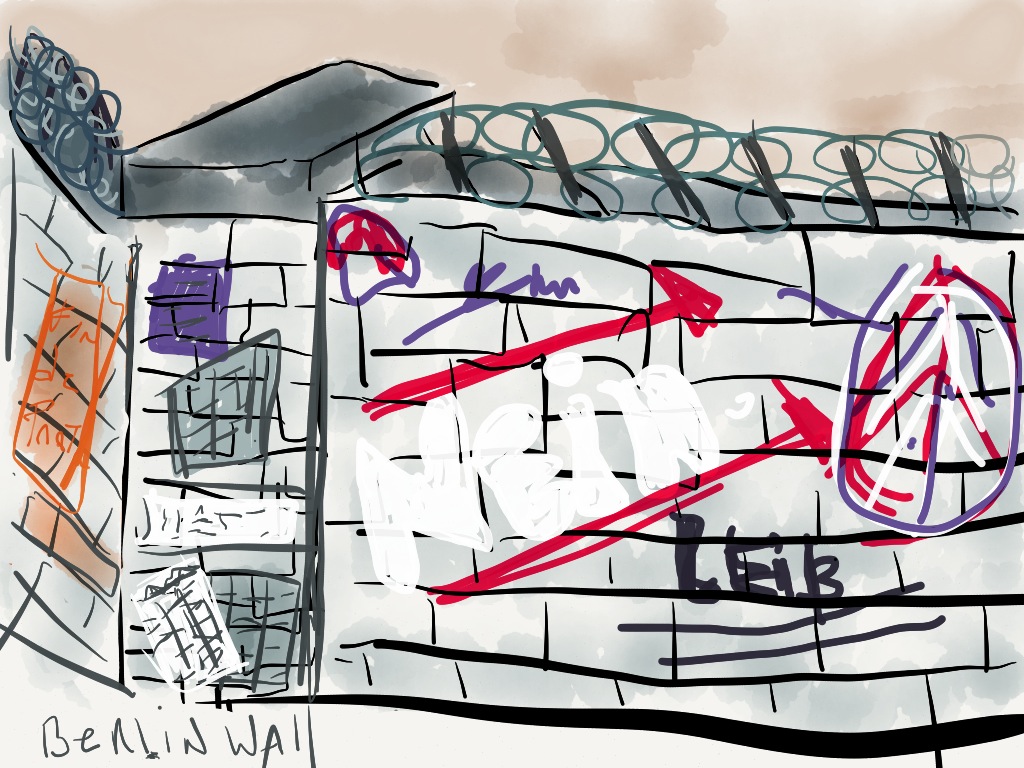
Berlin Wall                     2013 jpbohannon

Berlin Wall
illustration by jpbohannon © 2013

The East German film Barbara begins with a sense of paranoia and never backs off. Colors are muted, weather is stormy and damp, buildings are dilapidated. And Barbara (Nina Hoss) enters the picture wary, distant and observant.

Remember that old Kurt Cobain lyric that states that “just because your paranoid it doesn’t mean they’re not after you.” Well, it has never been truer than with Barbara. The film opens in East Germany in the 1980s with Barbara arriving at her job early. She is alone, aloof, and very aware. As she sits having a final cigarette before going into work, we see two men spying on her from a window and they give us some back-story. They already know her life. Barbara was a prestigious doctor in “the city” and for some misadventure–we are never told what–she has been sent to work in the provinces.
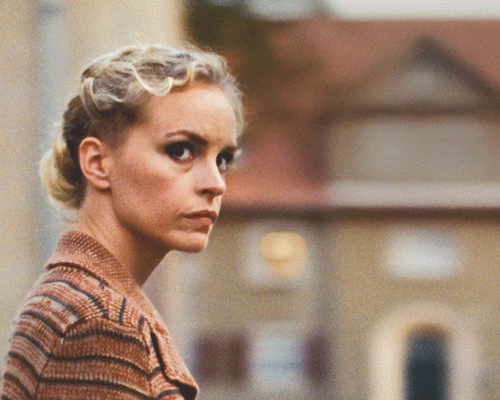
Nina Hoss as Barbara in the film Barbara

Nina Hoss as Barbara in the film Barbara

Andre (Ronald Zehrfeld), the young doctor who is her “handler,” is impressed by her skills but flustered by her attitude. He too has had a past that has sentenced him to this provincial hospital. But she sees him as nothing more than a pawn of the government. When he first offers her a ride home from the bus stop where she waits, he drives her home–without asking where she lives. Barbara is very certain of the eyes that are on her.

This oppressive watching makes Barbara’s secret plotting even more difficult. She is repeatedly meeting a lover who is arranging to have her escape to the West. And while the authorities are not aware of her plans, they are unhappy when she is unaccounted for hours at a time. Twice when she returns home, the Stassi are at her apartment, having rifled through her flat and subjecting her to a full body search. The humiliation and oppressiveness is palpable.

There are also two young patients that Barbara and her handler attend to, one of whom grows very fond of Barbara and begs not to be sent back to the work farm where she is sentenced. The young girl will play an important role later in the film, but it would be too much of a spoiler to say how. The other too is a fulcrum on which the plot balances.

Needless to say, the romantic tension between Barbara and Andre grows, but it is always secondary to the political and personal tension involved in Barbara’s escape.

Without giving too much of the ending away, let me just say that it is satisfying, heartwrenching and thoughtful.

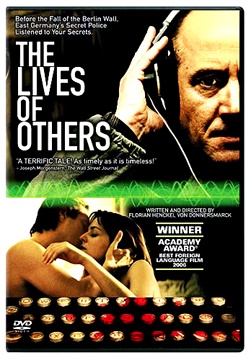
The East German paranoia reminded me of another film The Life of Others directed by Florian Henckel von Donnersmarck. This too took place in East Germany during the 547_The-Lives-of-Others_375931980s, but the film was told from the point of view of a Stassi spy. Spying on a writer and his lover, he becomes increasingly involved in the life he is observing. And while the oppressive paranoia and wariness is as palpable as it is in Barbara, it is, perhaps, less personal. In the former, we are in fairly familiar territory–the spy thriller, albeit with a twist. In director Christian Petzold‘s Barbara, the paranoia, the fear, and the oppression–engulfing the lives of everyday people as it does– seems more suffocating, closer to real.
♦ ♦ ♦ ♦ ♦ ♦ ♦ ♦

I’m not sure what Leonard Cohen has to do with any of this, except he tells us that “next we’ll take Berlin” in this, one of my favorite songs. But the water’s edge where the video begins is eerily reminiscent of the water’s edge where Barbara ends and that is what I thought of. Enjoy:

Icarus

Now some are born to fly high
Some are born to follow
Some are born to touch the sky
And some walk in the hollow
But as I watched your body fall
I knew that really you had won
For your grave was not the earth
But the reflection of the sun

“Icarus” by Anne Lister

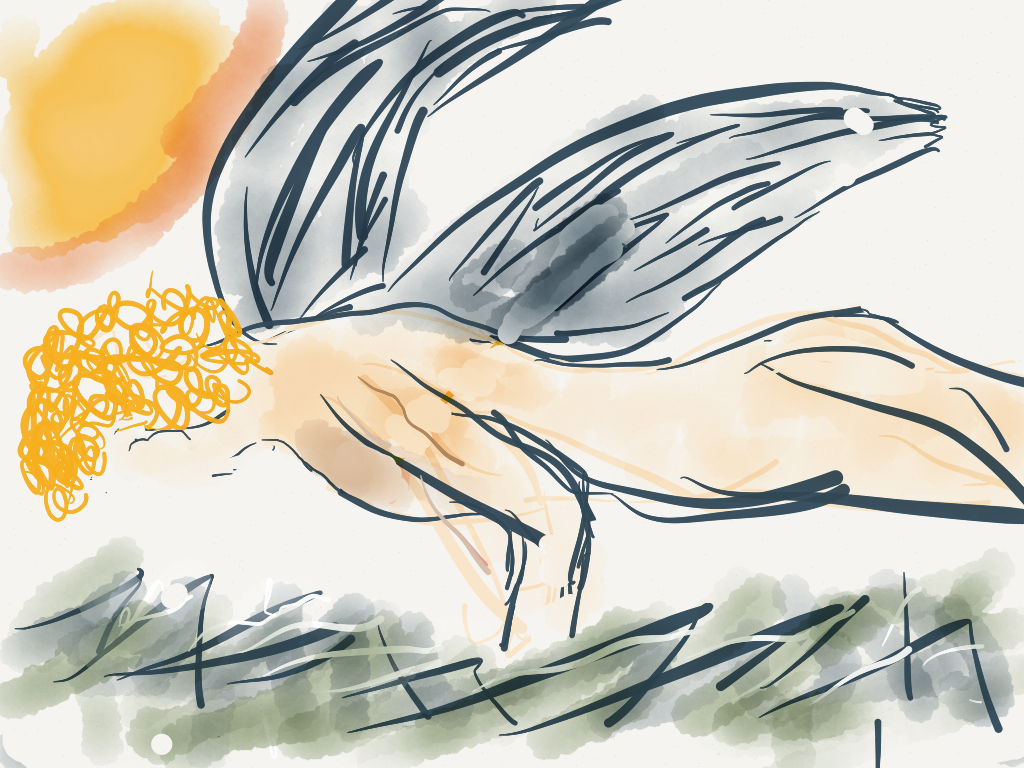
Icarus                        ©2013 by                     J.P. Bohannon

Icarus
illustration by jpbohannon © 2013

The mythological character Icarus has been a buzzword at my job recently. Many of us on the staff have been reading a book called The Icarus Deception by Seth Godin. To be honest, it is not my kind of read–more of a marketing, business oriented approach to things with a fair mixture of Dr. Phil and Oprah thrown in–but it has me thinking about Icarus.

I have always had a soft-spot for him. (See my post “Breughel, Auden and the Death of my Mother” from 2012/8/19.) There is something more than heroic in his quest, in his attempt at flying to the sun–(and I don’t want to hear any of the archetypal “primal disobedience” stuff at the moment. Sure, wasn’t it his old man, that grand artificer Daedelus, that had gotten them both locked up in the first place, locked up in that “inescapable” prison, because of his own disobedience and rebellion.)

And the more I think of it, Icarus’s “disobedience” IS NOT the story. The story is THE FLIGHT, where the tips of his wings glow white and gold with sunlight, where he becomes–for a moment–transcendent. It is all about the attempt, about the individual’s need to push further, to soar higher. For in a large way, to stop pushing forward is the real death by drowning.

No one had flown before Icarus and his father, but what we seem to remember is his drowning. That’s the wrong focus entirely.

♦ ♦ ♦ ♦ ♦ ♦ ♦ ♦ ♦ ♦ ♦

In a previous life, I wrote ad-copy for an agency. And I listened to a lot of music on a good old disc-player. If it was critical, creative stuff I needed to be writing, I used classical music or Irish trad or instrumental guitar. If it was mindless stuff, I listened to songs.

MartinSimpson

Martin Simpson

It was during this time that I became enamored with the guitar work and songs of a man named Martin Simpson. His playing was exquisite, intricate and beautiful and when he did sing a song, his voice was strong yet vulnerable. Until this weekend, I hadn’t listened to him in a long while although I must own four or five of his albums. But Icarus was in my head, and he had done a cover of Anne Lister’s song “Icarus” that I loved a lot and which never failed to choke me up. Told from the point of view of someone too timid to take a risk, too hesitant to make that leap, the song nevertheless details the pride and admiration he/she has for Icarus and what he has done. I always knew that the lump in my throat was not so much for Icarus but for his companion who “never wanted to fly high.”

Here are the full lyrics:

I never wanted to fly high
I was too fond of walking
So when you said you`d touch the sky
I thought it was your way of talking
And then you said you`d build some wings
You`d found out how it could be done
But I was doubtful of everything
I never thought you`d reach the sun

You were so clever with your hands
I`d watch you for hours
With the glue and rubber bands
The feathers and the lace and flowers
And the finished wings glowed so bright
Like some bird of glory
I began to envy you your flight
Like some old hero`s story

You tried to get me to go with you
You tried all ways to dare me
But I looked at the sky so blue
I thought the height would scare me
But I carried your wings for you
Up the path and to the cliff face
Kissed you goodbye and watched your eyes
Already bright with sunlight

It was so grand at the start
To watch you soaring higher
There was a pain deep in my heart
Your wings seemed tipped with fire
Like some seagull or a lark
Soaring forever
Or some ember or a spark
Drifting from Earth to Heaven

Then I believed all that you`d said
I believed all that you`d told me
You`d do a thing no man had ever done
You`d touch the stars to please me
And then I saw your wide wings fail
Saw your feathers falter
And watched you drop like a ball of gold
Into the wide green water

Now some are born to fly high
Some are born to follow
Some are born to touch the sky
And some walk in the hollow
But as I watched your body fall
I knew that really you had won
For your grave was not the earth
But the reflection of the sun

I never wanted to fly high…

And here is Martin Simpson playing and singing. Give it a listen:

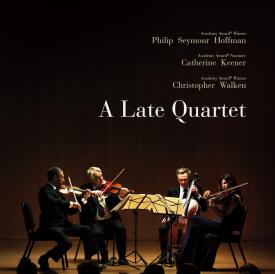
Movie Review: A Late Quartet–Harmony within the Dissonance

I received an e-mail last Monday that read like this:
Ciao Gianni,
Ho visto un film ieri sera si chiamo “A Last Quartet”. Ho pensato molto a Biggs perche un uomo ha Parkinson’s. Interesante  Buon giorno!!

“Biggs” was a friend of ours who struggled with Parkinson’s until the end of her life and Parkinsons plays a major role in the plot of Yaron Zilberman’s film A Late Quartet.  I had read about the film in those end-of-summer write-ups of films that would be arriving in the coming months, but had forgotten completely about it. And now, here it was in town.

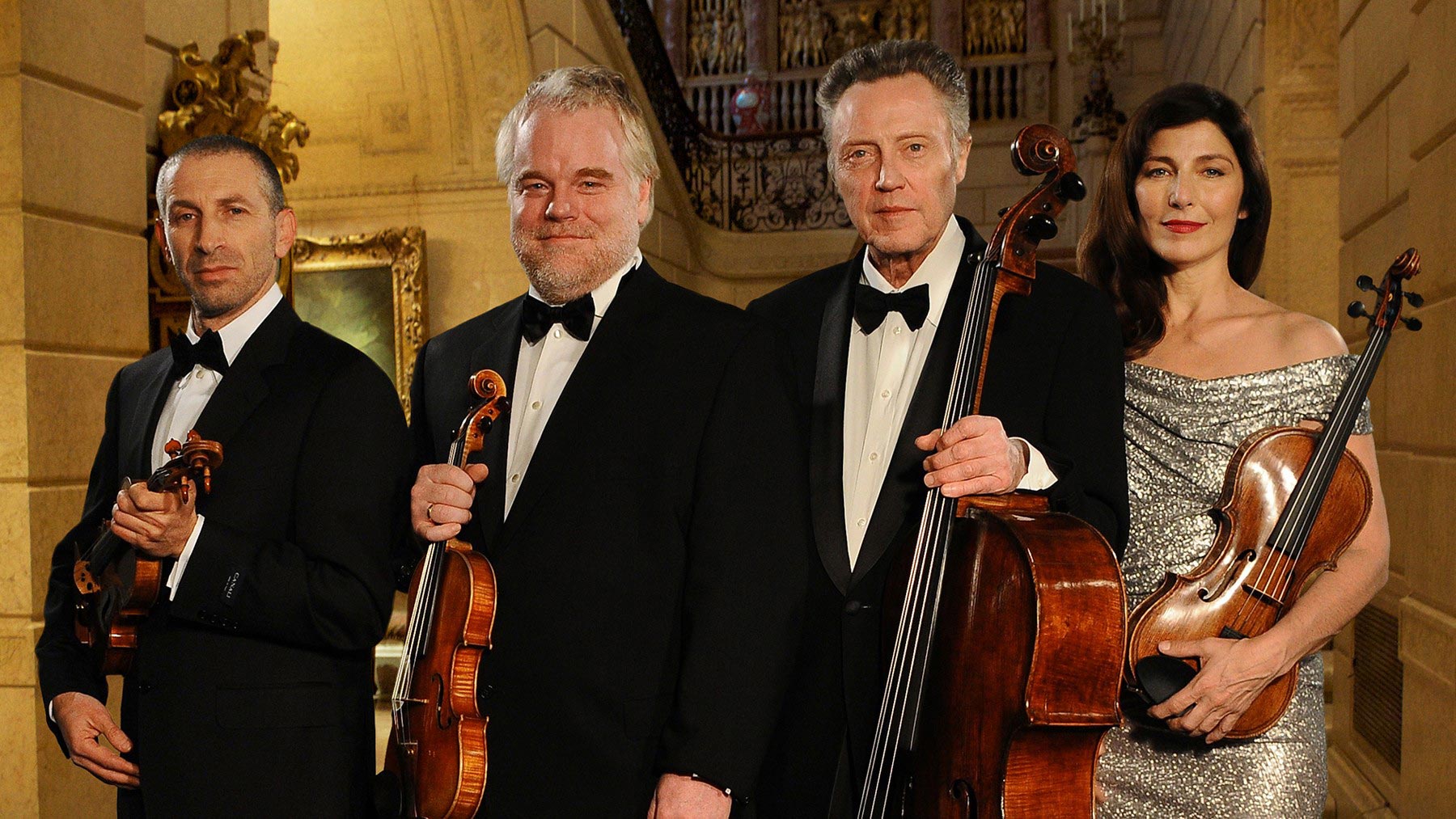
And while a diagnosis of Parkinson’s comes early in the movie, it is not the only malfunction in the story.  The film is about the tensions, dysfunctions, rivalries, and bickerings that take place within a famous string quartet, “The Fugue String Quartet.”  Celebrating its 25th anniversary together, the quartet reveals a shattering disharmony in an ensemble devoted to creating celestial harmony.

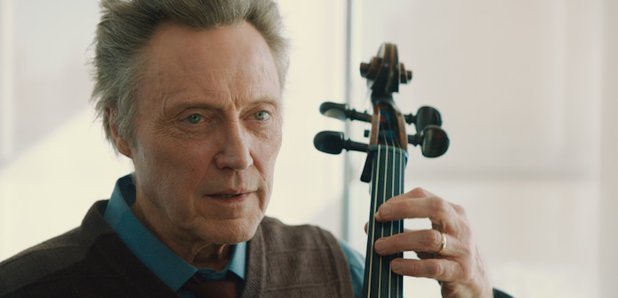
The film begins as the ensemble gathers for its first rehearsal after a short period apart. The cello player, Peter (Christopher Walken) cuts the practice short as he finds he is losing control and strength in his hand. After some visits to the doctor, he learns he has the onset of Parkinson’s disease, and he calls the group together to tell them and to announce that the first concert of the new season will be his final performance.
Yet Peter’s debilitating disease plays underneath the rest of the melodrama–much like his cello plays under the melodies of the quartet. Robert (Philip Seymour Hoffman) and Juliette (Catherine Keener) have been married through most of the quartet’s existence, and the strains within the marriage seem to be becoming more and more taut.  There is a silent dissatisfaction and regret running through the both of them. And finally, the first violinist Daniel (Mark Ivanir) is an exacting, domineering, egoist whose suppressed passion erupts in an affair that may fracture the quartet. (No, gentle readers. Although Juliette and he were once lovers before she married, she is not the focus of his attentions.)

A Late Quartet would be considered no more than just a middling film if it weren’t for the performances of Hoffman, Keener, Ivanir and Walken.  Walken, who lately seemed to be a mere parody of himself (more cowbell, anyone?) is superb. I can’t remember ever seeing him this intense, this openly vulnerable. In the class he teaches, he reads his young prodigies T.S. Eliot on Beethoven and reminisces about his and Pablo Casal’s conversations. He is dying, he is missing his dead wife, and he is suffering as he watches his beloved quartet rip apart. It is a simple, understated performance that echoes the role that his cello brings to the music.

On the other hand, while his character plays second violin in the quartet, Philip Seymour Hoffman is certainly the first violin in this ensemble. It is his quiet emotional rollercoaster, his final refusal to be everyone’s “doormat,” his true declaration of love for the wife whom he has just betrayed that is the masterstroke in this film. The film builds on Hoffman.  He and Cathrine Keener have worked in several films together (most notably Capote and Synecdoche, New York) and their comfort with each other is evident. The character she plays is perhaps the least discoverable–she is strong and yet damaged, wise and yet blindered, loving and yet cold.  Mark Ivanir (who people will recognize from countless television series as well as three Spielberg films and a couple of DeNiro projects) plays the role of the obsessive Daniel. Focused on passionless precision, he is the counterweight to Hoffman–who inwardly covets Daniel’s role as first violinist.

As well as the ensemble works off each other, the music is perhaps the most memorable.  The quartet is preparing Beethoven’s Opus 131 String Quartet (in C-sharp minor), a piece that Beethoven wrote during his last days and which taxes the strength and stamina of the performers as well as the integrity of the instruments.  We learn that it is what Schubert asked to be played to him as he was dying. In the film, the music is actually played by the Brentano Quartet, and it is stirringly emotional.  If you wish, you can hear it here:

Schubert once said after having heard Opus 131, “After this, what is left for us to write?”  The film A Late Quartet falls far short of those heights, yet when I think of Parkinson’s Disease and the people who I knew who have suffered from it, I wonder if the “what is left…?” is the haunting motif. I wonder if the Christoper Walken character–who so much wants the quartet to continue after him–has considered the same.

Watching the wheels go round and round

photo from “Gorillas don’t Blog,” November 3, 2011

I woke today in one of those states.  I didn’t know who I was or where I was or what I was supposed to be doing. And as I seeped into clearer consciousness, I felt in a rut…already in a rut at 4:45 a.m. Geeesh!

The day begins: the 57 bus, the Market-Frankford El, the R5 train and then a brisk walk, hoping for a co-worker to come driving by. I will do the reverse in the evening. And then again tomorrow and tomorrow and tomorrow.

But the commute is not what was getting me. I enjoy it. I get plenty of reading done–and not a little dozing as well.  But something wasn’t sitting well.

Simply, I am not sure what I am doing. 

For work, I am teaching Atwood’s The Handmaid’s Tale, Woodrell’s Winter’s Bone, and Jim Shepherd’s Like You’d Understand Anyway. But I ask myself, “What am I teaching?” Sure they are great reads. They are more than that: they are thoughtful, engaging, and well-suited for introspection, reflection, and–hopefully–understanding.  But, as for today…meh.

I know that it is a passing feeling, the not uncommon question of  “Is that all there is?”

And I know I will get pumped by the next great book I encounter, by the old song that I hear from someone else’s radio, by a magnificent movie that comes in under the radar, by good craíc shared with friends. 

But today the feeling is real. It is simply something you work through.

I was listening today to John Lennon’s “Watching the Wheels Go Round.”  I was thinking beforehand that it reflected my own feelings today.  But it was just the opposite.

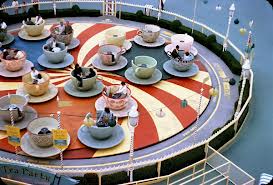
Lennon is watching “the wheels go round” because he had gotten off the merry-go-round, had walked out of the maze, was no longer “playing the game.”  He was enjoying the real things–his wife, his child, his new life.

But at the moment, for me (as for most of us),  I need to stay on the merry-go-round as it continues to spin, mindlessly, pointlessly and without destination. 

Nevertheless, today I am listening to what John says and that always seems hopeful.

Music Review: Ray Davies and the Kinks

Girl, you really got me goin’
You got me so I don’t know what I’m doin’

(Go up an octave)

Yeah, you really got me now
You got me so I can’t sleep at night

You’ve really got me, you’ve really got me.

For me the beginning of the Kinks’ song “You’ve Really Got Me” and to a similar degree the opening of their “All Day and All of the Night” represent the early days of British rock more than anything else.  Yes, more than the opening of the Stones’ “Satisfaction,” more than the the iconic opening chord of the Beatles’ “Help” or even the early intros to “I Want to Hold Your Hand”  or “Twist and Shout.”  It just seems more primal, less produced, more rock-and-roll.

Someone once told me that Rock-and-Roll was basically about wanting to “do it,” that jazz was about “doing it” and that country music was about “doing it with the waitress because your wife wrecked your truck and ran off with your dog and your best friend.”  I always liked that definition–encapsulates things very nicely, I think.

Anyway, by those parameters, the Kinks first two hits were pure Rock-and Roll.

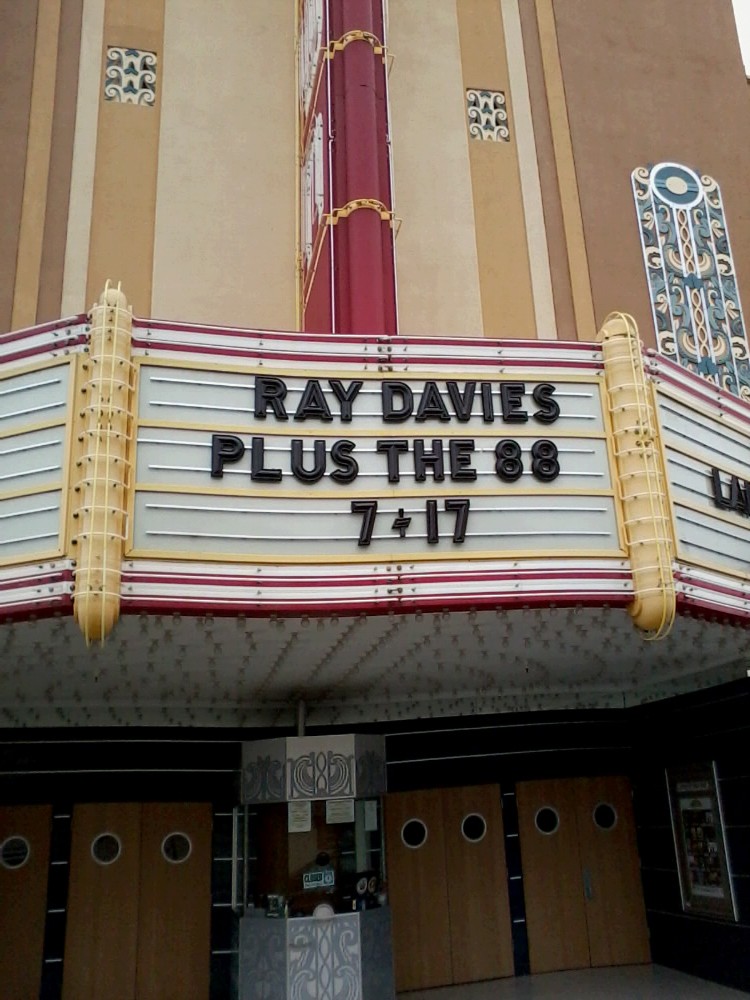
Ray Davies and The 88 at the Uptown Theater in Napa.

I drove into Napa last Friday night from San Francisco and just fifty yards away from where I was staying was the Uptown theater with Ray Davies advertised for Tuesday the 17th.  Didn’t know if I’d make it–had a lot of wine yet to drink and a lot of wineries yet to visit–but go I did.  And I was glad. The opening band The 88 were very good–the front man reminded me a lot of Larry Kirwan from Black 47–and later they acted as Ray Davies back-up band for the second half of Davies’ set.

And then Davies came on.  Nearly 50 years have passed since he and his brother Dave began the Kinks, and the years have taken their toll on his body–he looked thin and haggard and old. (Having experienced a terrible mugging in New Orleans a few years back also took its toll.) In fact often during the show he reminded me of the Bill Nighy character in the film Love Actually. (So much so, that I wonder if the director of the film had Ray Davies in mind when he cast and directed Nighy in the role.)
But his voice and his showmanship were still the same.  If you closed your eyes, no time had passed.  Accompanied by the Irish guitarist, Bill Shanley, and then by The 88, Davies put on a hell of a show with energy that belied his age.
It must be difficult for an artist whose major work is behind him.  Davies is still recording solo, still writing good music, but he is well aware that the majority of his audience wants to hear what he used to do…especially what he used to do with his old band.  He generously mixed many of his old Kinks tunes with newer things from later solo albums–but the majority of the set list  seemed to be the Kinks’ tunes. He introduced his new stuff by asking the audience “to just indulge me for a few minutes.”His new material is good, fine songwriting, fine melodies, but most of the audience wanted the past.
I didn’t write them down, but from the Kinks’ repertoire I know he did at least these titles:
•  Waterloo Sunset
•  Victoria
•  Celluloid Heroes
•  Low Budget
•  Apeman
•  Dedicated Follower of Fashion
•  Twentieth-Century Man
•  Dead-End Street
•  A Sunny Afternoon
•  All Day and All of the Night
•  You Really Got Me
So it was a great night of rock-and-roll, re-creating the sound of one of the seminal bands of the “first British invasion.”  I have always thought the Kinks were grossly underrated–and still do.  After their initial success with rocking tunes, they went on to create beautiful songs that often poked the stereotypical view of the “idyllic English life” in the eye.  They were clever, witty, and fun.  And Ray Davies is still capturing that on stage.
As a treat, here is a video of Ray Davies and the Kinks from a long, long time ago, but a treat nevertheless:

Music: Rhythm and Rest: Glen Hansard moves beyond Once

Glen Hansard’s new album, Rhythm and Repose

Glen Hansard is trying to separate himself from the massive success of Once. The former front man for the Frames (one person once said that “U2 gets all the fame but the Frames have all the soul”), Hansard found extraordinary success with the indie movie, Once, for which he and his partner, Marketa Irglova, garnered an Academy Award for Best Song.

But this was not his first foray into film. As a much younger man, Hansard was chosen by Alan Parker to play the guitarist in The Commitments–a former busker who ended up almost making it with Jimmy Rabbit’s Dublin Soul band. He was one of the more likeable lads in the band and as things worked out in the film his character ended up back on the Dublin streets busking.

Hansard as Outspan Foster in The Commitments

Fast forward 15 years and Hansard is again playing a busker in the Dublin streets, and this time he strikes gold. The on-screen (and purported off-screen) chemistry between him and Marketa Irglova found a wide audience around the world.  The music (much of it from the Frames’ repertoire) was memorable, the story was charming, and the ending was so far from a typical Hollywood ending that it was a refreshing success. And if people doubted Hansard and Irglova’s sincerity, their acceptance speech at the Oscars was one of the finest moments in what is usually an orgy of narcissism and self-aggrandizement.

When the music played to whisk Hansard off the stage, the emcee-Jon Stewart–stepped in and made the audience listen to what Irglova had to say.  Here is both of their “thank you speeches”–a tribute to independent artists and dreamers everywhere:

So Hansard and Irglova took advantage of the momentum and began a whirlwind concert tour bringing the music of Once to audiences live and then teamed up in a new band called The Swell Season, releasing a double album.

Marketa Irglova and Glen Hansard

Yet Once was not going to let go.  In 2011, the film was turned into a Broadway musical and in 2012 it won the Tony Award for Best Musical.

By then, Hansard and Irglova’s partnership had severed and Hansard moved to New York to work on a solo gig.

And on June 19th, his new album Rhythm and Rest hit the stores.  If you liked the music from Once and you like the music of the Frames, you will very much like this.

On Rhythm and Rest, Hansard does what he does best.  He writes personal,  soulful songs, often begins them with a single, simple instrument and then builds to a painful wail or a embracing chorus.  The song “High Hope” is typical–Hansard’s voice accompanied by his acoustic guitar and piano begins the tune and then builds with a rousing choral section on the choruses. The choral accompaniment is very similar to the styling of some of Van Morrison’s productions. “The Song of Good Hope” (do you detect a theme here?) starts the same way–if even more stark at the beginning being fortified not by choral voices but by strings.  It is the last song of the album and like all of Hansard’s songs it is bittersweet.

The song “Philander” (and the video) straddles loneliness and the determination to persevere, while “Love Don’t Leave Me Waiting,” reveals more resilience in human relations.  At times in “Philander,” Hansard’s voice–which I find expressive AND beautiful–veers towards the articulation of Tom Waits. It is amusing to find this Dublin street performer, unwittingly channeling the American blues, saloon singer.  While I very much like the song “Maybe Not Tonight” which begins with a simple guitar arpeggio, it reminds me an awful lot of the old Crazy Horse tune, “I Don’t Want to Think About It.”  It’s now all I hear when I listen.

My personal favorites are “The Storm is Coming” and “You will Become.” The first song on the album, “You Will Become” has a simple Leonard Cohen-like guitar, a haunting cello and a faint penny-whistle, before crescendo-ing with tinkling piano.  And the music perfectly complements the heart-breaking lyrics. “The Storm is Coming” features a single piano and Hansard’s voice in all its pain, its anticipation of the future, and its acceptance.

Hansard’s lyrics are very personal and his voice is perfectly suited for this. As he bemoans romantic fates, upcoming storms, lost chances, his voice soulfully captures the very essence of his words. Here is the video for “Philander”:

Saturday Potpourri: The young pups are taking over…and a story of G.A.S.

I went to a party Friday night to celebrate Zeke McLaughlin’s 60th birthday. It was a very good party–good conversation, great food, bottomless drink, and good music (the very definition of great craic).

As a gift, the man’s brother hired two twelve year old musicians: one played fiddle, the other uillean pipes and whistle. The music was nice–the boys had even brought Zeke a whistle of his own as a gift (he is an Irish flute player as well as whistler.) It was good to see the young pups bringing in the music.  Here they are:

I only found out later that these two young men are quite serious about their music.  They have their own website The Ladeens and their own touring schedule.  And two more polite and charming young men you’ll never meet.

♦     ♦     ♦    ♦     ♦     ♦     ♦

After the party, I went to a pub to see some friends play where I ran into a friend I hadn’t seen in many, many years.  He introduced me to the woman he had brought with him and riskily I asked her if he had told her about his G.A.S.  She knew right away that I was talking about Guitar Acquisition Syndrome.

A Small Case of G.A.S.

I met Richard while working in an advertising agency.  He was in the cubicle next to me. I knew he had had some success as a musician. He had opened for some pretty famous bands and had worked as a studio musician in Nashville.  And I also knew that he hadn’t touched a guitar in about ten years. I don’t know the whys or wheres, but he had just put that part of himself away and was now a talented graphic designer.

One afternoon, I took an extended lunch and bought a $300 dollar guitar that was on sale for $150. The day was sweltering and I didn’t want to leave it in a car so I brought it into my cubicle. Richard soon moseyed over and began noodling around. (It was immediately obvious that he was a very good player.)

Well a few days later, Richard asked me to go with him to a music store.  We wandered around a bit, and Richard left with a very good guitar. (Much better, more expensive than the low-end Ibanez that I had bought.)

A month later, he told me he had bought another.  I had re-awakened a monster.  He was teetering very close to the edge of G.A.S. Soon there was another…then another…then a humidifier or dehumidifier for the basement where he kept them. He was no longer teetering. He had a full-blast syndrome.

Since then, Richard has stopped buying guitars in music shops. Instead, he is having them made for him. In our conversation last night, he mention that he has a “luthier” who he works with.  I think he is down to eight, but they are sometimes different–he trades them or sells them in order to get another.

He plays very well, but refuses to play out anymore. (He had joined a band a few years back but his reluctance to play out was an obstacle to the band’s going anywhere.)

Anyway, it was good to see a long gone friend. And fun to talk music with him. Maybe, before too long we can sit down and play a few tunes together again.

Richard’s Olsen guitar

Thursday Music Review: Great music and then musings on greatness.

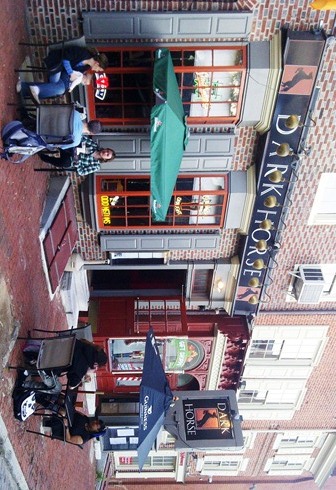
I went to see a band tonight down at a local pub, The Dark Horse, known more for soccer clubs and televised soccer games than for music. But some friends of mine are in this band and I had to see them.

The Dark Horse Pub, Philadelphia, PA

I have played with two of the members before in an Irish band, but this new band, The Flashbacks, is just that …a flashback to several decades earlier.  The band started out as a Beatles cover band, but then expanded with a lot of Steely Dan, Yardbirds, Stones, Kinks, before settling into CSNY, Beach Boys, the Dead, Eagles, etc. (They tout themselves as the second British Invasion, but they cover a fair amount of  American bands as well.)

And the reason they can cover this music is that they are DAMN GOOD!  The harmonies are precise–three-part most of the time–and the musicianship is impeccable.  They are seasoned players who have, for the most part, known each other for a very long time and they play to each others’ strengths and build on it. The youngest member–Joe Manning–is just a pup compared to the others, (he wasn’t born when these guys first started playing together) but he is one of those wunderkinder who can play anything and play it with perfect beauty, wit and definition. If he had been alive forty-five years ago, they would have called him a god.

And so this got me to thinking….

There are an awful lot of very talented people out there. I could go see scores of really talented bands or individuals every night of the week in my city alone.  Multiply that by every other city, burg, town. How many great musicians are there in Dublin? Edinburgh? Berlin? London? Madrid? Cairo?  Innumerable.

I know very talented artists, amazing writers, magical poets, extraordinary designers who day in and day out work at their craft (or because of the ways of the world, work at their “day-job” and then work at their craft) and create wonderful pieces. I am sure you know similar people in your parts of the world. What separates these artists from those who’ve become household names?

Luck, certainly plays a role, but a very minimum one.  Being at the right place at the right time, meeting someone who can truly help, etc. are all fortunate but are not the thing that separates the very good from the great.  And mere technique is not sufficient–there are thousands of technically gifted people.

I believe it is focus, focus on one’s calling at the expense of all else.

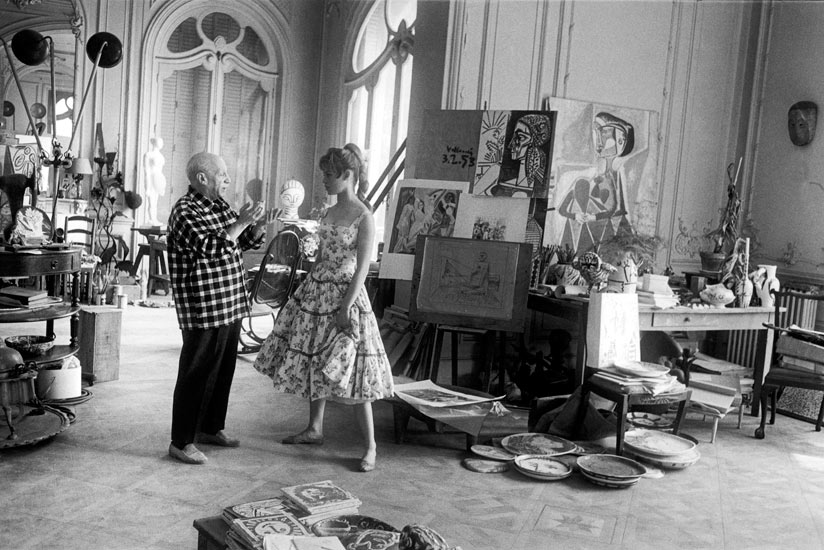
Picasso and Bardot. How great is that?
re-posted from http://weekendspast.com

I remember having a discussion with my father once. He was bemoaning the way that Picasso treated women, discarding them indiscriminately whenever it suited him. I argued that it was a symptom of his genius. (He challenged my assumption that Picasso was a genius.)  Genius, I said, uses everything it comes across. There is nothing else that matters but his or her art, his or her genius–other people and other people’s emotions included.

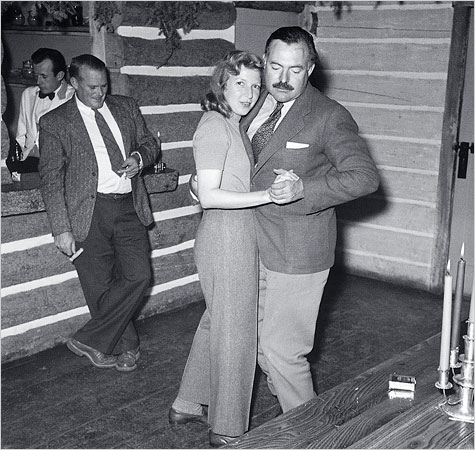
The conversation came up again this week, when someone remarked on seeing the television movie Hemingway and Gellhorn on what an unlikeable cad Hemingway actually was.  Again, it is all ego wrapped around his art…or maybe the opposite, all his art is wrapped around his ego.

The attitude can be summed up in the clichéd saying “It’s his (her) world, we’re just living in it.”

Hemingway and Gellhorn in Sun Valley, Idaho.

Who else has stepped on everyone to further their art–or in the furtherance of their art?  We could cite both Shelley and Byron, who stepped on and used everyone in their belief in their own genius and the entitlements it should deserve.

But this is not only in the arts.  Steve Jobs may have been a genius but he was hardly a likeable person. And Bobby Fischer, arguably the greatest chess player ever, became more than simply an egocentric genius. He became a misanthropic, hate monger.

Mozart–a man who could create entire operas in his head without touching an instrument–was certainly egocentric, almost to an infantile degree.

So what about all your acquaintances who are truly talented, gifted people? Is it that they are decent human beings whose company you enjoy, whose interest in you and others around them is obvious, that keeps them from reaching the pantheon of genius.

And would you have it any other way?  I know I wouldn’t!  I too much enjoy the people who are creating wonderful, beautiful things–like the middle-aged Flashbacks at The Dark Horse pub–and who are still wonderful human beings, interested in the world and the people around them.

The etymology of the word “amateur” comes from the word Latin word “amat” –to love. Whether one is paid or nor, celebrated or not, it is the love of doing, making, performing something that is good and beautiful that makes for a better world.

I’ll go see the Flashbacks, the next time they play!

Dark Sisters: Polygamy, Broken Women and Song

I am going to try to write this without disparaging any religion. (Although I maintain my right to think that certain things are more than ridiculous. This is America, though, and one can usually worship however one pleases.) I am tolerant of most things as long as no one is hurt  And that is the litmus test that this particular sect fails. A sect that still believes in polygamy, in “perfect obedience” from wives, in children brought to marriage as they reach puberty–this is wrong-minded, de-humanizing and abusive.

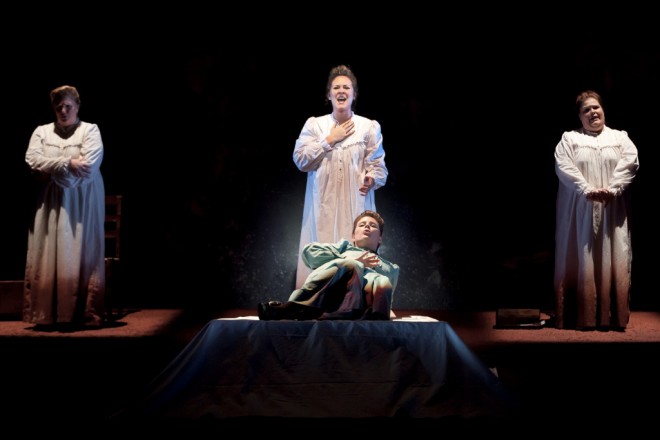
I went to an opera Friday night–a friend’s niece was in a starring role. The opera was entitled Dark Sisters and dealt with a fictional raid on a polygamist ranch by government officials.  The raid closely paralleled similar raids that took place in the late 20th-century in southwest United States.

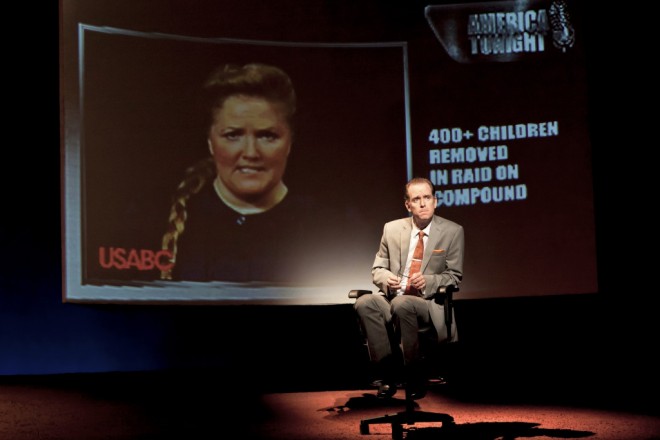
Written by Nico Muhly and Steven Karam, Dark Sisters opens with five wives mourning their children who have been taken from the ranch by the government. (Four hundred plus children have been removed.) The Father–the husband of these women and a supposed Prophet of God–tells them they must not mourn. They must “keep sweet.”  One of the wives, Eliza, bristles under her husband’s commands, worries for her children, and begins to doubt the rightness of their religion.

Another wife, Ruth,  is teetering on the edge of sanity. Her two young boys have died and Father has forbidden her to mourn. It is God’s will he explains. He also refused to allow her to seek medical care for the second son. (There is a hint that male children are unwanted and often put out of the compound. Sons are not breeders like the girl children and often can grow into rivals for the patriarchs.)

When Father goes out into the desert to pray, Eliza tries to make the other women realize what has happened. They refuse to believe her–although they almost come to her side–and see her as an apostate, a tool of the devil. For them the abuse, the sadness, the pain is the price they must pay in order to gain their heavenly reward where–significantly enough–they speak of joining their mothers and grandmothers, women who for generations have been part of this structure.

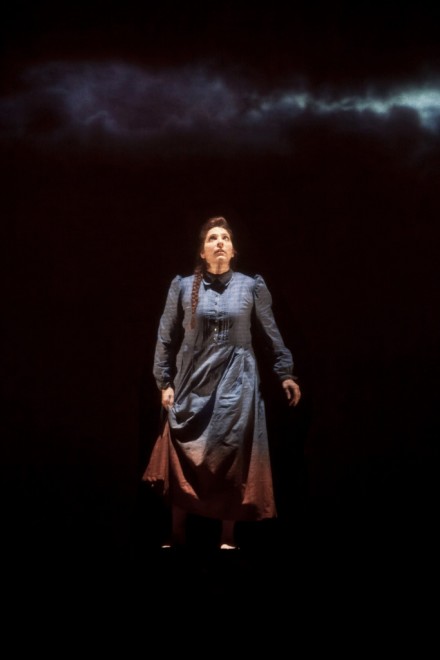
Eliza’s determination is hardened completely when she discovers that Father has arranged for the marriage of her fifteen year old daughter, Lucinda. She vows to speak the truth.

The second act begins with a news-magazine show covering the government’s raid on the ranch and interviewing the five wives.  The wives all parrot the beliefs of Father and their religion, proclaiming they are more free than the women in the real world, which they have never seen but only heard about from Father.  Only Eliza and Ruth dissent.  Eliza tries to speak her truth while Ruth’s testimony shows how dangerously fragile her psyche is becoming.

When the Supreme Court decides that the children must be returned to the ranch, life goes back to “normal” except for Eliza who has left.

Ruth decides-if that’s the right word in her distraught state–that she has had enough.  She climbs the mountain and throws herself off the cliff. (Eliza had hidden herself on the very same mountain as a girl on her wedding day before being found)

The last scene is Ruth’s funeral. Father and his five wives–he has replaced Eliza with a new favorite, her fifteen year old daughter–surround the grave. As they mouth their pieties, Eliza appears in modern but modest dress. She tries to convince them all of the truth of their imprisonment, but her arguments fall flat.

At last even her daughter,  whom she has tried so hard to liberate, turns against her. Taking Father’s hand, the young girl leaves her mother alone at the grave of the dead Ruth.

I know little about opera, and nothing about opera in English.  The story was riveting.  The set designs, the video pieces, the special effects were mesmerizing. And the music was beautiful and provocative.  I was not impressed with the lyrics, however. Maybe hearing an opera in English–instead of in French or in Italian or in German–takes something away from the magic and romance for a native-English speaker.  But many of the lyrics–while advancing the story–seemed artless. Commonplace. Perhaps it is simply the language.

Nevertheless, Darkest Sisters is an important piece.  For some reason, recent years have seen a surge of interest in polygamy.  There is the HBO series Big Love on television about a man and his wives and a reality-show Sister Wives that deals with a man and his four wives and combined children. Both shows deal with the difficulties of living in such large extended families, but neither really touches on the underside.

Dark Sisters does.  This is not a work debating the rightness or wrongness of government intrusion into private lives. That is not the focus of this piece.  Perhaps that is the subject for another piece. Dark Sisters focuses on a religious system where women are completely subservient, completely powerless, and –to my mind–completely brainwashed.

I don’t think anyone’s god should condone that.

Neil Young, Americana and me

On Friday, I received an e-mail from an old friend.  He had been listening to public radio and they had a program called “Old Music Tuesday.”  Here’s what the reporter, Robin Hilton said:

I haven’t kept an official ticker, but if government agents kicked in my door and forced me to pick the one album I’ve listened to more than any other, I’d have to say Neil Young‘s Everybody Knows This Is Nowhere. It came out 43 years ago this week.

The album was 43 years old that week (Yikes!). Though, I too can likely claim it as the album I played most. My friend linked me to the page–

http://www.npr.org/blogs/allsongs/2012/05/15/152748432/old-music-tuesday-neil-youngs-everybody-knows-this-is-nowhere?sc=nl&cc=sod-20120517

And then he said that he thought of me when he heard the show. He stated that it was I that had turned all our friends onto Neil Young.  I don’t know if that was true, but I do know I very much wanted to be him. I did a credible impersonation and knew all his songs on the guitar –although I never quite mastered  the lead jams. I had a female friend–Sue Shelley–who was a great seamstress and who patched my jeans just like Neil’s with upholstery and corduroy and quilting.  At a festival, a friend’s band invited me on stage and we did “Down By the River.” And I remember once going to a friend’s older brother’s party–whoo-hoo! we were hanging with the big boys–and I played the entire “Last Trip to Tulsa”–all 10 minutes of it–and felt that certain feeling you get as a teenager when the older guys validate you.

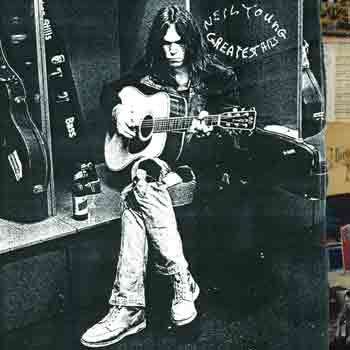
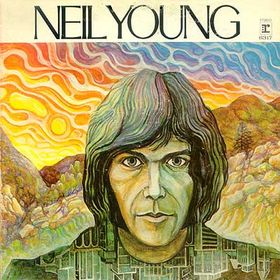
First solo album, with the 10 minute “Last Trip to Tulsa”

It was much later, after the Harvest album that another friend said that Neil Young was responsible for thousands of bad guitar players in America.  I’m not sure if he was alluding to me, but I got his point.  Every beginner seems to start with the basic E-minor, D sequence of “Heart of Gold.” But I argued that the simplicity does not take away from the beauty of the songs–it is part of the package, part of the appeal.

I went through them all. Followed the players in their own ventures: a young Nils Lofgren who played on the After the Gold Rush album, formed a exciting band named GRIN before moving on and becoming Springsteen’s guitarist;  the various incarnations of Crazy Horse, whose first album was the soundtrack to so many great moments; the irrepressible producer, Jack Nietzche who went on to win an Oscar for An Officer and a Gentleman and being nominated for his music for One Flew Over the Cuckoo’s Nest.

Anyway, I will confess, Neil was an obsession. I had every Buffalo Springfield album, and followed the many bands that broke off from there.  The same with CSN&Y.  But it was always Neil that was my focus. (Although a girl once dated me because she said I looked like Steven Stills. Probably, not the best foundation for a relationship, but I ran with it for as long as I could.)

And aside from his music, I admired his integrity. He made albums that pushed music every which way. (He was once sued for an album that the record company felt didn’t sound enough like Neil Young. This was the same year a record company sued John Fogerty for sounding too much like his old band. Ah, the suits, you gotta shake your head some time.)  He made rockabilly and electronica and country and good old rock-and-roll. He got involved in personal and political causes; founding Farm Aid in support of small farmers, as well as establishing the Bridge School for children with verbal and physical disabilities. He also leads the Bridge Festival each year which brings along some extraordinary performers and is a large source of fundraising and awareness for the project.

His performance of John Lennon’s “Imagine” shortly after 9/11 on a televised benefit was beautiful and perfect for the situation. Watch it here:

Under the pseudonym, Bernard Shakey, Neil as directed or co-directed a handful of films and produced even more. The recent film CSN&Y/Deja Vu–which centered on CSN&Y and their 2006 Freedom of Speech tour–was a reminder of Young’s commitment to the small man when set up against the larger, darker forces.

It is this film-making penchant which is front and center now. Having received that e-mail announcing the 43rd anniversary of Everyone Knows this is Nowhere, another friend, out of the blue, pointed me towards a new album that is coming in June, Americana. Neil is back with Crazy Horse and they have recorded an album of Americana songs: “Old Suzanna,” “Darling Clementine,” “She’ll be Coming Around the Mountain, ” etc. As of now, he has released three vide0s from the album–not footage of the band playing, but archival film of the rural poor, the ante-bellum rich, D.W. Griffith.  The films themselves are small jewels.  And the music is rocking.

Anyway, here’s the video from “Old Susanna.” Enjoy it: