Movie Review: The Angels’ Share by Ken Loach

I had wanted to like The Angels’ Share. In fact, I wanted to love it. It had all the makings of a great film: a master artist in Ken Loach, a lovable though incompetent gang of petty criminals, Scotland both urban and rural, and a plot involving Scotch whisky.  It had won the Jury Prize at Cannes in 2012 and even featured that catchy old tune by The Proclaimers, “500 Miles.”  And yet something felt flat.

Robbie (Paul Brannigan) is a soon-to-be-father with severe “anger management” problems. He is before the judge on assault and battery charges against three thugs who spend much of the film trying to get revenge. (It’s a tribal feud that can be traced back to their fathers.)  His pregnant girlfriend, Leonie (Siobhan Robinson) is about to deliver, and her father and his brothers want Robbie out.  The father calls Robbie a “waste of space” and offers him £5000 to move to England and away from his daughter.  While prison probably would be safer for him, the judge orders him to 300 hours of “community service.”

“Your record is appalling. For much of your short life you have behaved like a thug,” proclaims the judge to Robbie, and then sends him out into the rough life again, where that same thuggery is waiting its turn to do him in.

It is there, in community service, that he meets his gang of co-workers: Mo (Jasmine Riggins), a kleptomaniac who was arrested walking out of a store with a giant Macaw and called the arresting officer a “grumpy twat”; Rhino (William Ruane), arrested for urinating and defacing the statues of public dignitaries; and Albert (Gary Maitland), a profoundly stupid man, who was arrested for disrupting public transportation (he drunkenly fell onto the rail tracks). For all of them, life  is hopeless; Robbie, alone, sees hope in his newborn son, Luke, albeit a hope tinged with fear that the world he knows will bring down his son as well.

Mo, Rhino, Robbie and Albert after their heist.

The “Master Criminals” of The Angels’ Share

Having to oversee this very  incompetent and hopeless crew is Harry (John Henshaw) who has the patience, humor and compassion to see what a sorry lot he must deal with and how the justice system–and society in general– is doing none of them a favor. After Harry drives Robbie to the hospital where his son is being born and where Robbie is refused entrance by Leonine’s family and brutally pummeled by her uncles, Harry tends to Robbie’s gashes and injuries, brings him home, and in bracing him up offers him a glass of whisky.

Harry and Robbie (John Henshaw and Paul Brannigan)

Harry and Robbie (John Henshaw and Paul Brannigan)

Robbie does not drink–he has enough problems without that–but he becomes intrigued with the whisky: the ratings, the histories, the auctions, the distilling process, and the distinctions. And he becomes very deft at rating and describing whisky.

It cannot be an accident that  “whisky,” a word that comes from the Scottish Gaelic uisge beatha, means “water of life,” for that is exactly what it becomes in The Angels’ Share.  For the plan that Robbie hatches–involving a cask of highly prized whisky–will become, for all of them, the chance for a better life…or a further descent into their downward spiral.

Ken Loach has been described as a social-realist director and his films routinely look at those whom society has written off.  His world is not the violent underbelly as portrayed by Guy Ritchie or the taut, impoverished world of Mike Leigh, but a world in which hope does exist and brightness and compassion. This is not to say that everything in Loach’s vision of Paul Laverty’s screenplay is Pollyannish–by no means, no.  Robbie and his mates live in a violent, bleak world. But Loach always tends to offer a glimmer of hope.

Certainly, The Angles’ Share has its own share of faults and inconsistencies, but it is a likeable film nevertheless.  I simply didn’t love it.

Watch and enjoy the trailer below:
Movie Review: Something in the Air: Born Too Late

The actual title of Olivier Assayas’ new film is Après Mai–a reference to the months following the student and worker demonstrations of May 1968 in France.  And that, in many ways, is the focus of the film: young, sincere characters trying to maintain the commitments of 1968, but somewhat too young still to be a real part and unprepared for the crashing ordinariness of the life to come.

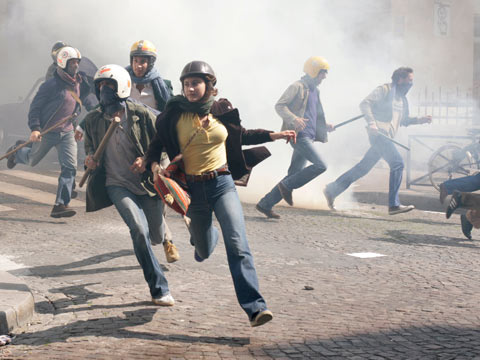
The film begins with high-school students’ listening to their teacher’s monotonous reading of Pascal’s Penseés. Within minutes of screen time, these same students are scrambling away from overzealous police dispelling a student demonstration.  The life of the classroom and their political/social/activist lives are much, much different. The teachers give them Pascal and they are reading Gregory Corso, Chairman Mao and listening to Phil Ochs.

Early riot scene in Something in the Air

Early riot scene in Something in the Air

I had a friend who was a student in Paris at that time in 1968.  When I asked her about it, she sort of shrugged.  “The only difference,” she said,  “was that afterwards we were permitted to call our professors tu rather than vous.

But for Gilles, Alain, Christine, Rachkam la Rouge, they want very much for the  spirit of May 1968 to be carried on, to be carried through.  They believe that May was not the climax but the beginning of the revolution. Stuck in their sleepy village outside of Paris, the students join political parties, pack debating halls, distribute the radical free-press, and organize guerrilla graffiti forays against the local establishment and police.  One of these night raids goes wrong and a guard falls into a coma when hit with a bag of cement mix.  The students decide to scatter.

Gilles (Clémont Métayer) and Christine (Lola Créton) hitch up with a radical collaborative on its way Italy where they become lovers and later part as she continues with the collaborative to make a film on Italian workers.

Christine and Giles on the road to Italy

Christine and Giles on the road to Italy

gilleschristine

Gilles (Clémont Métayer) and Christine (Lola Créton)

Gilles is torn in his radicalism–for his passion is art, and he is not convinced that his art must always serve the “cause.”  Alain (Felix Armand)  and Leslie (India Menduez), an American he meets in Rome,  go East to Afghanistan, he an artist and she a dancer looking for spirituality. Disillusioned over time, they all return to France, and ultimately to Paris.

But there is another story running through Gilles life.  Of course, in a story of a teenage-boy there needs to be friction between him and his father, a successful movie director.  While there is never dramatic conflict between the two, as he grows, Gilles is able to tell his father how superficial and wrong-headed he believes his film adaptations are.  (The father makes adaptations of George Simenon’s Maigret novels.)

But the more important sub-plot is about Gilles and his true love, Laure (Carole Combes).  When she first appears early in the film, there is a jarring film switch from the smokey riots of their village to an Edenic, woodsy scene. She has come to meet Gilles and is in flowing white and the sun illuminates both her and the shimmering foliage around her.  I felt however that I was in a 1970’s shampoo advertisement and that any minute I would hear Donovan singing “Wear Your Love Like Heaven.”

Gilles and Laure

Gilles and Laure

Laure is a bit more worldly than Gilles and his mates, and her wealthy bohemian parents are taking her to London, as the father is the light-man for a fledgling rock band. She is willowy and bright and airy and full of sunshine.  And she leaves a mark that even Christine knows she cannot undo.  Later, when his father informs him that she has returned, he ventures out to her parents’ chateau for a party.  Throughout the party, I was reminded of when the Stones had moved to the south of France in the early ’70s  and had worked on Exile on Main Street.  There was the same louche, blowsy freedom, the same drug use, the same music, the same comings-and-goings.

The party is important, though I am not positive how it ended.  Gilles leaves. Laure jumps from a burning building and that is it.

And then real life steps in.  Gilles is a “go-fer” for his father’s film company (although a left-wing broadsheet has begun using his drawings), Leslie abandons her “spirituality” and returns with her father to New York and Julliard,  Rackham le Rouge leaves the Trotskyites for inconsequential anarchism, and Christine discovers that the earnest leftism of the man she is living with and the collective they are part of does not carry forward to women.

Olivier Assayas–who wrote and directed–gives us a nostalgic film, a film that even looks from an earlier period. The colors, the lighting, the cutting, the soundtrack all capture a particular moment in time.  And the two leads, Créton and Métayer are likeable and familiar–we do care about them and their decisions.

Frequently in the film, we watch characters watching films–and these films within a film are rendered in wavering, sincere, gaudy, and innocent beauty.  (Perhaps part of that innocence is the knowledge in hindsight that much of it is not going to last.) Indeed, film and film-making is such an integral part of the story that now I am not sure if Apres Mai (Something in the Air) isn’t a dissertation on film of that era disguised behind a story of that era.

In the end, Gilles is working on a science fiction film in London that features giant lizards and Nazis (and Dolores Chaplin, the granddaughter of Charlie and Oona!); Christine’s collective is releasing its first commercial documentary on Italian workers (though free to workers’ unions) and Gille’s dad is still turning out the Maigret mysteries.  However, Apres Mai ends with a haunting, new wave, almost psychedelic clip of a willowy woman walking towards the camera.

We recognize her by the end.

♦     ♦     ♦     ♦     ♦     ♦

And for a treat, here’s the Stones live in 1972 doing “Tumbling Dice” from Exile on Main Street.

Movie Review: Starbuck–“there was an old man who lived in a shoe”

The rest of that line is “he had so many children he didn’t know what to do.”Starbuck

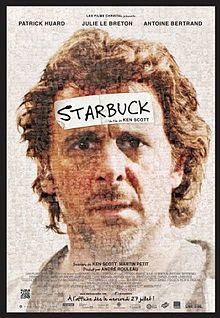
Even Mother Goose could not have imagined the number of children that David Wozniak (Paul Huard) fathered.  As a young man, Wozniak had visited a sperm bank close to 700 times in a 23-month period.  At $25/35 dollars a visit, it was a nice source of income (and an implied source of great generosity later in the film).  Unknown, to David, however, was that his sperm was very strong and very effective.  From his nearly 700 donations, 533 children were born.  And 142 of them have found each other, have united and are filing a class-action suit to discover who is the man behind the Agency’s alias known as STARBUCK.

Ironically, the day that David learns he has 533 children–most now in their late adolescence, early twenties– his girlfriend tells him she is pregnant. She also tells him that she wants nothing to do with him and does not want him to have a role in the life of their child.  It is the film’s narrative that has Wozniak gain paternal responsibility through identifying and relating with the numerous children he already has.

Huard’s performance is endearing. In a lumbering way, he reminds one of a young Gerard Depardieu. He is a bit of a sad sack, a bit of a screw-up, a 40-something slacker, and the least effective of his father’s sons who all work together in a butcher shop.  He is being hounded by loan sharks, discarded by his girlfriend, and advised by his cherub-faced croney who has let his legal license expire.

And then he finds out he is a father…and then some.  The delight of the film is when Starbuck annonymously tracks down various of his children. There is a nationalsoccer star and a busker in the metro, a promiscuous gay man and unstable heroin addict, a son with severe disabilities and a daughter who makes heads turn when she walks down the street.  Wozniak embraces them all and becomes part of their world–even to the point of allowing one “goth” son to live with him.  Yet none of them know who he really is.

And as charming as Huard is, his lawyer friend, Antoine Bertrand, is a delight. Himself harried by his own large family–one loses count of how many school lunches he must make in the morning–haunted by his mother’s lack of faith in him, and nervous about taking on a case that is gaining in notoriety, Bertrand is both gentle and loveable.  And like his friend, he too is a bit of a sad-sack, nearly ruining things completely as victory surrounds closes in.

Written by Ken Scott and Martin Petit and directed by Scott, Starbuck is a light film with a very good feeling.  Towards the end, there is even a “group hug,” which, as cheesy as it may sound, works wonderfully in capturing the joyful spirit of the entire movie.

group hug
Montreal looks wonderful, and, as a plus, the soundtrack is infectious with original music by a French-Canadian singer named David Giguere. My next quest is to find more of his music.

 The film was made in 2011 but is just now being shown in the U.S.  A “remake” has already been spawned, entiltled Delivery Man, starring Vince Vaughn and scheduled for release in October 2013.  Like so often happens, I can’t imagine the remake capturing the same charm as Starbuck.   So here’s the trailer of the original.  Enjoy it:

[youtube.com/watch?v=_8XKccuB_ao]

The Blackest of Comedys: Martin McDonagh’s The Lonesome West and Six Shooters

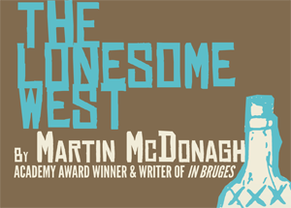
As many of you know, I am teaching a course in modern Irish literature this term to a group of 18-year old American boys.  As an American classroom, it is filled with various ethnicities and races.  And so, I can never assume that they know what I–or the authors they are reading–are talking about.  And so when we began Martin MacDonagh’s Lonesome West, I knew it was going to be a challenge to get them to enjoy it.poster

Because, when all is said and done, that’s really the purpose…to get them to enjoy what they are reading.  And surprisingly, that is a difficult thing for them to do.  Sure they loved saying the word “fek” when we read the play out loud–and which sometimes occurs twenty-five to thirty times on a page.  (One student told me he loved the word so much he started saying it around the house.  I advised him that maybe he should rein it in a bit.)

But surprisingly, they were too uptight to enjoy the humor…or even to get it!  There is a great line where Father Walsh Welsh — even that’s funny: I explained that this character has appeared in three separate plays now and that no one ever gets his name right, so they continually call him both. Stone faces in front of me. … anyway, there’s this great line where Father Walsh Welsh is anguishing about his failure as a priest.  Coleman tries to reassure him:

Ah there be a lot worse priests than you, Father, I’m sure. The only thing with you is you’re a bit weedy and you’re a terror for the drink and you have doubts about Catholicism. Apart from that you’re a fine priest. …

I had to explain that that was funny.  I had to explain that Girleen’s blatant attempts at seduction, her outrageous dirty-mindedness, and her falling in love were funny. (The pathos of her ending was a whole other story!) That Coleman’s constant ribbing of Fr. Walsh Welsh about the priest scandal in Ireland was funny. And that a small village where a father has been murdered by his son, a mother by her daughter, and a wife by her husband is a funny world indeed, especially when the smashing of holy figurines or stealing poteen is considered a more serious crime.

They were fine in talking about themes of redemption and reconciliation, in tracking down and explaining symbols, and analyzing character.  But they stumbled upon the humor.  And when all is said and done, that might be more important than all that the other stuff.

sixshooterAnd so I thought I would relieve their reading by showing them MacDonagh’s Oscar winning short film Six Shooter.  Unlike most of MacDonagh’s work which takes place in the west of Ireland, this takes place in  southeast Ireland, particularly on a train to Dublin.  A man is returning from hospital where his wife has just died that morning. He boards a train to go home and sits next to a young twenty-something who is a bit more than strange and possibly deranged.  The boy’s patter, aggressiveness and nonsequiturs are amusing, uncomfortable, and awkward.  But they are also, at times, bizarre and hilarious.  But maybe not to a group of high-school Americans.  Suffice it to say that by story’s end we have seen a cow explode, a rabbit get shot, a woman throw herself off a train, a character gunned down by police and a man fail at his attempt at suicide.  And that is  the violence that happens just on screen.  (I explained to them that MacDonagh was a combination of Quentin Tarentino, David Mamet, and John Millington Synge.)

Anyway, if a short movie that moves the cartoonish violence of Tarentino into the idyllic countryside of the Irish coast sounds appealing, then here it is below. It did win a 2006 Oscar in movie, though I don’t know if that held any sway with my boys.  Here it is:


Movie Review: Barbara, The Lives of Others, and Paranoia

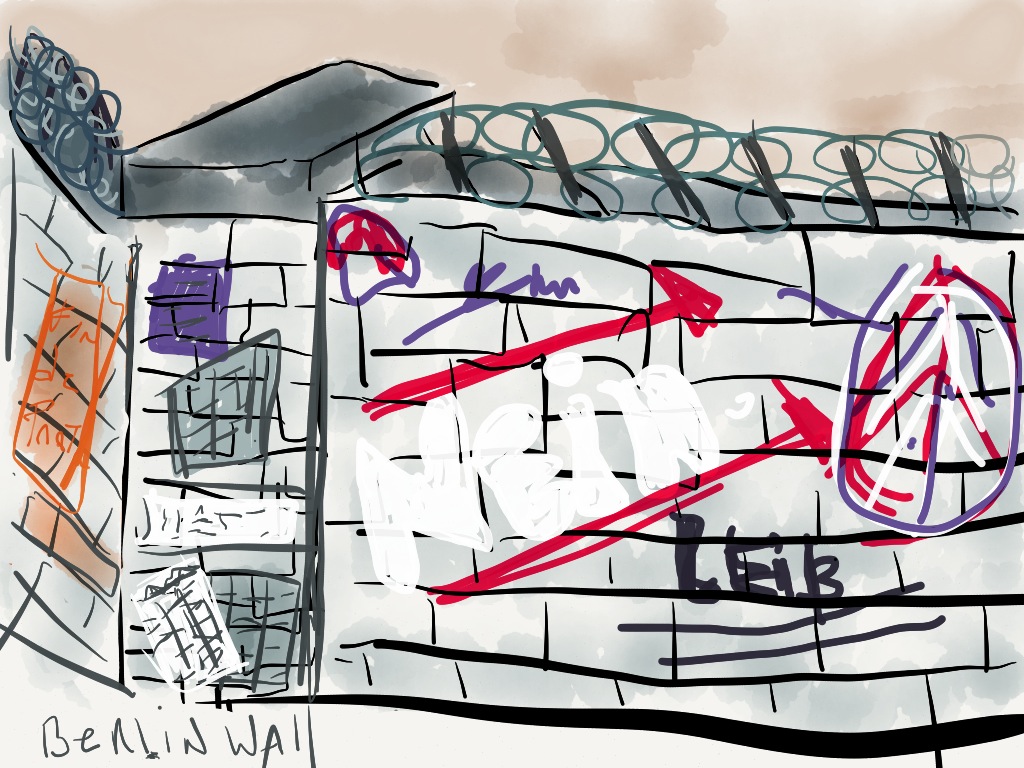
Berlin Wall                     2013 jpbohannon

Berlin Wall
illustration by jpbohannon © 2013

The East German film Barbara begins with a sense of paranoia and never backs off. Colors are muted, weather is stormy and damp, buildings are dilapidated. And Barbara (Nina Hoss) enters the picture wary, distant and observant.

Remember that old Kurt Cobain lyric that states that “just because your paranoid it doesn’t mean they’re not after you.” Well, it has never been truer than with Barbara. The film opens in East Germany in the 1980s with Barbara arriving at her job early. She is alone, aloof, and very aware. As she sits having a final cigarette before going into work, we see two men spying on her from a window and they give us some back-story. They already know her life. Barbara was a prestigious doctor in “the city” and for some misadventure–we are never told what–she has been sent to work in the provinces.

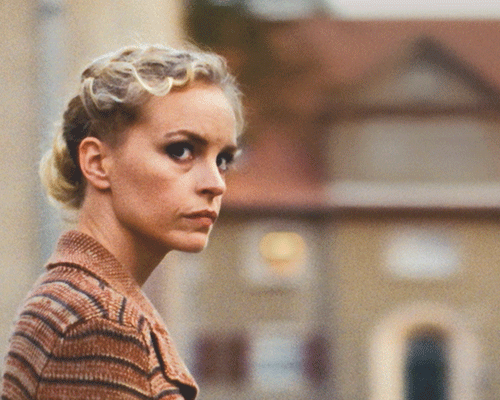
Nina Hoss as Barbara in the film Barbara

Nina Hoss as Barbara in the film Barbara

Andre (Ronald Zehrfeld), the young doctor who is her “handler,” is impressed by her skills but flustered by her attitude. He too has had a past that has sentenced him to this provincial hospital. But she sees him as nothing more than a pawn of the government. When he first offers her a ride home from the bus stop where she waits, he drives her home–without asking where she lives. Barbara is very certain of the eyes that are on her.

This oppressive watching makes Barbara’s secret plotting even more difficult. She is repeatedly meeting a lover who is arranging to have her escape to the West. And while the authorities are not aware of her plans, they are unhappy when she is unaccounted for hours at a time. Twice when she returns home, the Stassi are at her apartment, having rifled through her flat and subjecting her to a full body search. The humiliation and oppressiveness is palpable.

There are also two young patients that Barbara and her handler attend to, one of whom grows very fond of Barbara and begs not to be sent back to the work farm where she is sentenced. The young girl will play an important role later in the film, but it would be too much of a spoiler to say how. The other too is a fulcrum on which the plot balances.

Needless to say, the romantic tension between Barbara and Andre grows, but it is always secondary to the political and personal tension involved in Barbara’s escape.

Without giving too much of the ending away, let me just say that it is satisfying, heartwrenching and thoughtful.

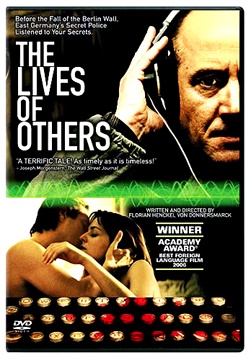
The East German paranoia reminded me of another film The Life of Others directed by Florian Henckel von Donnersmarck. This too took place in East Germany during the 547_The-Lives-of-Others_375931980s, but the film was told from the point of view of a Stassi spy. Spying on a writer and his lover, he becomes increasingly involved in the life he is observing. And while the oppressive paranoia and wariness is as palpable as it is in Barbara, it is, perhaps, less personal. In the former, we are in fairly familiar territory–the spy thriller, albeit with a twist. In director Christian Petzold‘s Barbara, the paranoia, the fear, and the oppression–engulfing the lives of everyday people as it does– seems more suffocating, closer to real.

♦ ♦ ♦ ♦ ♦ ♦ ♦ ♦

I’m not sure what Leonard Cohen has to do with any of this, except he tells us that “next we’ll take Berlin” in this, one of my favorite songs. But the water’s edge where the video begins is eerily reminiscent of the water’s edge where Barbara ends and that is what I thought of. Enjoy:

Central Station…more about a boy

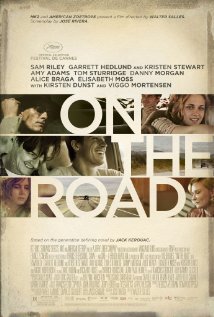
MV5BMTc1MzU5MDgzMF5BMl5BanBnXkFtZTcwMDQ4ODY2OA@@._V1_SX214_In the late November, I made a deal with my students. If they read Kerouac’s On the Road by Christmas, we could go see the film together as a class trip. (It was opening December 21.) However, for whatever reason, the film came, left, and went straight to video, before the first weekend was through. Needless to say, we did not go on our trip, (although one student claimed he could pirate it the day it came out and offered to show it in class.)

Later I told my boss this story. He hadn’t been aware of the On the Road film, but said that the director Walter Sayles was one of his favorites and that Sayles’ film Central Station was extraordinary and something I should see. And as he does often, he presented me with the DVD of it a week later.

Well, I finally got to watch last week. (I need to announce a spoiler here, but the ending is not the point. We all know how Romeo and Juliet ends but we watch it for what it gives us and makes us feel!)

Central Station (original title Central do Brasil) begins in Rio de Janiero’s enormous and busy train station, where Isadora (Fernanda Montenegra) makes her living writing letters for the illiterate. She scams most of them, never posting the letters she writes. One day a boy, Josué (Vinícius de Oliveira) and his mother arrive at her table. The mother wants to contact the boy’s father; she says that the boy has been asking about his father whom he has never seen. She dictates a letter that is both angry and accusatory.

The two appear again to Isadora’s table the next day to revise the letter, the mother wanting to erase much of the bile that was in the first. Astutely, the young boy is suspicious that Isadora still has the first letter right there and is able to retrieve it so quickly.

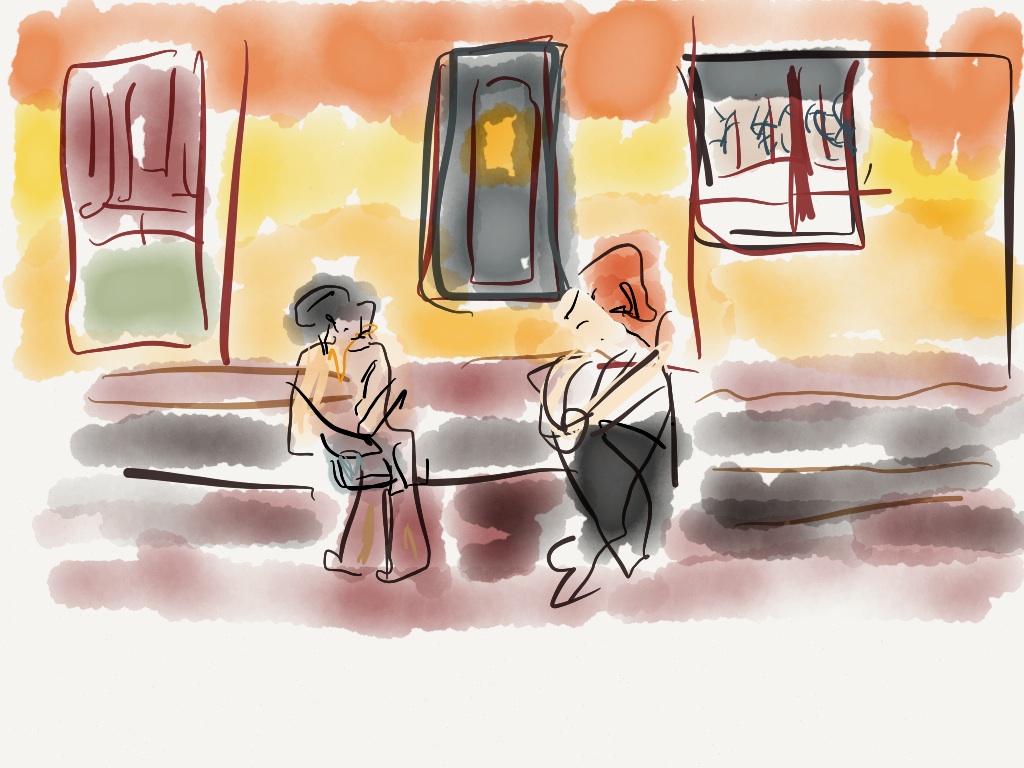
Central Station

Central Station illustration by jpbohannon © 2013

Afterwards, as the mother and the young boy leave the station, the mother is run over by a bus and killed, and by the end of the day Josué falls into the care of Isadora.

Central Station could have easily followed the film cliché where the rigid adult is paired with a rambunctious child and all sorts of mahem ensues–but it does not. It is not that kind of movie. Isadora does not want the boy; she has long been dealing with her own issues of parental abandonment. In fact, her first action is to sell him to an adoption agency. But that wracks her with guilt and she goes and retrieves him–keeping the money for herself which places her in some danger. Despite her bitter disposition, her jaded cynicism, and her own personal issues, she is responsible enough to want to get the child to his father. (And after all, she still has the address from the letter she never sent.) And so the two start the long trek by bus, kitted out with the money that she had originally sold Josué for.

Of course, the journey is difficult and there are a number of setbacks. Several times Isadora attempts to abandon Josué, but she fails–not because of pangs of conscience, but because of circumstances beyond her control. She dreams of running away with the kind truck driver who helped them out, but even Jopsué knew that that wasn’t going to work. She attempts to leave him while he is sleeping (his backpack secretly supplied with the money), but that doesn’t work and, in fact, goes horribly wrong.

And then finally they arrive, but the father is not where he last address indicated. Finding him is more difficult than they originally thought. In fact, they never do find the father–but they do find that Josué has two older brothers, who take him in.

In the history of film, there are certain moments that break your heart in both their beauty and their poignancy. The final scene where Isadora rides in a bus back home to Rio is one such scene. She has snuck away once again, in the middle of the night and leaving Josué with his brothers. As she attempts to write him a note, her anguish is palpable.

[caption id="attachment_2082" align="alignright" width="364"]fernanda_1 Brazilian actress, Fernanda Montenegra

The film is really a showcase for Fernanda Montenegra, one of Brazil’s greatest actresses. To be honest, her character Isadora is very unlikable –someone who cheats the poor and illiterate and sees a suddenly orphaned child as a get rich quick opportunity. Yet it is Montenegra’s talent that draws us into her, that makes us want her to do the right thing, and that breaks our hearts in the closing scenes. And the young Oliveira, who plays Josué, plays against her as if her were a veteran actor. Indeed, Josué’s uncanny and mature sense of what Isadora is up to is one of the delights of the film.

What Central Station is not is a showcase for Rio de Janeiro Except for Rio’s bustling train station and a street fair in a small outpost beyond the city, the film doesn’t dwell on location or even local color. Sayles, a Rio de Janiero native, sees nothing exotic about his home city…but perhaps that is to deliberately underscore the universality of this lovely and moving film.

Movie Review: A Late Quartet–Harmony within the Dissonance

I received an e-mail last Monday that read like this:
Ciao Gianni,
Ho visto un film ieri sera si chiamo “A Last Quartet”. Ho pensato molto a Biggs perche un uomo ha Parkinson’s. Interesante  Buon giorno!!

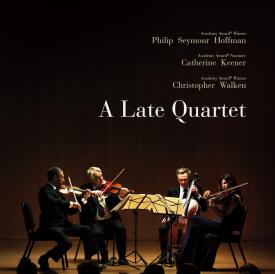
“Biggs” was a friend of ours who struggled with Parkinson’s until the end of her life and Parkinsons plays a major role in the plot of Yaron Zilberman’s film A Late Quartet.  I had read about the film in those end-of-summer write-ups of films that would be arriving in the coming months, but had forgotten completely about it. And now, here it was in town.

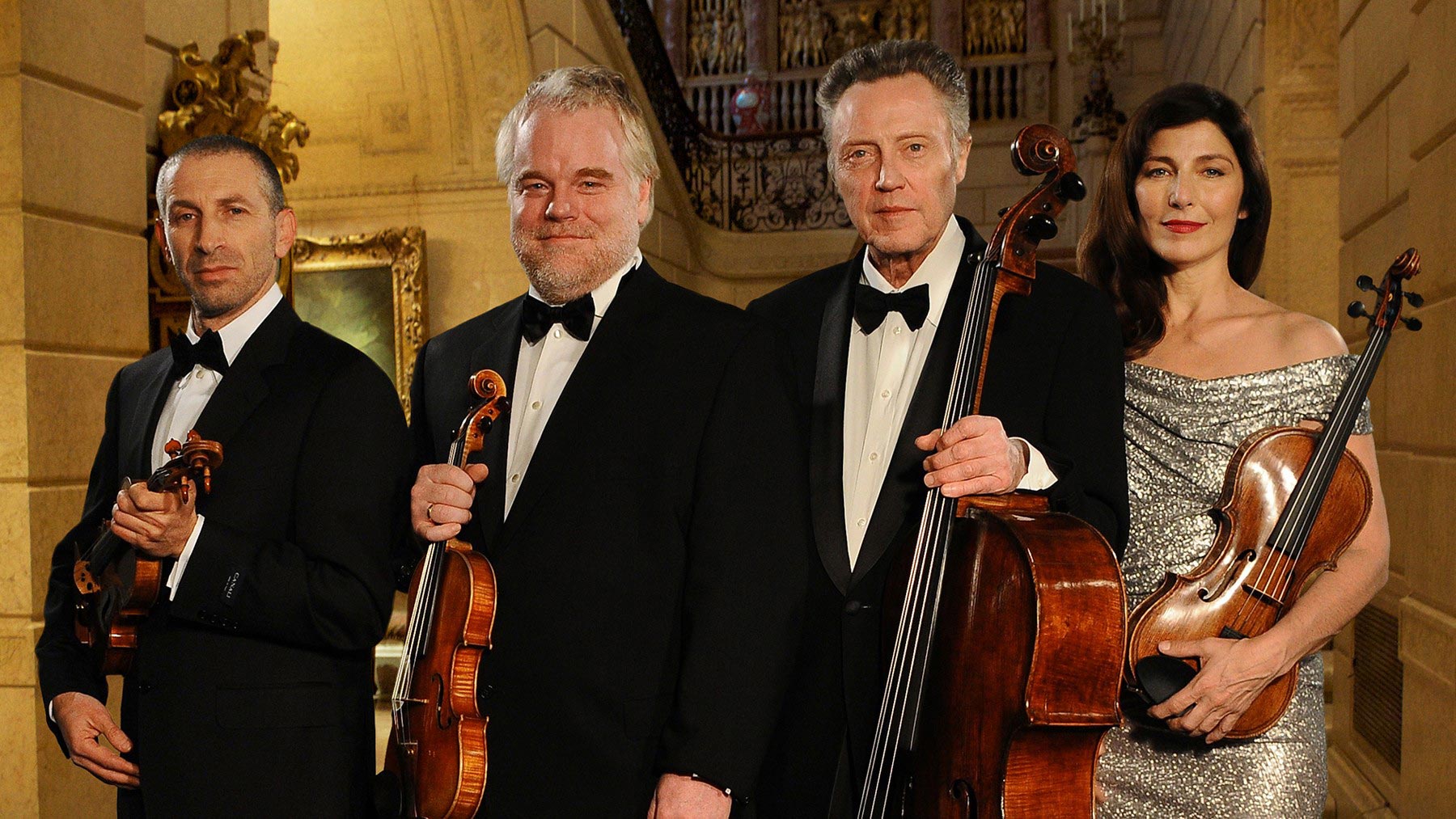
And while a diagnosis of Parkinson’s comes early in the movie, it is not the only malfunction in the story.  The film is about the tensions, dysfunctions, rivalries, and bickerings that take place within a famous string quartet, “The Fugue String Quartet.”  Celebrating its 25th anniversary together, the quartet reveals a shattering disharmony in an ensemble devoted to creating celestial harmony.

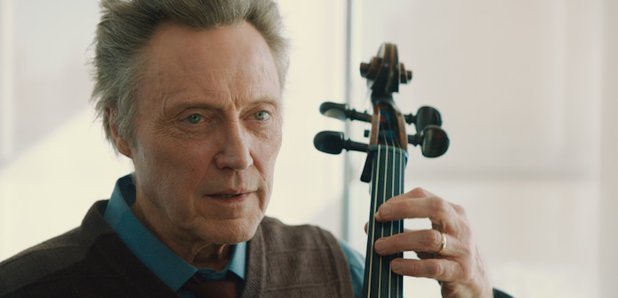
The film begins as the ensemble gathers for its first rehearsal after a short period apart. The cello player, Peter (Christopher Walken) cuts the practice short as he finds he is losing control and strength in his hand. After some visits to the doctor, he learns he has the onset of Parkinson’s disease, and he calls the group together to tell them and to announce that the first concert of the new season will be his final performance.
Yet Peter’s debilitating disease plays underneath the rest of the melodrama–much like his cello plays under the melodies of the quartet. Robert (Philip Seymour Hoffman) and Juliette (Catherine Keener) have been married through most of the quartet’s existence, and the strains within the marriage seem to be becoming more and more taut.  There is a silent dissatisfaction and regret running through the both of them. And finally, the first violinist Daniel (Mark Ivanir) is an exacting, domineering, egoist whose suppressed passion erupts in an affair that may fracture the quartet. (No, gentle readers. Although Juliette and he were once lovers before she married, she is not the focus of his attentions.)

A Late Quartet would be considered no more than just a middling film if it weren’t for the performances of Hoffman, Keener, Ivanir and Walken.  Walken, who lately seemed to be a mere parody of himself (more cowbell, anyone?) is superb. I can’t remember ever seeing him this intense, this openly vulnerable. In the class he teaches, he reads his young prodigies T.S. Eliot on Beethoven and reminisces about his and Pablo Casal’s conversations. He is dying, he is missing his dead wife, and he is suffering as he watches his beloved quartet rip apart. It is a simple, understated performance that echoes the role that his cello brings to the music.

On the other hand, while his character plays second violin in the quartet, Philip Seymour Hoffman is certainly the first violin in this ensemble. It is his quiet emotional rollercoaster, his final refusal to be everyone’s “doormat,” his true declaration of love for the wife whom he has just betrayed that is the masterstroke in this film. The film builds on Hoffman.  He and Cathrine Keener have worked in several films together (most notably Capote and Synecdoche, New York) and their comfort with each other is evident. The character she plays is perhaps the least discoverable–she is strong and yet damaged, wise and yet blindered, loving and yet cold.  Mark Ivanir (who people will recognize from countless television series as well as three Spielberg films and a couple of DeNiro projects) plays the role of the obsessive Daniel. Focused on passionless precision, he is the counterweight to Hoffman–who inwardly covets Daniel’s role as first violinist.

As well as the ensemble works off each other, the music is perhaps the most memorable.  The quartet is preparing Beethoven’s Opus 131 String Quartet (in C-sharp minor), a piece that Beethoven wrote during his last days and which taxes the strength and stamina of the performers as well as the integrity of the instruments.  We learn that it is what Schubert asked to be played to him as he was dying. In the film, the music is actually played by the Brentano Quartet, and it is stirringly emotional.  If you wish, you can hear it here:

Schubert once said after having heard Opus 131, “After this, what is left for us to write?”  The film A Late Quartet falls far short of those heights, yet when I think of Parkinson’s Disease and the people who I knew who have suffered from it, I wonder if the “what is left…?” is the haunting motif. I wonder if the Christoper Walken character–who so much wants the quartet to continue after him–has considered the same.

Book Review: Winter’s Bone by Darrell Woodrell–can you find a better heroine in all of literature?

I have a tendency to exaggerate, to think that whatever I have read, heard or seen lately and liked  is the BEST!  I am much more nuanced about things I dislike and usually soften the blows rather than exaggerate them.

But with Daniel Woodrell’s novel Winter’s Bone, I feel confident in stating what a truly fine book it is.

In fact, since I have read it, I have tried to think of a heroine in an American novel who matches Ree Dolly for grit, perseverance, wisdom and sheer moxie. These are the suggestions I have gotten so far:

1. Scarlett O’Hara in Margaret Mitchell’s Gone with the Wind (too spoiled, mercurial and self-centered)
2. Scout Finch in Harper Lee’s To Kill a Mockingbird (not really her story but her father’s–who, by the way, may be the best father in literature.)
3. Hester Prynne in Nathaniel Hawthorne The Scarlet Letter (interesting suggestion, but her props come from accepting her punishment and not revealing who the father of her child was, while letting the simpy Rev. Dimmesdale preach his sermons and fill himself with self-loathing. I don’t see her as a particularly active heroine.)
4. Katniss in Susan Collins The Hunger Games (must say, I don’t know enough about her, except that Jennifer Lawrence played both Katnis in the Hunger Games AND Ree Dolly in Winter’s Bone.)
5. Mattie Ross in Charles Portis’ True Grit (Mattie is a good second to Ree Dolly. Her challenges just don’t seem as daunting as Ree’s.)

Please feel free to add your own selections.

But my point is, I can’t remember any heroine–or any protagonist for that matter–who is so admirable in her refusal to not back down, in her persistence in doing what she must, and in her bravery in standing up to the very nasty forces that surround her.

In case you don’t know, Winter’s Bone is the story of Ree Dolly, a seventeen-year old girl who is raising her two younger siblings and caring for her catatonic, demented mother. Her meth-cooking father has just skipped bail and he had put up their hovel of a home as bond.  If he doesn’t show up for court, Ree and her family are out on the streets–or more realistically out in the fields of this very hardscrabble Missouri Ozarks setting.

Suffice it to say that her father is dead. And people aren’t real happy about Ree poking into their business. This is a community whose main economy and main diversion is crystal meth-amphetamine, and there are a whole lot of very, very nasty people.  No one talks. Talking creates witnesses.

In the course of her journey, Ree gets a truly horrible beating, she allies herself with her rough Uncle Teardrop (named such because of the three tears self-tattooed on his face), and finally proves her father’s death by sawing off his two hands (with a chain-saw from where he is sunken in a murky lake) and bringing the “identification” back to the authorities.

If it sounds gruesome. It is. But it is also one of those books that hooks you immediately and which you wish would go on forever. And it is all because of the character of Ree.  It is Ree that rises above all the violence, the poverty, the bleakness. But while Ree completes her quest at the end, while a few things begin to go right for her and her family, one is left feeling that in another five or ten years Ree will have turned into one of the many harridans that populate this mountain.  I hope not.

♦     ♦     ♦     ♦     ♦

I read the novel for a film class I am teaching.  And so, I also had to show the film. As in all translations, there are various changes–her two brothers for some reason become a brother and a sister–and particular scenes are deleted.  Yet the film very much captures the spirit and the landscape of the novel.

Jennifer Lawrence is, at times, magnificent. There are moments when the camera captures the soft plumpness of her face adding even a greater vulnerability to this girl/woman who has to face such ordeals.  At other times, that softness works against her, straining our credibility that she is who she is supposed to be.

Not so with John Hawkes.  Hawkes, who was the soft-spoken hardware salesman in Deadwood–a similar world of extreme dirtiness and corruption, plays Teardrop perfectly. Hard as Ozark flint, creased and shaky, Hawkes captures the violence, the drug addled paranoia and stupor, and the family loyalty of these inbred mountain folk with studied truthfulness and credibility.  While Winter’s Bone is Lawrence’s movie, you don’t forget Hawkes for too long.

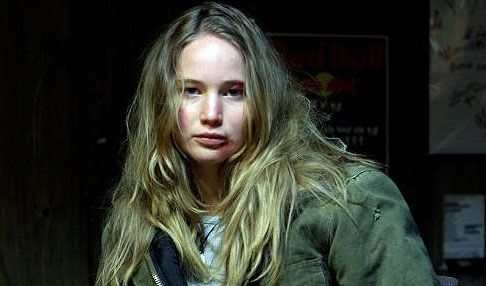
Jennifer Lawrence as Ree Dolly in Winter’s Bone.

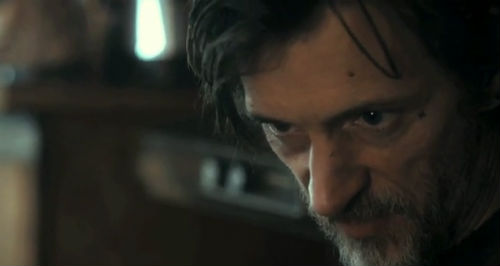
John Hawkes as Teardrop in Winter’s Bone

Movie Review: Liberal Arts–Light but Enjoyable

David Foster Wallace famously gave a commencement speech at Kenyon College in 2005. The speech –Wallace’s only know public speech–had been printed and reprinted, e-mailed and downloaded time and again, and now is published as the book, This Is Water: Some Thoughts, Delivered on a Significant Occasion, about Living a Compassionate Life.  Wallace, whose magnificent and enormous novel Infinite Jest is perhaps for the millennium generation what Gravity’s Rainbow was for the Viet Nam generation, is known for his intricate plots and subplots, his baroque sentences, his numerous footnotes, and his expansive and enormous intellect.

Well, Kenyon College and Wallace meet up again in the 2012 comedy Liberal Arts.  Actually, Wallace isn’t there physically, but Infinite Jest is, and the novel and its author play a significant part in a poignant subplot about a depressed, genius undergraduate. In fact, towards the end of the film, the hero tells the hospitalized boy to put down Infinite Jest  (he has already read it three times) and pick up one of the Twilight books! 

Kenyon College, on the other hand, is very much visible–and looks torn right out of a college brochure. The leafy campus, the quaint town, the rural surroundings, all make Kenyon look like a movie set for the perfect college.  However, although Kenyon is one of the more illustrious and demanding liberal arts colleges in the U.S., it offers up a pretty “easy-A” with Liberal Arts. Nothing too difficult, too taxing , or too subtle.

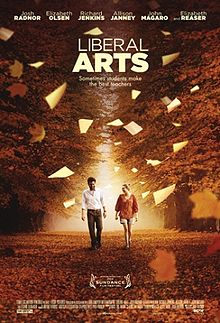
The film tells the story of Jesse (Josh Radnor), a bookish and sensitive admissions officer at a New York City college (read NYU) who is dissatisfied with his job and his life. When he is called back to Kenyon to attend the retirement party of one of his favorite professors (Richard Jenkins), he meets Zibby (Elizabeth Olsen), an undergraduate studying Improv Theater.

Elizabeth Olsen and Josh Radnor in Liberal Arts

The 35-year old Jesse and the 19-year old Zibby hit it off immediately and enjoy each other’s company as they wander around the bucolic campus. When Jesse returns to New York, he begins a “pen-pal” relationship with “Zibby” that is sweet, literate and full of hope.

However, when he returns to visit her, the differences in their age–and life experience–plays very much on his mind. (To me, since the actors do not seem all that greatly separated in age,  the age difference did not really seem all that jarring.)  Her attempt to bed him on this second visit is the moral center of the movie.

There are some wonderful performances–Allison Janney as an ice-hearted professor of the British Romantics is marvelous and Zac Efron as a chorus-like sprite that pops in and out of the story is charming and enigmatic. And the lead characters are very likeable.  The camera work between Ohio and New York is beautiful and perfectly captures the shift in energy that Jesse feels in moving between the two places. And the subplot with the depressive undergraduate is interesting enough, if rather slight. (It might have made a better movie in itself.)

In all, the film is concerned with life and its trajectory, with love and its various shadings, and with contentment and its frequent elusiveness. It is funny and literate at times, but for the most part it is a simple story, simply told.  Liberal Arts could have been a much weightier film–but that’s not the film the director chose to make.

I can’t imagine David Foster Wallace liking it. There isn’t much layering here, not much that he could footnote.  It would  have made a very slim novel.

Movie Review: City Lights by Charlie Chaplin

I began showing City Lights to my students last week. It is for my “Literature and Film” class and while I don’t necessarily have a “literature” to couple with,  I think it is a film that everyone should see.

In fact, I believe it is one of the finest movies ever.

(The AFI ranks it as number 76 of the 100 best American movies of all time. Chaplain’s  The Gold Rush is ranked two slots before it at 74 and his Modern Times several below it at 81. Chaplin leads all directors with having three in the top 100.)

Yet art is not a contest. And City Lights is pure art.

Most of my students have never seen a movie in black-and-white! And they immediately say (and moan)  that they have never seen a silent movie. Yet, City Lights is not a silent movie. Chaplin made the movie well past the advent of the “talkies.” He chose silence for his “Little Tramp” because giving him a voice–and a language–would impair his universally beloved appeal. In speaking no language, the Little Tramp belonged to all languages. And so Chaplain dubbed City Lights a romantic pantomine.

But it is false to state that it is a silent movie.  There is a omnipresent score (written by Chaplin) as well as several moments of sound. In the boxing ring, the bell signalling the end of a round clangs time and time again–the rope pulling the bell is tied around the Little Tramp’s neck and every time he hits the floor the bell sounds. An opera singer’s performance at a high society party is disrupted by the piercing whistle that the Little Tramp has inadvertently swallowed. And perhaps the best of all is the nonsensical sounds that emit from the braying politician and socialite at the film’s beginning.  Chaplin did not suffer fools easily and pompous power brokers are a large and easy target. (There is a series of holiday Charlie Brown television specials here in the States and in them all the adults speak no language; they simply bray these “wah, wah, wah” sounds.  I have to wonder if they picked it up from Chaplin’s City Lights.)

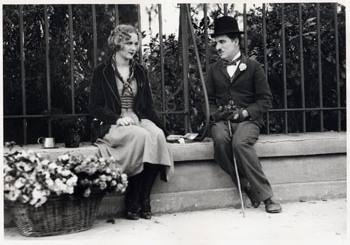
Charlie first meets the blind flower girl

But aside from the superb technicalities, the dramatic lighting, and the slapstick choreography, what anchors the film and raises it above mere madcap film-making is the story itself.

The Little Tramp has fallen in love with a blind flower girl, and she with him, but she mistakenly believes he is a millionaire. (When we–and Charlie–first meet her, a fleet of fancy cars had just pulled up to where she sells her wares. She believes that Charlie belongs with them. Several other coincidences add more credence to her misunderstanding.) As the story moves forward,  Charlie goes to great lengths to get her money not only to avoid eviction but to take part in a experimental cure for blindness, and his efforts finally land him in jail.

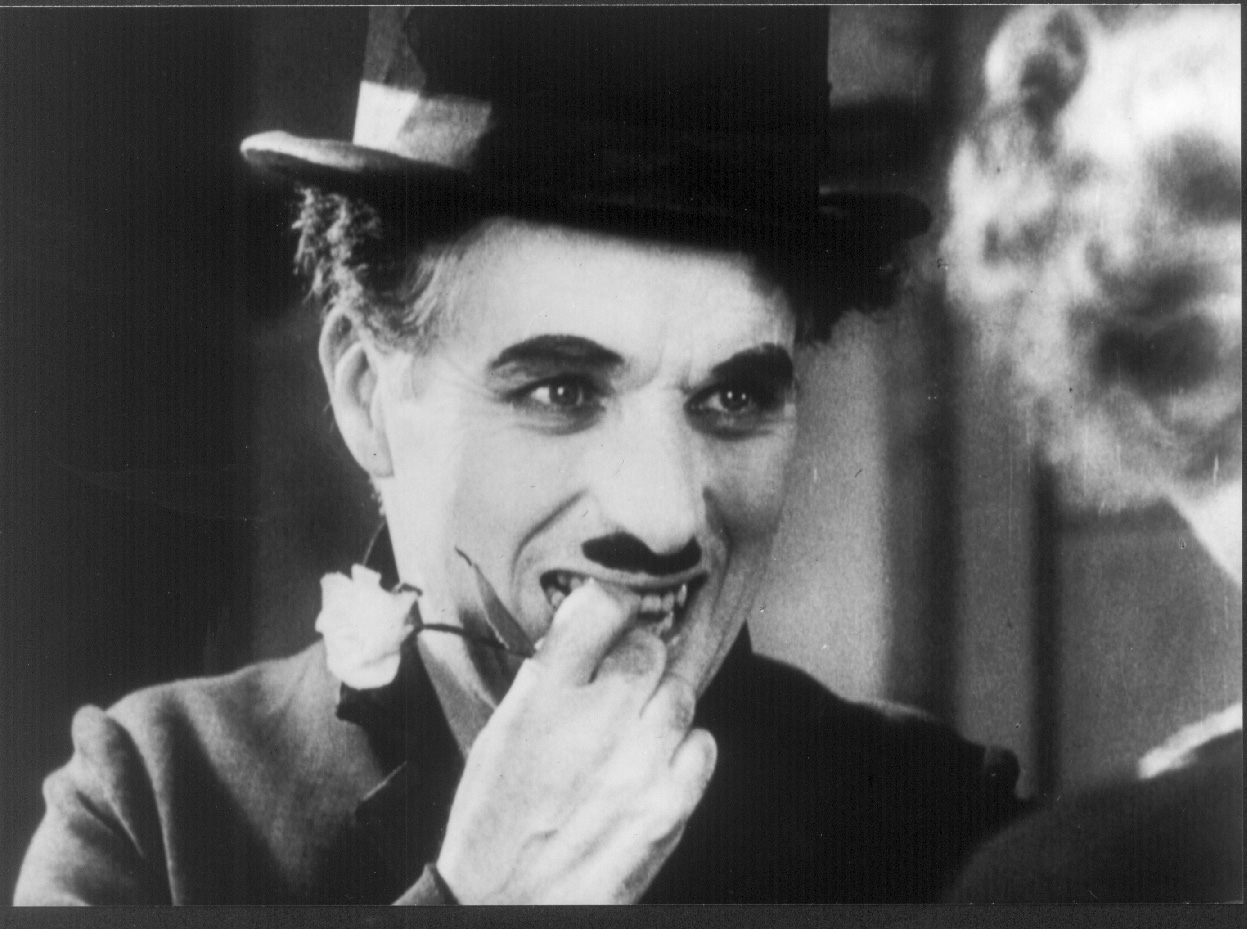
By the time  he is released from prison, she is cured. She can see.  And yet the rich prince she had imagined as her benefactor is a far cry from the Little Tramp she notices at the end. The scene where this is discovered has been called one of the high points of movie making.  The acting is all in the face. It is subtle, internal and real. (see the picture at the top of the post, look at Chaplain’s eyes, imagine what he is thinking.) And it is very hard not to beome a little teary when viewing it. It is not cloyingly sentimental–and it very well could have been. It is perfect.

The Little Tramp was a masterful creation. Always gentle, polite, and kind, he often acted as a foil to the crassness and cold-heartedness of modern life. From his position at the bottom of the social ladder, the Little Tramp sweetly pointed out the foibles of those above him.

Here is a delightful clip from the movie Chaplin in which Chaplin (played by Robert Downey, Jr.) creates the character of “the Little Tramp.”  Enjoy.