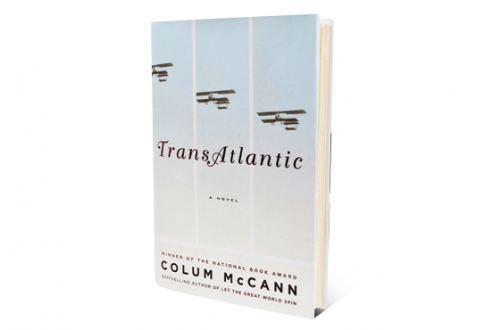
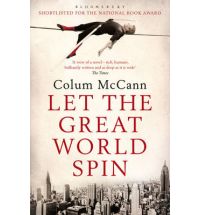
Around this time last year, a friend of mine lent me a paperback copy of Colum McCann’s Let the Great World Spin. It was nothing short of masterful, an eloquent novel filled with beauty, wit, humor, and wisdom–and a helluva story as well. A variety of personal histories are threaded around the dazzling 1974 tight-rope walk of Philippe Petite between the World Trade Towers and set against the more resonant chapter in the Towers’ history, with the tragedy of 9/11 looming in the background. The writing was dizzily beautiful, every page an extraordinary read.
Literature
Quote of the Week #13: July 21, 2013
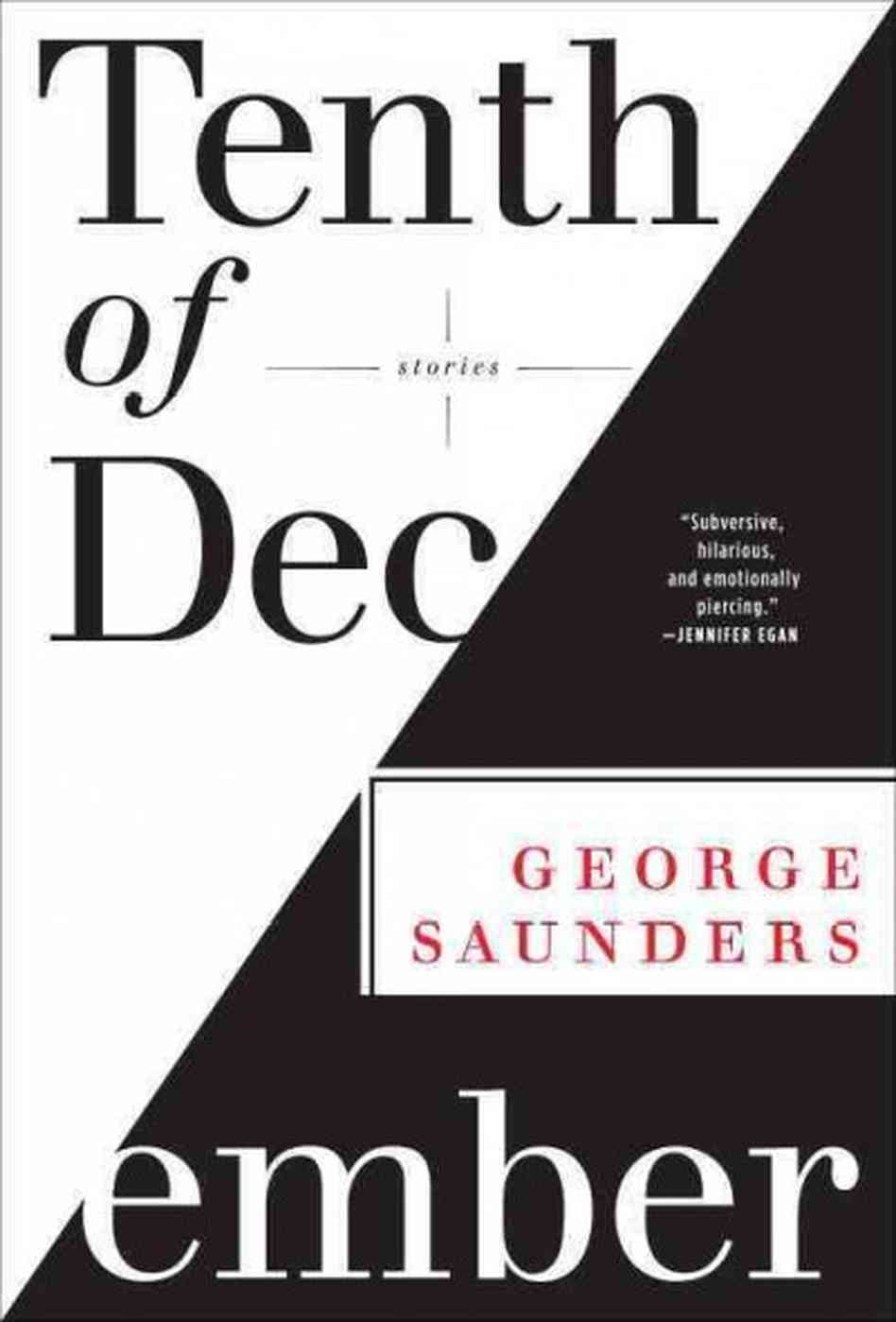
Book Review: Tenth of December by George Saunders
To be truthful, I was put off by all the hype that surrounded Tenth of December when it was released back in January. Articles about the short stories and their author, George Saunders, were everywhere. All the major papers, magazines and blogs were praising, lavishly, both the collection and Saunders himself. All of sudden I was seeing articles about or by Saunders from years past, all floating to the front, all becoming part of this giant group-hug! He was compared to Twain and Flannery O’Connor, to Vonnegut and Pynchon, to Bartheleme and Welty. Even the late David Foster Wallace was corralled in for a blurb on the inner covers.
And now, I can say, all the hype was legitimate and deserved. Tenth Of December is something special. 
The longest story in the book “The Semplica Girl Diaries” begins with a father, in the near future, starting a diary. As he begins, he recounts his fears and worries for his children, fears that they are growing up with so much less, materially, than their classmates. He also reveals his own anxieties about his failure as a provider of these consumer necessities. During the course of his journaling, the family is teased with a windfall and then pushed towards ruin. Oddly enough, strung throughout the story, literally, are third-world women who sell themselves in America as lawn ornaments, putting his own focus on material success in a very skewed light.
Other fathers–or father figures– appear throughout the stories. In the first story, “Victory Lap,” a young boy saves a girl who is being abducted. But he second guesses all of his heroic actions in terms of what his father would say about his getting involved and not completing his chores. At the same time, the perpetrator keeps worrying about his own father–and while carrying out his violent abductions–worries whether his father would be proud of the way he is doing things.
In a very short piece, “Sticks,” an aloof, mean-spirited and inaccessible father dresses a crucifix-like contraption for every holiday: Santa for Christmas, a groundhog for February 2nd, a soldier for Veterans Day, etc. When his wife dies, he dressed the pole as Death and makes a memorial to her. His own–and the sticks’–ending is seemingly inconsequential, but full of pathos nevertheless.
On the whole, Saunders’ stories are full of dysfunctioning families trying to succeed in a world of plastic values and overwrought commercialism. It is filled with simple people having difficulty coping in an increasingly complicated world. This world he describes is a bit off-kilter, but it all seems unnervingly familiar. And his telling of these tales is enjoyable and unforgettable.
Life and death, hope and despair, pride and self-loathing: these are the topics that Saunders addresses but in a way that is funny as often as it is heart wrenching, a way that is wryly observed, emotional and thought provoking.
All that hype was well deserved after all.
Book Review: The Flashman by George MacDonald Fraser
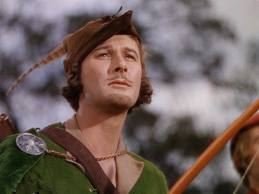
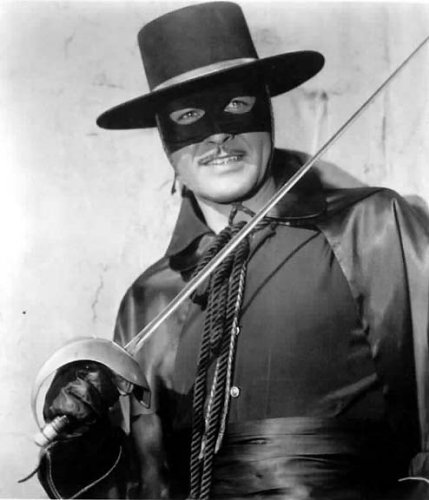
As a child I had two heroes–characters whom I would pretend to be, jumping off walls, running in alleys and woods, with friends or by myself. The one was Robin Hood. The other was Zorro. These were my heroes–and I’m sure for a variety of reasons. They both were rebels, outsiders fighting against established tyranny. (The evil Prince John in the former case, Spanish rule in the latter.) Robin Hood fought for the little people (the put-upon Saxons) as did Zorro (the colonized Californians.)
Both were dashing swashbucklers and always more cunning and cleverer than their enemies. They were both perfect role models for a young boy, for in addition to their skill with swords and bows and horses, in addition to their noble goals and pure hearts, they were gentlemen. And for some reason that appealed to me. (Probably for the same reason why I believe God should sound like Cary Grant in all portrayals!)
As I grew and my reading advanced, I found other such characters that appealed to me: The Three Musketeers, The Scarlet Pimpernel, even Charles Darnay and Sydney Carton in A Tale of Two Cities. Unwittingly, I was drawn to those characters who punctured the established hypocrisy and tyranny and who stood up for the little guy, the oppressed, the wronged.
And then I discovered Tom Jones. His skills were nowhere near as impressive as the others–although he was a great sportsman, a horseman, and a lover of life–but his charm and his concern for the weak and put-upon were similar. And he was the ultimate outsider–he was a bastard, found lying in the bed of the benevolent Squire Allworthy. Tom’s enemies were the hypocritical upper class who resented his being taken in by the squire, and who, in a way, both condemned and envied his life-loving ways. He was easy to root for. Certainly, he had his faults, but even these faults could be explained away. And in the end, he one-upped the toffs who had persecuted him–affirming life over priggishness.
So where is this all taken me? To a “hero” I can’t abide.
A friend of mine, a writer and comic in Brooklyn, had often asked me if I had ever read any of George MacDonald Fraser’s Flashman novels. I hadn’t, but promised I’d look into them. But I never got around to it. Finally, as a gift last Christmas, he bought me the first novel, Flashman.
I wanted to like it. But the hero was different from my past heroes in an important quality: he was part of the ruling classes, an imperialist, an Englishman lording it over the Empire on which the “sun never set.” A bit of a wild oat–the character Sir Harry Paget Flashman, first appeared in Thomas Hughes’ Tom Brown’s Schooldays, as one of Tom’s classmates who was expelled for drunkenness– Flashman desires to tell his side of the story and move forward. (Indeed, Fraser cleverly takes this very minor character, fleshes it out and runs with it–for more than a dozen novels.) But even Flashman describes himself as “a scoundrel, a liar, a cheat, a thief, a coward—and oh yes, a toady.”
Upon expulsion from school, he seduces (and beats) his father’s mistress; his father buys him a position in the army, and from there his (mis)adventures begin. These adventures could be a lot of heroic fun (ala Barry Lyndon), except it is all coming from the wrong perspective–from the view of those in charge. And because of that assumption of superiority, Flashman is as prejudiced and arrogant as any British officer could be at the time. And I found it uncomfortable to read. The Indians and Afghans and Irish and Italians are all stereotyped and all looked down upon and insulted. And they fare much better than the women; for the women–no matter what nationality–are not even human but mere objects for Flashman’s seductions. And he is completely unfeeling in his disposal of them.
Exotic locales, derring-do (though Flashman runs from more battles than he partakes in), and a flip irreverence is often a fun entertainment. But my heroes fight from the bottom up…not the other way around. Falstaff, who holds many of the same characteristics as Flashman, is much more likeable–but that can be because he is not an imperialist, a man who believes his own entitlements. To be honest, I simply don’t like Flashman, never mind the book.
♦ ♦ ♦ ♦ ♦ ♦ ♦ ♦ ♦ ♦ ♦
Ironic coincidence….
There is a scene in Flashman (1969) when Flashman has been transferred from Calcutta to Afghanistan. He is explaining the condition there. Ironically, it sounds very much like Afghanistan history over the past four decades (if you change the nationalities of the forces involved). Here is what Flashman says:
“The reason we sent an expedition to Kabul, which is in the very heart of some of the worst country in the world, was that we were afraid of Russia. Afghanistan was a buffer, if you like, between India and the Turkestan territory … and the Russians were forever meddling in Afghan affairs.”
Then, ” the British Government had invaded the country, … and put our puppet king, Shah Sajah, on the throne in Kabul, in place of old Dost Mohammed, who was suspected of Russian sympathies.”
“I believe, from all I saw and heard, that if he had Russian sympathies it was because we drove him to them by our stupid policy; at any rate, the Kabul expedition succeeded in setting Sujah on the throne, and old Dost was politely locked up in India. So far, so good, but the Afghans didn’t like Sujah at all, and we had to leave an army in Kabul to keep him on his throne. It was a good enough army,…but it was having its work cut out trying to keep the tribes in order, for apart from Dost’s supporters there were scores of little petty chiefs and tyrants who lost no opportunity of causing trouble in the unsettled times, …”
I don’t know about you but this summary of the world in 1839 sounds eerily familiar to me.
Movie Review: Much Ado About Nothing dir. Joss Whedon…another inevitable comparison
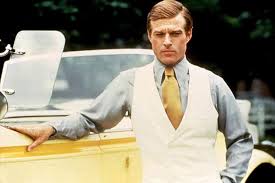
The summer of 2013 began with the release of Baz Luhrman’s The Great Gatsby, and everyone was in a race to compare it with the Robert Redford version from the 1970s. To be truthful, I never cared for Redford as Gatsby, but thought the rest of the cast was spot on. The opposite goes with Baz Luhrman’s film, in which I prefer DiCaprio’s Gatsby to the rest of the cast.
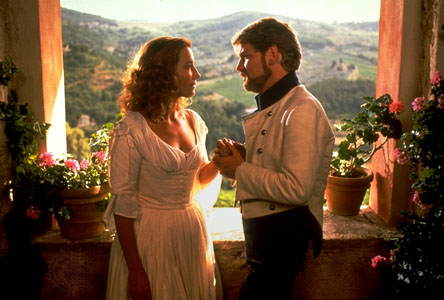
But we forgot about all that–and rather quickly– before the summer actually began, and now we have a new version of another “classic” work of literature: Much Ado About Nothing, directed by Joss Whedon, which must undoubtedly be compared with the Kenneth Branagh version of 1993.
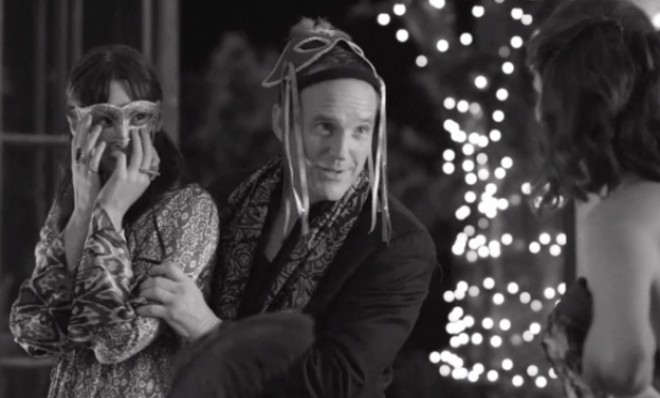
The story behind Whedon’s project is fun. It was something that he had long wanted to do, and finally his wife suggested that instead of going away on vacation for their 20th-anniversary, they make the film. And they did…entirely in their gorgeous home. Whedon gathered many of the actors who had played in his previous productions, and the first that Hollywood knew about the film was when they announced that photography had been completed. They had wrapped things up in 12 days.
Whedon chose to film in black-and-white which gives the film a stylish patina. And yet, I found it drained some of the emotion from the story. Benedick (Alexis Denisof) and Beatrice (Amy Acker) are likeable enough, and quite funny at times, but they shine mostly when they are apart…there are few sparks when they are together. Invariably, one has to compare them to Kenneth Brannagh and Emma Thompson–whose fire (both on film and personally) was palpable. And the golden sunlight of Tuscany, the shimmering palette of the entire film, gives Brannagh’s version a much richer patina.
Whedon’s actors all handle the dialog well and naturally, and after a few minutes you might even forget you are listening to Shakespearean English.
In both films, the constabulary are very good–verbal slapstick and mental banana skins. Nathan Fillon’s doltish Dogberry in Whedon’s film is every bit as memorable–and laugh-inducing– as Michael Keaton’s dimwitted portrayal in the 1993 version.
And the performance of Clark Gregg, as Leonato, Hero’s father is likeable and believeable. Much of the audience will quickly forget that he is Agent Phil Coulson of the Avenger’s franchise (also by Joss Whedon).
However, there are a few choices that Whedon made that I am not so sure about. The character of Conrade, for example, which was played by Richard Clifford in the Brannagh version has now been changed to a female role, played by Riki Lindhome. This in itself is usually not a problem. For instance, in Michael Almareyda’s Hamlet (starring Ethan Hawke), Marcello was changed to Marcella and played by Paula Malcomson. But nothing is changed, the part is minor, and her lines are few. In Whedon’s Much Ado…, the Conrade character is quite sexy and there is even a bit of titillating bed-play between her and Don John (Sean Maher), although the words of the play would not lead us to think so.
There is also a scene that is not in the play–during the opening credits–where Benedick sneaks out of Beatrice’s bed in the early morn. Beatrice lies there feigning sleep, but slyly opening her eyes as he dresses and leaves. We are left with the vision of her wide awake in bed, with eyes that speak of her aloneness. If this scene is supposed to prepare us for the friction between the two when the play proper begins, it fails.
Whedon shares writing credits with William Shakespeare, and, to be honest, he does a very admirable job. He has cut judiciously, and the only time he has changed the language was in Act 2 where he excised an anti-Semitic remark and changed it to a statement about love’s foolishness. The new line flows seamlessly into the original.
In all, I prefer the Brannagh version, but that is not to dismiss Whedon’s, which also I like very much. Whedon’s Much Ado About Nothing is inventive and imaginative and aimed at a whole new audience. The filming is crisp, fresh, and confidant–and quite stylish. Whedon has successfully taken Shakespeare out of the classroom and made it very hip, without destroying the story at all. It is certainly worth viewing…and more than once. If this was his gift for his 20th anniversary, I hope he tackles another Shakespeare title before his 40th anniversary comes around.
Here is the very elegant and engaging trailer:
Yes, Yes, Yes: Affirmation ala Molly Bloom
yes I said yes I will Yes.
Last Sunday was Bloomsday, the international celebration of James Joyce’s novel Ulysses.
Dublin had its usual extravaganza with crowds retracing Leopold Bloom’s wanderings and with women’s hats that rivaled those worn at major horse races (remember to bet it all on “throwaway.”) In New York, the complete novel was read outside writer Colum McCann’s tavern, aptly named Ulysses. And at Philadelphia’s Rosenbach Museum and Library, (where Joyce’s manuscript is housed) there was, beside the usual full reading, an unusual installation.
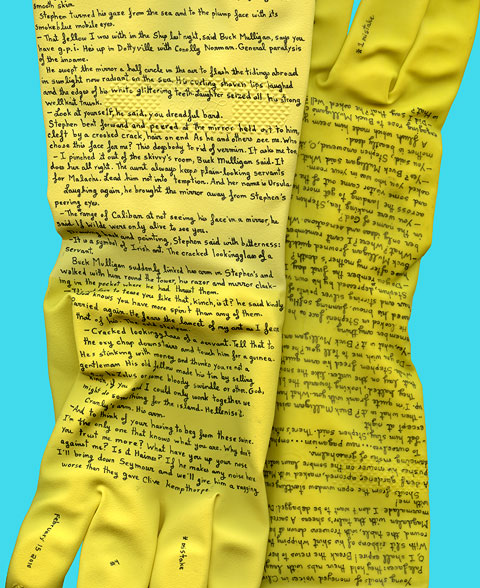
The artist, Jessica Deane Rosner, wrote out the entire text of the novel on 310 yellow, rubber, dish gloves and suspended them from the gallery ceiling in a very Joycean spiral. Rosner stated that it was Joyce who showed us that the things of everyday life–including the muck and the un-pretty–are the very essence of and inspiration for Art.
And so she used the mundane kitchen gloves to carry Joyce’s text–a text replete with the beauty of life’s mundane grime and natural effluences.
But that’s not what I want to talk about today. …
I want to talk about the last seven words of the novel, the strong affirmation that ended Molly Bloom’s long nighttime reverie in the early hours of June 17, 1904.
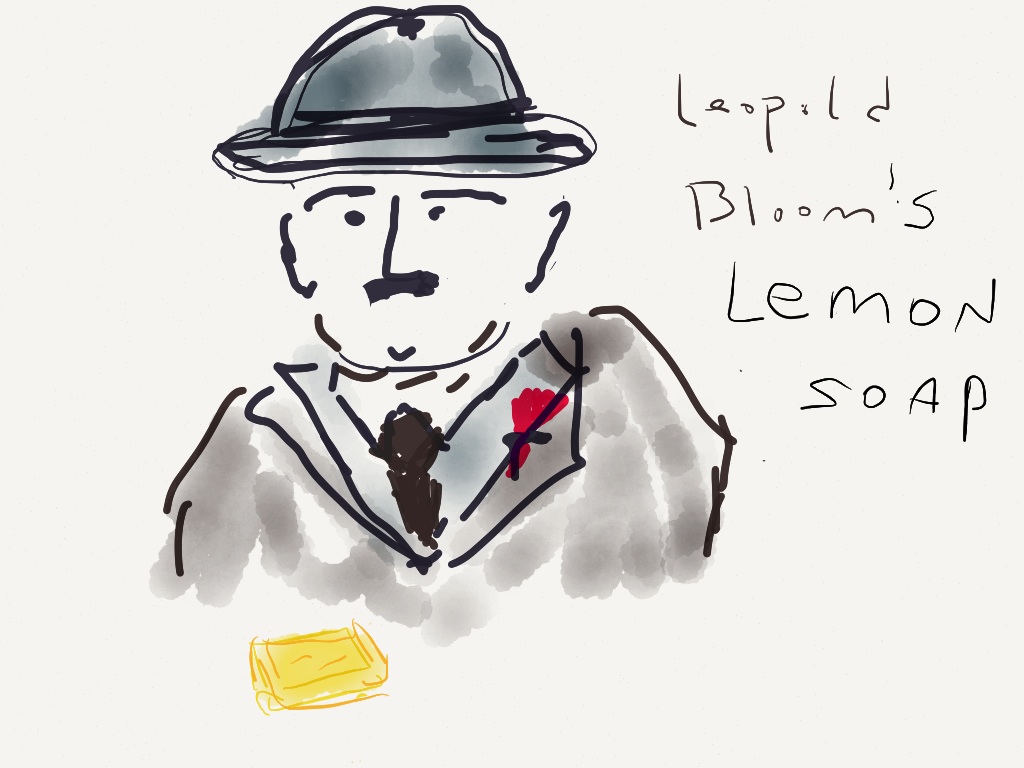
It is this affirmation, the “yes I said yes I will Yes” that makes Ulysses so important. For, if ever there was a modern Everyman, it is her husband, Leopold Bloom. Leopold the ridiculous, the schlump, the man she has cuckolded just hours before. Leopold the grieving, the masturbatory, the lecherous, the neighborly, the isolated, the humane, the persecuted. And to him–and he is each of us– Molly proclaims a resounding Yes!
And we all need to do more of the same. To say “Yes.”
I have a good friend, Ken Campbell, who served thirteen long months in Vietnam before becoming one of the leading figures in the Vietnam Vets Against the War movement. This fall the two of us went together to see Samuel Beckett’s Endgame. I wallowed in the existential bleakness; he did not. He enjoyed the company. He had spent too long in Vietnam, wondering every night if he was going to live another day, and today he has no time for Beckett’s desperate vision.
He sides much more with Molly Bloom’s “Yes”!
So here’s to saying “yes.” Saying “yes” to all the myriad things and people that life places in front of us: like the noodle shop at 56th and 6th in NYC… the children’s fountain on the Ben Franklin Parkway…the surprise of 310 yellow rubber gloves hanging from an elegant ceiling.
I can’t write, so I read Denis Johnson…
…and now I know I can’t write.
At times I feel I’m kidding myself. Who do I think I am pretending to be a writer, a poet, a thinker? I am just an everyday slug without the discipline to get anything really worthwhile done. And discipline is what you need. How many times do we hear that just showing up is 90% of the struggle? Just do the work, day in and day out, we are told, and the creation will come.
I don’t do the work.
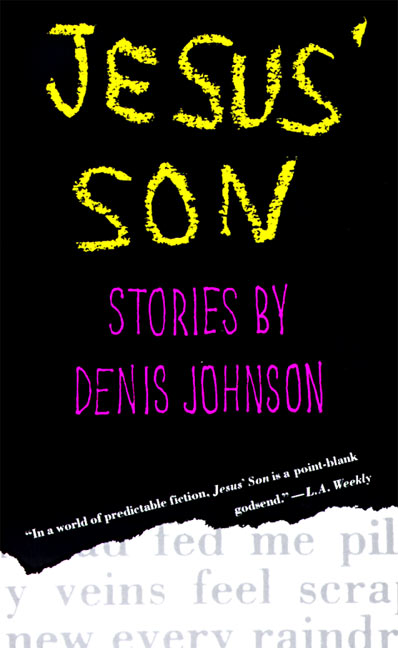
And so as I sneak off for my hour-and-a-half, two hours, I try to jump-start my atrophied mind by reading for a while at first. Unfortunately today, I began re-reading Denis Johnson’s Jesus’ Son, a collection of eleven wise, lively, brutal, intense, truthful short-stories.
I’ve never felt so washed up in my life!
The first story, “Car Crash While Hitchhiking” is riveting. It’s like a very bad car accident that you can’t turn away from. The narrator, the hitchhiker, has been on the road from Texas to Kansas City. The first driver fed him amphetamines and Canadian Club; the second ride was a hashish filled bubble to the city limits; and the third ride was the fateful ride–a family of four with a nine-month old baby on the back seat, destined to be brutalized in a head-on collision. The narrator is flawed and generous and seemingly prescient, for he seems to know that it is this family that picks him up that will suffer. His final words long after the car accident and while being admitted to the Detox at Seattle General are puzzling–if not telling: “And you, you ridiculous people, you expect me to help you.”
God, could it be Jesus’ son?
Much later in the collection–one could label Jesus’ Son an episodic novel rather than a collection of short stories with its single narrator and progressive (though disjointed) chronology–the narrator is in detox and is shaving another man. (The drugs they are giving him have steadied his hands to such a degree that he has taken to shaving fellow patients.) Here is part of the scene:
Just below one cheekbone, Bill had a small blemish where a bullet had entered his face, and in the other cheek a slightly larger scar where the slug had gone on its way.
“When you were shot right through your face like that, did the bullet go on to do anything interesting?”
“How would I know? I didn’t take notes. Even if it goes on through, you still feel like you just got shot in the head?”
But they aren’t Bill’s only wounds. “I’ve been shot twice,” Bill reveals. …”Once by each wife for a total of three bullets, making four holes, three ins and one out.”
This is the world of Jesus’ Son. There are bullet wounds and heartaches. There is addiction and abortion, love and lovelessness, disease and car-crashes and murder. Johnson once said about his stories “Some of us go to the movies to see everybody shooting each other, and then there’s another bunch who actually shoot each other.” It is this latter bunch that people Johnson’s stories. But in addition to “shoot[ing] each other,” they seek salvation, search for love, and try to survive on the wrong track that life has set them on.
Intense and unsettling, witty and thrilling, the stories are both unforgettable and beautiful. Something any writer should aspire to.
So, Another Weird Coincidence…
So, I had sneaked out to this coffee house to do this wee bit of writing and reading. And I was considering saying something about the title–Jesus’ Son–and how it was taken from the Lou Reed song “Heroin.” I had just decided against it when Lou Reed’s “Sweet Jane” comes on the sound-system and that sealed the deal. When I mentioned the coincidence to the guy at the counter, he replied, “Lou is everywhere.” I didn’t know, hah!
So, if you want, here’s a recent version of Lou Reed singing “Heroin” from where the title came:
Book Review: Deadman’s Pedal by Alan Warner…coming of age in Scotland
Alan Warner belongs to a certain group of writers who came of age in Scotland in the last decades of the 20th century. Those with more recognizable names would included Irvin Welsh who gave us Trainspotting, James Kelman with his unique voice of urban rootlessness, Ian Banks (who died last week) and A.L. Kennedy with their distinctive fictions, and Ian Rankin who gave us Inspector Rebus and his Edinburgh detective novels. Among these, Alan Warner seems the one who has gained less recognition over here in the States. And that is a shame.
Warner’s first novel Morvern Caller was a magnificent tale of a young woman who steals her dead boyfriend’s novel from his computer, changes the name on the manuscript and quickly and decadently burns through the advance that the novel garners, moving from her dilapidated Scottish town through the ravages of the European rave scene. A later novel with the unfortunate title The Sopranos follows a group of high school choir girls from a rural western outpost on its class trip to Edinburgh. Both novels are memorable for their voice, for the seeming accuracy of Warner’s portrayals of 16 and 17-year olds. And both are fun.
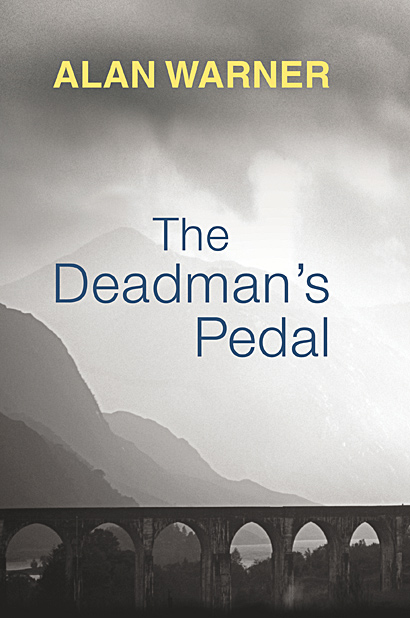
Warner returns to the same locale from which Morvern Caller and the girls from The Sopranos escape in his newest novel, The Deadman’s Pedal. And again, he is dealing with characters of a certain age, characters who are between childhood and adulthood, characters who are innocents even as they are losing their innocence.
The novel takes place around “the Port,” Warner’s fictionalized treatment of the town of Oban in western Scotland and is held together by the train line that serves the area and which is dwindling in impact. In fact the title “Deadman’s Pedal” refers to a device that on a runaway train is set to brake in the case of an engineer losing consciousness.
Simon Crimmons is turning sixteen and wants to quit school, get a motorbike, and get a job. He is considered well-to-do by his companions because his father owns a trucking company, but wealth is a relative thing, and the Crimmons family is certainly working class in comparison to the lordly Bultitude’s. In fact, Simon, the town and the novel itself are greatly aware of class distinctions. And this is a running theme throughout.
Yet it is in terms of young Simon’s desires that the class distinctions are most evident. For he is torn between the beautiful and always available Nikki Caine from the Estate houses and the enigmatic Varie Bultitude–of the town’s legendary, aristocracy. Managing such affairs is always risky and managing one between such two disparate worlds is like being on a run-away train.
When Simon mistakenly gets a job as a trainee train driver–he thought he was applying for a hospital position–he discovers the extent of these class divisions. He says to Vaire, “I’ve got the whole railway telling me I’m not working class enough and I’ve got you telling me I’m not middle class enough. This country needs to sort out the class question. As far as it applies to me.”
And to make matters more difficult, Simon’s father is caught up in it as well. He sees his son’s work on the trains as a betrayal, as his son’s working for a competitor that could ultimately put him out of business. It’s never easy being sixteen. It seems much harder for Simon Crimmons.
The joy of the novel–apart from the very real depictions of young desire, lust, and confusion–is the language itself. Some may find the dialect off-putting at first, but it quickly becomes second nature, but the narration itself is pure genius: A funeral for a dead train man is told with humor, nostalgia and poignancy; Simon’s first kiss is described as sweet, anxious, innocent and thrilling; the grounds of the Bultitude property are given an almost gothic eeriness and grandeur. (The Bultitudes are said to bury their dead in glass coffins…the aristocracy is always with us!)
Early in the novel, Simon and his friend Galbraith show Nikki the secret hideout they have built out in the wilds. They make her promise not to mention it to the other boys knowing that it is a childish thing and that the others would tease them for it. It is here that Simon and Nikki first have sex– in a short scene that is both innocent and knowing. It is a scene–positioned in his boyhood escape– that captures the very tension of this novel, the tension between innocence and adulthood, between desire and attainment, between the people and their landscape.
Alan Warner is an extraordinary writer. That his name is little known outside Britain is an injustice, but one that may be set aright by Deadman’s Pedal–a novel that is larger than its Scottish setting, a novel that is universal in its wonders, its desires, and its struggles.
Book Review: Ancient Light by John Banville
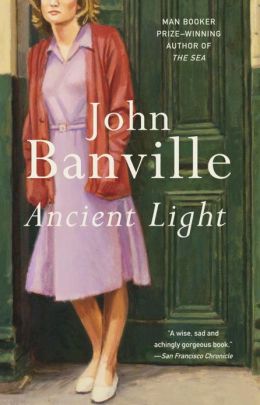
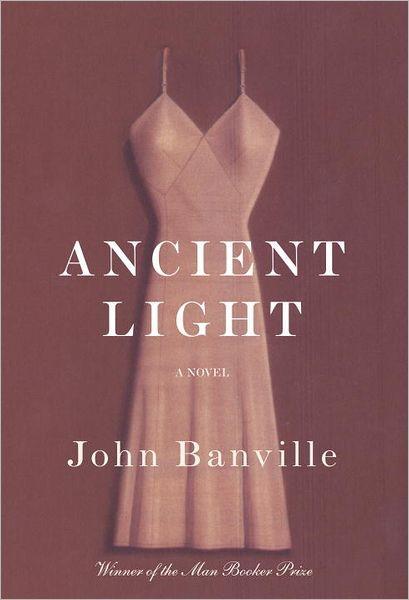
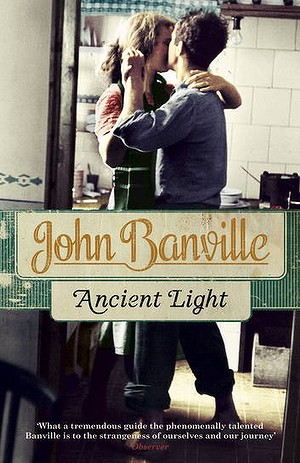
It seems appropriate that there are three book-covers for John Banville’s Ancient Light. For confusion–or perhaps”uncertainty” –is the appropriate word for the various threads that form the cloth of Banville’s novel. Weaving together three stories (at the very least), Ancient Light details the aging actor Alex Cleave’s misted memories and the challenges of his present life.
Particularly important in his mind are the affair he had when he was 15 with the 35-year old mother of his best friend, his daughter who killed herself in Italy ten years before the novel begins, and the young “movie-star”with whom he–a respected stage actor– is filming his first movie. And hovering in the background, drinking tea in the kitchen while Cleave writes these “memoirs” is his wife, Lydia, who is struggling with their daughter’s death in her own way.
So who are the women represented on the book covers? Is that Mrs. Gray, his first love standing in front of the shop? Or his daughter waiting impatiently for his arrival? Is that the actress Dawn Davenport’s slip? Or Mrs. Gray’s? Or his daughter’s? And who can that be dancing? Mrs. Gray and young Alex seems obvious. But could it also be the characters that Cleave and Davenport are playing in their film? Or his daughter and the mysterious man she was working for (and whose child she was carrying) when she flung herself into the rock-strewn sea?
That we can not be sure is part of the joy and wonder–and admiration–one feels in reading Ancient Light. Banville is an exquisite writer–and I do not use that word lightly. Character description, dialogue, setting, interior life–all are rendered with keenly sensitive language and thoughtfulness. At one point, the sky is the color of “wetted jute“; at another, it is described as “a layering of bands of clay-white, peach, pale green, all this reflected as a vaguely mottled mauve wash on the motionless…canal.” Some of the writing is heart-wrenching in its perfection; some is amusing. Here is Cleave describing a “researcher” sent by the movie company to help him with his role:
Billie, however, is obviously a native of these parts, a short pudgy person in, I judge, her middle to late thirties. She really is of remarkable shape, and might have been assembled from a collection of cardboard boxes of varying sizes that were first left out in the rain and then piled soggily any old way one on top of the other. The general effect was not improved by the extremely tight jeans she was wearing, and the black polo-necked jumper that made her large head look like a rubber ball set squarely atop those precariously stacked cartons.
Here is what the aging Alex has to say early about love:
I should like to be in love again, I should like to fall in love again, just once more.
He is aware of both the poignancy of those words and the sadness of the thought in the presence of his wife.
What Ancient Light is most surely about is the past. Cleave–believing he is nearing the end of his career–is enamored by it, by the love affair with Mrs. Gray (he notes the inexactness of this phrase) and by the death of his daughter.
Because I am getting old and the past has begun to seem more vivid than the present, he states, and then later, when he learns of what he mis-remembered, he concludes that often the past seems a puzzle from which the most vital pieces are missing.
When in Italy with Dawn Davenport he meets a mysterious Argentinian, (a ghost? his doppelgänger?) who over a bottle of wine says this too him:
“Even here,” he said, ” at this table, the light that is the image of my eyes takes time…to reach your eyes, and so it is that everywhere we look, everywhere, we are looking into the past.”
But the past is slippery for both Cleave and the memoir he is writing. He notices instances when the progression of time seems to slip, to miss a cog:
There are moments, infrequent though marked, when it seems that by some tiny shift or lapse in time I have become misplaced, have outstripped or lagged behind myself.
Cleave’s stories ultimately come together in subtle and satisfying ways. There are coincidences, but Cleave does not believe in coincidences. There are “apparitions,” though Cleave is reluctant to but wishes to believe in an afterlife. (Twenty years ago, Banville did write a novel Ghosts.) There is doubling and there are doubles. There is a subtle knowledge of and reference to Greek mythology, and a faint feeling that the ancient gods are still at work in the lives of these mortals. And it is all done in a lush, rich style that is the very antithesis of modernity’s spare and sparse writing.
John Banville is an author who writes intelligent and dense books that deserve a much wider readership. His novel The Sea won the Man Booker Prize (much to the dismay of critics who felt it wasn’t commericial enough.) And lately he has also been writing detective novels under the pseudonym Benjamin Black. And I just learned, when I mentioned Ancient Light to a friend that this novel is in fact the third of a loose triology featuring Alex Cleave, his wife Lydia and their daughter Cass.
I will have to hunt them down.
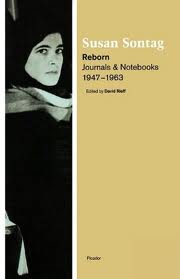
Book Review: Reborn: Journals and Notebooks 1947-1966 Susan Sontag
There is a danger in reading memoirs, diaries, journals. Certainly, there are times when our angels are shown to have feet of clay. Or other instances, when we weigh the turmoils and angst of a particular life with the end product that impelled you to read the memoir in the first place.
But with Sontag it is quite, quite different.
Next to even her young self, I feel so inadequate, so shallow, so wasteful of time.
Here is a young woman–14 years of age when the journals begin–embarking on a intellectual career that would put most of us to shame. Her reading lists, her “to-do” lists, her debates with herself, her analysis of events, readings, concerts and people she meets, her experiences, all are more fervent, more intelligent, more thoughtful in the years between her 14th birthday and her 30th, than mine have been for most of my life.
I teach a group of extremely bright 18-year old boys. They have great intelligence, and some are quite creative. But every so often they need to be reminded that their superior intelligence is frequently measured within the very small pond of our school. Here’s what I read them from Sontag’s journal:
…Yet we do exist, + affirm that. We affirm the life of lust. Yet there is more. One flees not from one’s real nature which is animal, id, to a self-torturing externally imposed conscience, super-ego, as Freud would have it–but the reverse, as Kierkegaard says. Our ethical sensitivity is what is natural to man + we flee from it to the beast…
I ask them to describe the person who would write this in his or her personal journal. And they are always far off…in both gender and age. Sontag wrote this (a snippet of a much larger journal entry) two weeks after she had turned 17! Already her depth of reading and understanding and active thoughtfulness is evident.
Immediately in this first volume of the journals, one meets a brilliant, thoughtful intelligence. She attended Berkeley at the age of 16, transfered to University of Chicago, married Phillip Reiff–a sociology professor–at 17, taught at the University of Connecticut when she was 19, and attended graduate school at Harvard, where she got her degree in philosophy and theology. And throughout these years, she recorded her thoughts and criticisms and interpretations, as well as her fears, her doubts and her insecurities. As her marriage began to falter, she received a fellowship to Oxford and then moved to Paris. When she moved back to New York in 1959 (26 years old), her marriage was dissolved and she had gained custody of her son. Established in New York, she began teaching at various colleges, completed her first novel, The Benefactor, and witnessed her reputation as part of New York’s intelligentsia begin to grow.
These are the years covered in the volume. Aside from the inquisitiveness, interpretation, and analysis of what she reads, sees and watches (she was a rabid film-goer), there is the struggle of understanding who she was. The marriage was unsatisfying, the lovers often hurtful, and in reading the journals we see a young woman trying to discover herself and come to terms with her own individuality, her own bi-sexuality, her own identity. There are times when one feels she is too hard on herself…when one wants to warn her, NO, this is going to end bad, but then again, one can’t.
Beginning when she was 14 and ending when she was 30, the journals are remarkable for their honesty and the peek into her rigorous mind. But at the end, one is moved by the ever-going struggle between her sexuality and her intelligence, by the vulnerabilities and insecurities she reveals in her two major love affairs with Harriet Sohmers Zwerling and Irene Fornés. For her extraordinary mind struggled continually to understand the extraordinary pull of the flesh.
Her last two entries for 1963 read:
The intellectual ecstasy I have had access to since early
childhood. But ecstasy is ecstasy.
Intellectual “wanting” like sexual wanting.
♦ ♦ ♦ ♦ ♦ ♦
Reborn is the first of a proposed three volumes of journals. The next volume–As Consciousness Is Harnessed to Flesh– covers the years 1963 to 1964, when Sontag develops her reputation, her political activism, and her writing. It is now on my “to-read” list.