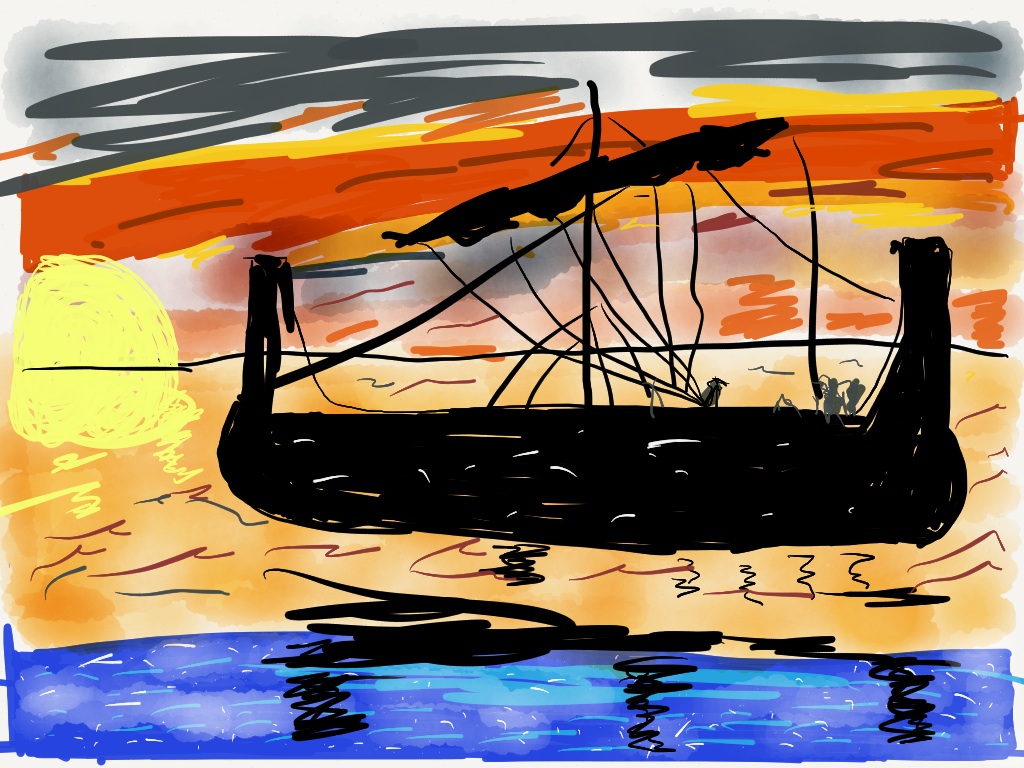
illustration 2013 jpbohannon
illustration 2013 jpbohannon
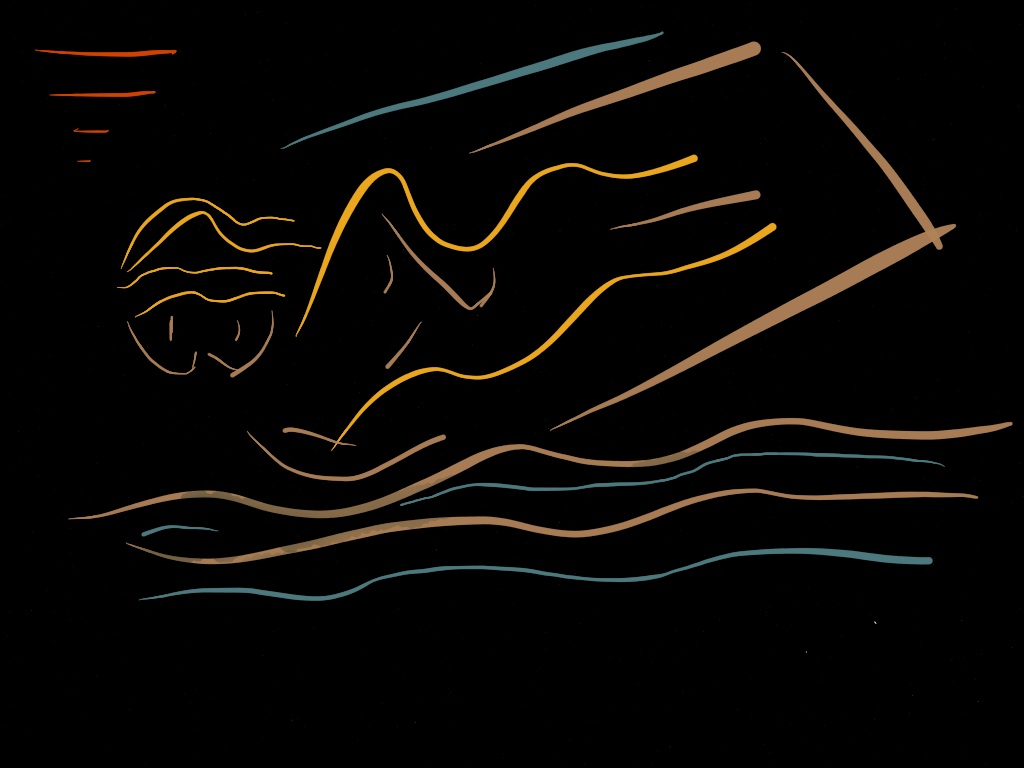
illustration 2013 jpbohannon
My reading list these days is erratic and wide. I am picking up things that pique my interest without any plan, without any connection to what I previously had been reading. But that’s okay for these summer days.
A colleague had forwarded an article from Maria Popova’s brain pickings blog. It was a review of Rosalind D. Cartwright’s book on the role of sleeping and 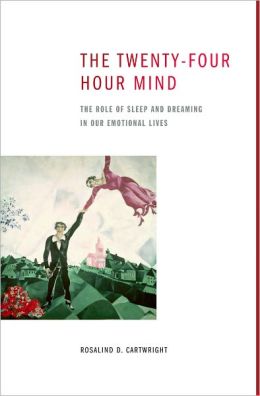 dreaming in our lives. The review (like nearly everything on “brain pickings”) was intriguing and interesting. So of course, I had to find it in our library.
Cartwright is one of the preeminent scientists studying sleep–a relatively new area in scientific research. Her thesis is that sleep is essential to our health, particularly to our emotional health, and that the modern penchant (and desire) for sleeping less is damaging both physically and psychically.
Indeed, the mind does not sleep when we sleep–it goes into over-drive, cataloging memories, cementing new knowledge, mapping neural pathways. Cartwright states:
We can now begin to answer the question, “Where do we go when we got to sleep?” Clearly we do not sink into a void, but instead into a mental workshop where emotionally important information is kept active until it is saved in neural networks. When the highly activated REM sleep comes along, perceptual dreams reveal the matching of new information to old… . Through the night, from REM to REM, new information is integrated, drawing together more and more remote associations.
She continues that there is short-term functionality to these rhythms– “down-regulation of negative mood” –and long-term functionality. The long-term benefits, she lists as “continuously test[ing] and modify[ing] those non-conscious habitual schemas that make up our self-system and influence our behavior choices, based on our emotional evaluation of whether the new experience supports or challenges our present self-definition.”
This is a lot of responsibility thrown onto a good night sleep, and Cartwright’s argument is that we, as modern human beings, are sabotaging that essential need.
Aside from emotional turmoil–and Cartwright’s expertise is on sleep disorders, particular sleepwalking–Cartwright points out physical dangers as well. Those with long-term insomnia are more prone to obesity and diabetes. A famous study by the American Cancer Society was done over a 10-year period and found a puzzling pattern. Those who slept less than six hours a night AND those who slept more than nine hours a night had a higher mortality rate for their age. The conclusion is that we humans are built to sleep about 1/3 of our 24 hour cycles, that magic 7 to 9 hour range.
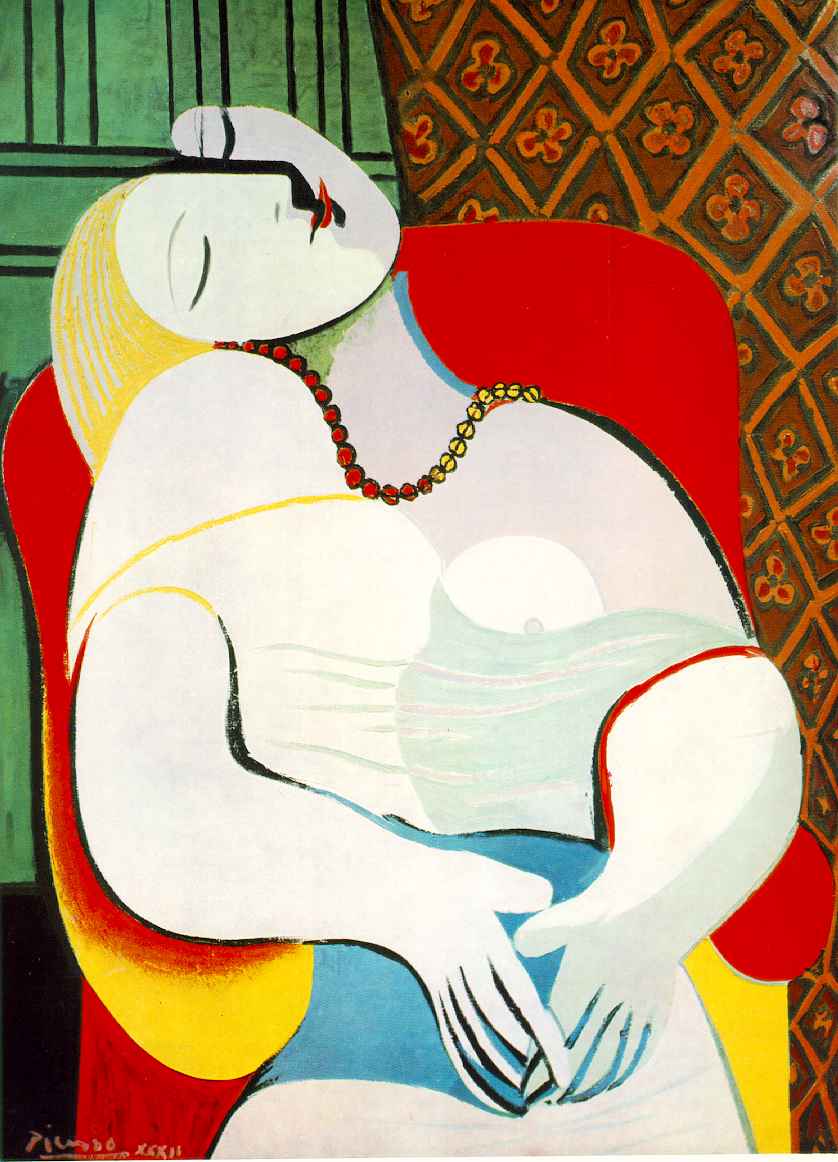
“The Dream,” 1932 Pablo Picasso
Yet, for Cartwright’s thesis, it is not merely sleep that is essential to human health, but dreaming as well. In her profession, Cartwright is known as “the Queen of Dreams,” and dream-research is what she is interested in and battles for. Here is how Cartwright explains the symbiotic functioning of the waking and dreaming life.
“…[T]he mind is continuously active, although in different modes of expression, during the two major alterating states of waking and sleep. … In waking, there is a wider lens open to receive and respond more to the external world, while in sleep we are mostly confined to a narrower base of internal information both new and old.”
It is this “internal” information that sets us dreaming, that allows us to fit old information with new information, to anticipate new situations and reconcile old. Cartwright firmly believes that our emotions are greatly tied to the functioning of our dreaming, and of our sleeping.
While Cartwright acknowledges the contributions of Freud to dream-analysis and the understanding of the unconscious, she moves decidedly apart from him. (The technological abilities for brain-image mapping, sleep studies, etc. give her a great advantage.) The Freudian concept of the preconscious, unconscious and conscious mind is much too simplistic for what Cartwright sees happening. Here is her take on dreaming:
“So in good sleepers, the mind is continuously active, reviewing experience from yesterday, sorting which new information is relevant and important to save due to its emotional saliency. Dreams are not without sense, nor are they best understood to be expressions of infantile wishes. They are the result of the interconnectedness of new experience with that already stored in memory networks. But memory is never a precise duplicate of the original; instead, it is a contining act of creation. Dream images are the product of that creation. They are formed by pattern recognition between some current emotionally valued experience matching the condensed representation of similarly toned memories. Networks of these become our familiar style of thinking, which gives our behavior continuity and us a coherent sense of who we are. Thus, dream dimensions are elements of the schemas, and both represent accumulated experience and serve to filter and evaluate the new day’s input.”
It all is a lot to digest. But it is something to sleep upon.
These are beautiful, wonderful pictures that I know many of you will enjoy.
2013 jpbohannon
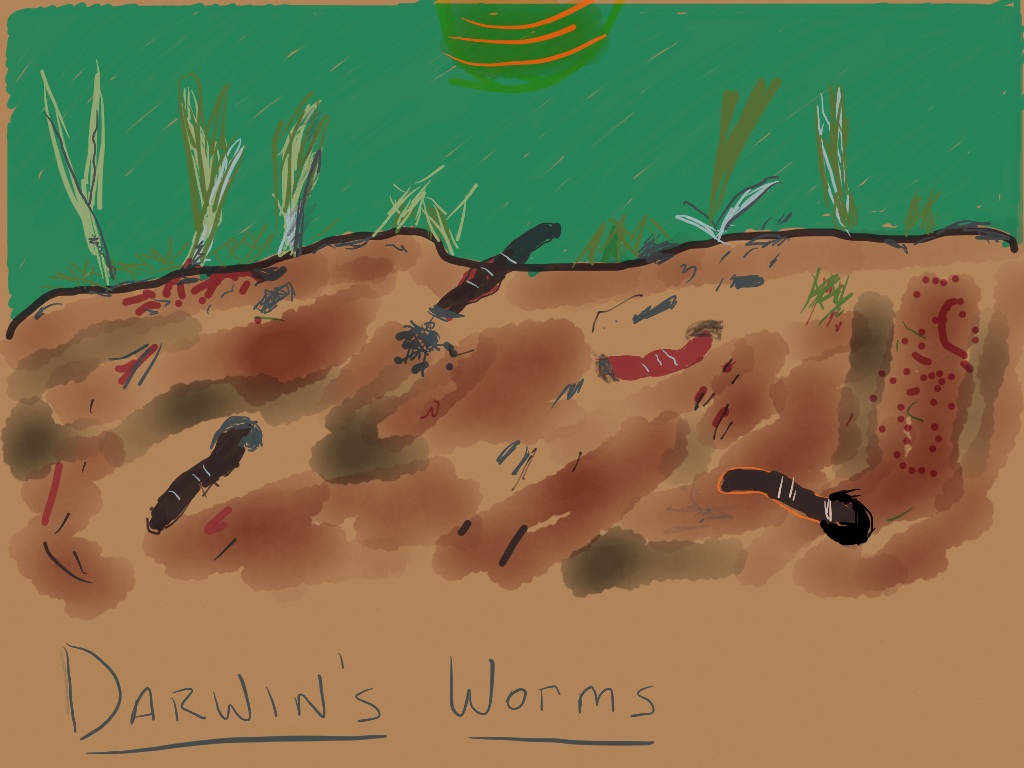
Adam Phillips begins his small book Darwin’s Worms with a story about the composer John Cage. Cage had attended a concert by a friend. In the program notes to the concert the friend had written that he hoped in some small way that his music helps to ease some of the suffering in our modern world. When Cage criticized this desire, the friend asked him if he didn’t think there was too much suffering in the world. “No,” replied Cage. “I think there is just the right amount.”
And so, Phillips writes, it is to remind us of and reconcile us to the fact that the amount of suffering in life is just the right amount that we turn to Darwin and Freud.
Darwin was very aware of the suffering in the natural world. Anticipating Freud on one level, he saw all organisms in a war for survival, thrust forward by an instinct to regenerate, adapting continually to a constantly changing environments. While the rest of his society were arguing, debating, proselytizing what it believed were the weightier implications of Darwin’s observations, Darwin studied the lowly earthworm, understanding its importance in the life of nature and, in turn, our own, (which he would argue is part of nature and not separate from). Flipping the usual symbolism on its head, removing the lowly worm from man’s symbolic last meal (“not where he eats, but where he is eaten”) and placing it at the continual meal that is life, Darwin points out that worms function in nature like plows, turning over soil and creating the soft and germinating loam that we take as the earth’s surface. As they struggle to survive (and “struggle” and “survival” are both key words in Darwin and Freud’s lexicon), worms leave behind shards of the past–that which they cannot digest–and form suitable soil for the plants that will provide for their future. Darwin states that:
“…it would be difficult to deny the probability that every particle of earth forming the bed from which the turf in old pasture land springs has passed through the intestines of worms.” That is a very large contribution to life on earth, powered simply by the worm’s instinctual drive to survive.
Later, Freud elaborated this drive, this instinct to survive and coupled it with its antithesis, the death instinct. At first, he termed them simply, the life instinct and the death instinct. Ultimately, he gave it the poetic designation of “Eros and Thanatos.” The life instinct is easy to understand. Man is driven to survive and to propagate. (“To be or not to be” becomes “to survive or not to be.”) The latter, however, the death instinct is a bit more difficult to get one’s head around. Freud believes that in the struggle to survive man also has a desire to cease that struggle–to stop the pain, if you will. However, the desire, says Freud, is also to be in control of that death. To make it part of one’s life story.
Later in the book, Phillips gives us passages from two separate biographies (“life stories”) of Freud. Both describe the same scene, Freud’s death (“death stories”). The scenes themselves are poignant, but what Phillips does with the passages is telling. In it, he shows Freud “controlling his death” the way that he thought all humans desired. In a way, it is a heroic portrait and an affirmation of Freud’s theories.
As Phillips concludes, in their work, both Freud and Darwin “ask us to believe in the permanence only of change and uncertainty… . to describe ourselves from nature’s point of view; but in the full knowledge that nature, by (their) definition, doesn’t have one.” In an work that analyzes mortality, death, and loss, Darwin’s Worms is a surprisingly upbeat and reassuring view of the world.
♦ ♦ ♦ ♦ ♦ ♦
Freud famously said that there are no such things as coincidences. But today as I opened my computer to begin writing this post about Darwin and Freud, the homepage on my computer opened to this New York Times article revealing the discovery of the fossil of a nearly complete skeleton of what is the earliest primate known, changing scientists’ time-line for the appearance of primates on earth by 8 million years, and giving credence to the growing theory that primates emerged first in Asia rather than Africa.
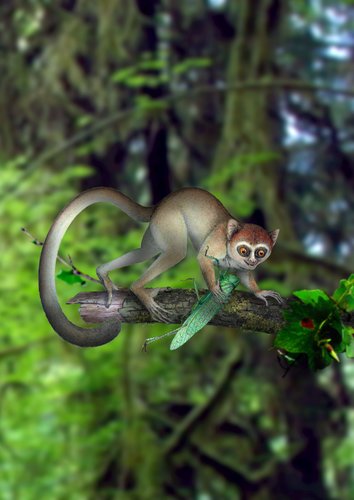
Xijun Ni/Chinese Academy of Sciences An artist’s interpretation of a tiny primate that is thought to be the earliest known ancestor of nocturnal primates living today in Southeast Asia. from NYTimes 06/06/2013
How appropriate. Darwin would have been excited, for he saw great value in studying the simplest and earliest of life-forms, plankton, barnacles, and earthworms.
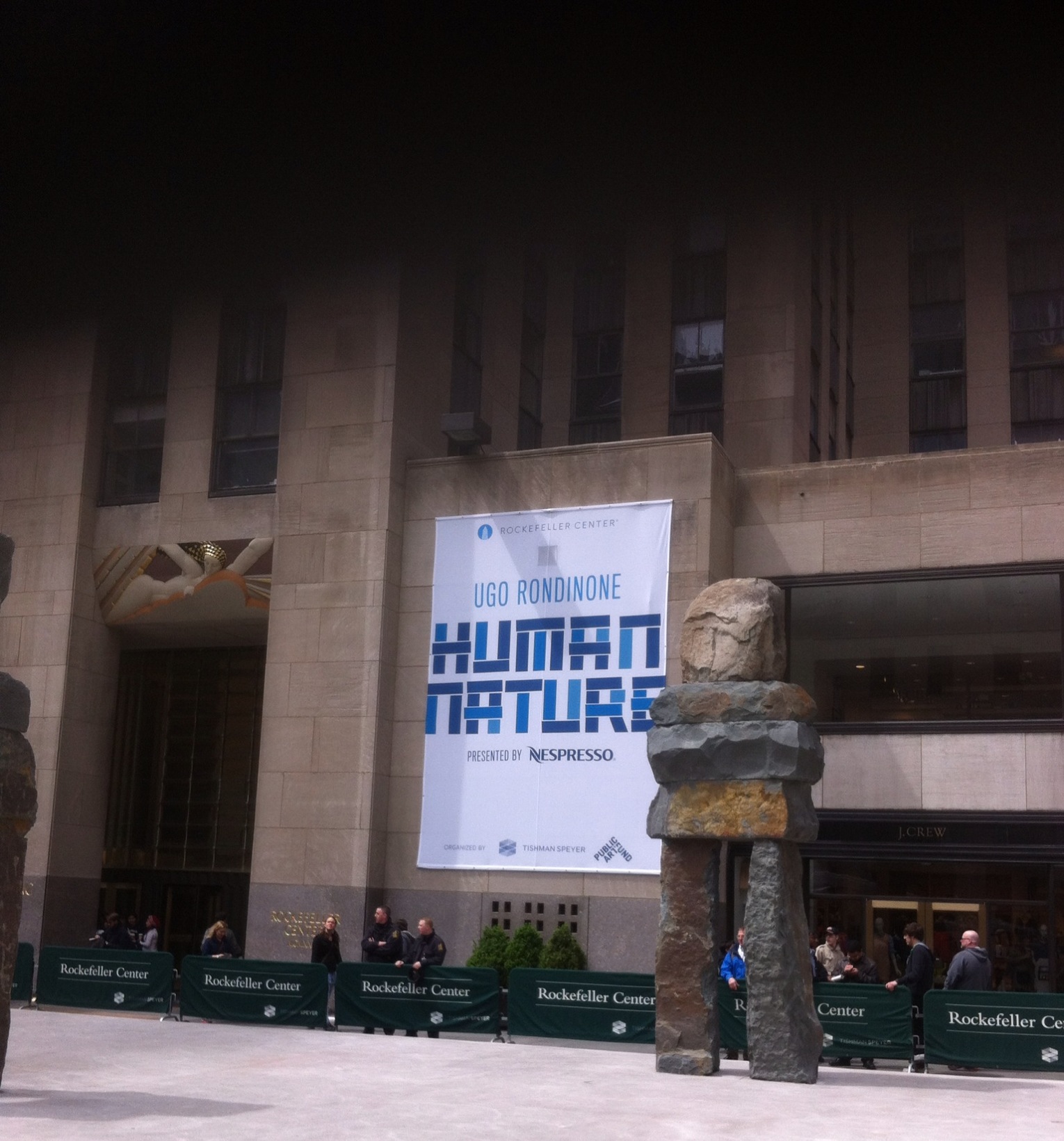
Robin Cembalest, Artnews. “The Gentle Giants of Rockefeller Center”

Ugo Rondinone’s “Human Nature” Installation, Rockerfeller Center, NYC
photo: 2013 jpbohannon
The Official Web Site of LeAnn Skeen
Grumpy younger old man casts jaded eye on whipper snappers
"Here is my secret. It is very simple: It is only with the heart that one can see rightly; what is essential is invisible to the eye.."- Antoine de Saint Exupéry
Of writing and reading
Photography from Northern Ontario
Musings on poetry, language, perception, numbers, food, and anything else that slips through the cracks.
philo poétique de G à L I B E R
Hand-stitched collage from conked-out stuff.
"Be yourself - everyone else is already taken."
Celebrate Silent Film
Indulge- Travel, Adventure, & New Experiences
Haiku, Poems, Book Reviews & Film Reviews
The blog for Year 13 English students at Cromwell College.
John Self's Shelves
writer, editor
In which a teacher and family guy is still learning ... and writing about it
A Community of Writers
visionary author
3d | fine art | design | life inspiration
Craft tips for writers
 j. p. bohannon