Book Review: Darwin’s Worms: On Life Stories and Death Stories by Adam Phillips

2013 jpbohannon

2013 jpbohannon

Adam Phillips begins his small book Darwin’s Worms with a story about the composer John Cage. Cage had attended a concert by a friend. In the program notes to the concert the friend had written that he hoped in some small way that his music helps to ease some of the suffering in our modern world. When Cage criticized this desire, the friend asked him if he didn’t think there was too much suffering in the world. “No,” replied Cage. “I think there is just the right amount.”

And so, Phillips writes, it is to remind us of and reconcile us to the fact that the amount of suffering in life is just the right amount that we turn to Darwin and Freud.

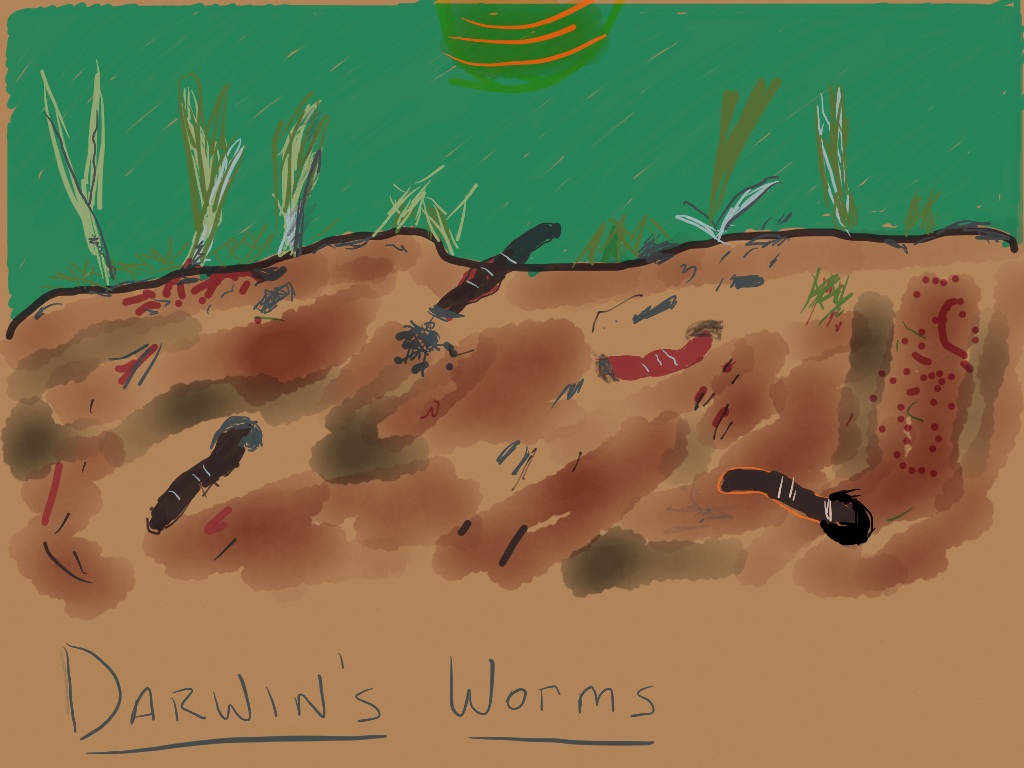
Darwin was very aware of the suffering in the natural world. Anticipating Freud on one level, he saw all organisms in a war for survival, thrust forward by an instinct to regenerate, adapting continually to a constantly changing environments. While the rest of his society were arguing, debating, proselytizing what it believed were the weightier implications of Darwin’s observations, Darwin studied the lowly earthworm, understanding its importance in the life of nature and, in turn, our own, (which he would argue is part of nature and not separate from). Flipping the usual symbolism on its head, removing the lowly worm from man’s symbolic last meal (“not where he eats, but where he is eaten”) and placing it at the continual meal that is life, Darwin points out that worms function in nature like plows, turning over soil and creating the soft and germinating loam that we take as the earth’s surface. As they struggle to survive (and “struggle” and “survival” are both key words in Darwin and Freud’s lexicon), worms leave behind shards of the past–that which they cannot digest–and form suitable soil for the plants that will provide for their future. Darwin states that:

“…it would be difficult to deny the probability that every particle of earth forming the bed from which the turf in old pasture land springs has passed through the intestines of worms.” That is a very large contribution to life on earth, powered simply by the worm’s instinctual drive to survive.

Later, Freud elaborated this drive, this instinct to survive and coupled it with its antithesis, the death instinct. At first, he termed them simply, the life instinct and the death instinct. Ultimately, he gave it the poetic designation of “Eros and Thanatos.” The life instinct is easy to understand. Man is driven to survive and to propagate. (“To be or not to be” becomes “to survive or not to be.”) The latter, however, the death instinct is a bit more difficult to get one’s head around. Freud believes that in the struggle to survive man also has a desire to cease that struggle–to stop the pain, if you will. However, the desire, says Freud, is also to be in control of that death. To make it part of one’s life story.

Later in the book, Phillips gives us passages from two separate biographies (“life stories”) of Freud. Both describe the same scene, Freud’s death (“death stories”). The scenes themselves are poignant, but what Phillips does with the passages is telling. In it, he shows Freud “controlling his death” the way that he thought all humans desired. In a way, it is a heroic portrait and an affirmation of Freud’s theories.

As Phillips concludes, in their work, both Freud and Darwin “ask us to believe in the permanence only of change and uncertainty… . to describe ourselves from nature’s point of view; but in the full knowledge that nature, by (their) definition, doesn’t have one.” In an work that analyzes mortality, death, and loss, Darwin’s Worms is a surprisingly upbeat and reassuring view of the world.

♦ ♦ ♦ ♦ ♦ ♦

Freud famously said that there are no such things as coincidences. But today as I opened my computer to begin writing this post about Darwin and Freud, the homepage on my computer opened to this New York Times article revealing the discovery of the fossil of a nearly complete skeleton of what is the earliest primate known, changing scientists’ time-line for the appearance of primates on earth by 8 million years, and giving credence to the growing theory that primates emerged first in Asia rather than Africa.

Xijun Ni/Chinese Academy of Sciences An artist's interpretation of a tiny primate that is thought to be the earliest known ancestor of nocturnal primates living today in Southeast Asia. from NYTimes 06/06/2013

Xijun Ni/Chinese Academy of Sciences An artist’s interpretation of a tiny primate that is thought to be the earliest known ancestor of nocturnal primates living today in Southeast Asia. from NYTimes 06/06/2013

How appropriate. Darwin would have been excited, for he saw great value in studying the simplest and earliest of life-forms, plankton, barnacles, and earthworms.
Adam Phillips: Promises, Promises: Essays on Psychoanalysis and Literature

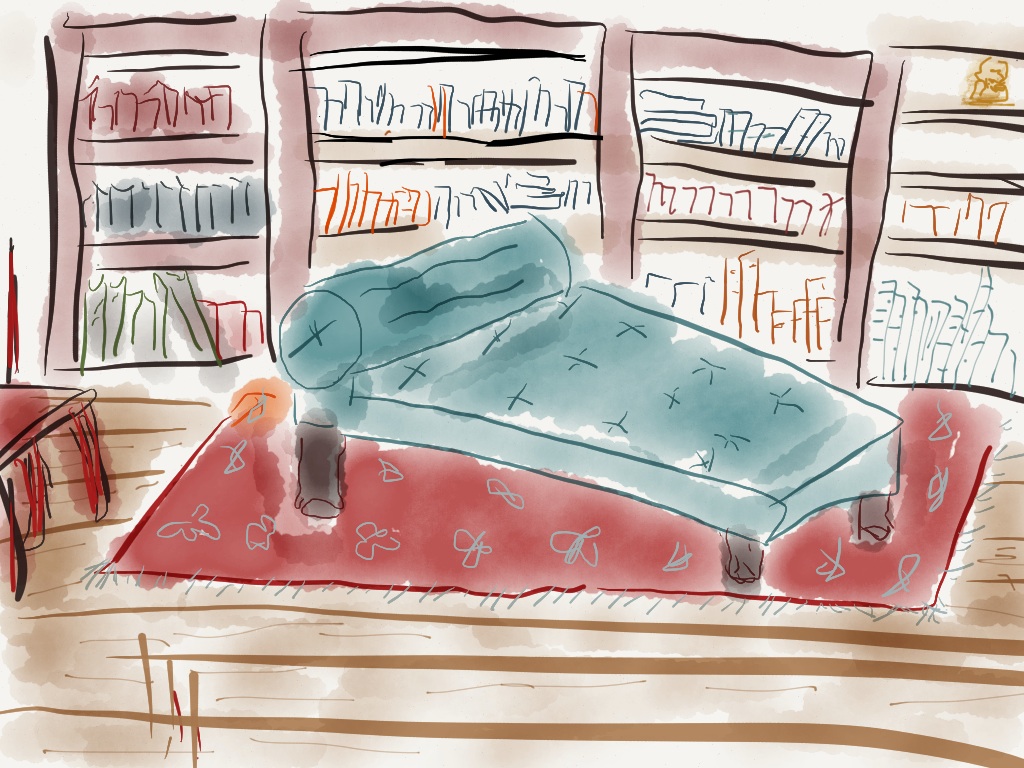
illustration by jpbohannon

illustration by jpbohannon, 2013

In the office of a colleague a while back I noticed a towering pile of books on the desk, as if he were re-arranging his book shelves or carting out old titles to a different location.  But no,  it was his “to read” pile, and it was impressive and imposing.

Among the authors gathered, there was one whom I had not heard of–Adam Phillips. A psychoanalyst by trade–specifically a children’s clinical psychotherapist–Phillips read literature at Oxford, specializing in the 19th century British romantics.  And as the “science” of psychoanalysis has always been symbiotically tied to literature,  a degree in literature seemed the perfect training ground.
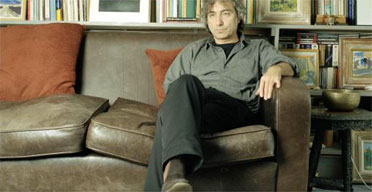
Adam Phillips photo: Andy Hall

Adam Phillips
photo: Andy Hall

And so I decided to dive in.

Of Phillips’ seven or so titles, Promises, Promises: Essays on Psychoanalysis and Literature seemed a reasonable starting point. And, the frantic busyness at the end of the school term made a collection of independent essays more attractive and less of a task.
 

“As poets struggle to find a place in contemporary cultural reality, psychoanalysts, implicitly or explicitly,  are still promoting the poets as ego-ideals.”

Philips, “Poetry and Psychoanalysis”

The crux of Phillips’ essays is the mutual relationship between literature and psychoanalysis…and psychoanalysts’  established reverence for creative writers. Literature, according to Freud, gave birth to psychoanalysis and psychoanalysis often gives resonance to literature.

And so go his essays.

He begins with the essay “Poetry and Psychoanalysis” and brings in the young poet Keats–a former medical student–who famously stated that science ruined poetry when Newton reduced the rainbow to a prism.  Not so, Phillips says, for poetry (and you can read “creative writing” where Phillips says “poetry”) can do what the sciences cannot.  Indeed, much of his argument is that the science of psychoanalysis is bringing understanding to the vision of poetry.  Freud said, Phillips tells us, that the poets had long before discovered the unconscious, and that he only had devised a way to study it.

Phillips graciously gives way to “poetry” saying that the short history of psychoanalysis has been an attempt to study the unconscious that poetry reveals. And since both poetry and psychoanalysis–the “talking cure”–depend on language, and often, coded language, the two are intrinsically welded together.

And so he is off.

There are marvelous literary essays on Hamlet, Hart Crane, Martin Amis,  A.E. Housman and Frederick Seidel, all informed by an accessible shading of psychoanalytic theory, as well as masterful psychoanalytic pieces on Narcissism, Jokes, Anorexia and Clutter, informed by a broad knowledge of literature/poetry.  It is Phillips’ contention–his modus operandi, if you will–that the two disciplines can or should depend on each other for clarity.

Hamlet-and-skull-on-stampThe collection ends with the title piece, “Promises, Promises.”  In it, Phillips examines the “promise” that both literature and psychoanalysis offer. He writes:

“If we talk about promises now, as I think we should when we talk about psychoanalysis and literature, then we are talking about hopes and wishes, about what we are wanting from our relationship with these two objects in the cultural field.”

What does reading literature promise us?  What does analysis promise us?  Phillips contends that both promise us, to a degree, “the experience of a relationship in silence, the unusual experience of a relationship in which no one speaks.”  Of course, ultimately, the analyst must speak.  But it is in that silence that often we become “true to ourselves.”

Reading psychoanalytic theory can often be dry and dusty, but Phillips’ writing never is. Bringing in an encyclopedic knowledge of both creative literature and psychoanalytic literature (and, at times, arguing that there might not be a difference),  Phillips imaginatively and wittily plumbs past and current trends, canonical and esoteric literatures, clinical practice and private correspondence to bring to light his vision of psychoanalysis and literature’s potential and promise.

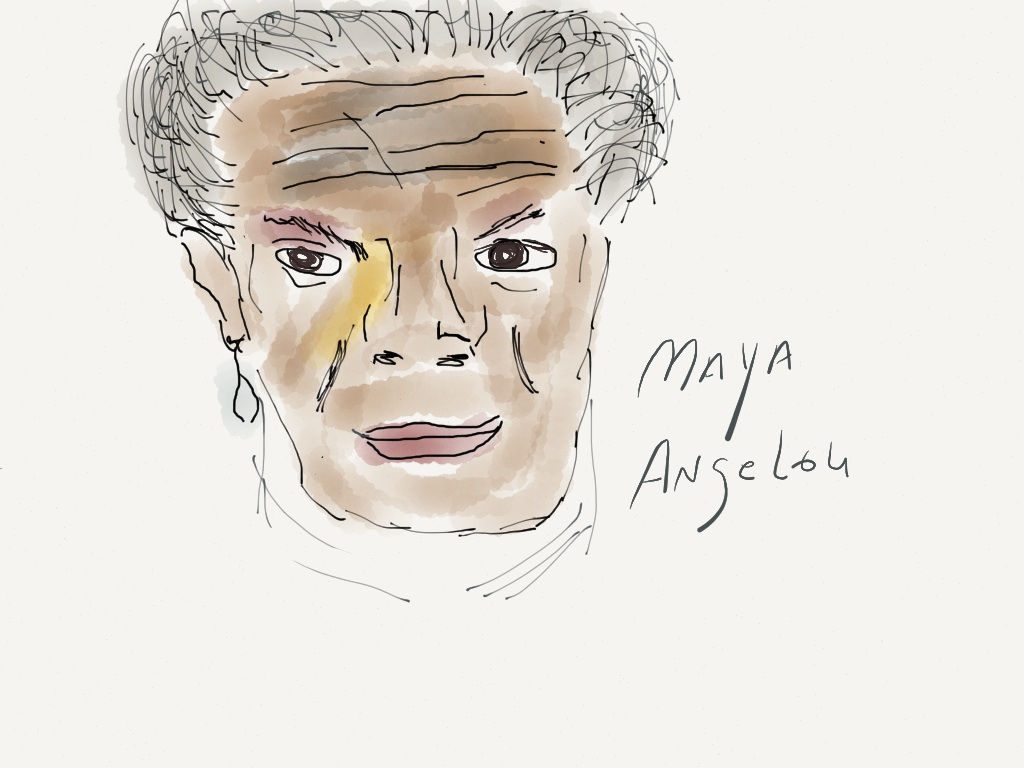
Quote of the Week: #3 May 12, 2013

“Be certain that you do not die without having done something wonderful for humanity.”

Maya Angelou, Letter to her daughter

Maya Angelou 2013 jpbohannon

Maya Angelou
illustration by jpbohannon © 2013

Hackles, Philly Fringe Festival and a personal ghost

Photo courtesy of Groundswell Players

The Philly Fringe Festival and the Live Arts Festival have been running concurrently in Philadelphia for the past few weeks.  This usually means that there is an abundance of cutting edge theater, dance, performance, readings going on throughout the city, and this year it seems even more so.

For the past three years we have had a friend, Pia Agarwal, who worked for the festivals and always gave us a heads-up on what to see.  And she was never wrong.

But she’s moved to Austin, so we were on our own.

Fortunately, I know Nick Gillette, who is finding some success in the local theater scene.  This year, for the Fringe Festival,  he directed one play, Myths and Monsters,  at the Adrienne Mainstage and performed in another Hackles at the Crane Arts Old School White Space.

On Saturday night I went and saw Hackles. I have been in this venue twice before and each time have been wowed and impressed. This night was no different.

Groundswell Players in rehearsal for Hackles
(photo: Emma Lee/for NewsWorks)

“Devised” by the Groundswell Players–students at the Pig Iron School for Advance Performance Training–the play features four actors who take on a variety of roles. The main roles however are a blind old man, his daughter, his cockatoo, and Death itself. Scott Shepherd, who played the cockatoo–incredibly well by the way–also played the daughter’s hesitant boyfriend. The other additional roles–teacher, fellow students, policeman–were negligible and merely stock figures to keep the plot moving.

When  the cockatoo dies, the daughter–played by Martha Stuckey–believes she sees Death come and take the bird’s soul. Later, she witnesses an accident (off-stage) and sees this female incarnation of Death (played by Alice Yorke) more clearly and more definitely.

She tells her blind father (Nick Gillette), who is fascinated by what she relates and who believes that the dead continue to contact us through the holes in the static of his off-station transistor radio.

There is still more death, in the past and yet to come, but there is also great hope: the play ends with the awkward daughter and her boyfriend figuring out how to slow dance while Al Green’s version of  “How Can You Mend a Broken Heart” plays on the father’s no-longer-static radio.

The set was very cool–pure white walls with clear plastic opened umbrellas suspended from the ceiling. There was minimum furniture–the father’s table and chairs and a cabinet-like piece that was spun around–and great lighting.  There were two or three scenes with a scooter and roller-blades which could have been discarded, but as for the rest, it was perfect.

The play combined physical performance, comedy, metaphysics and domestic drama in a piece that was entrancing, engaging and thoughtful.

But the play was not what raised the “hackles” on my neck!

After the play, a number of us met in the parking lot, going over what we were doing and where we were going next.  Someone had an iPhone and asked someone else to take a picture of us all gathered.

No one, however, invited the ghost, who appears behind my head.

I have now studied this picture backwards and forwards, have enlarged it as much as I could and still see clearly, and it doesn’t make sense. Granted, the play dealt with death and the afterlife and the conviction that spirits communicate with us regularly, but I didn’t expect them to come out to an abandoned grammar-school parking lot. She seems to be in period costume–and our play was in modern dress; In fact, Death was dressed in a sexy black cocktail dress.  So she’s not from the play and she isn’t from the audience; her proportions seem larger than those walking out of the building; and she wasn’t with us.

So where do we go with this?

Job’s question, the Death of a Child and Ben Jonson’s poetry

Job asking “Why?” Asking “How much more?”

Last year, a friend of my sister had a 4-year old child drown in a neighborhood swimming pool.  One would think that was enough for any parent to bear.

Last week, the very same woman’s 4-month old baby died in her crib—a case of SIDS.

This is a Job-like battering.   How much more can two people take?  How much more? They can’t be looking to sense, or reason, or “God’s plan.”  None of that can help, certainly not at the moment.

Lately, I have had a number of friends and relatives  who have lost aging parents. Sad as that is, it is reasonable and acceptable—part of the pattern of life.  But the death of a child?  No.

And there are thousands of children all over the world who die every day of disease, mal-nourishment, war, violence, and mere accident.

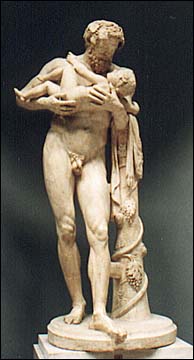
Statue of Father and Son
Vatican Museums. ©1999 A. Jokinen.

I used to teach a poem by Ben Jonson. If Shakespeare had not come along the era would have probably been known as “the Age of Jonson.”  He was much more successful, much more popular than Shakespeare was during his life.  And yet, he is not really part of the common culture today.  Shakespeare has pushed him aside.  But he is good and he is important. Here is the poem in which Jonson tries to deal with the death of his son: 

On My First Son
by Ben Jonson

Farewell, thou child of my right hand, and joy ;
    My sin was too much hope of thee, lov’d boy.
Seven years thou wert lent to me, and I thee pay,
    Exacted by thy fate, on the just day.
Oh, could I lose all father now ! For why
    Will man lament the state he should envy?
To have so soon ‘scaped world’s and flesh’s rage,
    And if no other misery, yet age !
Rest in soft peace, and, asked, say, Here doth lie
    Ben Jonson his best piece of poetry.
For whose sake henceforth all his vows be such
    As what he loves may never like too much.

Jonson’s first son—also named Benjamin, which in Hebrew means “Son of My Right Hand”—died when he was seven years old. Jonson, renowned and celebrated for his poetry and drama, puts it all in perspective and rates this dead son as the best thing he has ever created.  One can feel the father’s pain in the final two lines–the fear of “liking too much” that which one loves.