First day of school…wait ’til you see the books!

School started this week.  And I’ve got a whale of a course load–five separate courses with five separate reading lists.  But the nice part about it, I got to choose the books.  So here is what we’re reading:

AP Literature and Composition

Brave New World. Aldous Huxley
The Handmaid’s Tale. Margaret Atwood
Crime and Punishment. Fyodor Dostoyevsky
The Stranger Albert Camus
Oedipus Rex Sophocles
Antigone Sophocles
A Doll’s House Henrik Ibsen
Hedda Gabler Henrik Ibsen
Hamlet William Shakespeare
Rosencrantz and Guildenstern are Dead Tom Stoppard
Slaughterhouse-5 Kurt Vonnegut
Catch-22 Joseph Heller
Invisible Man Ralph Ellison
The Piano Lesson August Wilson
Who’s Afraid of Virginia Woolf Edward Albee

Literature and Film

One Flew Over the Cuckoo’s Nest Joseph Heller
Winter’s Bone Daniel Woodrell
Revolutionary Road Richard Yates
The Commitments  Roddy Doyle
The Human Stain  Phillip Roth

The Contemporary Short Story

Best American Short Stories of 2011 Geraldine Books (editor)
The New Yorker magazine

Creative Writing

The 3AM Epiphany Brian Kiteley
The Practice of Creative Writing Heather Sellers
Bird by Bird: Some Instructions on Writing and Life Annie Lamott

Modern Irish Literature

A Portrait of the Artist as a Young Man  James Joyce
Dubliners James Joyce
Butcher Boy Patrick McCabe
Waiting for Godot Samuel Beckett
The Complete Plays of John Millington Synge
The Lonesome West Martin MacDonagh

Now, I have to admit this is a pretty hefty reading list.  Many of the titles I have read multiple times, and some as recently as last year and each of the three years before that.  But as for others, it has been a good while and I’m going to have dig in and get them read.

And of course this is all supplemented with various handouts of Yeats and Heaney and MacNiece, of Hemingway and O’Connor (Flannery and Frank), of modern poets and ancient classical texts.

My boys are getting quite a load.  Some appreciate it. Many don’t.

But that’s okay.  At least they’ve been exposed to the things I love–and sometimes I think that could be contagious.

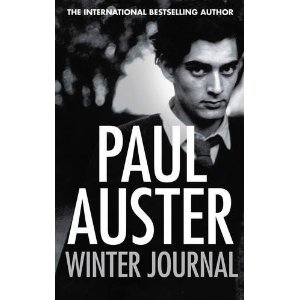
Marvelous bodies…rebellious bodies and Winter Journal by Paul Auster

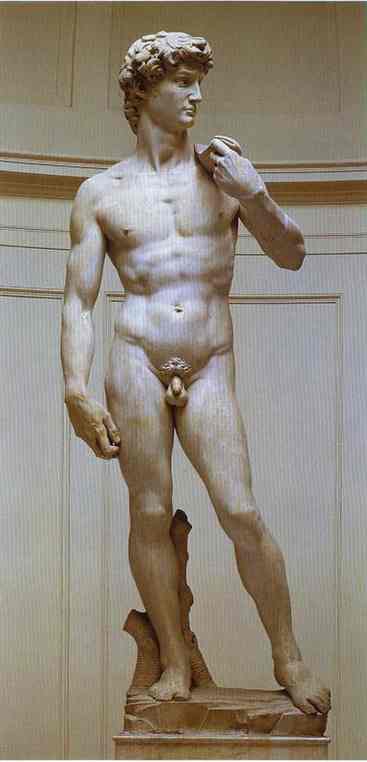
What a piece of work is a man! how noble in Reason!
how infinite in faculties!  in form and moving
how
express and admirable! in action how like an Angel!
in apprehension how like a god!  the beauty of the world,
the paragon of animals. and yet to me, what is

this quintessence of dust?

            Hamlet, Act II, Scene ii

And it’s true. The human body is an extraordinary piece of work, a marvelous machine inside and out. Just look at the accomplishments of this summer’s Olympic athletes–the speed, the agility, the grace, the strength.

And while most of us do not have–and never will– the bodies of an Olympian, we do have something very much in common:  our bodies will ultimately rebel against all of us.

I have spent the recent past with bodies that are failing to various degrees. My mother’s body–stricken with Parkinson’s disease for the past fifteen years–was continually at war with itself, the brain sending damaged impulses to the rest of her body. Uncontrollable tremors, catatonic staring, personality changes, rapid mood swing, fevers, chills, labored breathing–these were the mutinies that the disease in her body raised against its very host. And in the end, the disease won.

On a much lesser scale, my own body is now wearing down. Aches and pains are common enough, but then my knee screamed out, began to fail. So a surgeon goes in–part of the extra-ordinariness of that piece of work that is man!–and some things are cut out, scraped out and removed, damaged pieces all due to the passage of time, to the ordinary wear and tear.

And then, again, my body foments a small uprising against the surgery itself.  There are some complications after the surgery, some minor concerns with my leg.

And so for the first time in two weeks, I read a book.  A marvelous book and one that I enjoyed immensely.

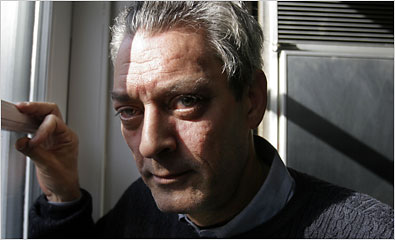
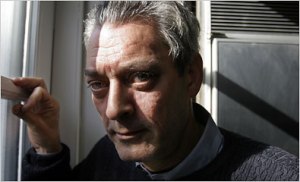
Paul Auster’s Winter Journal is a beautiful piece of writing–beautiful in the way that all of Paul Auster’s writing is beautiful: clear, intelligent, imaginative and clever.

The premise of the book–is it a novel, a memoir, a journal? the genres are often cloudy in Auster’s writing–is that on a particularly day, one month exactly to his 64th birthday, a writer sits down and writes a journal addressing his aging body.

The book is told in the second person–a technique I don’t particularly like but which here provides a close intimacy with the physical, emotional, and psychological body he is addressing. And yet there is a myriad of voices–a chorus of voices made up of the writer’s body at the various moments in his life

Throughout, the writer addresses his body in certain phases of his life. He examines the physical scars that have added up over an active boyhood: when he is five a playmate hits him in the head with a metal rake; when he is three-and-a-half he slides into a protruding nail and has much of his face ripped apart; as a ten year old baseball player he is smacked into by another player as he looks up to catch a ball and splits his head open.
But the scars are not only physical.  There is the death of his mother, the panic attacks, the cessation of driving after he and his family survive a near fatal car accident.

He remembers when as a little boy in a tub the wondrous surprise of an erection and as a grown man the various women he has loved both in late adolescence and in manhood.  He recounts the unshakeable love that he and his wife share. He remembers the exhaustion of producing a film in Dublin and the clarifying epiphany that metamorphosed him into a serious writer.  There are memories of women he has loved and men he admires.  Of situations, in Arles, in Dublin, in Brooklyn where he learned–and retained–a certain self-knowledge about himself.
And overall, it is the pleasure he remembers his body enjoying, much more than the pain.  When, at the age of five, he was hit by the rake, he was lying on the ground examining an ant-hill. And it is his boyhood fascination with those ants that he remembers more than the delivered blow which literally raked his head.  When he is cracked in the head by the fellow teammate, it is the joy of following an arcing baseball, of angling to bring it into one’s mitt that he remembers more than the bloodying crash.

And now at this juncture of his life,  it is always the pleasure not the pain that his aging body (and mind) remembers most clearly.

Winter Journal is –perhaps surprisingly–an uplifting book.  A man, growing old but not nearing what he calls “advanced old age,” seems somewhat content with the life that he has lived so far. There is still a boy’s joy with a winter snowstorm, a lover’s appreciation of his longstanding wife, a satisfaction with the things he has accomplished–and a recognition of the many that never made it to the age he is now approaching.

In many ways,  Winter Journal is a fine, fine book…a fine, fine way of looking at a life.


1984Brave New World…and Phillip K. Dick????

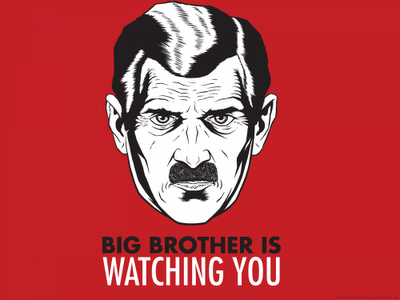
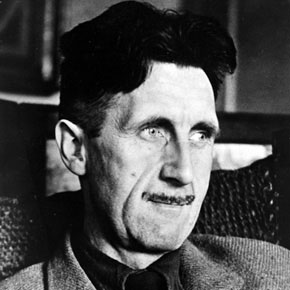
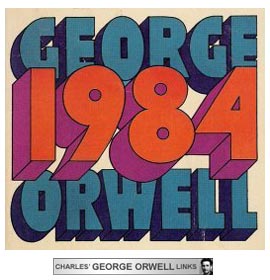
It is perhaps the most iconic novels of the 20th century.  George Orwell’s 1984 is the dystopian novels of all dystopian novels.  We all know the phrases “Big Brother,” “doublethink,” “thought-police”; their ominous overtones and insinuations are recognized even by those who have never read the book. The deadening conformity and mind-control that Orwell writes about are the fears often invoked by those who fear totalitarianism in any form–in governments or corporations.

Apple–now a mighty corporation in itself–famously advertised its new Macintosh computer by pitting itself against the corporate giants of the computer world in a magnificent television commercial that echoed the world of 1984–and Apple’s defiance to its conformity.  (The ad was seen only once on television during the American Superbowl and then subsequently was shown in theaters.)

The novel is bleak and that bleakness is broken only briefly by a wonderful love affair and the main character’s misplaced hope.  Indeed, my favorite image from the book is one that perfectly captures the grime, the incompetency, the substandard level of life, when Winston Smith, the protagonist, goes to unclog a sink in a neighbor’s apartment. As he looks at her, he notices the dust that has gathered in the lines of her face.  I always remember that–a pretty powerful image.

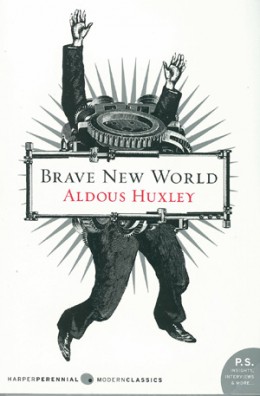
Orwell wrote his novel in 1948 (that’s really the only significance of the novel’s title: it’s the year he wrote it reversed). But nearly a quarter century earlier, another British writer also wrote a powerful dystopic novel: Aldous Huxley’s Brave New World.

And where Orwell’s world is one in which a film of oil lies on the gin and ready-made cigarettes fall apart in your hand and where sex is frowned upon (because one should really only love Big Brother), Huxley’s novel is the opposite.

Huxley saw his dystopia as a world in which people are perfectly happy–indeed where they are conditioned to be happy. There is no disgruntlement–people have been conditioned to accept and love their station in life. (A station that has been pre-decided by the artificial generation process.) Promiscuity is greatly encouraged and sex is varied and plentiful. And if for some reason, one might feel a little blue, there is SOMA, a mood-enhancing drug that is given out in vast quantities to all the classes.

The society works efficiently and happily. Yet Huxley sees the snake in the garden–the lack of freedom to be wrong, to be sad, to disagree. Even to be alone.  It is when a “savage” is brought back from a reservation in the southwestern part of the U.S. is the society and its beliefs challenged–but not for long.

♦     ♦    ♦    ♦    ♦    ♦

By the way, click here for a letter that Huxley wrote to Orwell upon first reading 1984. It is this very discussion of dystopia comprising great suffering or constant happiness:

Huxley to Orwell letter

♦     ♦    ♦    ♦    ♦    ♦

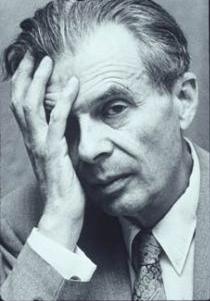
Aldous Huxley

I teach Brave New World as the first book of the new school year.  I will have thirty very bright 18-year-old students enrolled in my class. I know that half of them read 1984 last year with the one teacher they had. The other half did not. (And 1984 is such a great companion piece to any discussion of Brave New World.) So I assigned it as “summer reading.” But only to half of them. I looked for another “dystopian” novel to give the class that had already read Orwell’s novel.
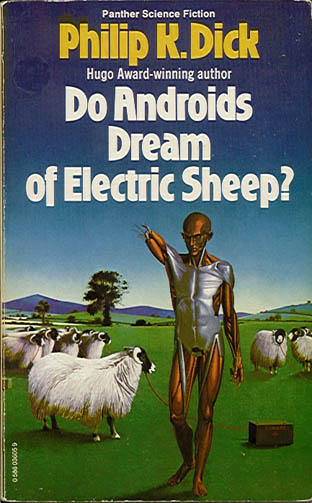
And so I assigned Phillip K. Dick’s Do Androids Dream of Electric Sheep?

Now, I have never been a big fan of science-fiction. I have just never gotten into it. In fact, I have never seen a Star Wars movie!

I’ve read some of the standards–Bradbury, Welles, Asimov, and, if we are stretching, Vonnegut.  But it’s something I just never made a connection with.

And Dick’s novel did nothing to change my mind!? Despite it being anointed a “classic” by so many and being the source for the beloved film, Blade Runner, it left me very flat.
Again we are dealing in a world different than our own–a post-apocalyptic earth where most of the able bodied people have emigrated to Mars.  Nuclear fallout from World War Terminus has made much of Earth inhabitable. The government’s enticement for people to emigrate is a free android that will work as their personal servants.

However, some of these androids have returned to earth and must be killed. And the only way to distinguish between the androids and the humans is the lack of empathy in the androids–a lack that can be tested.

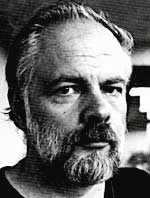
Phillip K. Dick

The plot, entails the main character, Rick Deckhard–an android bounty hunter–attempting to increase his bounty numbers so that he can buy some real animals, instead of the “electric sheep” he now owns. Animals, he feels, encourage empathy in humans.
I am not sure how I will squeeze this into our discussions of Brave New World and 1984.  I am not sure if it can be squeezed into dystopic literature.  Post-apocalpytic maybe–most of my kids have read or seen The Road and I am Legend–but it doesn’t really fit in with totalitarianism and its evils.

And then, maybe it won’t be all that important to the discussion anyway. Or better yet, maybe it’ll throw us all in a different direction completely.

Anesthesia–the perfect vacation

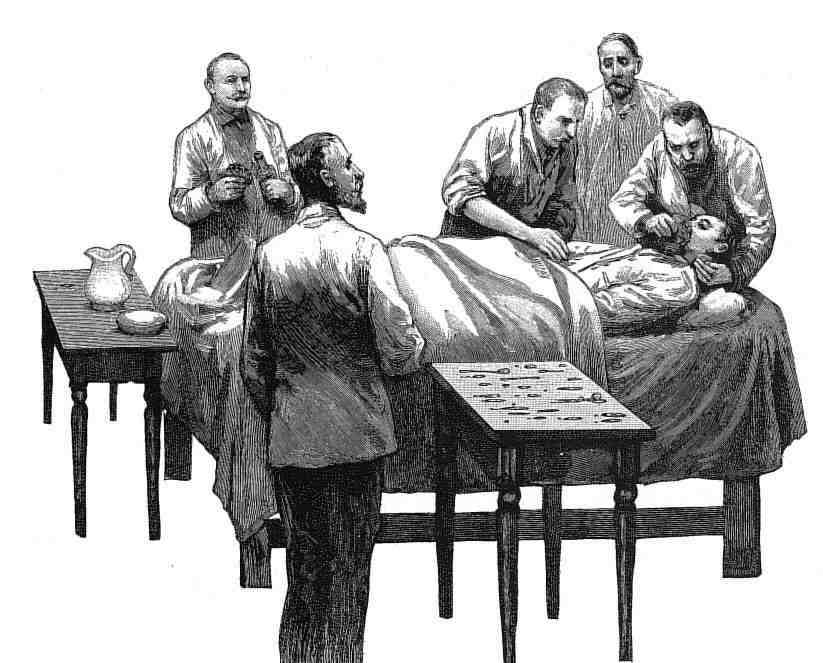
I had to get some work done on my knee this week and in order to do it, the doctors had to give me general anesthesia.

God I love it.  It is the perfect vacation.

To start with, an anesthesiologist gave me a light anesthetic and then wheeled me into the operating room where I would be administered a more powerful anesthetic.  I remember her wheeling me towards the operating room, I remember her saying to someone else that the bed had to be turned around because I had to go into the room head first.

And I remember nothing else.  I awoke a little more than an hour later in the recovery room.  How great is that!

For that short interim, I had no worries about bills, no stresses about work, no fretting about family, no anguish, no responsibilities, no obligations, nothing.  I desired nothing, feared nothing, was attached to nothing.  It is the very definition of Nirvana.  And I experienced it without hours of meditation!

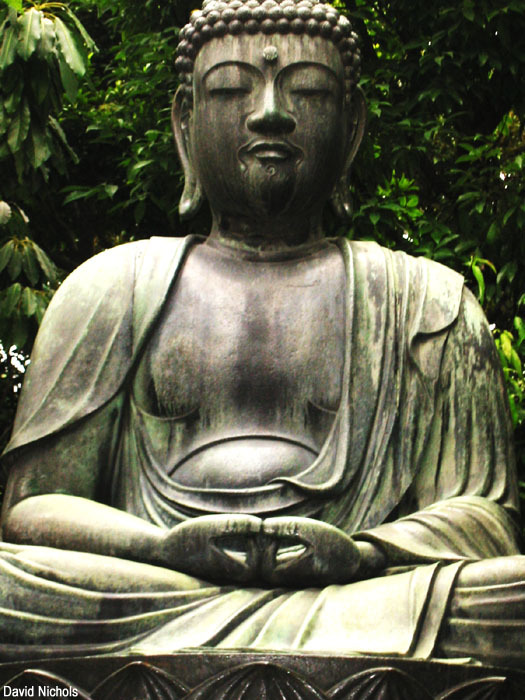
The word “nirvana” has been misrepresented by Westerners as a simple synonym for “paradise,” for an existence of pure pleasure and perfection. Nothing can be further from the truth. In Eastern thought, “nirvana” is the final stage of enlightenment, a state where there is NO pleasure and NO pain. One has NO desires nor regrets.  There is no suffering, no joy, no self.  One is completely separated from the pulls, the demands, the pains, joys, wants, and urges of modern existence.

Wow, that certainly sounds like  the perfect vacation to me. Or a lethe-like morning of general anesthesia.

(Or at least until the painkillers wear off. Hah!)

A simple and wonderful book for westerners to read as an introduction to the Buddha,

Siddhartha by Herman Hesse

to nirvana and the path towards it is Herman Hesse’s Siddhartha. It is a short, beautiful,
inspiring novel of Gotama Buddha, written by German author for the western mind.
One cannot finish the book without feeling some sense of peace. I used to give it out
quite often as a gift.

If you have never read it, try to find it. You can read it in one sitting.
If you have already read it, pick it up again. Those same good feelings will return.

Book Review: Disgrace by J. M. Coetzee

A new acquaintance of mine asked if I had ever read the book Disgrace by J. M. Coetzee.  I hadn’t, though I had read several others by the South African writer.  We talked about many things that morning, and, to be truthful, I had forgotten all about the book until about a week later, when a package arrived in the mail with a gift-wrapped book. Inside was a copy of Disgrace with the note: “I hope you enjoy this half as much as I did.”

And so I began.

Disgrace is the story of David Lurie, a 52 year-old, twice-divorced, white South African professor of Communications and Romantic poetry.  Quite early in the novel he is forced to resign from his university under the disgrace of having sex with one of his students.  As Lurie  rationalizes to himself, the sex itself was not rape, but it certainly wasn’t completely consensual.  He admits guilt but not contrition–which infuriates even those trying to help him.

In disgrace, hounded by reporters, and bereft of his job, Lurie leaves town and drives out into the eastern countryside of the Cape. There his daughter has some land where she raises flowers and kennels dogs.  He is there presumably to write an opera on Byron, Byron’s mistress Teresa, and her husband.  But it is not the most conducive area for such refined creation: it is a hard land and an area still simmering in the afterbirth of the post-apartheid era.

As Lurie settles into the rhythms of country-life, of physical labor and simple pleasures, even volunteering in an animal shelter, his life is once again shattered when he and his daughter are attacked by three men.  All the dogs are slaughtered, Lurie is doused in alcohol and set on fire, and his daughter is gang-raped (and impregnated) by the three men.  The very crime for which Lurie was censured has been visited trebly on his daughter.  The very world he has known–the power he has always arrogantly assumed for himself–has been violently wrenched away.

As both father and daughter try to come to terms with the horrors that have visited them, as they learn more and more about the identity of their attackers and their relations to people they know, and as they struggle with the essential character of each other’s personalities, Lurie comes to better realize the nature of the world around him.  His views on racism, on feminism, even on animal rights, must be examined and re-calibrated.  The world he has known is, simply, no longer.

I knew nothing of the book when I opened it. I thought it was contemporary, not published in 1999–a mere five years after the historic elections in which the African National Congress overwhelmingly won and from which apartheid’s demise can best be dated. The difficulties that Lurie has in understanding the new order, the distrust, fear and violence among the various peoples, even the “modernization” of the University all make better sense. (Lurie’s teaching of Communication is in itself ironic–Communication skills are what this country and its people are badly in need of.  An expert in the British romantic poets–those type of courses are considered fluff in the new university structure–Lurie teaches both Communications 101 and Communications 201. The one Romantic Poets course he teaches is a salve that the administration gives its older professors.) In many ways the novel is a reflection of the birth pangs of the new country: it is violent, bloody, and at times deadly.

Does everything get resolved?  Of course, not.  Is Lurie a better person at the end?  I’m not sure.  I think he is. Early in the novel when a tribunal is questioning Lurie on his womanizing, he states that he believes that every woman he has bedded has “enriched” him in some way.  The question at the end of the novel then must be  “has the violence and catastrophe that he has suffered also enriched him?”  Again, I don’t know. But he is a different man than he was at the beginning of the novel.

J.M. Coetzee

And while the summary of the plot seems rather dark, the novel itself is quick moving and understated.  It is a very subtle but easy read, and it sucks you into its disparate worlds–the urbane world of the university and the stark world of the South African countryside–quite easily.

And so much dovetails together within the novel: the womanizing man of letters writing about that grand literary womanizer Byron; the mirrored rapes; his evolving attitudes towards women underpinning his new understanding of animals; his role as both teacher and father. It all comes together seamlessly and wonderfully, not like a patchwork quilt, but a beautifully woven cloth–like the Ashanti patterned bedspread that Lurie’s daughter presents to the woman living on her land.

J.M. Coetzee won the Booker Prize for Disgrace in 1999, four years before winning the Nobel Prize for Literature in 2003. His writing is succinct and accessible. In many ways he is a quiet writer, not at all flashy. (Not surprising, considering that his dissertation was on Beckett.)  Intelligent, subtle, and layered, the writing is satisfying and rewarding from the very first, and ages richly with subsequent reading.

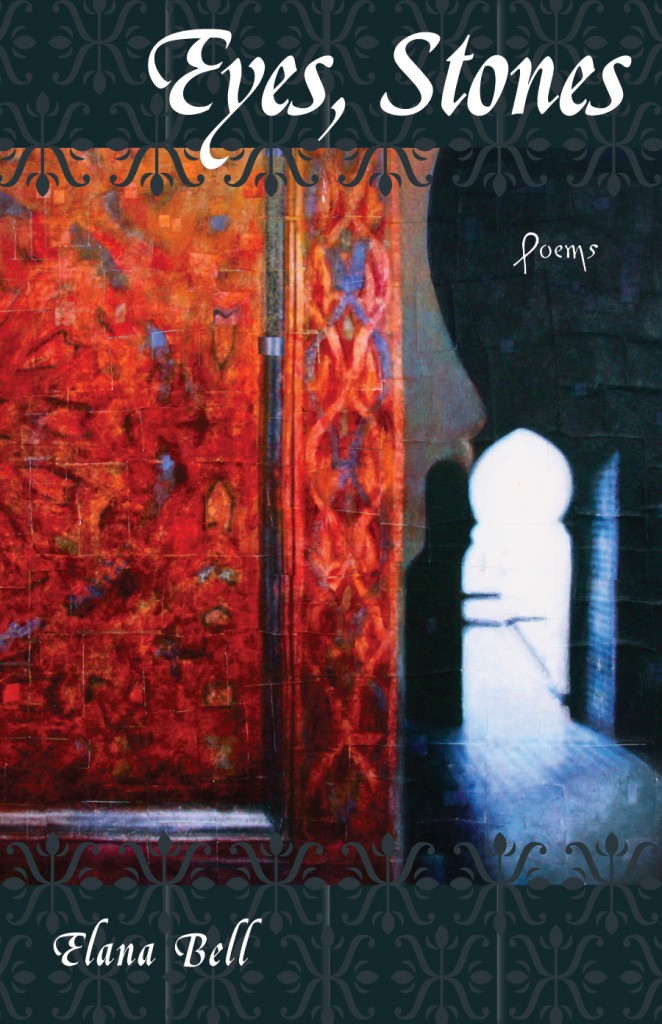
Book Review: Eyes, Stones by Elana Bell

Eyes, Stones–Elana Bell’s first collection of poetry and the winner of the 2011 Walt Whitman Award–is an extraordinary feat of poetry and clear-mindedness.  Each of these 40 small poems are dense explosions of beauty and clarity, encased in language that is both modern and antique, beautiful and brutal–much like the countries that she writes about.

In her poetry, Bell attempts to look and understand the worlds that are Palestine and Israel. She moves from biblical stories to modern events and much in between. Her topics range from the ancient relationship of Abraham and God, Sarah and Hagar, Ishmael and Hagar to the modern Holocaust, the Zionist movement, the 1968 Egypt-Israeli War, and the most recent Intifada.

But what is remarkable about these poems is that they don’t stink of politics, of nationalism, of self-righteousness.  They are simple poems that lay bare the simplicity of man’s pain, the artlessness of his troubles, the wonder of his existence. Often, in these poems one is unsure which side of the Israeli-Palestinian conflict Bell sits, her treatment is so even-handed.

Take for instance her poem “Naming the Day,” which is a composite both of those Jewish villages in Eastern Europe destroyed or made “Jew free” AND those Palestinian villages destroyed or evacuated during the 1948 Arab-Israeli war.

In “On a Hilltop at the Nassar Farm,” the speaker admires the Palestinian woman Amal:

Amal laughs with all her teeth and her feet
tickle the soil when she walks. She moves
through her land like an animal. She knows it
in the dark. She feeds stalks to the newborn
colt and collects its droppings like coins
to fertilize the field. Amal loves this land
and when I say land I mean this
exact dirt and the fruit of it.

Amal’s rough existence she compares with her own existence in the settlement that surrounds Amal’s land:

All around her land the settlements sprout like weeds.
They block out the sun and suck precious water
through taps and pipes while Amal digs wells
to collect the rain. I am writing this poem
though I have never drunk rain
collected from a well dug by my own hands,
never pulled a colt through
the narrow opening covered in birth fluid
and watched its mother lick it clean,
or eaten a meal made entirely of things
I got down on my knees to plant.

Yet Bell’s work does not rise from the guilt of the occupier.  It comes from a genuine love of the people–both Arab and Israeli–and a horror of the world that has evolved around them.  A particularly poignant poem, “In Another Country It Could Have Been Love,”  laments what could be between the two:


The next time I saw her, a rifle
strapped her shoulder. The tip
of it fingered my ribs, my hips
the inside of my thighs.
Cold metal instead of her hands,
her eyes.

Elana Bell herself is the granddaughter of Holocaust survivors, and as such, her examination of Jewish and Arab relationships is strikingly honest. She maintains an embracing love of the land through its many incarnations: biblical landscape and Zionist dream, modern nation and occupied territory.

In the end of the collection, she returns to Brooklyn where she lives. There she will “watch the Super Bowl…eat organic greens and make love on Saturday afternoon…[She will] listen to jazz in tight-packed clubs…and sleep on clean cotton sheets.” It is during this sleep, however, that the Mid-East comes to haunt her, to remove her from her comfort, and to tie her to the lands of her heritage.

Eyes, Stones won the 2011 Walt Whitman Award of the Academy of American Poets.  Five of her poems (along with her bio) are published on the Academy’s website. Check it out. She is a remarkable woman and a fine poet.

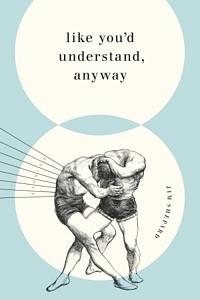
Book Review: Like You’d Understand Anyway by Jim Shephard

I don’t often read short story collections. My rhythms, I guess, are more geared towards the novel. And most of the short stories I read are in magazines or journals, not in collections where one follows the other. But I did pick up and read Jim Shepherd’s  Like You’d Understand, Anyway.

Someone once explained a short-story to me like this: imagine a brick wall is a person’s life. A short-story is just one of the bricks removed. We have little real knowledge of the bricks surrounding this one brick, just the one. solitary brick. Just this moment in a person’s life.  I don’t how accurate this is for all stories (it’s very Joycean) but I refer to it often.

Well, Jim Shephard’s stories are pieces not of a brick wall but from an extraordinary mural. The stories are all over the place and all over time.

There is a general fatalistic theme running through them, a feeling of being unprepared, unsuited, or even uninterested in facing the battles of life. And if that sounds like a very modern view of the world, it is.  Except Shepards’s characters are from all over history.

“Eros 7,” my particular favorite, is a sweet love story taken from the diary of a female cosmonaut in 1963, the early days of the  Russian-US space race.

“Hadrian’s Wall” is a sensitive look at young soldier in the Roman legion–lacking confidence and skill–as he is stationed in 2nd-century Britain.

There are stories that take place during the Chernobyl accident, during the French Reign of Terror, during an early ascent of the Himalayan peaks, during the 19th-century days of Australian exploration.

But there are also simple domestic stories. “Proto Scorpions of the Silurian” depicts a young man trying to deal with his overwrought parents who, in turn, are trying to cope with his mentally unbalanced brother. Another story,  “Courtesy for Beginnings,” shows a young boy who is terribly miserable at a horrible summer camp but who is forced to console his parents by phone who are also struggling with an unbalanced sibling.

But whether in Ancient Greece or modern Connecticut, each of these stories brings a modern sensibility of doubt, isolation and struggle. Each is a sensitive portrayal of a character far different than most of us, but very similar all the same.

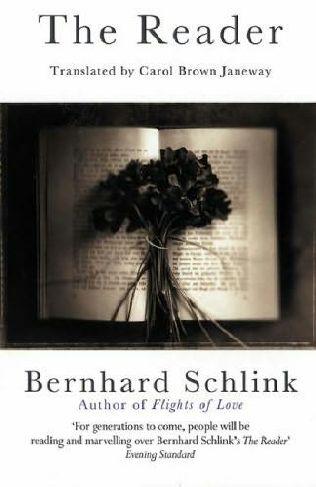
Book Review: The Reader by Bernhard Schlink

Cover of Bernhard Schlink’s book.

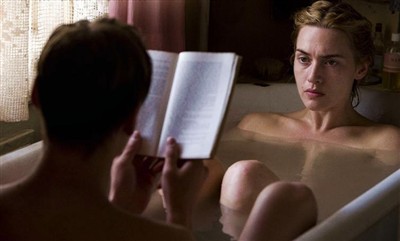
A scene from Stephen Daldry’s film, The Reader

The old question of the book and the movie: Can a film ever do a novel justice?  Or should we look at them as entirely separate works of art and not make the comparison at all?  Just the parameters of a roughly  two hour viewing experience seriously limits what a film maker can do with his source, a source that usually comprises a multi-hour/multi-day experience for a reader.

Certainly there are films that are more successful than others in capturing the essence of a novel. And just as certain there are real travesties. But the successes are such because they capture the spirit of the novel rather than getting lost in trying to relate every detail.  I am thinking of Mike Nichols Catch-22 based on the Joseph Heller novel.  The film works because it perfectly captures the inanity of bureaucracy, the numbness of war, and the black humor of Heller.  It is a large novel, non-linear in its arc, and Nichols captures its essence without getting bogged down in trying to capture every character and sub-plot.

I saw the film The Reader when it was released in 2008 and only got to reading the book in 2012. (I had two friends who refused to see the film because they had loved the novel so much.)  Regardless, it was a compelling film with a maddening and dramatic twist.  A young school boy (Michael) has an affair with a older woman who insists that he reads to her every time before they have sex.  He reads her all the classics–The Odyssey, War and Peace, etc. But she seems oddly aloof, and at the end we realize why. The boy, on the other hand, grows into an unfeeling man, and his coldness and inaction when needed is what is infuriating.

The novel–by its very nature–is quite different. First, it is much more internal, narrated by the boy who often questions and analyzes his own thoughts and his own actions. There are ruminations on the ethical choices made by ordinary citizens during the Holocaust, on the responses of the following generations on the actions of their own mothers and fathers. (These scenes take place in 1966, two decades after the war.) And yet while the narrator weighs, dissects, conjectures about these ethics, his own actions–many years after the war–must also be examined.  His coldness, his lack of human kindness, his decision not to act is all quite similar to that which he condemns in the female guards who are on trial in the second half of the novel.

When Hannah (the older woman) confesses to a crime she did not commit rather than reveal a secret she is much more ashamed of, she is given life imprisonment. Michael has information that could acquit her that he does not reveal.

To me, the ending is insignificant, despite the attempt to redeem Michael. Yes, he does reach out to Hannah, he does realize his own hardness, and he does try to do right.  But it is all too late. I had grown to dislike him so much by then that his redemption was all but impossible for me.

Most of the details of the plot remained the same from  book to  film but the internal voice was missing–or at least adulterated. The novel also starts out quite erotic which simply cannot be captured adequately on film with the same impact–words seem always more intimate and immediate than soft-lit actors and actresses.

The old question of book and movie?  In the case of The Reader, both.  They are two different things, two very good experiences, two separate ways of engaging a reader/viewer.

Northern California and Ireland, sea lions and selkies, and a powerful poem

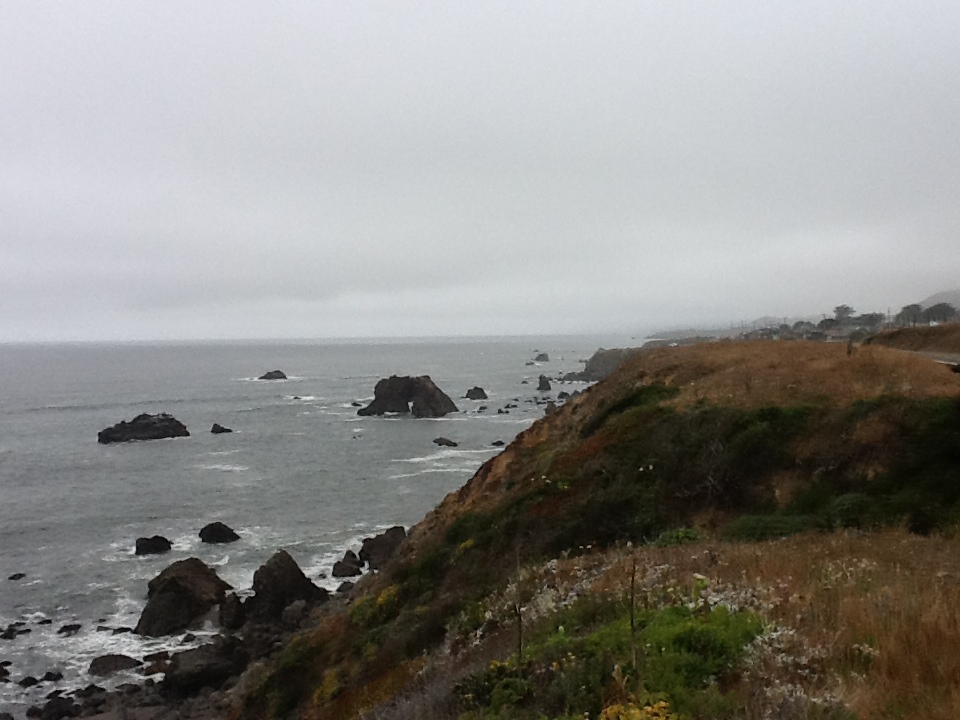
I am not the first to make the comparison between the Pacific Coast Highway in Northern California and Ireland. But that doesn’t make it any less true. It is a magnificent landscape, full of crashing surf and rock-strewn fields, dramatic cliffs and rolling mountains. The hills are more “golden” than green, and the roadways have much fewer sheep and doubledecker tour buses, but yes, it very much reminds me of the west coast of Ireland. Every turn in the corkscrewing highway offers another extraordinary vista.

But it is Goat Beach which is perhaps the most memorable. Goat Beach sits where the Russian River meets the Pacific Ocean. In July the river flow is feeble, but it is then–between March and July–that the area is a breeding ground for sea lions.

By July the sea lions have already pupped and the adult ones seemed quite tired. At first, it is a bit jolting to see twenty to thirty adult sea lions asleep by the rivers edge. It looks as if they have all been slaughtered. But then a fin rises to slap a companion or another waddles to find a more comfortable position. They are just resting–and continue to do so for the rest of the morning.

But the seal pups are another story. Frisky and active, they plunge into the crashing surf of the Pacific or slide into the muddy waters of the Russian River. There is something fascinating about these creatures: their sleekness, their eyes, their movement.

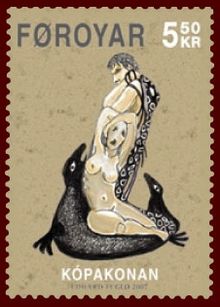
A stamp from the Faroe Islands featuring a selkie emerging from her skin.

Seals and sea lions have long played a part in Norse and Celtic myth.  The legend of the selkie is perhaps one of the most famous and there are a wide variety of stories about them.  These creatures are seals when in the water but humans when they go upon land and emerge from their sealskin. And while there are numerous variants on the stories, there are basically two version of the selkie myth: one female, one male.  The female selkie is often a beautiful woman who is  “captured” by the man who finds her, unable to return to the water because the man has taken possession of her discarded skin.  The male selkie is also renowned  for its beauty and charm when it comes upon land and sheds its skin, and he is often noted for his ability to satisfy the unhappy and dissatisfied women of the area.  Fairly often, these women bear his children, usually children with some sort of “deformity” or oddity about them. These women too are in possession of the creature’s skin.

I can immediately think of two wonderful movies that deal with this myth.  One, is a 2009 film, Ondine, featuring Colin Farrell (and my personal favorite actress Dervla Kirwan from Ballykissangel)  and the other is an older film from 1994 called The Secret of Roan Inish.  Both are well worth finding, however you find your movies these days. And both deal with the female version of the story.

Anyway, so I am reading The Guardian online this winter and I come a cross a video of the Scottish poet Robin Robertson reading his poem “At Roane Head.” It is a powerful poem, and perhaps the most powerful reading I have ever witnessed. In it a woman cares for her four children. Her drunken husband has disowned them–for they have seal-like characteristics as well as human. At the tragic end, the woman returns the seal skin to her lover.

Here is the video.  Give it a view–I find it very powerful.


City Lights, Vesuvio Bar and sighting Lawrence Ferlinghetti

I had the chance to be across the country and in San Francisco for a few days this week, and I immediately went to City Lights Books in the North Beach section of the city.  If not the most famous bookstore in America, it is certainly one of them.

City Lights was founded by Peter D. Martin and named after the politico/literary magazine he had founded named City Lights in 1953. It was the very first paperback book store in the United States. As he was hanging the sign on the store at 291 Columbus Avenue, Larry Ferlinghetti walked past and asked to be a partner. Both Martin and Ferlinghetti invested $500. Martin sold his share to Ferlinghetti in 1955.

But the financial/founding history isn’t what is important. It is the store’s place in America literary  history that stands out.

In December, 1955, Ferlinghetti and City Lights published Alan Ginsberg’s Howl. Ferlinghetti had seen Ginsberg read at Six Galleries. It was an extraordinary evening. The reading was delayed until Jack Kerouac, who after collecting donations for wine, returned with several gallon jugs. Also performing and/or in attendance were Mike McLure, Kenneth Rexroth, Gary Snyder, Lawrence Ferlinghetti, Phillip Lamantia and Phillip Whalen–all bright lights in the Beat movement. The next morning, Ferlinghetti sent Ginsberg a telegram stating that he would like to publish the poem, the fourth book in City Lights’ Pocket-Rocket Series. Ferlinghetti’s telegram began: “I greet you at the beginning of a great career. When do I get the manuscript?

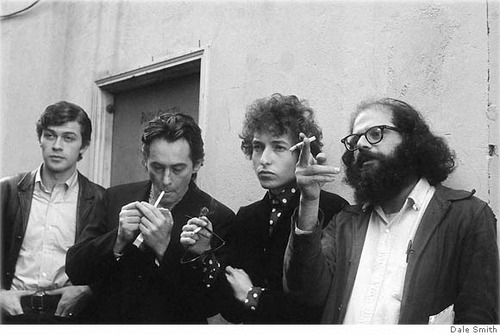
Robbie Robertson, Mike McLure, Bob Dylan, and Alan Ginsberg. City Lights Books, San Francisco 1965.

Four months after publication, the cashier at the store and Ferlinghetti were arrested for selling obscene material–Howl. The case riveted the nation–and made Howl one of the most notorious/famous books of its time. The judge’s decision–that Howl was fully protected by the First Amendment–became an important precedent in the future cases against Lawrence’s Lady Chatterley’s Lover and Miller’s Tropic of Cancer.

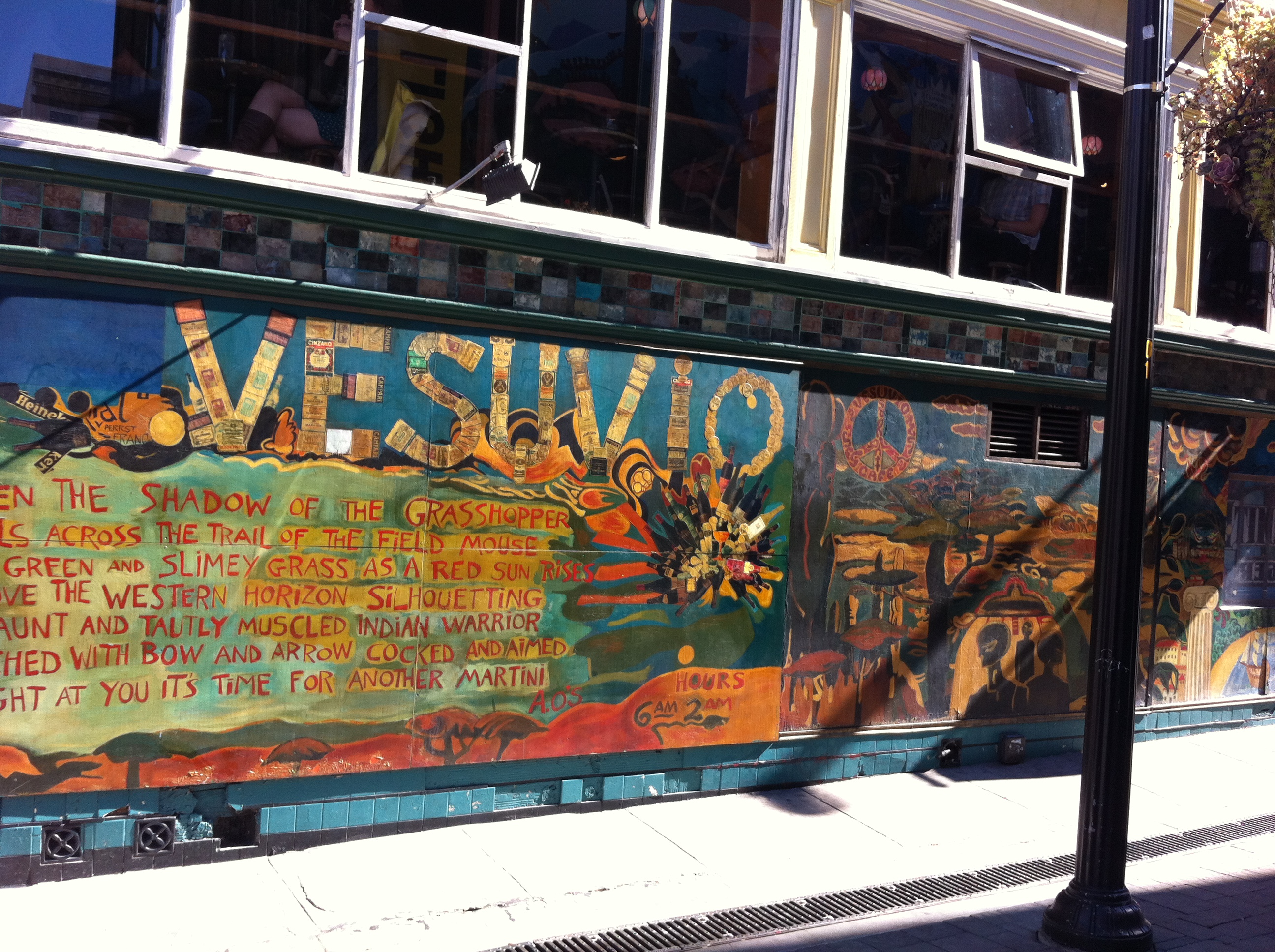
And so…after browsing  the three floors of the book-store, filled with memorabilia, photos, and more than just books, I went across the alley–Jack Kerouac Square–to  the Vesuvio bar. This wonderful bar –mismatched furniture, decals, art work, cheap drinks, two floors, old posters–is a step back into time, or at least in my head. Pictures of Jack London vie with pictures of Jack Kerouac vie with pictures of David Crosby and Grace Slick. A giant portrait of James Joyce hangs next to a photo of Joyce reading the paper in Paris on Bloomsday, June 16th.

Ienjoyed myself. Spent most of the time walking around and reading the walls–the vintage posters advertising readings by a who’s who of San Francisco poets and concerts from the early days, the photos of legendary writers, poets, activists and actors, and original art both bad and worse.

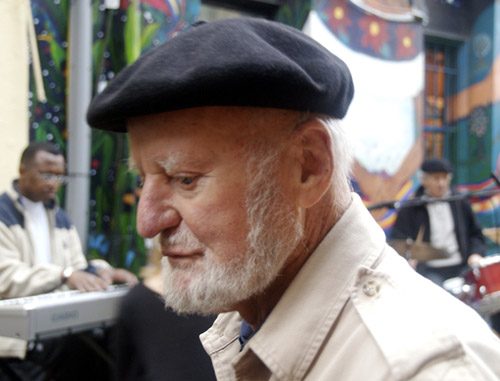
And then it was time to leave.  Outside, we took a few pictures and turned to leave.  And then, as I turned to look back, there coming out of the bar was Ferlinghetti himself.  He stopped, looked around, and placed a cap on his head. My first inclination was to go up to him and shake his hand, thanking him for his long battle against censorship, imperialism, and philistinism, for his support of art, poetry and the avant-garde.  But then I decided against it.  Let a man walk out of a bar, look into the sunshine and set on his way without being bothered by an admirer.

Lawrence Ferlinghetti. photo via Flickr by Steve Rhodes