Book Review: The Changeling by Kenzaburo Oe

Kenzburo Oe

Kenzburo Oe

My knowledge of Japanese literature is very limited. I know a few poets–mainly ancient masters of the haiku–and I knew two novelists: Yukio Mishma, who many of my generation would know as the author of The Sailor Who Fell From Grace with the Sea,  and the contemporary novelist Haruki Murakami, whose critically acclaimed novels such as Kafka on the Shore, Norwegian Wood, and The Wind-up Bird Chronicles have been international best sellers as well.

Well this summer, I was introduced to a new one–Kenzaburo Oe.  (It is evidence of my ignorance that Kenzaburo Oe won the 1994 Nobel Prize for Literature, but nevertheless unknown to me.)  I was introduced to him by a wonderful writer, reader, traveler and photographer who writes the erroneously named blog francescannotwrite and who spoke about picking up the novel in Geneva last year, having known nothing about it or the author either. Her comments on it stressed the intelligence of Oe and her fascination with the plot.  And it sent me searching for it.

She was right on both accounts.

The Changeling tells the story of an aging writer Kogito whose boy-hood friend is now his brother-in-law and a giant in the Japanese film industry. The brother-in-law, Goro, had once sent Kogito a tape-deck with a collections of tapes that he had made. These first tapes were of overheard (and recorded) conversations, eavesdropped moments, unsettling sounds that Goro collected to help Kogito put out of mind the vindictive journalist who has been hounding him.  Fifteen years later, Goro sent him a new collection of tapes, tapes that were, in his voice,  lectures, rants, philosophical  queries, friendly advice and mentoring, and most importantly–the announcement of his suicide.

Book cover for The Changeling

Book cover for The Changeling

In fact, it is on an early tape that Kogito learns of his friend’s death:

“So anyway, that’s it for today–I’m going to head over to the Other Side now,” Goro said casually. …”But don’t worry,” Goro went on, “I’m not going to stop communicating with you.”

And the rest of the tapes are Goro’s communication–from the Other Side. Each night Kogito listens, pauses the tapes, responds, pushes play again, responds again. In fact, each night after Goro’s death, Kogito has full-out conversations with his dead friend. Conversations that are filled with intelligence, logic, debate and argument and that are seeped in a great deal of memory.

After a while, Kogito’s wife–and Goro’s sister–asks him to stop. His loud conversations are upsetting both her and their disabled son.

Kogito does stop and accepts a guest teaching spot in Berlin. But Goro speaks to him in other ways there as well. There is a mysterious woman who claims to have known him, claims to know the real reason for Goro’s suicide. (The Japanese tabloids have been running with a scandalous story.)  But most importantly there are Kogito’s memories, which, alone in Berlin, he can recount, examine and analyze with much greater attention to detail.  Memories of Goro’s life, of his own, and of the two’s together.

We learn that Goro had been attacked and badly beaten by the henchman of Japanese organized crime (he had made an unflattering film about them), but then we learn that the left-leaning Kogito had years earlier been attacked  several times by right-wing groups. Goro’s attack made international news and he is fighting the thugs in court; Kogito never reported his assaults.

We also learn a disturbing secret of the two men’s shared childhood.  A secret that–when faced–shines much light on Kogito’s memories and the inward journey that Goro’s suicide precipitated.

Frances, of “francescannotwrite” mentions the intelligence with which the novel is imbued. And she is right.  The conversations between Goro and Kogito, one dead and one alive, are heady and range from art and politics to society and life, from French literature and Japanese gangsterism to the War and their childhoods.  In his tapes, Goro seems–from “the Other Side”–to be pushing his friend to a clarity that his life requires.

And it is a wonderful read. Like the art of Hokusai, where there are minimal lines but great power, Oe’s story is rich and dense and intelligent but it never feels that those things are in the foreground. The power is there in the conversations, the allusions, the references, but In the foreground is the fascinating history of Kogito and his dead friend.

It is a memorable story and a memorable novel.  So now, I need to find some others.
Movie Review: Bonjour Tristesse (dir. by Otto Preminger)–Jean Seberg and the weight of sadness

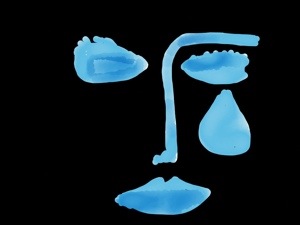
"Bonjour Tristesse" illustration 2013 by jpbohannon based on image from film credits.

“Bonjour Tristesse”
illustration 2013 by jpbohannon
based on image from film credits.

Bonjour Tristesse (1958) was Jean Seberg’s second movie and her second one with the director Otto Preminger. The first, St. Joan, was a commercial flop and roundly criticized, as was Seberg’s performance in it. But it wasn’t really her fault: Preminger had let the nineteen year old naif vulnerably out on her own and she was unprepared. In fact, she had “won” the major role when, unknown to her, a neighbor had entered her name in a raffle that Preminger had famously set up to pick his St. Joan. The young girl from Iowa was in no way prepared to carry the load of Preminger’s version of George Bernard Shaw’ play.

As a gesture of faith (and apology), Preminger cast Seberg in his next film, Bonjour Tristesse, based on the novel by Francois Sagan. Set in Paris and on the French Riviera, Seberg plays Cecile, the daughter of widowed playboy, Raymond (David Niven). Present day scenes are set in Paris and shot in black-and-white. As she flits from bohemian jazz club to high-society, pre-opera dinners,  Seberg’s voice narrates a voice-over explaining her present ennui. Her memories, on the other hand–the events that have caused this sadness–take place on the French Riviera and are filmed in brilliant, sun-soaked color.

While on the Riviera, Raymond abandons his young, scatter-brained girlfriend for an old friend, the more sophisticated, more mature and more serious Anne Larson (Deborah Kerr). The two quickly get engaged and the new fiance is serious about curbing the young Cecile’s carefree life.  It doesn’t end nicely.

bonjourtristessecast

Jean Seberg, Deborah Kerr, and David Niven in Bonjour Tristesse

The film is a bit dated now, but Seberg’s charm is still infectious and her waif-like beauty fetching. But again, the film was pilloried by the critics. She was a younger, spunkier Audrey Hepburn (whom Preminger had considered), but she simply did not have the acting experience…yet.

Her next film, The Mouse that Roared with Peter Sellers was much more warmly received, but by then Seberg had already decided on a life in France. (She had by then married François Moreuil, a French man she had met while filming Bonjour Tristesse.)  Her career in France skyrocketed, and she soon became the female face of the French New-Wave–most notably starring in Jean-Luc Godard’s Breathless–and an international sensation.

Jean Seberg in Bonjour Tristesse

Jean Seberg in Bonjour Tristesse

But around then, her personal life was already under scrutiny by the FBI. Her financial support and vocal support of civil rights organizations and Native American organizations brought her to the attention of J. Edgar Hoover and the  U.S. government, and she quickly became one of the more celebrated objects of the FBI’s COINTELPRO program. Its surveillance of her, its rumor-mongering, and its harassment were unceasing. And damaging.

In the end, it was too much, and Jean Seberg killed herself at the age of 40 in 1979. (Although even this is questionable, and the circumstances of her death are more than suspicious.)

In, Bonjour Tristesse, Seberg played a young woman stumbling under the weight of immense sadness (the sadness works much better in the novel.) Her career from that point on would likewise embrace much sadness but also much happiness. Celebrated in Europe, blacklisted (probably) in Hollywood, and hounded by the U.S. government, the young gamine-like beauty became a film icon…and a large footnote in the annals of FBI malfeasance.

Quote of the week #16: August 11, 2013

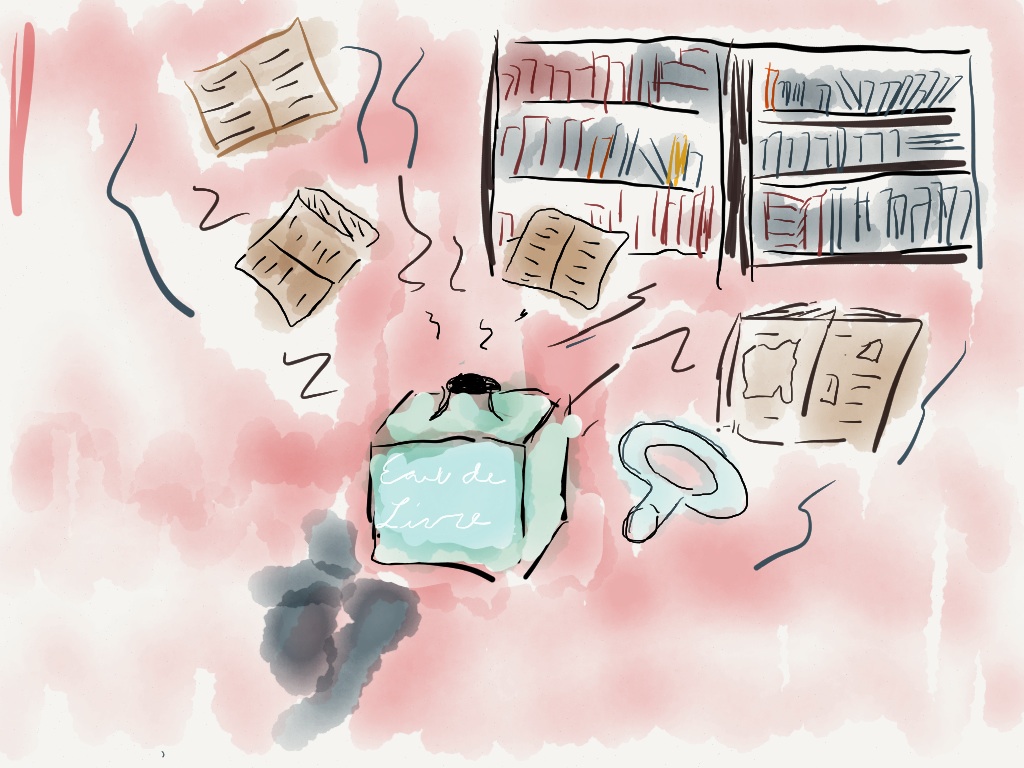
“I stepped into a bookshop and breathed in that perfume of paper and magic that strangely no one had ever thought of bottling.”

Carlos Ruiz Zafón
The Angel’s Game

Eau de Livre illustration 2013 jpbohannon

Eau de Livre
illustration 2013 jpbohannon

Book Review: Black Aperture by Matt Rasmussen

“Sponsored by the Academy of American Poets, the Walt Whitman
Award is given annually to the winner of an open competition
among American poets who have not yet published a book of poems.”

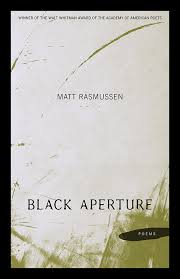
black aperture

Black Aperture by Matt Rasmussen

Each year the Academy of American Poets sends its members a copy of that year’s winning volume. This year the title was Black Aperture by Matt Rasmussen. And if good poetry is meant to rattle in your head, nestle there a while in the corners of your mind, and then come unbeckoned to the forefront of your consciousness, then Rasmussen’s poems pass the test and the Academy made an excellent choice.

Within the collection, there are poems about deer hunting and bird hunting: “when cleaning a grouse,/puncture the crop/to release the scent/of fresh clover.” (from “O”). There are poems that re-imagine the creation:

The animals gathered
and having cried enough

would never again.
God knew he had

asked too much. He threw himself

into the sun and burnt
into white ash. It fell

from the sky and covered
the mountains. The animal

who named everything
called it snow. (from “And God Said”)

And there are poems about poetry itself: “Through the mirror, it saw a house/of air falling inward. The poem heard/the poet calling and jumped.” (from “I am not a poem”)

But the overriding theme is the suicide of a brother.

There are three separate poems called “After Suicide” and one poem, “Reverse Suicide,” which takes the events in reverse to when both the speaker and his dead brother are once again raking and bagging leaves. In truth, the majority of poems take this momentous act as its subject. And those that don’t address it specifically are tinged with the shadow of it, a shadow that hovers over every poem.

Yet the poetry is not maudlin or morbid. It is, in fact, a source of liberation, as the speaker attempts to clarify through language both the act and his reactions, both his grief and his understanding of it, both his dead brother and his relationship with him.

Midway through the book, Ramussen places a poem called “Chekhov’s Gun.” Chekhov’s theory is that if a loaded gun appears in a play in Act 1, it must be fired by Act 5. Rasmussen begs to differ:

Nothing ever absolutely has to happen. The gun
doesn’t have to be fired. When our hero sits

on the edge of his bed contemplating the pistol
on his nightstand, you have to believe he might

not use it. … (from Chekhov’s Gun”)

It is a clever argument within the Black Aperture, because that gun–not only loaded but already fired–is present from the very beginning of the collection. The possibility of “not firing” that he posits in the Chekhov poem, is no longer a possibility. The speaker circles the once possible act of not-firing, while coming to grips with the already accomplished fact. That he does so with clarity, compassion, understanding and brilliance raises Matt Rasmussen’s Black Aperture from a mere elegy for a dead brother into something much more universal and accessible to us all.

Truth, Fiction, and Bigger Truth

A few days ago I received a message from my friend Gerry Bracken who started off with the words “I rarely read fiction, but I picked up a copy…” And he recommended a detective novel based in L.A. to where I was then flying.

Maria Popova's Brain Pickings

Maria Popova’s Brain Pickings

Yesterday, I was browsing through Maria Popova’s blog, “brain pickings,” and I clicked on her bookshelf. (http://bookpickings.brainpickings.org/) Her site routinely discusses books, authors, and readers. And the titles she list are predominantly non-fiction: titles that I jot down and often pick up at the library.

And then last night, I read the ExPlore twitter posting (also managed by Maria Popova). It listed Bill Gates’ reading list for the Summer of 2013. The list is daunting, fascinating and wide-ranging, but except for a single novel, it was all non-fiction. (Click here to see list.)

What is with this reluctance to read fiction? Are we wasting our time? Or more importantly, am I wasting my time.

There once was a time, when the reading of fiction–particular of novels–was considered by many as a harmless past-time for idle girls and not the pursuit of serious, intelligent people. But that was 200 years ago. In the interim, fiction has taken on a bit more gravitas, a bit more legitimacy.

At times, however, I feel haunted by that ancient attitude. And at other times, I feel deliciously guilty for sinking into a novel. Shouldn’t I be learning something? Shouldn’t I be boning up on something? Refining what I know? Discovering new ideas?

Well, I don’t know.

A while back, I ghostwrote a book on the history of Ireland. I researched assiduously, read primary and secondary sources, talked and listened to people and their stories, pored over all the news reports, particularly those on the current events that were unfolding before my eyes.

books.transatlantic_1

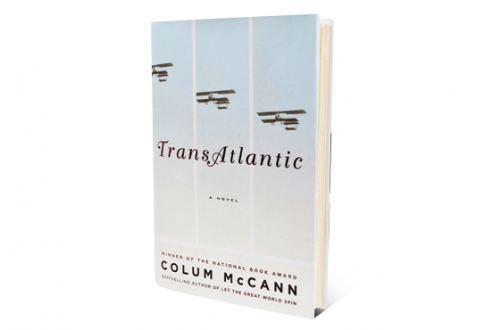
Colum McCann’s true fiction TransAtlantic

But I know I never got near the truth that I got in reading Colum MCCann’s novel Trans Atlantic. The section(s) on George Mitchell and the Irish peace negotiations, for instance, was better history than I could have ever gleaned in a biography or history book. There was life in those pages, in the account of Mitchell’s days in Belfast, on his dealings with the myriad politicians and organizations, in his observations of the ordinary people and the details around him. Did everything happen the way McCann described it? Probably not. Was it true? I believe very much so. A bigger truth than the historians can share.

I have learned much from fiction–I have learned about people: people in drastic circumstances, in simple ordinariness, in great passion, and in wrenching heartbreak. I have learned about pride and hubris, of great loyalty and great betrayal, of sacrifice and of love. I have met more people in the pages that I have read than I ever could have in the life that I led.

And, in a way, after all, that is what we’re here for–to learn about the wide variety of fellow human beings who share our moment in time and space.

I need to turn my back on this guilt about reading fiction.

Book Review: TransAtlantic by Colum McCann–the world continues spinning.

National Book Award Winner, Colum McCann

National Book Award Winner, Colum McCann

Around this time last year, a friend of mine lent me a paperback copy of Colum McCann’s Let the Great World Spin. It was nothing short of masterful, an eloquent novel filled with beauty, wit, humor, and wisdom–and a helluva story as well. A variety of personal histories are threaded around the dazzling 1974 tight-rope walk of Philippe Petite between the World Trade Towers and set against the more resonant chapter in the Towers’ history, with the tragedy of 9/11 looming in the background. The writing was dizzily beautiful, every page an extraordinary read.let the great world spin

When I returned to work at the beginning of the school year, I learned that many of my colleagues were also reading McCann’s novel. And each of them held the same high opinion.
Now, this summer I was excited for the release of McCann’s latest novel, Trans Atlantic. And my anticipation was well worth it.
Like the previous work, McCann’ new novel is steeped in history, although this work stretches from 1847 to 1998 and concerns three separate stories of historic figures who have traveled across the Atlantic.
The novel begins in 1919 with two pilots, Alcock and Brown, both veteran RAF flyers, about to embark on the first transatlantic flight. The two leave from Newfoundland for Ireland, with a thermos of tea, a few wax-papered sandwiches, a load of mail, and a lot of gumption. At one point, close to their end point then get caught in an enormous cloud. They lose their perspective, not knowing what’s up or down, what’s left or right, The only way to survive is to go into a spin–a dangerous thing in itself. But the ultimate fly out and land in a bog field in Galway. The soft earth swallows the nose of their plane.
books.transatlantic_1
In fact, “spinning” is a theme that plays greatly in this book–seemingly carrying on a theme outlined in the last novel.
The second story comes seventy years earlier, and Frederick Douglas, the escaped slave, has traveled to Ireland to promote his book. (Although he had tried to book first class passage, he had been threatened and made to sleep in steerage.) In Ireland, however, he is feted and adored by the Anglo-Irish; he gives speeches to large audiences, garners great donations to send home to the abolitionist movement and his book sells well. But he too feels he is spinning. At one point, he even refers to himself as a tightrope walker (he says “funambulist”–I had to look it up.) Again we are echoing the tropes of the last novel.
Douglas is “spinning” because while he is being celebrated for his passion for equality and the end of slavery in America, he witnesses the utter horror of the starving Irish, starving while rivers of food, livestock and goods are exported to the rest of the British Empire. (Ireland led the British Empire in beef exports during the years of the potato famine!) It is the beginning of the potato blight, and Douglas is greatly affected by what he sees–the men whose faces are brown from eating bark, the woman whose arms are like ropes asking them to take care of her dead infant–affected by the disparity between the Anglo overlords and the downtrodden Irish.
On stage, he meets and joins the great liberator, Daniel O’Connell, but when he later expounds O’Connell’s beliefs at table, his host pulls him aside and tells him not to “bite the hand that feeds him.” Douglas’ tightrope-walk is to embrace justice and freedom for his people, while keeping silent about the horrors of Ireland in the 1840s. The one will bring funds and awareness to the abolitionist movement back home; the other would dry those funds up. It is a dizzying conundrum.
The third story takes place in 1998 and follows George Mitchell as he jets back and forth across the Atlantic negotiating what would become the Good Friday Peace Accord. Mitchell has been picked by President Clinton to lead this historic conference, and, aside from the constant jetting back and forth, he feels his head spinning from the various participants in the process: the separate governments, the various paramilitary organizations, the political parties, the loyalists, the nationalists, the Gaels, the Unionists, etc.
Here is the world that Mitchell is trying to straighten out, trying to stop from spinning further out of control:
The Battle of the Boyne. Eniskillen. Bloody Sunday. There was a clue in every detail. Gary was a Prod. Seamus was a Taig. Liz lived on the Shankill Road. Bobby on the Falls. Sean went to St. Columba’s. Jeremy to Campbell. Bushmill’s was a Protestant whiskey. Jamesons for Catholics. Nobody drove a green car. Your tie was never orange. You went for holidays in Bundoran or you went to Portrush. Fly you flag. Pick your poison. Choose your hangman.
Added to this, the ex-senator, is an old father. At sixty-four, his son is only five months old. Talk about your head spinning. In the five months of his son’s life, Mitchell has been home less than twenty days–his transatlantic treks becoming more and more urgent. (Mitchell did this for two years and received zero salary, just expenses.)
All three stories–like the stories in Let the Great World Spin–are threaded together in a marvelous tapestry of history and generation, of perspective and connection. Four generations of women–from the scullery maid who met Douglass in 1846 and emigrated on a coffin ship to America to her great, granddaughter shaken but unbowed by the Troubles that George Mitchell is striving to repair–weave their story through the historic narrative.
And the language is exquisite. The streets of New York, the light on the town of Cove, the sky above the Atlantic, the horrors of a Civil War field hospital, the ice fields of Minnesota, all are described with details that are both lyrical and true. The inner and outer lives of both the historic personages and the fictional characters are drawn with verisimilitude and generosity. And the story itself is affirmative and moving, profoundly moving.
In an NPR interview after Let the Great World Spin won the National Book Award, McCann implied that he now thinks of himself as a New York writer. That may be so. But the transatlantic tug is a strong one, and his Irish way with words is very much still serving him well.
Find the book and read it. It is that good.

Quote of the Week #13: July 21, 2013

illustration 2012 jpbohannon

illustration 2012 jpbohannon

“If my books had been any worse, I should not have been invited to Hollywood, and if they had been any better, I should not have come.”

Raymond Chandler

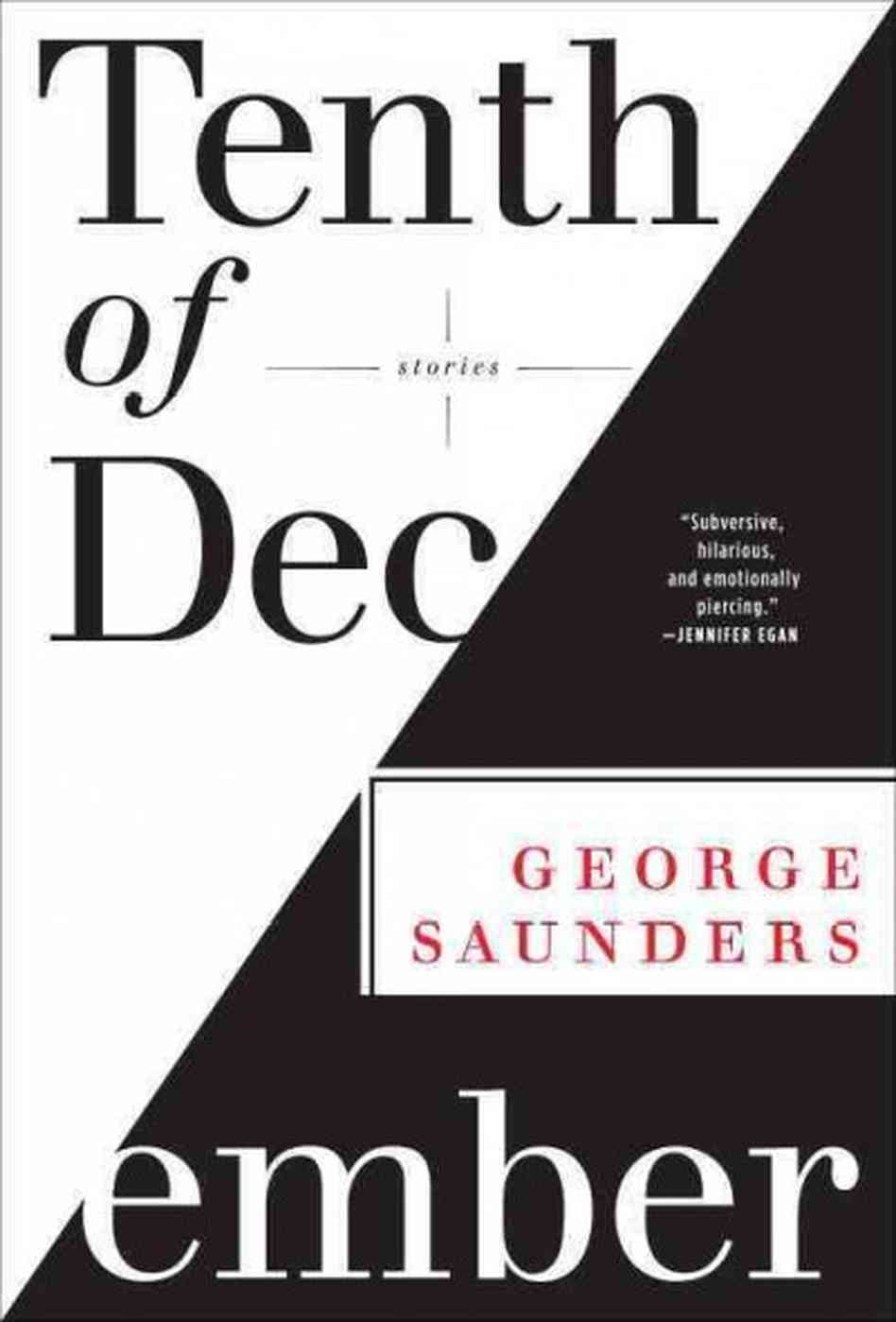
Book Review: Tenth of December by George Saunders

To be truthful, I was put off by all the hype that surrounded Tenth of December when it was released back in January. Articles about the short stories and their author, George Saunders, were everywhere. All the major papers, magazines and blogs were praising, lavishly, both the collection and Saunders himself. All of sudden I was seeing articles about or by Saunders from years past, all floating to the front, all becoming part of this giant group-hug! He was compared to Twain and Flannery O’Connor, to Vonnegut and Pynchon, to Bartheleme and Welty. Even the late David Foster Wallace was corralled in for a blurb on the inner covers.

And now, I can say, all the hype was legitimate and deserved.  Tenth Of December is something special. 10thdecemberbookcover

The longest story in the book “The Semplica Girl Diaries” begins with a father, in the near future, starting a diary. As he begins, he recounts his fears and worries for his children, fears that they are growing up with so much less, materially, than their classmates. He also reveals his own anxieties about his failure as a provider of these consumer necessities. During the course of his journaling, the family is teased with a windfall and then pushed towards ruin. Oddly enough, strung throughout the story, literally, are third-world women who sell themselves in America as lawn ornaments, putting his own focus on material success in a very skewed light.

Other fathers–or father figures– appear throughout the stories. In the first story, “Victory Lap,” a young boy saves a girl who is being abducted. But he second guesses all of his heroic actions in terms of what his father would say about his getting involved and not completing his chores. At the same time, the perpetrator keeps worrying about his own father–and while carrying out his violent abductions–worries whether his father would be proud of the way he is doing things.

In a very short piece, “Sticks,” an aloof, mean-spirited and inaccessible father dresses a crucifix-like contraption for every holiday: Santa for Christmas, a groundhog for February 2nd, a soldier for Veterans Day, etc. When his wife dies, he dressed the pole as Death and makes a memorial to her. His own–and the sticks’–ending is seemingly inconsequential, but full of pathos nevertheless.

George Saunders

George Saunders

On the whole, Saunders’ stories are full of dysfunctioning families trying to succeed in a world of plastic values and overwrought commercialism. It is filled with simple people having difficulty coping in an increasingly complicated world. This world he describes is a bit off-kilter, but it all seems unnervingly familiar.  And his telling of these tales is enjoyable and unforgettable.

Life and death, hope and despair, pride and self-loathing: these are the topics that Saunders addresses but in a way that is funny as often as it is heart wrenching, a way that is wryly observed, emotional and thought provoking.

All that hype was well deserved after all.

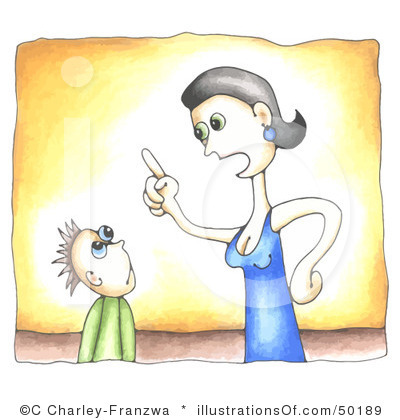
Mother’s advice: “if you have nothing nice to say…”

motherson

I went to the movies on Monday afternoon to see a film that I had been wanting to see for the past month or so. But I left the theater greatly disappointed. And as I walked up 3rd street, I thought to myself, I am not even going to write about this one.

And I think I am right.

I am not a critic–of film, books or music–I simply enjoy these things. And I enjoy writing about them and sharing my enthusiasms about them. But, I don’t feel comfortable bad-mouthing the ones I don’t like. On Wednesday I posted a piece about a book I didn’t like and I feel more than a little discomforted about it.

In this vast “blogosphere” where everyone so easily can send out his or her opinions, I want to rein myself in. Of course, BAD ART exists–there are books that are dreadful, movies that are deadening, music that irks me, but they will find their own levels of acceptance, they will find their own audiences (or not) without my weighing in.

And besides, I don’t have the time to waste on negativity.

After all, all creativity is risk…risk of missing the mark, of being misunderstood, of being ripped apart. But one has to put it out there and let it find its own life. (As Woody Allen says, “Eighty percent of success is just showing up.”)

coffeeshopSo, I’m sitting in a shop having a coffee after the movie and am asked what I thought. “I didn’t like it,” I say, and I give my reasons, listen to counter-positions, discuss the pluses and minuses. This is good, this is what Art should engender–conversation, dialogue, thought, and, yes, even judgment.

But is there really a need for me to blast it on the internet? I’m not so sure, but I don’t think so.

Don’t get me wrong; I will point out inconsistencies in the things that I like, choices and perspectives I disagree with, differences and surprises that throw me, things I see as flaws or would have wished the artist had done differently.

But with things that I don’t like…?  Well, as my mother would say, “if I have NOTHING nice to say, I’m not going to say it.”

Book Review: The Flashman by George MacDonald Fraser

robinhood

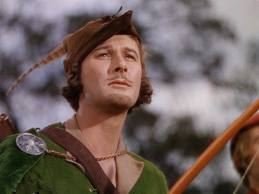
Errol Flynn as Robin Hood (1938)

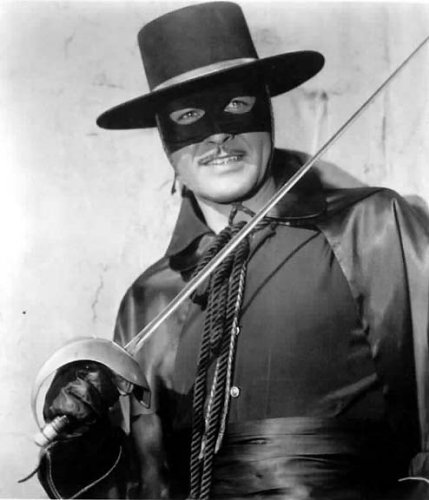
Guy Williams as Zorro (1957-1962)

Guy Williams as Zorro (1957-1962)

As a child I had two heroes–characters whom I would pretend to be, jumping off walls, running in alleys and woods, with friends or by myself. The one was Robin Hood. The other was Zorro. These were my heroes–and I’m sure for a variety of reasons. They both were rebels, outsiders fighting against established tyranny. (The evil Prince John in the former case, Spanish rule in the latter.) Robin Hood fought for the little people (the put-upon Saxons) as did Zorro (the colonized Californians.)

Both were dashing swashbucklers and always more cunning and cleverer than their enemies. They were both perfect role models for a young boy, for in addition to their skill with swords and bows and horses, in addition to their noble goals and pure hearts, they were gentlemen. And for some reason that appealed to me. (Probably for the same reason why I believe God should sound like Cary Grant in all portrayals!)

As I grew and my reading advanced, I found other such characters that appealed to me: The Three Musketeers, The Scarlet Pimpernel, even Charles Darnay and Sydney Carton in A Tale of Two Cities. Unwittingly, I was drawn to those characters who punctured the established hypocrisy and tyranny and who stood up for the little guy, the oppressed, the wronged.

tomjones65

Albert Finney as Tom Jones (1963)

And then I discovered Tom Jones. His skills were nowhere near as impressive as the others–although he was a great sportsman, a horseman, and a lover of life–but his charm and his concern for the weak and put-upon were similar. And he was the ultimate outsider–he was a bastard, found lying in the bed of the benevolent Squire Allworthy. Tom’s enemies were the hypocritical upper class who resented his being taken in by the squire, and who, in a way, both condemned and envied his life-loving ways. He was easy to root for. Certainly, he had his faults, but even these faults could be explained away. And in the end, he one-upped the toffs who had persecuted him–affirming life over priggishness.

So where is this all taken me? To a “hero” I can’t abide.

A friend of mine, a writer and comic in Brooklyn, had often asked me if I had ever read any of George MacDonald Fraser’s Flashman novels. I hadn’t, but promised I’d look into them. But I never got around to it. Finally, as a gift last Christmas, he bought me the first novel, Flashman.

Book Cover of Flashman by George MacDonald Fraiser

Book Cover of Flashman by George MacDonald Fraiser

I wanted to like it. But the hero was different from my past heroes in an important quality: he was part of the ruling classes, an imperialist, an Englishman lording it over the Empire on which the “sun never set.” A bit of a wild oat–the character Sir Harry Paget Flashman, first appeared in Thomas Hughes’ Tom Brown’s Schooldays, as one of Tom’s classmates who was expelled for drunkenness– Flashman desires to tell his side of the story and move forward. (Indeed, Fraser cleverly takes this very minor character, fleshes it out and runs with it–for more than a dozen novels.) But even Flashman describes himself as “a scoundrel, a liar, a cheat, a thief, a coward—and oh yes, a toady.”

Upon expulsion from school, he seduces (and beats) his father’s mistress; his father buys him a position in the army, and from there his (mis)adventures begin. These adventures could be a lot of heroic fun (ala Barry Lyndon), except it is all coming from the wrong perspective–from the view of those in charge. And because of that assumption of superiority, Flashman is as prejudiced and arrogant as any British officer could be at the time. And I found it uncomfortable to read. The Indians and Afghans and Irish and Italians are all stereotyped and all looked down upon and insulted. And they fare much better than the women; for the women–no matter what nationality–are not even human but mere objects for Flashman’s seductions. And he is completely unfeeling in his disposal of them.

Exotic locales, derring-do (though Flashman runs from more battles than he partakes in), and a flip irreverence is often a fun entertainment. But my heroes fight from the bottom up…not the other way around. Falstaff, who holds many of the same characteristics as Flashman, is much more likeable–but that can be because he is not an imperialist, a man who believes his own entitlements. To be honest, I simply don’t like Flashman, never mind the book.

♦ ♦ ♦ ♦ ♦ ♦ ♦ ♦ ♦ ♦ ♦

Ironic coincidence….

There is a scene in Flashman (1969) when Flashman has been transferred from Calcutta to Afghanistan. He is explaining the condition there. Ironically, it sounds very much like Afghanistan history over the past four decades (if you change the nationalities of the forces involved). Here is what Flashman says:

“The reason we sent an expedition to Kabul, which is in the very heart of some of the worst country in the world, was that we were afraid of Russia. Afghanistan was a buffer, if you like, between India and the Turkestan territory … and the Russians were forever meddling in Afghan affairs.”

Then, ” the British Government had invaded the country, … and put our puppet king, Shah Sajah, on the throne in Kabul, in place of old Dost Mohammed, who was suspected of Russian sympathies.”

“I believe, from all I saw and heard, that if he had Russian sympathies it was because we drove him to them by our stupid policy; at any rate, the Kabul expedition succeeded in setting Sujah on the throne, and old Dost was politely locked up in India. So far, so good, but the Afghans didn’t like Sujah at all, and we had to leave an army in Kabul to keep him on his throne. It was a good enough army,…but it was having its work cut out trying to keep the tribes in order, for apart from Dost’s supporters there were scores of little petty chiefs and tyrants who lost no opportunity of causing trouble in the unsettled times, …”

I don’t know about you but this summary of the world in 1839 sounds eerily familiar to me.