
“After silence that which comes nearest to expressing the inexpressible is music.”
Aldous Huxley, “The Rest is Silence”
(As cited on BrainPickings)
“After silence that which comes nearest to expressing the inexpressible is music.”
Aldous Huxley, “The Rest is Silence”
(As cited on BrainPickings)

“Cellar Window in the Courtyard” –illustration 2016 by jpbohannon
The English translation of Elena Ferrante’s L’amica geniale has been given the title My Brilliant Friend and for much of the book we believe it to be a reference to Lila Cerullo, the daughter of the shoemaker and the much-admired friend of the narrator Elena Greco (known as Lenù). And indeed, the phrase fits, for Lila is a precociously wise, driven, and independently thinking little girl. (The novel spans the two girls’ lives from six to sixteen.) And yet, much later in the book, when Lila is being fitted for a wedding dress, it is she who utters the phrase, calling the quieter, less assured Lenù “my brilliant friend.” Much to Lenù’s delight.


But close readers come to understand this much earlier in the novel. Through the first two-thirds of the book we are caught up in Lenù’s appreciation, competition, and admiration of her friend Lila. Lenù is telling the story of HER BRILLIANT FRIEND. But gradually we realize that the novel is actually the story of Lenù, the story of her friendship with Lila, and the decisions the SHE ultimately makes not to be dragged down into the social stagnation that is their poor Neapolitan neighborhood. (Lenù is telling us this story as a 60-year old woman living in Turin after Lila’s son has called from Naples to say his mother has disappeared.)
That Lila is brilliant there is no doubt. She excels in grade school–always edging out her friend Lenù and everyone else–and wins the admiration of all the teachers. She is fierce and brave and sure of herself. Meanwhile, Lenù is like most every youngster, tentative, unsure of herself, and uncomfortable in her ever-changing body. Even after Lila has quit schooling at the age of twelve, she continues to learn and tutors Lenù in Latin and in Greek and sharpens Lenu’s mind with logic and politics and philosophy.
And while Lila finally succumbs to the fate circumscribed by the neighborhood courtyard, Lenù knows that her schooling–an “occupation’ that none of her neighbors or friends or family see the value of–is her only way to break beyond the poverty, the dirt, the violence.
And by this point we see that the novel is Lenù’s Icarus moment, her attempt to fly, to soar higher than those before her. We leave her “on the cliff’s edge,” as she begins to realize at Lila’s wedding the cords that the neighborhood could tie her down with. We readers had also hoped that her friend Lila would join her, but she cannot. At least for now.
Elena Ferrante may be the most written about novelist of the past five years. She is reviewed in the mainstream press and in literary journals. She is both critically and popularly acclaimed. And she is “anonymous”–no one knows her true identity. (Despite a mid-March break through, that cited a Florentine history professor who has denied that she is Ferrante.) This mystery certainly has added to her cachet. And has added to the millions of words written about her.
And yet, even if there were no “mystery,” Ferrante would stand out. Her writing is more than masterful–the narrative is a driving, relentless tour of childhood, filled with incisive details–both external and internal–and a realistic understanding of human fears, desires, needs and ambitions. My Brilliant Friend–the first of Ferrante’s four Neapolitan novels–follows the girls from six to sixteen, and captures exquisitely and perfectly, the pain and joy and dread and hopes of young children in a way that is unmatched in my reading.
Yet, like life itself when looking backwards, those ten years that Ferrante chronicles seem to fly by and are finished before we know it…or are ready for it.
I facetiously wrote to a friend that I found My Brilliant Friend “disappointing”: my great disappointment was that the 330-page novel was over so quickly. I wanted it not to end.
I will take a breather…and then begin the second volume.

“Easter Morning” illustration 2016 by jpbohannon
“I have always been delighted at the prospect of a new day, a fresh try, one more start, with perhaps a bit of magic waiting somewhere behind the morning.”
J. B. Priestly

“Elm Tree” illustration 2016 by jpbohannon
“Then the big elm shot up ahead, lying in wait for them at the bend of the road, and he said between his teeth: ‘We can fetch it; I know we can fetch it–‘”
Edith Wharton, Ethan Frome
I was organizing a bit of a celebration of Irish poets for St. Patrick’s Day at my school, and I figured I might contribute by singing a tune or two. Really, I was only going to do an a capella version of “The Auld Triangle”–the wonderful song/poem from Brendan Behan’s play The Hostage.

Brendan Behan
When a colleague e-mailed to ask if he could bring a penny whistle to the poetry thing I told him my plans. He wasn’t familiar with the tune, but said he would look it up on YouTube. I don’t know what he found–Luke Kelly’s version with the Dubliners is the first hit–but I went and found this Ceiliuradh (celebration) from 2014 at the Royal Albert Hall.
This video captures everything that should be celebrated about being Irish: it is cross-generational, it revels in its history, it enjoys itself and others. The camaraderie among the players–Donal Lunny, Andy Irvine and Paul Brady (all once members of Planxty), Imelda May, John Sheehan from the Dubliners, Lisa Hannigan, Glen Hansard, Elvis Costello, Conor O’Brien from Villagers–is infectious and joyful. But moreso it is the audience–an audience joyously celebrating its heritage in the “veddy-proper” Royal Albert Hall.
I watched the video three times and became more choked up with each viewing. Happy St. Patrick’s Day–watch the video here.


A few decades ago, I remember having to read a piece on “the sociology of clothing in the Victorian era.” The author’s intent was to show that fashion had a subtext. I remember clearly the argument about men’s hats. The thesis was that the height of a man’s hat in Victorian England was proportionate to his status on the social scale. i.e. The society toffs wore tall top hats, the navvies and farmers wore flat caps.
I thought of this again after a conversation about “bowlers.” A friend and I had just finished reading Milos Kundera’s The Unbearable Lightness of Being and were commenting on the bowler hat that the character Sabina is attached to (it reminds her of her grandfather) and which she often wears during sex.
“It’s a silly hat,” my friend said. “There is really nothing sexy about it.”
Silly or sexy? I’d state that both things are true, depending on who’s wearing it.
For Christmas this year, my young nephew gave me a tee-shirt imprinted with the text of Joyce’s Ulysses on it. The text is manipulated to depict Leopold Bloom’s mustache and bowler hat. (Though I argue that Bloom would never wear his hat tilted at such a jaunty angle.)

Leopold Bloom t-shirt
Now, although the book ends with Bloom’s wife repeatedly affirming her husband’s worth (“yes, yes I said yes I will Yes.”), throughout much of the novel, Bloom is a figure of ridicule. And a bowler hat only underscores that. (In truth, those who most ridicule him wear flat caps or no hats at all.)
When I was little my parents enjoyed Laurel and Hardy. (How politically incorrect we all  were then: I didn’t know their names were “Laurel and Hardy” until much later. My mom had always called them “Fats and Skinny.”) They both wore bowlers, doffing them in times of embarrassment or playing with them in times of nervousness.
Now, Chaplin’s bowler represents something else. As the Little Tramp, he is at the very bottom of the social scale, and yet his dignity, manners and goodheartedness far outshine those socially above him. Perhaps, it is that chiasmus between the tramp and gentle-behavior and “gentlemen” and their boorishness that the bowler suggests. It could also simply be that the “little tramp” is wearing whatever has been tossed aside. Nevertheless, it is part of his comic ensemble. In the film Chaplin, there is a marvelous scene where Robert Downey Jr. as Chaplin, first puts together his iconic “Little Tramp” costume, beginning with the hat.

But then you have the women. On the female, the bowler hat moves from an object of comedy or ridicule to something sexy, even forbidding.
It seems in every dance revue–whether a toddlers’ dance recital or the Rockettes at Radio City Music Hall–there is one number where the females are dressed in stockings and shorts, tux shirts and ties…and a bowler hat. The hat acts as a prop, an accessory and the dancers put them on and off, dance with them held in front or waving above their heads.
In the film Cabaret, Sally Bowles is played by Liza Minnelli–perhaps the greatest role of her career. And while the film is certainly different than the play –and the novels from which it was drawn–it is Minnelli that people most closely associate with Cabaret and Sally Bowles. Straddling a chair, her bowler hat rakishly tilted on her head, Bowles lustily sings and performs at the Kit Kat Klub in Berlin as the Third Reich begins its ascent. She–and the cabaret she works at–are the very symbols of the sexuality and decadence that the Nazi’s demonize in their rise to power, symbols of the “other” that the Nazis want to purge.
And in Minnelli’s performance, it is the bowler hat that represents this decadence–a symbol of transgression, of otherness, of living life as SHE wants it.
(Please note: I know that there have been extraordinary actresses who have taken on the role of Sally Bowles on the stage, from Julie Harris and Judi Dench to Natasha Richardson and Brooke Shields to Emma Stone and Michelle Williams. But still it is Minnelli’s film version that has the most resonance with the most people.)
Just as Sally Bowles performs her cabaret in Berlin during the Nazis’ rise to power, so too is Sabina creating her art as the Soviet Union crushes the Czech Spring in Milos Kundera’s The Unbearable Lightness of Being. Although we have moved from 1920 Berlin to 1960s Prague, the same tensions exist–the forces of love, freedom, and humanity in opposition to the bureaucratic autocracy of the State. This time the state is the USSR.
For the painter Sabina, her bowler is a sort of fetish–a memory of her grandfather and a quirk of her sexuality. It is very much a part of her. Kundera describes Sabina’s hat as such:
The bowler hat was a motif in the musical composition that was Sabina’s life. It returned again and again, each time with a different meaning, and all the meanings flowed through the bowler hat like water through a riverbed. … each time the same object would give rise to a new meaning, though all former meanings would resonate (like an echo, like a parade of echoes) together with the new one.
Thus the bowler hat has apotheosized from a mere garment and quirky accessory to something much more. And in the politically charged world of Prague in 1968, that  something more is crucial to life, to a sense of independence, to a sense of identity. And on Lena Olin, who played Sabina in the 1988 film version of the book, it also looks incredibly sexy.
So whether it accompanies John Cleese’s ungainly stride within the Ministry of Silly Walks or Lena Olin steaming up scenes in The Unbearable Lightness of Being, one finds that the bowler fills both extremes–from the ridiculous to the erotic. That often seems to be the divide.
That is until you bring in Alex from A Clockwork Orange. And then it’s a whole different story…


Patti Smith (photo: MPR/Nate Ryan)
Reading Patti Smith is like listening to an old friend–but an old friend who is better read, better traveled and better experienced than you. And certainly wiser. And though she states several times at the beginning of M Train she has nothing to write about, her sense of nothing is quite different than mine.
As a means of remembering and reminiscing about her deceased husband–Fred “Sonic” Smith, who died in 1994–M Train begins by documenting a trip to French Guiana that the two of them took  with the express purpose of gathering pebbles at an abandoned jail in Saint-Laurent-du-Maroni. It is a trip filled with obstacles and difficulties, but the three pebbles she has gathered are for placing on Jean Genet’s grave– the type of gesture of reverence and respect that Smith repeats throughout her account. And though her remembered moments with her husband anchor the memoir, more of it chronicles her life that continues on afterwards.
And what we find in that chronicle is an extraordinarily interested human being. (And generally, those who are most interested in the world around them are usually the most interesting themselves!) Smith is a voracious reader and much of her writing deals with what she is reading and the directions it sends her. (Here is a list of books–from Rimbaud to Susan Sontag–that Patti Smith once recommended.) The writer Maria Popova, in her wonderful blog BrainPickings, also has amassed a list of Smith’s literary references from M Train alone.
Her relationship with books goes well beyond the printed page. She engages with the authors and the characters and the places. (In actuality, she knew a good number of writers: Burroughs, Bowles, Ginsberg.) When she first reads Murakami, she reads nothing else, going from one novel to the next (though not in chronological order.) When she reads his The Wind Up Bird Chronicle, she immediately rereads it, fixating on a specific fountain that appears in the novel.
For Smith, the writers and artists who create the things she loves are very real–and she feels very close to them and their spirits. Thus, she visits Frieda Kahlo’s bedroom and Sylvia Plath’s grave, photographs Virginia Woolf’s walking stick, Beckett’s spectacles, Tolstoy’s bear. In Japan she makes pilgrimages to the graves of her most beloved writers and honors them reverently. To her, the spirit of these creative individuals remains. Like her husband, they too are dead, but still inform her world.
And while she is an extraordinary reader and traveler, she is also very much an ordinary person: addicted to detective shows (The Killing, Law and Order, and the gamut of BBC detectives), sits on her front stoop to smoke a cigarette, feeds her cats, and hangs out in a favorite coffee shop. (A hilarious scene occurs when a woman takes her regular table while she’s in the bathroom and Smith fantasizes how the woman’s murdered body would be positioned in various detective shows.)
It is this ordinariness that is the most charming. We easily forget that she is more than an artist–is in some senses a celebrity. But one never meets the celebrity; instead we meet a woman who is at times gregarious and at other times meditative, who lives simply and cherishes the little moments of our lives, and who is still capable of being overpowered by a book she has read or awed by a celebrity she has met. (She tells an amusing tale of running into the British actor, Robbie Coltrane, who starred in the rarely televised detective series Cracker.)
She reads with an artist’s eye and a writer’s ear; yet she writes like an old lost friend. And that is what has made both of her memoirs —Just Kids and M Train–such a joy to read.
Below is a lovely (6 minute) video of Patti Smith “giving advice to the young.” It is a good example of her wisdom, her kindness, and her hope.

“David Lynch” illustration 2016 by jpbohannon
“A good 65% of the people in metropolitan bus terminals between the hours of midnight and 6:00 A.M. tend to qualify as [David] Lynchian figures–flamboyantly unattractive, enfeebled, grotesque, freighted with a woe out of all proportion to evident circumstances.”
David Foster Wallace defining “Lynchian”as quoted in
David Lynch: The Man from Another Place by David Lim
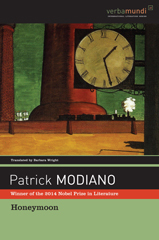
Book Cover for Honeymoon by Patrick Mondiano
It is perhaps a sad testimony to how parochial my reading has become. There was once a time where I knew almost every Nobel Prize for Literature winner–would have yearly bets with colleagues and follow the London odds makers’ short lists. And while my knowledge was primarily eurocentric/american, I was an early reader of the Egyptian Naguib Mahfouz before he won and I understood that his time was eminent and important. (My sister, after a trip to Egypt, had turned me on to him. I don’t know how, but she brought me back two uncorrected proofs of his novels.)
But again, I am increasingly ignorant of the world’s literature.
Which is why discovering Patrick Modiano is such a wonderful treat. The French Modiano is the 2014 Nobel Prize for Literature winner. And until a New Yorker review of his most recent novel, I had not heard of him nor his winning. Lately, I must have my head very deeply buried in the sand.

Patrick Modiano illustration by Niklas Elmehed © Nobel Media
Honeymoon (published in 1990 in France/1995 in the U.S.) is the novel I decided to start out on. The language is direct, bare and sparse–reminding me much of the first half of Camus’ The Stranger. But the story is intricate and convoluted, told in such an honest style that makes the intricacies and coincidences of life seem matter-of-fact.
There are two stories that braid themselves around two middle and connected ones. On the first page the narrator discovers that a woman in the hotel in Milan where he is staying has committed suicide. He then learns that he had known her once decades when she and her husband had picked him up hitchhiking and had taken him in and cared for him for several days.
This coincidence sets the man on a quest–of sorts. After his wife and his business partner (her lover) drop him off at the airport where he is to fly to Rio de Janeiro for business, he disappears. He takes a plane back to Milan and then returns to Paris, where he goes to ground and hides in the outer arrondissements.
His purpose is to make sense of the woman’s suicide, of her life.
We find that he has been obsessed with this couple for a long time, ever since his youth, long before the knowledge of her death. He has taken numerous notes, cut out clippings, and prepared to write a memoir of the couple, and so he tells us of their hardships and trials during the Nazi occupation of France.
While we at the same time are following his exploits in the Parisian neighborhoods, aware of his wife’s comings and goings, and preparing for a new life in his rougher world.
All the plot threads, in a way, revolve around a single newspaper clipping from the 1940s searching for the woman who suddenly went missing when she was sixteen years old. (From what I have learned, the actual clipping is what sent Modiano himself to fashion his story.) She had simply stepped out of the Metro and moved from one world–a constricting and dangerous world in Nazi occupied Paris–to another. Her abrupt relocation parallels the narrator’s who moves from his bourgeoise life as a documentary filmmaker married to a high-fashion model to an uncertain world in the boondocks of Paris, seeking for understanding of the couple who once showed him much kindness.
I said that I had started out on Patrick Modiano by selecting Honeymoon. It is only a starting point. I look forward to picking up another.

White Daffodils
illustration 2015 by jpbohannon
“Be a good steward of your gifts. Protect your time. Feed your inner life. Avoid too much noise. Read good books, have good sentences in your ears. Be by yourself as often as you can. Walk. Take the phone off the hook. Work regular hours.”
Jane Kenyon, from A Hundred White Daffodils
The Official Web Site of LeAnn Skeen
Grumpy younger old man casts jaded eye on whipper snappers
"Here is my secret. It is very simple: It is only with the heart that one can see rightly; what is essential is invisible to the eye.."- Antoine de Saint Exupéry
Of writing and reading
Photography from Northern Ontario
Musings on poetry, language, perception, numbers, food, and anything else that slips through the cracks.
philo poétique de G à L I B E R
Hand-stitched collage from conked-out stuff.
"Be yourself - everyone else is already taken."
Celebrate Silent Film
Indulge- Travel, Adventure, & New Experiences
Haiku, Poems, Book Reviews & Film Reviews
The blog for Year 13 English students at Cromwell College.
John Self's Shelves
writer, editor
In which a teacher and family guy is still learning ... and writing about it
A Community of Writers
visionary author
3d | fine art | design | life inspiration
Craft tips for writers
 j. p. bohannon