Icarus

Now some are born to fly high
Some are born to follow
Some are born to touch the sky
And some walk in the hollow
But as I watched your body fall
I knew that really you had won
For your grave was not the earth
But the reflection of the sun

“Icarus” by Anne Lister
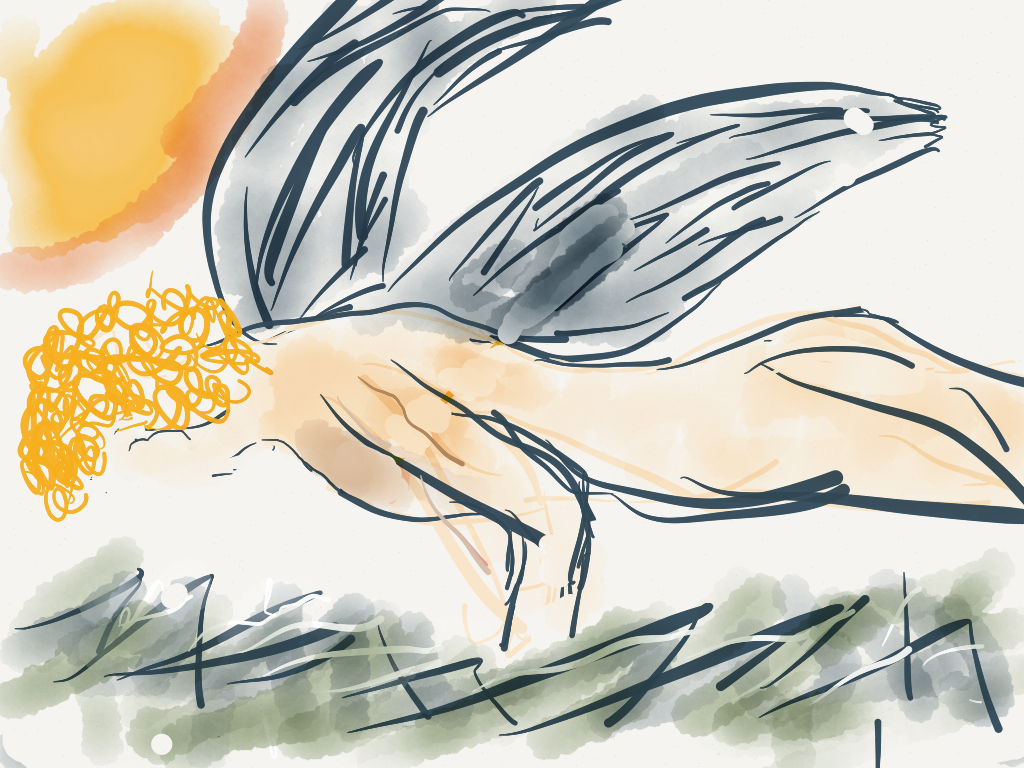
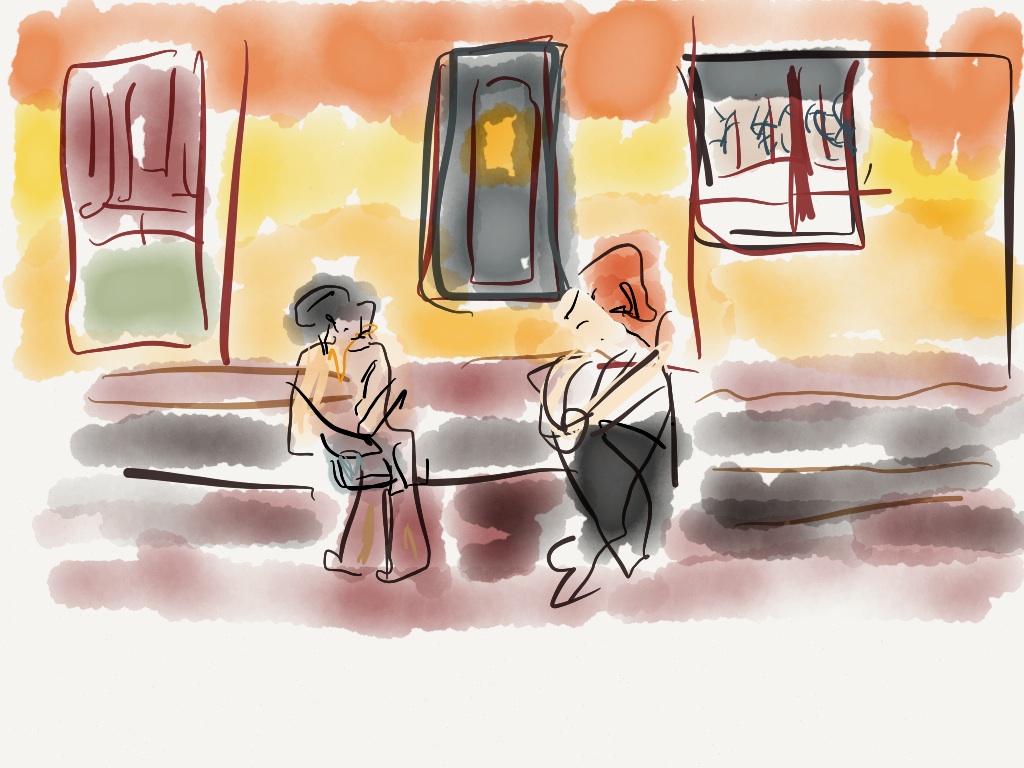
Icarus                        ©2013 by                     J.P. Bohannon

Icarus
illustration by jpbohannon © 2013

The mythological character Icarus has been a buzzword at my job recently. Many of us on the staff have been reading a book called The Icarus Deception by Seth Godin. To be honest, it is not my kind of read–more of a marketing, business oriented approach to things with a fair mixture of Dr. Phil and Oprah thrown in–but it has me thinking about Icarus.

I have always had a soft-spot for him. (See my post “Breughel, Auden and the Death of my Mother” from 2012/8/19.) There is something more than heroic in his quest, in his attempt at flying to the sun–(and I don’t want to hear any of the archetypal “primal disobedience” stuff at the moment. Sure, wasn’t it his old man, that grand artificer Daedelus, that had gotten them both locked up in the first place, locked up in that “inescapable” prison, because of his own disobedience and rebellion.)

And the more I think of it, Icarus’s “disobedience” IS NOT the story. The story is THE FLIGHT, where the tips of his wings glow white and gold with sunlight, where he becomes–for a moment–transcendent. It is all about the attempt, about the individual’s need to push further, to soar higher. For in a large way, to stop pushing forward is the real death by drowning.

No one had flown before Icarus and his father, but what we seem to remember is his drowning. That’s the wrong focus entirely.

♦ ♦ ♦ ♦ ♦ ♦ ♦ ♦ ♦ ♦ ♦

In a previous life, I wrote ad-copy for an agency. And I listened to a lot of music on a good old disc-player. If it was critical, creative stuff I needed to be writing, I used classical music or Irish trad or instrumental guitar. If it was mindless stuff, I listened to songs.

MartinSimpson

Martin Simpson

It was during this time that I became enamored with the guitar work and songs of a man named Martin Simpson. His playing was exquisite, intricate and beautiful and when he did sing a song, his voice was strong yet vulnerable. Until this weekend, I hadn’t listened to him in a long while although I must own four or five of his albums. But Icarus was in my head, and he had done a cover of Anne Lister’s song “Icarus” that I loved a lot and which never failed to choke me up. Told from the point of view of someone too timid to take a risk, too hesitant to make that leap, the song nevertheless details the pride and admiration he/she has for Icarus and what he has done. I always knew that the lump in my throat was not so much for Icarus but for his companion who “never wanted to fly high.”

Here are the full lyrics:

I never wanted to fly high
I was too fond of walking
So when you said you`d touch the sky
I thought it was your way of talking
And then you said you`d build some wings
You`d found out how it could be done
But I was doubtful of everything
I never thought you`d reach the sun

You were so clever with your hands
I`d watch you for hours
With the glue and rubber bands
The feathers and the lace and flowers
And the finished wings glowed so bright
Like some bird of glory
I began to envy you your flight
Like some old hero`s story

You tried to get me to go with you
You tried all ways to dare me
But I looked at the sky so blue
I thought the height would scare me
But I carried your wings for you
Up the path and to the cliff face
Kissed you goodbye and watched your eyes
Already bright with sunlight

It was so grand at the start
To watch you soaring higher
There was a pain deep in my heart
Your wings seemed tipped with fire
Like some seagull or a lark
Soaring forever
Or some ember or a spark
Drifting from Earth to Heaven

Then I believed all that you`d said
I believed all that you`d told me
You`d do a thing no man had ever done
You`d touch the stars to please me
And then I saw your wide wings fail
Saw your feathers falter
And watched you drop like a ball of gold
Into the wide green water

Now some are born to fly high
Some are born to follow
Some are born to touch the sky
And some walk in the hollow
But as I watched your body fall
I knew that really you had won
For your grave was not the earth
But the reflection of the sun

I never wanted to fly high…

And here is Martin Simpson playing and singing. Give it a listen:
Central Station…more about a boy

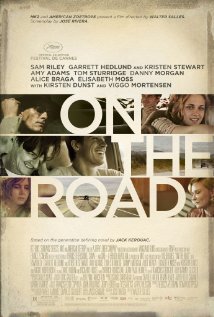
MV5BMTc1MzU5MDgzMF5BMl5BanBnXkFtZTcwMDQ4ODY2OA@@._V1_SX214_In the late November, I made a deal with my students. If they read Kerouac’s On the Road by Christmas, we could go see the film together as a class trip. (It was opening December 21.) However, for whatever reason, the film came, left, and went straight to video, before the first weekend was through. Needless to say, we did not go on our trip, (although one student claimed he could pirate it the day it came out and offered to show it in class.)

Later I told my boss this story. He hadn’t been aware of the On the Road film, but said that the director Walter Sayles was one of his favorites and that Sayles’ film Central Station was extraordinary and something I should see. And as he does often, he presented me with the DVD of it a week later.

Well, I finally got to watch last week. (I need to announce a spoiler here, but the ending is not the point. We all know how Romeo and Juliet ends but we watch it for what it gives us and makes us feel!)

Central Station (original title Central do Brasil) begins in Rio de Janiero’s enormous and busy train station, where Isadora (Fernanda Montenegra) makes her living writing letters for the illiterate. She scams most of them, never posting the letters she writes. One day a boy, Josué (Vinícius de Oliveira) and his mother arrive at her table. The mother wants to contact the boy’s father; she says that the boy has been asking about his father whom he has never seen. She dictates a letter that is both angry and accusatory.

The two appear again to Isadora’s table the next day to revise the letter, the mother wanting to erase much of the bile that was in the first. Astutely, the young boy is suspicious that Isadora still has the first letter right there and is able to retrieve it so quickly.

Central Station

Central Station illustration by jpbohannon © 2013

Afterwards, as the mother and the young boy leave the station, the mother is run over by a bus and killed, and by the end of the day Josué falls into the care of Isadora.

Central Station could have easily followed the film cliché where the rigid adult is paired with a rambunctious child and all sorts of mahem ensues–but it does not. It is not that kind of movie. Isadora does not want the boy; she has long been dealing with her own issues of parental abandonment. In fact, her first action is to sell him to an adoption agency. But that wracks her with guilt and she goes and retrieves him–keeping the money for herself which places her in some danger. Despite her bitter disposition, her jaded cynicism, and her own personal issues, she is responsible enough to want to get the child to his father. (And after all, she still has the address from the letter she never sent.) And so the two start the long trek by bus, kitted out with the money that she had originally sold Josué for.

Of course, the journey is difficult and there are a number of setbacks. Several times Isadora attempts to abandon Josué, but she fails–not because of pangs of conscience, but because of circumstances beyond her control. She dreams of running away with the kind truck driver who helped them out, but even Jopsué knew that that wasn’t going to work. She attempts to leave him while he is sleeping (his backpack secretly supplied with the money), but that doesn’t work and, in fact, goes horribly wrong.

And then finally they arrive, but the father is not where he last address indicated. Finding him is more difficult than they originally thought. In fact, they never do find the father–but they do find that Josué has two older brothers, who take him in.

In the history of film, there are certain moments that break your heart in both their beauty and their poignancy. The final scene where Isadora rides in a bus back home to Rio is one such scene. She has snuck away once again, in the middle of the night and leaving Josué with his brothers. As she attempts to write him a note, her anguish is palpable.

[caption id="attachment_2082" align="alignright" width="364"]fernanda_1 Brazilian actress, Fernanda Montenegra

The film is really a showcase for Fernanda Montenegra, one of Brazil’s greatest actresses. To be honest, her character Isadora is very unlikable –someone who cheats the poor and illiterate and sees a suddenly orphaned child as a get rich quick opportunity. Yet it is Montenegra’s talent that draws us into her, that makes us want her to do the right thing, and that breaks our hearts in the closing scenes. And the young Oliveira, who plays Josué, plays against her as if her were a veteran actor. Indeed, Josué’s uncanny and mature sense of what Isadora is up to is one of the delights of the film.

What Central Station is not is a showcase for Rio de Janeiro Except for Rio’s bustling train station and a street fair in a small outpost beyond the city, the film doesn’t dwell on location or even local color. Sayles, a Rio de Janiero native, sees nothing exotic about his home city…but perhaps that is to deliberately underscore the universality of this lovely and moving film.

Blogging, Beckett and a Seven-Year Old Boy

It was one year ago last week that I started blogging.  But I  quit before that anniversary came around.

Yes, I quit blogging in late November, because I could no longer do it.  I loved doing it. I had met some extraordinary people–Romanians in London, Americans in Ecuador, an art colony in Italy.  I enjoyed thinking about the books I read, the music I heard, the films I watched.  And I enjoyed trying to get those thoughts “down on paper.”

photo

Henry dressed as the “Holy Roman Emperor Saint Henry” for Halloween last October.

But then my life changed drastically and blogging found itself way down on my list of priorities.

I became responsible for a seven-year old boy.

Henry is a delightful young boy. He is creative, bright, and personable.  And it is my job, to a degree, to nurture and protect him. I shower him with love and I make sure that he knows he is loved. I try to pay attention to what he does and what he says and what he feels.

We play silly word games. We read together: I to him on the sofa; he to me on the steps, (where the game is that I must go up or down a step every time he turns a page.)  He is seven years old, but will still hold my hand when we walk places, at least for now.  We often take “adventures” together, and these are usually simple jaunts across the city on public transportation. We take a trolley and then a subway and then a train and then we reverse ourselves, adding in a bus on the return trip. He points out train yards and sidings, trolley tracks and subway couplers. We stay and wave to the drivers after we get off and they drive away. (He does LOVE his transportation!)

Sure, there are time when I must get him to do things that he doesn’t want to: to try foods he does not like (that comprises everything that isn’t pizza) or to stop talking and listen when others are speaking or to slow down with his homework, with his handwriting. I try to teach him, and I try to do so with patience, with gentleness and with love.

For the most part, when I am not at work, I am with him, or I am asleep. And when I am at work, I am thinking about him and worrying about him.

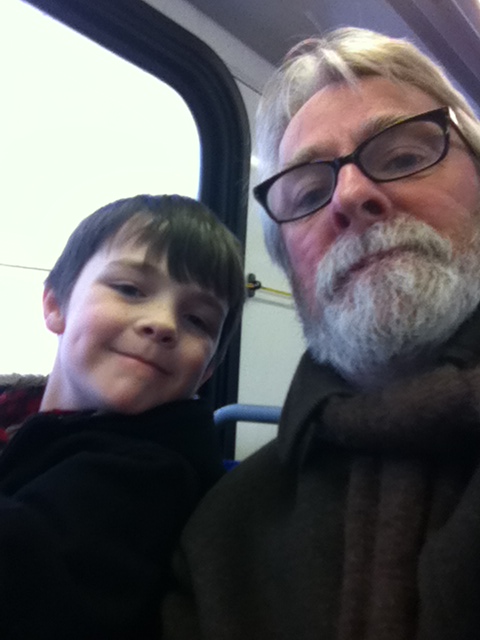
photo22

Henry and I on the R5

Having a seven-year old in your 30s is one thing; having a seven-year old in your late 50s is something else altogether.  I haven’t read a book in I can’t say how long. My film-going is greatly constricted.  And my television viewing is completely limited to Phineas and Ferb (don’t ask!) and America’s Funniest Home Videos.  And yet his enjoyment of both of these shows is genuine and sweet. He laughs with purity and with delight. And that, I wouldn’t trade  for anything.

♦     ♦     ♦     ♦     ♦     ♦     ♦     ♦     ♦     ♦

I went out last Thursday night with my wife and some friends to see a play: Endgame by Samuel Beckett.  I had read it many times, but had never seen it performed, and so we made definite plans to get there.

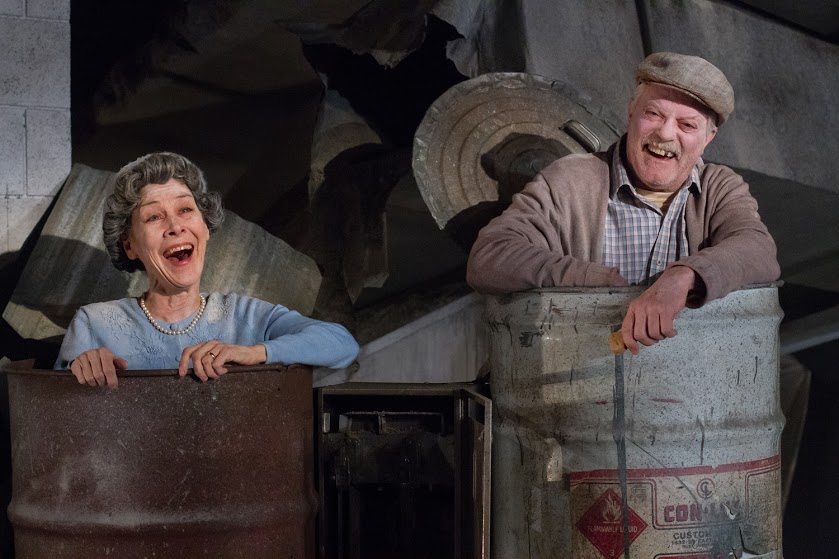
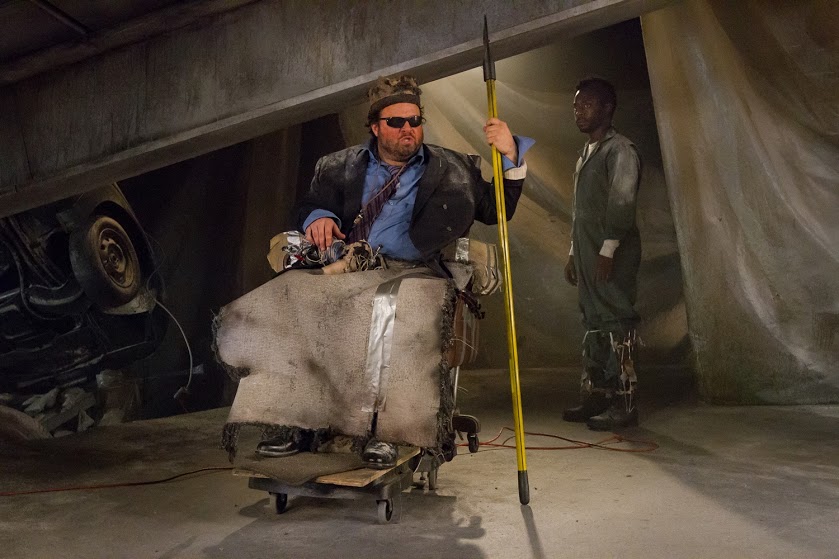
Endgame is the second of the four major plays that Beckett wrote following World War II. (Waiting For Godot, Endgame, Krapps Last Tape and HappyDay.) Situated firmly in the Theater of the Absurd, Endgame presents Hamm, a blind, crippled man who sits in a make-shift wheel-chair in a single, disheveled room. He is tended to by Clov, who, conversely, is unable to sit.  In the room are also two trash bins.  In the one is Hamm’s legless father, Nagg, and in the other, his legless mother, Nell. Hamm pontificates on the bleakness of  life, on the attraction of story-telling, on the uncertainty of a future.  It is one of my favorite plays.

In one piece of dialogue that I particularly love, Hamm asks Clov to open the trash bin to see what his father is doing:

          HAMM (letting go his toque)
                What’s he doing?
               (Clov raises lid of Nagg’s bin, stoops, look into it. Pause.)

            CLOV
               
He’s crying.
                  (He closes lid, striaghtens up.)

          HAMM
                Then he’s living.

I love this. How simple, how poignant, how piercing. It perfectly captures Beckett’s–and to a large degree, my own–world view.  For better or worse, my personal philosophy has long been greatly informed by Beckett’s.  Or else, I had already formed it and because of that I found Beckett. But, for one reason or another, I am drawn to his bleakness and  emptiness–and to the black humor that attends it.

Endgame_2_high

Nancy Boykin and Dan Kern as Nell and Nagg in Arden Theater’s production of Endgame. Philadelphia, February 28, 2013.
© Photos by Mark Garvin

Endgame_8_high

Scott Greer and James iJames as Hamm and Clov in the Arden Theater’s production of Endgame. Philadelphia, February 28, 2013.
© Photos by Mark Garvin

As I said, I have long enjoyed and embraced Beckett’s dire existentialism.  But now, I can no longer afford it, can no longer afford to wallow in such bleakness, to delight in such barren absurdity.  I have to try to tamp it down. For I have Henry now to take care of, and that is very much the purpose of my life.

The End

Thank you to all who have been such gracious readers

and who have left such wonderful comments

and taken part in such thoughtful conversations.

It has been fun and I’ve met an extraordinary amount of wonderful people.

But it is time to stop…at least for a while.

Thank you, again.

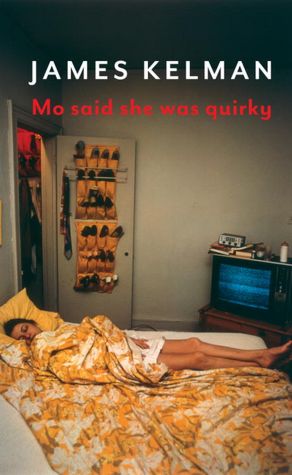
Book Review: Mo Said She Was Quirky by James Kelman

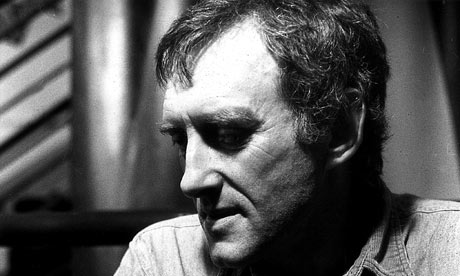
James Kelman

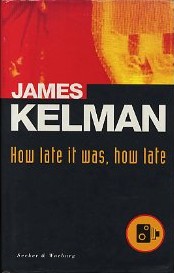
I first started reading James Kelman back in 1994 when his novel How Late It Was, How Late had just won the Man Booker Award. The novel was entrancing. Driven by a rough Glaswegian dialect that was musical, whimsical and earthy, the novel followed the Kafkaesque troubles of an ex-con who has been beaten, blinded and abandoned.  I remember the plot only faintly, but the language itself will stay with me forever. It was as if Samuel Beckett had plopped down into Glasgow, went on a long bender, and lived to tell the tale.

After that introduction, I read his short story collection, Busted Scotch. Again, while I enjoyed the stories, it was the language that remained. Lively, working-class language, filled with imaginative slang and time-born wisdom.

I remember being excited when I learned of his next novel, You Have to Be Careful In the Land of the Free when it came out in 2005. How wonderful, I thought, to hear that raspy, magical, glittering voice unleashed in the vastness of the Americas. But I was greatly disappointed.  Storyline was never his strong point, but here even the voice had faded. I was off Kelman for a while.

And I guess to my detriment, because Kelman’s next work was widely praised.  Kieron Smith, Boy was a story of an urban and lonely childhood and it was called both “magnificent and important.”  But I missed it and now it’s at the bottom of a long list of must reads.

But I did pick up Kelman’s latest novel, Mo Said She Was Quirky–mainly because of the intriguing title. And once again, the language is at the forefront. Once again we are in a Beckettian world of isolation and words. Yet, unlike anything he did before, in Mo Said She Was Quirky, Kelman’s lyrical speaker is a woman, Helen. The novel is told primarily in the first person, much an extended interior monologue. Other characters appear, but we see and hear them only through Helen’s eyes.

Helen works the night shift at a London casino, where she and her daughter have moved to get away from her no-account husband in Glasgow and where they now share a small, one-bedroom flat with her Pakistani lover, Mo.

In a cab on the way home one night, Helen stares at two homeless men stagger across the intersection in front of the taxi. One of the me stares intently into the cab and Helen recognizes him as her brother. This recognition begins her long night of self-examination, self-incrimination, and self-rationalization. Why is she here? Why is he there? How dysfunctional was her and her brother’s growing up or is this the state of all humanity? Helen is generous in her compassion and stingy with her self-pity. Many have it worse than she, she deliberates, and then realizes that misery, sorrow, and pain are  very relative and the fact that she has a hot shower and another person does not does not make her pain any easier or lighter to bear.

Completely knackered and unused to the night-shift, Helen, nevertheless, cannot sleep. Her mind races with memories of her brother, her damaged parents, her child, her ex, and the kind man she lives with, Mo. She waits until Mo and her daughter waken, watches them go off to school, and yet, still, she cannot sleep.  She thinks greatly about the differences between men and women, the posturing and bullying of those she has known, the favorites that her parents very obviously played. She thinks about racism and worries about Mo. She thinks of the urban jungle and worries about her daughter.

As night turns into day, as Mo takes her child to work, she grabs a few hours of rest but her mind is increasingly racing. And as it does we learn more why this simple-hearted woman is so fraught with worry about the future, so done-in by her present, and so haunted by her past.

I give Kelman a lot of credit for trying what he does so well in a woman’s voice. At times, Helen’s monologue seems to drag but at others it is riveting, revealling bits and bits of a single life and illuminating the mind of a  woman who lives in constant worry about the world around her–and the past that formed her.

I’m not really sure yet how I feel about Mo Said She Was Quirky. I do know that Kelman’s voice in it has me returning to reread How Late It Was, How Late. That’s the novel of his that I loved the most, and the others have yet to measure up.

Aventuras de Avril, Reader Appreciation Award, and some blogs to check out

For a long while, the country that was third or fourth in readership of my blog was Ecuador.  That was mainly because of a woman named April who writes a wonderful blog herself and whose comments on my own postings were always amusing, thoughtful  and enjoyable.

April is a remarkable woman.  About a year ago, she decided to change her life. Not something superficial like a new hair-style, a new tattoo (I don’t know if she has even one!) or a change in diet. April picked up and moved to Ecuador.  As she said “I filled up a backpack, bought a ticket to Ecuador and left, without speaking any Spanish, with no job lined up, and just a starting point and a general goal.”

She has been living there for nine months now and she has been recording her adventures in a delightful blog called AVENTURAS de AVRIL.  You should check it out. Her enthusiasm for her new world, her new language and the many new people that are in her life is uplifting, and her writing and photography are special.  I had read two pieces this week–one in the NYTimes and one in the preface to the Best American Short Stories of 2011–which advised one to pick up his or her things, move to a place where the language is unknown, and discover something special about one’s self.  April has successfully taken that to heart.  So be sure to check out her blog by clicking on the link above.

So why am I writing about April?  To THANK HER. She has recommended me for a Reader Appreciation Award–a recognition that she herself just won.  In the large scale of things, this is a very unassuming award, meaningful and known to only a few. But it is a simple recognition from someone out there who’s reading. And that is very, very much appreciated.  So THANK YOU very much April!  Keep writing and keep wringing everything you can out of life.

♦     ♦     ♦     ♦      ♦

The Rules:


1. Provide a link and thank the blogger who nominated you for this award.
2. Answer 10 questions.
3. Choose 10-12 blogs that you find a joy to read.
4. Provide links to these blogs and kindly let the recipients know that they have been chosen.
5. Include the award logo within your blog post.

The Questions:

Your favorite color?     I like grey in all its many shades. (This is not a literary reference. Hah!)
Your favorite animal?      Otters
Your favorite non-alcoholic drink?     Chocolate Milk
Facebook® or Twitter®?     Neither.
Your favorite pattern?   Very small checks.
Getting or giving presents?   I very much dislike receiving gifts. I love giving gifts when I am truly excited about what I am giving.
Your favorite number? 18
Your favorite day of the week?    Every day.  I see no differences in them.
Your favorite flower? Bird of Paradise.
What is your passion? To learn to write well.

The Blogs I Appreciate:


Two of these are the blogs of a personal friend and a niece. The rest are by people that I have connected with since I began writing my blog at the beginning of March and are part of a very neat community.  Some I read for advice, others I read for inspiration, and still others I read for the shear joy of it.  So, here they are in no particular order:

Sue Healy – An Irish born writer whose short stories and dramas have won numerous awards. Her blog addresses the day-ins and day-outs of the writing craft.

Diane Bones – The very humorous opinions of a very funny writer. Diane opines on everything from SPAM to National Elections, from Award Shows to urban violence.  A great and wonderful read.

me myself and ela –a Romanian woman living in London, her blog is filled with magnificent photographs, music videos, and her own musings.

O Lumi in Imagini –another Romanian blog, this one focusing on art and film. A bit avant garde but fun to look at.

Courtney Gillette— a young Brooklyn writer who is literate, interesting, funny and saavy.

The Coevas–I am not sure what this is or how I got here.  It’s from a middle-European writing/creative collective that is putting together a novel and the film to go with it all at once on the site. Pretty dramatic images and a beautiful site.

francescannotwrite–“so let these writers impress you instead” states the header of this blog. I think she’s being modest. Francess Antoinette is well travelled and posts her amazing photos and amusing thoughts on her blog.  It’s a very nice read.

Pretty Feet, Pop Toe–post after post, this is one of the funnier blogs I read. A snarky complaint about all the things that drive all of us mad, written well and with a unique sense of humor.

apk: an art diary–I have probably forwarded posts from this blog site more than any other. It is like a digital art gallery that posts extraordinary art work from artists (all unknown to me) from around the world. Truly wonderful.

The Saturday Morning Post–as the title says, it is a blog that delivers a post each and every Saturday. It discusses the writing life in all its aspects, from successes to rejection, from inspiration to business.  Well written, serious, and informative.

♦     ♦     ♦     ♦      ♦

So THANKS to all of you for reading my  blog.  I was seriously considering putting my blog to sleep–but I’ve developed a strange relationship with it. So maybe we’ll go on for a bit longer. Go check out some of the blogs listed above. I’m sure you’ll find them interesting.

And thank you to April for sending me this Reader Appreciation Award. Please be sure to check out her blog. She’s a fascinating person.

Do What You Love: The Philadelphia Museum of Art Craft Show

David D’Imperio’s sculptured lighting

On Friday past, I went to the Philadelphia Art Museum’s annual Craft Show.  Now this isn’t your usual craft show with knitted tea cozies, outré Christmas decorations, and cute tchotchkes for the home. This is major art.  The exhibitors were potters and metal workers, fabric artists and glass blowers, painters, fashion designers and jewelers, woodworkers and stone carvers. This was some major stuff–and more often than not far above my price range.

Yet it was all beautiful.  At one point, I called over one of the women I was with to see these magnificent glass platters. The artist corrected me: what I thought was glass was actually wood. All his pieces were wood.  Yet they were so translucent and brilliant and delicate that one would never first believe that they were wood.

Mark Schuler’s wooden bowl.

Two fashion designers–at opposite ends of the “elegance” scale–were both kicky and inventive. Their dresses and capes and skirts and pants were flowing with ruched materials or angular draping. One woman painted gorgeous canvasses, part abstract/part folk art, and treated them so they could be use as floor coverings. Runners for hallways, area mats for large rooms. They were exquisite. 

There was exquisite furniture and graceful pots, jewelry both elegant and extreme. There was a perpetual motion glass wine aerator and eyeglasses made of wood. There were graceful ceramics and fun metal sculptures. There was simply aisle after aisle in the cavernous Convention Center filled with magnificent works of human artistry. 

And that was the true beauty of this collection. Hundreds of people from around the world were simply doing what they loved–creating things of beauty.  How lucky one must be to be able to do what he or she loves as not their job but as their vocation, to be able to start the day with nothing and end up with something. For the artist does not go to work, he is always at work. He eats and sleeps and breathes his work.  And while not all of these crafts were to my taste–though many, many were–all were to my liking. For something inside me loves the idea that human beings are a species that does create, and often creates piece not for their utility but for their simple and utter beauty.

Movie Review: A Late Quartet–Harmony within the Dissonance

I received an e-mail last Monday that read like this:
Ciao Gianni,
Ho visto un film ieri sera si chiamo “A Last Quartet”. Ho pensato molto a Biggs perche un uomo ha Parkinson’s. Interesante  Buon giorno!!

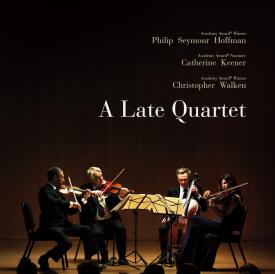
“Biggs” was a friend of ours who struggled with Parkinson’s until the end of her life and Parkinsons plays a major role in the plot of Yaron Zilberman’s film A Late Quartet.  I had read about the film in those end-of-summer write-ups of films that would be arriving in the coming months, but had forgotten completely about it. And now, here it was in town.

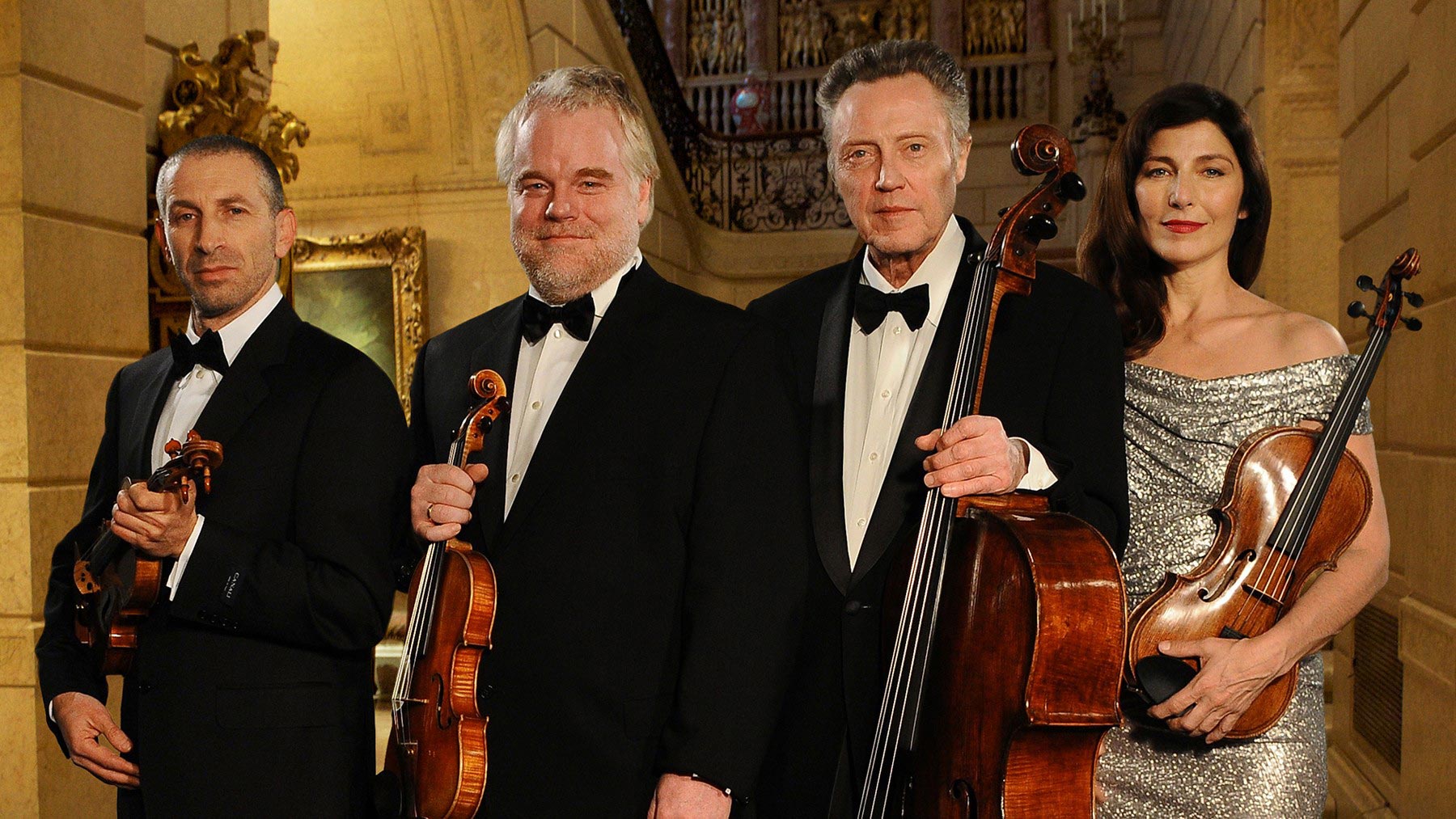
And while a diagnosis of Parkinson’s comes early in the movie, it is not the only malfunction in the story.  The film is about the tensions, dysfunctions, rivalries, and bickerings that take place within a famous string quartet, “The Fugue String Quartet.”  Celebrating its 25th anniversary together, the quartet reveals a shattering disharmony in an ensemble devoted to creating celestial harmony.

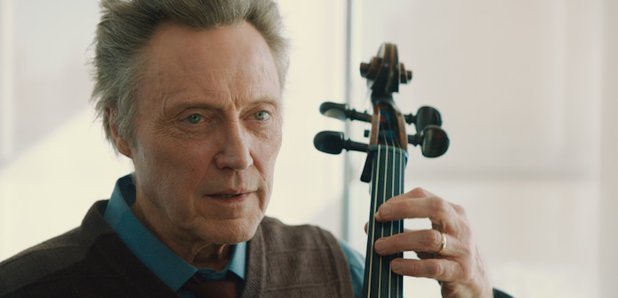
The film begins as the ensemble gathers for its first rehearsal after a short period apart. The cello player, Peter (Christopher Walken) cuts the practice short as he finds he is losing control and strength in his hand. After some visits to the doctor, he learns he has the onset of Parkinson’s disease, and he calls the group together to tell them and to announce that the first concert of the new season will be his final performance.
Yet Peter’s debilitating disease plays underneath the rest of the melodrama–much like his cello plays under the melodies of the quartet. Robert (Philip Seymour Hoffman) and Juliette (Catherine Keener) have been married through most of the quartet’s existence, and the strains within the marriage seem to be becoming more and more taut.  There is a silent dissatisfaction and regret running through the both of them. And finally, the first violinist Daniel (Mark Ivanir) is an exacting, domineering, egoist whose suppressed passion erupts in an affair that may fracture the quartet. (No, gentle readers. Although Juliette and he were once lovers before she married, she is not the focus of his attentions.)

A Late Quartet would be considered no more than just a middling film if it weren’t for the performances of Hoffman, Keener, Ivanir and Walken.  Walken, who lately seemed to be a mere parody of himself (more cowbell, anyone?) is superb. I can’t remember ever seeing him this intense, this openly vulnerable. In the class he teaches, he reads his young prodigies T.S. Eliot on Beethoven and reminisces about his and Pablo Casal’s conversations. He is dying, he is missing his dead wife, and he is suffering as he watches his beloved quartet rip apart. It is a simple, understated performance that echoes the role that his cello brings to the music.

On the other hand, while his character plays second violin in the quartet, Philip Seymour Hoffman is certainly the first violin in this ensemble. It is his quiet emotional rollercoaster, his final refusal to be everyone’s “doormat,” his true declaration of love for the wife whom he has just betrayed that is the masterstroke in this film. The film builds on Hoffman.  He and Cathrine Keener have worked in several films together (most notably Capote and Synecdoche, New York) and their comfort with each other is evident. The character she plays is perhaps the least discoverable–she is strong and yet damaged, wise and yet blindered, loving and yet cold.  Mark Ivanir (who people will recognize from countless television series as well as three Spielberg films and a couple of DeNiro projects) plays the role of the obsessive Daniel. Focused on passionless precision, he is the counterweight to Hoffman–who inwardly covets Daniel’s role as first violinist.

As well as the ensemble works off each other, the music is perhaps the most memorable.  The quartet is preparing Beethoven’s Opus 131 String Quartet (in C-sharp minor), a piece that Beethoven wrote during his last days and which taxes the strength and stamina of the performers as well as the integrity of the instruments.  We learn that it is what Schubert asked to be played to him as he was dying. In the film, the music is actually played by the Brentano Quartet, and it is stirringly emotional.  If you wish, you can hear it here:

Schubert once said after having heard Opus 131, “After this, what is left for us to write?”  The film A Late Quartet falls far short of those heights, yet when I think of Parkinson’s Disease and the people who I knew who have suffered from it, I wonder if the “what is left…?” is the haunting motif. I wonder if the Christoper Walken character–who so much wants the quartet to continue after him–has considered the same.

Zero words, four days drinking and not getting near a mustache!!

In the States, November is the month for all sorts of things.  I don’t know why, but it is.  In 2000, National Novel Writing Month was begun when Chris Bayley launched an interactive web-site that encouraged writers to produce 50,000 words or more of a novel. (Here is the site, but it’s too late to join this year: www.nanowrimo.org/).  The year earlier, Bayley had started the novel writing month in July, but moved it to  November the following year to take advantage of the more miserable weather.

Anyway, there was a lot of press in the weeks leading up to November 1, and I had toyed with the idea of doing it on my own without “registering” on the official website.  I had already 1700 words of something I had been working on, so I figure I’d cheat a little and have a head start when November came around. Well now it is November 4 and I still have the original 1700 hundred words.  November has produced ZERO!

I also figured I would try to cut back a little on the drink and use November as a dry month–sort of like what some people do during Lent.  I thought maybe it would get me feeling a bit more energized, a little more clear headed, repair some brain cells, and get a little further along on my “works in progress” (see paragraph above!)

Well it’s now November 4th.  I didn’t succeed on the 1st–a few beers with pizza.  On the 2nd, I stopped for dinner at my local and had several pints of Guinness and then a couple of glasses of wine when I returned home. Yesterday, the 3rd,  I was at a dinner party where the wine was flowing voluminously, and today I am invited again somewhere for dinner.  I plan to drink water at the dinner tonight and start my dry month from there.  We shall see.

But to be truthful, I haven’t been too successful for the first three days.

And then the oddest of all the November month “challenges,” this month is the November Mustache Growing Month for Prostate Health.  Entitled MOVEMBER, the event has been around for nine years now and is instituted to heighten awareness of all men’s health issues. There are celebrities involved, a Mobile App that allows you to time-lapse record the results of your growing and share with other participants, and professionally produced videos celebrating hairy upper lips.  I am sure it is a very good cause (my father died of prostate cancer) but Mustache Growing is very scary territory.  What happened to the good old 5k run?

Anyway, scarred by too many images of bad mustaches, this is one event I am not getting close to, not by a whisker.

.

Book Review: Sweet Tooth by Ian McEwan

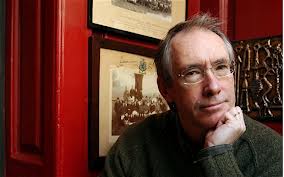
Ian McEwan

A lot of people I know do not like McEwan’s books.  However, I do very much. I find that his novels are both literary and very good reads.

McEwan’s novels are always well plotted, full of wonderful local color and specialized information that I did not know, and often times appeal to a particularly personal aspect of my life.  I remember very well and with great fondness the exact day that the novel Saturday takes place. (In fact I have written a piece about that particular day as well and am now shopping it around to place somewhere.) The novella On Chesil Beach is in many ways a modernization of the poem “Dover Beach” –a poem which also plays a crucial part in the ending of Saturday–and one on which I had based a short story a long while ago.  And despite the time period, Atonement is thoroughly post-modern in its attitude towards time and the historicity of events.

U.K. Cover of McEwan’s Sweet Tooth

McEwan’s new novel Sweet Tooth also plays with post-modernism in its narration. Indeed, the main character Serena Frome–a woman noted for her prolific reading habits–complains about the very type of novel that Sweet Tooth ends up being.

The time is the early 1970s, and Serena Frome is an intelligent young woman who goes off to Cambridge to study maths. It is right before the burgeoning of the women’s rights movement, and in fact, Serena is the only Cambridge female studying mathematics at the time. Yet she does not see herself as a trailblazing feminist, and in fact often  distances herself from many aspects of the movement’s agenda.

Yet feminism is not the crux on which this novel hangs. The Cold War is in full swing, and Frome has been recruited by an elderly Cambridge teacher who is also her lover for a position at MI5. Her task is to help wage battle on the cultural lines between the West and the Soviet Union. The government is worried that it is losing the cultural battle as more and more intellectuals, artists, and writers lean further and further left.  What it proposes is a plan to set up a false foundation that subsidizes writers with the idea that the intellectual community will see the country as supporting the arts and  with the added  hope that the writers’ work will fall more in line with its philosophies.

The mission is dubbed “Sweet Tooth” and Frome is given the job to bring in such a writer. She is to introduce herself as part of a panel that has recommended a young, upcoming writer and to offer him a stipend of two years salary to complete a novel.

Unfortunately, she also falls in love with the man.

Illustration: Satoshi Kambayashi/The Guardian
Taken from Guardian’s excerpt from Sweet Tooth

Like many Cold War tales, particularly when dealing with MI5, there are betrayals and mistrust.  There are thwarted love affairs, rogue agents, and a general sense of looking over one’s shoulder.  And in many ways, Serena is out of her depth.

The story is couched in the gestalt of the 70’s.  The IRA campaign in Northern Ireland is emigrating to England, the hippie movement is petering out while the establishment is growing its sideburns, and opposition to the war in Viet Nam is growing exponentially.  And all of these elements play a small role in Serena’s world.  Even McEwan’s buddy, Martin Amis, shows up to receive an award, along with Serena’s protege.

I was innundated with work (one reason I haven’t posted in three weeks), but had ordered Sweet Tooth from the U.K.  (It doesn’t come out in the U.S. until mid-November). And despite being behind in everything else, I picked up the novel and read it in two days. It is fast moving, intricately plotted, and enjoyable. I was told that the beginning was a little slugish and that one had to be patient before things got good, but I did not find this to be the case at all.

And I loved the ending, which put everything in perspective.

My only complaint is the cover of this edition–it is a bit cheesy and, with the title “Sweet Tooth,”  it  looks like the cover to some sort of  girls’  young-adult series, or worse some tarted up middle-class porn.  Don’t know what the people at Cape were thinking, but I think they blundered on this one.