Movie Review: Much Ado About Nothing dir. Joss Whedon…another inevitable comparison

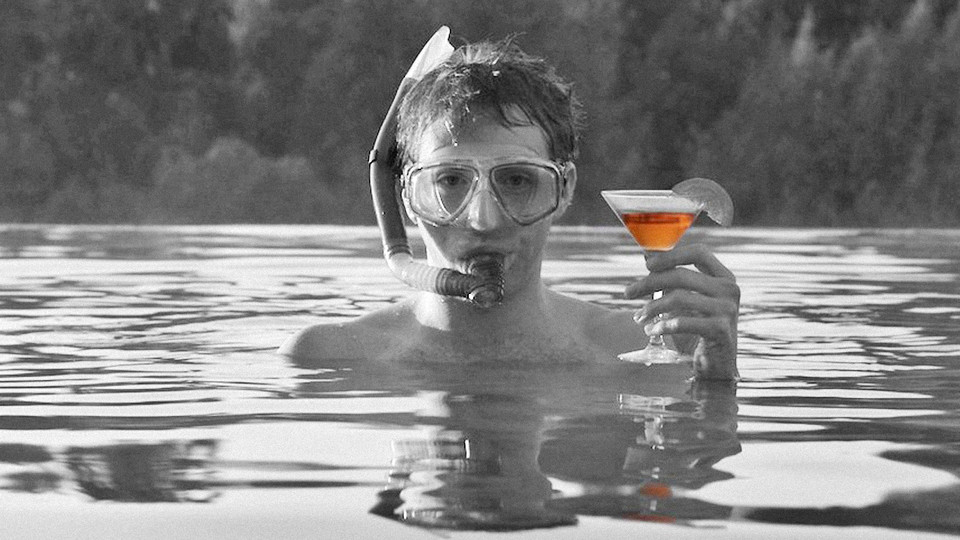
Claudio in Joss Whedon's Much Ado About Nothing

Fran Kranz as Claudio in Joss Whedon’s Much Ado About Nothing

The summer of 2013 began with the release of Baz Luhrman’s The Great Gatsby, and everyone was in a race to compare it with the Robert Redford version from the 1970s. To be truthful, I never cared for Redford as Gatsby, but thought the rest of the cast was spot on. The opposite goes with Baz Luhrman’s film, in which I prefer DiCaprio’s Gatsby to the rest of the cast.
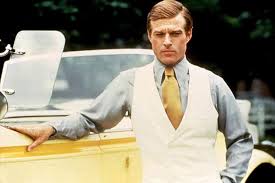
Robert Redford as Jay Gatsby (1974)

Robert Redford as Jay Gatsby (1974)

Leonardo DiCaprio as Jay Gatsby 2013

Leonardo DiCaprio as Jay Gatsby (2013)

But we forgot about all that–and rather quickly– before the summer actually began, and now we have a new version of another “classic” work of literature: Much Ado About Nothing, directed by Joss Whedon, which must undoubtedly be compared with the Kenneth Branagh version of 1993.

The story behind Whedon’s project is fun. It was something that he had long wanted to do, and finally his wife suggested that instead of going away on vacation for their 20th-anniversary, they make the film. And they did…entirely in their gorgeous home. Whedon gathered many of the actors who had played in his previous productions, and the first that Hollywood knew about the film was when they announced that photography had been completed. They had wrapped things up in 12 days.

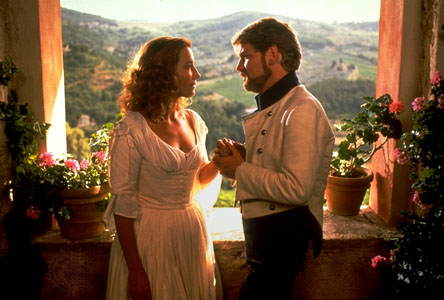
Whedon chose to film in black-and-white which gives the film a stylish patina. And yet, I found it drained some of the emotion from the story. Benedick (Alexis Denisof) and Beatrice (Amy Acker) are likeable enough, and quite funny at times, but they shine mostly when they are apart…there are few sparks when they are together. Invariably, one has to compare them to Kenneth Brannagh and Emma Thompson–whose fire (both on film and personally) was palpable. And the golden sunlight of Tuscany, the shimmering palette of the entire film, gives Brannagh’s version a much richer patina.

Amy Acker as Beatrice and Alexis Denisof as Benedck
Amy Acker as Beatrice and Alexis Denisof as Benedck

Emma Thompson as Beatrice and Kenneth Brannagh as Benedick (1993).

Emma Thompson as Beatrice and Kenneth Brannagh as Benedick (1993).

Whedon’s actors all handle the dialog well and naturally, and after a few minutes you might even forget you are listening to Shakespearean English.

In both films, the constabulary are very good–verbal slapstick and mental banana skins. Nathan Fillon’s doltish Dogberry in Whedon’s film is every bit as memorable–and laugh-inducing– as Michael Keaton’s dimwitted portrayal in the 1993 version.

And the performance of Clark Gregg, as Leonato, Hero’s father is likeable and believeable. Much of the audience will quickly forget that he is Agent Phil Coulson of the Avenger’s franchise (also by Joss Whedon).
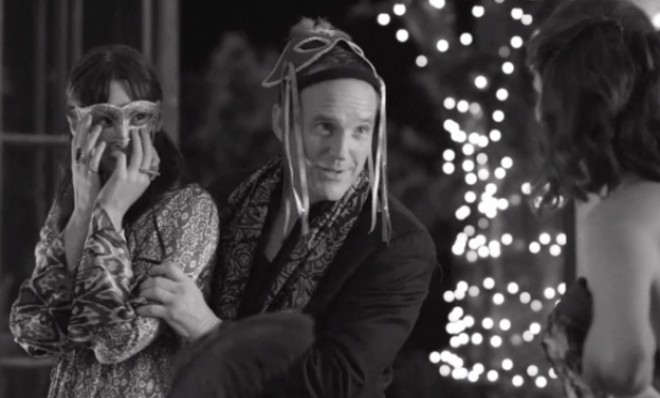
Clark Gregg as Leonato and Jillian Morgese as Hero

Clark Gregg as Leonato and Jillian Morgese as Hero

However, there are a few choices that Whedon made that I am not so sure about. The character of Conrade, for example, which was played by Richard Clifford in the Brannagh version has now been changed to a female role, played by Riki Lindhome. This in itself is usually not a problem. For instance, in Michael Almareyda’s Hamlet (starring Ethan Hawke), Marcello was changed to Marcella and played by Paula Malcomson. But nothing is changed, the part is minor, and her lines are few. In Whedon’s Much Ado…, the Conrade character is quite sexy and there is even a bit of titillating bed-play between her and Don John (Sean Maher), although the words of the play would not lead us to think so.

There is also a scene that is not in the play–during the opening credits–where Benedick sneaks out of Beatrice’s bed in the early morn. Beatrice lies there feigning sleep, but slyly opening her eyes as he dresses and leaves. We are left with the vision of her wide awake in bed, with eyes that speak of her aloneness. If this scene is supposed to prepare us for the friction between the two when the play proper begins, it fails.

Whedon shares writing credits with William Shakespeare, and, to be honest, he does a very admirable job. He has cut judiciously, and the only time he has changed the language was in Act 2 where he excised an anti-Semitic remark and changed it to a statement about love’s foolishness. The new line flows seamlessly into the original.

In all, I prefer the Brannagh version, but that is not to dismiss Whedon’s, which also I like very much. Whedon’s Much Ado About Nothing is inventive and imaginative and aimed at a whole new audience. The filming is crisp, fresh, and confidant–and quite stylish. Whedon has successfully taken Shakespeare out of the classroom and made it very hip, without destroying the story at all. It is certainly worth viewing…and more than once. If this was his gift for his 20th anniversary, I hope he tackles another Shakespeare title before his 40th anniversary comes around.

Here is the very elegant and engaging trailer:

Fish and Chips, an AIDS Memorial, and celebrating the court’s decision

Fish-and-Chips at the Irish Times in South Philadelphia

Fish-and-Chips at the Irish Times in South Philadelphia

A neighbor, a exuberant fellow from County Tyrone, told me about a new pub down in South Philly. It had, he claimed, the best pint in the city and fish-and-chips that were extraordinary. And so I made my way to the Irish Times. I’m not sure about the pint–I prefer my local’s–but the platter of fish-and-chips could have fed a family of four.

But there was something very familiar about the pub from the minute I walked in. Behind all the soccer regalia, the scarves, the jerseys, the posters, I recognized the place from an earlier time–it had a very odd, unique but familiar, two-level set up. Of course, I had been there before in an earlier incarnation, when it had been a good Italian restaurant. I had been there for Nick B.’s memorial.

By the early 90s, I had been to three AIDS memorials. All three were great celebrations and deservedly so. They celebrated the lives of three very special, very creative people. Nick B. was a graphic designer in the advertising agency I once worked in. In fact, he was often my graphic designer–or to be more exact, I was often his copywriter. He was kind and witty and funny and very talented.

When Nick contracted AIDS, he deteriorated quickly. The last time I saw him was about a week before he died. By then, he weighed about 70 pounds and had difficulty breathing, but still he tried to comfort us and keep us at ease. He still managed a smile, or maybe it was a smirk.

Before he was in too bad shape, his parents had come down to visit him. He had had two things he wanted to tell them: first that he was gay and second that he was dying. How long had he wanted to tell them? how long had they already known? how sad is that whole scenario—for all of them?

Anyway, a month after his funeral, his partner threw this wonderful party, a memorial to Nick. In a very real way, it was a joyous event, with many good people–his family and friends–celebrating a life well lived.

And now, once again, I was standing in the very space.

Memories came back slowly, not only of that night, but of Nick, of working with him and laughing with him.

So two days ago, on Wednesday, the Supreme Court of the United States struck down the Defense of Marriage Act, and with its two rulings gave married gay couples federal footing and paved the way for California couples to resume marrying. It was a great day for people everywhere. And a great day for people like Nick. Because now there is less reason to hide who one is, less reason for young men and women to feel that they are outside the pale.

Maybe this is the first large step in a much larger acceptance… maybe soon no man or woman will have to wait until they are dying to tell their parents who they really are.

It is a day to celebrate.

Lisa Kirk, left, and Lena Brancatelli react to the U.S. Supreme Court's ruling on gay marriage ERIC RISBERG / AP

Lisa Kirk, left, and Lena Brancatelli react to the U.S. Supreme Court’s ruling on gay marriage ERIC RISBERG / AP

Photo: PETE MAROVICH/MCT

Celebrating the Supreme Court’s Rulings
Photo: PETE MAROVICH/MCT

Book Review: Ed Ruscha’s Los Angeles by Alexandra Schwartz–“learning what I do not know”

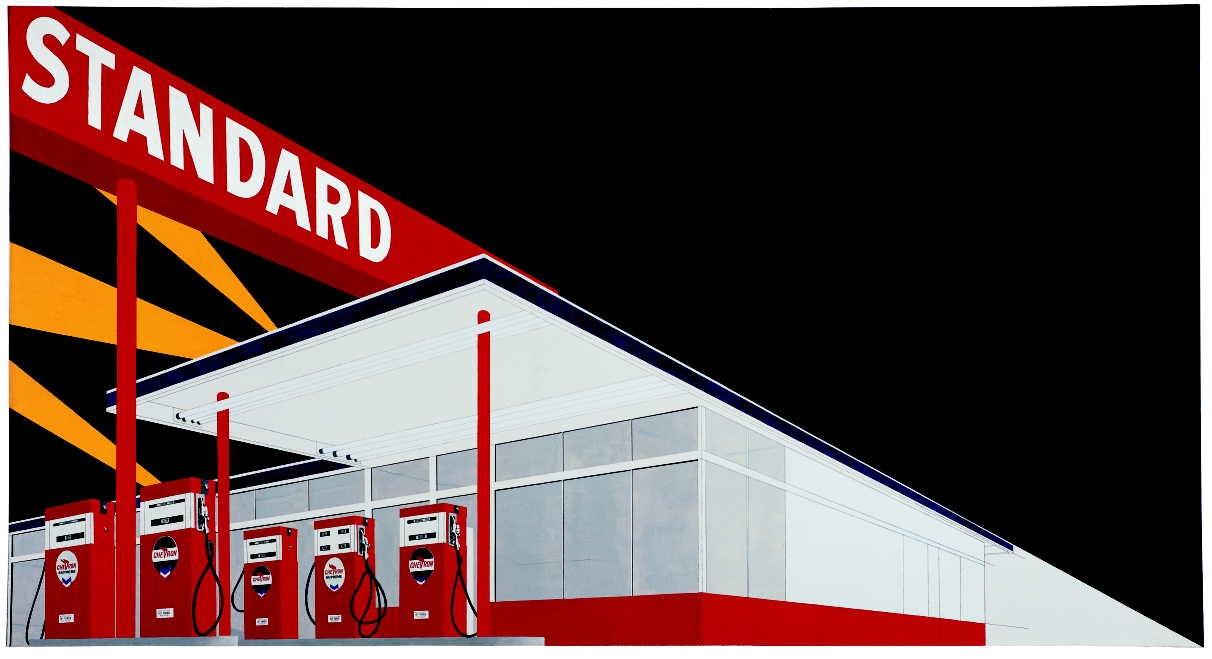
Standard Station, 1966, Ed Ruscha. (Park West Gallery)

Standard Station, 1966, Ed Ruscha. (Park West Gallery)

RuschasLAMITI received a book about six months ago as a gift: Ed Ruscha’s Los Angeles by Alexandra Schwartz.  At first I thought it was a travel guide, for I was headed to L.A. a few weeks later and I just assumed it was a book detailing the more out-of-the-way spaces to see.  Except that it was much too nice a book for a mere travel guide: small and compact with fine paper, hard-board covers and peppered with illustrations. I put it aside to read it at another time. (I have since spilled an entire cup of coffee on it in a place where food and drink was forbidden. Deserved bad karma!)

Anyway, boy was I wrong about the travel guide…and ignorant of an artist and a whole school of painting.

I had been completely unaware of Ed Ruscha–and of Los Angeles art.  And I was not alone. In fact, much of the book’s focus is how the Los Angeles’ school of Pop Art has always played the poor sister to New York’s more celebrated school.  And yet, unlike many cultural movements in which a western migration can honestly be traced, Pop Art in America seems not to have originated on the East Coast and worked its way across to California. Apparently, according to Schwartz, Pop Art seems to have arisen simultaneously in various parts of the country, reacting to and inspired by the same cultural influences.

In 1962, the Ferus Gallery in Los Angeles mounted an exhibit entitled “The New Painting of Common Objects.” The British critic, Lawrence Alloway–the man who coined the term “Pop Art”–cites it as being the first exhibit of American Pop Art.  In fact, the gallery–and its curator Walter Hopps–was the first to exhibit Warhol’s iconic Campbell Soup Can–arguably, the defining image of Pop Art–two months before it was shown in New York.  The list of artists at “The New Painting of Common Objects” exhibit included Lichtenstein, Dine and Warhol from the East Coast, Phillip Hefferton and Robert Dowd from the Mid-West, and Edward Ruscha, Joseph Goode and Wayne Thiebaud from the West. It was the nation’s introduction to Pop and a major stroke for the establishment of Pop Art in the country. This, and the fact that the respected art magazine ArtForum had its offices above the Ferus Gallery where the show was staged, would seem enough to move the spotlight onto the Los Angeles’ art world, but it wasn’t.  But New York is much too big a player. (Ultimately ArtForum moved there, as well.)

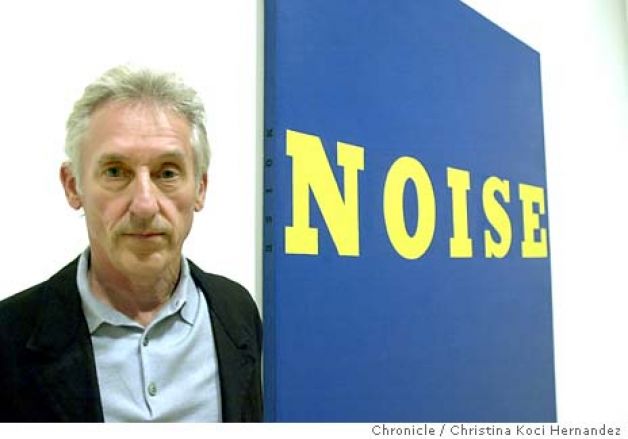
Ed Ruscha in front of Noise, 1966. Photo: CHRISTINA KOCI HERNANDEZ for San Francisco Chronicle

Ed Ruscha in front of Noise, 1966.
Photo: 2004 CHRISTINA KOCI HERNANDEZ for San Francisco Chronicle

Ruscha hit the L.A. scene young, having hitchhiked in from Oklahoma at the age of nineteen. He enrolled in what is now the California Institute of Arts and afterwards worked–like his contemporary Warhol–in advertising.   And like Warhol, his collages, his word-art, the signage and everyday objects, and his photographs greatly showed the influenced that advertising had on him.

Ruscha’s work is vibrant and fun, enigmatic and engaging, uncluttered and beguiling. Besides his artwork, he has created numerous books and films, and often collaborates with artists, writers and publishing houses on lay-out and cover designs. He still works and lives in Southern California.

To be truthful, the book, Ed Ruscha’s Los Angeles itself, however is a bit heavy going and academic at times. (It was published by MIT and was originally Schwartz’s doctoral dissertation). But nevertheless, it is a wonderful introduction to Ruscha’s art.

At least for me, for whom he was a completely new name. And one that I am enjoying discovering.

“Always learning, even if it’s simply that I do not know.”

Movie Review: The Discreet Charm of the Bourgeoisie by Luis Buñuel

bunueld

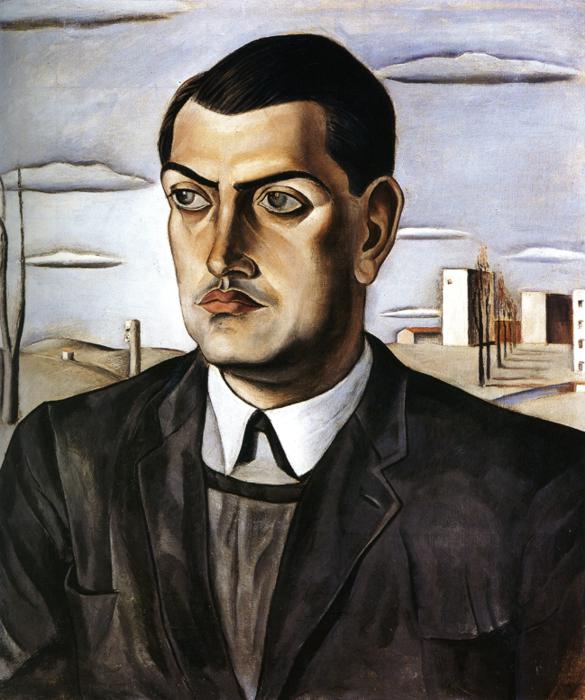
painting of Luis Bunuel
(artist unknown)

Towards the end of Midnight in Paris, the main character Gil (Owen Wilson) suggests a movie idea to a young man accompanying Salvador Dali. The man (played by Adrien de Van) was Luis Buñuel, the Spanish filmmaker and poet who caused a outrage with his first two films, Un Chien Andalou (1928)  and L’Age d’Or (1930), both collaborations with the surrealist painter, Salvador Dali. The latter film was banned for nearly 50 years before it had its premier in the U.S. in 1979.

(By the way, the movie that the Owen Wilson character was suggesting was Buñuel’s The Exterminating Angel.)

Buñuel and his compatriot Dali were at the forefront of surrealism and, while their artistic vision was not embraced by everyone, both men practiced their art well into old age.  And while the difficulty of surrealism coupled with Buñuel’s savage attacks on the bourgeoisie and on religion might have distanced himself from much of the mainstream audience, he was quickly seen as a seminal figure in film and one of its greatest directors. His films won or were nominated for major awards throughout the world.

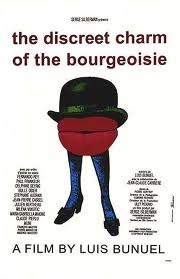
Both his anti-religion and the anti-bourgeoisie attitudes are in full display in Buñuel’s 1972 film The Discreet Charm of the Bourgeoisie. And of course, the entire film is surreal.poster..and quiet funny.

While plot has never been the most stringent part of Buñuel’s films, The Discreet Charm of the Bourgeoisie focuses on three couples and a series of quirky events and odder dreams that continually prevent them from dining together. There is also a Catholic bishop who asks to moonlight as one couple’s gardener. (It is typical of Buñuel that the bishop performs the most brutal action in the film.)

There are gentle stabs at the military, the police, and the upper-middle-classes, but overall the film is relatively light–at times even farcical. Etiquette is important to the three couples–and propriety–despite the fact that the men are drug smugglers and their life style is founded on drug money. They talk about the proper way to drink a martini and bemoan the fact that the lower classes do not know how–this they see as evidence of the downfall of society. (They use their chauffeur as a test case.)

Throughout the film, dreams occur within dreams within dreams…and at times we forget that some of the situations the characters find themselves in dissolve upon waking. And the dreams themselves get increasingly brutal. There are various ghosts and visits to the underworld and dreamlike violence.

And all these well-to-do people want to do is eat a meal together–and they can’t…a rare event for people who are used to getting everything they want. Life–as surreal as it can be–gets in the way.

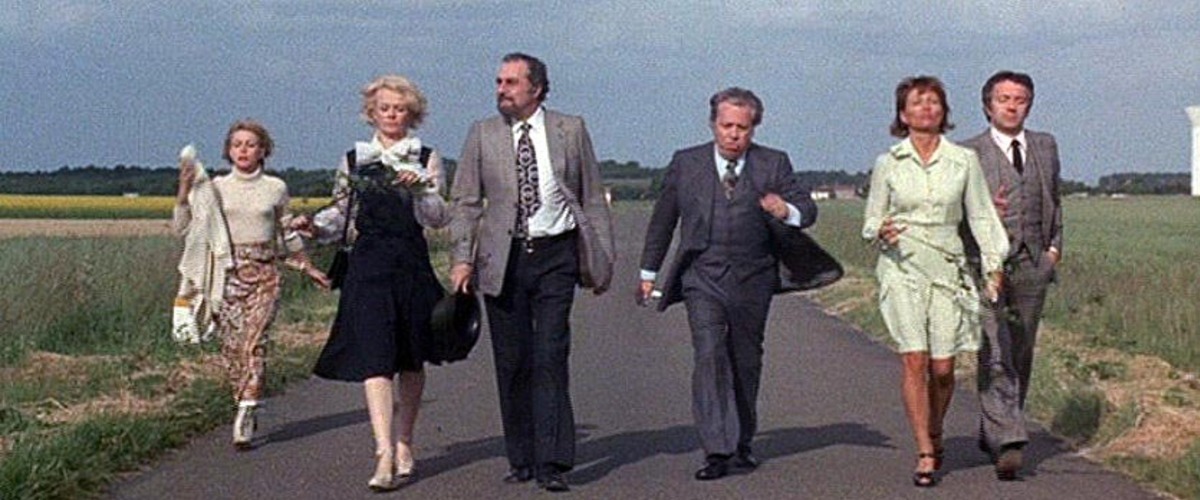
The six discreet bourgeoisie

The six discreet bourgeoisie

By the way…

The original title for the movie was Down with Lenin, or The Virgin in the Manger (A bas Lénine, ou la Vierge à l’écurie) and was changed to The Charm of the Bourgeoisie.  Adding the word Discreet was an afterthought.

Quote of the week #9: June 23, 2013

“There is a time for many words, and there is also a time for sleep.”

Homer, The Odyssey

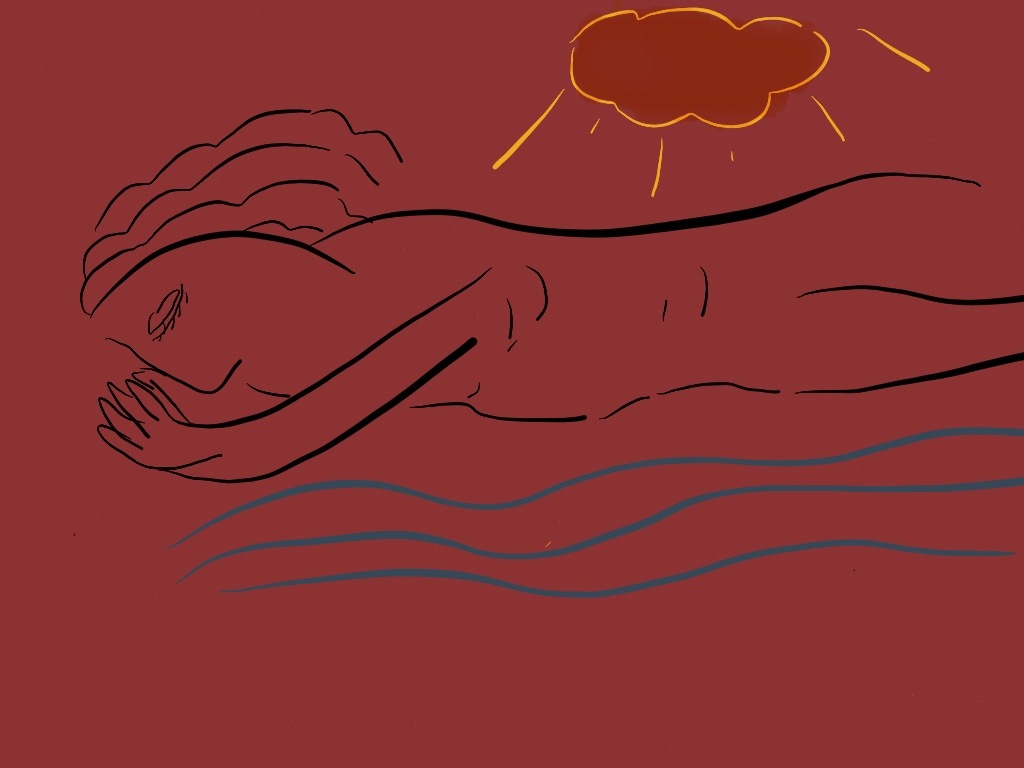
20130622-151602.jpg

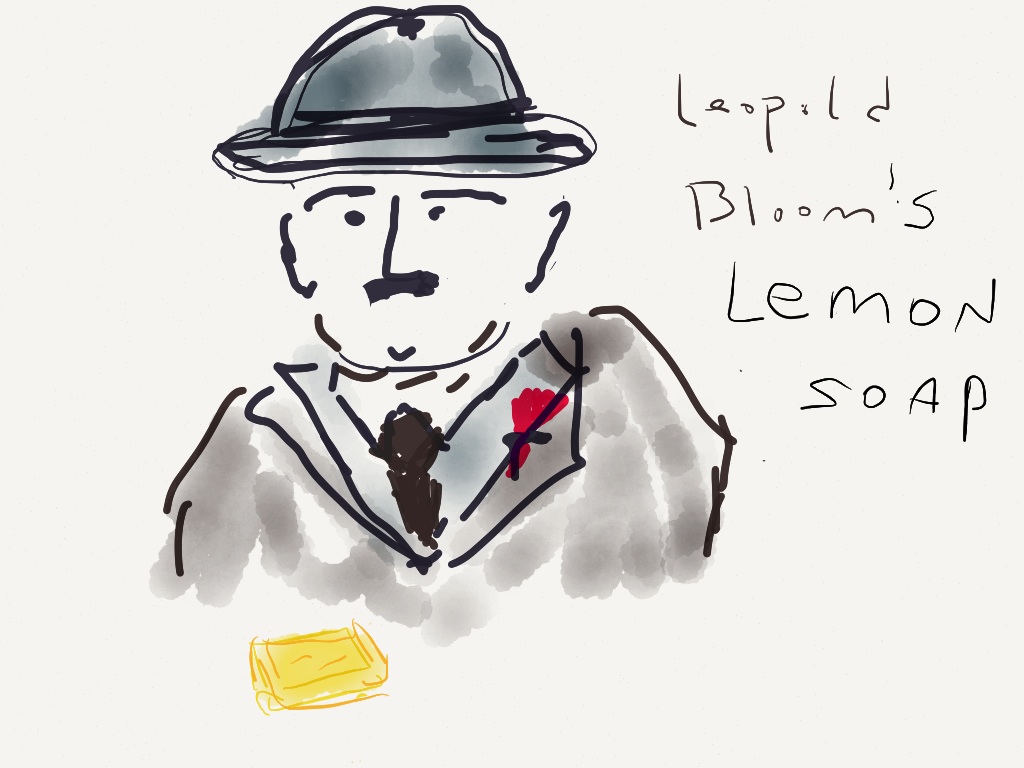
illustration 2013 jpbohannon

Yes, Yes, Yes: Affirmation ala Molly Bloom

yes I said yes I will Yes.

Last Sunday was Bloomsday, the international celebration of James Joyce’s novel Ulysses.

Dublin had its usual extravaganza with crowds retracing Leopold Bloom’s wanderings and with women’s hats that rivaled those worn at major horse races (remember to bet it all on “throwaway.”) In New York, the complete novel was read outside writer Colum McCann’s tavern, aptly named Ulysses. And at Philadelphia’s Rosenbach Museum and Library, (where Joyce’s manuscript is housed) there was, beside the usual full reading, an unusual installation.

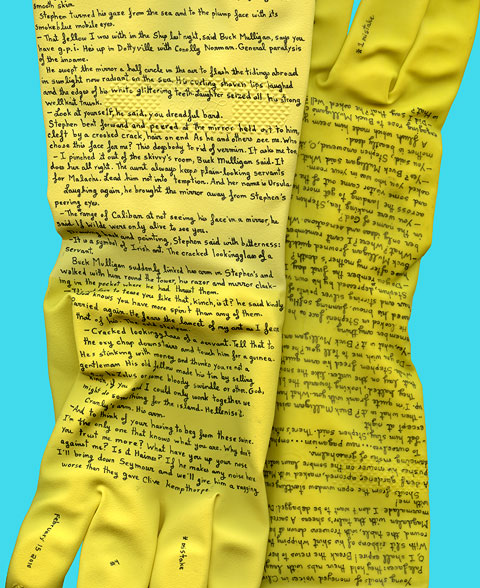
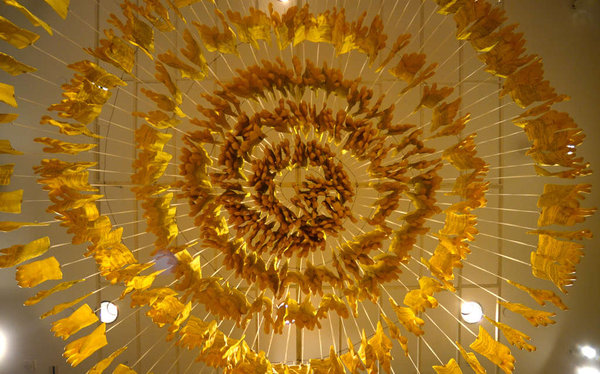
The artist, Jessica Deane Rosner, wrote out the entire text of the novel on 310 yellow, rubber, dish gloves and suspended them from the gallery ceiling in a very Joycean spiral. Rosner stated that it was Joyce who showed us that the things of everyday life–including the muck and the un-pretty–are the very essence of and inspiration for Art.

And so she used the mundane kitchen gloves to carry Joyce’s text–a text replete with the beauty of life’s mundane grime and natural effluences.

Jessica Deane Rosner’s Text of Ulysses on yellow rubber gloves.

Jessica Deane Rosner's Ulysses Glove Project suspended from ceiling of Rosenbach Gallery

Jessica Deane Rosner’s Ulysses Glove Project suspended from ceiling of Rosenbach Gallery

But that’s not what I want to talk about today. …

I want to talk about the last seven words of the novel, the strong affirmation that ended Molly Bloom’s long nighttime reverie in the early hours of June 17, 1904.

It is this affirmation, the “yes I said yes I will Yes” that makes Ulysses so important. For, if ever there was a modern Everyman, it is her husband, Leopold Bloom. Leopold the ridiculous, the schlump, the man she has cuckolded just hours before. Leopold the grieving, the masturbatory, the lecherous, the neighborly, the isolated, the humane, the persecuted. And to him–and he is each of us– Molly proclaims a resounding Yes!

And we all need to do more of the same. To say “Yes.”

illustration 2012 jpbohannon

illustration © 2012 jpbohannon

I have a good friend, Ken Campbell, who served thirteen long months in Vietnam before becoming one of the leading figures in the Vietnam Vets Against the War movement. This fall the two of us went together to see Samuel Beckett’s Endgame. I wallowed in the existential bleakness; he did not. He enjoyed the company. He had spent too long in Vietnam, wondering every night if he was going to live another day, and today he has no time for Beckett’s desperate vision.

He sides much more with Molly Bloom’s “Yes”!

So here’s to saying “yes.” Saying “yes” to all the myriad things and people that life places in front of us: like the noodle shop at 56th and 6th in NYC… the children’s fountain on the Ben Franklin Parkway…the surprise of 310 yellow rubber gloves hanging from an elegant ceiling.

Movie Review: Black, White + Gray: A Portrait of Sam Wagstaff and Robert Mapplethorpe 

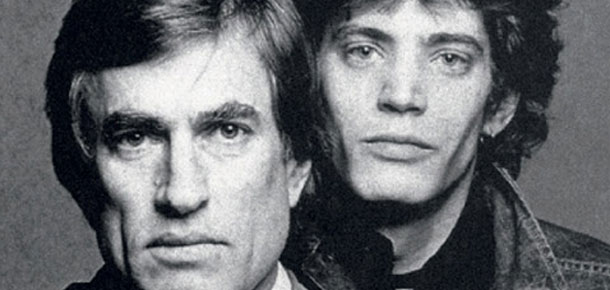
Sam Wagstaff and Robert Maplethorpe

Sam Wagstaff and Robert Maplethorpe

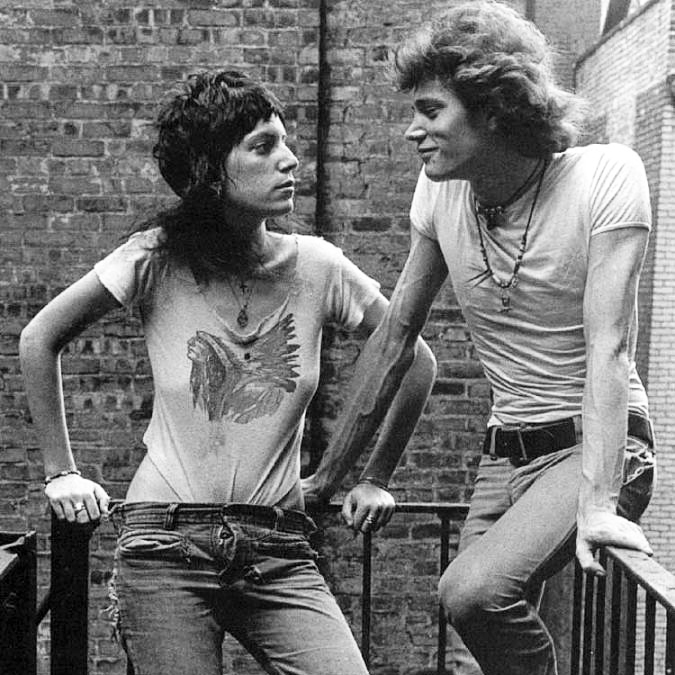
I discovered a documentary the other night called Black, White + Gray by James Crumb (2007). The blurb calls it a study of the relationship between the curator/collector Sam Wagstaff, the artist Robert Mapplethorpe, and the poet/singer Patti Smith. To be honest, however, it is really the story of Wagstaff, that touches greatly on his relationship with Mapplethorpe and to a much smaller degree with Smith, both for whom he was mentor and patron and friend. (In Mapplethorpe’s case lover and companion.) Consequently, it also deals with art, the business of art, the demimonde of gay life in the 1970s and 80s, and, of course, the scourge of AIDS.

patti smith robert mapplethorpe

patti smith robert mapplethorpe

Moving chronologically through Wagstaff’s life–and anchored by Patti Smith’s intelligent and honest and fond recollections–the film follows Wagstaff from his schooldays through his loathed time spent in advertising to his prominence in the art worlds of New York, Paris and London. Along the way, there are appearances on the Dick Cavett Show, press conferences, interviews with his friends and colleagues, and countless photographs, many taken by him or Mapplethorpe and many part of his historic collection.

Wagstaff was strikingly handsome, aristocratic, and intelligent. (Dominick Dunne called him one of the most handsome men he ever saw.) He was also gay, but closeted himself for much of the oppressive fifties and early part of his life. Not until his meeting with Mapplethorpe did it seem he grew comfortable with his homosexuality. As a curator, he embraced and pushed forward those artists and art forms that were still on the fringe, Minimalism, Earth Works, Conceptual Art, and, most importantly, photography. Wagstaff believed that photography was an ignored art and deserved to be elevated to the pantheon of “Fine Arts.”

Indeed, it is because of Wagstaff that photography holds the status that it does today. His relentless collecting, the exorbitant sums he paid, the continual praise and comments in the press, single-handedly hauled photography onto the main stage.

A few years before he died, Wagstaff sold his private collection of photographs to the Getty Museum in Los Angeles for the then unheard-of price of $5-million. It was testimony to how far he had brought photography to the forefront.

The interviews within the film are honest and intelligent. Many deal with his collecting, with his curating, and with his “vision.” Many deal (some negatively, some positively) with his relationship with Mapplethorpe. Dominick Dunne, particularly, gets much air time, and talks about Wagstaff in two of the worlds that he lived in–the socialite world and the gay world. And all is brought together by the reminiscences of Smith.

“Compartmentalized” is a word that often came up, and it seemed that Wagstaff was very good in ordering his life into separate and distinct components. But in the end, it was the gay world that did him–and so many others–in. It is easy to forget that at one point, AIDS was a scourge that was decimating much of the art world. The film ends with Wagstaff’s death, and then with Mapplethorpe’s, and then with a list of the many artists who have died of AIDS complications since.

It is a sobering ending. But then the credits role and are intersperse with clips from the many interviewees and once again we are reminded of the life, of the visionary man who rose so high in the world of art–and brought others with him .

We know much about Mapplethorpe’s life, and Patti Smith’s, greatly due to her wonderful memoir, Just Kids. James Crumb’s film Black, White + Gray adds greatly to our knowledge of that time and that world and the people who populated it. It’s worth while finding and fascinating viewing.

By the way…

The title of the film, Black, White + Gray not only refers to the B&W Photography that Sam Wagstaff collected, cataloged, and often curated, or the shades of distinctions in the compartmentalized life that he constructed, but also to the momentous exhibited he staged at the Hartford Wadsworth Atheneum entitled “Black, White and Gray.” The exhibit, considered the first minimalist show, featured the work of Stella, Johns, Kelly, and Lichtenstein, among others. It was an extraordinary success, influencing fashion, Hollywood, advertising, and, of course, Truman Capote’s infamous Black and White Ball.

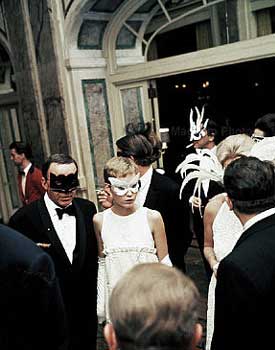
Frank Sinatra and Mia Farrow arriving at Truman Capote's Black and White Ball.

Frank Sinatra and Mia Farrow arriving at Truman Capote’s Black and White Ball.

https://i0.wp.com/media-cache-ak0.pinimg.com/192x/85/cf/f1/85cff11fb5bb99780ab77c77af4861d9.jpg

Andy Warhol at Truman Capote’s Black and White Ball without a mask.

I can’t write, so I read Denis Johnson…

…and now I know I can’t write.

At times I feel I’m kidding myself. Who do I think I am pretending to be a writer, a poet, a thinker?  I am just an everyday slug without the discipline to get anything really worthwhile done.  And discipline is what you need. How many times do we hear that just showing up is 90% of the struggle?  Just do the work, day in and day out, we are told, and the creation will come.

I don’t do the work.

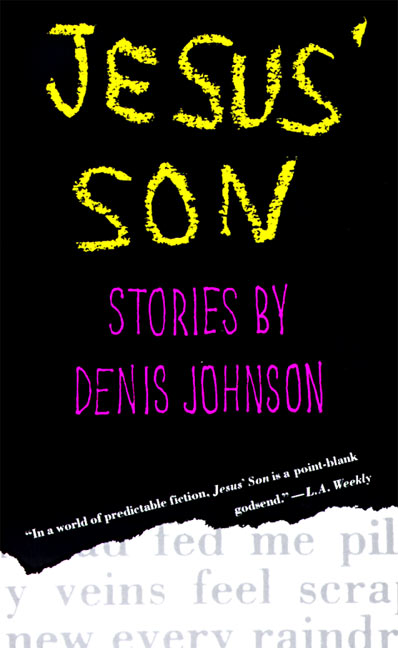
jesus-sonAnd so as I sneak off for my hour-and-a-half, two hours, I try to jump-start my atrophied mind by reading for a while at first. Unfortunately today, I began re-reading Denis Johnson’s Jesus’ Son, a collection of eleven wise, lively, brutal, intense, truthful short-stories.

I’ve never felt so washed up in my life!

The first story,  “Car Crash While Hitchhiking” is riveting. It’s like a very bad car accident that you can’t turn away from. The narrator, the hitchhiker, has been on the road from Texas to Kansas City. The first driver fed him amphetamines and Canadian Club;  the second ride was a hashish filled bubble to the city limits; and the third ride was the fateful ride–a family of four with a nine-month old baby on the back seat, destined to be brutalized in a head-on collision. The narrator is flawed and generous and seemingly prescient, for he seems to know that it is this family that picks him up that will suffer. His final words long after the car accident and while being admitted to the Detox at Seattle General are puzzling–if not telling: “And you, you ridiculous people, you expect me to help you.”

God, could it be Jesus’ son?

Much later in the collection–one could label Jesus’ Son an episodic novel rather than a collection of short stories with its single narrator and progressive (though disjointed) chronology–the narrator is in detox and is shaving another man. (The drugs they are giving him have steadied his hands to such a degree that he has taken to shaving fellow patients.) Here is part of the scene:

Just below one cheekbone, Bill had a small blemish where a bullet had entered his face, and in the other cheek a slightly larger scar where the slug had gone on its way.

“When you were shot right through your face like that, did the bullet go on to do anything interesting?”

“How would I know? I didn’t take notes. Even if it goes on through, you still feel like you just got shot in the head?”

But they aren’t Bill’s only wounds. “I’ve been shot twice,” Bill reveals. …”Once by each wife for a total of three bullets, making four holes, three ins and one out.”

This is the world of Jesus’ Son. There are bullet wounds and heartaches. There is addiction and abortion, love and lovelessness, disease and car-crashes and murder. Johnson once said about his stories “Some of us go to the movies to see everybody shooting each other, and then there’s another bunch who actually shoot each other.” It is this latter bunch that people Johnson’s stories. But in addition to “shoot[ing] each other,” they seek salvation, search for love, and try to survive on the wrong track that life has set them on.

Intense and unsettling, witty and thrilling, the stories are both unforgettable and beautiful.  Something any writer should aspire to.

So, Another Weird Coincidence…

So, I had sneaked out to this coffee house to do this wee bit of writing and reading. And I was considering saying something about the title–Jesus’ Son–and how it was taken from the Lou Reed song “Heroin.”  I had just decided against it when Lou Reed’s “Sweet Jane” comes on the sound-system and that sealed the deal.  When I mentioned the coincidence to the guy at the counter, he replied, “Lou is everywhere.”  I didn’t know, hah!

So, if you want, here’s a recent version of Lou Reed singing “Heroin” from where the title came:


Quote of the week #8: June 16, 2013

image

illustration ©2013 jpbohannon

“Mythical heroes are of obviously superhuman dimensions, an aspect which helps to make these stories acceptable to the child. Otherwise the child would be overpowered by the implied demand that he emulate the hero in his own life. Myths are useful in forming not the total personality, but only the superego. The child knows that he cannot possibly live up to the hero’s virtue, or parallel his deeds; all he can be expected to do is emulate the hero to some small degree so the child is not defeated by the discrepancy between this ideal and his own smallness.”

Bruno Bettelheim, The Uses of Enchantment