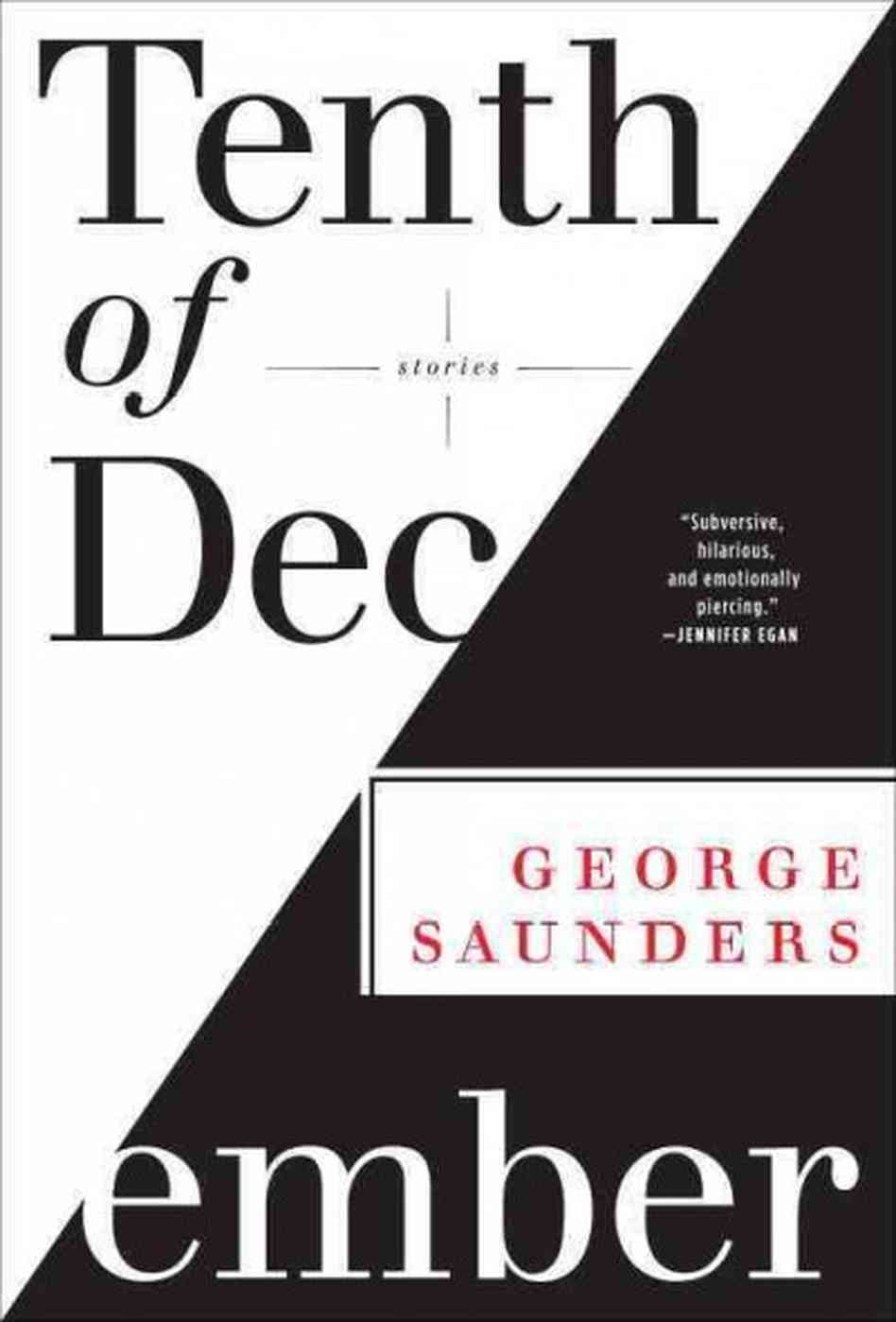
Book Review: Tenth of December by George Saunders

To be truthful, I was put off by all the hype that surrounded Tenth of December when it was released back in January. Articles about the short stories and their author, George Saunders, were everywhere. All the major papers, magazines and blogs were praising, lavishly, both the collection and Saunders himself. All of sudden I was seeing articles about or by Saunders from years past, all floating to the front, all becoming part of this giant group-hug! He was compared to Twain and Flannery O’Connor, to Vonnegut and Pynchon, to Bartheleme and Welty. Even the late David Foster Wallace was corralled in for a blurb on the inner covers.

And now, I can say, all the hype was legitimate and deserved.  Tenth Of December is something special. 10thdecemberbookcover

The longest story in the book “The Semplica Girl Diaries” begins with a father, in the near future, starting a diary. As he begins, he recounts his fears and worries for his children, fears that they are growing up with so much less, materially, than their classmates. He also reveals his own anxieties about his failure as a provider of these consumer necessities. During the course of his journaling, the family is teased with a windfall and then pushed towards ruin. Oddly enough, strung throughout the story, literally, are third-world women who sell themselves in America as lawn ornaments, putting his own focus on material success in a very skewed light.

Other fathers–or father figures– appear throughout the stories. In the first story, “Victory Lap,” a young boy saves a girl who is being abducted. But he second guesses all of his heroic actions in terms of what his father would say about his getting involved and not completing his chores. At the same time, the perpetrator keeps worrying about his own father–and while carrying out his violent abductions–worries whether his father would be proud of the way he is doing things.

In a very short piece, “Sticks,” an aloof, mean-spirited and inaccessible father dresses a crucifix-like contraption for every holiday: Santa for Christmas, a groundhog for February 2nd, a soldier for Veterans Day, etc. When his wife dies, he dressed the pole as Death and makes a memorial to her. His own–and the sticks’–ending is seemingly inconsequential, but full of pathos nevertheless.

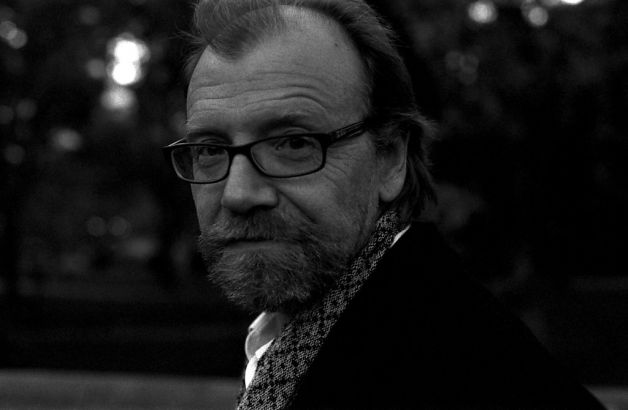
George Saunders

George Saunders

On the whole, Saunders’ stories are full of dysfunctioning families trying to succeed in a world of plastic values and overwrought commercialism. It is filled with simple people having difficulty coping in an increasingly complicated world. This world he describes is a bit off-kilter, but it all seems unnervingly familiar.  And his telling of these tales is enjoyable and unforgettable.

Life and death, hope and despair, pride and self-loathing: these are the topics that Saunders addresses but in a way that is funny as often as it is heart wrenching, a way that is wryly observed, emotional and thought provoking.

All that hype was well deserved after all.

Music Review: Tom Jones’ Spirit in the Room: “There’s a Lot New, Pussycat!”

tomjonesI can’t believe I’m doing this. But I am.  I am reviewing the latest Tom Jones album.  Mainly because it’s extraordinary.

Remember when Johnny Cash did that Nine Inch Nails cover produced by Rick Rubin and accompanied by that powerful video, and how every hipster coffee shop around now has a Johnny Cash tune playing on its sound system about once every 20 minutes?  If you don’t remember, here it is:

Well, Tom Jones is doing the same thing. He has left behind the Las Vegas glitz and the sex-god personna of his past (he parodied himself in Mars Attacks, for god’s sake!) And he is choosing songs that give resonance to his powerful voice.  Like a old bottle of Laphroaig that announces itself with a blast of peat smoke against your throat, Tom Jones voice is aged to perfection. And the lyrics he’s delivering add to that agedness, to the gravitas.Spirit+in+the+Room

Produced by Ethan Johns and covering songs by Leonard Cohen, Tom Waits, Bob Dylan, Richard Thompson, Odetta, Paul Simon and McCartney, among others, Spirit in the Room presents Jones stripped down and honest. Just as likely to be accompanied  by a single acoustic guitar or a tinkling piano as a full-tilt-boogie band, Jones dives into the blues, gospel, and roots music.

And again, he has the voice to do it: this time, however, one hears more of the Welsh ditch-digger than the nightclub lounge singer.  And in my opinion, that’s a vast improvement. He is authentic, he is wise, he is ruminative.

Jones’ cover of Cohen’s “Tower of Song” is every bit as good as Cohen has ever done it. One hears the pain of age, the pain of wisdom.

Richard Thompson’s “Dimming of the Day” is one of my top ten favorite songs ever (I own recordings by Thompson, Bonnie Raitt, the Corrs, Emmylou Harris, and a wonderful version by the short-lived band, Danko, Fjeld and Anderson) and I was excited to see that Jones included it here and that he does it well.

His voice smooths out Waits’ growl, roughs out Simon’s baritone and turns Dylan’s “When the Deal Goes Down” into a rueful waltz that reminds me of Jagger’s version of “The Long Black Veil” with the Chieftains. And his version of Blind Willie Johnson’s “Soul of Man” is almost threatening and is as jagged as the guitar that centers it.

I have always felt that Tom Jones was a bit schmaltzy but, to be fair, I never gave him much of a listen. He has always had a powerful voice, but his delivery was always a little more polished than I preferred, every end note seemed elongated, every word seemed to carry the same weight.  He always seemed to be overdoing what I saw was essentially an outdated vibrato.

But I was wrong or he has changed or I have changed.  Because Spirit in the Room is quite an achievement.

Now, I’ll  probably start hearing him every fifteen minutes in the coffee shops I hide in!

♦     ♦    ♦    ♦    ♦    ♦    ♦

Here is Tom Jones covering Leonard Cohen’s “Tower of Song,” the first track on the album:

Quote of the week # 12: July 14, 2013

illustration 2013 jpbohannon

illustration 2013 jpbohannon

“After so many years, I’ve learned that being creative is a full-time job with its own daily patterns. That’s why writers, for example, like to establish routines for themselves. The most productive ones get started early in the morning, when the world is quiet, the phones aren’t ringing, and their minds are rested, alert, and not yet polluted by other people’s words. They might set a goal for themselves — write fifteen hundred words, or stay at their desk until noon — but the real secret is that they do this every day. In other words, they are disciplined. Over time, as the daily routines become second nature, discipline morphs into habit.

“It’s the same for any creative individual, whether it’s a painter finding his way each morning to the easel, or a medical researcher returning daily to the laboratory. The routine is as much a part of the creative process as the lightning bolt of inspiration, maybe more. And this routine is available to everyone.

“Creativity is a habit, and the best creativity is a result of good work habits.”

Twyla Tharp, The Creative Habit

Werner Herzog, Northern Liberties and my neighbors’ art

Werner Herzog photo Bil Zelman

Werner Herzog
photo Bil Zelman

So it is August last year and I’m with a group of people at a street fair on 2nd Street and we’re standing watching the children attempting to throw over-sized basketballs into undersized hoops. All of a sudden, the barker takes away one of the balls and points it to me. “Let’s give Werner Herzog a try,” he says.

Now, I’ve have been compared to a lot of people in my time–both as insults and as compliments–but I had never been compared to Werner Herzog before. We all had a laugh and promptly forgot about it…until this past Tuesday, that is.

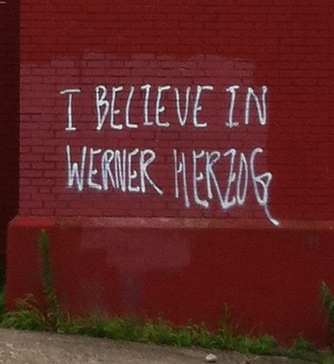
Anyway, I was walking down 3rd Street to my local when I passed the abandoned Ortlieb’s brewery at 3rd and Poplar. It is a derelict building with a lot of character but in really great disrepair, and nobody yet has taken the risk to convert it to anything. Anyway, I was surprised to see, yet again, a reference to the German film director: Brand new graffiti spray-painted on the brewery wall.

Newly Arrived Graffiti on the wall of the abandoned Ortlieb's brewery (3rd and Poplar).

Newly Arrived Graffiti on the wall of the abandoned Ortlieb’s brewery (3rd and Poplar).

What is the fascination with Herzog in my little neighborhood? I photographed it immediately.

♦ ♦ ♦ ♦ ♦ ♦

Philadelphia is very proud of its wall art–murals that dot the city–and visitors can now take one of several bus tours visiting the more spectacular ones. But in my neighborhood of Northern Liberties, the wall art is not necessarily all that official–but it is more than impressive. And so on Wednesday, I took my own little tour of just a one block by two block area, snapping whatever pieces I saw.

A half-block north of the Ortleib’s brewery is Liberty Lands Park. Its southern wall is Kaplan’s Bakery and the air is filled with the aroma of baking bread–bread that makes its way to many of the restaurants throughout the city. The wall is filled with a three-dimensional mural of birds and bees and a map of the land as it once was.

A half-block north of the Ortleib's brewery is Liberty Lands park.

A half-block north of the Ortleib’s brewery is Liberty Lands park.

At the northeast corner of the park, where Bodine crosses Widley, there is a house where the owners have painted a interesting tale on their wall. The famous tortoise (looking a bit startled) is crossing the finish tape, held up by a pigeon and an owl. The hare is nowhere in the picture. Hah!

The Tortoise crossing the tape.

The Tortoise crossing the tape.

Immediately across the street, ten meters from the tortoise, a neighbor has painted his garden fence in lush roses.

A Garden Fence of Roses (Bodine and Wildey Sts.)

A Garden Fence of Roses (Bodine and Wildey Sts.)

A block away in one direction, there is a coffee shop…

One Shot Coffee Shop

One Shot Coffee Shop

… and a block away in the other direction is GreenSaw, an environmentally-conscious design, architectural, construction firm that makes furniture, does remodeling, and sells DIY materials and supplies—all earth friendly and green. I guess that pleases the orangutan on the wall next to them:

4th Street between Poplar and Brown

4th Street between Poplar and Brown

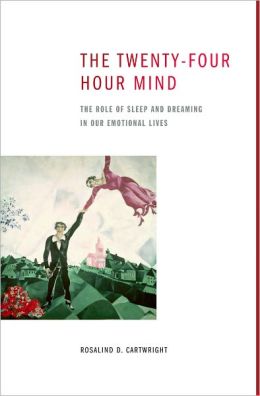
Book Review: The Twenty-Four Hour Mind by Rosalind D. Cartwright

The Twenty-Four Hour Mind: The Role of Sleep and Dreaming in Our Emotional Lives

illustration 2013 jpbohannon

illustration 2013 jpbohannon

My reading list these days is erratic and wide. I am picking up things that pique my interest without any plan, without any connection to what I previously had been reading. But that’s okay for these summer days.

A colleague had forwarded an article from Maria Popova’s brain pickings blog. It was a review of Rosalind D. Cartwright’s book on the role of sleeping and bookdreaming in our lives. The review (like nearly everything on “brain pickings”) was intriguing and interesting. So of course, I had to find it in our library.

Cartwright is one of the preeminent scientists studying sleep–a relatively new area in scientific research. Her thesis is that sleep is essential to our health, particularly to our emotional health, and that the modern penchant (and desire) for sleeping less is damaging both physically and psychically.

Indeed, the mind does not sleep when we sleep–it goes into over-drive, cataloging memories, cementing new knowledge, mapping neural pathways. Cartwright states:

We can now begin to answer the question, “Where do we go when we got to sleep?” Clearly we do not sink into a void, but instead into a mental workshop where emotionally important information is kept active until it is saved in neural networks. When the highly activated REM sleep comes along, perceptual dreams reveal the matching of new information to old… . Through the night, from REM to REM, new information is integrated, drawing together more and more remote associations.

She continues that there is short-term functionality to these rhythms– “down-regulation of negative mood” –and long-term functionality. The long-term benefits, she lists as “continuously test[ing] and modify[ing] those non-conscious habitual schemas that make up our self-system and influence our behavior choices, based on our emotional evaluation of whether the new experience supports or challenges our present self-definition.”

This is a lot of responsibility thrown onto a good night sleep, and Cartwright’s argument is that we, as modern human beings, are sabotaging that essential need.

Aside from emotional turmoil–and Cartwright’s expertise is on sleep disorders, particular sleepwalking–Cartwright points out physical dangers as well. Those with long-term insomnia are more prone to obesity and diabetes. A famous study by the American Cancer Society was done over a 10-year period and found a puzzling pattern. Those who slept less than six hours a night AND those who slept more than nine hours a night had a higher mortality rate for their age. The conclusion is that we humans are built to sleep about 1/3 of our 24 hour cycles, that magic 7 to 9 hour range.

“We speak prose while awake and poetry when asleep.”

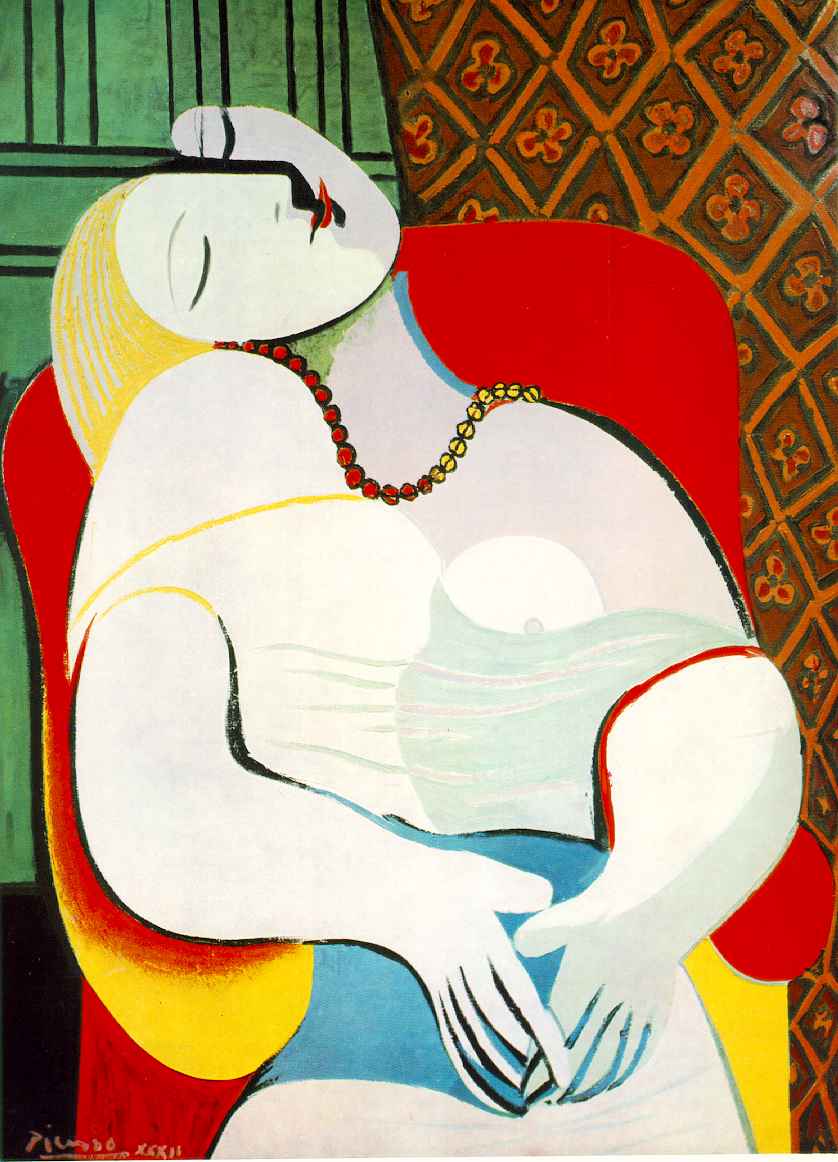
"The Dream," 1932 Pablo Picasso

“The Dream,” 1932 Pablo Picasso

Yet, for Cartwright’s thesis, it is not merely sleep that is essential to human health, but dreaming as well. In her profession, Cartwright is known as “the Queen of Dreams,” and dream-research is what she is interested in and battles for. Here is how Cartwright explains the symbiotic functioning of the waking and dreaming life.

“…[T]he mind is continuously active, although in different modes of expression, during the two major alterating states of waking and sleep. … In waking, there is a wider lens open to receive and respond more to the external world, while in sleep we are mostly confined to a narrower base of internal information both new and old.”

It is this “internal” information that sets us dreaming, that allows us to fit old information with new information, to anticipate new situations and reconcile old. Cartwright firmly believes that our emotions are greatly tied to the functioning of our dreaming, and of our sleeping.

While Cartwright acknowledges the contributions of Freud to dream-analysis and the understanding of the unconscious, she moves decidedly apart from him. (The technological abilities for brain-image mapping, sleep studies, etc. give her a great advantage.) The Freudian concept of the preconscious, unconscious and conscious mind is much too simplistic for what Cartwright sees happening. Here is her take on dreaming:

“So in good sleepers, the mind is continuously active, reviewing experience from yesterday, sorting which new information is relevant and important to save due to its emotional saliency. Dreams are not without sense, nor are they best understood to be expressions of infantile wishes. They are the result of the interconnectedness of new experience with that already stored in memory networks. But memory is never a precise duplicate of the original; instead, it is a contining act of creation. Dream images are the product of that creation. They are formed by pattern recognition between some current emotionally valued experience matching the condensed representation of similarly toned memories. Networks of these become our familiar style of thinking, which gives our behavior continuity and us a coherent sense of who we are. Thus, dream dimensions are elements of the schemas, and both represent accumulated experience and serve to filter and evaluate the new day’s input.”

It all is a lot to digest. But it is something to sleep upon.

Movie Review: Hannah Arendt dir. by Margarethe von Trotta

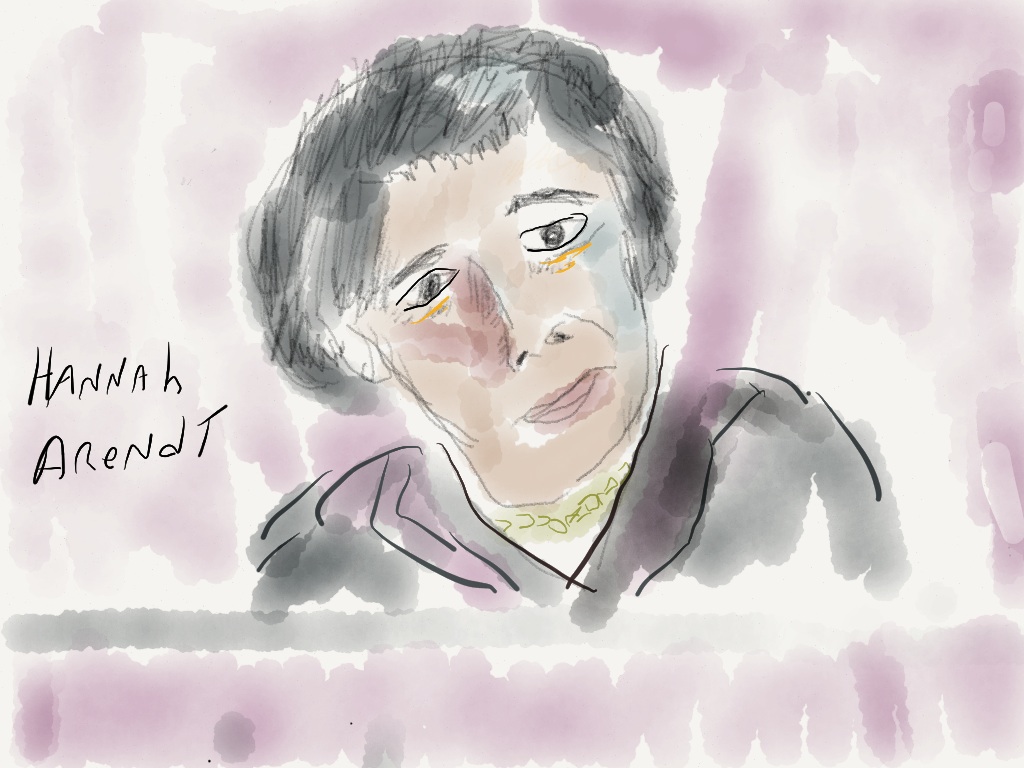
illustration 2013 jpbohannon

illustration 2013 jpbohannon

The philosopher, political theorist and writer, Hannah Arendt has received a thoughtful and deserving biopic from director Margarethe von Trotta, in her eponymous film, Hannah Arendt. The film’s intelligence reflects the life of the mind that Arendt lived–and an honest and hard intelligence at that.  Concentrating on the period when Arendt covered the Adolph Eichmann trials for New Yorker magazine–and the fury that it unleashed– it shows Arendt resolute in her thinking, uncolored by prejudice or sympathies.

Her coverage of the Eichmann trial ended with these words, this pronouncement:

Just as you [Eichmann] supported and carried out a policy of not wanting to share the earth with the Jewish people and the people of a number of other nations—as though you and your superiors had any right to determine who should and who should not inhabit the world—we find that no one, that is, no member of the human race, can be expected to want to share the earth with you. This is the reason, and the only reason, you must hang.

♦       ♦      ♦      ♦      ♦      ♦      ♦      ♦

Arendt’s biography is well know.  Born into a secular Jewish family, she studied under Martin Heidegger with whom she reportedly had a long affair.  Her dissertation was on Love and Saint Augustine, but after its completion she was forbidden to teach in German universities because of being Jewish. She left Germany for France, but while there she was sent to the Grus detention camp, from which she escaped after only a few weeks. In 1941, Arendt, her husband Heinrich Blücher, and her mother escaped to the United States.

From there she embarked on an academic career that saw her teaching at many of the U.S.’s most prestigious universities (she was the first female lecturer at Princeton University) and publishing some of the most influential works on political theory of the time.

♦       ♦      ♦      ♦      ♦      ♦      ♦      ♦

Hannah-ArendtBut the film, concerns a small time period in her life–but one for which many people still hold a grudge.  The film begins darkly with the Mosada snatching Eichmann off a dark road in Argentina. Back in New York City, Arendt (Barbara Sukowa) and the American novelist, Mary McCarthy (Janet McTeer) are sipping wine and gossipping about the infidelities of McCarthy’s suitors.  Even genius can be mundane–perhaps a subtle reference to Arendt’s conclusions from the trial.  When news of Eichmann’s arrest–and trial in Israel–is announced, Arendt writes to William Shawn (Nicholas Woodeson) at the New Yorker, asking if she might cover the trial for the magazine. Shawn is excited; his assistant, Francis Wells (Megan Gay,) less so.

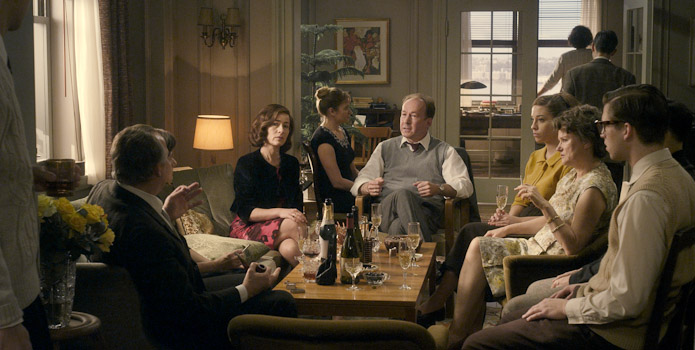
Of course, the trial–and Arendt’s commission to follow it–is fascinating and controversial and we listen in on Arendt and her husband and their circle of friends as they debate and argue and opine. Aside from Mary McCarthy and the head of the German department at the New School where Arendt is teaching, the guests at Arendt’s apartment are all friends from Europe, German-Jews who have escaped the Shoah/Holocaust. Listening to their different conversations is fascinating and electrifying.  This is a movie about “thinking.”

Conversing in Arendt's apartment.

Conversing in Arendt’s apartment.

In Israel, Arendt meets with old friends, friends who remember her argumentative spirit, and stays with the Zionist, Kurt Blumenfeld. From the outset, one sees that Arendt is not thinking along the same lines as the masses following the trial.

“Under conditions of tyranny it is much easier to act than to think.”

Hannah Arendt

At the trial, there is a telling moment, when Arendt watches Eichmann in his glass cage sniffling, rubbing his nose and dealing with a cold. It is then, a least in the film, that she comes to understand that this monster is not a MONSTER. She sees him as simply a mediocre human being who did not think. It is from here that she coins the idea of the “banality of evil.”

Upon returning home–with files and files of the trial’s transcripts–her article for the New Yorker is slow in coming. Her husband has a stroke, and the enormity of what she has to say needs to be perfect.

When it is finally published, the angry reaction is more than great. The critic Irving Howe called it a “civil war” among New York intellectuals. (Just last week, the word “shitstorm” was added to the German dictionary, the Duden, partly due to Chancellor Angela Merkel’s use of the word to describe the public outcry she faced over the Eurozone’s finacial crisis. It is an apt term for what occurred upon publication of Arendt’s coverage.)

It is this extraordinary anger towards Arendt–and her staunch defense–that makes up the final moments of the film. In the closing moments, Arendt speaks to a packed auditorium of students (and a few administrators). She has just been asked to resign, which she refuses to do.  These are her closing words:

“This inability to think created the possibility for many ordinary men to commit evil deeds on a gigantic scale, the like of which had never been seen before. The manifestation of the wind of thought is not knowledge but the ability to tell right from wrong, beautiful from ugly. And I hope that thinking gives people the strength to prevent catastrophes in these rare moments when the chips are down.”

This is, more than anything else, a film about thinking.

♦       ♦      ♦      ♦      ♦      ♦      ♦      ♦

The extraordinary anger shown in the film is still felt by many today and, in fact, seems to have colored some of the reviews that I have read and heard. Some of these reviewers seem to be reviewing the life and work of Arendt and not the film of Margarethe von Trotta, for von Trotta’s film is a unique, masterpiece. It is more than a biography of a controversial thinker…it is a portrait of thought itself.  Arendt attempts to define “evil”–certainly an apt exercise at the time. She defines it–to her friends, to her classes, to her colleagues, and to herself–and finds that it is not “radical” as she once had posited. It is merely ordinary.  Goodness, she sees, is what has grandeur.

The film, Hannah Arendt, is well worth seeking out. It is thoughtful, provoking, controversial, and, at times, even funny.  You can’t ask for much more for the price of a movie ticket.  As always, here’s a trailer:

Quote of the Week #11: July 7, 2013

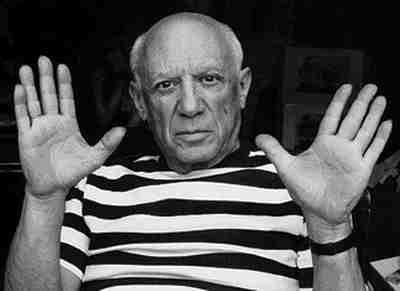
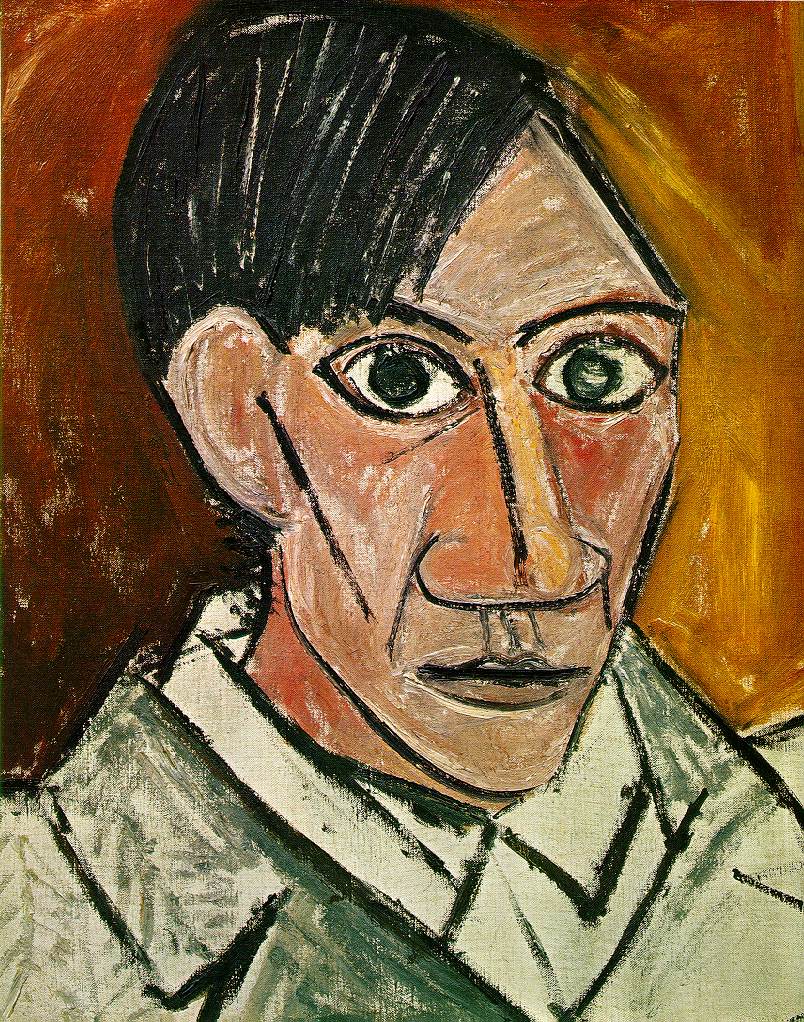
“My mother said to me, ‘If you become a soldier, you will be a general; if you become a monk, you’ll end up the pope.’ Instead, I became a painter and I wound up as Picasso.”

Pablo Picassopablo-picasso

Self-Portrait (1907)

Self-Portrait (1907)

Dylan’s rhythms and the 13-year old poet

dylanSo, out of the blue on Saturday morning I receive a poem by a young boy, Domenic Feola, thirteen years old.  I don’t know him, never taught him, probably never will.  He is a suburban kid who runs cross-country at one of the city parks. But his ear is impeccable and his language is crisp.  And the rhythm of his poem is infectious (until the last couplet where in trying to sum up his feelings he loses is footing) .

             The City

     by Domenic Feola

Bright lights, fast trains
Cold nights, heavy rains
Dirty air, bus fare
Pigeons flying everywhere
Crowded streets, traffic jams
Music beats, grand slams
Bugs fly, kids cry
No stars in the night sky
Noisy bars, littered trash
Big cars, no cash
Garbage smells, huge hotels
In the shadows, spiders dwell
Scary strangers, taxi cabs
Hidden dangers, science labs
Museums of art, cherry tart
Broken beat up shopping carts
If you say I’m biased, I would agree
I think the suburbs are more for me.

Pretty sophisticated for a thirteen-year-old boy. Or for anyone, for that matter.  Great imagery, great confidence and impressive rhythm.  If I could, I would talk to him about the rhythm. That is the strength of the poem–but there are a few times where it needs to be tightened, where some minor tweaking would make it even better.  But it is impressive nevertheless.

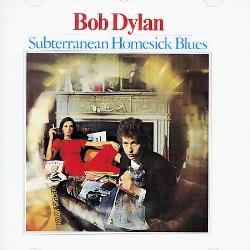
Album Cover Subterranean Homesick Blues

Album Cover Subterranean Homesick Blues

In fact when I first read the poem I could hear Dylan–specifically “Subterranean Homesick Blues” –in the rhythm. Here’s the second verse from Dylan’s song:

Maggie comes fleet foot
Face full of black soot
Talkin’ that the heat put
Plants in the bed but
The phone’s tapped anyway
Maggie says that many say
They must bust in early May
Orders from the DA
Look out kid
Don’t matter what you did
Walk on your tip toes
Don’t try, ‘No Doz’
Better stay away from those
That carry around a fire hose
Keep a clean nose
Watch the plain clothes
You don’t need a weather man
To know which way the wind blows.

from “Subterranean Homesick Blues”

The short 5 and 6 syllable lines are similar. The grammatical “packages” the same.

Now, I read someone say that this Dylan song was one of the first rap songs.  But that’s not true, it’s utter nonsense.  Dylan was influenced by “talking blues,” Chuck Berry’s rock-and-roll, and the Beats like Kerouac, Ginsberg, and Ferlinghetti. (Notice in the iconic picture at the top, Alan Ginsberg talking to folksinger Bob Neuwirth on the left side of the photo.)

On the other hand, Dominic Feloa (who probably doesn’t know who Bob Dylan is) more than likely has been influenced by rap and hip-hop.  It is all around him, in the music he listens to, the advertisements he is bombarded with, the zeitgeist of the culture.  Yet his rhythms are a bit different. It might be that his non-urban background (and his youth)  gives his rap rhythms a subtle difference, a blunter edge. But they are working.

So, cheers to Dominic Feloa.  Keep writing. Show your work to your teachers.  Find someone to work with, to work against.  Write–revise–and write again.  Send your work out.  Expect rejection.  Work harder.  Good luck to you.  Thanks for letting me read your poem.

And, of course, I couldn’t leave without sharing a video, a promotion for the 1965 Dylan documentary Don’t Look Back, a promotion that did have an enormous influence on what was to become “music videos.”  This was the original…it has been copied/parodied countless times:

Mother’s advice: “if you have nothing nice to say…”

motherson

I went to the movies on Monday afternoon to see a film that I had been wanting to see for the past month or so. But I left the theater greatly disappointed. And as I walked up 3rd street, I thought to myself, I am not even going to write about this one.

And I think I am right.

I am not a critic–of film, books or music–I simply enjoy these things. And I enjoy writing about them and sharing my enthusiasms about them. But, I don’t feel comfortable bad-mouthing the ones I don’t like. On Wednesday I posted a piece about a book I didn’t like and I feel more than a little discomforted about it.

In this vast “blogosphere” where everyone so easily can send out his or her opinions, I want to rein myself in. Of course, BAD ART exists–there are books that are dreadful, movies that are deadening, music that irks me, but they will find their own levels of acceptance, they will find their own audiences (or not) without my weighing in.

And besides, I don’t have the time to waste on negativity.

After all, all creativity is risk…risk of missing the mark, of being misunderstood, of being ripped apart. But one has to put it out there and let it find its own life. (As Woody Allen says, “Eighty percent of success is just showing up.”)

coffeeshopSo, I’m sitting in a shop having a coffee after the movie and am asked what I thought. “I didn’t like it,” I say, and I give my reasons, listen to counter-positions, discuss the pluses and minuses. This is good, this is what Art should engender–conversation, dialogue, thought, and, yes, even judgment.

But is there really a need for me to blast it on the internet? I’m not so sure, but I don’t think so.

Don’t get me wrong; I will point out inconsistencies in the things that I like, choices and perspectives I disagree with, differences and surprises that throw me, things I see as flaws or would have wished the artist had done differently.

But with things that I don’t like…?  Well, as my mother would say, “if I have NOTHING nice to say, I’m not going to say it.”

Book Review: The Flashman by George MacDonald Fraser

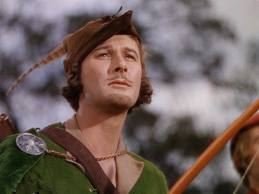
robinhood

Errol Flynn as Robin Hood (1938)
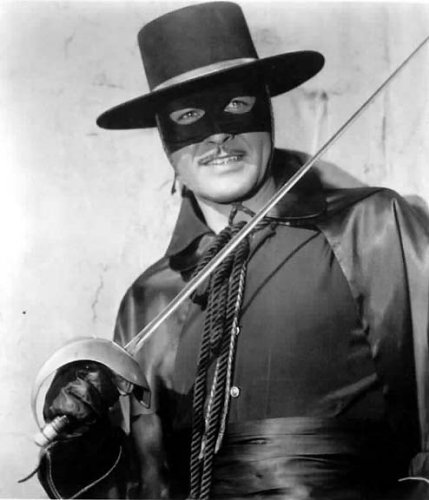
Guy Williams as Zorro (1957-1962)

Guy Williams as Zorro (1957-1962)

As a child I had two heroes–characters whom I would pretend to be, jumping off walls, running in alleys and woods, with friends or by myself. The one was Robin Hood. The other was Zorro. These were my heroes–and I’m sure for a variety of reasons. They both were rebels, outsiders fighting against established tyranny. (The evil Prince John in the former case, Spanish rule in the latter.) Robin Hood fought for the little people (the put-upon Saxons) as did Zorro (the colonized Californians.)

Both were dashing swashbucklers and always more cunning and cleverer than their enemies. They were both perfect role models for a young boy, for in addition to their skill with swords and bows and horses, in addition to their noble goals and pure hearts, they were gentlemen. And for some reason that appealed to me. (Probably for the same reason why I believe God should sound like Cary Grant in all portrayals!)

As I grew and my reading advanced, I found other such characters that appealed to me: The Three Musketeers, The Scarlet Pimpernel, even Charles Darnay and Sydney Carton in A Tale of Two Cities. Unwittingly, I was drawn to those characters who punctured the established hypocrisy and tyranny and who stood up for the little guy, the oppressed, the wronged.
tomjones65

Albert Finney as Tom Jones (1963)

And then I discovered Tom Jones. His skills were nowhere near as impressive as the others–although he was a great sportsman, a horseman, and a lover of life–but his charm and his concern for the weak and put-upon were similar. And he was the ultimate outsider–he was a bastard, found lying in the bed of the benevolent Squire Allworthy. Tom’s enemies were the hypocritical upper class who resented his being taken in by the squire, and who, in a way, both condemned and envied his life-loving ways. He was easy to root for. Certainly, he had his faults, but even these faults could be explained away. And in the end, he one-upped the toffs who had persecuted him–affirming life over priggishness.

So where is this all taken me? To a “hero” I can’t abide.

A friend of mine, a writer and comic in Brooklyn, had often asked me if I had ever read any of George MacDonald Fraser’s Flashman novels. I hadn’t, but promised I’d look into them. But I never got around to it. Finally, as a gift last Christmas, he bought me the first novel, Flashman.

Book Cover of Flashman by George MacDonald Fraiser

Book Cover of Flashman by George MacDonald Fraiser

I wanted to like it. But the hero was different from my past heroes in an important quality: he was part of the ruling classes, an imperialist, an Englishman lording it over the Empire on which the “sun never set.” A bit of a wild oat–the character Sir Harry Paget Flashman, first appeared in Thomas Hughes’ Tom Brown’s Schooldays, as one of Tom’s classmates who was expelled for drunkenness– Flashman desires to tell his side of the story and move forward. (Indeed, Fraser cleverly takes this very minor character, fleshes it out and runs with it–for more than a dozen novels.) But even Flashman describes himself as “a scoundrel, a liar, a cheat, a thief, a coward—and oh yes, a toady.”

Upon expulsion from school, he seduces (and beats) his father’s mistress; his father buys him a position in the army, and from there his (mis)adventures begin. These adventures could be a lot of heroic fun (ala Barry Lyndon), except it is all coming from the wrong perspective–from the view of those in charge. And because of that assumption of superiority, Flashman is as prejudiced and arrogant as any British officer could be at the time. And I found it uncomfortable to read. The Indians and Afghans and Irish and Italians are all stereotyped and all looked down upon and insulted. And they fare much better than the women; for the women–no matter what nationality–are not even human but mere objects for Flashman’s seductions. And he is completely unfeeling in his disposal of them.

Exotic locales, derring-do (though Flashman runs from more battles than he partakes in), and a flip irreverence is often a fun entertainment. But my heroes fight from the bottom up…not the other way around. Falstaff, who holds many of the same characteristics as Flashman, is much more likeable–but that can be because he is not an imperialist, a man who believes his own entitlements. To be honest, I simply don’t like Flashman, never mind the book.

♦ ♦ ♦ ♦ ♦ ♦ ♦ ♦ ♦ ♦ ♦

Ironic coincidence….

There is a scene in Flashman (1969) when Flashman has been transferred from Calcutta to Afghanistan. He is explaining the condition there. Ironically, it sounds very much like Afghanistan history over the past four decades (if you change the nationalities of the forces involved). Here is what Flashman says:

“The reason we sent an expedition to Kabul, which is in the very heart of some of the worst country in the world, was that we were afraid of Russia. Afghanistan was a buffer, if you like, between India and the Turkestan territory … and the Russians were forever meddling in Afghan affairs.”

Then, ” the British Government had invaded the country, … and put our puppet king, Shah Sajah, on the throne in Kabul, in place of old Dost Mohammed, who was suspected of Russian sympathies.”

“I believe, from all I saw and heard, that if he had Russian sympathies it was because we drove him to them by our stupid policy; at any rate, the Kabul expedition succeeded in setting Sujah on the throne, and old Dost was politely locked up in India. So far, so good, but the Afghans didn’t like Sujah at all, and we had to leave an army in Kabul to keep him on his throne. It was a good enough army,…but it was having its work cut out trying to keep the tribes in order, for apart from Dost’s supporters there were scores of little petty chiefs and tyrants who lost no opportunity of causing trouble in the unsettled times, …”

I don’t know about you but this summary of the world in 1839 sounds eerily familiar to me.