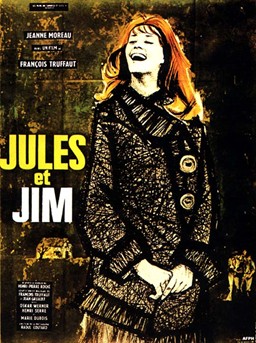
Movie Review: Jules et Jim by Francois Truffaut

Poster for Jules et Jim

Poster for Jules et Jim

In many Woody Allen films, there is a scene where Allen’s characters enter a New York movie house to see an old film. In Annie Hall, it was Bergman’s Face to Face; in Manhattan Murder Mystery, it was Wilder’s Double Indemnity.

I have always envied that: going to a theater and watching a classic on the big screen. It doesn’t happen much where I am from.

Until recently, that is. One of the city’s major theaters began showing the newly mastered version of Carol Reed’s 1939 thriller The Third Man, and another theater was screening Truffaut’s Jules et Jim.  I saw The Third Man earlier in the summer (which, by the way, is the first film I ever recorded on VHS, a long time ago when the local PBS was airing classic films at midnight.)

This past weekend, I saw Jules et Jim for the first time.
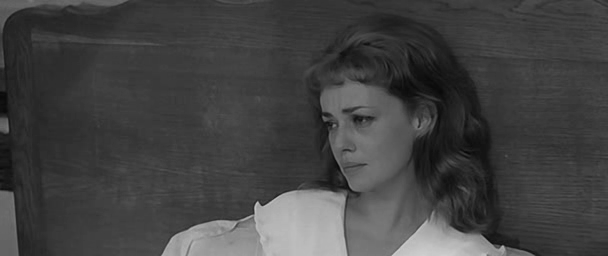
Jeanne Moreau as

Jeanne Moreau as “Catherine” in Jules et Jim

Truffaut’s Jules et Jim is a primer for anyone wanting to understand the French Nouvelle Vague that blossomed in the 50s and 60s. The loose and fluid camera work, the montages, the freeze frames, the newsreels, the voice overs, the simple location sets (allowing for the breezy filming), these are the defining attributes of the New Wave, and they are used masterfully in this 1962 film.

And, as much as technical innovations defined the moment, so did the narratives. The films focused on youth, on iconoclastic characters outside the mainstream, and on ambiguity. One is never sure what to think at the end–and that is intentional.

Jules et Jim is basically the story of a love triangle. The film opens with a frenetic piece showing the carefree life of two friends, the French Jim and the Austrian, Jim. Jules is overly shy. Jim is a comfortable and adept womanizer.

The Love Triangle Jim, Catherine, and Jules (Serre, Moreau, and Werner)

Jim, Catherine, and Jules
(Serre, Moreau, and Werner)

Catherine (Jeanne Moreau) and Jim (Henri Serre) in Jules et Jim

Catherine and Jim
(Jeanne Moreau and Henri Serre)
in Jules et Jim

Their friendship is intense and true.

One day, another friend Albert introduces them to Catherine, a woman with a captivating smile and quirky personality.

When the normally shy Jules sees Catherine, he famously says to his playboy friend “Pas celle-là, Jim” (“Not this one, Jim”), asking that Jim does not use his charm to sweep this one away.

Jules (Oscar Werner) and Catherine (Jeanne Moreau) in ,i>Jules et Jim,/i.

Jules and Catherine
(Oscar Werner and Jeanne Moreau)
in Jules et Jim.

For this is the woman for him. And Jim, who is equally as attracted to her, acquiesces. The three have rollicking adventures together in the countryside, around Paris, and at the beach and they thoroughly enjoy each other’s company.

Soon after, Jules and Catherine marry, but then World War I breaks out. Jules and Jim find themselves in opposing armies and pray that they don’t kill each other.

But Truffaut focuses on more personal conflicts than the global cataclysm of World War I. After the war, Catherine is quite unhappy in her marriage and in her motherhood. She has several affairs, one of which is with Albert who originally introduced her to Jules and Jim and who now is recuperating in the village below. (There is a hint that her child is actually his and not Jules’)

When Jim comes to visit them, she seduces him (he is an easy seduction since he too is in love with her) and ultimately they plan to marry and have children. Jules is okay with this–he loves both Jim and Catherine– and the three live together in an odd but comfortable arrangement.

That the arrangement and the plans fail is the descending path of Truffaut’s narrative arc. How they fail–spectacularly–is the thrill of the movie (and which I won’t reveal here.) Nevertheless, I can say that Jeanne Moreau as Catherine is wonderful and is the anchor of the film. Oddly, a young Oscar Werner resembles a young William F. Buckley, though his shyness and awkwardness is painful to watch. And Henri Serre makes a charming partner–both for Jules and for Catherine.

*     *     *     *     *

Francois Truffaut

Francois Truffaut

In the first paragraph of this post, I mentioned Woody Allen’s films, Bergman’s films, Wilder’s films. It is largely because of Truffaut that we identify films in this way. Before he directed films, Truffaut was a writer–and then editor–for the famous Cahiers du cinema (“Notebooks on Cinema”), a seminal journal that helped bring film into the realm of serious study.  In the journal, Truffaut often argued his point that a director is the true author of the film, as much as a Picasso or a Hemingway is the creator of his work.

It is only fitting then that when discussing the classics of twentieth century cinema, the phrase “a Truffaut film” is a necessary component of the conversation.
Book Review: Talk by Linda Rosenkrantz

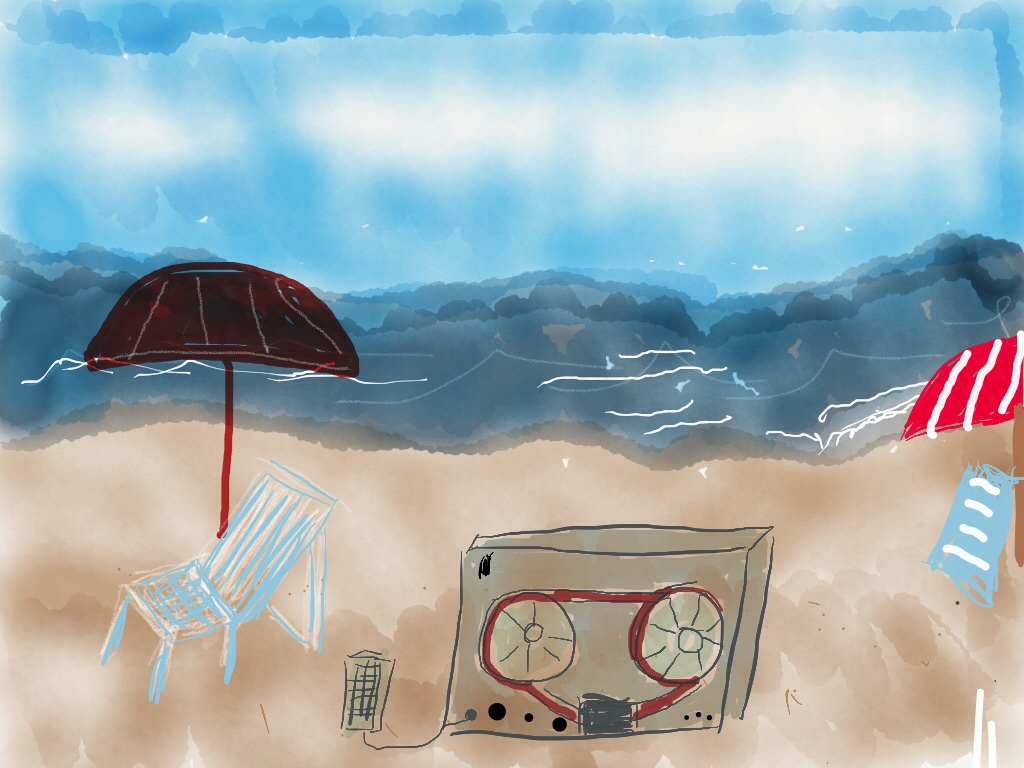
Recording on the beach illustration 2015 by jpbohannon

Recording on the beach
illustration 2015 by jpbohannon

In the introductory material to the New York Review of Books‘ re-issue  of this 1968 novel, the writer Stephen Koch states that Linda Rosenkrantz was the precursor of “reality tv” with this inventive, unusual work. He says that Rosenkrantz’s technique, far more than anticipating reality television, was even the precedent for everything from Friends to Broke Girls. 

His latter assertion, he bases on the fact that this novel deals with two “twenty-something” women and one male talking about relationships, hopes, dreams, and reality. Before Rachel, Monica and Ross dished, Rosenkrantz’s characters were doing the same.

And before Snooki and the “Situation” shared more than we wanted to know about their adventures at the Jersey Shore, Rosenkrantz’s kids were already at it.

And how she did it was that she took a tape-recorder (they were very bulky in the mid-1960s) everywhere she went one summer, on the beach, in the shore-houses, at clubs.

Cover of NYRB's  re-issue of Linda RosenKrantz's Talk

Cover of NYRB’s re-issue of Linda Rosenkrantz’s Talk

The concept sounded wonderful. Rosenkrantz took her tape recorder and recorded her friends as they made dinners, basked on the beach, drove to clubs, and packed and unpacked.

At the end of the summer, she had more than twenty-five characters speaking the truth–or at the very least speaking. And they speak a lot.

Thankfully, she winnowed the twenty-five down to three: Vincent, a gay male painter; Emily, a struggling actress with a drinking problem; and Marsha, who has a “serious” job in New York, and who is the anchor of the novel. All of it is supposed to take place against the background of New York’s edgy art scene, with Warhol the subject of more than one name drop. (At the time, Rosenkrantz was editor of Sotheby’s Auction magazine and was quite cognizant of all the goings on in the art world at the time.)

The three are all at the shore. They are all in therapy. And they share their therapeutic insights with us. And on top of it all, there is an odd love triangle.

Emily loves Marsha. They are the best of friends and Marsha tries to nurture Emily through her psychiatric problems and her drinking. Vinnie understands Emily more than he understands Marsha, but Marsha is madly in love with him despite knowing he is gay. (And there are hints that Vinnie might also be in love with Marsha, but… .)

Take these three people, have their conversations recorded, and then transcribe them in a novel may have worked 50 years ago, but it does not work today. The psychoanalysis is juvenile, the relationships are sophomoric, and the conversations–for the most part–are deadening.

Koch was right when he said Talk was the precursor to reality television. He just didn’t tell us that it was the precursor of all that was inane, self-indulgent, and titallating about the genre. Talk might have been ground-breaking in 1968, but in the 21st century, it doesn’t even work as anthropology.

Imagine sitting on a towel on the beach next to these three people, discussing their analysis, their love lives and more. It would be enough for me to hope for a rip tide.

Quote 46: “…T is not too late to seek a newer world.” Tennyson

Ulysses sailing west illustration 2013 by jpbohannon

Ulysses sailing west
illustration 2013 by jpbohannon

The lights begin to twinkle from the rocks:
The long day wanes: the slow moon climbs: the deep
Moans round with many voices. Come, my friends,
‘T is not too late to seek a newer world.
Push off, and sitting well in order smite
The sounding furrows; for my purpose holds
To sail beyond the sunset, and the baths
Of all the western stars, until I die.
Alfred, Lord Tennyson
from “Ulysses”

Book Review: Milan Kundera–the new and the old: The Festival of Insignificance and The Unbearable Lightness of Being

The Festival of Insignificance illustration 2015 by jpbohannon (recreation of book cover art)

The Festival of Insignificance
illustration 2015 by jpbohannon
(recreation of book cover art)

A few weeks back I read a review of Milan Kundera’s newest novel, The Festival of Insignificance.  The review was warm, discussing the narrative quirks and the philosophic resonances.  In the review, however, the critic spent much time on Kundera’s earlier work, particularly The Unbearable Lightness of Being.  It was the second time that week that that novel had come to my attention.

A friend on mine was in semi-seclusion and had begun reading the novel aloud to her cat. (Although, out of compassion, she did not read him the passages where Karenin the dog is in his final stages of cancer and must be euthanized.) The cat stayed attentive through all of it.

Kundera himself would love this story.

Having no immediate access to Kurenda’s latest, I pulled down from the shelf my worn copy of The Unbearable Lightness of Being and began reading it myself. It was the sixth or seventh time I had read it.

What draws the reader into the novel are the characters’ personalities, both heroic and damaged; the politics, both sexual and global; and the self-knowledge with which each of the three characters, Tomas, Teresa, and Sabina, work at achieving and which causes readers to reflect inward themselves. At least, that’s what happened to me.

And of course, there is the quirky, sometimes humorous interruptions by the narrator and the self-aware, redoubling rhythms of the narration.

During the course of my reading, I also had to attend a funeral. And at the luncheon that followed, I sat next to a woman who has always reminded me of the actress, Juliette Binoche, which of course reminded me of Binoche’s role in the film version of The Unbearable Lightness of Being.  That my friend was from East Germany underscored the connection with this Eastern European novel.

Here is the trailer from the 1988 film:

And so, I finally got the newest, The Festival of Insignificance, out of the public library, and began reading it the moment I finished the earlier work. It is a slim volume, a mere 115 pages in the American edition, and it features much of what is admirable in Kundera:  Characters who “live examined lives” and are notable for their philosophic wonderings and reflective attitudes, a narrator who periodically pops into the story to discuss the workings of the novel itself, and a level of global political awareness that is not often present in American novels.

And there is Kundera’s wry humor.

The flap of the book jacket cites a passage from an earlier novel, Slowness, in which the wife of the main character tells her husband:

“You’ve often told me you meant to write a book one day that would have not a single serious word in it. … I warn you: watch out. Your enemies are lying in wait.”

The Festival of Insignificance purportedly is that book, and it begins with a discussion of the navel.  Or at least what one character, Alain, feels is the eroticization of the navel in the 21st century. This thought comes about as Alain walks down a street in Paris and notices the many cropped tops and low-hung jeans — and thus the navels — of so many young women. And, it is this immediate preoccupation with the navel that is the cord that binds the various stories of the novel together.

Through his musings about the navel’s surge in fashionable exposure, the middle-aged Alain remembers the last time he saw his mother, who had wanted him aborted and abandoned him when he was two and whom he last saw when he was six. This is paired with another friend whose mother is dying, which is then linked to Joseph Stalin who gave birth to an era of madness and horror in twentieth-century Europe.

In fact, Stalin appears throughout the novel, finally making an appearance in modern day Paris, at a children’s show in the Luxembourg Gardens, riding in a tiny children’s carriage.

As with all of Kundera, there are serious musings on European and human history, on disease and finality, on love and on sex. These are thoughtful and thought-provoking discussions which nest comfortably in the interior lives of his main characters.

Kundera’s thesis is that in the vastness of the universe, human life AND human history is relatively insignificant–that human history is merely a “festival of insignificance.” And while there is much that seems “insignificant” in Kundera’s novel, the reality is quite different.

Human significance might not have cosmic ramifications in the universe, at large. It is, however, greatly personal, and often has repercussions through the larger community. So in this novel, the spilled Armagnac, the little lie about one’s health, the lines of people at a Chagall exhibit, all play a “significant” role in the lives of a limited circle of acquaintances. Our lives, our acquaintances, our histories are all rather parochial, to be sure, but they are ours, and they are all that we have.

The Festival of Insignificance is at first look a slight and whimsical book. But it is much more than that. It is enjoyable and funny and thoughtful and wise.

And despite the cited desire of the writer in Kundera’s Slowness, there are more than a few serious words in it.

Penny Shorts–an online journal with an interesting spin.

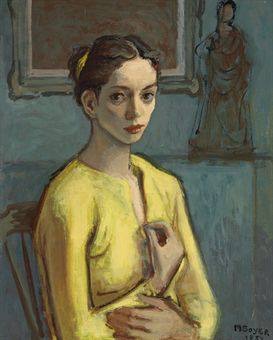
Cynthia  A portrait by Moses Soyer (1954)

Cynthia
A portrait by Moses Soyer (1954)

On Wednesday morning I received a tweet advertising that my short-story “Don’t Crows Eat Corn?” was now available on the on-line journal Penny Shorts. And the tweet was accompanied by this stunning portrait by the Russian/American artist, Moses Soyer.

(Later, the editor Catherine Horlick said that “This portrait by Moses Soyer reminds me of Sandy [the protagonist in my story], although in fact the story is like a painting by Edward Hopper, who so brilliantly depicted subjects trapped by life.”)

The turn-around had been extraordinary. On Tuesday evening, I had received one e-mail accepting the story, another that attached a PDF of the proofed galleys, and a third asking for a photo and a short bio.

Even taking into account that the UK-based Penny Shorts was five hours ahead of me so that while I slept they were working preparing copy, it was a very quick and pleasant surprise.

The fledgling journal has an interesting “business model.” Readers can purchase individual stories for 50p (about 78 cents in U.S. dollars) or they can buy a variety of subscriptions that give them access to multiple stories during the course of the subscription. Agents and editors are given free access.

This was the text of the tweet that was set out:

J.P. Bohannon’s story ‘Don’t Crows Eat Corn?’ is new on pennyshorts. The day after her mother’s funeral, Sandy has to hide a bruise on the side of her head. http://bit.ly/1TCpHBr

And so, the link to the Penny Shorts web site in general and to my story in particular was tweeted out to the world. It was efficient–and quick–marketing.

As an editor, Ms. Horlick has been a pleasure to work with, attentive, professional and warm. Moreso than anyone else I have met in the business.  For those interested in reading or writing or both, you should visit her Facebook page or the Penny Shorts website itself.

Quote 45: “The bowler hat was a motif in the musical composition … .”

Sabina's Bowler illustration 2015 by jpbohannon

Sabina’s Bowler
illustration 2015 by jpbohannon

The bowler hat was a motif in the musical composition that was Sabina’s life. It returned again and again, each time with a different meaning, and all the meanings flowed through the bowler hat like water through a riverbed. … each time the same object would give rise to a new meaning, though all former meanings would resonate (like an echo, like a parade of echoes) together with the new one.

Milan Kundera, The Unbearable Lightness of Being

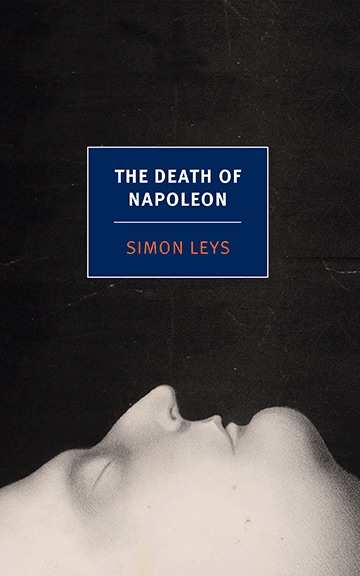
Book Review: The Death of Napoleon by Simon Leys

Simon Ley’s 1986 novella, La Mort de Napoleon was translated from the French in 1991 by Patricia Clancy. Twenty years later it was re-issued by The New York Review of Books as part of its Classics series. The decision was a wise one, for the novel is one that should be more greatly known. It is likely not to be forgotten by any who read it.Cover of NYRB Classics edition

The novel begins with these words:

As he bore a vague resemblance to the Emperor, the sailors on board the Hernamm-Augustus Stoeffer had nicknamed him Napoleon. And so, for convenience, that is what we shall call him.

Besides, he was Napoleon.

And so the story begins. Napoleon has been smuggled off his St. Helena-exile and replaced by a look-alike, a sergeant who in the past had acted as the Emperor’s double. The crew of the hunting-ship is unaware of the identity of the new man among them. They knew only that as a sea-man, he is pretty ineffective. The plan was that when the ship stopped in Bordeaux, Napoleon would be met by an agent of the vast conspiracy that had freed him. This agent would bring him to the organization that would then propel him once more onto the world’s stage.

Unfortunately, at the last moment, the ship is given orders to sail past Bordeaux and head straight to Antwerp. From then on, what occurs to the Emperor is both comical and poignant, heart-wrenching and hopeful. From his visit to the tourist trap that is now Waterloo–he visits two separate places where Napoleon slept on the eve of the battle, not recognizing either; gets in an argument with a tour-guide about the positioning of the Grand Army; and is arrested for forgetting to pay his hotel bill–to his return to Paris, we follow the emperor as he tries to regain his footing in the world.

However, return to Paris he does. Though not necessarily in the way he thought he would.

Having attracted the love and devotion of an old fruit seller, he demonstrates his genius by rallying some old loyal soldiers into a more efficient program of selling melons and cantaloupes. And on the night when he intends to reveal himself to an old campaigner, he is brought to a sanitarium filled with men who believe they are Napoleon.

And in the end he dies.

The novel is short and momentous and moves quite quickly, and yet with every sentence you realize that you are in the hands of a master. Ley’s language is at times sublime. Here he is describing the sun-rise on Napoleon’s last day on-board the Hernamm-Augustus Stoeffer:

The sky was divided between night and dawn–blue-black from the west to the zenith, pearl-white in the east–and was completely filled with the most fantastic cloud architecture one could possibly imagine. The night breeze had erected huge unfinished palaces, colonnades, towers, and glaciers, and then had abandoned this heavenly chaos in solemn stillness, to be a pedestal for the dawn. The highest crest of a windblown cumulous was already brushed with yellow, the first beam of daylight against the rood of fading night. …

The unrecognized emperor had by wakened by the African cook and brought up on deck to witness this scene. At the end of the novel, it is this scene that greets him in death.

And so we are left with a wonderful read that makes us ask the all-important questions: What is real? And what is true?  Is Edmund, the ineffective cabin-hand, actually Napoleon? Is Edmund’s belief that he is Napoleon any different than the inmates’ of the asylum in Paris? (We are told on page one that he IS Napoleon.) Are the stories passed on to the tourists at Waterloo any truer or less true than the jumbled memories of our hero? These are the fun little boxes that Ley opens up for us, and which ultimately makes The Death of Napoleon such a satisfying read.

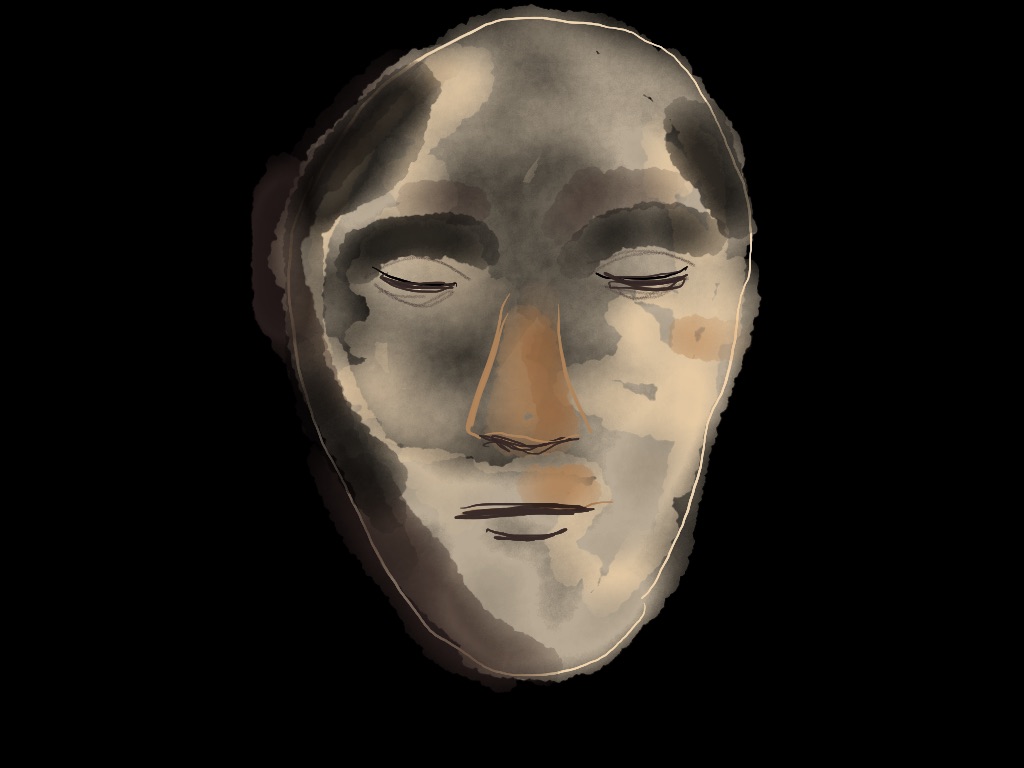
Death Mask of Napoleon illustration © 2015 by jpbohannon

Death Mask of Napoleon
                                                                     illustration  © 2015 by jpbohannon

Movie Review: Wild Tales (Relatos Salvajes) written and directed by Damien Szifron

A friend sent me a text the other day about a movie he had recently seen: Wild

Movie Poster for Wild Tales

Movie Poster for Wild Tales

Tales. His description was that it was “six vignettes on modern life and its frustrations.”  He later texted that he had been careful with choosing his words and with not wanting to be a spoiler but that “violence and vengeance” better captured the gist of the vignettes than “modern frustrations.” He also stated that he was going to go see it a second time the following weekend.

He was right in amending his description and in his decision to go see it a second time.

For it is a worthwhile film.

Written and directed by the young Argentinian filmmaker Damien Szifron and produced by the Almodovar brothers, Wild Tales is just that: Six wild stories about modern life pushed to the extreme.  An unhappy man takes vengeance on all the people in his past; a waitress is confronted with a customer who had ruined her father’s life; two men are caught up in road-rage gone to the extreme; an engineer fights against a DMV system that seems to indiscriminately tow cars; a wealthy man must deal with a world of bribery and corruption; and a wedding reception goes wonderfully wrong.

Seven characters from six of the "Wild Tales"

Seven characters from six of the “Wild Tales”

To give more detail would indeed be “spoiling” it, for much of the fun comes from the twists these tales take–twists that we probably saw coming, but that leave us incredulous that they did.

In each of these stories, there is frustration and violence and suppressed anger that we all can understand, and because of that, because of their vague familiarity, they become amusing. These tales are cartoonish episodes that seem all too real, and in our recognition of them we also find something that is both wince-evincing and laugh-inducing.

Of course, some of the narratives are better than others. One or two is a “one-liner”–a joke that is elaborately set up and then smacks us with the “aha” (or better yet the “oh no”) moment. And others are quite elaborate. But they all succeed. They all pull us in with their story–unique yet familiar.  The frustrations of modern life tempered by dreams of vengeance.

And if for nothing else, Wild Tales leaves us with one of the most memorable wedding receptions in film history.

Here’s the trailer for your enjoyment:


The Ethical Society: Deed before Creed

The Philadelphia Ethical Humanist Society

The Philadelphia Ethical Society

On Wednesday night I attended a rally to kick off the political campaign of my brother-in law Chris McCabe, who is running for judge in Philadelphia and who has now collected the 1000 names necessary to put his name on the ballot. The campaigning officially began this week.

The rally was held at the Ethical Humanist Society of Philadelphia, an inconspicuous building on Philadelphia’s ritzy Rittenhouse Square. I had been there before.

Several years ago, I had been awarded a fellowship by The National Endowment for the Humanities to read “Texts of Toleration”–those works that promoted liberty, free will, and understanding. The opening reception was held at the Ethical Society. That both events were held here made sense: the pieces we were to read dealt primarily with the ethics of society and my brother-in-law is one of the most socially conscious people I know.

Deed before Creed

Deed before Creed

And now, I was here again.  I don’t know if I remember seeing the plaque at the front steps the first, but I liked what it said: “DEED BEFORE CREED.” In our modern world, we are too often reminded that belonging to a particular “creed” is no assurance that “goodly deeds” are to follow.  Certainly, we can point to most of the major world religions to find evidence of this.

And so, I decided to look into this place that calls itself “The Ethical Society.”

The American Ethical Society was officially started in 1877 in New York (as the New York Society for Ethical Culture) when Felix Adler gave a sermon that focused on the immorality of exploiting the underclasses–which at the time included women and labor. Adler’s European education informed his Kantian belief that morality could exist separate from organized religion.

Within ten years of the founding of New York Society, three other societies were established in the U.S., in Philadelphia, in St. Louis, and in Chicago.

*     *     *     *     *     *

In 1867, Matthew Arnold wrote:

The Sea of Faith
Was once, too, at the full, and round earth’s shore
Lay like the folds of a bright girdle furled.
But now I only hear
Its melancholy, long, withdrawing roar,
Retreating, to the breath
Of the night-wind, down the vast edges drear
And naked shingles of the world.

The retreating “sea of Faith,” the general Victorian uncertainties of the day, was the impetus for the foundation of the societies in Britain.  One can trace the American ethical cultural movement to various ethical movements in early Britain.  There was a South Place Ethical Society in London as early as 1793. It became a Unitarian chapel a few years later and is most noted for its strong support of women rights. By the mid-nineteenth century, the Unitarians moved out and the place became the South Place Ethical Society.

A few years after Adler had established the Ethical Culture Movement in the U.S., the Fellowship of New Life was established in Britain, bringing together some of the more innovative and brilliant intellectuals of its time. The fellowship did not last long, but was instrumental in finding the Fabian Society which had a large impact on British intellectual and social thought of the time.  Within years, however, there were four Ethical Societies in London and over fifty societies in Great Britain by 1910.

*     *     *     *     *     *

So what’s it all about?

As far as I can tell, the Ethical Society basically acknowledges and celebrates the inherent worth of all people. It emphasizes that moral action is not dependent on religious creed and that the betterment of self implies a betterment of society.

That all seems pretty good to me.

*     *     *     *     *     *

And then one of those weird coincidences.  Four days after beginning–though not finishing–this blog post, I read a review of two volumes of work by Bernard Malamud.  In the work they mention, that Malamud, the son of Jewish immigrants, wanted to marry the daughter of Italian Catholic immigrants.  Malamud’s father was highly against the marriage. (He did not speak to his son for years afterward.)  But they married anyway–at the New York Ethical Society.  It is a small bit of information, but it highlights the society’s pushing aside of parochial prejudices and celebrating a basic goodness.

Quote #44: “When I was a child I truly loved… “


"Grendel" illustration 2015 by jpbohannon

“Grendel”
illustration 2015 by jpbohannon

“When I was a child I truly loved:
Unthinking love as calm and deep
As the North Sea. But I have lived,
And now I do not sleep.”
—  John Gardner, Grendel