Movie Review: Bonjour Tristesse (dir. by Otto Preminger)–Jean Seberg and the weight of sadness

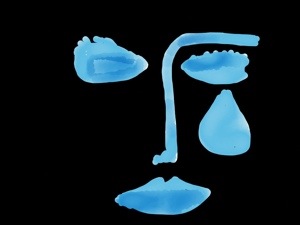
"Bonjour Tristesse" illustration 2013 by jpbohannon based on image from film credits.

“Bonjour Tristesse”
illustration 2013 by jpbohannon
based on image from film credits.

Bonjour Tristesse (1958) was Jean Seberg’s second movie and her second one with the director Otto Preminger. The first, St. Joan, was a commercial flop and roundly criticized, as was Seberg’s performance in it. But it wasn’t really her fault: Preminger had let the nineteen year old naif vulnerably out on her own and she was unprepared. In fact, she had “won” the major role when, unknown to her, a neighbor had entered her name in a raffle that Preminger had famously set up to pick his St. Joan. The young girl from Iowa was in no way prepared to carry the load of Preminger’s version of George Bernard Shaw’ play.

As a gesture of faith (and apology), Preminger cast Seberg in his next film, Bonjour Tristesse, based on the novel by Francois Sagan. Set in Paris and on the French Riviera, Seberg plays Cecile, the daughter of widowed playboy, Raymond (David Niven). Present day scenes are set in Paris and shot in black-and-white. As she flits from bohemian jazz club to high-society, pre-opera dinners,  Seberg’s voice narrates a voice-over explaining her present ennui. Her memories, on the other hand–the events that have caused this sadness–take place on the French Riviera and are filmed in brilliant, sun-soaked color.

While on the Riviera, Raymond abandons his young, scatter-brained girlfriend for an old friend, the more sophisticated, more mature and more serious Anne Larson (Deborah Kerr). The two quickly get engaged and the new fiance is serious about curbing the young Cecile’s carefree life.  It doesn’t end nicely.

bonjourtristessecast

Jean Seberg, Deborah Kerr, and David Niven in Bonjour Tristesse

The film is a bit dated now, but Seberg’s charm is still infectious and her waif-like beauty fetching. But again, the film was pilloried by the critics. She was a younger, spunkier Audrey Hepburn (whom Preminger had considered), but she simply did not have the acting experience…yet.

Her next film, The Mouse that Roared with Peter Sellers was much more warmly received, but by then Seberg had already decided on a life in France. (She had by then married François Moreuil, a French man she had met while filming Bonjour Tristesse.)  Her career in France skyrocketed, and she soon became the female face of the French New-Wave–most notably starring in Jean-Luc Godard’s Breathless–and an international sensation.

Jean Seberg in Bonjour Tristesse

Jean Seberg in Bonjour Tristesse

But around then, her personal life was already under scrutiny by the FBI. Her financial support and vocal support of civil rights organizations and Native American organizations brought her to the attention of J. Edgar Hoover and the  U.S. government, and she quickly became one of the more celebrated objects of the FBI’s COINTELPRO program. Its surveillance of her, its rumor-mongering, and its harassment were unceasing. And damaging.

In the end, it was too much, and Jean Seberg killed herself at the age of 40 in 1979. (Although even this is questionable, and the circumstances of her death are more than suspicious.)

In, Bonjour Tristesse, Seberg played a young woman stumbling under the weight of immense sadness (the sadness works much better in the novel.) Her career from that point on would likewise embrace much sadness but also much happiness. Celebrated in Europe, blacklisted (probably) in Hollywood, and hounded by the U.S. government, the young gamine-like beauty became a film icon…and a large footnote in the annals of FBI malfeasance.

Quote of the week #16: August 11, 2013

“I stepped into a bookshop and breathed in that perfume of paper and magic that strangely no one had ever thought of bottling.”

Carlos Ruiz Zafón
The Angel’s Game

Eau de Livre illustration 2013 jpbohannon

Eau de Livre
illustration 2013 jpbohannon

Big Brother IS Watching: 1984 and Summer Reading 2013

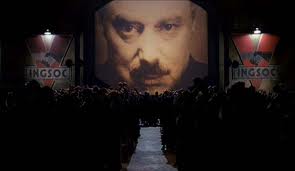
bigbrother

In the two weeks before the opening of school I have the students who will be entering my class read George Orwell’s 1984. It is the perfect prequel to the first two books we read in class, Brave New World and A Handmaid’s Tale. (We start out with a big dose of dystopia.)

Well, one of my more ambitious students has already done all his summer reading and e-mailed me about 1984. Orwell was pretty clever, he wrote, but he doesn’t think that that kind of thing could really ever happen.

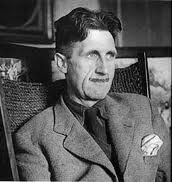
George Orwell

George Orwell

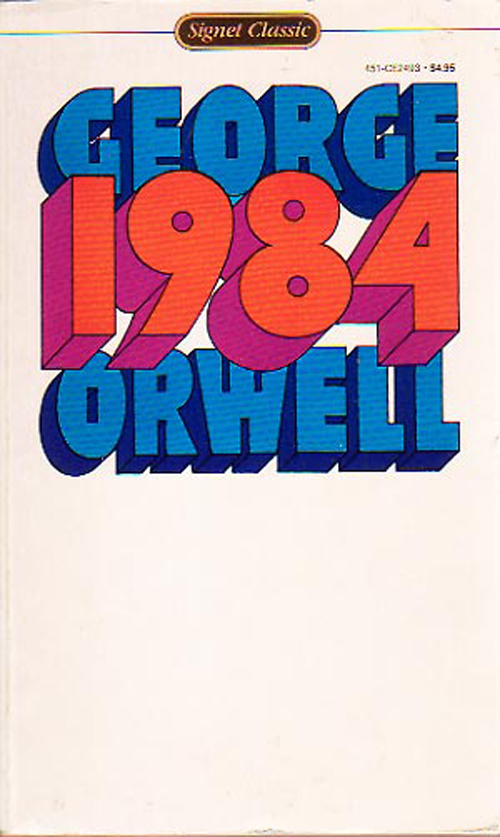
Signet Classic's cover of 1984

Signet Classic’s cover of 1984

Boy, did he pick the wrong summer to make that statement.

The other day, I saw the trailer for a film, Closed Circuit (see bottom of post). It is a terrorist-mole-investigative reporting-shady government department type of thing. And it looked very good. But, as I was telling a friend, one of the major players in the film is the network of 1.85 million close circuit cameras mounted throughout Britain. (http://www.theguardian.com/uk/2011/mar/02/cctv-cameras-watching-surveillance). That is roughly one camera for every 32 people. Of course, that ratio is a lot smaller in urban areas than in rural.

George Orwell saw it coming.

And then of course, the major news story of the summer was the Snowden leaks. (As Yossarian said in Catch-22, “Where are the Snowdens of yesteryear?”) For many, the actions of Snowden, his search for asylum, the international posturing and subsequent tensions have been the most riveting part of the story. What seems to have trouble staying in the foreground, however, is the fact that the U.S.government has been spying on its citizens, collecting data from their e-mails, their texts, their cell-phones, and their search engines. The citizens have been assured that the NSA is not going to use this data, but is simply archiving it. “For what?” is a sensible question.

George Orwell would have certainly asked it.

And the technology just gets better and better. Even the most naive teenager knows that his computer searches and activity are catalogued and sold to marketers. So it is not surprising that if the day after you search on-line for an umbrella for your father, you see umbrella advertisements popping up on your screen. (And depending who you are, where you are, and how often you searched, the price for the same umbrella will fluctuate.)

Well now this same marketing scheme has been adapted by the brick and mortar stores through face-recognition technology. Higher-end stores are testing facial-recognition technology which will alert store clerks immediately when someone (usually a celebrity) walks into the store and what his or her buying preferences are. At the moment the focus is on celebrities because their photos are already available in their databanks.

But it won’t be long. Walk into your favorite department store, spend some time in the men’s shoe department, and you might find an advert for men’s shoes pop up the next time you click on your device. They already know what you think you want.

Google has the technology for you to snap a photo of someone on the street, upload it, and learn everything you want about them. They have refrained from releasing it so far, mainly due to the legal tangle that Facebook is finding itself in.  Facebook’s ‘”tagging” photos capabilities is a subtle way to create an enormous facial-recognition database. And that database is available not only to you and your friends.

As Facebook founder Mark Zuckerberg once famously claimed, privacy is no longer a “social norm.”

George Orwell would find it all familiar.

If things go right, the first few days in school should have a lot of interesting discussions.

I hope so.

Here’s the trailer to Close Circuit. It looks like it could be good.

Book Review: Black Aperture by Matt Rasmussen

“Sponsored by the Academy of American Poets, the Walt Whitman
Award is given annually to the winner of an open competition
among American poets who have not yet published a book of poems.”

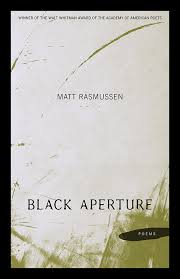
black aperture

Black Aperture by Matt Rasmussen

Each year the Academy of American Poets sends its members a copy of that year’s winning volume. This year the title was Black Aperture by Matt Rasmussen. And if good poetry is meant to rattle in your head, nestle there a while in the corners of your mind, and then come unbeckoned to the forefront of your consciousness, then Rasmussen’s poems pass the test and the Academy made an excellent choice.

Within the collection, there are poems about deer hunting and bird hunting: “when cleaning a grouse,/puncture the crop/to release the scent/of fresh clover.” (from “O”). There are poems that re-imagine the creation:

The animals gathered
and having cried enough

would never again.
God knew he had

asked too much. He threw himself

into the sun and burnt
into white ash. It fell

from the sky and covered
the mountains. The animal

who named everything
called it snow. (from “And God Said”)

And there are poems about poetry itself: “Through the mirror, it saw a house/of air falling inward. The poem heard/the poet calling and jumped.” (from “I am not a poem”)

But the overriding theme is the suicide of a brother.

There are three separate poems called “After Suicide” and one poem, “Reverse Suicide,” which takes the events in reverse to when both the speaker and his dead brother are once again raking and bagging leaves. In truth, the majority of poems take this momentous act as its subject. And those that don’t address it specifically are tinged with the shadow of it, a shadow that hovers over every poem.

Yet the poetry is not maudlin or morbid. It is, in fact, a source of liberation, as the speaker attempts to clarify through language both the act and his reactions, both his grief and his understanding of it, both his dead brother and his relationship with him.

Midway through the book, Ramussen places a poem called “Chekhov’s Gun.” Chekhov’s theory is that if a loaded gun appears in a play in Act 1, it must be fired by Act 5. Rasmussen begs to differ:

Nothing ever absolutely has to happen. The gun
doesn’t have to be fired. When our hero sits

on the edge of his bed contemplating the pistol
on his nightstand, you have to believe he might

not use it. … (from Chekhov’s Gun”)

It is a clever argument within the Black Aperture, because that gun–not only loaded but already fired–is present from the very beginning of the collection. The possibility of “not firing” that he posits in the Chekhov poem, is no longer a possibility. The speaker circles the once possible act of not-firing, while coming to grips with the already accomplished fact. That he does so with clarity, compassion, understanding and brilliance raises Matt Rasmussen’s Black Aperture from a mere elegy for a dead brother into something much more universal and accessible to us all.

Movie Review: Girl Most Likely –a different kind of Jersey girl

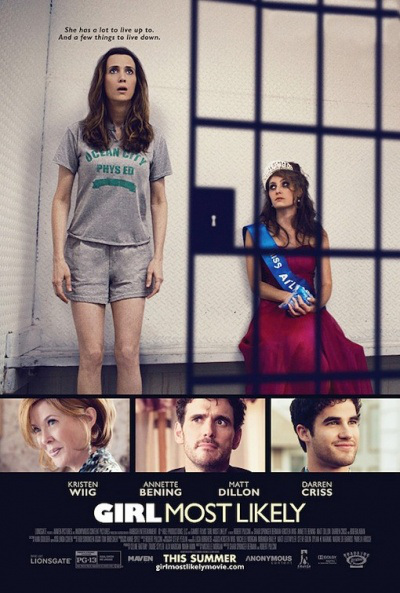
poster2Ocean City, New Jersey cannot be happy that they allowed Girl Most Likely to use it as location, for the directors, Shari Springer Berman and Robert Pulcini, paint this quaint, South Jersey town in a trashy, rusty, tone that is so opposite to the quaint, well-kept, South Jersey resort that it is.  It is as if they wanted a “Jersey Shore” vibe and settled on the first town they found named on a map. Except they chose one of the most conservative, upper-middle-class, dry towns, and they didn’t know it.

A hint that they truly didn’t know the locale happens early when Lee, Darren Criss’s character, is filling his car with gas as he prepares to drive to New York.  I saw the film in Philadelphia, and everyone in the theater noticed the gaffe: New Jersey does not let drivers pump their own gas! (It must be done by an attendant and it’s a good 20 to 50 cents cheaper than Philly’s stations.)

But aside from their missing the mark with the location–which only a small proportion of the audience will recognize–Girl Most Likely is a likeable film that doesn’t seem to know what it wants to be: is it a “small film” or a large entertainment? It can’t be both.

Imogene (Kristen Wiig) is an aspiring playwright in New York. She had won some recognition as a young woman, but ten years later she has produced nothing. Through her boyfriend, she travels in the rarefied world of women who chair charities, wear simple black dresses, and sharpen their talons on their preposterously large diamonds. Although they tolerate Imogene’s company (because of her boyfriend), they look down their noses at her because she is, after all, (gasp), from Jersey.

annettebenning2

Annette Benning as Zelda, Imogene’s eccentric mother.

When her boyfriend leaves her, she fakes a suicide attempt in the hope that he will save her and come back to her. Her plan backfires, and, instead, she is given in custody to her mother  and driven to New Jersey. Her mother–the wonderful Annette Bening–is a casino habitue, an ex-go-go dancer, living with a shady CIA agent (Matt Dillon) who has told her children that their father died twenty years ago rather than saying that he simply left her.

When Imogene comes home, she learns that her mother has rented out her room to a handsome casino performer (Chriss), her brother’s social anxiety is getting worse, and her father isn’t really dead as she has believed for all these years.

The arc of the plot is familiar. Angry about being in New Jersey and not in “glamorous” New York, appalled by her mother and her life-style, and shattered by the news of her idolized father’s existence, Imogene grows to learn how wrong she is in so many ways.  After lurching from one disappointment to another, from one shredded dream to the next, Imogene finally realizes her talent, embraces her family, and “lives happily ever after.”

While the film is inconsistent at times, it is propped up by some memorable performances:

Christopher Fitzgerald plays Imogene’s brother Ralph, who bordering on the autistic, is more comfortable with crustaceans than with people and has constructed a bullet-proof, wearable, snail shell into which he can retreat when he needs protection from the real world.  But he is wiser than his sister and more tolerant of the quirky household that their mother has assembled.

Matt Dillon plays a CIA agent (“Is he or isn’t he?” we wonder throughout most of the film.) with the name of George Bousche.  We have seen Dillon play this character before, over-the top, mildly threatening and unbalanced, and oddly mysterious.

Annette Bening looks like she is having fun playing trashy, but when her character has to show depth and anxiety she demonstrates why she is one of America’s finest actors.

Kristen Wiig is loveable and confused and vulnerable and frustrating. She seems, however, ten years too old for the character. We are used to seeing late twenty-somethings struggling with identity, purpose, and life; it is a bit off-putting to see that same struggle played the same way ten years later.

Light summer fare, Girl Most Likely, is too frothy to deal with the subject it seems to want to address: class distinctions and presumptions.  Imogene’s father is a pompous prig, her New York girlfriends are two-dimensional caricatures and her condescending attitude towards Lee, Chriss’s casino performer, is brutal and unfair. But the film simply does not have enough weight to go there.

Like a night of summer fireworks, Girl Most Likely is enjoyable but easily forgotten.

Truth, Fiction, and Bigger Truth

A few days ago I received a message from my friend Gerry Bracken who started off with the words “I rarely read fiction, but I picked up a copy…” And he recommended a detective novel based in L.A. to where I was then flying.

Maria Popova's Brain Pickings

Maria Popova’s Brain Pickings

Yesterday, I was browsing through Maria Popova’s blog, “brain pickings,” and I clicked on her bookshelf. (http://bookpickings.brainpickings.org/) Her site routinely discusses books, authors, and readers. And the titles she list are predominantly non-fiction: titles that I jot down and often pick up at the library.

And then last night, I read the ExPlore twitter posting (also managed by Maria Popova). It listed Bill Gates’ reading list for the Summer of 2013. The list is daunting, fascinating and wide-ranging, but except for a single novel, it was all non-fiction. (Click here to see list.)

What is with this reluctance to read fiction? Are we wasting our time? Or more importantly, am I wasting my time.

There once was a time, when the reading of fiction–particular of novels–was considered by many as a harmless past-time for idle girls and not the pursuit of serious, intelligent people. But that was 200 years ago. In the interim, fiction has taken on a bit more gravitas, a bit more legitimacy.

At times, however, I feel haunted by that ancient attitude. And at other times, I feel deliciously guilty for sinking into a novel. Shouldn’t I be learning something? Shouldn’t I be boning up on something? Refining what I know? Discovering new ideas?

Well, I don’t know.

A while back, I ghostwrote a book on the history of Ireland. I researched assiduously, read primary and secondary sources, talked and listened to people and their stories, pored over all the news reports, particularly those on the current events that were unfolding before my eyes.

books.transatlantic_1

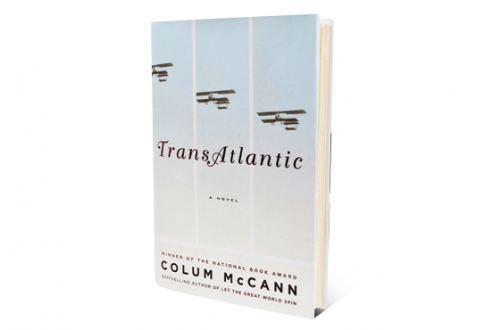
Colum McCann’s true fiction TransAtlantic

But I know I never got near the truth that I got in reading Colum MCCann’s novel Trans Atlantic. The section(s) on George Mitchell and the Irish peace negotiations, for instance, was better history than I could have ever gleaned in a biography or history book. There was life in those pages, in the account of Mitchell’s days in Belfast, on his dealings with the myriad politicians and organizations, in his observations of the ordinary people and the details around him. Did everything happen the way McCann described it? Probably not. Was it true? I believe very much so. A bigger truth than the historians can share.

I have learned much from fiction–I have learned about people: people in drastic circumstances, in simple ordinariness, in great passion, and in wrenching heartbreak. I have learned about pride and hubris, of great loyalty and great betrayal, of sacrifice and of love. I have met more people in the pages that I have read than I ever could have in the life that I led.

And, in a way, after all, that is what we’re here for–to learn about the wide variety of fellow human beings who share our moment in time and space.

I need to turn my back on this guilt about reading fiction.