Penny Shorts–an online journal with an interesting spin.

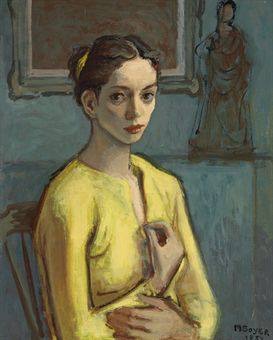
Cynthia  A portrait by Moses Soyer (1954)

Cynthia
A portrait by Moses Soyer (1954)

On Wednesday morning I received a tweet advertising that my short-story “Don’t Crows Eat Corn?” was now available on the on-line journal Penny Shorts. And the tweet was accompanied by this stunning portrait by the Russian/American artist, Moses Soyer.

(Later, the editor Catherine Horlick said that “This portrait by Moses Soyer reminds me of Sandy [the protagonist in my story], although in fact the story is like a painting by Edward Hopper, who so brilliantly depicted subjects trapped by life.”)

The turn-around had been extraordinary. On Tuesday evening, I had received one e-mail accepting the story, another that attached a PDF of the proofed galleys, and a third asking for a photo and a short bio.

Even taking into account that the UK-based Penny Shorts was five hours ahead of me so that while I slept they were working preparing copy, it was a very quick and pleasant surprise.

The fledgling journal has an interesting “business model.” Readers can purchase individual stories for 50p (about 78 cents in U.S. dollars) or they can buy a variety of subscriptions that give them access to multiple stories during the course of the subscription. Agents and editors are given free access.

This was the text of the tweet that was set out:

J.P. Bohannon’s story ‘Don’t Crows Eat Corn?’ is new on pennyshorts. The day after her mother’s funeral, Sandy has to hide a bruise on the side of her head. http://bit.ly/1TCpHBr

And so, the link to the Penny Shorts web site in general and to my story in particular was tweeted out to the world. It was efficient–and quick–marketing.

As an editor, Ms. Horlick has been a pleasure to work with, attentive, professional and warm. Moreso than anyone else I have met in the business.  For those interested in reading or writing or both, you should visit her Facebook page or the Penny Shorts website itself.

Review: “The Heart of the Heart of the Country” by William H. Gass

"I dreamed my lips would drift down your back like a skiff on a river." Gass "in the heart of the heart of the country." P.179

“I dreamed my lips would drift down your back like a skiff on a river.” William H. Gass “In the Heart of the Heart of the Country.” illustration 2014 by jpbohannon

Because of some administrative hic-cough, I was sent two copies this weekend of the same book: William H. Gass’ In the Heart of the Heart of the Country. I had not heard of it, although I recognized the name of the author (and immediately confused him with the novelist, William Gaddis). Having two copies, I gave one to my friend Tim Dougherty, who very well may be the best-read person I know.

Here was the text he sent me later that day:

John,

Thanks so much for the book. Gass’ “In the Heart of the Heart of the Country” is a seminal postmodern short story. The collection is one of my favorites, and the new edition blows my flea market paperback out of the water. And now I can throw that one away!

Who’d have thunk it.

So, on my train-ride to work the next morning, I read “In the Heart of the Heart of the Country.”  The story is the final piece in a collection of the same name that includes two novellas and three short stories, but I went to the last story right away.
And it is everything that Tim’s message had intimated.

First it is broken into short chunks with headings such as “People” or “Weather” or “Places” or “My House.” It is a sort of stream of consciousness, movie-like postcard of a town in Indiana and the people who live there, and at the same time it is a self-portrait of the narrator who has lately lost love (through death or separation I am unsure) and who is both crushed and buoyed by the vastness of the Midwest.

But it is the language that is so remarkable, that stands out yet does not make a show of it. There are exquisite lists. This is the narrator describing a neighbor’s basement:

...stacks of newspapers reaching to the ceiling, boxes of leaflets and letters and programs, racks of photo albums, scrapbooks, bundles of rolled-up posters and maps, flags and pennants and slanting piles of dusty magazines devoted mostly to motoring and the Christian ethic. I saw a bird cage, a tray of butterflies, a bugle, a stiff straw boater, and all kinds of tassels tied to a coat tree.

And here he is describing the town itself in a section called “Vital Data”:

There are two restaurants here and a tearoom. two bars. one bank, three barbers, one with a green shade with which he blinds his window. two groceries, a dealer in Fords. one drug, one hardware, and one appliance store. several that sell feed, grain, and farm equipment. an antique shop. a poolroom. a laundromat. three doctors. a dentist. a plumber. a vet. a funeral home in elegant repair the color of a buttercup. numerous beauty parlors which open and shut like night-blooming plants. …

But it is his memories of the lost love and of lost childhood, the feelings of being trapped in a dying world, and his description of the decadent monotony of small town life that resonates the most, in which the fiction writer becomes one with the poet, and where the language becomes as integral to the story as the story itself, where inside and outside, the public and the private, that which is thought and  that which is felt, all merge into one.

It is majestic and memorable.

And I can’t wait to finish the rest of the collection.

Book Review: Echo’s Bones by Samuel Beckett

Samuel Beckett Illustration 2014 by jpbohannon

Samuel Beckett
Illustration 2014 by jpbohannon

Coincidences are no more than that, though I am very well aware of the research on them. (Freud once stated that  there were no such things as accidents, but I believe coincidences to be a lesser, less conscious form of accident. In the latter, the subconscious is directing you towards what might seem to be a accident but is actually rooted in one’s memory, suppressed or on the surface. Coincidence, on the other hand, is simply the awareness of a multiplication of events, of which one wasn’t completely cognizant or prepared for beforehand.)

So anyway, I attended an intense two-week workshop on education-on assessments and feedback and good old Bloom’s taxonomy. However, much of it was rooted in the teachings of Augustine–and much of the feedback I received  referenced Dante.

Before the workshop, however, I had bought a book, Echo’s Bones by Samuel Beckett. I knew it was something I would need to concentrate on–a 52 page short-story, accompanied by 58 pages of annotations, and complete with an introduction,  copies of the original typescript, letters from Beckett’s publishers, and a bibliography. This was not simply reading a short story, but sort an academic adventure. The type of diversion I hadn’t had in a while.

Cover of Samuel Beckett's Echo's Bones

Cover of Samuel Beckett’s Echo’s Bones

And so I waited until my Augustinian-laced workshop was over.

And then I began reading.  After I got  through the introduction and  into the story I began to smile. It was Augustine all over again with a large dollop of Dante.  In the first three pages alone there are five allusions to Augustine and four allusions to the Divine Comedy. And the main character, Belacqua, is given the nickname, Adeodatus–the name of Augustine’s illegitimate son.

So why all this hubbub about a short story that was written more than eighty years ago?  Well, Beckett had written a collection of interrelated short stories entitled More Pricks than Kicks.  Right before publication, however,  his publisher asked if Beckett would add a final story to the collection, to fatten it up, so to speak.

Beckett agreed, except there was one problem.  All the characters in the collection were now dead.  And so Beckett wrote “Echo’s Bones,”  which told the story of the dead Belacqua’s return to life in his short interim between death and eternity.  The publisher rejected the story, stating that it was too dark, too odd, and that it would make readers shudder.  And so More Pricks than Kicks was published as it was originally intended, and “Echo’s Bones” was assigned to the crypt of oblivion.  Until now.

The title refers to the mythological figure Echo, who tragically fell in love with Narcissus. (He was never a good catch for any woman. Too much competition with himself alone!)  Anyway, when she died, all that was left were her bones and her voice. Thus, we have “Echo’s Bones.”  If the editors had only known how perfectly the story’s title would foretell the nature of Beckett’s future work: a work of spotlighted voices–often disembodied (Krapp’s Last Tape), often body-less (HappyDays), and often flowing in a rushing stream (Ponzo’s soliloquy in Godot).

The plot is secondary to the wordplay, the erudition, the humor, and Beckett’s world view. Quickly: the dead Belacqua suddenly finds himself on a fence in a empty Beckettian landscape. A woman arrives and brings him to Lord Gall, a giant of a man with a paradisaical estate which he will lose because he is sterile and lacks a male heir. He convinces Belacqua  to bed his wife, in hope of an heir, but–in a twist of telescoped time–the woman gives birth to a daughter.  The story concludes with Belacqua conversing with his own grave digger (from an earlier story) and searching his own coffin for his body. The story ends with a familiar phrase in Beckett’s work and letters: “So it goes in the world.”  These are the last words of “Echo’s Bones,” but they are also the last words of “Draff,” the final story in the version of More Pricks than Kicks that was ultimately published.  A phrase that Beckett had picked up from the Brothers Grimm story “How the Cat and the Mouse Set up House,” it is a phrase that encapsulates Beckett’s life view and one that he used often even in his personal correspondence.

While I respect and love Beckett’s drama, I particularly enjoy his early fiction. Still under the influence of Joyce, Beckett, at this time, was  full of his verbal powers, delighting in the wordplay, and confident in his free association. It is always, for me, a treat to read.


words and pictures (part 2) …and the power of MUSIC

Music...Art...Literature Illustration 2014 by jpbohannon

Music…Art…Literature
Illustration 2014 by jpbohannon

Yesterday, I wrote a post about the film Words and Music, a sweet romance about a battle between an Art teacher and an English teacher. The film had interesting examples about the power of words and magnificent examples of the power of “pictures.”  But what I forgot about was the part that held it together and in a way redeemed it:

The Power of Music

In the film. after the male protagonist has made a bollocks of things and the female protagonist has had enough of his destructive behavior, it is music that is the most evocative, most informative, most powerful…and most healing.

Scene after scene the male (Jack Marcus) tries to contact the female (Dina Delsanto) to apologize for the drunken mess he made of her art. Scene after scene we see her aggressively stop his attempts or stoically ignore them. Until the moment, when she opens an e-mail and there is an audio attachment.  The piece–written for the film by Paul Grabowsky—is a chamber piece for piano, cello and clarinet entitled “I am a Small Poem.”  (This is also the name of the poem that Markus steals from his son.)  It is rich and resonant and connects with Delsanto more than any words or pictures could.

It is what saves their seemingly destroyed relationship.

I wish I could embed the music that was played when Delsanto opened her e-mail. but I can’t.  It isn’t available yet.  So instead, I will give you this: an extraordiary piece by Fauvre. It is what I often listen to when I am writing:

A while back, a music teacher (Manny DelPizzo), an art teacher (Jackie White) and I got together to make plans for a large project. (The educators call this kind of thing “Project Based Learning.”)  I was going to get my Creative Writing Students to submit their best work and the art teacher and music teacher would each have their students interpret it and we would have a performance.  Our ambitions were high–this seemed like the best outlet for student creativity– but the realities of schedules and time and curricula put many roadblocks in our way and we let it fizzle out.

The “performance” that the fictional students in Words and Pictures was much like what we were hoping for, minus the music. Our music component would have made it better.

A new school term is starting in a couple of weeks. I am newly energized (though not as drunken as Jack Marcus) and am excited about trying this for real. It doesn’t have to be a battle–as it was in the film–but a really cool examination of the power of words, of art, and of music–a real exercise in Creativity

The Hemingway House, Key West

Hemingway House, Key West Illustration 2014 jpbohannon

Hemingway House, Key West
Illustration 2014 jpbohannon

I have always had a love/hate relationship with Ernest Hemingway. For a long time, all the machismo got in my way: the big game hunting, the bull fighting, the boxing, the boasting, the egoism, all seemed to be compensating for something, a sense of insecurity perhaps, to put it in simplest terms.

And yet, I love his writing. It is pure and clean and powerful and elemental. I can still feel the the visceral punch in  “Indian Camp” when the father removed the blanket from the young husband in the upper bunk. Or, the pared-down, gradual dawning of realization in reading “Hills Like White Elephants” or the existential abyss yawning at the end of a “A Clean Well Lighted Place.”

It’s been a while since I read one of the novels. I remember A Sun Also Rises fondly. The damaged romanticism of  Jake Barnes, the alluring aloofness of Brett Ashley, the thirsty landscape of Spain are all still vivid in my mind despite how long ago I last read it. And while critics claim A Farewell to Arms to be the better written novel, The Sun Also Rises remains more important to me.  (A colleague just last month called it the worst novel written in English! Oh well.)

And so, with this ambivalence about Hemingway, I visited his home while in Key West in early June.

The home is extraordinary–and rich in story and history.

photo

The front of the Hemingway House on Whitehead Street in Key West. Photograph 2014 jpbohannon

In the 1930s, Hemingway moved to Key West with his second wife–Pauline Pfeiffer–whose uncle purchased the house on the corner of Whitehead and Olivia Streets. And although, Hemingway claimed that he was “restless” in Key West, at this house he wrote a great deal of what would be his most important work.

The house is a two level structure built in 1851 by Asa Tift, a successful architect and salvager, and the Hemingways bought it in 1931.  Today, the home is an Historic Site and remains filled with the Hemingways’ furniture and artifacts.  Throughout each room are both original furnishings and memorabilia–posters of movies made from his novels, photos of Hemingway at various stages of his life, of his family, and of various celebrities and writers. The bed in the master bedroom is actually two double beds that Hemingway wired together and the headboard is a gate made of Spanish mahogany that Hemingway and his wife had seen in a monastery in Spain.  A bench in the foyer is from the same monastery.

Hemingway's Writing Studio in Key West Photograph 2014 jpbohannon

Hemingway’s Writing Studio in Key West
Photograph 2014 jpbohannon

Behind the main house is a “carriage house” in which Hemingway had built a writing studio on the second floor.  In order to ensure his privacy, Hemingway had a wrought-iron catwalk stretched across the patio from the bedroom to his studio.  This was the only means in and out.  Today, the catwalk has been taken down and there is a narrow stairway from the patio to the studio door.  It is an ideal working space.

The house also has a large pool–the first ever in Key West.  Hemingway and Pauline had wanted to build a pool, but cost was prohibitive.  They had bought the house for $8000 dollars, but building a pool in the remote Keys was expensive. Instead, Hemingway built a regulation sized boxing ring. Much to Pauline’s dismay, her dream of lounging poolside had given way to a ring side seat to her husband’s sparring bouts.

However, Pauline got her way (and ultimately the house itself).  Hemingway had started an affair with the writer Martha Gelhorn, and the two of them had met up in Spain to cover the Spanish Civil War.  When Pauline caught wind of the tryst, she promptly had a over-sized pool built–at the cost of $20,000, two and half times the cost of the house.

When Hemingway returned he was none too pleased.  In one gesture of comeuppance, he dragged a urinal from what was then Sloppy Joe’s (and is now Captain Tony’s) which had been thrown curbside during renovations, and brought it home as a watering trough for his many cats. As he told his wife, “you have your pool, and now I have mine.”

And it is the cats that retain their residency.  Hemingway loved cats, particularly 6-fingered, “polydactyl” cats. He believed them to be good luck. There are countless photos of Hemingway with them–while he wrote and while he lounged. (Apparently, they were the only others who had access to his studio.) Today, all of the 48 or so cats on the property are descendants of Hemingway’s cats–and all of them carry the gene for the polydactyl mutation.

One of the many six-fingered cats on the Hemingway Huse property. photograph 2014 by jpbohannon

One of the many six-fingered cats on the Hemingway Huse property.
photograph 2014 by jpbohannon

But after the cats and the pools and the writing studios, after the womanizing, the wives, and the bluster, after the houses and the legends and the suicide, what we are left with in the end is the writing.  As I said earlier, it is pristine and clear and purposeful.  Hemingway was a great reviser, mostly paring down and paring down to the very essence of what he wanted to say. As he famously told an interviewer, the hardest part is getting the words right:

Interviewer: How much rewriting do you do?
Hemingway: It depends. I rewrote the ending of Farewell to Arms, the last page of it, 39 times before I was satisfied.
Interviewer: Was there some technical problem there? What was it that had stumped you?
Hemingway: Getting the words right.
(Ernest Hemingway, “The Art of Fiction,” The Paris ReviewInterview, 1956)
Book Review: Beautiful Losers by Leonard Cohen

illustration 2014 by jpbohannon

illustration 2014 by jpbohannon

A few weeks back I saw a photograph of Jonathan Letham’s favorite books.   Among the titles on the row of spines,  I noticed a book by Leonard Cohen called Beautiful Losers.

Now, I am a big Cohen fan.  I listen to and play his music frequently–both new and old– and I am well aware of his  poetry, so I assumed Beautiful Losers was one such poetry collection.

I was wrong. It was a novel, first published in 1964–several years before the release of his first album, The Songs of Leonard Cohen.

And so I thought, what the hell.

Beautiful Losers is very much a work of its times. Frenetic and speeding. Erotic and rambling. Big-hearted and narcissistic.

It is the story of an unnamed narrator whose other two partners in a odd love-triangle –his wife and an elusive shaman-like man named F.–are dead. (His wife committed suicide in the unconventional way of sitting at the bottom of an elevator shaft and having the elevator crush her. F. is a member of the Canadian Parliament.) The other object of his love/lust is also dead but she’s been dead for 300 years and is up for canonization by the Catholic Church, Catherine Tekakwitha, the virgin of the Iroquois.

There are betrayals and reversals and climaxes and re-unions.  There is sex and loneliness and more sex.  There is 17th-century genocide and 20th-century nationalism and separatism. (This is early 1960s Montreal, after all.)  There are Joycean lists and Henry Miller-like rhapsodies, but all and all the whole thing seemed to me to be very much a part of the 60’s gestalt. (One of my favorite scenes is when the naked narrator watches his wife and her/his lover shoot up, only to discover later that they are injecting an odd mix of heroin and Lourdes water. He found the advertisement/receipts for the Lourdes water in his wife’s dresser drawer)

The whole thing reminded me more of late Ken Kesey or even Gilbert Sorrentino than it reminded me of Joyce or Miller (which connection the book jacket blurbs go on and on about). The attempt seemed old and tired…but maybe because  the energy of those times seems so old these days as well.  True, it is a pastiche of Joyce–but then again how many young artists were trying the same at the time.

But more than anything else, Beautiful Losers is the announcement of a unique and individual voice.  That that voice ultimately decided to be heard through poetry and song rather than through fiction was a decision that the artist himself made.

And I for one believe it was a right decision.

In a very early poem, Cohen wrote:

So you’re the kind of vegetarian

Who only eats roses

Is that what you meant

with your beautiful losers?”

I’m not sure if this is where Cohen got the title for his novel or precisely what these lines might mean, but it reflects the  word usage and mindset of the novel.

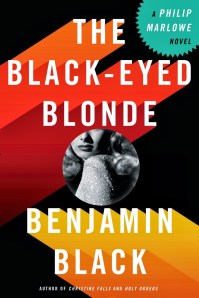
Book Review: The Black-Eyed Blonde by Benjamin Black

In 2006, with the release of Christine Falls, the Booker-Prize-winning novelist John Banville began publishing “crime fiction” under the pen name Benjamin Black.  Like his “literary novels,” these crime novels are psychologically astute, intensely plotted, and keenly aware of language.The Black-Eyed Blonde

With The Black-Eyed Blonde, however, Banville decided to try something new:  to write a novel using Raymond Chandler’s most famous private detective, Philip Marlowe.

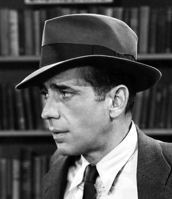
While Chandler’s fiction is read and esteemed, and his influence on detective fiction in particular and American literature in general widely acknowledged, his detective’s presence is mostly ingrained in the American consciousness through film and television.  There have been several television series featuring the L.A. detective and many movies.  Dick Powell and Robert Mitchum both played Marlowe, and successfully, but undoubtedly, the most iconic incarnation of Phillip Marlowe is that played by Humphrey Bogart. So pervasive are the film renditions of Chandler’s L.A., that I found myself casting the characters while reading The Black-Eyed Blonde.  Sure enough there was a role for all the usual suspects: there is a creepy, effeminate Peter Lorre type, an enormous, gang-lord Sydney Greenstreet, a fetching Lauren Bacall character, and, of course, there is Bogart as Marlowe.

Humphrey Bogart as Phillip Marlowe in The Big Sleep

Humphrey Bogart as Phillip Marlowe in The Big Sleep

Banville himself is certainly aware of the hold that film has on the literary characters and early in the book he gives a winking nod to Bogart. Marlowe is sitting in the offices of a fancy country-club. There are cigars and brandy, chintz armchairs and fine china. Marlowe says:

“At that point, I wouldn’t have been surprised if some fruity type in white shorts and a blazer had come bounding through the door, inquiring with a lisp if anyone was for tennis.”

This is Banville’s joke, and nod to Bogart.  Before he played tough guys in film, Bogart played in drawing-room comedies on Broadway. A long-lived story is that Bogart’s first professional line as an actor was as a young dandy, bouncing onto stage with his tennis whites and tennis racquet and inquiring “Tennis, anyone?”  That Bogart also had a slight lisp, makes Banville’s nod even more on target.

But The Black-Eyed Blonde is not a film, it is a novel, and a highly readable one at that. The title is one of several possibilities that Raymond Chandler had filed away and which Banville received permission to use from The Raymond Chandler Estate.  From there, somehow, Banville began channeling Chandler, because what he has created is an exceptional mirroring of Chandler’s style: the rapid-fire dialogue, the lyrical similes, and the sprawling, frenetic plot and subplots.

The plot is typical: the eponymous blonde, Clare Cavendish, enters Marlowe’s office and hires him to find a “friend”  who has gone missing.  When Marlowe discovers that the friend was killed and cremated two months earlier but that Cavendish had seen him just a few days ago, things get complicated.  There are betrayals, murders, cover-ups, flirtations, and deceptions.  And throughout it Marlowe maintains a strict code of honor–the characteristic that always set Marlowe apart from the rest. He protects his clients’ confidences, he takes no joy in the violence that is visited upon the deserving, he cannot be bought no matter what the price, and, while he can empathize with those on both sides of the law, he believes in justice.  It is this chivalric honor that became the hallmark of the American noir hero.

But always, when reading Chandler–and now Banville posing as Chandler–the story seems secondary.  It is the evocation of 1930s-40s Los Angeles, the elaborate metaphors (“He smelled like an over large man who had lain in the bath too long.”), the snappy dialogue that conjures up an entire world–a fictional world, perhaps, but one that we are very familiar with through both reading and film. And with The Black-Eyed Blonde, Banville re-captures that world perfectly,  note for note.

The Black-Eyed Blonde is a fun, a quick, and a memorable read.


At Swim-Two-Birds, Guinness, and Finn McCool’s Arse

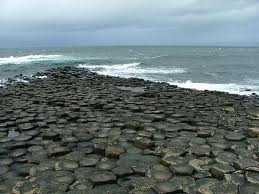
Giant's Causeway

The Giant’s Causeway
–Carved out by Finn McCool

In the mid-nineties, the Guinness company ran a contest that entailed writing an advertisement within a certain number of words.  First prize for the winning ad was a pub in Ireland, and you could see the pubs themselves on-line. (Winning this prize is the impetus of the plot of the novel The Night Swimmer)

Anyway, I remember my entry and remember loving its major image…150 orphans playing handball against the wide girth of Finn McCool’s arse.

Obviously I didn’t win. (I arrogantly told myself that I didn’t win the contest because it was run by American advertisers who didn’t pick up on the allusion!)

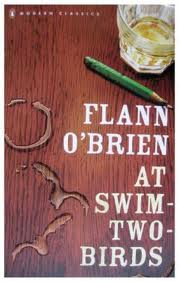
ATSWIMTWOBIRDS And I remembered that ad because the image came from Flann O’Brien’s novel,  At Swim-Two-Birds. And last week I began a post with a poem “The Workman’s Friend” that came from the same novel. That post got me nostalgic for O’Brien’s work. A man of many pseudonyms, O’Brien is best known for the comic novel At Swim-Two-Birds, although my funnest memories are of The Third Policeman and The Poor Mouth, the latter which O’Nolan wrote in Irish as  An Beal Bocht under the pen name Myles na Gopaleen. (And both of which I first read in Connemarra and Sandymount respectively.)

At Swim Two-Birds is a rich novel of basically three stories, a meta-fiction in which a character created by the protagonist writes a novel from which his characters gang together with other characters in the novel to avenge their creator.  It starts with a university student, who spends more time in his bed and in the pubs than in the classroom. Besides drinking, the student is also writing a novel about a man named Dermot Trellis, a middling writer of Westerns. It is his characters who intermingle with each other, who plot against him, and who attempt to live their lives apart from their author’s intentions, after they drug him.

All of this is mixed with a great deal of Irish mythology and ancient poetry (wryly translated by O’Brien himself). From McCool to Mad King Sweeney, from pookas to fairies, an entire ancient world enters this most modern of novels and interacts with O’Brien’s and Trellis’s fictional creations.

To say there is a circularity to the plot is perhaps inaccurate, and certainly understated.  It is more like a mobius strip in another dimension.  One thing turns on another to make way for other things that reflect on something else. This jibes very much with the Greek epigraph which translated means “For all things change, making way for each other.”  For yes, indeed, one character after another makes way for one other character after yet another.

But most memorably, it is laugh-out-loud funny.

So I began re-reading At Swim-Two-Birds again this week and  I started thinking of comic novels in general.

I feel they are best enjoyed by the young.

Think The Gingerman and Catch-22. Think Tom Jones and Confederacy of Dunces. Think Lucky Jim and Reuben, Reuben.  Each presents a hero who is outrageously set up against the straight-laced establishment, whether it be the military bureaucracy, the world of academia, or society in general.  And each hero takes part in the most outrageous antics–antics that only a young soul could aspire to and believe in.  It was once said that an uncle of mine in the army tried to received a medal buck naked, much like–and before–Yossarian in Catch-22. (Unlike Yossarian, he was thrown in the brig.) For my 21st birthday, a good friend of mine wanted to rent a kangaroo suit for me to go bar hopping in, as Sebastian Dangerfield did in The Gingerman.  I still chuckle at the peccadilloes that the Scottish poet Gowan McGland gets himself into in the uptight Connecticut suburbs in Reuben, Reuben. (Apparently, the plot was based on Dylan Thomas’s drunken stay in the town in the 1950s.)

But these antics and nose-thumbings are the actions (and dreams) of younger men.  And, also, the world has changed.  I remember once reading The Gingerman on a bus and being accosted by a woman who yelled that Sebastian Dangerfield was the most misogynistic character in all of literature.  I had to admit she was right. In fact, I’d go one further: he is one of the most despicable anti-heroes of all time.  Yet, he is still extraordinarily funny.

But, young or old,  the truth of  all comedy is a certain sadness mixed with the high-jinx. Perhaps the perception of each changes with age–but they both are undoubtedly there. They both need each other.

And so, once more I am churning through At Swim-Two-Birds, and I am still laughing out loud.  I just hope that there is no one on my bus protecting the interests of characters who are thought up by characters who are thought up by characters.  Cheers.

Quote of the Week #23: October 6, 2013

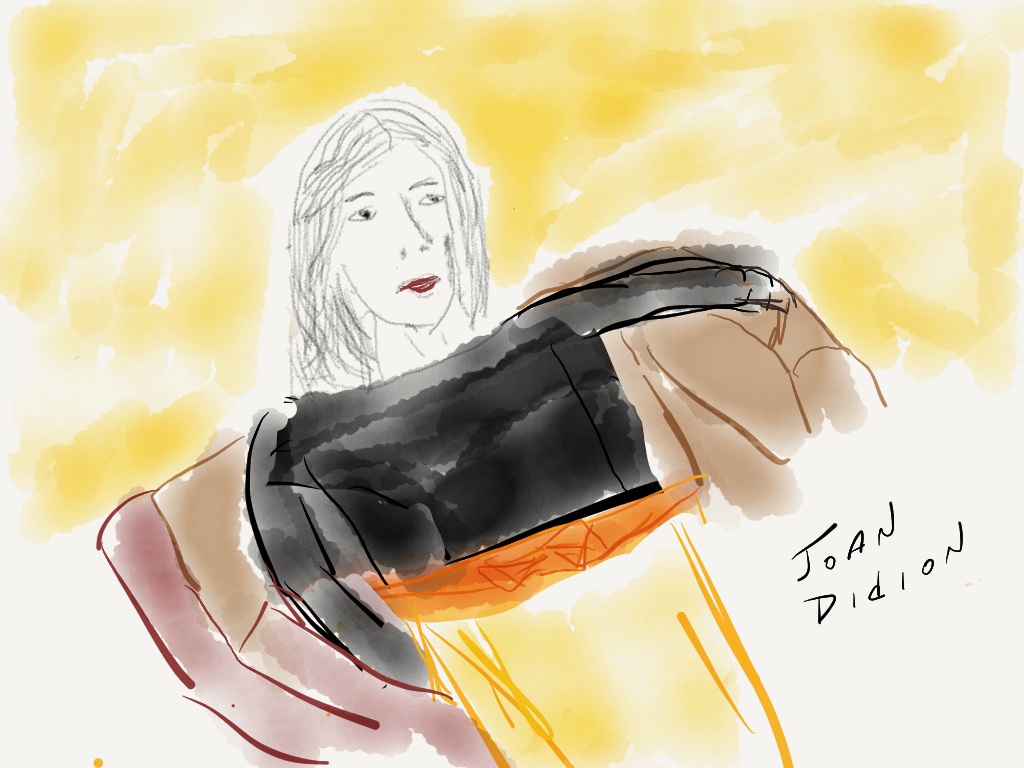
Joan Didion.  illustration 2013 jpbohannon  based on portrait by Lisa Congdon for Reconstructionists project

Joan Didion.
illustration 2013 jpbohannon
based on portrait by Lisa Congdon for Reconstructionists project

“I’m not telling you to make the world better, because I don’t think that progress is necessarily part of the package. I’m just telling you to live in it. Not just to endure it, not just to suffer it, not just to pass through it, but to live in it. To look at it. To try to get the picture. To live recklessly. To take chances. To make your own work and take pride in it. To seize the moment. And if you ask me why you should bother to do that, I could tell you that the grave’s a fine and private place, but none I think do there embrace. Nor do they sing there, or write, or argue, or see the tidal bore on the Amazon, or touch their children. And that’s what there is to do and get it while you can and good luck at it.”

Joan Didion

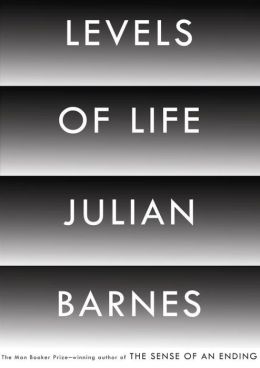
Book Review: Levels of Life by Julian Barnes… a grief both honest and beautiful.

levels of life  Julian Barnes latest work is a slim, tripartite volume that encompasses a 19th century history of ballooning and the beginnings of portrait photography, a semi-fictional account of the love affair between an English “balloonatic” and the divine Sarah Bernhardt, and a searingly honest examination of the author’s own grief upon the loss of his wife, Pat Kavanagh, in 2008.

As always, Barnes writing is careful, thoughtful, and precise. His insight into the heights of ballooning and its accompanying crashes, the flights of romance and the desperation of rejection, and the comfort of love and the devastation of its loss are intelligent, beautiful, and memorable. It is the type of book that one reads with a pencil nearby so to copy the phrases that so often hit their marks squarely.

In the first section, “The Sin of Height,” Barnes describes the flights of three different balloonists over the course of nineteen years–all of the passengers whose paths cross at times throughout the years. The first is Nadar the French photographer, whose balloon basket carried a developing lab and who was one of the first to ever give us aerial photographs, albeit very vague and poor ones. (moving from Nadar’s early aerial photographs to the Earthrise photos that were taken on the first trip to the moon a century later, Barnes writes beautifully about our tiny planet, swirling with gasses and storms and blue beauty.)

Nadar did however go on to be a great portrait photographer, and his photographs of the actress Sarah Bernhardt are the first we have of her. She too is one of the balloonists that Barnes features. The third balloonist, Fred Burnaby is a English military man–a member of the Royal Horse Guard–an adventurer, and a noted bohemian.  It is a history that captures the excitement and controversy of the modern age–encapsulated by the birth of photography, electricity, and aviation.  Victor Hugo believed that flight would bring about democracy while Balzac believed that photography steals a layer of the sitter’s persona.

It is Burnaby’s romance with Sarah Bernhardt that makes up the second section, “On the Level.” Reading like part of a novel, this section depicts Burnaby–very much a man of the world–now very much in love and very articulate about how he feels. He is aware of the dizzying heights to which Bernhardt has taken him, and, as a ballonist, he is always aware of the heights from which he will fall when she releases him. His dispassionate accounting of his heartbreak, his pain, his desolation is telling, but despite the level-headedness of his account we never doubt the intensity of the love that he experienced.

But it is the third and longest section–“The Loss of Depth”–that is the most moving, that often feels like a punch in the heart.  For in it, Barnes examines his own grief upon losing his wife.  “Thirty-seven days from diagnosis to death” is the quickness with which this blow was dealt, and Barnes delineates his pain, his grief, his loneliness with extraordinary honesty and bravery and clarity. It is a exceptional feat, this incise, self-examination of utter loss, put down in words.

While the section surprises us, coming as it does after the previous two sections, in a way he was preparing us for it as well. Burnaby’s meditation on the loss of love, the discussion of crashing being part of the risk of rising, the uxorious care that Nadar took of his stroke-stricken wife, all these point to the marriage of Barnes and Pat Kavanagh.

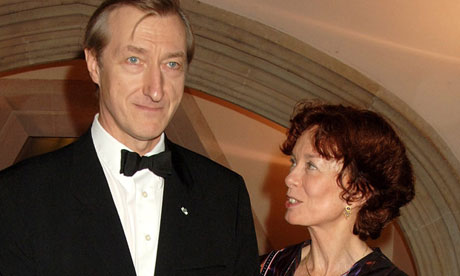
Julian Barnes with his wife, Pat Kavanagh in 2005. Photograph: Dave M. Benett/Getty Images

Julian Barnes with his wife, Pat Kavanagh in 2005.
Photograph: Dave M. Benett/Getty Images

He discusses the reactions of those he knows, the kind but often inept remarks that friends attempt, the plans they suggest to help him “through it.”  He discusses his daily patterns, emptied now of half the players. He considers suicide, but checks that because if his wife lives in his memory, killing himself would be killing her a second time. He examines the Orpheus legend and takes refuge in meaningless soccer games and overly-emotional opera. And through this all he continues to miss his wife terribly and daily, and the pain of her absence seems never to go away.

But at no times is this meditation maudlin. Indeed, I found myself thinking what a wonderful thing this would have been if he could have shown it to his wife when she was alive. But then, he wouldn’t have had the wrenching grief that allowed him to write it.

Levels of Life is more than a beautiful book. It is powerful and loving. Intelligent and thoughtful. Honest and real. Perhaps after reading it, we should then ask our partners to read it as well, to let them know now what they mean to each of us and how their absence would affect us.