Tuesday Book Review: Wonder Boys by Michael Chabon

I read Wonder Boys last week.  I had read it previously, at least twenty years ago, and, boy, had I misremembered it.  As a younger man, I found inspiration in the “wunderkind” writing student and was fascinated by the famous writing teacher who is famously blocked with his novel (also called Wonderboys) that is going on past 2600 pages long.  This time around I did not have the same reactions.

Part of the problem is also that I could not get the film adaptation out of my head– a film I had seen in the long interim between readings.  In the film, the famous writing teacher is played by Michael Douglas, his cynical, jaded literary agent by Robert Downey, Jr., and the fabulous writing student by Tobey Maguire.  And while I remember enjoying the movie greatly–and understand why marquee actors are used–I think  it was terribly miscast.
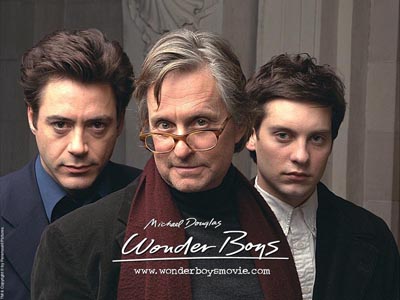
Grady Tripp is the dissolute writing teacher.  He smokes way too much dope, he is cavalier in his relationships, and he is always looking out to score. In the novel, he is over-large, a big hulking bear of a man.  In one scene, when he is spiraling into what might be a catastrophic relationship with a young student who rents a room in his basement, he notices his reflection in the mirror. He sees a middle-aged, bearish man slumped down over this young college girl as they slow dance together. It is a moment of self-awareness–aided by a large quantity of pills, dope, and alcohol enhanced by pounding adrenelain after a slapstick night of antics. The man he sees in the mirror no way is the stylish professor played by Michael Douglas.

The young writing student is a-social and painfully awkward which Tobey Maguire captures but he is not nearly dark enough. In the novel, James Leer is very dark, in a long overcoat of indeterminate material and age.  And Robert Downey Jr. did not match my vision either. I know that most people quibble with the casting of books they’ve read when they are made into movies.  And this is my quibble: the cast is too handsome.

But enough about the movie…

The novel starts out on a rollicking tear. On the night that the novel begins Grady Tripp finds a note from his wife saying she has left him, he picks up his agent and the transvestite he met on the plane, his mistress–Chancellor of the school and wife of his Department Chairman–tells him she is pregnant, he gets bit in the leg by a dog, and he is traveling around with a tuba, a dead dog, the coat Marilyn Monroe wore at her wedding to Joe DiMaggio and a student who may or may not be suicidal…or truthful.  It reminded me of John Irving at his best.

An academic farce, there are set scenes of college gatherings and festival lectures. There are Tripp’s musings on the requirements of good writing, his praise for James Leer’s young but promising work, and insights into a truly blocked artist–one who comes to no longer believe in the work he is doing.

The female characters, his wife, his mistress, the student living in his house, however, are very shallow–cardboard figures created for Tripp to act or react against.

Michael Chabon

That the novel famously echoes Chabon’s early writing life makes reading it this much later in his career offer its own rewards.  Like James Lear, the young student, Chabon received a book contract for The Mysteries of Pittsburgh when his writing professor–unknown to Chabon–passed the manuscript on to his own literary agent.  And like Grady Tripp, Chabon worked years on a follow-up novel–a novel that grew enormously large before he himself destroyed it.

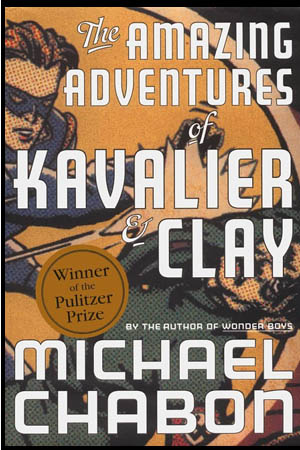
Since The Mysteries of Pittsburgh and Wonderboys, Chabon has continued to win great praise and loyal readership.  His novel, The Adventures of Kavalier and Clay won the Pulitizer Prize for fiction in 2000 and his 2007 novel The Yiddish Policemen’s Union won the Hugo, Nebula, Sidewise and Ignotus awards. (An aside–I was in Quebec city one week and needed something to read. There was primarily only French book stores. In one that I stepped into there was a small rack with about a dozen books written in English. It was there that I bought the Yiddish Policemen’s Union.)
And while his first novel–The Mysteries of Pittsburgh–and the novels following Wonderboys deal directly with Jewishness and Judaism, it is a very minor theme in Wonderboys.  There are touches of it when Tripp and James go visit his Korean ex-wife for Passover Seder and bumps against it when James’ own history is revealed, but it is not forefront in the novel.

Instead this is very much a novel about writing–or not writing as is Tripp’s case.  It is academic because it takes place on a university campus and deals with chancellors and professors and students and chairmen, but there is no scenes within a classroom. It tries to be a novel about love and contentment–but Tripp’s long road there, it is his third wife that leaves him and his tentative gestures towards his pregnant mistress are filled with doubt and fear.

All in all, though, Wonderboys is a wonderful read.  The beginning is peerless–quick moving, deft character sketches, and hilarious plotting. If the second-half seems to suffer from a bit of a hangover, it is because nothing could keep up with the original momentum. The novel must switch rhythms to mirror Grady Tripp’s more thoughtful musings, fears, and discoveries.

Do read Wonderboys or, if you want, rent the film.  Both are very enjoyable.  Just don’t do both too close together. And when you finish with those give Chabon’s other titles a try. Any of them are well worth the time spent.

Next Post

I thought this was an interesting post. She seems an intelligent and thoughtful writer, and I am going to try to track down her book.

phdincreativewriting's avatarph.d. in creative writing

As writers, we live double lives: lived once in the world of others, and again, in the quiet of our own minds. It takes a certain amount of will and courage to leave with regularity the circle of humanity in order to enact a kind of theft, which is one aspect of what the writing life seems to be.

Anne Germanacos is the author of the short story collection In the Time of Girls (BOA Editions). Born in San Francisco, she has lived in Greece for over thirty years. Together with her husband, Nick Germanacos, she ran the Ithaka Cultural Studies Program on the islands of Kalymnos and Crete, and taught writing, literature, and Modern Greek. She holds an MFA from the Bennington Writing Seminars. Her work has appeared in over eighty literary reviews and anthologies, including Dzanc’s Best of the Web 2009. She and her husband have four…

View original post 1,063 more words

Quibble with electronic publishing, part 2:

♦ ♦ ♦ ♦ ♦ ♦ ♦ ♦ ♦ ♦ ♦ ♦

Who would have thought it?

Well, I guess quite a few people.  Yesterday, I posted a piece worrying about the future of writings “published” on the Internet and used as an example the disappearance of two particular stories of mine.

I said that I knew that nothing ever really disappears from cyberspace, but asked, “Would the common man have the tools necessary to recover those materials that are missing?”

Apparently he does.

Sure enough, someone a lot cleverer than I am went and found one of the stories I had cited. Three cheers for Gerry Bracken. He said the tool he used was the “Wayback Machine” (see picture above) and I know I definitely don’t have one of those.  Anyway, he found the “Dublin work-shopped” version of the story “Nadja and the Dream of Teeth.”  I don’t remember the difference between this and the final version, but it’s been a long while since I read it, so that was fun it itself.

Anyway,  I posted the first few paragraphs below.  If you’re interested, the rest of the story is at

http://web.archive.org/web/20040102060543/http://www.dublinwriters.org/eacorn/EA13/bohannonstory.htm

Again, thank you Gerry Bracken. It’s been a good day all around.

from “Nadja and the Dream of Teeth”

At the time there are three distinct women. Two orbit around his person like meteors that arrive and disappear, pendulous and pending, with the rigidity and regularity of the calendar. They are dark and light, one and the other. The fair one is more than fair. Her skin is pellucid. Thin webs of capillaries and veins map her arms, her breasts, the small of her back. The other, the dark one, is Mediterranean, raven-haired, Homeric. She smells of cigarette smoke and has hands older than her age. There is a husband somewhere. Cruel. Oafish. He keeps her meanly and she stays. The third is Nadja, herself. She is his earth, past which the others streak.

“I have made you an appointment,” she tells him. “At half-nine tomorrow.”

He presses his fingers to his face, toward the eye socket. The pain is there, where he touches. Not in the tooth itself, but on his face. Always he has avoided dentistry. But now, she has made the appointment and, when the time comes, she will drive him there.

The two others, the dark and light ones, we shall call Mim and Mam.

Mim keeps exotic animals. Large brilliant birds, ataractic reptiles, silky-haired dogs. She walks a wolfhound, Erté-like, on a tartan leash, its dusky coat shimmering in the sunlight. She wears black always and walks with catlike grace, taut muscles rippling effortlessly and surely. On certain evenings she will stride into McLoughlin’s and the big dog will stay at her feet through two and sometimes three gin-and-tonics. The dog is said to be gentle.

The other one, the dark one, he calls “Calypso,” and when she kept him, the moment seemed infinite and timeless. She fusses about him yet, fusses about what he eats and drinks and thinks, pleasuring him with a maternal concern that he had long forgotten. To his soul, dusty and cretaceous by nature, she brings the mist of the sea, the juices and oils of the fields, the energy of the sun. She gives him hope and calls him her “Father Confessor,” for she too has her secrets, her venom, her lusts. He never touches her but for her hand and her crone-like fingers.

It is to Nadja however that he has decided to remain grounded, connected. For her, too, he has given up the drink, the three-o’clock whiskeys, the bottle of Beaujolais at dinner, the Armagnac before bed. Of course, he has lied. He is always aware of his duplicity, for he said, in a moment of self-incriminating fury, that she would never again see him with a drink in his hand. And he keeps that promise, to be sure. But he continues when she is not there, when he is alone, when she is away. …

Summer Reading

Image

It is traditional in the U.S. for schools to give students a list of books to read during the summer.  The concept is twofold: one, keeping a student’s mind engaged while absent from most intellectual interaction; and two, trying to excite a student to the pleasure of reading.  So the trick is to find titles that are both stimulating and enjoyable and thoughtful.

So in the school I work at, the “Summer Reading List” has just been published. Here are the titles:

For 9th Graders:

The Hunger Games by Suzanne Collins
Enders’ Game by Orson Scott Card
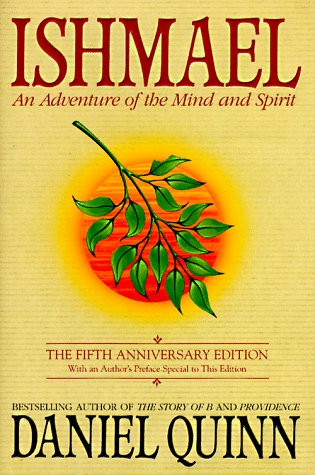
Ishmael: An Adventure of Mind and Spirit by Daniel Quinn

For 10th Graders:

Four mandatory short stories by Nathaniel Hawthorne and four other Hawthorne stories of the student’s choosing.
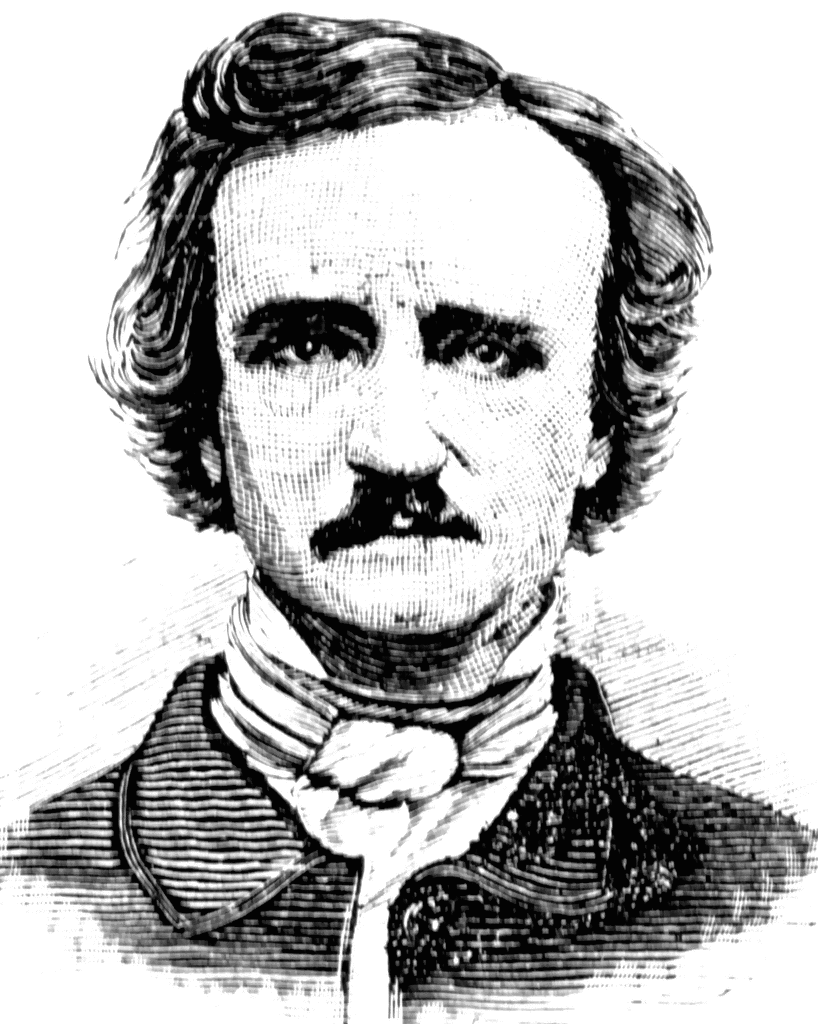
Four mandatory short stories by Edgar Allan Poe and four other Poe stories of the student’s choosing.

For 11th Graders:  There are two levels of books. The first level has a wide choice. They MUST read the first two and then choose ONE of the remaining six:

Don’t Look Now: Selected Stories of Daphne Du Maurier   by Daphne DuMaurier and Patrick McGrath
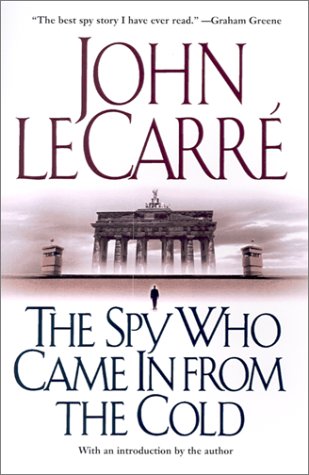
The Spy Who Came in from the Cold by John Le Carre

Here’s Looking at Euclid by Alex Bellos  (HOW GREAT A TITLE IS THIS!!!!!)
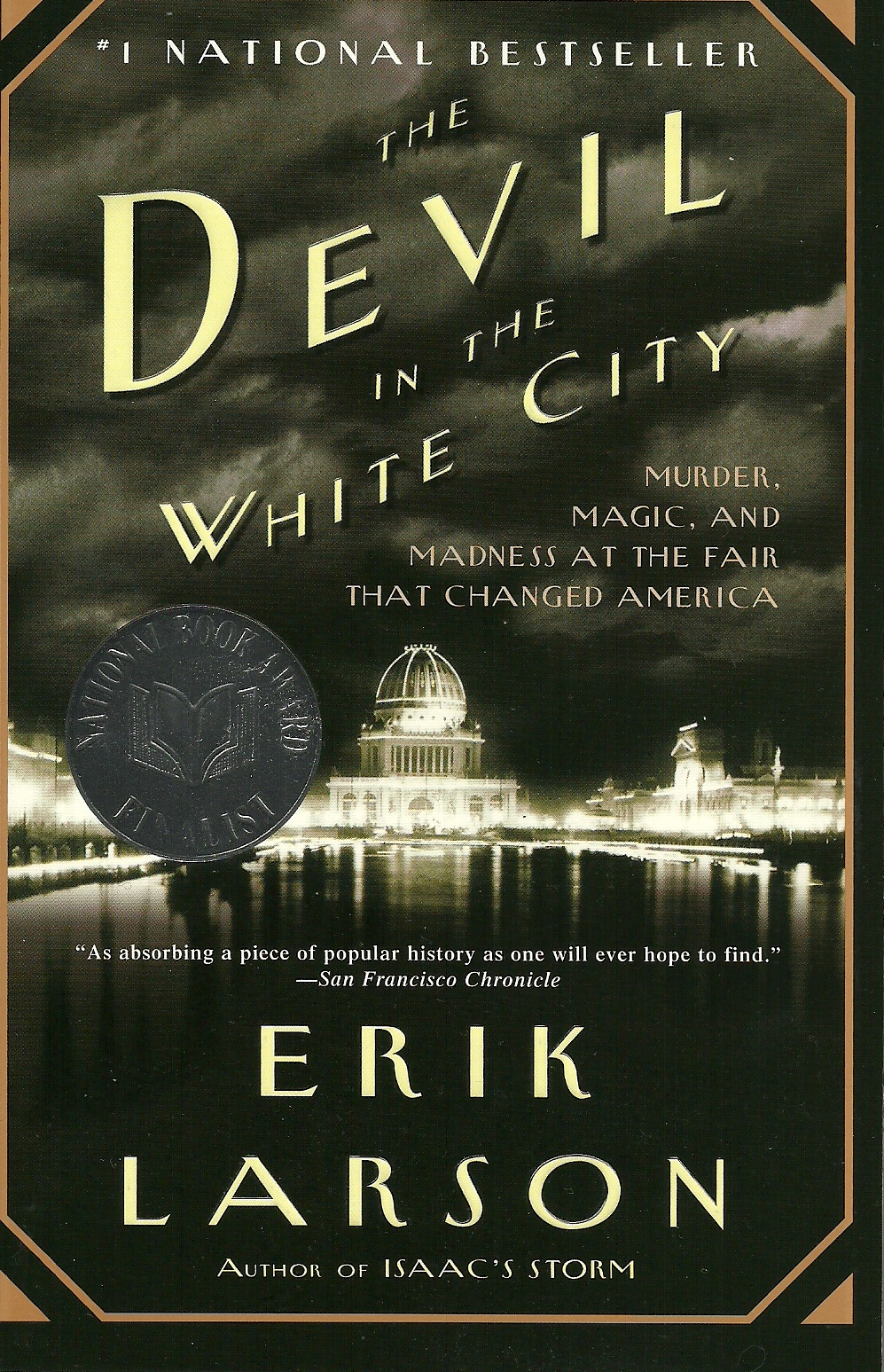
The Devil in the White City  by Erik Larson
The Omnivore’s Dilemma by Michael Pollan
Mutants: On Genetic Variety and the Human Body by Armand Marie Leroi
The Professor and the Madman by Simon Winchester
The Disappearing Spoon by Sam Kean

The other group of 11th graders read these:

Watership Down by Richard Adams
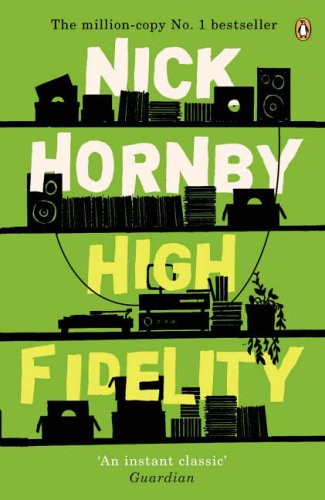
HIGH FIDELITY by Nick Hornby
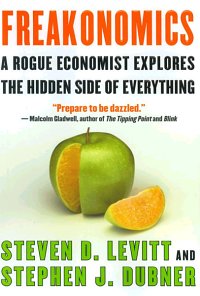
Freakonomics by Stephen Dubner and Steven Levit

Those in 12th Grade read:

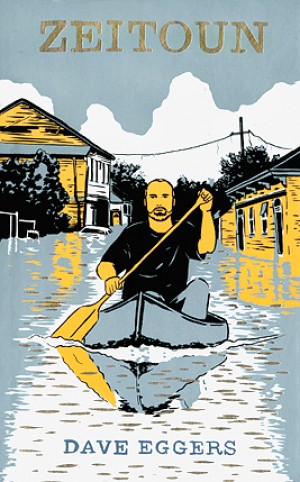
Zeitoun by David Eggers
Like You’d Understand Anyway by James Shepherd

Those in Advanced Placement 12th Grade have a large list to choose from. Some are mandatory and some are choice, but they end up reading 5 titles in all (and for one, reading the book AND watching the film.) They are:

Ragtime by E.L. Doctorow
The Wonder Boys by Michael Chabon
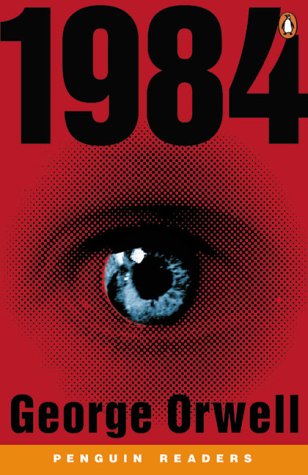
1984 by George Orwell
Do Androids Dream of Electric Sheep? by Phillip K. Dick
On the Beach by Nevil Shute
A Plague of Doves by Louise Erdrich
Brighton Rock by Graham Greene
Player Piano by Kurt Vonnegut
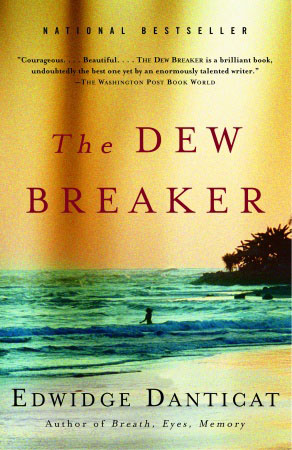
The Dew Breaker by Edwidge Danticat
Demian by Hermann Hesse
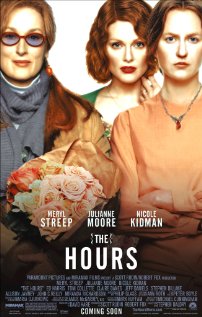
The Hours by Michael Cunningham
Obasan by Joy Kogawa

King Lear by William Shakespeare and the 1985 Akira Kurosawa film Ran
Educating Rita by Willy Russell and the1983 film by the same name
The House of the Spirits by Isabel Allende and the 1994 film by the same name
The Commitments by Roddy Doyle and the 1991 film by the same name
High Fidelity by Nick Hornby and the 2000 film by the same name
Equus by Peter Shaffer and the 1977 film by the same name
The Day of the Locust by Nathaniel West and the 1975 film by the same name
The Color Purple by Alice Walker and the 1985 film by the same name
Beloved by Toni Morrison and the 1998 film by the same name
The Good Earth by Pearl Buck and the 1937 movie by the same name
The Reader by Bernhard Schlink and the 2010 movie by the same name

I must admit, I haven’t read (or watched) all of these titles, but I have read most. It’s a pretty eclectic list…and certainly stimulating. I have my own favorites–Zeitoun for anger, The Commitments for fun, The Hours for tears, The Color Purple for the extraordinary… I could go on, but won’t.  Have fun. Choose something for yourself, if you have the time.

So whether it’s been one year since you’ve been out of high-school or fifty-one years, give the list a look over and maybe you’ll find something to get you through the hot summer days that are already well on their way.

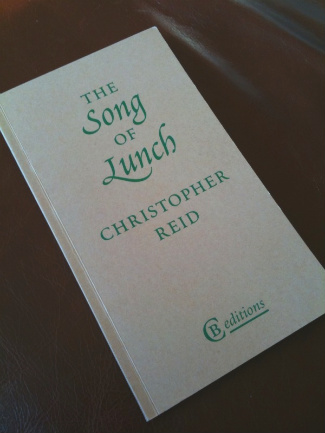
Poetry on TV: The Song of Lunch by Christopher Reid

Farewell to long lunches
and other boozy pursuits!
Hail to the new age
of the desk potato, …

Sometimes, though, a man needs
to go out on the rampage,
throw conscientious time-keeping
to the winds,
kill a few bottles
and bugger the consequences.

Ah, I too miss those boozy lunches. I worked for more than a decade in an in-house advertising agency, and some of our Friday lunches were both epic and legendary.  But I ultimately left advertising for the more sedate, sober world of academia–or at least the more sedate, sober lunches of academia.

The man who is lamenting the lost tradition of long lunches above is the rather bitter and sarcastic subject of Christopher Reid’s The Song of Lunch. Yet on this particular day he sticks a note on his computer screen saying that he is headed out to lunch and that indeed it is going to be a long one.

Probably, unwisely, he has arranged to meet an ex-lover for lunch at one of their old haunts. He, a copy-editor at a famous publishing house; she, the wife of an extremely successful novelist, living in Paris. The novelist is also the man she left the narrator for.

He isn’t sure what he expects from this rendezvous but little of it goes the way he hopes.

Lunch has never been more poetic, or sexier, or frustrating.  The dance of tension and attraction between the two begins immediately.

There! she says, and smiles
Lips, eyes, eyebrows
and the new lines in her forehead
fill out the harmony.

Here! he replies.

She has just entered with “There” and he counters with “Here.”

He bemoans the fact that “their” restaurant has changed so much in the fifteen year interim: the menu features:

pizzas by the yard.
More pizzas than there should be.
And too much designer pizazz.

He turns it over:
choose the right wine
and have it ready breathing
for when she arrives.

There’s a mid-price Chianti,
which won’t come plump
in tight straw swaddling,

byt will do for auld lang syne.

In fact, it is for the “auld lang syne” that he is here, crumpled by the present, dashed in his literary hopes, and obsessed with a long-gone love.  This lunch is very much not the best idea of his.

But she on the other hand is charming.  Personable, open, interested, determined to enjoy the day.  But he cannot. When she asks about his life he goes on a rant about modern publishing:

Confessions of  Copy Editor ,
chapter 93.
It;s an ordinary day
in a publishing house
of ill repute.

Another moronic manuscript
comes crashing down the chute
to be turned into art.
This morning it was Wayne Wanker’s
latest dog’s dinner
of sex, teenage philosophy,
and writing-course prose.

In contrast, she is accepting and pleased with her life as:

Me? Oh, the good wife,
and loving mother.
That keeps me occupied.
I’ve no complaints.
And Paris is a fabulous city.
You really should visit.

(He has by the way, visited. Stalked her a while back but lost the nerve to ring the bell when he was at her door.)

Throughout the lunch, he observes her every move. He watches her daub her mouth with a napkin,  slice into her ravioli, ask the waiter for advice. And all of these observations are described in a rich language filled with a keen ache, for he remembers every whorl of her knuckles, every dilation of her pupil, every crinkle of her lips.

To deal with his ache, his confusion, his lust, he drinks.  Far too much.  Much more than she.

She had arrived at the lunch full of good will and charm, but his sarcastic, bitter demeanor pushes her away.

But, it is a narrative poem–it tells a story–so I won’t spoil the ending.

Now, in 2010, the BBC did something extraordinary.  Rather than digging in the vaults of the classics (there is an endless list of Dickens and Austen productions) or dramatizing the latest Scandinavian thriller or Scottish mystery, they decided to do something quite different.  They decided to dramatize a contemporary work of poetry.  And they did it well.

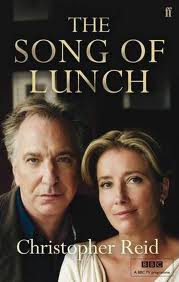
The BBC2’s production of The Song of Lunch–made to celebrate National Poetry Day in Britain– was genius simply in the choice of the actors.  Alan Rickman and Emma Thompson.  For who can better play a put-upon man, dour and drunken, and rising with lust and regrets better.  I cannot think of anyone else.  And Emma Thompson, literally shines in the role–literally that is. In one scene where Rickman is looking at her through his half empty wine glass she is glimmering.  There is a fresh aura of rightness about her that works in perfect contrast to the curmudgeonly Rickman.

The Song of Lunch is a strange one for me, for I saw the film production before I read the book.  In fact, it was BECAUSE of the dramatization that I got the book. “Making words come alive” is such a cliche, yet in this case it is very much true.  The tiny narrative of Reid’s is served quite well when animated by Rickman and Thompson.

I’ve read the poem several times now, finding something new to enjoy each time.  I You-tubed the BBC production and watched a few scenes, but the BBC came in and took certain “chapters” off, so one loses the continuum.

I do remember those long boozy lunches.  Though I wish at the time I was as observant as Christopher Reid.  His The Song of Lunch is as rich as the carpaccio and pumpkin ravioli that were ordered for appetizers and as heady as the grappa that finished the meal.

“Before the World was Made”

“The Yale philosopher Shelly Kagan … manages to raise some interesting and subtle concerns about …notions relating to the question of what’s really bad about death, including this one: Why do we regard no longer existing (post-mortem nonexistence) as worse than not having existed before our births (prenatal nonexistence)? And are we wrong to do so?” 

“The Opinionator,” New York Times, May 16, 2012.

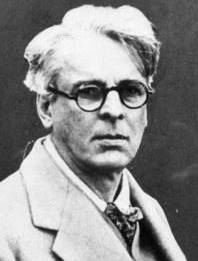
I love this question.  I have thought of it before, and it gives me comfort. For it makes perfect sense to me.  I wonder if Mr. Kagan is aware of the Yeats’ poem, “Before the World was Made.”  I would imagine he is. I know I thought of it right away when I read the article.

    Before the World was Made

If I make the lashes dark
And the eyes more bright
And the lips more scarlet,
Or ask if all be right
From mirror after mirror,
No vanity’s displayed:
I’m looking for the face I had
Before the world was made.

What if I look upon a man
As though on my beloved,
And my blood be cold the while
And my heart unmoved?
Why should he think me cruel
Or that he is betrayed?
I’d have him love the thing that was
Before the world was made.

For here, Yeats too is looking at what Kagan calls “prenatal nonexistence”–though Yeats prefers to think of it as “prenatal existence.”

Now Yeats is working in a spiritual cosmology quite different from that which the Yale philosopher is dealing with.  Yeats was always susceptible to spirituality and spiritualism…mysticism and the occult.  (Adrienne Rich famously called him a “table-rattling fascist.” Click here for Evan Boland’s essays on literary antagonisms.) Nevertheless, he was very much interested in concepts of a soul. He believed–through a complicated mythology of his own making, explicated in his book The Vision–in an individual, social, and civilization-wide reincarnation or continuance of the soul.  And so through this series of Yeatsian cycles we have it: a “pre-natal” AND “post-mortem” existence, as the philosopher says.

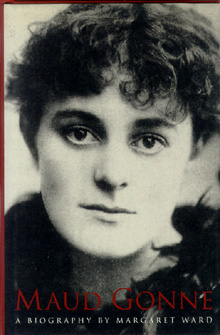
Maude Gonne

And yet, there is also something else going on in the poem that is not as deep, not as cosmic, not as “philosophical.” This is not a cosmic dance taking place in front of the mirror.  It is that old familiar dance of seduction and romance.  For who is the speaker sitting in front of her vanity? Has Yeats returned to musings on his old beloved Maude Gonne? Is he thinking of her daughter–to whom he once proposed having been rejected for the umpteenth time by Gonne? The poem was published in 1933 when Yeats was 68 years old.  The following year Yeats had the Steinach operation performed–a procedure of inserting animal glands into the body in order to increase testosterone production. Good old Yeats–he was now 68–was not giving up on this existence…and at this time was carrying on several romantic affairs with much younger women.

The poem itself appeared in the collection, The Winding Stair, and was one of twelve poems included in a section called “A Woman Young and Old.”  If the speaker is a woman where does she fit in that continuum?  Is this a young woman relatively new at the game?  Or a more experienced woman, who could look on any man “as though on my beloved”?

And what is it she would have him love?  What existed “before the world was made”?  For the philosopher Kagan, the answer is nothing.  For Yeats it is something large, something essential.

As an aside, I knew that Van Morrison had recorded a song version of the poem.  I also knew that Mike Scott and the Waterboys had just put out an album, An Appointment with Mr. Yeats, on which the poem appeard. But I just learned that Carla Bruni–the former first lady of France–had also recorded the song.  I don’t know why, but I find that amusing.  Anyway,  here’s Van the Man’s performance of Yeats’ “Before the World Was Made.”

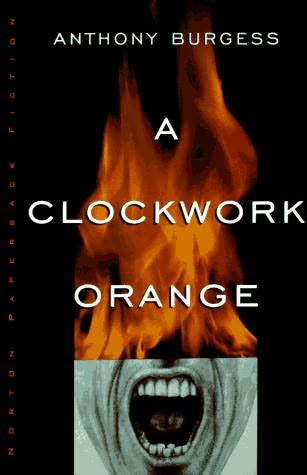
Clockwork Orange and City of Bohane

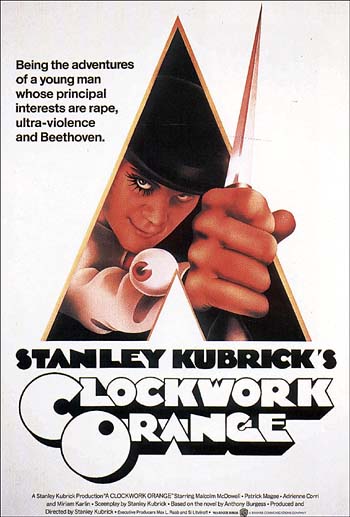
The Guardian had an article today noting the 50th Anniversary of Anthony Burgess’s A Clockwork Orange. Mind you, it is the anniversary of the book not Stanley Kubrick’s iconic movie, which has taken on a life of its own.

I first read the novel when I was seventeen. I read it a month later when I learned there was an edition with a glossary in the back. The glossary didn’t enhance the read that much; everything could be inferred from context  without too much trouble. (I had heard the glossary was only in the American edition, but I am not positive of that.) Anyway, what I remember most was the language: it was playful, edgy, smart, and alive. It was a mixture of joycean word play, street jive, cockney, rhyming, Slavic slang. And it was what set me off reading a lot of Burgess, from the Enderby novels to the majestic Napoleon’s Symphony to the various autobiographies.

The movie was another thing.  I was hitch-hiking across Canada from Vancouver to Toronto and winter was coming on a lot earlier than it came where I was from. It was only the last week of August, but we woke up under a thin sheet of snow in Regina.  Earlier, to stay out of the cold, and since nothing seemed to be coming along Canada’s Highway 1, we went into the town of Regina and bought tickets to see Kubrick’s A Clockwork Orange. It was very stylish and engrossing, with a narrative that I already knew.  I don’t remember now being struck by the ultra-violence. I do remember the music and the Skinner-like experiments and the tragic ending.  

But anyway, today, in their piece on the 50th anniversary of the book, the Guardian said this:

Fifty years ago today, Anthony Burgess published his ninth novel, A Clockwork Orange. Reviewing it in the Observer, Kingsley Amis called the book “the curiosity of the day.” Five decades later there is still nothing like it.

I beg to differ.

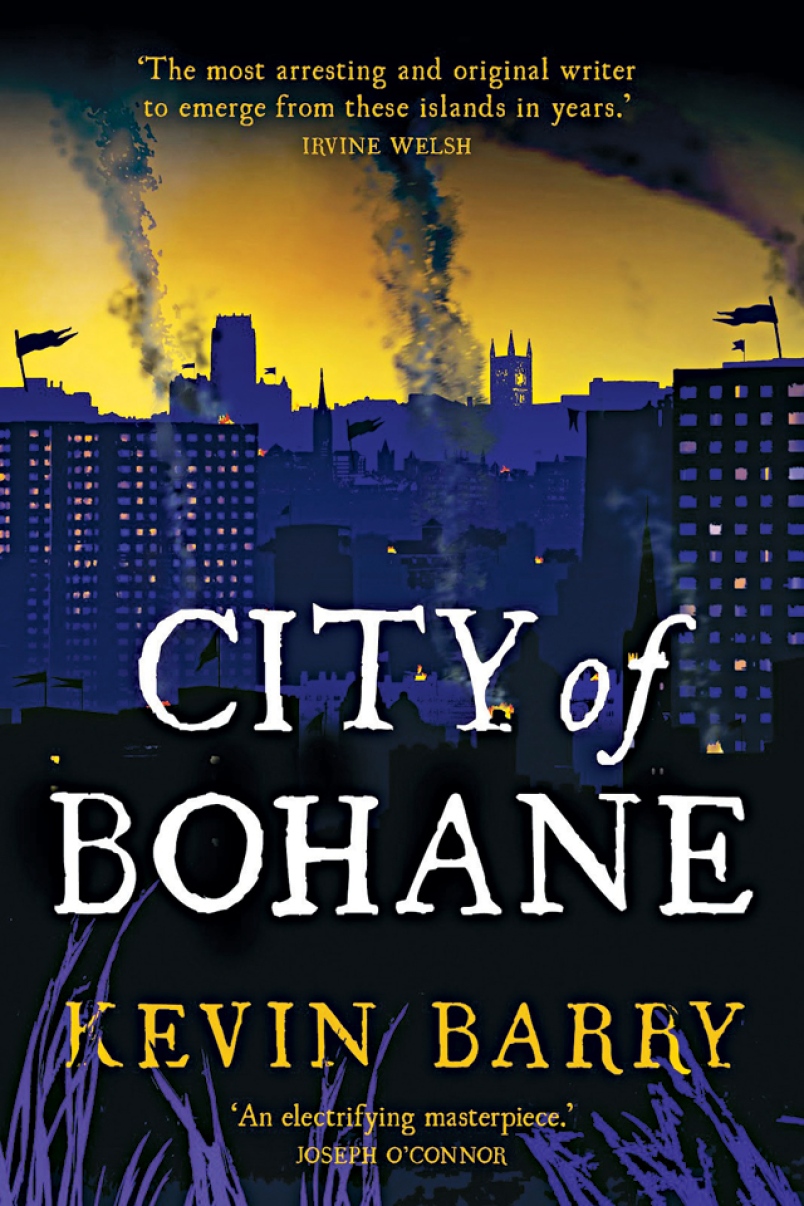
Kevin Barry’s first novel, The City of Bohane is channeling Burgess big time.  Set in a dystopian future, in what could be an unrecognizable Dublin of 2053, it is full of violence, sex, drugs, and turf wars. And again, the language  is at the forefront. Here is Barry describing DeValera Street:
[DeValera Street] leases are kept cheap and easy– bucksee enterprises appear overnight and fold as quick. There are soothsayers,. There are purveyors of goat’s blood cures for marital difficulties. There are dark caverns of record stores specialising in ancient  calypso 78s –oh we have an old wiggle to the hip in Bohane, if you get us going at all. There are palmists. There are knackers selling combination socket wrench sets. Discount threads are flogged from suitcases mounted on bakers’ pallets, there are cages of live poultry, and trinket stores devoted gaudily to the worship of the Sweet Baba Jay. There are herbalists, and veg stalls, and poolhalls. Such is the life of DeValera Street… .

Here again is Barry introducing Girly Hartnett, the 90-year old matriarch of the major family:

Here was Girly, after the picture show, drugged on schmaltz, in equatorial heat beneath the piled eiderdowns, a little whiskey-glazed and pill-zapped, in her ninetieth–Sweet Baba help us–Bohane winter, and she found herself with the oddest inclination.

I always found the world of A Clockwork Orange to be too sterile, too sharp-edged, even the thugs were dressed in sparkling white.  Bohane City is many things, but sterile it is not.  There is a richness of detail, texture, smell. Even in memory, Alex and his droogies seem too slick compared to the denizens of Bohane. For in this dystopic future, the world has not been re-shaped by technology–in fact, technology is surprisingly absent.  There is an elevated train, but no cars. Communication is done face-to-face…and at times angry-face-to-angry-face. Newspaper writers get their stories in pubs or brothels; the hunchback photographer pegs his developing photos in a morbid array across a room.  Although this is the future, it is not one overrun with gadgets!

The violence is real–but somehow not graphic. The economy runs on sex, alcohol, and drugs. There is an outer world, beyond the pale, but it doesn’t intervene, seemingly content to let Bohane run its own violent course.

And it is so, so visual.

Here’s a description of the major characters as they prepare for the momentous battle at the center of the novel:

“Logan Hartnett [the albino leader of the Bohane Trace] suavely walked the ranks and he offered his smiles and his whispers of encouragement. There was confidence to be read in the sly pursing of his lips, and atop a most elegant cut of an Eyetie suit he wore, ceremonially, an oyster-grey top hat.”

“Fucker Burke was bare-armed beneath a denim waistcoat and wore his finest brass-toed bovvers.”

“Jenni Ching carried a spiked ball on a chain and swung it over her head. She wore an all-in-one black nylon jumpsuit, so tightly fitted it might have been applied with a spray-can, and she smoked a black cheroot to match it, and her mouth was a hard slash of crimson lippy.”

“Wolfie Stanners, however, was widely acknowledged to have taken the prize. Wolfie was dressed to kill in an electric-blue ska suit and white vinyl brothel-creepers with steel toecaps inlaid. Four shkelps were readied on a custom-made cross-belt.”

[Macu–Logan’s wife–wore] “a pair of suede capri pants dyed to a shade approaching the dull radiance of turmeric, a ribbed black top of sheer silk that hugged her lithe frame, a wrap of golden fur cut from an Iberian lynx…and…an expression unreadable.”

My god, look at the attention to clothing–not futuristic, Buck Rogers’ one-pieces, but clothing that has been taken from a vibrant past.  It is as if the costume designers from Game of Thrones, Gangs of New York, and My Fair Lady got together to outfit the cast for this rumble.

And what City of Bohane also has that A Clockwork Orange doesn’t  is a love story.  Granted it is a story of disappointed love and jealous love and abandoned love, but the emotions of these characters are real and painful and poignant. For  while Logan Hartnett and his antagonist, the Broderick Gant, may have run the machinery of their town with brutality and violence, they are both bowed when set against the forces of love.

Now there’s something to pass on to Alex and his droogies!

Women Writers and New York City–or all writers and everywhere.

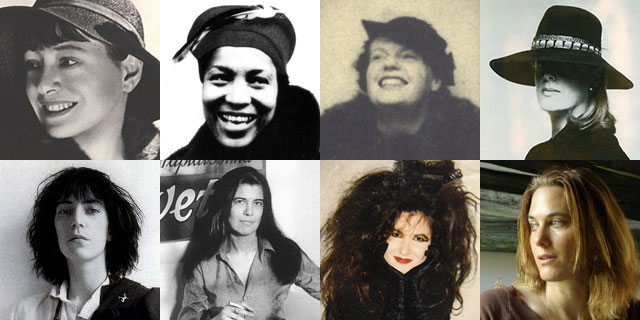
Top row: Dorothy Parker, Zora Neale Hurston, Shirley Jackson, Gael Greene.
Bottom row: Patti Smith, Susan Sontag, Tama Janowitz, Kate Christensen.

I have a niece who is struggling in New York City to make it as a writer…and she is doing pretty well (see my blogroll and click on “Courtney Gillette.”) Nevertheless, it is a struggle. I have a friend whose son Brendan is carving his way as a comic/comedy writer–not the easiest of niches to crack into–and he is making headway. They are just two of thousands who go to NYC with dreams of making it big and –more power to them–they have the drive and determination to do so.  But it is not just New York, it is cities around the world where people intent on making something new, struggle to survive and to get their work out…and hopefully recognized.  So I thought of both of them–Courtney and Brendan–when I read this article this morning.  The article itself is from mid-April, but it is a fun piece highlighting some of my favorite people and writers.

Anyway, here is the article from a site called AWL. It tracks what particular writers arrived New York with before they “made it” and adjusts the value of their belongings and purchases for inflation.  It is a fun piece that ranges from Dorothy Parker and Zora Neale Huston to Patti Smith and Tama Janowitz:

What it Cost Eight Women Writers…

And speaking of Patti Smith, I have been on a Patti Smith kick for over a year now.  One day in December 2010, I actually received three separate copies of her memoir, Just Kids and of course read it in a night and then began giving out copies to everyone. Then I began to reacquaint myself with her music. (Her video singing “Helpless” with Neil Young is powerful.)

Just last week a friend sent me this new Patti Smith video/song. It’s about April and poetry and fools.  Enjoy.

Hugh MacDiarmid, Robert Burns and My Father

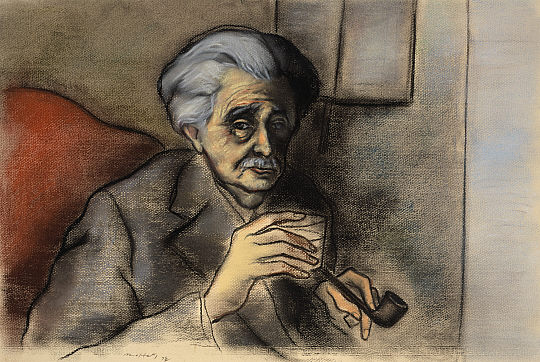
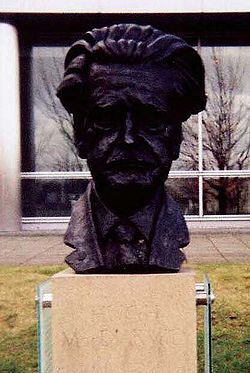
Hugh MacDiarmid

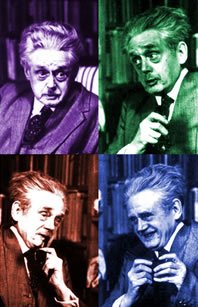
Hugh MacDiarmid times 4

No’ wan in fifty kens a wurd Burns wrote
But misapplied is a’body’s property
And gin there was his like alive the day
They’d be the last a kennin’ haund to gi’e–

Croose London Scotties wi’ their braw shirt fronts
And a’ their fancy freen’s, rejoicin’
That Simlah gatherings in Timbuctoo,
Bagdad — and Hell, nae doot–are voicin’

Burns’ sentiments o’ universal love,
In pidgin English or in wild-fowl Scots,
And toastin’ ane wha’s nocht to them but an
Excuse for faitherin’ Genius wi’ their thochts.

A’ they’ve to say was aften said afore
A lad was born in Kyle to blaw aboot.
What unco fate mak’s him the dumpin’-grun’
For a’ the sloppy rubbish they jaw oot?

Mair nonsense has been uttered in his name
Than in ony’s barrin’ liberty and Christ.
If this keeps spreedin’ as the drink declines,
Syne turns to tea, wae’s me for the Zeitgeist!

Rabbie, wad’st thou wert here–the warld hath need,
And Scotland mair sae, o’ the like o’ thee!
The whisky that aince moved your lyre’s become
A laxative for a loquacity.

from “A Drunk Man Looks at the Thistle” (lines 41-64)
Hugh MacDiarmid (1892-1978)

I got involved with this poem yesterday–a poem that I had long forgotten and had once loved dearly.  A student of a friend of mine got in a bit of trouble with it and an art project he was doing. Just a few bad decisions.

Anyway, he was also out of his depth. The poem is nearly a hundred pages long, close to 3000 lines long, and written in the Scots dialect. In it MacDiarmid is bemoaning the present state of the world ( (“Rabbie, wad’st thou wert here–the warld hath need”) and calling for a certain national identity through a link to the past. And of course, as a early-twentieth century Scots poet, for Hugh MacDiarmid that link is Robert Burns.

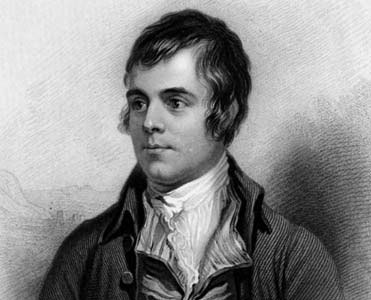
I have always had an affinity for Burns.  We share the same birthday and hit some of life’s milestones at the same time. But my introduction to him was from my father. My father was not a academic man; he had finished high-school and then out to work. But he had always been a wide-ranging and voracious reader.  And he had a extraordinary memory for the poems he had read in school. Even in old age, he could recite poems that he had learned as a youth.  The one I remember most was Robert Burns’ “To A Louse.”  I remember it because it was his way of teaching humility, of teaching his children not to become too full of themselves.  As a child, I loved the poem because it dealt with the humorous situation of spying a louse crawling in the wig of the elegant lady in front of him at church.  Her social airs and superciliousness are punctured by the creature burrowing through her hair, unknown to her but visible to those in the pew behind.

But making fun of the rich lady was not the point.  The lesson my father was offering was directed to us.  Burns ends the poem with a prayer:

O wad some Power the giftie gie us
To see oursels as ithers see us!

How perfect.  How humbling. What an antidote to hubris!

I grew older, life went by, and I began reading seriously on my own. Suddenly, many of the pieces that my dad had recited came back into my life.  And I took to Burns. (Even, his most anthologized–”To A Mouse, on Turning up her Nest with a Plough”–is a plea for empathy and understanding among all creatures, not only between humans, although that too certainly is implied. And it was there that I first recognized my father’s oft recited quote about the frequent ruinations of the “best laid plans.”)

In the section of Hugh MacDiarmid’s poem above, the speaker laments the caricature that has been made of Robert Burns over the years. The Burns’ suppers held around the world, the saccharine versions of “Auld Lang Syne” that punctuate each passing year (and that omit most poignant verses), the iconic being that he has been puffed up as, emptied of all the genius, vitality, politics and love that made him what he was.

Instead, MacDiarmid yearns for that great lover of liberty,  the lover of life, the lover of Scotland. For instance, here is Burns simply singing the praises of his love–and stating that even death would not sever its bond:

Fair and lovely as thou art,
Thou hast stown my very heart;
I can die–but canna part,
My bonie dearie.
(“Ca’ the Yowes,”  lines 20-24)

Here in 1792–70 years before the American Emancipation Proclamation–Burns writes about the anguish of a Senegalese leaving his home on a slave ship for the shores of Virginia.  It is not the politics that are most important here (although they are important) it is the humanizing of a black man in 1792, the compassion and empathy for the slave’s lot. One can feel the slave’s weariness. One can feel his “bitter tear.”

The Slave’s Lament

It was in sweet Senegal that my foes did me enthral,
For the lands of Virginia,-ginia, O:
Torn from that lovely shore, and must never see it more;
And alas! I am weary, weary O:
Torn from that lovely shore, and must never see it more;
And alas! I am weary, weary O.

All on that charming coast is no bitter snow and frost,
Like the lands of Virginia,-ginia, O:
There streams for ever flow, and there flowers for ever blow,
And alas! I am weary, weary O:
There streams for ever flow, and there flowers for ever blow,
And alas! I am weary, weary O:

The burden I must bear, while the cruel scourge I fear,
In the lands of Virginia,-ginia, O;
And I think on friends most dear, with the bitter, bitter tear,
And alas! I am weary, weary O:
And I think on friends most dear, with the bitter, bitter tear,
And alas! I am weary, weary O:

But for me, it is the love poems that stand out. While some here in the 21st century might bash his promiscuity,  I see it as his inordinate zeal and love of life. I believe the truth of his love poems–they are not simply lines to bed a willing lass–and I see them as some of the tenderest poems ever written. Here is one in which he has been played false…and his heart is breaking:

Ye banks and braes o’ bonnie Doon

Ye banks and braes o’ bonnie Doon,
How can ye bloom sae fair!
How can ye chant, ye little birds,
And I sae fu’ o’ care!

Thou’ll break my heart, thou bonnie bird
That sings upon the bough;
Thou minds me o’ the happy days
When my fause Luve was true.

Thou’ll break my heart, thou bonnie bird
That sings beside thy mate;
For sae I sat, and sae I sang,
And wist na o’ my fate.

Aft hae I roved by bonnie Doon
To see the woodbine twine,
And ilka bird sang o’ its love;
And sae did I o’ mine.

Wi’ lightsome heart I pu’d a rose
Frae aff its thorny tree;
And my fause luver staw the rose,
But left the thorn wi’ me.

From a boy in trouble in a friend’s school, to a poem by Hugh MacDiarmid, to Robert Burns, to my dad.  The mind shifts easily from one thing to another. This is not a scholarly piece–my dad would find no worth in that–but a post about things I love and loved.

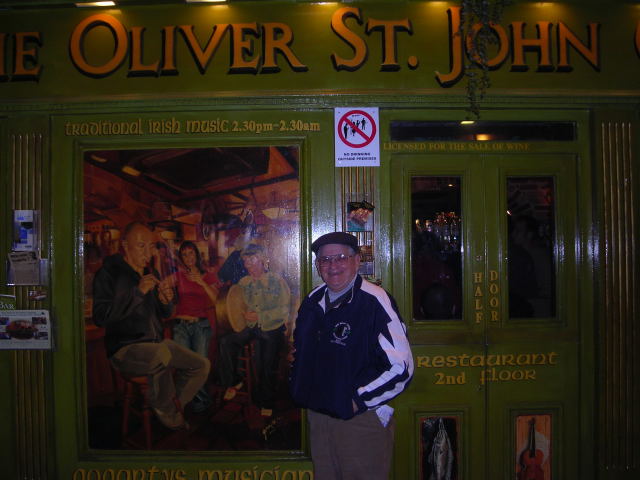
My father outside a pub in Dublin

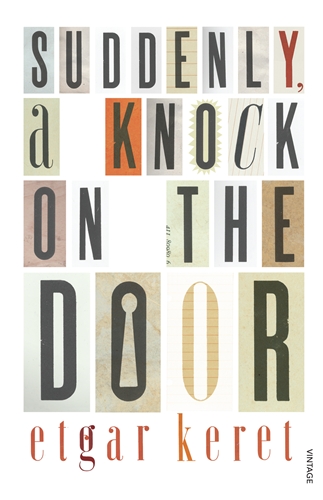
Book Review: Suddenly, A Knock on the Door by Etgar Keret

There is a weird zeitgeist about my reading these days.  I will pick up a book that I am unfamiliar with, because of a friend’s recommendation or a short review in the Sunday papers, and then all of a sudden I am seeing it everywhere.  I began reading Etgar Keret’s collection of short stories, Suddenly a Knock on the Door, after seeing it reviewed in the Sunday NYTimes two weeks ago (15 April). While I was half way through it, I was tidying up the house when a magazine from back in February fell open to a review of the book announcing its upcoming publication. I had read the review back then, but had forgotten completely about it. And then again on Wednesday in the Metro–the free paper given to commuters each day and hardly a go-to read for  literary suggestions–the book was advertised on the front page and reviewed inside. On Friday, a co-worker told me the library had called to tell him the book he had on hold had arrived: Suddenly a Knock on the Door.

What is with all the buzz?  Keret’s publicists must be very good.

And to a large degree it is worth it.  Keret’s thirty-seven stories (translated by three people) are short, zippy, and fun.  They straddle the world between stark realism (suicide bombers and bratty children) and magic (talking fish, pissed-off angels). The subject matter often seems to be fiction itself–the fictions of the literary mind and the fictions of liars.

The collection is bookended by two stories in which they author is forced to write a story in front of us.  In the final story, he is being filmed by German Television and they want to film him writing, want to record the actual creative process. In the first, he is being forced by three men–a terrorist, a poll taker, and pizza delivery man–who have invaded his home and demand a story. Violence is threatened if he doesn’t come through with a story they approve of.  When the narrator begins telling a story about what is actually happening at the time–the most current form of realism–the pizza delivery man demands something more magical: “Things are tough,” he says. “Unemployment, suicide bombings, Iranians. People are hungry for something else.”

And something else is what Keret gives us.

In one story, “Lieland,” a man is pulled into a world where all his past lies have come alive. The fabrications he has made up throughout his life in order to deceive his mother, his employers, his girlfriends all confront him in a world that is harrowing and freeing.  In “Unzipping,” a woman, tired of her current lover, finds a zipper in the man’s mouth, and unzips it to reveal a new person inside, who is indeed a different sort of lover. In still another, a woman has only slept with men named Ari–twenty-eight of them previously and now her current boyfriend and the landlord.

Yet all is not silliness.

The number of suicides and suicide bombings in the stories are many. One beautiful story, “Not Completely Alone” begins “Three of the guys she dated tried to commit suicide. …One of them even succeeded.”  The last paragraph begins “Four of the guys she dated tried to commit suicide. Two of them succeeded.”  It’s only after going back to read the first sentence that we realize the narrator is the fourth guy–and the second success. In another, a man’s life is completely changed after emerging from a extended coma that was caused by a  jumper landing on his head after falling eleven stories to his death.  In another story “Joseph,” a smarmy producer in a cafe boasts about his talent for reading people but is not clever enough to spot the sweating man with the bomb strapped to him.  After a discussion of final words by those who die a violent death, we learn of one bombing victim whose last words are the bathetic “Without cheese” as he orders a kosher “cheeseburger” in the story “Cheesus Christ.”

In “Pick a Color,” a black man is beaten badly when he moves into a white neighborhood. In the hospital, he falls in love with the white nurse who tends to him, and, whom, confined to a wheelchair, he marries  in a ceremony presided by a Yellow priest whose family also had been beaten because of their color. When the white nurse is murdered by brown men, the man turns to the Yellow priest for explanation, explanation of “the God who loves you and wishes you all the best.” When that God shows up, in a wheel chair like the black man, the explanation that God gives is not what any of us probably expected.

In relating these stories here , they seem much darker than they are upon first reading. The stories do zip by, some of them only a page and a half long.  There is much “smoke-and-mirror” playing with reality, turns with truth and illusion.  There is banality, as there is always in life, and there is beauty. A young son gives animal names to the prostitutes who visit the old man on the floor above…a dying man gets his dying wish for peace on earth…a mourning widow comes to some closure through cooking in her diner.

Nathan Englander, in the title story of his collection What We Talk About When We Talk About Anne Frank, has a character say that the difference between Israel and Miami is “the space” –that there is none in Israel.  In Etgar Keret’s collection (in which Englander translated seven of the stories), space is also the focus. Ketger looks closely at the spaces between lies and truth, between life and illusion, between hope and reality.  The stories are clever, witty, and fun. There are enough “wow” moments, enough times when you breathe out in relief or exasperation, and plenty of times when you simply smile knowingly to yourself.

In the blurbs on the paperback edition, there are statements by Salmon Rushdie, Amos Oz, Yann Martel.  But my favorite is by Gary Shteyngart, author of Super Sad True Love Story. Talking about Keret’s novel The Nimrod Flipout, Shteyngart calls it “the best work of literature to come out of Israel in the last five thousand years… .” That’s quite a claim.  Maybe I’ll see if it’s in our library.