Cinnamon Girl, St. Jack’s and the White Goddess

jackclubs

A few years back, after a particularly mind-numbing conference, a number of colleagues and I repaired to a little hole in the wall on 3rd Street called St. Jacks. The place, hung with erotic black and white photos and glazed with a patina of dust and grime, look as if it were waking up after a rough night. There were no other patrons and, if I remember right, the “kitchen” had been closed for a very long time.

The place was named after a character in the eponymous novel by Paul Theroux. (It was later made into a film by Peter Bogdanovich which has a weird history in itself.) At the time, I was reading Robert Graves The White Goddess, his archeological/anthropological/mythological treatise on pre-Grecian religion, primarily the matriarchies of early civilizations that spread throughout Northern Europe and the British Islands from the south.
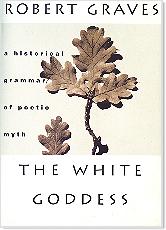
Robert Graves The White Goddess

Robert Graves’ The White Goddess

Several of my colleagues filled the booths, and four or five of us sat at the bar. The bartender’s name was Cinammon. And she was good. In fact, she is perhaps the best bartender I’ve ever encountered. I put the book I was carrying on the bar, and preceded to talk to my colleagues and to Cinnamon.

Yes, her mother had named her after Neil Young’s “Cinnamon Girl.”  And yes, she asked me about the book, but no, she had never read Robert Graves, nor had ever heard of him. After a while, the others wandered out, but my friend Jim and I stayed for a few hours more. The two of us–and Cinnamon–talked about the things we always do when sitting at a bar: music, film, and books. It was a good day.

But now comes the amazing part. We attended a similar conference, one year and a day from that original conference. And like the first one, we all went to St. Jack’s after the conference. And Cinnamon was still tending bar. I hadn’t been in the place since that first time, a year ago. But when I sat at the bar and ordered my pint she asked me if I had finished The White Goddess.

Now, a good bartender should remember the drinks of his regular customers. A very good bartender will remember the drink of the occasional customer. But it is an extraordinary bartender who remembers not only the drink of a customer whom she had served only once a year ago, but remembers the book he was reading at the time.

Jim and I stopped a few more times after that, but Cinnamon left a short while after, left to become a legal secretary. It is a great loss to the bar-tending profession. And St. Jack’s itself is now gone (It had once got in trouble with the Thai government for using an image of the King of Thailand on an advertisement that ran in one of the free city papers. How they came across it is a wonder? Much of the novel/film St. Jack takes place in Singapore and what was then Siam.)  And I have never warmed to the new place.

And for various reasons–I had just purchased James George Fraser’s The Golden Bough which reminded me of The White Goddess, and I have been lately banging out “Cinnamon Girl” on the guitar whenever I get a moment to myself–I have been thinking about St. Jack’s, about The White Goddess, and about Cinnamon.

So here, in memory of the greatest bartender I ever met is Neil Young singing “Cinnamon Girl.”  And as a treat, it is not his familiar fuzz-driven guitar version of the song, but a different version of Neil by himself on the piano from his upcoming album “Live at the Cellar Door.” Enjoy:
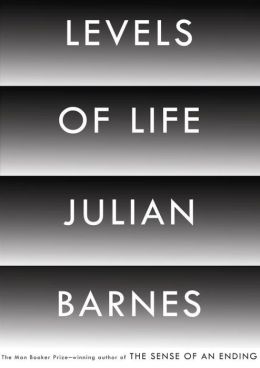
Book Review: Levels of Life by Julian Barnes… a grief both honest and beautiful.

levels of life  Julian Barnes latest work is a slim, tripartite volume that encompasses a 19th century history of ballooning and the beginnings of portrait photography, a semi-fictional account of the love affair between an English “balloonatic” and the divine Sarah Bernhardt, and a searingly honest examination of the author’s own grief upon the loss of his wife, Pat Kavanagh, in 2008.

As always, Barnes writing is careful, thoughtful, and precise. His insight into the heights of ballooning and its accompanying crashes, the flights of romance and the desperation of rejection, and the comfort of love and the devastation of its loss are intelligent, beautiful, and memorable. It is the type of book that one reads with a pencil nearby so to copy the phrases that so often hit their marks squarely.

In the first section, “The Sin of Height,” Barnes describes the flights of three different balloonists over the course of nineteen years–all of the passengers whose paths cross at times throughout the years. The first is Nadar the French photographer, whose balloon basket carried a developing lab and who was one of the first to ever give us aerial photographs, albeit very vague and poor ones. (moving from Nadar’s early aerial photographs to the Earthrise photos that were taken on the first trip to the moon a century later, Barnes writes beautifully about our tiny planet, swirling with gasses and storms and blue beauty.)

Nadar did however go on to be a great portrait photographer, and his photographs of the actress Sarah Bernhardt are the first we have of her. She too is one of the balloonists that Barnes features. The third balloonist, Fred Burnaby is a English military man–a member of the Royal Horse Guard–an adventurer, and a noted bohemian.  It is a history that captures the excitement and controversy of the modern age–encapsulated by the birth of photography, electricity, and aviation.  Victor Hugo believed that flight would bring about democracy while Balzac believed that photography steals a layer of the sitter’s persona.

It is Burnaby’s romance with Sarah Bernhardt that makes up the second section, “On the Level.” Reading like part of a novel, this section depicts Burnaby–very much a man of the world–now very much in love and very articulate about how he feels. He is aware of the dizzying heights to which Bernhardt has taken him, and, as a ballonist, he is always aware of the heights from which he will fall when she releases him. His dispassionate accounting of his heartbreak, his pain, his desolation is telling, but despite the level-headedness of his account we never doubt the intensity of the love that he experienced.

But it is the third and longest section–“The Loss of Depth”–that is the most moving, that often feels like a punch in the heart.  For in it, Barnes examines his own grief upon losing his wife.  “Thirty-seven days from diagnosis to death” is the quickness with which this blow was dealt, and Barnes delineates his pain, his grief, his loneliness with extraordinary honesty and bravery and clarity. It is a exceptional feat, this incise, self-examination of utter loss, put down in words.

While the section surprises us, coming as it does after the previous two sections, in a way he was preparing us for it as well. Burnaby’s meditation on the loss of love, the discussion of crashing being part of the risk of rising, the uxorious care that Nadar took of his stroke-stricken wife, all these point to the marriage of Barnes and Pat Kavanagh.

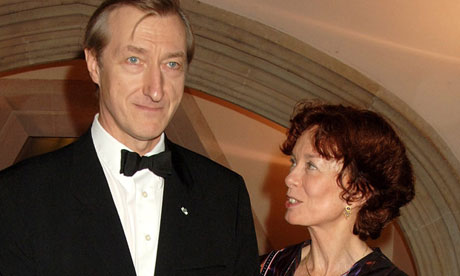
Julian Barnes with his wife, Pat Kavanagh in 2005. Photograph: Dave M. Benett/Getty Images

Julian Barnes with his wife, Pat Kavanagh in 2005.
Photograph: Dave M. Benett/Getty Images

He discusses the reactions of those he knows, the kind but often inept remarks that friends attempt, the plans they suggest to help him “through it.”  He discusses his daily patterns, emptied now of half the players. He considers suicide, but checks that because if his wife lives in his memory, killing himself would be killing her a second time. He examines the Orpheus legend and takes refuge in meaningless soccer games and overly-emotional opera. And through this all he continues to miss his wife terribly and daily, and the pain of her absence seems never to go away.

But at no times is this meditation maudlin. Indeed, I found myself thinking what a wonderful thing this would have been if he could have shown it to his wife when she was alive. But then, he wouldn’t have had the wrenching grief that allowed him to write it.

Levels of Life is more than a beautiful book. It is powerful and loving. Intelligent and thoughtful. Honest and real. Perhaps after reading it, we should then ask our partners to read it as well, to let them know now what they mean to each of us and how their absence would affect us.

Book Review: The Changeling by Kenzaburo Oe

Kenzburo Oe

Kenzburo Oe

My knowledge of Japanese literature is very limited. I know a few poets–mainly ancient masters of the haiku–and I knew two novelists: Yukio Mishma, who many of my generation would know as the author of The Sailor Who Fell From Grace with the Sea,  and the contemporary novelist Haruki Murakami, whose critically acclaimed novels such as Kafka on the Shore, Norwegian Wood, and The Wind-up Bird Chronicles have been international best sellers as well.

Well this summer, I was introduced to a new one–Kenzaburo Oe.  (It is evidence of my ignorance that Kenzaburo Oe won the 1994 Nobel Prize for Literature, but nevertheless unknown to me.)  I was introduced to him by a wonderful writer, reader, traveler and photographer who writes the erroneously named blog francescannotwrite and who spoke about picking up the novel in Geneva last year, having known nothing about it or the author either. Her comments on it stressed the intelligence of Oe and her fascination with the plot.  And it sent me searching for it.

She was right on both accounts.

The Changeling tells the story of an aging writer Kogito whose boy-hood friend is now his brother-in-law and a giant in the Japanese film industry. The brother-in-law, Goro, had once sent Kogito a tape-deck with a collections of tapes that he had made. These first tapes were of overheard (and recorded) conversations, eavesdropped moments, unsettling sounds that Goro collected to help Kogito put out of mind the vindictive journalist who has been hounding him.  Fifteen years later, Goro sent him a new collection of tapes, tapes that were, in his voice,  lectures, rants, philosophical  queries, friendly advice and mentoring, and most importantly–the announcement of his suicide.

Book cover for The Changeling

Book cover for The Changeling

In fact, it is on an early tape that Kogito learns of his friend’s death:

“So anyway, that’s it for today–I’m going to head over to the Other Side now,” Goro said casually. …”But don’t worry,” Goro went on, “I’m not going to stop communicating with you.”

And the rest of the tapes are Goro’s communication–from the Other Side. Each night Kogito listens, pauses the tapes, responds, pushes play again, responds again. In fact, each night after Goro’s death, Kogito has full-out conversations with his dead friend. Conversations that are filled with intelligence, logic, debate and argument and that are seeped in a great deal of memory.

After a while, Kogito’s wife–and Goro’s sister–asks him to stop. His loud conversations are upsetting both her and their disabled son.

Kogito does stop and accepts a guest teaching spot in Berlin. But Goro speaks to him in other ways there as well. There is a mysterious woman who claims to have known him, claims to know the real reason for Goro’s suicide. (The Japanese tabloids have been running with a scandalous story.)  But most importantly there are Kogito’s memories, which, alone in Berlin, he can recount, examine and analyze with much greater attention to detail.  Memories of Goro’s life, of his own, and of the two’s together.

We learn that Goro had been attacked and badly beaten by the henchman of Japanese organized crime (he had made an unflattering film about them), but then we learn that the left-leaning Kogito had years earlier been attacked  several times by right-wing groups. Goro’s attack made international news and he is fighting the thugs in court; Kogito never reported his assaults.

We also learn a disturbing secret of the two men’s shared childhood.  A secret that–when faced–shines much light on Kogito’s memories and the inward journey that Goro’s suicide precipitated.

Frances, of “francescannotwrite” mentions the intelligence with which the novel is imbued. And she is right.  The conversations between Goro and Kogito, one dead and one alive, are heady and range from art and politics to society and life, from French literature and Japanese gangsterism to the War and their childhoods.  In his tapes, Goro seems–from “the Other Side”–to be pushing his friend to a clarity that his life requires.

And it is a wonderful read. Like the art of Hokusai, where there are minimal lines but great power, Oe’s story is rich and dense and intelligent but it never feels that those things are in the foreground. The power is there in the conversations, the allusions, the references, but In the foreground is the fascinating history of Kogito and his dead friend.

It is a memorable story and a memorable novel.  So now, I need to find some others.

Truth, Fiction, and Bigger Truth

A few days ago I received a message from my friend Gerry Bracken who started off with the words “I rarely read fiction, but I picked up a copy…” And he recommended a detective novel based in L.A. to where I was then flying.

Maria Popova's Brain Pickings

Maria Popova’s Brain Pickings

Yesterday, I was browsing through Maria Popova’s blog, “brain pickings,” and I clicked on her bookshelf. (http://bookpickings.brainpickings.org/) Her site routinely discusses books, authors, and readers. And the titles she list are predominantly non-fiction: titles that I jot down and often pick up at the library.

And then last night, I read the ExPlore twitter posting (also managed by Maria Popova). It listed Bill Gates’ reading list for the Summer of 2013. The list is daunting, fascinating and wide-ranging, but except for a single novel, it was all non-fiction. (Click here to see list.)

What is with this reluctance to read fiction? Are we wasting our time? Or more importantly, am I wasting my time.

There once was a time, when the reading of fiction–particular of novels–was considered by many as a harmless past-time for idle girls and not the pursuit of serious, intelligent people. But that was 200 years ago. In the interim, fiction has taken on a bit more gravitas, a bit more legitimacy.

At times, however, I feel haunted by that ancient attitude. And at other times, I feel deliciously guilty for sinking into a novel. Shouldn’t I be learning something? Shouldn’t I be boning up on something? Refining what I know? Discovering new ideas?

Well, I don’t know.

A while back, I ghostwrote a book on the history of Ireland. I researched assiduously, read primary and secondary sources, talked and listened to people and their stories, pored over all the news reports, particularly those on the current events that were unfolding before my eyes.

books.transatlantic_1

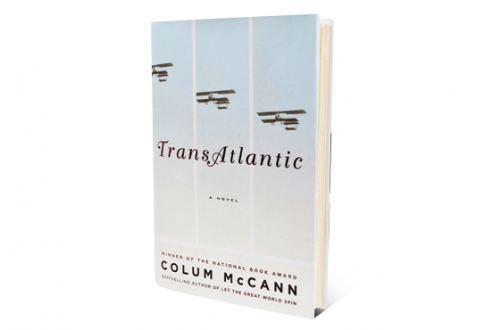
Colum McCann’s true fiction TransAtlantic

But I know I never got near the truth that I got in reading Colum MCCann’s novel Trans Atlantic. The section(s) on George Mitchell and the Irish peace negotiations, for instance, was better history than I could have ever gleaned in a biography or history book. There was life in those pages, in the account of Mitchell’s days in Belfast, on his dealings with the myriad politicians and organizations, in his observations of the ordinary people and the details around him. Did everything happen the way McCann described it? Probably not. Was it true? I believe very much so. A bigger truth than the historians can share.

I have learned much from fiction–I have learned about people: people in drastic circumstances, in simple ordinariness, in great passion, and in wrenching heartbreak. I have learned about pride and hubris, of great loyalty and great betrayal, of sacrifice and of love. I have met more people in the pages that I have read than I ever could have in the life that I led.

And, in a way, after all, that is what we’re here for–to learn about the wide variety of fellow human beings who share our moment in time and space.

I need to turn my back on this guilt about reading fiction.

Book Review: TransAtlantic by Colum McCann–the world continues spinning.

National Book Award Winner, Colum McCann

National Book Award Winner, Colum McCann

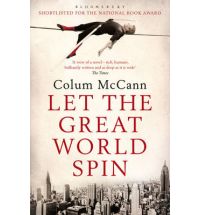
Around this time last year, a friend of mine lent me a paperback copy of Colum McCann’s Let the Great World Spin. It was nothing short of masterful, an eloquent novel filled with beauty, wit, humor, and wisdom–and a helluva story as well. A variety of personal histories are threaded around the dazzling 1974 tight-rope walk of Philippe Petite between the World Trade Towers and set against the more resonant chapter in the Towers’ history, with the tragedy of 9/11 looming in the background. The writing was dizzily beautiful, every page an extraordinary read.let the great world spin

When I returned to work at the beginning of the school year, I learned that many of my colleagues were also reading McCann’s novel. And each of them held the same high opinion.
Now, this summer I was excited for the release of McCann’s latest novel, Trans Atlantic. And my anticipation was well worth it.
Like the previous work, McCann’ new novel is steeped in history, although this work stretches from 1847 to 1998 and concerns three separate stories of historic figures who have traveled across the Atlantic.
The novel begins in 1919 with two pilots, Alcock and Brown, both veteran RAF flyers, about to embark on the first transatlantic flight. The two leave from Newfoundland for Ireland, with a thermos of tea, a few wax-papered sandwiches, a load of mail, and a lot of gumption. At one point, close to their end point then get caught in an enormous cloud. They lose their perspective, not knowing what’s up or down, what’s left or right, The only way to survive is to go into a spin–a dangerous thing in itself. But the ultimate fly out and land in a bog field in Galway. The soft earth swallows the nose of their plane.
books.transatlantic_1
In fact, “spinning” is a theme that plays greatly in this book–seemingly carrying on a theme outlined in the last novel.
The second story comes seventy years earlier, and Frederick Douglas, the escaped slave, has traveled to Ireland to promote his book. (Although he had tried to book first class passage, he had been threatened and made to sleep in steerage.) In Ireland, however, he is feted and adored by the Anglo-Irish; he gives speeches to large audiences, garners great donations to send home to the abolitionist movement and his book sells well. But he too feels he is spinning. At one point, he even refers to himself as a tightrope walker (he says “funambulist”–I had to look it up.) Again we are echoing the tropes of the last novel.
Douglas is “spinning” because while he is being celebrated for his passion for equality and the end of slavery in America, he witnesses the utter horror of the starving Irish, starving while rivers of food, livestock and goods are exported to the rest of the British Empire. (Ireland led the British Empire in beef exports during the years of the potato famine!) It is the beginning of the potato blight, and Douglas is greatly affected by what he sees–the men whose faces are brown from eating bark, the woman whose arms are like ropes asking them to take care of her dead infant–affected by the disparity between the Anglo overlords and the downtrodden Irish.
On stage, he meets and joins the great liberator, Daniel O’Connell, but when he later expounds O’Connell’s beliefs at table, his host pulls him aside and tells him not to “bite the hand that feeds him.” Douglas’ tightrope-walk is to embrace justice and freedom for his people, while keeping silent about the horrors of Ireland in the 1840s. The one will bring funds and awareness to the abolitionist movement back home; the other would dry those funds up. It is a dizzying conundrum.
The third story takes place in 1998 and follows George Mitchell as he jets back and forth across the Atlantic negotiating what would become the Good Friday Peace Accord. Mitchell has been picked by President Clinton to lead this historic conference, and, aside from the constant jetting back and forth, he feels his head spinning from the various participants in the process: the separate governments, the various paramilitary organizations, the political parties, the loyalists, the nationalists, the Gaels, the Unionists, etc.
Here is the world that Mitchell is trying to straighten out, trying to stop from spinning further out of control:
The Battle of the Boyne. Eniskillen. Bloody Sunday. There was a clue in every detail. Gary was a Prod. Seamus was a Taig. Liz lived on the Shankill Road. Bobby on the Falls. Sean went to St. Columba’s. Jeremy to Campbell. Bushmill’s was a Protestant whiskey. Jamesons for Catholics. Nobody drove a green car. Your tie was never orange. You went for holidays in Bundoran or you went to Portrush. Fly you flag. Pick your poison. Choose your hangman.
Added to this, the ex-senator, is an old father. At sixty-four, his son is only five months old. Talk about your head spinning. In the five months of his son’s life, Mitchell has been home less than twenty days–his transatlantic treks becoming more and more urgent. (Mitchell did this for two years and received zero salary, just expenses.)
All three stories–like the stories in Let the Great World Spin–are threaded together in a marvelous tapestry of history and generation, of perspective and connection. Four generations of women–from the scullery maid who met Douglass in 1846 and emigrated on a coffin ship to America to her great, granddaughter shaken but unbowed by the Troubles that George Mitchell is striving to repair–weave their story through the historic narrative.
And the language is exquisite. The streets of New York, the light on the town of Cove, the sky above the Atlantic, the horrors of a Civil War field hospital, the ice fields of Minnesota, all are described with details that are both lyrical and true. The inner and outer lives of both the historic personages and the fictional characters are drawn with verisimilitude and generosity. And the story itself is affirmative and moving, profoundly moving.
In an NPR interview after Let the Great World Spin won the National Book Award, McCann implied that he now thinks of himself as a New York writer. That may be so. But the transatlantic tug is a strong one, and his Irish way with words is very much still serving him well.
Find the book and read it. It is that good.

Quote of the Week #13: July 21, 2013

illustration 2012 jpbohannon

illustration 2012 jpbohannon

“If my books had been any worse, I should not have been invited to Hollywood, and if they had been any better, I should not have come.”

Raymond Chandler

Quote of the week # 12: July 14, 2013

illustration 2013 jpbohannon

illustration 2013 jpbohannon

“After so many years, I’ve learned that being creative is a full-time job with its own daily patterns. That’s why writers, for example, like to establish routines for themselves. The most productive ones get started early in the morning, when the world is quiet, the phones aren’t ringing, and their minds are rested, alert, and not yet polluted by other people’s words. They might set a goal for themselves — write fifteen hundred words, or stay at their desk until noon — but the real secret is that they do this every day. In other words, they are disciplined. Over time, as the daily routines become second nature, discipline morphs into habit.

“It’s the same for any creative individual, whether it’s a painter finding his way each morning to the easel, or a medical researcher returning daily to the laboratory. The routine is as much a part of the creative process as the lightning bolt of inspiration, maybe more. And this routine is available to everyone.

“Creativity is a habit, and the best creativity is a result of good work habits.”

Twyla Tharp, The Creative Habit

Movie Review: Hannah Arendt dir. by Margarethe von Trotta

illustration 2013 jpbohannon

illustration 2013 jpbohannon

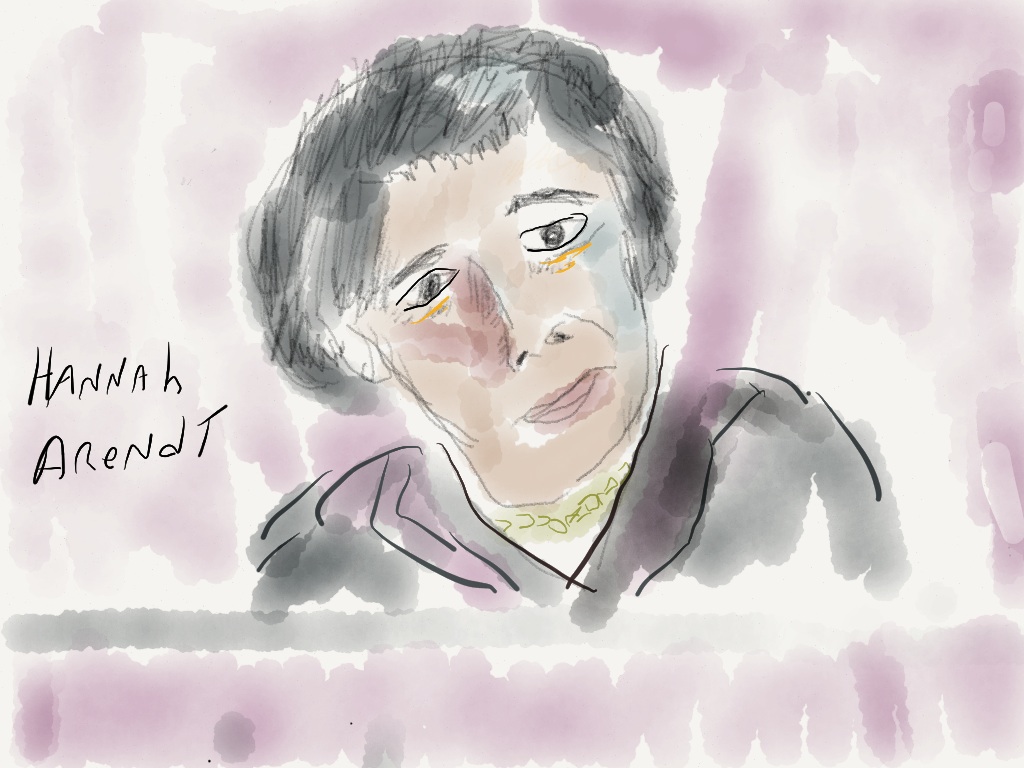
The philosopher, political theorist and writer, Hannah Arendt has received a thoughtful and deserving biopic from director Margarethe von Trotta, in her eponymous film, Hannah Arendt. The film’s intelligence reflects the life of the mind that Arendt lived–and an honest and hard intelligence at that.  Concentrating on the period when Arendt covered the Adolph Eichmann trials for New Yorker magazine–and the fury that it unleashed– it shows Arendt resolute in her thinking, uncolored by prejudice or sympathies.

Her coverage of the Eichmann trial ended with these words, this pronouncement:

Just as you [Eichmann] supported and carried out a policy of not wanting to share the earth with the Jewish people and the people of a number of other nations—as though you and your superiors had any right to determine who should and who should not inhabit the world—we find that no one, that is, no member of the human race, can be expected to want to share the earth with you. This is the reason, and the only reason, you must hang.

♦       ♦      ♦      ♦      ♦      ♦      ♦      ♦

Arendt’s biography is well know.  Born into a secular Jewish family, she studied under Martin Heidegger with whom she reportedly had a long affair.  Her dissertation was on Love and Saint Augustine, but after its completion she was forbidden to teach in German universities because of being Jewish. She left Germany for France, but while there she was sent to the Grus detention camp, from which she escaped after only a few weeks. In 1941, Arendt, her husband Heinrich Blücher, and her mother escaped to the United States.

From there she embarked on an academic career that saw her teaching at many of the U.S.’s most prestigious universities (she was the first female lecturer at Princeton University) and publishing some of the most influential works on political theory of the time.

♦       ♦      ♦      ♦      ♦      ♦      ♦      ♦

Hannah-ArendtBut the film, concerns a small time period in her life–but one for which many people still hold a grudge.  The film begins darkly with the Mosada snatching Eichmann off a dark road in Argentina. Back in New York City, Arendt (Barbara Sukowa) and the American novelist, Mary McCarthy (Janet McTeer) are sipping wine and gossipping about the infidelities of McCarthy’s suitors.  Even genius can be mundane–perhaps a subtle reference to Arendt’s conclusions from the trial.  When news of Eichmann’s arrest–and trial in Israel–is announced, Arendt writes to William Shawn (Nicholas Woodeson) at the New Yorker, asking if she might cover the trial for the magazine. Shawn is excited; his assistant, Francis Wells (Megan Gay,) less so.

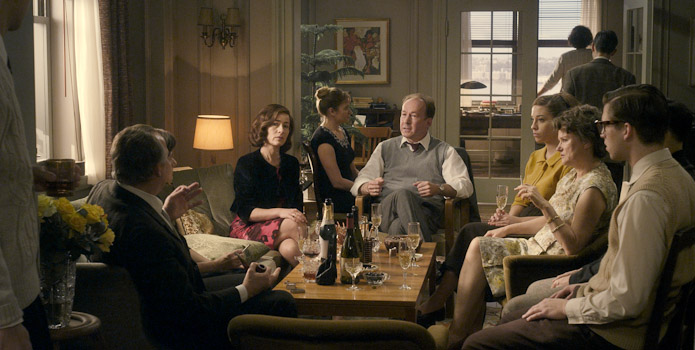
Of course, the trial–and Arendt’s commission to follow it–is fascinating and controversial and we listen in on Arendt and her husband and their circle of friends as they debate and argue and opine. Aside from Mary McCarthy and the head of the German department at the New School where Arendt is teaching, the guests at Arendt’s apartment are all friends from Europe, German-Jews who have escaped the Shoah/Holocaust. Listening to their different conversations is fascinating and electrifying.  This is a movie about “thinking.”

Conversing in Arendt's apartment.

Conversing in Arendt’s apartment.

In Israel, Arendt meets with old friends, friends who remember her argumentative spirit, and stays with the Zionist, Kurt Blumenfeld. From the outset, one sees that Arendt is not thinking along the same lines as the masses following the trial.

“Under conditions of tyranny it is much easier to act than to think.”

Hannah Arendt

At the trial, there is a telling moment, when Arendt watches Eichmann in his glass cage sniffling, rubbing his nose and dealing with a cold. It is then, a least in the film, that she comes to understand that this monster is not a MONSTER. She sees him as simply a mediocre human being who did not think. It is from here that she coins the idea of the “banality of evil.”

Upon returning home–with files and files of the trial’s transcripts–her article for the New Yorker is slow in coming. Her husband has a stroke, and the enormity of what she has to say needs to be perfect.

When it is finally published, the angry reaction is more than great. The critic Irving Howe called it a “civil war” among New York intellectuals. (Just last week, the word “shitstorm” was added to the German dictionary, the Duden, partly due to Chancellor Angela Merkel’s use of the word to describe the public outcry she faced over the Eurozone’s finacial crisis. It is an apt term for what occurred upon publication of Arendt’s coverage.)

It is this extraordinary anger towards Arendt–and her staunch defense–that makes up the final moments of the film. In the closing moments, Arendt speaks to a packed auditorium of students (and a few administrators). She has just been asked to resign, which she refuses to do.  These are her closing words:

“This inability to think created the possibility for many ordinary men to commit evil deeds on a gigantic scale, the like of which had never been seen before. The manifestation of the wind of thought is not knowledge but the ability to tell right from wrong, beautiful from ugly. And I hope that thinking gives people the strength to prevent catastrophes in these rare moments when the chips are down.”

This is, more than anything else, a film about thinking.

♦       ♦      ♦      ♦      ♦      ♦      ♦      ♦

The extraordinary anger shown in the film is still felt by many today and, in fact, seems to have colored some of the reviews that I have read and heard. Some of these reviewers seem to be reviewing the life and work of Arendt and not the film of Margarethe von Trotta, for von Trotta’s film is a unique, masterpiece. It is more than a biography of a controversial thinker…it is a portrait of thought itself.  Arendt attempts to define “evil”–certainly an apt exercise at the time. She defines it–to her friends, to her classes, to her colleagues, and to herself–and finds that it is not “radical” as she once had posited. It is merely ordinary.  Goodness, she sees, is what has grandeur.

The film, Hannah Arendt, is well worth seeking out. It is thoughtful, provoking, controversial, and, at times, even funny.  You can’t ask for much more for the price of a movie ticket.  As always, here’s a trailer:

Dylan’s rhythms and the 13-year old poet

dylanSo, out of the blue on Saturday morning I receive a poem by a young boy, Domenic Feola, thirteen years old.  I don’t know him, never taught him, probably never will.  He is a suburban kid who runs cross-country at one of the city parks. But his ear is impeccable and his language is crisp.  And the rhythm of his poem is infectious (until the last couplet where in trying to sum up his feelings he loses is footing) .

             The City

     by Domenic Feola

Bright lights, fast trains
Cold nights, heavy rains
Dirty air, bus fare
Pigeons flying everywhere
Crowded streets, traffic jams
Music beats, grand slams
Bugs fly, kids cry
No stars in the night sky
Noisy bars, littered trash
Big cars, no cash
Garbage smells, huge hotels
In the shadows, spiders dwell
Scary strangers, taxi cabs
Hidden dangers, science labs
Museums of art, cherry tart
Broken beat up shopping carts
If you say I’m biased, I would agree
I think the suburbs are more for me.

Pretty sophisticated for a thirteen-year-old boy. Or for anyone, for that matter.  Great imagery, great confidence and impressive rhythm.  If I could, I would talk to him about the rhythm. That is the strength of the poem–but there are a few times where it needs to be tightened, where some minor tweaking would make it even better.  But it is impressive nevertheless.

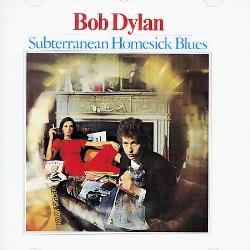
Album Cover Subterranean Homesick Blues

Album Cover Subterranean Homesick Blues

In fact when I first read the poem I could hear Dylan–specifically “Subterranean Homesick Blues” –in the rhythm. Here’s the second verse from Dylan’s song:

Maggie comes fleet foot
Face full of black soot
Talkin’ that the heat put
Plants in the bed but
The phone’s tapped anyway
Maggie says that many say
They must bust in early May
Orders from the DA
Look out kid
Don’t matter what you did
Walk on your tip toes
Don’t try, ‘No Doz’
Better stay away from those
That carry around a fire hose
Keep a clean nose
Watch the plain clothes
You don’t need a weather man
To know which way the wind blows.

from “Subterranean Homesick Blues”

The short 5 and 6 syllable lines are similar. The grammatical “packages” the same.

Now, I read someone say that this Dylan song was one of the first rap songs.  But that’s not true, it’s utter nonsense.  Dylan was influenced by “talking blues,” Chuck Berry’s rock-and-roll, and the Beats like Kerouac, Ginsberg, and Ferlinghetti. (Notice in the iconic picture at the top, Alan Ginsberg talking to folksinger Bob Neuwirth on the left side of the photo.)

On the other hand, Dominic Feloa (who probably doesn’t know who Bob Dylan is) more than likely has been influenced by rap and hip-hop.  It is all around him, in the music he listens to, the advertisements he is bombarded with, the zeitgeist of the culture.  Yet his rhythms are a bit different. It might be that his non-urban background (and his youth)  gives his rap rhythms a subtle difference, a blunter edge. But they are working.

So, cheers to Dominic Feloa.  Keep writing. Show your work to your teachers.  Find someone to work with, to work against.  Write–revise–and write again.  Send your work out.  Expect rejection.  Work harder.  Good luck to you.  Thanks for letting me read your poem.

And, of course, I couldn’t leave without sharing a video, a promotion for the 1965 Dylan documentary Don’t Look Back, a promotion that did have an enormous influence on what was to become “music videos.”  This was the original…it has been copied/parodied countless times:

I can’t write, so I read Denis Johnson…

…and now I know I can’t write.

At times I feel I’m kidding myself. Who do I think I am pretending to be a writer, a poet, a thinker?  I am just an everyday slug without the discipline to get anything really worthwhile done.  And discipline is what you need. How many times do we hear that just showing up is 90% of the struggle?  Just do the work, day in and day out, we are told, and the creation will come.

I don’t do the work.

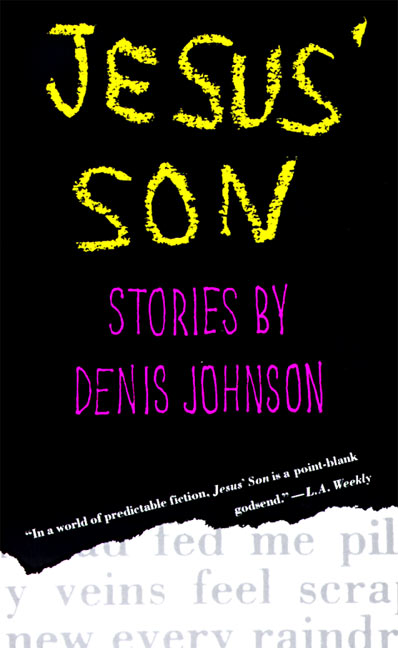
jesus-sonAnd so as I sneak off for my hour-and-a-half, two hours, I try to jump-start my atrophied mind by reading for a while at first. Unfortunately today, I began re-reading Denis Johnson’s Jesus’ Son, a collection of eleven wise, lively, brutal, intense, truthful short-stories.

I’ve never felt so washed up in my life!

The first story,  “Car Crash While Hitchhiking” is riveting. It’s like a very bad car accident that you can’t turn away from. The narrator, the hitchhiker, has been on the road from Texas to Kansas City. The first driver fed him amphetamines and Canadian Club;  the second ride was a hashish filled bubble to the city limits; and the third ride was the fateful ride–a family of four with a nine-month old baby on the back seat, destined to be brutalized in a head-on collision. The narrator is flawed and generous and seemingly prescient, for he seems to know that it is this family that picks him up that will suffer. His final words long after the car accident and while being admitted to the Detox at Seattle General are puzzling–if not telling: “And you, you ridiculous people, you expect me to help you.”

God, could it be Jesus’ son?

Much later in the collection–one could label Jesus’ Son an episodic novel rather than a collection of short stories with its single narrator and progressive (though disjointed) chronology–the narrator is in detox and is shaving another man. (The drugs they are giving him have steadied his hands to such a degree that he has taken to shaving fellow patients.) Here is part of the scene:

Just below one cheekbone, Bill had a small blemish where a bullet had entered his face, and in the other cheek a slightly larger scar where the slug had gone on its way.

“When you were shot right through your face like that, did the bullet go on to do anything interesting?”

“How would I know? I didn’t take notes. Even if it goes on through, you still feel like you just got shot in the head?”

But they aren’t Bill’s only wounds. “I’ve been shot twice,” Bill reveals. …”Once by each wife for a total of three bullets, making four holes, three ins and one out.”

This is the world of Jesus’ Son. There are bullet wounds and heartaches. There is addiction and abortion, love and lovelessness, disease and car-crashes and murder. Johnson once said about his stories “Some of us go to the movies to see everybody shooting each other, and then there’s another bunch who actually shoot each other.” It is this latter bunch that people Johnson’s stories. But in addition to “shoot[ing] each other,” they seek salvation, search for love, and try to survive on the wrong track that life has set them on.

Intense and unsettling, witty and thrilling, the stories are both unforgettable and beautiful.  Something any writer should aspire to.

So, Another Weird Coincidence…

So, I had sneaked out to this coffee house to do this wee bit of writing and reading. And I was considering saying something about the title–Jesus’ Son–and how it was taken from the Lou Reed song “Heroin.”  I had just decided against it when Lou Reed’s “Sweet Jane” comes on the sound-system and that sealed the deal.  When I mentioned the coincidence to the guy at the counter, he replied, “Lou is everywhere.”  I didn’t know, hah!

So, if you want, here’s a recent version of Lou Reed singing “Heroin” from where the title came: