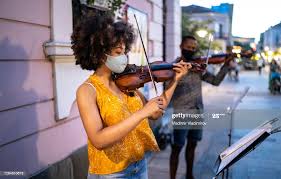
I had planned to quit teaching at the end of the 2019-2020 school year. Pack it in, that June. I had no real definite plans besides vague ideas of going to movies and concerts, hanging in coffee houses and museums, traveling a bit and eating out a lot. I also wanted to grow my “music career.” The previous year had been a good one with nearly 40 shows, and I figured that in 2020 I would be able to increase that number significantly.
Well, to paraphrase Robert Burns, “…the best laid plans of mice and men, gang aft agley.”

School was to end in June, but the lock-down started in March. From mid-March (when I posted my last blog piece) up to then, all learning was virtual, on-line. I never again returned to the classroom. Movie theaters and museums shut their doors; restaurants and cafes as well, doing their best to stay afloat through take-out and out-door service. Traveling was limited and probably unwise and unsafe. And music venues were shuttered. That first week of “lock-down” I had three gigs cancelled. And I was glad…in full support.
Soon people started improvising. One venue set up “live streaming, virtual concerts”–I’ve done three of them. When the weather turned nice, another place used its out-door space for music (though masks had to be worn throughout all performances. An odd experience.)
In my city, we moved from take-out dining only to outdoor dining to 10% indoor capacity to 25% and then back to outdoor dining only. It was brutal on the small businesses, the fledgling pubs, the local shops. Many of them are not coming back. But many are…and will.
Me, on the other hand, I decided to put out a video on YouTube every Sunday: “Another Sunday Morning Tune.” If nothing else, it kept me busy and grew my fan-base to a large degree. I also concentrated on my songwriting and on learning the art of recording and production. That second part is not easy, and I’ve still got a lot to learn. But I got some good work done.
By the last quarter of the year, some places were opening and I was getting jobs again.
I also found a way to embed my original music onto this blog site. I hope you check it out. My songs are available on most streaming services, but here is a way you can listen to them right now.
Have fun and enjoy!
And to be sure to receive info on upcoming shows, new song releases, and new Sunday videos, please check out the Music Schedule Page above.
 At 6:30 a.m. on the Friday after Christmas, I found myself fully inserted into a large MRI tube. For 45 minutes I had to remain completely still while an icy course of “tracer” pulsed through my veins and a cacophonous symphony of beeps, clanks and rumblings sneaked through the noise-reducing headphones that were provided. Forty-five minutes in odd isolation gives you a lot of time to think…about pretty much everything, but certainly about one’s own mortality, about creativity and about finishing the work that one has started.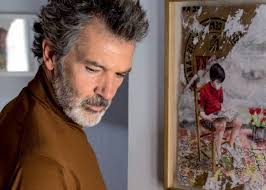
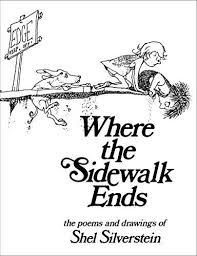 And every student and every adult knew what I was referring to: the delightful first collection of poems by Shel Silverstein that every student had loved as a child and every adult of a certain age remembered reading to his or her own. The poems in Where the Sidewalk Ends are silly, irreverent, charming, and knowing. It’s the silly irreverence that children most love: as if the adult Silverstein—unlike other adults in their world— was clued into the fears, the joys, the silliness, the incomprehension, the absurdity with which they view the world.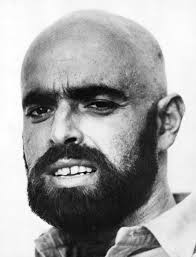

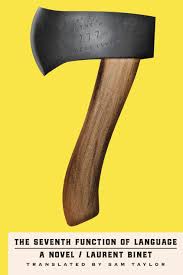 actual death of Roland Barthes, who was killed by a laundry van, is determined to be NOT AN ACCIDENT and the suspects include everyone from Mitterrand to Foucault, from Umberto Eco to Noam Chomsky. It is a bold and nervy novel that merges the modern detective story with outrageous flights into semiotics.
 side and compete with each other for the boy’s favor. Meanwhile, the grieving president continues to visit. It is an extraordinary, emotional and satisfying read.
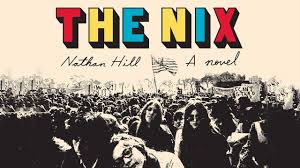 manipulation, war, the classical musical world, gaming, and academic integrity, Hill seems to have bitten off far too much. But he brings it all together to serve up one extraordinary and satisfying novel.
 Times ended up to be much, much more–a wonderful peek into a Parisian street and neighborhood that has resisted progress and gentrification and tourism, and which continues in much of its uniqueness and tradition.
 –particularly writers and artists and herself– walking in world cities, though with a concentration in Paris. I am grateful for its introducing me to the marvelous artist Sophia Calle, whose one amusing art work involved walking around Venice while following a strange man. (It also introduced me to Georges Sand, of whom I knew very little. Two of her enormous novels sit next to my bed, waiting for 2018.)
 Rebecca Solnit, whose “invisible cities” books have given me much enjoyment in the past. This year I turned to her Field Guide to Getting Lost, a wonderful meditation on the usefulness and growth achieved in being lost somewhere. Like all of Solnit’s work, the main thesis is simply a jumping off point for all sorts of insights and reflections.
 j. p. bohannon