John, Paul, and Christian, and the Theory of Chaos

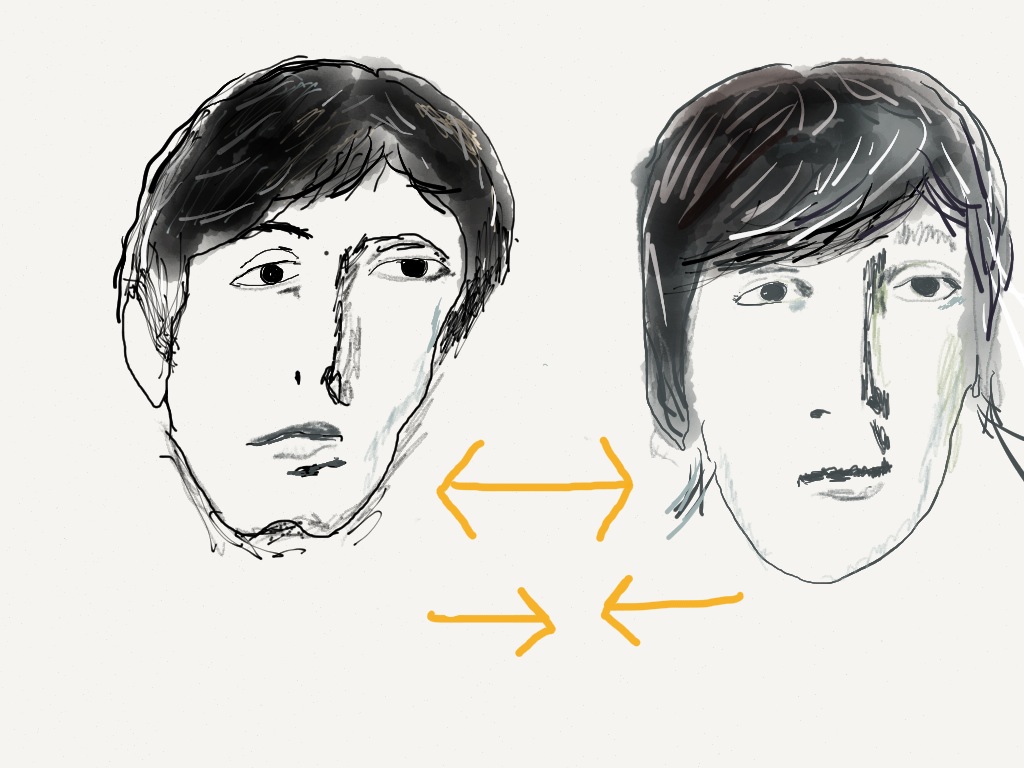
John and Paul/Paul and John illustration 2014 by jpbohannon

John and Paul/Paul and John
illustration 2014 by jpbohannon

Last week, at a “workshop/institute/conference” I am attending for a few weeks this summer, Christian Talbot spoke to us about “chaos theory” and the creative need for tension in any collaboration. The theory goes, simply, that any collaboration must begin with chaos. Butting against each other is a conflict of ideas–and often a conflict of personalities.  As the collaborative project goes forward, this tangle of conflicts begins to stretch out into a diametric pattern of varying depths with one single thrust being countered by another until ultimately the collaborators move directly towards the goal. Talbot insisted that the initial conflict is essential, even positing that if there is no conflict the final outcome can not be as robust as it possibly could have been.
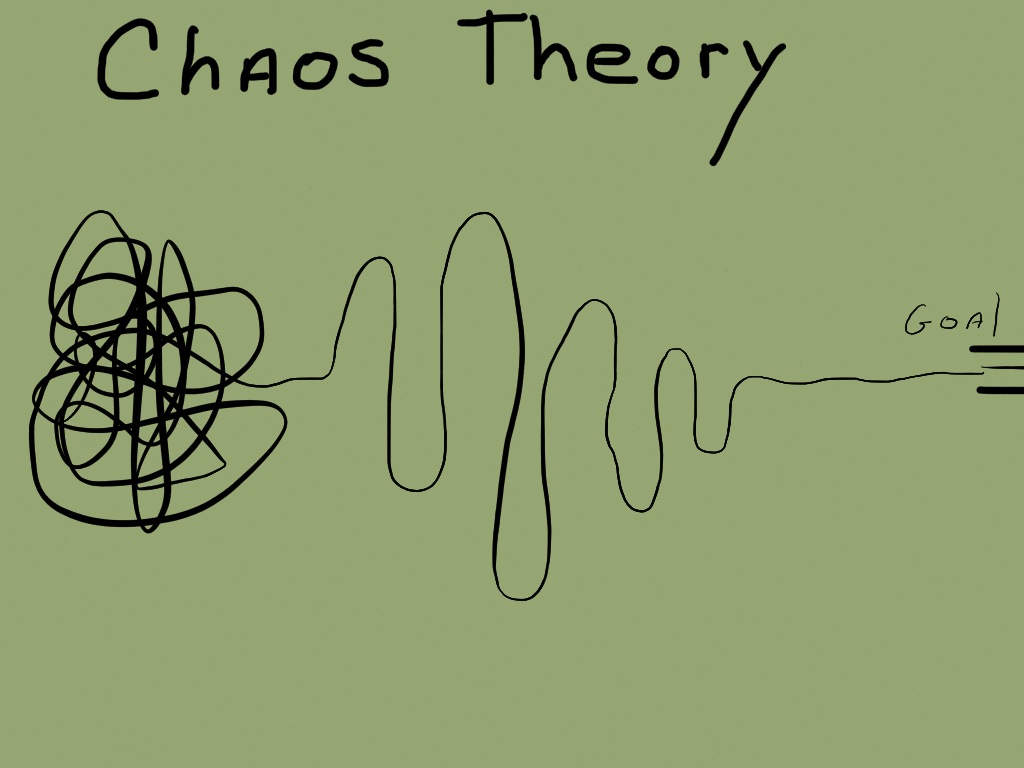
Chaos theory illustrated illustration 2014 by jpbohannon

Chaos theory illustrated
illustration 2014 by jpbohannon

The man next to me, Emanuel DelPizzo–an excellent musician and leader of a twelve piece R&B band–cited the Beatles as evidence of this tension.  He cited the arguing and fighting and one-up-manship that often went on during a Beatles’ recording session and the perfection of the result.  We both talked about the tensions that can arise within bands and the trust that one ultimately has to place in one’s fellow players.
AtlanticAnd then, this coincidence ensued.  The following day, as we were moving from one task to the next, I walked over to a quiet part of the room where there were a pile of recent magazines.  On the top was a copy of the July/August issue of The Atlantic. A picture of Lennon and McCartney on the cover caught my eye.  It is The Atlantic’s “IDEA issue.” (Though I would think it would want all its issues to be “idea issues”!)  Anyway, the essay was touted on the front cover as–“John vs. Paul: The Power of Creative Tension.”  This is exactly what Christian was talking about yesterday and was the very example that Manny had offered.

The essay by Joshua Wolf Shenk is entitled “The Power of Two” and immediately attempts to diffuse the prevalent idea, that Lennon wrote his songs and McCartney wrote his.  Debunking the idea of the solitary genius–so prevalent in popular lore and imagination–Shenk states that the two very different friends bounced off and into each other in order to create what they did.

And the two were in fact very different.  Shenk quotes Lennon’s first wife, Cynthia, who said, “John needed Paul’s attention to detail and persistence, and Paul needed John’s anarchic, lateral thinking” (p. 79).  And this symbiosis continued to fuel their creativity. (One could seriously argue that nothing they wrote separately afterwards attains the same level as their “collaborative” effort.) I was surprised to hear that McCartney, more sure of himself, was the one likely to take criticism badly, while Lennon was more open to others’ opinions and more amenable to change.  Shenk attributes this to McCartney’s perfectionism.

Shenk cites Sgt. Pepper’s Lonely Hearts Club Band and the White Album as an example of the collaborative conflict that the two would cycle through–both jockeying for dominance, both vacillating between the alpha male and the diplomat.  Sgt. Pepper’s  showed the two working closely together. For example, they volleyed Lewis Carroll-like phrases back and forth to each other to write “Lucy in the Sky with Diamonds” and they simply fused two separate songs together to create the masterpiece “A Day in the Life.”  Lennon called the White Album, “the tension album,” but as Shenk writes:

“Despite the tension–because of the tension–the work was magnificent. Though the White Album recording sessions
were often tense and unpleasant ([EMI engineer Geoff] Emerick disliked them so much that he flat-out quit),
they yielded an album that is among the best in music history.” (p. 85)

And when they did write separately they egged each other on. Lennon scoffed at MccCartney’s original opening of “I Saw Her Standing There”  and fixed it.  McCartney softened the raw pain of John’s original version of “Help,” adding a counter-melody and harmony. And even when they were apart, they were bouncing off each other.  John wrote “Strawberry Fields” –about a nostalgic spot of his boyhood Liverpool–in late 1966 and the band recorded it on December 22 of that year.  Seven days later McCartney arrived with a song he had written about another iconic Liverpool spot, Penny Lane. Shenk quotes McCartney saying that John and he often played this answer and call type of thing–sort of the middle ground of that chaos theory illustration.

Any one who knows the story of The Beatles, knows roughly the story of their falling out and “disbanding.”  And yet, Shenk returns to the final concert–the rooftop performance on top of Apple Studios–and sees the old collaboration–both the conflict and the trust–still evident.  Standing in the positions that they had taken in the early days, the two rely on and trust each other, even through some miscues and misstakes, to present a concert that was both memorable and historic.

While it is fun, to travel through the Lennon and McCartney’s creative process–and through their times in the studio–this is not really the focus of Shenk’s article.  He is attempting to show the workings of creative pairs.  He lists creative pairs from Martin Luther King, Jr. and Ralph Abernathy to Steve Jobs and Steve Wozniak. Shenk enumerates McCartney and Lennon’s differences and their tensions as well as their friendship and trust as being the forge in which their art was struck.  As Shenk states:

John and Paul were so obviously more creative as a pair than as individuals,
even if at times they appeared to work in opposition to each other. …The essence
of their achievements, it turns out , was relational. (p.79)

And that achievement is timeless.

Shenk, Joshua Wolf. “The Power of Two” The Atlantic. (July/August 2014, pp. 76-86)
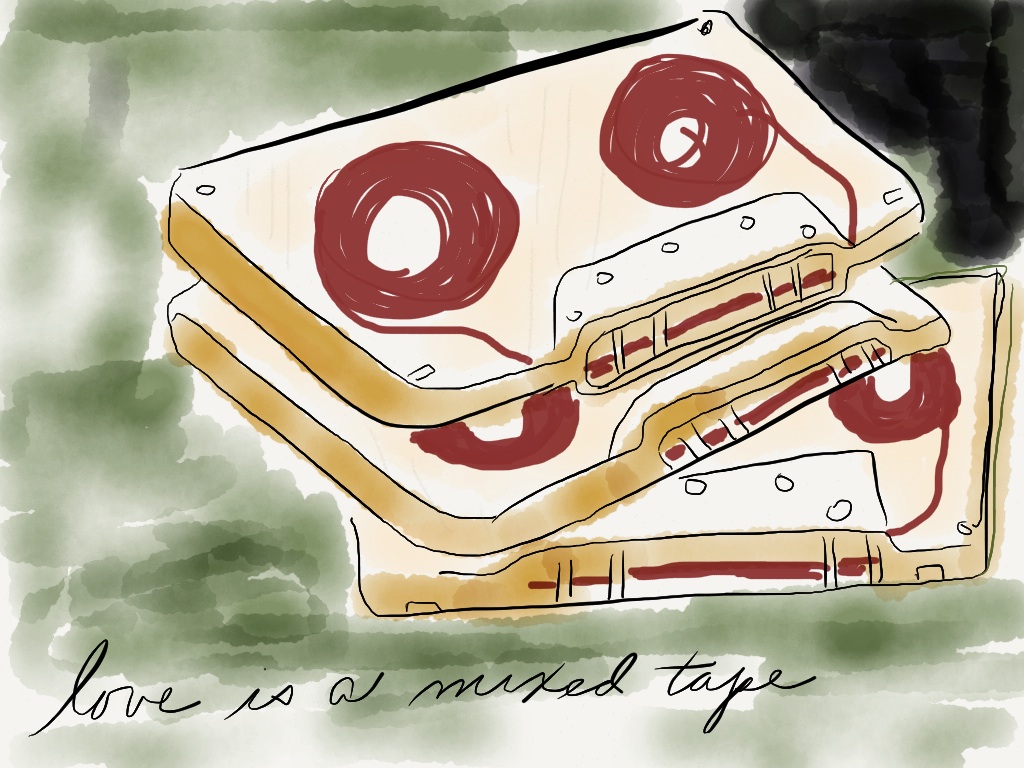


Book Review: Love is a Mixed Tape by Rob Sheffield

"Love is a Mixed Tape" illustration 2014 by jpbohannon (based on book cover)

“Love is a Mixed Tape”
illustration 2014 by jpbohannon
(based on book cover)


On two separate occasions, my friend Jim has stopped the car on the way to dropping me off at the train station to finish listening to Neil Young’s “Country Girl.”  For him, he remembers a particular girlfriend who broke up with him oddly and for whom this song is a reminder. For me, I remember hitchhiking across Canada, sitting on the floor of a Winnipeg record store (Winnipeg was where Neil was born) and copying down the chords from a fake book. For both of us, the song is a lot more than just music and lyrics.

Jim and I often do this. The “where” and “when” of a song, the lives we were leading, the dreams we were having, the people we were hanging with, are as much a part of a song than any of its recordable parts. And for each of us, those elements are different and recall a thousand different memories.

This is the basis of Rob Sheffield’s memoir Love is a Mixed Tape. Sheffield–a writer for Rolling Stone–writes about his late wife and himself through the skeleton of different mixed tapes. The sub-title of the book is Life and Loss, One Song at a Time, and this is exactly it: the life of a man and the life of the woman he loved told through the soundtrack of their lives. And, for some of us, it is our lives as well.

Sheffield starts off going through his dead wife Renee’s belongings and discovering several of her mixed tapes, spending a sad night listening to the first one–The Smiths, Pavement, 10,000 Maniacs, R.E.M., Morrissey, Mary Chapin Carpenter, and Boy George among them–commenting on her choices and their lives together when she made them. He talks about the various types of mixed tapes: the Party Tape, the “I Want You” tape, the “We’re Doing It” tape, the Road Tape, the “You Broke My Heart and Made Me Cry” tape, the Walking Tape, the Washing the Dishes tape. etc. From here he sets up his frame work–the tapes of our lives are the record of of our lives.

And so he begins. He starts by dissecting his own tapes, chronologically starting from a mixed tape he made as a thirteen-year old for an 8th-grade dance through his first romance and subsequent break up to his meeting Renee, their courtship and marriage, her sudden death and his struggles to continue on afterwards.  It is poignant and wise writing about  love and loss and survival.

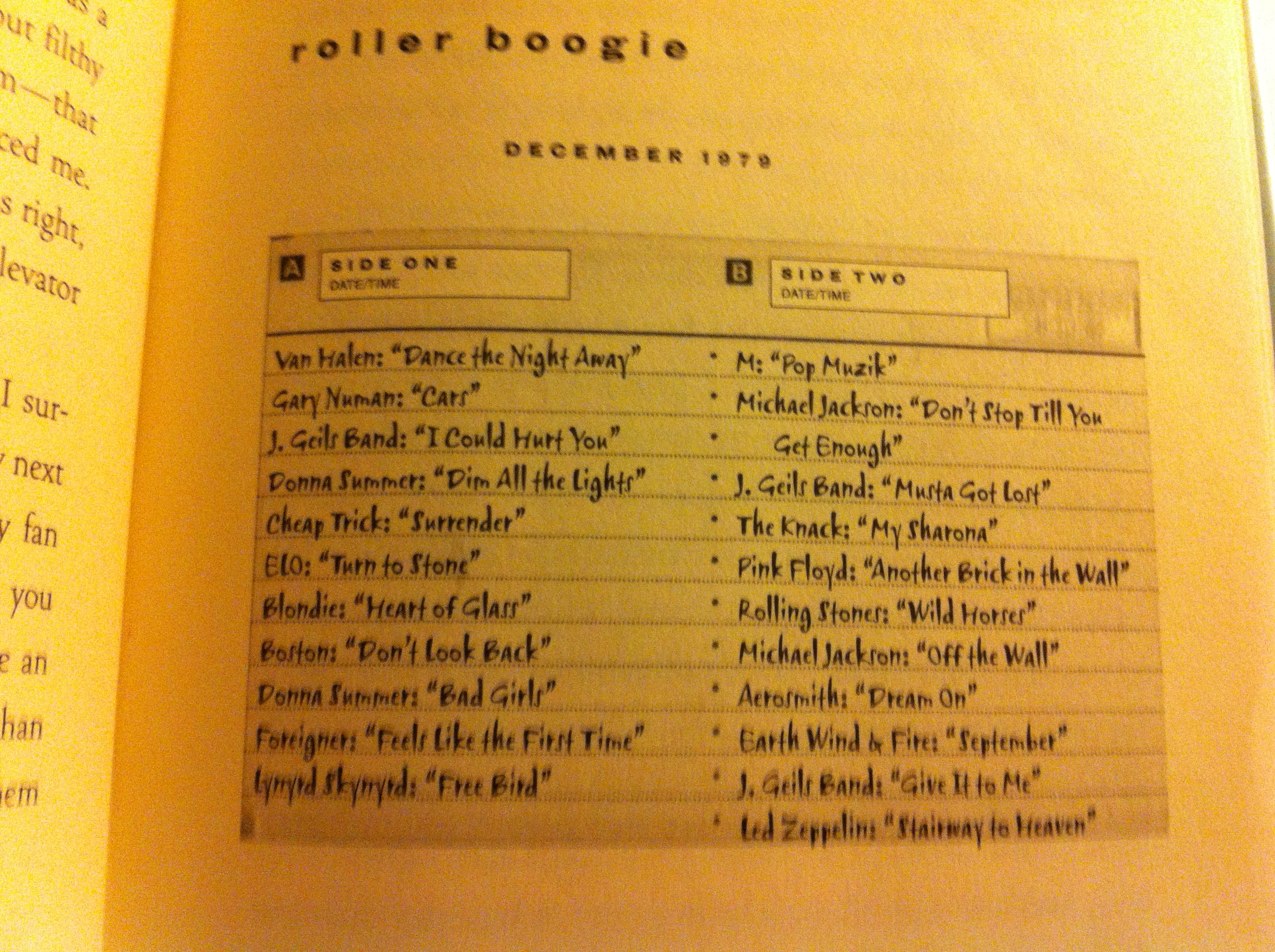
Mixed Tape Sheffield made for his 8th-grade dance

Mixed Tape Sheffield made for his 8th-grade dance

Many of the bands I had never heard of–both he and his wife were music writers–but the pure affection and excitement that these two shared for new and old music was infectious. He was an Irish-Catholic boy from Boston who grew up on Led Zeppelin, the J. Giles Band, and Aerosmith; she, an Appalachian girl from West Virginia as familiar with George Jones and Hank Williams as she was with the punk bands she adored. Together they made a likeable pair. And their knowledge and love for music is wide and inclusive.

Sheffield met his wife in 1989 and she died in 1997. Their relationship lasted most of the 1990s and this is where Sheffield the music critic is at his best. His analysis of that decade, where the music was going and what it was doing is trenchant: he understands the phenomenon of Kurt Cobain, the importance of female empowerment in 90s’ music, the resurgence of guitar bands. (His discussion of Cobain’s late music/performances as the plights and pleas of a pained husband is unique and insightful and bittersweet.)

The naturally shy Sheffield–understandably–reverts into himself after his wife’s death. He is more and more asocial, awkward and uncomfortable. He writes eloquently about the pain of loss, of the condition of “widow-hood,” of unexpected kindness, and of the haunting of the past. Sadly, music–which once was his  buoy in life–is pulling him down, especially the music that he and Renee had shared.  In the end, however, it is music that pulls him together as well. He moves out of the south and to New York City, he reconnects with friends, makes new friends, and–of course–starts seeing and listening to new bands.

photo 3(1)

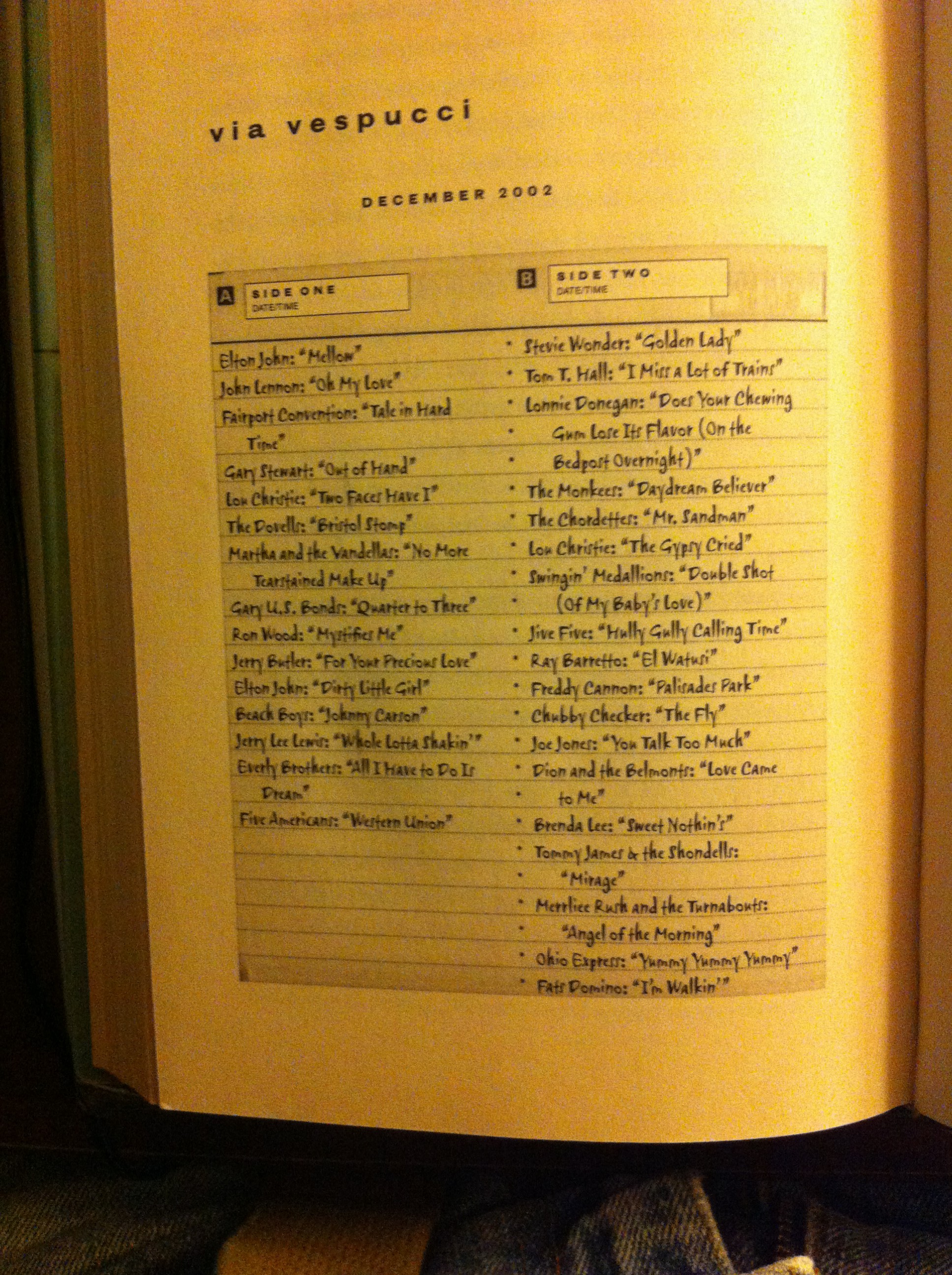
This is the tape–the last in the book–that Sheffield made when moving into a new apartment in Brooklyn, December 2002.

Love is a Mixed Tape was recommended to me by a friend, Brendan McLaughlin. Brendan was born in the mid-80’s, not long before Sheffield and his wife first met.  He is connected much more closely to the music than I am, and I am sure that he recognized a lot more of the bands and songs cited than I did.  But that is the great thing about Sheffield’s memoir: you don’t have to be completely tuned into what he is listening to, just to what he is saying.

And what he says is true.

words and pictures (part 2) …and the power of MUSIC

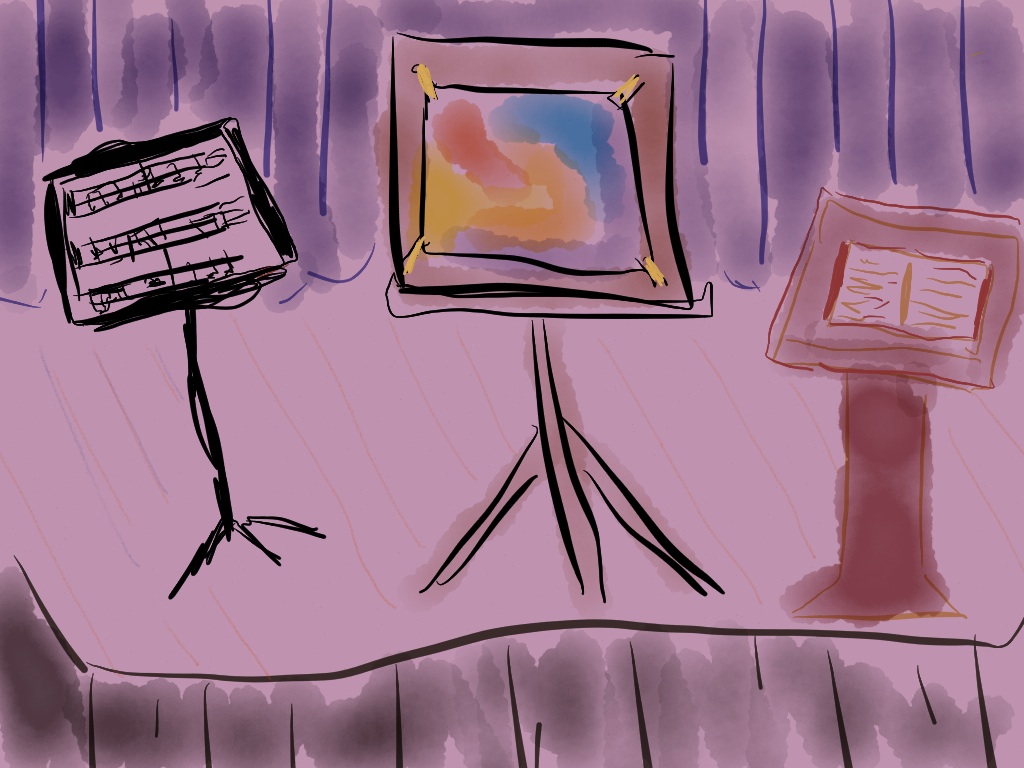
Music...Art...Literature Illustration 2014 by jpbohannon

Music…Art…Literature
Illustration 2014 by jpbohannon

Yesterday, I wrote a post about the film Words and Music, a sweet romance about a battle between an Art teacher and an English teacher. The film had interesting examples about the power of words and magnificent examples of the power of “pictures.”  But what I forgot about was the part that held it together and in a way redeemed it:

The Power of Music

In the film. after the male protagonist has made a bollocks of things and the female protagonist has had enough of his destructive behavior, it is music that is the most evocative, most informative, most powerful…and most healing.

Scene after scene the male (Jack Marcus) tries to contact the female (Dina Delsanto) to apologize for the drunken mess he made of her art. Scene after scene we see her aggressively stop his attempts or stoically ignore them. Until the moment, when she opens an e-mail and there is an audio attachment.  The piece–written for the film by Paul Grabowsky—is a chamber piece for piano, cello and clarinet entitled “I am a Small Poem.”  (This is also the name of the poem that Markus steals from his son.)  It is rich and resonant and connects with Delsanto more than any words or pictures could.

It is what saves their seemingly destroyed relationship.

I wish I could embed the music that was played when Delsanto opened her e-mail. but I can’t.  It isn’t available yet.  So instead, I will give you this: an extraordiary piece by Fauvre. It is what I often listen to when I am writing:

A while back, a music teacher (Manny DelPizzo), an art teacher (Jackie White) and I got together to make plans for a large project. (The educators call this kind of thing “Project Based Learning.”)  I was going to get my Creative Writing Students to submit their best work and the art teacher and music teacher would each have their students interpret it and we would have a performance.  Our ambitions were high–this seemed like the best outlet for student creativity– but the realities of schedules and time and curricula put many roadblocks in our way and we let it fizzle out.

The “performance” that the fictional students in Words and Pictures was much like what we were hoping for, minus the music. Our music component would have made it better.

A new school term is starting in a couple of weeks. I am newly energized (though not as drunken as Jack Marcus) and am excited about trying this for real. It doesn’t have to be a battle–as it was in the film–but a really cool examination of the power of words, of art, and of music–a real exercise in Creativity

Quote #41: “…someday, everything’s gonna be different.”

Dylan's self-portrait The cover of the Self-Portrait album

Dylan’s self-portrait
The cover of the Self-Portrait album

“But someday, every thing’s gonna be different/ when I paint my masterpiece.”

Bob Dylan, “When I Paint My Masterpiece”

Happy Birthday, Bob: May 24, 1941…so as a special treat, here’s Bob singing “When I Paint My Masterpiece” with the Band.

Cinnamon Girl, St. Jack’s and the White Goddess

jackclubs

A few years back, after a particularly mind-numbing conference, a number of colleagues and I repaired to a little hole in the wall on 3rd Street called St. Jacks. The place, hung with erotic black and white photos and glazed with a patina of dust and grime, look as if it were waking up after a rough night. There were no other patrons and, if I remember right, the “kitchen” had been closed for a very long time.

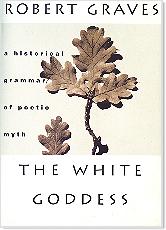
The place was named after a character in the eponymous novel by Paul Theroux. (It was later made into a film by Peter Bogdanovich which has a weird history in itself.) At the time, I was reading Robert Graves The White Goddess, his archeological/anthropological/mythological treatise on pre-Grecian religion, primarily the matriarchies of early civilizations that spread throughout Northern Europe and the British Islands from the south.

Robert Graves The White Goddess

Robert Graves’ The White Goddess

Several of my colleagues filled the booths, and four or five of us sat at the bar. The bartender’s name was Cinammon. And she was good. In fact, she is perhaps the best bartender I’ve ever encountered. I put the book I was carrying on the bar, and preceded to talk to my colleagues and to Cinnamon.

Yes, her mother had named her after Neil Young’s “Cinnamon Girl.”  And yes, she asked me about the book, but no, she had never read Robert Graves, nor had ever heard of him. After a while, the others wandered out, but my friend Jim and I stayed for a few hours more. The two of us–and Cinnamon–talked about the things we always do when sitting at a bar: music, film, and books. It was a good day.

But now comes the amazing part. We attended a similar conference, one year and a day from that original conference. And like the first one, we all went to St. Jack’s after the conference. And Cinnamon was still tending bar. I hadn’t been in the place since that first time, a year ago. But when I sat at the bar and ordered my pint she asked me if I had finished The White Goddess.

Now, a good bartender should remember the drinks of his regular customers. A very good bartender will remember the drink of the occasional customer. But it is an extraordinary bartender who remembers not only the drink of a customer whom she had served only once a year ago, but remembers the book he was reading at the time.

Jim and I stopped a few more times after that, but Cinnamon left a short while after, left to become a legal secretary. It is a great loss to the bar-tending profession. And St. Jack’s itself is now gone (It had once got in trouble with the Thai government for using an image of the King of Thailand on an advertisement that ran in one of the free city papers. How they came across it is a wonder? Much of the novel/film St. Jack takes place in Singapore and what was then Siam.)  And I have never warmed to the new place.

And for various reasons–I had just purchased James George Fraser’s The Golden Bough which reminded me of The White Goddess, and I have been lately banging out “Cinnamon Girl” on the guitar whenever I get a moment to myself–I have been thinking about St. Jack’s, about The White Goddess, and about Cinnamon.

So here, in memory of the greatest bartender I ever met is Neil Young singing “Cinnamon Girl.”  And as a treat, it is not his familiar fuzz-driven guitar version of the song, but a different version of Neil by himself on the piano from his upcoming album “Live at the Cellar Door.” Enjoy:

Quote # 32: Pete Seeger’s Banjo

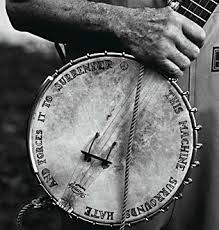
20140131-083000.jpg

“This machine surrounds hate and forces it to surrender.”
…words inscribed on Pete Seeger’s banjo

Pete Seeger
(1919-2014)

Quote #30: John Cage on the meaning of life

20131218-144749.jpg

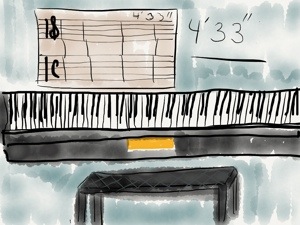
“No why. Just here.”

John Cage

Music Review: Tom Jones’ Spirit in the Room: “There’s a Lot New, Pussycat!”

tomjonesI can’t believe I’m doing this. But I am.  I am reviewing the latest Tom Jones album.  Mainly because it’s extraordinary.

Remember when Johnny Cash did that Nine Inch Nails cover produced by Rick Rubin and accompanied by that powerful video, and how every hipster coffee shop around now has a Johnny Cash tune playing on its sound system about once every 20 minutes?  If you don’t remember, here it is:

Well, Tom Jones is doing the same thing. He has left behind the Las Vegas glitz and the sex-god personna of his past (he parodied himself in Mars Attacks, for god’s sake!) And he is choosing songs that give resonance to his powerful voice.  Like a old bottle of Laphroaig that announces itself with a blast of peat smoke against your throat, Tom Jones voice is aged to perfection. And the lyrics he’s delivering add to that agedness, to the gravitas.Spirit+in+the+Room

Produced by Ethan Johns and covering songs by Leonard Cohen, Tom Waits, Bob Dylan, Richard Thompson, Odetta, Paul Simon and McCartney, among others, Spirit in the Room presents Jones stripped down and honest. Just as likely to be accompanied  by a single acoustic guitar or a tinkling piano as a full-tilt-boogie band, Jones dives into the blues, gospel, and roots music.

And again, he has the voice to do it: this time, however, one hears more of the Welsh ditch-digger than the nightclub lounge singer.  And in my opinion, that’s a vast improvement. He is authentic, he is wise, he is ruminative.

Jones’ cover of Cohen’s “Tower of Song” is every bit as good as Cohen has ever done it. One hears the pain of age, the pain of wisdom.

Richard Thompson’s “Dimming of the Day” is one of my top ten favorite songs ever (I own recordings by Thompson, Bonnie Raitt, the Corrs, Emmylou Harris, and a wonderful version by the short-lived band, Danko, Fjeld and Anderson) and I was excited to see that Jones included it here and that he does it well.

His voice smooths out Waits’ growl, roughs out Simon’s baritone and turns Dylan’s “When the Deal Goes Down” into a rueful waltz that reminds me of Jagger’s version of “The Long Black Veil” with the Chieftains. And his version of Blind Willie Johnson’s “Soul of Man” is almost threatening and is as jagged as the guitar that centers it.

I have always felt that Tom Jones was a bit schmaltzy but, to be fair, I never gave him much of a listen. He has always had a powerful voice, but his delivery was always a little more polished than I preferred, every end note seemed elongated, every word seemed to carry the same weight.  He always seemed to be overdoing what I saw was essentially an outdated vibrato.

But I was wrong or he has changed or I have changed.  Because Spirit in the Room is quite an achievement.

Now, I’ll  probably start hearing him every fifteen minutes in the coffee shops I hide in!

♦     ♦    ♦    ♦    ♦    ♦    ♦

Here is Tom Jones covering Leonard Cohen’s “Tower of Song,” the first track on the album:

Mother’s advice: “if you have nothing nice to say…”

motherson

I went to the movies on Monday afternoon to see a film that I had been wanting to see for the past month or so. But I left the theater greatly disappointed. And as I walked up 3rd street, I thought to myself, I am not even going to write about this one.

And I think I am right.

I am not a critic–of film, books or music–I simply enjoy these things. And I enjoy writing about them and sharing my enthusiasms about them. But, I don’t feel comfortable bad-mouthing the ones I don’t like. On Wednesday I posted a piece about a book I didn’t like and I feel more than a little discomforted about it.

In this vast “blogosphere” where everyone so easily can send out his or her opinions, I want to rein myself in. Of course, BAD ART exists–there are books that are dreadful, movies that are deadening, music that irks me, but they will find their own levels of acceptance, they will find their own audiences (or not) without my weighing in.

And besides, I don’t have the time to waste on negativity.

After all, all creativity is risk…risk of missing the mark, of being misunderstood, of being ripped apart. But one has to put it out there and let it find its own life. (As Woody Allen says, “Eighty percent of success is just showing up.”)

coffeeshopSo, I’m sitting in a shop having a coffee after the movie and am asked what I thought. “I didn’t like it,” I say, and I give my reasons, listen to counter-positions, discuss the pluses and minuses. This is good, this is what Art should engender–conversation, dialogue, thought, and, yes, even judgment.

But is there really a need for me to blast it on the internet? I’m not so sure, but I don’t think so.

Don’t get me wrong; I will point out inconsistencies in the things that I like, choices and perspectives I disagree with, differences and surprises that throw me, things I see as flaws or would have wished the artist had done differently.

But with things that I don’t like…?  Well, as my mother would say, “if I have NOTHING nice to say, I’m not going to say it.”

Quote of the week: #2, May 6, 2013

“…The arts are not a way to make a living. They are a very human way of making life more bearable. Practicing an art, no matter how well or badly, is a way to make your soul grow, for heaven’s sake. Sing in the shower. Dance to the radio. Tell stories. Write a poem to a friend, even a lousy poem. Do it as well as you possibly can. You will get an enormous reward. You will have created something.” — Kurt Vonnegut, Jr. A Man Without a Country, 2005

Kurt Vonnegut, 1922-2007. 2013 jpbohannon

Kurt Vonnegut, Jr., 1922-2007
illustration by jpbohannon © 2013