Movie Review: The Footnote: fathers and sons, parents and children

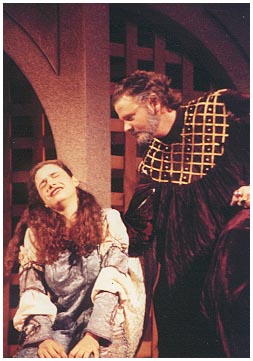
Juliet being bullied by her father

I have always been fascinated by the importance of parent/child relationships in Shakespeare. As school children, one of the first plays we read is Romeo and Juliet and aside from the love story, the second major story is Juliet’s relationship with her parents. The mother is cold and aloof and the father, while seemingly sensible in the beginning, shows himself an insensitive brute. Then there is Hamlet–a psychiatrist’s field-guide to dysfunctional parenting. In the histories, there is Henry IV, parts 1 and 2; the tragedies also give us King Lear–a tragedy of parenting if ever there were one; the romances give us The Tempest with the sorcerer Prospero manipulating his daughter’s–and everyone else’s–life. Throughout the canon, there are lovers blocked by parents, young nobles obeying the edicts of  fathers, and even a childless woman declaring what violence she would wreak on her children if she had them.
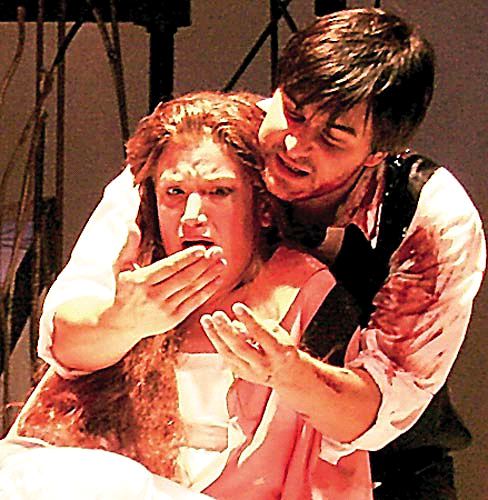
Hamlet berating his mother

And then I thought how much all of literature is tied in with this theme. From the earliest fairy-tales like Snow White, Cinderella, and Rumpelstiltskin to the Greek plays–where does one begin with Oedipus?–the dynamic between parent and child is in the foreground. As for the great epics: The Odyssey is really a tale of a son trying to find his father, as is its modern counterpoint, Ulysses,where “fatherless” Stephen is cared for by Bloom who mourns the death of his own infant son; and what is Paradise Lost but a father punishing his errant children?  In Great Expectations Pip is orphaned and raised by a beastly sister and her kind and understanding husband. In Huck Finn, Huck is trying to survive in spite of the obstacles that the disreputable Pap has put in his way. And even a modern potboiler like the Girl with the Dragon Tattoo trilogy is founded on several perverse father/child relationships.
Lisbeth Salander and her father from The Girl With the Dragon Tattoo

So I thought of all of this as I left the theater Sunday after watching The Footnote. An Israeli film, The Footnote follows a father and son, both Talmudic scholars through their strained relationship. The father’s career–rightly or wrongly–stalled early in its course. The son, on the other hand, is immensely successful. The film opens with an award ceremony where the son is being inducted into the Academy of Sciences. In his thank-you speech, the son focuses on what an inspiration and model his father was, but the father is so filled with envy, anger, and bile that he walks out of the theater.
Son and father from The Footnote

Later, the father receives a telephone call informing him that he has won the prestigious Israeli Prize, an award given by the President of Israel to an important scholar. The call is actually a mistake and was intended for the son who naturally has the same last name.  The son is informed of the mistake and told that he must be the one to tell his father. What ensues is riveting, heartwrenching, and sad.

The soured relationship between the two is echoed with the son’s strained relationship with his own adolescent child. At times, it seems the women are holding things in place, but I am not completely sure. There is a lot of dishonesty, a terrible lack of communication, and an underlying egoism that is poisoning the family dynamic.

The film is very good.  It is one of those films that you talk about long after, and think about much longer than that.
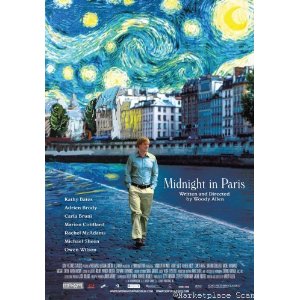
Midnight on Revolutionary Road in Paris, County Cork

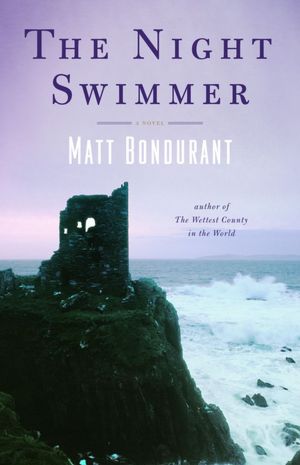
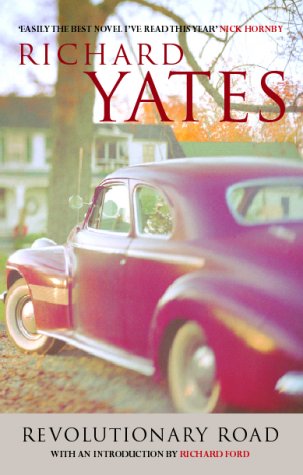
I am reading a book, The Night Swimmer by Matt Bondurant, where early in the novel, a young, successful couple have these yearnings to chuck it all and to move to Ireland.  They are intelligent and aware of the commonness of this trope–they intentionally nickname their street “Revolutionary Road” after the Richard Yates’ novel.  Earlier, before the dream of starting afresh in Ireland, the couple had wished to live in the time period when the novel Revolutionary Road takes place–a Cheever-esque world where pitchers of martinis and pyramids of cigarettes punctuated each evening. That glamorous “Mad-Men” world had not work out for them, but the dream of emigrating does: the husband wins a pub in County Cork, Ireland.  Needless to say, the paradise/excitement/vigor of the new life they imagined in this other world does not pan out they way it had in their dreams.  And like in Richard Yates’ novel, the marriage suffers more than greatly.

What is it about us that makes us often wish we were in some other place, some other time?  In Midnight in Paris,  Woody Allen wrestles with this question. The protagonist wishes he lived in 1920s Paris, but the 1920s woman he meets wishes she lived in the Paris of the 1890s?  And in fact, the life he is already experiencing in 2011 turns out to be full of promise. Why is this nostalgia for a world other than our own,  for an imagined place and an imagined time, so strong?  Is it  general among everyone?  Or only with a certain type of person?

I walked out to get a coffee today and on my walk home I cut down an alley.  Looking around me, I realized that I could have been walking in any foreign city with any foreign adventure around the corner.  I could have been in Paris, in Cork, but I was merely a short stroll from my own house. I took a picture with my phone.  The concept of a more exotic, romantic other place is just a whiff of smoke–it is always around us if we keep our eyes open.

Now it is often said that one doesn’t appreciated one’s home until one is separated from it. Joyce gave us a loving, photographic picture of Dublin, but only when he was writing in Switzerland and Paris.  Beckett too gives us an unnamed but undoubtedly Irish landscape in his novels and several of his plays and he too was across the sea.  But that is different than romanticizing a place one wishes for, a place that does not exist.  What Joyce and Beckett do is understand what they had left, see it without the distortion of being so close within. This is not the same as dream-manufacturing, as imagining a better world through the kaleidoscope of nostalgia and generalities.

Nevertheless, there are still many days when I wish I was somewhere else, when I don’t appreciate the vitality of the world around me. But in these daydreams, it seems that I am never working, that there is no concern about putting food on the table or where the next dollar is coming from–who wouldn’t find that attractive. And that’s what makes it all somewhat of a sham.

Friday Film Review–Manhattan

My sister is flying to Edinburgh today and I happened to be searching for a particular clip from the movie Manhattan.

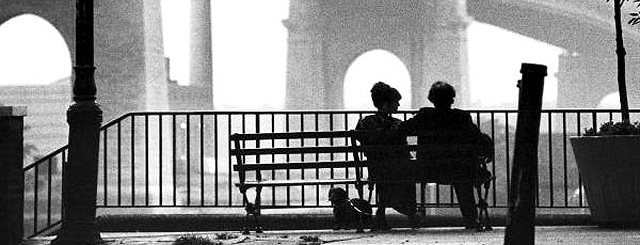
You know the opening of Manhattan where Woody Allen is doing a voice over, purportedly writing a book about his love for the city? The gorgeous photography–Woody had the legendary cinematographer Gordon Willis as his cameraman–the pulsating Gershwin music, the edgy decision to film in black and white, all work to make this perhaps Allen’s most beautiful film and certainly his greatest paean to the energy, diversity, pulse of New York City.

If you don’t know what I am referring to, check out the opening clip here:

The simplicity is its beauty.  There are no screen credits, no rolling text, just this gorgeous black-and-white montage of Manhattan.  The title of the movie itself appears as a vertical, flashing neon sign, one that you might not notice because it is so incorporated within the segment.

Quickly, the plot of the story is this: Isaac (Woody Allen), a writer whose ex-wife is publishing a tell-all memoir of their marriage, is dating a high-school girl (Mariel Hemingway).  Granted that in hind-sight this relationship feels a bit uncomfortable, but Isaac is in fact the moral center of the film (and his high-school girl-friend perhaps the most mature and un-jaded of all the characters). His dating the young girl pales as an issue when juxtaposed against the shallownesss, the deceit and the disloyalty of the other main characters.  Isaac’s friend, Yale, is having an affair with Mary, played by Diane Keaton, in what seems to be a reprise of her Annie Hall role–all intellectual charm and goofiness. (Manhattan came out two years after Annie Hall.)  She is endearing here as well, but it is basically the same character. Anyway, Isaac is attracted to Mary and Mary to him, but he will not act on it because she is having an affair/relationship with his best friend. The fact that his best friend is cheating on his wife who is also Isaac’s friend is also troubling to him.  Not until the affair between Yale and Mary ends, does Isaac allow himself to act on his feelings towards her.

I won’t spoil it, but there is more  treachery and disloyalty to come, and towards the end of the film, Isaac bursts into the classroom where Yale is teaching and makes an impassioned speech for morality. It is one of those movie moments when the action, the story, the jokes stop and someone makes an intelligent plea for humanity and for decency.

But the story, in many ways, is secondary for me with the film.  It is simply beautiful. The black-and-white photography mixed with George Gershwin’s exhilarating music is majestic, perfect.  It might not be far off to say that no one can make a city look better than Woody Allen.  Consider his recent efforts outside New York:  Paris in Midnight in Paris, Barcelona in Vicki Christina Barcelona, and London in Match Point.  In each film, the particular city seems a character in itself–a beautiful, energetic, lively character. A city’s tourist bureau would love to have Woody Allen film their promotional releases. He has a certain means of capturing the magic, the gestalt of a place. (Rome is next in his upcoming film, To Rome with Love.)

I used to pop Manhattan in the VCR/DVD whenever I was feeling particularly blue, for watching it somehow made me feel better.  I don’t know why–it really is rather depressing on the whole–but Isaac’s last speech to Yale is something special. Or perhaps the energy of Manhattan itself is what affects me, and my personal malaise at the time proves to be no match for that vigor and life pulse.

Anyway, as I said, my sister is flying to Edinburgh today and I stumbled upon this wonderful video by accident. Someone has taken the opening scene of Manhattan, and substituted black and white photos of Edinburgh.  Woody Allen’s voice over–where he praises Manhattan–is taken up verbatim except instead of Woody’s unmistakeable New York accent it is a strong Scottish voice and the word “New York” is replaced with the word “Edinburgh.”  Here it is below. Enjoy it.


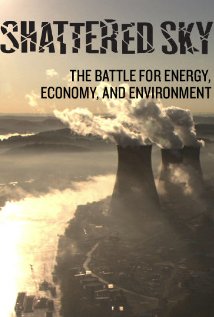
Shattered Sky–An Important and Hopeful Documentary by Steve Dorst and Dan Evans

Tonight I was lucky enough to attend a premier of the film Shattered Sky in Washington D.C. as part of the closing night of the Environmental Film Festival.  (Full disclosure: I was invited because I am friends with one of the filmmakers, Dan Evans.)  Held in the majestic Carnegie Institution for Science at 16th and P streets with a following reception at the Bar at the Hotel Rouge, the film seemed like a good way to spend a Sunday night and catch up with some friends I haven’t seen in a while.

I am so glad I went.

The film–which will be shown on PBS stations in the fall–deals with two distinct environmental situations, separated by four decades. In the 1970s, when the hole in the ozone layer was first detected, the science showed that CFCs were the main culprit, and America and Americans led the way to curtail the use of these photo-carbons around the globe. Fighting against an indifferent world, many of whom had financial interests in the status quo, the EPA–under the Reagan administration–pressed its case hard. The climax of this fight occurs in a marathon session in Montreal when America held sway and the rest of the world finally signed on to greatly limit the use of these ozone-depleting agents. The film  celebrates this moment in American leadership, touting the efforts of Johnson, Nixon, Carter and Reagan admnistrations. It is this battle–and the victory–that is the crux of the film.

Now fast forward, thirty years.  Climate-change is today presenting even more dire predictions. But the topic has become a political tug-of-war.  With the “ozone” problem, there seemed to be immediate repercussions for the public–such as skin cancer and cataracts–and the public made its voice  heard through the marketplace, refusing to buy aerosol products, for instance, and forcing industry’s hand to come up with alternatives. The effects of climate-change, however,  are not so immediate–and the possibilities of market pressures from the public are unlikely given our modern way of life. Plus, while we are enjoying this balmy spring, it is hard to imagine immediate  down-side.  But the down-side is there, and it is drastic. The film deliberately tries to skirt partisan politics; instead, it asks for America to take on the kind of leadership that it showed in the “ozone” battle many years ago.  And it asks, because the situation is urgent.

Unlike many environmental documentaries, however, Shattered Sky does not leave one feeling helpless and doomed, but instead is full of hope. For if America was once able to forget its political differences and  fight together to counter an environmental disaster such as the depletion of the ozone layer, it can certainly rise to the occasion once more.

The science is there.  Those who oppose it, who try to find holes in the facts, do so for other reasons than truth, reasons that often deal with economy, industry, and self-interest. The film is riveting, rational and cautiously hopeful, even as it recognizes the possibility and the consequences of no action at all. Check out the film’s web site for more information.  Check out its Facebook page. And more importantly try to check out the film.

The Shattered Sky web site is here: http://www.shatteredsky.com/

The IMDB review is here: http://www.imdb.com/title/tt1795650/

Friday Film Review: Into the West

Old Lady:  “You can’t take that horse onto the lift.”

Little Boy:  “I have to. The stairs would fucking kill him.”

                                                                                Into the West (1992).

The drunken revelers started up last weekend, college kids in goofy hats, increasingly offensive t-shirts, and green New Orleans love beads, lining up at Finnegans Wake on Spring Garden, weaving down Spruce, and jamming any bar that has an apostrophe in its title.  But since tomorrow is St. Patrick’s Day, I thought I add to the festivities by taking a look at a wonderful–and somewhat underrated–Irish film, Into the West.

The film is the story of two boys, their widowed father, and their bleak existence in the tower flats of North Dublin. When the boys’ grandfather (the inimitable and late David Kelly) arrives suddenly with a majestic white horse, the young boys’ lives are transformed.  There are conflicts with the police (hard to hide a horse in your 7th floor flat), with undesirable racing buffs, and with the upper-class “gentry,” as well as a sweet nod to Irish myth and the legend of tir na Nog.

Written by Jim Sheridan (and two others) and starring Gabriel Byrne and Ellen Barkin–who were married to each other at the time–the film traces these two young boys and their dreams of going into the West.  Except for them the West is the American West of cowboys and Indians, of gunslingers and tumbleweeds. It is a far cry from the fields and rocks of Galway and Mayo.  Yet sure enough when the authorities come after them–they retake their horse from a high-stakes horserace–the boys gallop into the West.  It is here that Irish myth comes into play and the ending of the film is certain to raise a lump in your throat at the very least.  Yet, to me, it is wonderful.

I saw Into the West on the last day that it was playing in the theaters in Philly.  I wanted everyone to see it, so when my young daughters begged off because they had too much homework, I famously told them that they “would have homework the rest of their lives, but they would get to go see this only once.”  To this day, I am glad I forced them to go.  And I think they are as well.