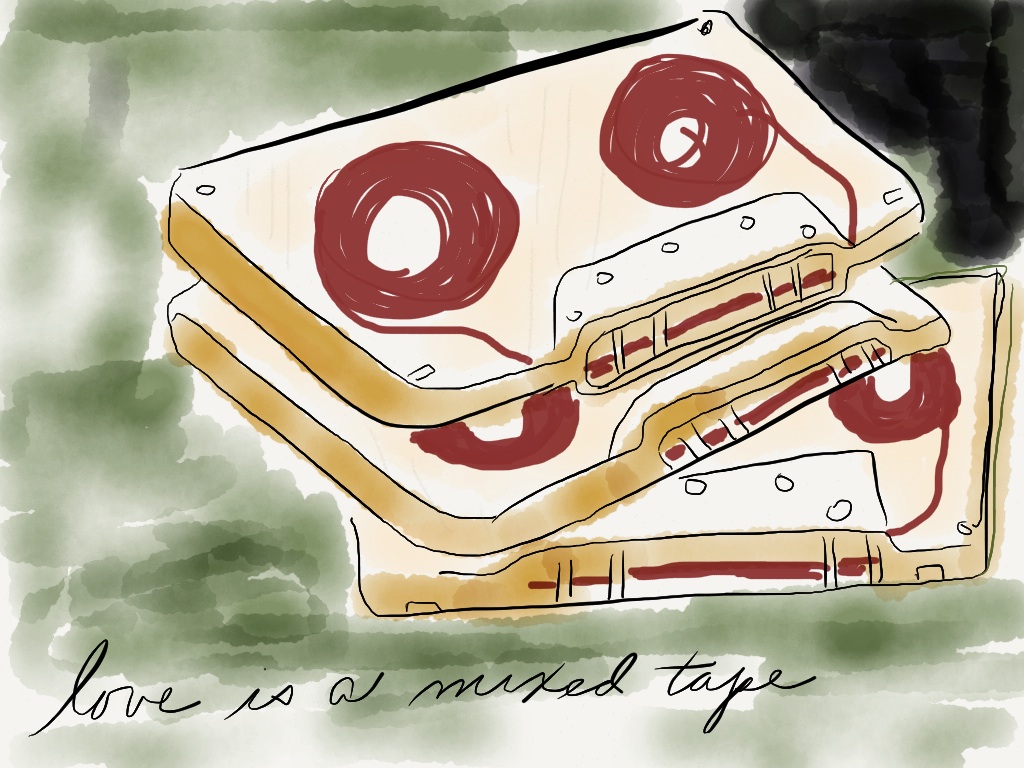
Book Review: Love is a Mixed Tape by Rob Sheffield

"Love is a Mixed Tape" illustration 2014 by jpbohannon (based on book cover)

“Love is a Mixed Tape”
illustration 2014 by jpbohannon
(based on book cover)


On two separate occasions, my friend Jim has stopped the car on the way to dropping me off at the train station to finish listening to Neil Young’s “Country Girl.”  For him, he remembers a particular girlfriend who broke up with him oddly and for whom this song is a reminder. For me, I remember hitchhiking across Canada, sitting on the floor of a Winnipeg record store (Winnipeg was where Neil was born) and copying down the chords from a fake book. For both of us, the song is a lot more than just music and lyrics.

Jim and I often do this. The “where” and “when” of a song, the lives we were leading, the dreams we were having, the people we were hanging with, are as much a part of a song than any of its recordable parts. And for each of us, those elements are different and recall a thousand different memories.

This is the basis of Rob Sheffield’s memoir Love is a Mixed Tape. Sheffield–a writer for Rolling Stone–writes about his late wife and himself through the skeleton of different mixed tapes. The sub-title of the book is Life and Loss, One Song at a Time, and this is exactly it: the life of a man and the life of the woman he loved told through the soundtrack of their lives. And, for some of us, it is our lives as well.

Sheffield starts off going through his dead wife Renee’s belongings and discovering several of her mixed tapes, spending a sad night listening to the first one–The Smiths, Pavement, 10,000 Maniacs, R.E.M., Morrissey, Mary Chapin Carpenter, and Boy George among them–commenting on her choices and their lives together when she made them. He talks about the various types of mixed tapes: the Party Tape, the “I Want You” tape, the “We’re Doing It” tape, the Road Tape, the “You Broke My Heart and Made Me Cry” tape, the Walking Tape, the Washing the Dishes tape. etc. From here he sets up his frame work–the tapes of our lives are the record of of our lives.

And so he begins. He starts by dissecting his own tapes, chronologically starting from a mixed tape he made as a thirteen-year old for an 8th-grade dance through his first romance and subsequent break up to his meeting Renee, their courtship and marriage, her sudden death and his struggles to continue on afterwards.  It is poignant and wise writing about  love and loss and survival.
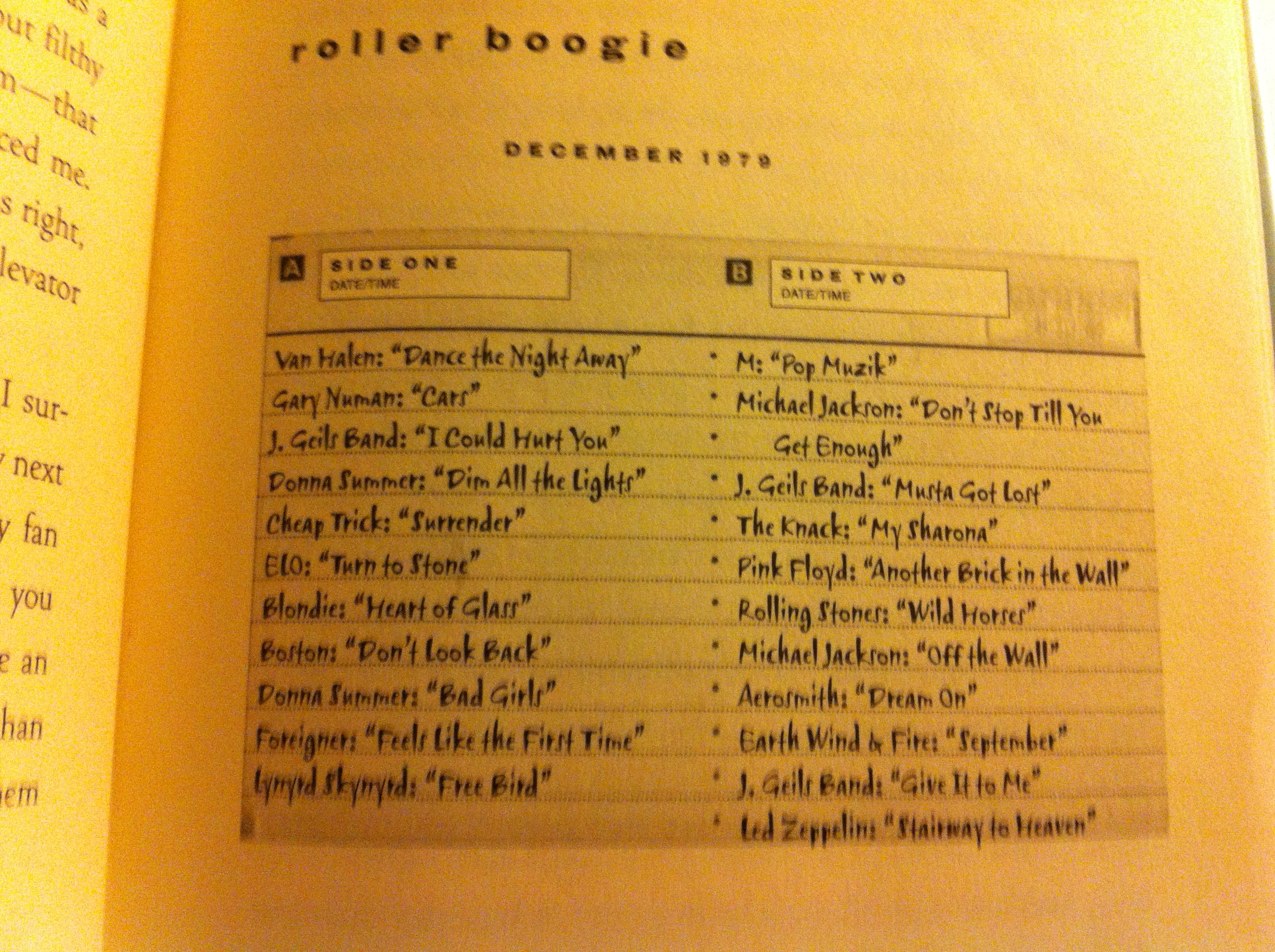
Mixed Tape Sheffield made for his 8th-grade dance

Mixed Tape Sheffield made for his 8th-grade dance

Many of the bands I had never heard of–both he and his wife were music writers–but the pure affection and excitement that these two shared for new and old music was infectious. He was an Irish-Catholic boy from Boston who grew up on Led Zeppelin, the J. Giles Band, and Aerosmith; she, an Appalachian girl from West Virginia as familiar with George Jones and Hank Williams as she was with the punk bands she adored. Together they made a likeable pair. And their knowledge and love for music is wide and inclusive.

Sheffield met his wife in 1989 and she died in 1997. Their relationship lasted most of the 1990s and this is where Sheffield the music critic is at his best. His analysis of that decade, where the music was going and what it was doing is trenchant: he understands the phenomenon of Kurt Cobain, the importance of female empowerment in 90s’ music, the resurgence of guitar bands. (His discussion of Cobain’s late music/performances as the plights and pleas of a pained husband is unique and insightful and bittersweet.)

The naturally shy Sheffield–understandably–reverts into himself after his wife’s death. He is more and more asocial, awkward and uncomfortable. He writes eloquently about the pain of loss, of the condition of “widow-hood,” of unexpected kindness, and of the haunting of the past. Sadly, music–which once was his  buoy in life–is pulling him down, especially the music that he and Renee had shared.  In the end, however, it is music that pulls him together as well. He moves out of the south and to New York City, he reconnects with friends, makes new friends, and–of course–starts seeing and listening to new bands.
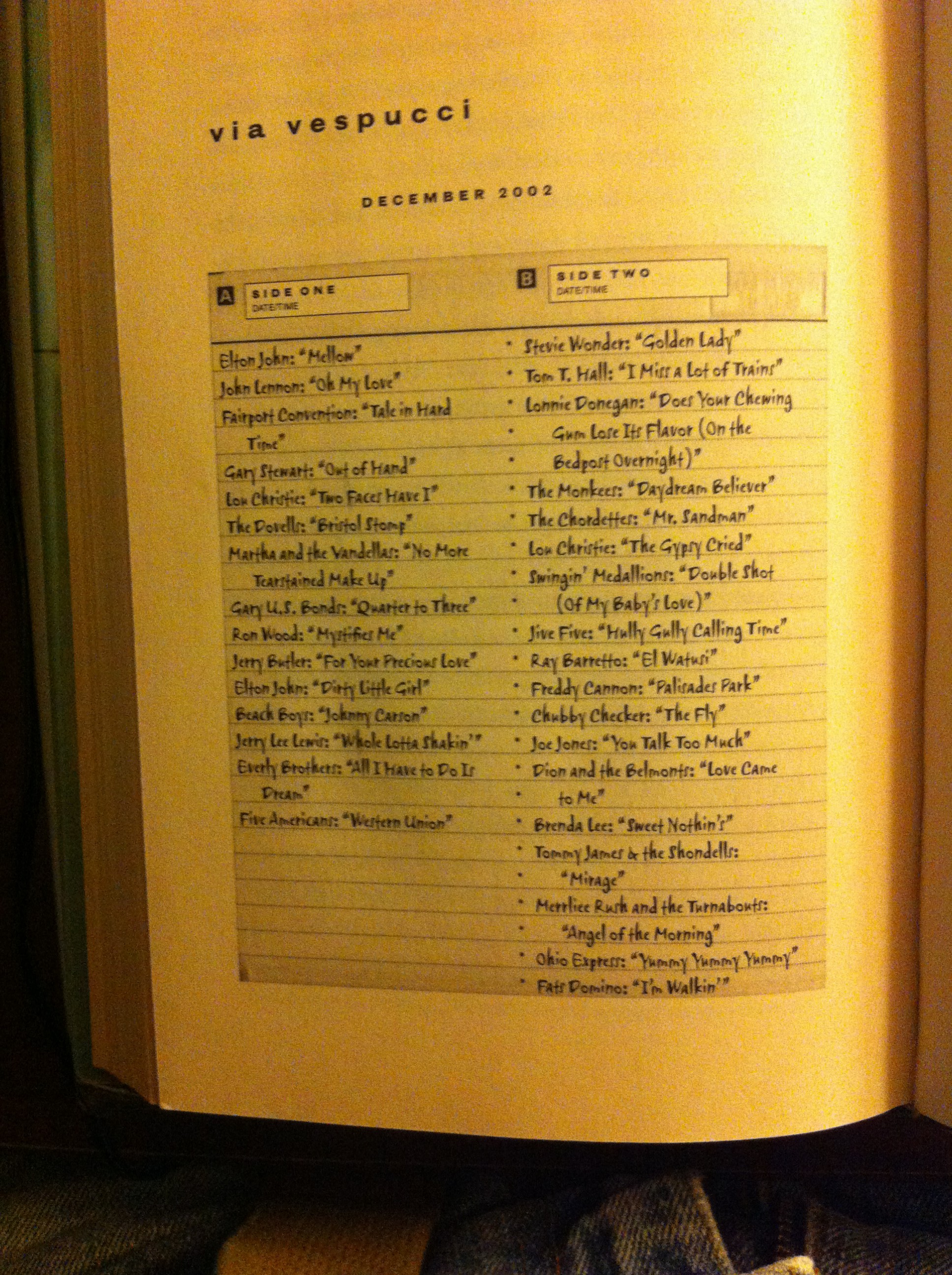
photo 3(1)

This is the tape–the last in the book–that Sheffield made when moving into a new apartment in Brooklyn, December 2002.

Love is a Mixed Tape was recommended to me by a friend, Brendan McLaughlin. Brendan was born in the mid-80’s, not long before Sheffield and his wife first met.  He is connected much more closely to the music than I am, and I am sure that he recognized a lot more of the bands and songs cited than I did.  But that is the great thing about Sheffield’s memoir: you don’t have to be completely tuned into what he is listening to, just to what he is saying.

And what he says is true.
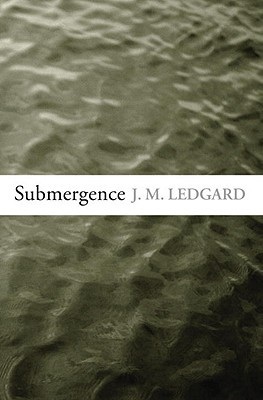
Book Review: Submergence by J. M. Ledgard

image

“submergence” illustration 2014 by jpbohannon


There are some novels that do more than just examine a life, dissect a relationship, recount an adventure. They tell you things you do not know, often things you could not know. J. M. Ledgard’s Submergence is such a novel.

James More is a secret operative for the Secret Inteligence Service , dropped into Somalia under the guise of a water engineer and captured by al-Qaeda jihadists. Tortured–physically, mentally, and psychologically–he survives by remembering his past and observing keenly his present.  A very big part of his past is a recent love affair that he had the previous year in France with Danielle (Danny) Flinders, a bio-mathematician and a renowned expert in life at the bottom of the ocean. While More is submersed in chaotic Somalia, Flinders is on a dangerous diving expedition off Greenland where she will take the submersible, Nautilie,  into an oceanic fault to get samples of the microbiotic, chemosynthetic life that exists there.

More–an ancestor of Sir Thomas More, his father was Thomas More XVI–is an Englishman who is very fond of his native home. His memories of the stone walls and green fields, the beautiful churches and the glorious music are often set against the stark, impoverished sites that his captives periodically move him to.  Flinders, part French, part Australian, is more of a free spirit, a rootless and rogue scientist, whom this affair with More has seemingly tamed. Her thoughts are perhaps larger, going beyond the current events of Muslim Africa and modern conflicts, and contemplating human origins–and extinction, the primeval soup that is the ocean, and the mythic and cosmic implications of the studies she runs.

The actual love affair itself is quick and remembered periodically by James and Danny, as he is subjected to the harsh world of jihadists on the run and she on the prehistoric world of the ocean deeps.  But although it is quick–a week or so at Christmas–it creates a lasting–and perhaps permanent–bond for the both of them.

cover of the hardback edition of Submergence

cover of the hardback edition of Submergence

But then James is taken.

In the novel–informed so greatly by current events- we learn much about jihadists–about their training camps, their dreams, their aspirations, their hatreds, their violence. We see the extreme depredations that allows young boys to decide that the promise of Paradise to martyrs is much more attractive than the life they actually live.  We see primitive societies and their primitive justice. And we see the harsh landscape of Somalia.  We see the jihadists’ voiced hatred of things Western, yet their fascination with it at the same time. (Once very popular, Rambo fighting alongside the Afghans against the Soviets has been replaced by Disney animation. The leader of James’ captors sees Bambi as an allegory of the “Crusader” in the Muslim world.)

We learn about Islam, about the djinn and the promises of Paradise.  More’s education allows him to intelligently compare Islam with Christianity, for both good and bad, to discuss literature and his ancestor’s Utopia, and to give insight into the covert maneuvers of both sides in the “war on terror.”

And we learn much about violence.

We also learn a great deal about the ocean’s floor and the creatures that live there and the (few) people who explore it.

None of this is pedantic, however.  In fact, it is fascinating. It is couched in James More’s adventure story: his struggle to survive day in and day out propels the story forward. His memories and thoughts are what tie it together. Her memories and knowledge add to the banquet.

In all it is a wonderful read.

J. M. Ledgard

J. M. Ledgard

J.M Ledgard is a journalist who has been the political and war correspondent for the Economist. He now lives in Africa, where he consults developing countries on technology and risk.  His first novel Giraffe (2006) was inspired by the slaughter of 49 giraffes at a zoo in Czechoslovakia in 1975, which Ledgard uncovered in 2001 when he was working there as a correspondent.  Submergence is his 2nd novel.

Book Review: A Farewell to Arms by Ernest Hemingway

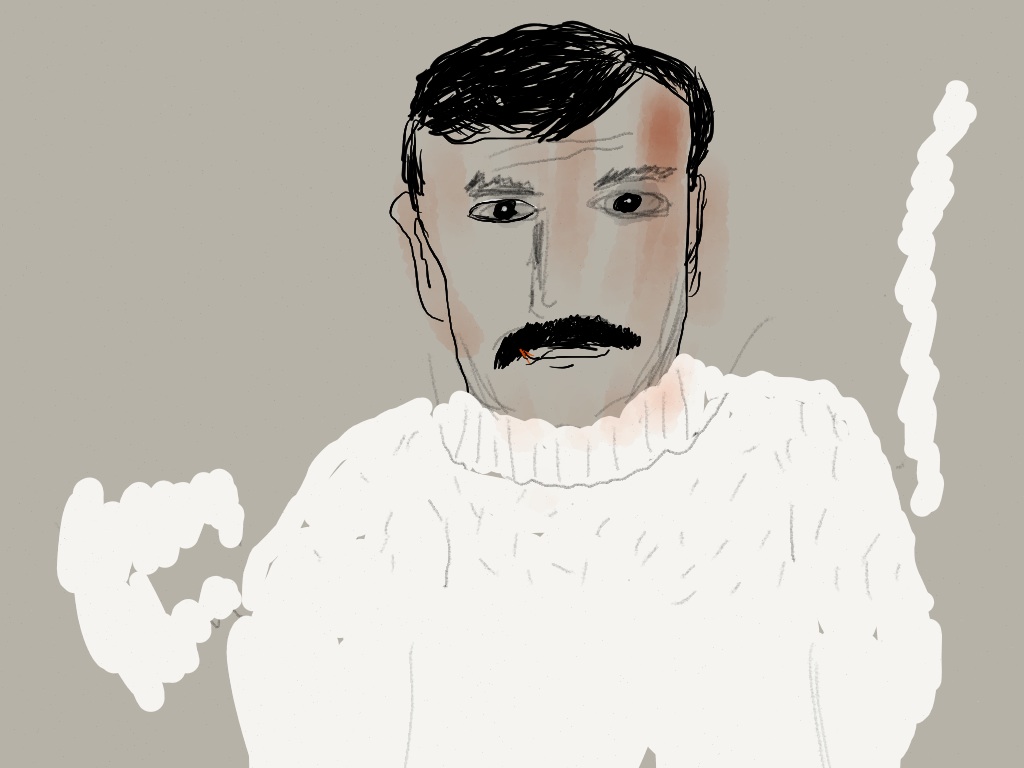
Hemingway as a young man.   illustration 2014 by jpbohannon

Hemingway as a young man.
illustration 2014 by jpbohannon

The most gaping hole in my formal education is a lack of courses in American Literature. In undergraduate and graduate school combined, I had taken only one course in American lit. My understanding is mostly self-directed–and often spurred on by the requirements of teaching American Lit survey courses for many years. Certainly, I know the school classics: The Great Gatsby, Huck Finn, The Scarlet Letter, The Old Man and the Sea, The Sound and the Fury.

And as a reader, I have discovered on my own Vonnegut and Pynchon, Heller and Elison, Mailer, Roth and Updike. And from my friends I have learned to love DeLillo, Wallace, and Johnson.  But I know there are gaps.

I took a tour, a few weeks back of Ernest Hemingway’s home in Key West. I respect and admire Hemingway’s short stories–and often teach them in writing classes for their craft–and have fond memories of reading The Sun Also Rises and A Moveable Feast,  but I never read much else. Anyway, the tour guide told us that it was here in the Key West house that Hemingway wrote a large portion of his work, in particularly A Farewell to Arms, which he stated is considered Hemingway’s greatest work. (Remember, he is a tour-guide, not a literary critic.)

And so I decided to give it a try. And to be truthful, in the beginning, it was slogging read at times.

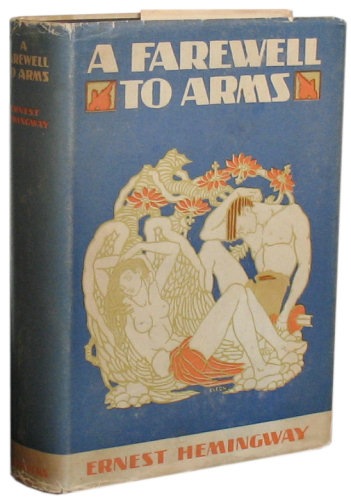
First Edition of A Farewell to Arms

First Edition of A Farewell to Arms

In brief, the novel is the semi-autobiographical story of an American ambulance driver, Frederic Henry, working for the Italian army during World War I, who is wounded, falls in love with his nurse, impregnates her and sneaks across the border with her into neutral Switzerland. There are pieces that are perfect Hemingway: the army’s long retreat, the Swiss countryside in winter, the view from a hotel room. These passages are clear and distinct and one can almost imagine Hemingway speaking them himself.

What one cannot imagine is anyone speaking the dialogue that Hemingway has given his characters to speak. The dialogue among the soldiers is stilted–but I thought perhaps that was intentional as the narrator is an American and the conversation is between him and his Italian comrades. But the conversation between the lovers–between Frederick and Catherine–is downright embarrassing.

Perhaps, it is dated. But I do not believe so. The dialogue in Fitzgerald’s Gatsby published four years earlier in 1925 is not as silly or inane. This can’t be how people talked 75 years ago. Perhaps, Hemingway is trying to capture the coded, playful language that lovers often engage in privately. Well if so, it should have remained private. While Catherine Barkley is a strong woman–a British nurse working in the Italian theater of war–when she speaks she sounds infantile and ditzy, hardly the type that Henry would fall for.

But then, perhaps, it is just me, the reader, far past the ages of the protagonists, a little bit wiser (one hopes) and a little bit more jaded.

And yet, having said all that, the slogging read and the cloying dialogue are more than made up for in the last chapter. It is here that Hemingway elevates the novel to something different, something larger. It succeeds not merely because of the drama–which in lesser hands would have become melodrama–but because of  the craft. The language is pared down–like Joyce had taught him–and there is simply life, death, man and woman. It doesn’t get more basic than that. In the end we admire Frederic Henry more than before–I found him hard to like or take seriously throughout much of the book– and we admire Hemingway too. We admire what he is doing and we understand how this novel placed Hemingway in the pantheon of American authors.

Hemingway famously once claimed that he rewrote that last chapter 39 times. Well, then it is a good advertisement for revision, for it is so superior to everything else.

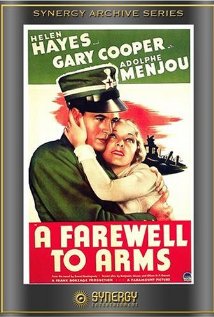
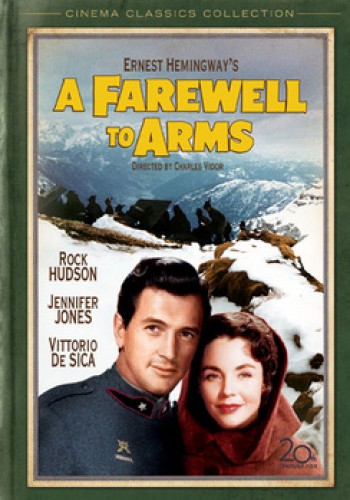
The novel was an instant–and huge–success.  Within a year of its publication a dramatization was staged and in 1932 Hollywood released a major film of the novel, featuring Gary Cooper and Helen Hayes.  In 1957, a second film was made, this time starring Rock Hudson and Jennifer Jones.

I have seen neither, and I won’t search for them. It is Hemingway’s language and style that is the star of A Farewell to Arms, not the story.  And much of that would be lost in film.

Movie Poster for 1932 film

Movie Poster for 1932 film

Movie Poster for 1957 film

Movie Poster for 1957 film

Gore Vidal: The United States of Amnesia

Gore Vidal Illustration 2014 by jpbohannon

Gore Vidal
Illustration 2014 by jpbohannon

The United States was founded by the brightest people in the country…and we haven’t seen them since.” Gore Vidal

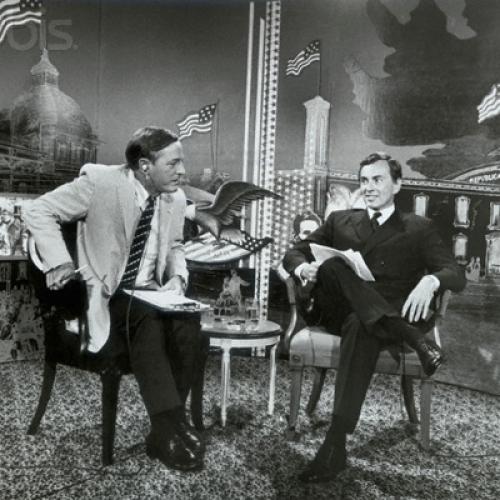
Gore Vidal is perhaps one of the U.S.’s most under-appreciated writers, certainly was one of its most vocal political intellects, and truly one of its most fascinating personalities. Novelist, screenwriter, playwright, essayist, he parlayed his wit and intelligence–and his knowledge of the backrooms of politics– into becoming a favorite choice when looking for a liberal spokesman for televised debate (most famously with William F. Buckley), a panel member, or talk show guest.

vidal6

The infamous of their many debates where Buckley called Vidal a “queer” and Vidal called Buckley a “crypto-Nazi.” They were discussing police brutality in Chicago during the 1968 Democratic Convention.

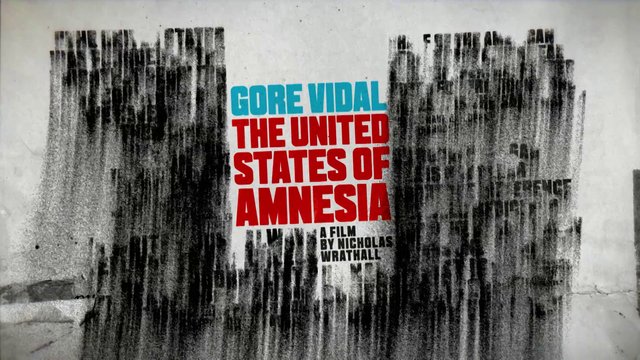
Nicholas D. Wrathall’s documentary, Gore Vidal: The United States of America attempts to capture the wit, the acerbity, the political thought and the literary presence of Vidal, but at last, Vidal is really simply large a figure to truly pin down in little less than two hours. So it focuses on the political.

The film tries to be chronological but it is not really historical, moving ahead and back indiscriminately in chapters set off by one of Vidal’s aphorisms.

“I heard bad news on the way over here: the Ronald Reagan Presidential Library was just destroyed by fire, and, tragically, both books were a total loss. Worse yet, he wasn’t finished coloring the second one.” Gore Vidal to the National Press Club on Ronald Reagan

The United States of Amnesia is primarily focused on Vidal’s political thought–and his ultimate pessimism about the reality of the United States. The biographical part moves rather quickly. He was raised primarily by his blind grandfather, the U.S. Senator from Oklahoma, Thomas Gore, for whom he acted as page and guide, and for whom he would read out loud the senator’s voluminous reading list of philosophy and political thought. The political ideas and conversations that his grandfather was interested in had to come first through the mouth of his young grandson, and gave the young man an invaluable schooling. Vidal–who was christened Eugene Luther Gore Vidal–took the grandfather’s last name as his own and became Gore Vidal.

Even as a child, Vidal was surrounded by the powerful and famous. Not only did Vidal walk the august halls and back offices of the U.S. Senate with his grandfather, but his father was a close adviser to FDR and was, according to one biographer, the great love affair of Amelia Earhart. His mother married four times, once to Henry Auchincloss, the step-father of Jacqueline Bouvier, the future Mrs. Kennedy. Vidal also reported that she had a long “on-again, off-again” affair with the actor Clark Gable.

After service in the navy during World War II, Vidal published–at the age of twenty-one– the novel, Williwaw. Based on his military experiences, the novel was highly successful. His second novel published two years later The City and the Pillar, caused a furor of controversy because of its matter-of-fact portrayal of homosexuality. So outraged was the mainstream press, that the editor of The New York Times, Orville Prescott, refused to “read or review” any subsequent Vidal novels.  (Vidal got around this to a small degree by writing under the pseudonym  Edgar Box.)

“What is in question is a kind of book reviewing which seems to be more and more popular: the loose putting down of opinions as though they were facts, and the treating of facts as though they were opinions.  Gore Vidal

With his books banned from review from the national “papers of record,”  Vidal set out to become a screen writer in Hollywood. He wrote several television plays–the most notable being The Best Man–and several feature films, including the rewrite of the script for Ben-Hur.  

In the 1960s, Vidal returned to fiction, writing three  novels Julian, Washinton, D.C. and Myra Breckinridge. In a way, these three encompass the themes of all his later fiction–ancient history, Washingtonian politics, and broad comedic social commentary.  Importantly,  also in the 1960s, Vidal moved to the Amalfi coast in Italy.  He was not the first writer to believe he can see and comment on his native country better from a distance…and that is what he did.

Vidal’s targets were many:  American foreign policy, the militarization of America, the role of big business in American politics, the growth of religion in government.  In journals such as The New Statesman, The Nation and The New York Review of Books, Vidal spoke his mind in well-crafted, observant and illuminating essays. Indeed, it is the essays for which Vidal is most celebrated.  Always witty, always incisive, and always confident in his beliefs, the tendencies of his political thought still harkened to the populist politics of the grandfather who raised him.

It is difficult to capture all of Vidal in a movie.  In Gore Vidal: The United States of Amnesia, we have film clips of the famous debates and talk show appearances, we have photographs of the famous and celebrated who attended his many parties, and we have talking heads reminiscing about Vidal.  Perhaps, the most rewarding of the bits is when Vidal himself remembers particular moments. An adept storyteller–often supplying different accents–he tells us of a shooting party with him, JFK and Tennessee Williams, of an encounter between Paul Neuman and William F. Buckley following the legendary “crypto-Nazi” debate, and of the pain of ultimately packing up his beloved home in Italy when he became to feeble to stay there himself.
vidal-image

Poster for Nicholas Wrathall’s documentary on Gore Vidal.

The film begins with Vidal visiting the tombstone where his life long partner Howard Austen was buried and where his name is etched waiting for him to join. It ends there as well, a full circle.  It is an enjoyable two hours, filled with insight and humor and not a small bit of nostalgia for a time when non-conformist ideas and opinions were voiced in the mainstream and not lost in a sea of cable channels and internet sites.

“All in all, I would not have missed this century for the world.”  Gore Vidal

The Hemingway House, Key West

Hemingway House, Key West Illustration 2014 jpbohannon

Hemingway House, Key West
Illustration 2014 jpbohannon

I have always had a love/hate relationship with Ernest Hemingway. For a long time, all the machismo got in my way: the big game hunting, the bull fighting, the boxing, the boasting, the egoism, all seemed to be compensating for something, a sense of insecurity perhaps, to put it in simplest terms.

And yet, I love his writing. It is pure and clean and powerful and elemental. I can still feel the the visceral punch in  “Indian Camp” when the father removed the blanket from the young husband in the upper bunk. Or, the pared-down, gradual dawning of realization in reading “Hills Like White Elephants” or the existential abyss yawning at the end of a “A Clean Well Lighted Place.”

It’s been a while since I read one of the novels. I remember A Sun Also Rises fondly. The damaged romanticism of  Jake Barnes, the alluring aloofness of Brett Ashley, the thirsty landscape of Spain are all still vivid in my mind despite how long ago I last read it. And while critics claim A Farewell to Arms to be the better written novel, The Sun Also Rises remains more important to me.  (A colleague just last month called it the worst novel written in English! Oh well.)

And so, with this ambivalence about Hemingway, I visited his home while in Key West in early June.

The home is extraordinary–and rich in story and history.

photo

The front of the Hemingway House on Whitehead Street in Key West. Photograph 2014 jpbohannon

In the 1930s, Hemingway moved to Key West with his second wife–Pauline Pfeiffer–whose uncle purchased the house on the corner of Whitehead and Olivia Streets. And although, Hemingway claimed that he was “restless” in Key West, at this house he wrote a great deal of what would be his most important work.

The house is a two level structure built in 1851 by Asa Tift, a successful architect and salvager, and the Hemingways bought it in 1931.  Today, the home is an Historic Site and remains filled with the Hemingways’ furniture and artifacts.  Throughout each room are both original furnishings and memorabilia–posters of movies made from his novels, photos of Hemingway at various stages of his life, of his family, and of various celebrities and writers. The bed in the master bedroom is actually two double beds that Hemingway wired together and the headboard is a gate made of Spanish mahogany that Hemingway and his wife had seen in a monastery in Spain.  A bench in the foyer is from the same monastery.

Hemingway's Writing Studio in Key West Photograph 2014 jpbohannon

Hemingway’s Writing Studio in Key West
Photograph 2014 jpbohannon

Behind the main house is a “carriage house” in which Hemingway had built a writing studio on the second floor.  In order to ensure his privacy, Hemingway had a wrought-iron catwalk stretched across the patio from the bedroom to his studio.  This was the only means in and out.  Today, the catwalk has been taken down and there is a narrow stairway from the patio to the studio door.  It is an ideal working space.

The house also has a large pool–the first ever in Key West.  Hemingway and Pauline had wanted to build a pool, but cost was prohibitive.  They had bought the house for $8000 dollars, but building a pool in the remote Keys was expensive. Instead, Hemingway built a regulation sized boxing ring. Much to Pauline’s dismay, her dream of lounging poolside had given way to a ring side seat to her husband’s sparring bouts.

However, Pauline got her way (and ultimately the house itself).  Hemingway had started an affair with the writer Martha Gelhorn, and the two of them had met up in Spain to cover the Spanish Civil War.  When Pauline caught wind of the tryst, she promptly had a over-sized pool built–at the cost of $20,000, two and half times the cost of the house.

When Hemingway returned he was none too pleased.  In one gesture of comeuppance, he dragged a urinal from what was then Sloppy Joe’s (and is now Captain Tony’s) which had been thrown curbside during renovations, and brought it home as a watering trough for his many cats. As he told his wife, “you have your pool, and now I have mine.”

And it is the cats that retain their residency.  Hemingway loved cats, particularly 6-fingered, “polydactyl” cats. He believed them to be good luck. There are countless photos of Hemingway with them–while he wrote and while he lounged. (Apparently, they were the only others who had access to his studio.) Today, all of the 48 or so cats on the property are descendants of Hemingway’s cats–and all of them carry the gene for the polydactyl mutation.

One of the many six-fingered cats on the Hemingway Huse property. photograph 2014 by jpbohannon

One of the many six-fingered cats on the Hemingway Huse property.
photograph 2014 by jpbohannon

But after the cats and the pools and the writing studios, after the womanizing, the wives, and the bluster, after the houses and the legends and the suicide, what we are left with in the end is the writing.  As I said earlier, it is pristine and clear and purposeful.  Hemingway was a great reviser, mostly paring down and paring down to the very essence of what he wanted to say. As he famously told an interviewer, the hardest part is getting the words right:

Interviewer: How much rewriting do you do?
Hemingway: It depends. I rewrote the ending of Farewell to Arms, the last page of it, 39 times before I was satisfied.
Interviewer: Was there some technical problem there? What was it that had stumped you?
Hemingway: Getting the words right.
(Ernest Hemingway, “The Art of Fiction,” The Paris ReviewInterview, 1956)

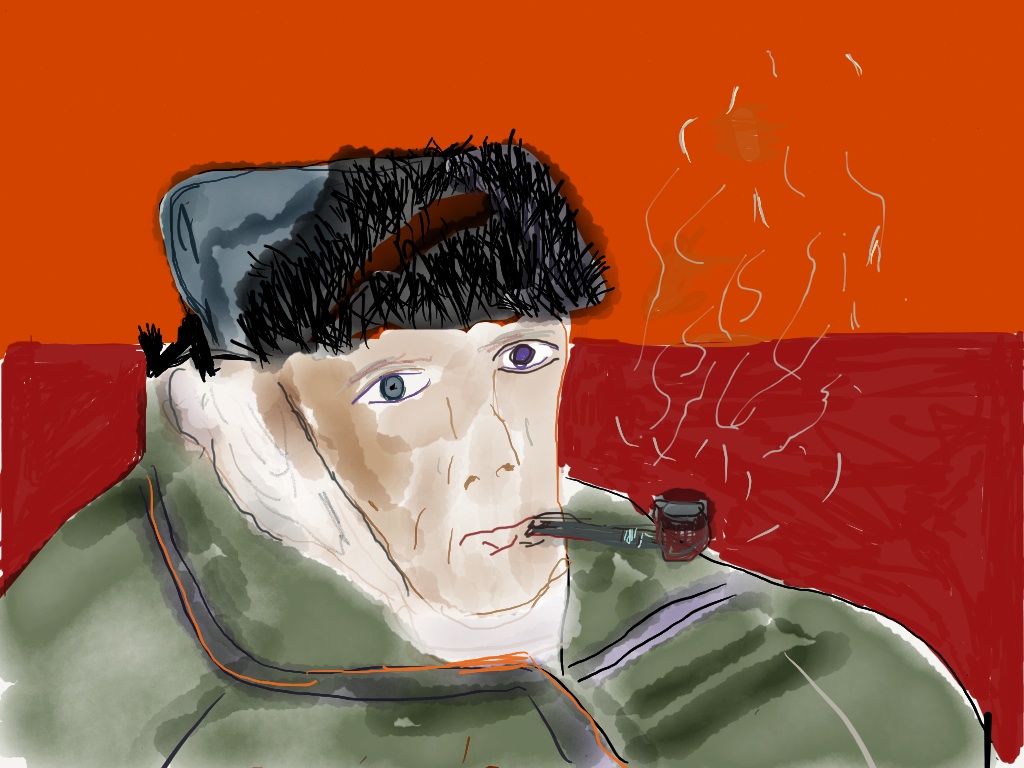
Quote #43: “The way to know life…”

Illustration 2014 by jpbohannon

Illustration 2014 by jpbohannon

The way to know life is to love many things.     Vincent Van Gogh


Quote #42: “There are three things all wise men fear…”

Gentle man on a moonless night. Illustration 2014 jpbohannon

Gentle man on a moonless night.
Illustration 2014 jpbohannon

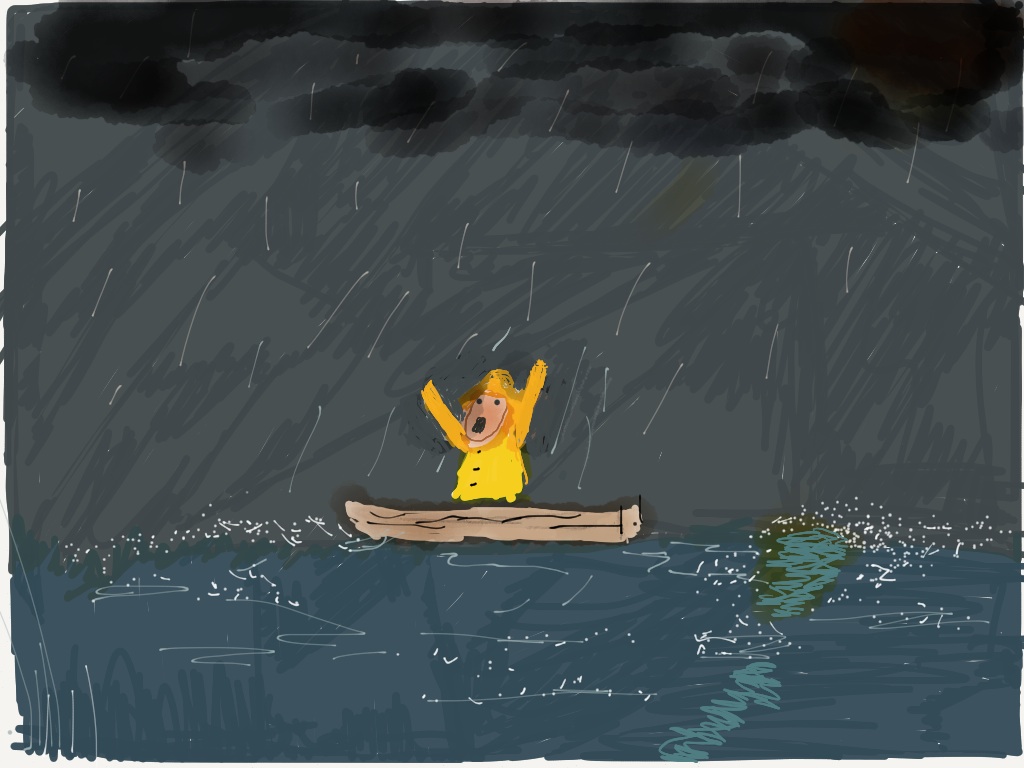
“There are three things all wise men fear: the sea in storm, a night with no moon, and the anger of a gentle man.” – Patrick Rothfuss, The Wise Man’s Fear

Quote #41: “…someday, everything’s gonna be different.”

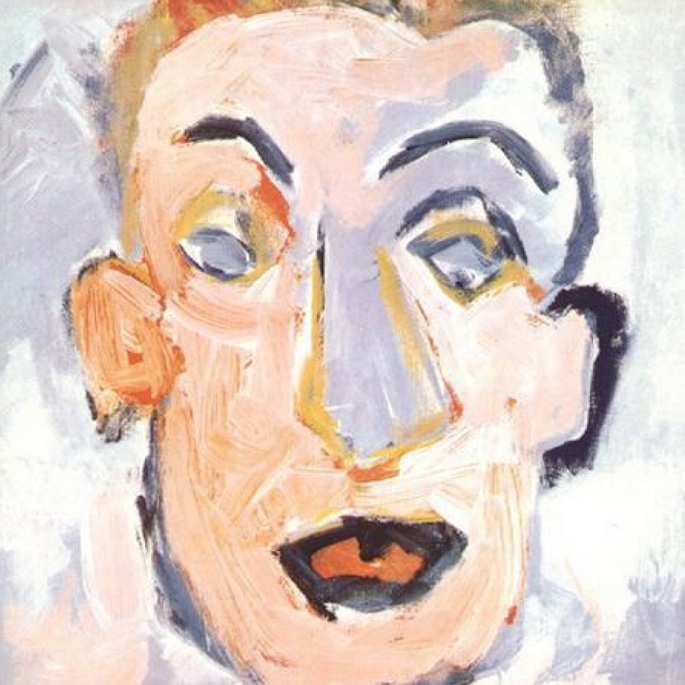
Dylan's self-portrait The cover of the Self-Portrait album

Dylan’s self-portrait
The cover of the Self-Portrait album

“But someday, every thing’s gonna be different/ when I paint my masterpiece.”

Bob Dylan, “When I Paint My Masterpiece”

Happy Birthday, Bob: May 24, 1941…so as a special treat, here’s Bob singing “When I Paint My Masterpiece” with the Band.

Movie Review: Woody Allen’s Blue Jasmine


Blue Jasmine Illustration 2014 by jpbohannon

Blue Jasmine
Illustration 2014 by jpbohannon

More than a year and a half ago, I first saw the trailer for Woody Allen’s Blue Jasmine. I was excited about it, as I usually am with new Woody Allen films, but now my interest was especially piqued: it was a return to the U.S. for Allen whose recent work had been in London, Rome, Barcelona and Paris.

The director whose greatest actor had always been the city of New York was returning home…although his depictions of the European sites were equally memorable and noteworthy.

The cast was eclectic (as is often the case in Allen’s work), and even before its general release, there was murmuring about Cate Blanchett’s performance. Already, the wags were talking Oscar (and they were right in their early prediction.) The setting was New York–Manhattan and the Hamptons–and San Francisco. And the writing seemed crisp and clever.

But for some reason, I put off seeing it. The times or the opportunities were never right, and I found myself hesitating because of the many people who told me how depressing they had found it. The analogies that I had noticed between it and A Streetcar Named Desire were now being mentioned in every piece I read.

And Streetcar can be rough.

And so now, twenty-two months after it was released, three months after Cate Blanchett won every major award for Best Actress, and several months after it was put on “On-Demand” I saw Blue Jasmine.

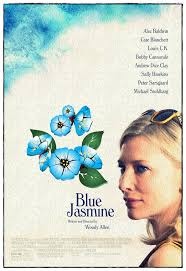
Poster for Blue Jasmine

Poster for Blue Jasmine


And I loved it.

Cate Blanchett-as “Jasmine,” the pampered rich-girl whose world comes crashing down when her Bernie Madoff like husband (Alec Baldwin) is arrested by the F.B.I. and who loses everything– alternates between haughty insensitivity and splintered lunacy. The moments when she is lost and most fragmented are frighteningly real. The moments when she is full of herself are maddening and distancing.

The film, in many ways, is a portrait of a woman who is shattered. We see her life as it once was–rich, pampered, and idle–and we see her now. Fueled with Xanax and vodka, talking out loud to herself, losing track of the present moment, and trying to manipulate those around her,  she is a wreck of a woman.

And as in Streetcar, Jasmine –the Blanche duBois character–finds romance and possibly love, and as in Streetcar, it is sabotaged. And like Blanche, it is the final straw for Jasmine, and we last see her chattering to herself like a madwoman on a park bench.

Cate Blanchett as "Jasmine"

Cate Blanchett as “Jasmine”

While Blue Jasmine is undoubtedly Cate Blanchett’s film, she is supported by some wonderful actors. Sally Hawkins plays Jasmine’s “sister,” Ginger.; Alec Baldwin, the smarmy husband whose financial fraud and infidelities send Jasmine down the road to mental breakdown; and Andrew Dice Clay and  Bobby Cannavale as Ginger’s ex-husband and her present fiance–an amalgam of Stanley Kowalski from Streetcar.

My original fear that Blue Jasmine was going to be just too depressing was wrong. Instead, I found it fascinating–a fascinating film and a fascinating story, anchored by a truly fascinating and extraordinary performance.

Quote #40: “A page with a poem…” Anne Carson

illustration 2014 by jpbohannon

illustration 2014 by jpbohannon

“A page with a poem on it is less attractive than a page with a poem on it and some tea stains.” —Anne Carson (as quoted in The Paris Review )