
illustration 2014 jpbohannon
… it’s
spring
and
the
the
goat-footed
balloonMan whistles
far
and
wee
e.e.cummings from “in just Spring”
illustration 2014 jpbohannon
… it’s
spring
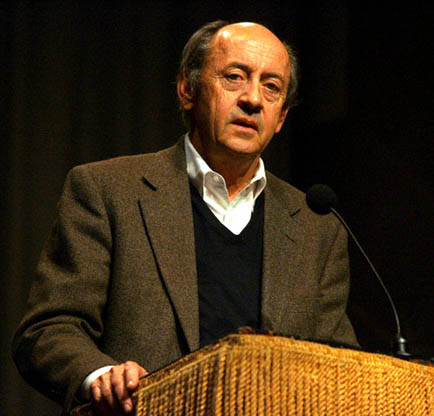
Billy Collins
The other night I went to see the poet Billy Collins deliver a lecture. It was a pretty fancy event–I’d been given the tickets– held in the beautiful Verizon Hall at the Kimmel Center in Philadelphia. As Billy Collins remarked, it is like standing inside an enormous cello.

Verizon Hall at the Kimmel Center, Philadelphia, PA
Anyway, I don’t know a lot of Collins’ poetry, except maybe two or three poems, but I always use his poem “Introduction to Poetry” at the beginning of any course I teach in poetry. In it, Collins claims:
I ask them to take a poem
and hold it up to the light
like a color slide
or press an ear against its hive.
I say drop a mouse into a poem
and watch him probe his way out,
or walk inside the poem’s room
and feel the walls for a light switch.
I want them to waterski
across the surface of a poem
waving at the author’s name on the shore.
But all they want to do
is tie the poem to a chair with rope
and torture a confession out of it.
They begin beating it with a hose
to find out what it really means.
It is those last five lines that are important. They describe why poetry is met with such an “ugh” from people whose only experience with it has been in classes where the well-intentioned teacher urged them to “find the meaning.”
I tell my students that human beings are innately wired to respond positively to poetry (think infant lullabies, toddlers’ picture books, nonsense riddles, jump-roping songs). It is the English teachers who teach students to dislike it. To think of it as something to fear and dread.
And that is a shame.
For last night, Collins (who repeated what I said about poetry being innate) was as entertaining as could be. He told the audience a bit of his life and his term as Poet Laureate of the U.S. He spoke of his influences and literary influences in general. He spoke of the death of humor in poetry–he blames the Romantics who he said “replaced sex and humor with landscape.” And he spoke of the difficulty for some people used to hearing formalist poetry to hear the acoustics of what is commonly called free verse. (He doesn’t like the term.)
He also read several of his poems, although half of what he read came from others. Here is a wonderful two line poem by Howard Nemerov called “Bacon and Eggs”:
The chicken contributes,
But the pig gives his all.
See it’s good to laugh. And have fun in poetry.
And so he spoke of the importance of humor and used a poem by Ruth L. Schwartz to demonstrate how humor can be used as a transition point, moving from light to darkness (or vise versa). He got a laugh on the line “look at that DUCK,” which is how he wanted it to be:
The Swan at Edgewater Park
Isn’t one of your prissy richpeoples’ swans
Wouldn’t be at home on some pristine pond
Chooses the whole stinking shoreline, candy wrappers, condoms
in its tidal fringe
Prefers to curve its muscular, slightly grubby neck
into the body of a Great Lake,
Swilling whatever it is swans swill,
Chardonnay of algae with bouquet of crud,
While Clevelanders walk by saying Look
at that big duck!
Beauty isn’t the point here; of course
the swan is beautiful,
But not like Lorie at 16, when
Everything was possible—no
More like Lorie at 27
Smoking away her days off in her dirty kitchen,
Her kid with asthma watching TV,
The boyfriend who doesn’t know yet she’s gonna
Leave him, washing his car out back—and
He’s a runty little guy, and drinks too much, and
It’s not his kid anyway, but he loves her, he
Really does, he loves them both—
That’s the kind of swan this is.
But the most effecting poem that he read was the one that he read last. It is his beautiful poem about the love between a mother and son–told with sweet humor:
The Lanyard
by Billy Collins
The other day I was ricocheting slowly
off the blue walls of this room,
moving as if underwater from typewriter to piano,
from bookshelf to an envelope lying on the floor,
when I found myself in the L section of the dictionary
where my eyes fell upon the word lanyard.
No cookie nibbled by a French novelist
could send one into the past more suddenly—
a past where I sat at a workbench at a camp
by a deep Adirondack lake
learning how to braid long thin plastic strips
into a lanyard, a gift for my mother.
I had never seen anyone use a lanyard
or wear one, if that’s what you did with them,
but that did not keep me from crossing
strand over strand again and again
until I had made a boxy
red and white lanyard for my mother.
She gave me life and milk from her breasts,
and I gave her a lanyard.
She nursed me in many a sick room,
lifted spoons of medicine to my lips,
laid cold face-cloths on my forehead,
and then led me out into the airy light
and taught me to walk and swim,
and I, in turn, presented her with a lanyard.
Here are thousands of meals, she said,
and here is clothing and a good education.
And here is your lanyard, I replied,
which I made with a little help from a counselor.
Here is a breathing body and a beating heart,
strong legs, bones and teeth,
and two clear eyes to read the world, she whispered,
and here, I said, is the lanyard I made at camp.
And here, I wish to say to her now,
is a smaller gift—not the worn truth
that you can never repay your mother,
but the rueful admission that when she took
the two-tone lanyard from my hand,
I was as sure as a boy could be
that this useless, worthless thing I wove
out of boredom would be enough to make us even.
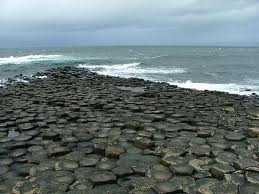
The Giant’s Causeway
–Carved out by Finn McCool
In the mid-nineties, the Guinness company ran a contest that entailed writing an advertisement within a certain number of words. First prize for the winning ad was a pub in Ireland, and you could see the pubs themselves on-line. (Winning this prize is the impetus of the plot of the novel The Night Swimmer)
Anyway, I remember my entry and remember loving its major image…150 orphans playing handball against the wide girth of Finn McCool’s arse.
Obviously I didn’t win. (I arrogantly told myself that I didn’t win the contest because it was run by American advertisers who didn’t pick up on the allusion!)
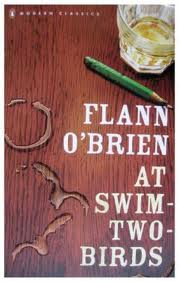 And I remembered that ad because the image came from Flann O’Brien’s novel, At Swim-Two-Birds. And last week I began a post with a poem “The Workman’s Friend” that came from the same novel. That post got me nostalgic for O’Brien’s work. A man of many pseudonyms, O’Brien is best known for the comic novel At Swim-Two-Birds, although my funnest memories are of The Third Policeman and The Poor Mouth, the latter which O’Nolan wrote in Irish as An Beal Bocht under the pen name Myles na Gopaleen. (And both of which I first read in Connemarra and Sandymount respectively.)
At Swim Two-Birds is a rich novel of basically three stories, a meta-fiction in which a character created by the protagonist writes a novel from which his characters gang together with other characters in the novel to avenge their creator. It starts with a university student, who spends more time in his bed and in the pubs than in the classroom. Besides drinking, the student is also writing a novel about a man named Dermot Trellis, a middling writer of Westerns. It is his characters who intermingle with each other, who plot against him, and who attempt to live their lives apart from their author’s intentions, after they drug him.
All of this is mixed with a great deal of Irish mythology and ancient poetry (wryly translated by O’Brien himself). From McCool to Mad King Sweeney, from pookas to fairies, an entire ancient world enters this most modern of novels and interacts with O’Brien’s and Trellis’s fictional creations.
To say there is a circularity to the plot is perhaps inaccurate, and certainly understated. It is more like a mobius strip in another dimension. One thing turns on another to make way for other things that reflect on something else. This jibes very much with the Greek epigraph which translated means “For all things change, making way for each other.” For yes, indeed, one character after another makes way for one other character after yet another.
But most memorably, it is laugh-out-loud funny.
So I began re-reading At Swim-Two-Birds again this week and I started thinking of comic novels in general.
I feel they are best enjoyed by the young.
Think The Gingerman and Catch-22. Think Tom Jones and Confederacy of Dunces. Think Lucky Jim and Reuben, Reuben. Each presents a hero who is outrageously set up against the straight-laced establishment, whether it be the military bureaucracy, the world of academia, or society in general. And each hero takes part in the most outrageous antics–antics that only a young soul could aspire to and believe in. It was once said that an uncle of mine in the army tried to received a medal buck naked, much like–and before–Yossarian in Catch-22. (Unlike Yossarian, he was thrown in the brig.) For my 21st birthday, a good friend of mine wanted to rent a kangaroo suit for me to go bar hopping in, as Sebastian Dangerfield did in The Gingerman. I still chuckle at the peccadilloes that the Scottish poet Gowan McGland gets himself into in the uptight Connecticut suburbs in Reuben, Reuben. (Apparently, the plot was based on Dylan Thomas’s drunken stay in the town in the 1950s.)
But these antics and nose-thumbings are the actions (and dreams) of younger men. And, also, the world has changed. I remember once reading The Gingerman on a bus and being accosted by a woman who yelled that Sebastian Dangerfield was the most misogynistic character in all of literature. I had to admit she was right. In fact, I’d go one further: he is one of the most despicable anti-heroes of all time. Yet, he is still extraordinarily funny.
But, young or old, the truth of all comedy is a certain sadness mixed with the high-jinx. Perhaps the perception of each changes with age–but they both are undoubtedly there. They both need each other.
And so, once more I am churning through At Swim-Two-Birds, and I am still laughing out loud. I just hope that there is no one on my bus protecting the interests of characters who are thought up by characters who are thought up by characters. Cheers.

Ancestors’ Song by Maria Mazziotti Gillan
A friend of mine went to a conference in New York City a few weeks back, where she saw the poet, Maria Mazziotti Gillan. When she returned, she had thoughtfully brought me back a copy of Gillan’s latest collection, Ancestors’ Song, with a lovely note on the title page (which I didn’t discover until I had read most of it two or three times.)
The poems are powerful. They are heart-wrenching and thought provoking and memory inducing.
Anyway, I thought I would share one with you. (I hope that Ms. Gillan does not mind.)
Even if you claim not to like poetry, read this one anyway. It is not a thanksgiving day poem, but a poem about mothers and food and abundance and unspoken love, things that are often intertwined during this holiday which so heavily focuses on the kitchen and table.
Enjoy it:
“Conjuring Up My Mother,” by Maria Mazziotti Gillan. In Ancestors’ Song, Bordighera Press, 2013.

“Follow your inner moonlight; don’t hide your madness.” Allen Ginsberg
illustration 2013 jpbohannon
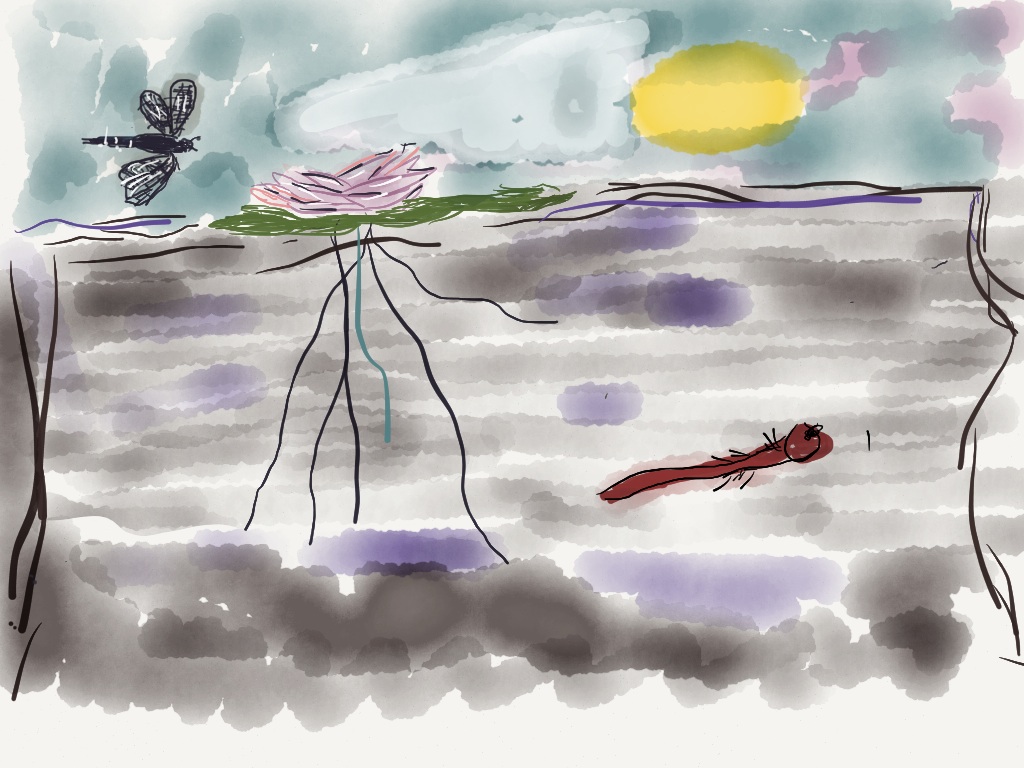
illustration 2013 jpbohannon
… Now paint the long-necked lily-flower
Which, deep in both worlds, can be still
As a painting, trembling hardly at all
Though the dragonfly alight,
Whatever horror nudge her root.
from “To Paint a Water Lily,” Ted Hughes
I rarely drive, so I rarely listen to the radio. That might not make sense for many, but I know that some will understand. The radio is simply not part of my home life.
But anyway,there were reasons for my being behind the wheel this past Thursday and I was listening to RadioTimes on Public Radio (Marty Moss-Coane on WHYY in Philadelphia.) The guest was MK Asante, a hip-hop singer, filmmaker, writer and creative-writing/film teacher at Morgan State University.
I was blown away.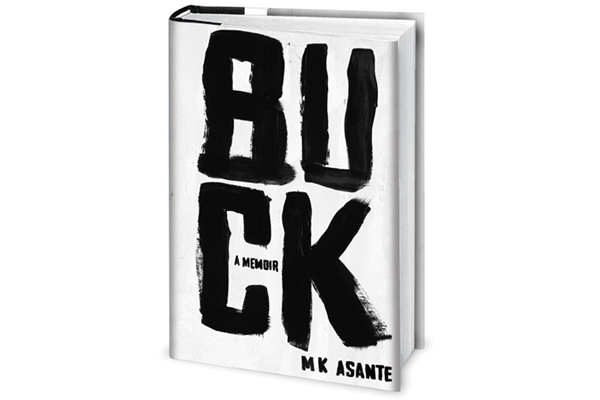
Asante was plugging his new book, Buck: A Memoir about his life in “Killadelphia” during the 1990s. At the same time it is the story of his family’s breaking apart and then coming back together.
Asante was born in Zimbabwe and raised in Philadelphia. His parents’ marriage disintegrated, his idolized brother had a series of run-ins with the law and was imprisoned, his mother suffered from clinical depression, and he grew up in the “hood” full of anger, confusion, and energy.
This coming-of-age story is probably more familiar than it ever should be, but, oh, the language itself is extraordinary. Like nothing you ever heard.
Here is the first paragraph of the book: (Asante reads it in the interview attached below):
The Fall
The fall in Killadelphia. Outside is the color of corn bread and blood. Change hangs in air like sneaks on the live wires behind my crib. Me and my big brother, Uzi, in the kitchen. He’s rolling a blunt on top of the Source, the one with Tyson on the cover rocking a kufi, ice-grilling through the gloss. Uzi can roll a blunt with his eyes closed.
Cracks, splits, bits.
The rawest crews in Philly are all three letters,“ he tells me. I read the cover through the tobacco guts and weed flakes: “The Rebirth of Mike Tyson: ‘I’m Not Good. I’m Not Bad. I’m Just Trying to Survive in this World.’”
Awakening crews in a rude fashion
On they ass like Mike Tyson at a beauty pageant•
I do this–spit lyrics to songs under my breath–all day, every day. The bars just jump out of me no matter where I am or what I’m doing. It’s like hip-hop Tourette’s.
Dumps, spreads, evens.
“JBM–Junior Black Mafia. Of course us, UPK–Uptown Killaz. PHD–Play Hero and Die.”
Tears, licks, wraps.
“HRM–Hit Run Mob. EAM–Erie Ave. Mobsters. ABC–Another Bad Creation.”
Folds, rolls, tucks. Another perfect blunt, jawn looks like a paintbrush.
Jawn can mean anything–person, place, or thing. Sometimes if we’re telling a story and don’t want people to know what we’re talking about, we’ll plug in jawn in for everything. The other day I was at the jawn around the corner with the young jawn from down the street. We get to the jawn, right, and the ngh at the door is all on his jawn, not nowing I had that jawn on me. Man, it was about to be on in that jawn.
“ Wreck Your Ears (Can Do),” The B.U.M.S. (Brothers Under Madness), 1965
This is language at its most alive, its most energetic. (To hear him read it is even more electrifying.)
Asante mentions in the interview that the first book that turned him on was Jack Kerouac’s On the Road. Besides the plot of the novel–drugs, sex, wildness–which he was surprised to learn could be the focus of serious literature, it was the style of the writing that attracted him, the energy, the speed, the exuberance. As he said, from it he learned he didn’t have to worry about commas.
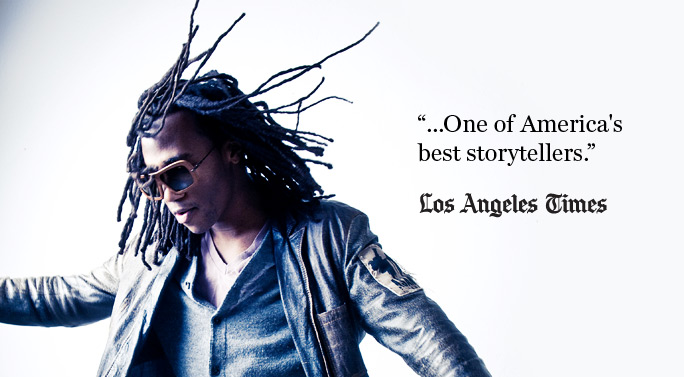
photo of MK Asante from the L.A. Times
MK Asante’s journey from the hood to plugging his books on national radio is one story. But it is a minor story. The true story is the language of this memoir. It is hypnotizing, energetic, alive and present. It puts me to shame.
In two more weeks I begin teaching a class in creative writing. My students are quite a distance from the world that MK Asante grew up in. Nevertheless, I am opening class with readings from the book. It is a lesson in being true to oneself, in being true to one’s voice, in being able to plumb one’s life for the story we all need to tell.
Here is the interview in its entirety: (this is Radio Times web site and will feature the day’s current show. Scroll down to the middle of the page to hear MK Asante on yesterday’s show. As time passes, the 8/22/2013 show will be placed in the easily accessed archives. And check out MK Asante’s web page, above, to see trailers, past works, etc.)
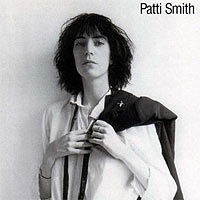
Iconic photo of Patti Smith
by Robert Maplethorpe
“Build a good name. Keep your name clean. Don’t make compromises, don’t worry about making a bunch of money or being successful — be concerned with doing good work and make the right choices and protect your work. And if you build a good name, eventually, that name will be its own currency.”
Patti Smith (remembering advice she got from William S. Burroughs)

Kenzburo Oe
My knowledge of Japanese literature is very limited. I know a few poets–mainly ancient masters of the haiku–and I knew two novelists: Yukio Mishma, who many of my generation would know as the author of The Sailor Who Fell From Grace with the Sea, and the contemporary novelist Haruki Murakami, whose critically acclaimed novels such as Kafka on the Shore, Norwegian Wood, and The Wind-up Bird Chronicles have been international best sellers as well.
Well this summer, I was introduced to a new one–Kenzaburo Oe. (It is evidence of my ignorance that Kenzaburo Oe won the 1994 Nobel Prize for Literature, but nevertheless unknown to me.) I was introduced to him by a wonderful writer, reader, traveler and photographer who writes the erroneously named blog “francescannotwrite“ and who spoke about picking up the novel in Geneva last year, having known nothing about it or the author either. Her comments on it stressed the intelligence of Oe and her fascination with the plot. And it sent me searching for it.
She was right on both accounts.
The Changeling tells the story of an aging writer Kogito whose boy-hood friend is now his brother-in-law and a giant in the Japanese film industry. The brother-in-law, Goro, had once sent Kogito a tape-deck with a collections of tapes that he had made. These first tapes were of overheard (and recorded) conversations, eavesdropped moments, unsettling sounds that Goro collected to help Kogito put out of mind the vindictive journalist who has been hounding him. Fifteen years later, Goro sent him a new collection of tapes, tapes that were, in his voice, lectures, rants, philosophical queries, friendly advice and mentoring, and most importantly–the announcement of his suicide.

Book cover for The Changeling
In fact, it is on an early tape that Kogito learns of his friend’s death:
“So anyway, that’s it for today–I’m going to head over to the Other Side now,” Goro said casually. …”But don’t worry,” Goro went on, “I’m not going to stop communicating with you.”
And the rest of the tapes are Goro’s communication–from the Other Side. Each night Kogito listens, pauses the tapes, responds, pushes play again, responds again. In fact, each night after Goro’s death, Kogito has full-out conversations with his dead friend. Conversations that are filled with intelligence, logic, debate and argument and that are seeped in a great deal of memory.
After a while, Kogito’s wife–and Goro’s sister–asks him to stop. His loud conversations are upsetting both her and their disabled son.
Kogito does stop and accepts a guest teaching spot in Berlin. But Goro speaks to him in other ways there as well. There is a mysterious woman who claims to have known him, claims to know the real reason for Goro’s suicide. (The Japanese tabloids have been running with a scandalous story.) But most importantly there are Kogito’s memories, which, alone in Berlin, he can recount, examine and analyze with much greater attention to detail. Memories of Goro’s life, of his own, and of the two’s together.
We learn that Goro had been attacked and badly beaten by the henchman of Japanese organized crime (he had made an unflattering film about them), but then we learn that the left-leaning Kogito had years earlier been attacked several times by right-wing groups. Goro’s attack made international news and he is fighting the thugs in court; Kogito never reported his assaults.
We also learn a disturbing secret of the two men’s shared childhood. A secret that–when faced–shines much light on Kogito’s memories and the inward journey that Goro’s suicide precipitated.
Frances, of “francescannotwrite” mentions the intelligence with which the novel is imbued. And she is right. The conversations between Goro and Kogito, one dead and one alive, are heady and range from art and politics to society and life, from French literature and Japanese gangsterism to the War and their childhoods. In his tapes, Goro seems–from “the Other Side”–to be pushing his friend to a clarity that his life requires.
And it is a wonderful read. Like the art of Hokusai, where there are minimal lines but great power, Oe’s story is rich and dense and intelligent but it never feels that those things are in the foreground. The power is there in the conversations, the allusions, the references, but In the foreground is the fascinating history of Kogito and his dead friend.
It is a memorable story and a memorable novel. So now, I need to find some others.
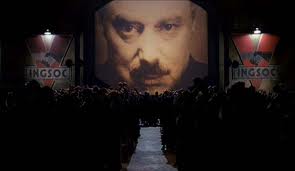
In the two weeks before the opening of school I have the students who will be entering my class read George Orwell’s 1984. It is the perfect prequel to the first two books we read in class, Brave New World and A Handmaid’s Tale. (We start out with a big dose of dystopia.)
Well, one of my more ambitious students has already done all his summer reading and e-mailed me about 1984. Orwell was pretty clever, he wrote, but he doesn’t think that that kind of thing could really ever happen.
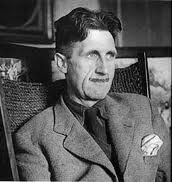
George Orwell
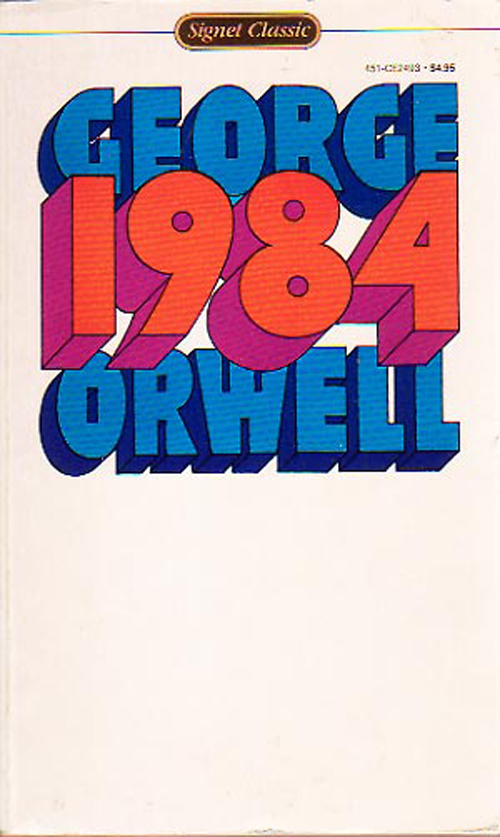
Signet Classic’s cover of 1984
Boy, did he pick the wrong summer to make that statement.
The other day, I saw the trailer for a film, Closed Circuit (see bottom of post). It is a terrorist-mole-investigative reporting-shady government department type of thing. And it looked very good. But, as I was telling a friend, one of the major players in the film is the network of 1.85 million close circuit cameras mounted throughout Britain. (http://www.theguardian.com/uk/2011/mar/02/cctv-cameras-watching-surveillance). That is roughly one camera for every 32 people. Of course, that ratio is a lot smaller in urban areas than in rural.
George Orwell saw it coming.
And then of course, the major news story of the summer was the Snowden leaks. (As Yossarian said in Catch-22, “Where are the Snowdens of yesteryear?”) For many, the actions of Snowden, his search for asylum, the international posturing and subsequent tensions have been the most riveting part of the story. What seems to have trouble staying in the foreground, however, is the fact that the U.S.government has been spying on its citizens, collecting data from their e-mails, their texts, their cell-phones, and their search engines. The citizens have been assured that the NSA is not going to use this data, but is simply archiving it. “For what?” is a sensible question.
George Orwell would have certainly asked it.
And the technology just gets better and better. Even the most naive teenager knows that his computer searches and activity are catalogued and sold to marketers. So it is not surprising that if the day after you search on-line for an umbrella for your father, you see umbrella advertisements popping up on your screen. (And depending who you are, where you are, and how often you searched, the price for the same umbrella will fluctuate.)
Well now this same marketing scheme has been adapted by the brick and mortar stores through face-recognition technology. Higher-end stores are testing facial-recognition technology which will alert store clerks immediately when someone (usually a celebrity) walks into the store and what his or her buying preferences are. At the moment the focus is on celebrities because their photos are already available in their databanks.
But it won’t be long. Walk into your favorite department store, spend some time in the men’s shoe department, and you might find an advert for men’s shoes pop up the next time you click on your device. They already know what you think you want.
Google has the technology for you to snap a photo of someone on the street, upload it, and learn everything you want about them. They have refrained from releasing it so far, mainly due to the legal tangle that Facebook is finding itself in. Facebook’s ‘”tagging” photos capabilities is a subtle way to create an enormous facial-recognition database. And that database is available not only to you and your friends.
As Facebook founder Mark Zuckerberg once famously claimed, privacy is no longer a “social norm.”
George Orwell would find it all familiar.
If things go right, the first few days in school should have a lot of interesting discussions.
I hope so.
Here’s the trailer to Close Circuit. It looks like it could be good.
The Official Web Site of LeAnn Skeen
Grumpy younger old man casts jaded eye on whipper snappers
"Here is my secret. It is very simple: It is only with the heart that one can see rightly; what is essential is invisible to the eye.."- Antoine de Saint Exupéry
Of writing and reading
Photography from Northern Ontario
Musings on poetry, language, perception, numbers, food, and anything else that slips through the cracks.
philo poétique de G à L I B E R
Hand-stitched collage from conked-out stuff.
"Be yourself - everyone else is already taken."
Celebrate Silent Film
Indulge- Travel, Adventure, & New Experiences
Haiku, Poems, Book Reviews & Film Reviews
The blog for Year 13 English students at Cromwell College.
John Self's Shelves
writer, editor
In which a teacher and family guy is still learning ... and writing about it
A Community of Writers
visionary author
3d | fine art | design | life inspiration
Craft tips for writers
 j. p. bohannon