“Before the World was Made”

“The Yale philosopher Shelly Kagan … manages to raise some interesting and subtle concerns about …notions relating to the question of what’s really bad about death, including this one: Why do we regard no longer existing (post-mortem nonexistence) as worse than not having existed before our births (prenatal nonexistence)? And are we wrong to do so?” 

“The Opinionator,” New York Times, May 16, 2012.

I love this question.  I have thought of it before, and it gives me comfort. For it makes perfect sense to me.  I wonder if Mr. Kagan is aware of the Yeats’ poem, “Before the World was Made.”  I would imagine he is. I know I thought of it right away when I read the article.
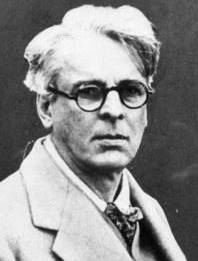
    Before the World was Made

If I make the lashes dark
And the eyes more bright
And the lips more scarlet,
Or ask if all be right
From mirror after mirror,
No vanity’s displayed:
I’m looking for the face I had
Before the world was made.

What if I look upon a man
As though on my beloved,
And my blood be cold the while
And my heart unmoved?
Why should he think me cruel
Or that he is betrayed?
I’d have him love the thing that was
Before the world was made.

For here, Yeats too is looking at what Kagan calls “prenatal nonexistence”–though Yeats prefers to think of it as “prenatal existence.”

Now Yeats is working in a spiritual cosmology quite different from that which the Yale philosopher is dealing with.  Yeats was always susceptible to spirituality and spiritualism…mysticism and the occult.  (Adrienne Rich famously called him a “table-rattling fascist.” Click here for Evan Boland’s essays on literary antagonisms.) Nevertheless, he was very much interested in concepts of a soul. He believed–through a complicated mythology of his own making, explicated in his book The Vision–in an individual, social, and civilization-wide reincarnation or continuance of the soul.  And so through this series of Yeatsian cycles we have it: a “pre-natal” AND “post-mortem” existence, as the philosopher says.
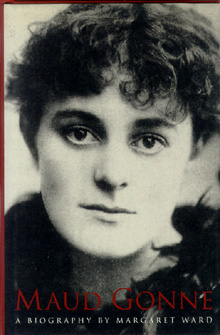
Maude Gonne

And yet, there is also something else going on in the poem that is not as deep, not as cosmic, not as “philosophical.” This is not a cosmic dance taking place in front of the mirror.  It is that old familiar dance of seduction and romance.  For who is the speaker sitting in front of her vanity? Has Yeats returned to musings on his old beloved Maude Gonne? Is he thinking of her daughter–to whom he once proposed having been rejected for the umpteenth time by Gonne? The poem was published in 1933 when Yeats was 68 years old.  The following year Yeats had the Steinach operation performed–a procedure of inserting animal glands into the body in order to increase testosterone production. Good old Yeats–he was now 68–was not giving up on this existence…and at this time was carrying on several romantic affairs with much younger women.

The poem itself appeared in the collection, The Winding Stair, and was one of twelve poems included in a section called “A Woman Young and Old.”  If the speaker is a woman where does she fit in that continuum?  Is this a young woman relatively new at the game?  Or a more experienced woman, who could look on any man “as though on my beloved”?

And what is it she would have him love?  What existed “before the world was made”?  For the philosopher Kagan, the answer is nothing.  For Yeats it is something large, something essential.

As an aside, I knew that Van Morrison had recorded a song version of the poem.  I also knew that Mike Scott and the Waterboys had just put out an album, An Appointment with Mr. Yeats, on which the poem appeard. But I just learned that Carla Bruni–the former first lady of France–had also recorded the song.  I don’t know why, but I find that amusing.  Anyway,  here’s Van the Man’s performance of Yeats’ “Before the World Was Made.”
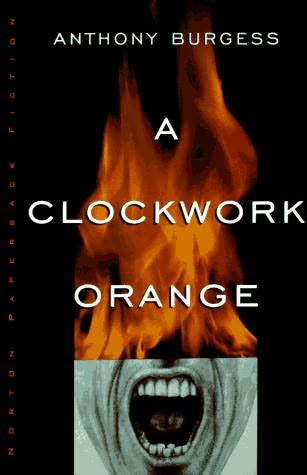
Clockwork Orange and City of Bohane

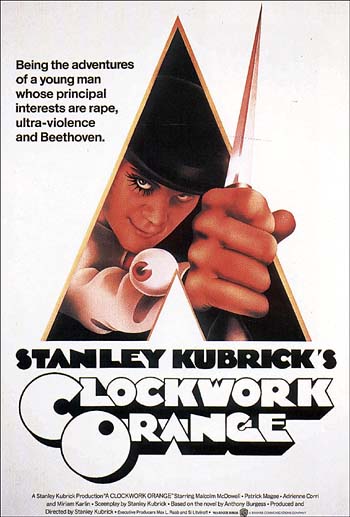
The Guardian had an article today noting the 50th Anniversary of Anthony Burgess’s A Clockwork Orange. Mind you, it is the anniversary of the book not Stanley Kubrick’s iconic movie, which has taken on a life of its own.

I first read the novel when I was seventeen. I read it a month later when I learned there was an edition with a glossary in the back. The glossary didn’t enhance the read that much; everything could be inferred from context  without too much trouble. (I had heard the glossary was only in the American edition, but I am not positive of that.) Anyway, what I remember most was the language: it was playful, edgy, smart, and alive. It was a mixture of joycean word play, street jive, cockney, rhyming, Slavic slang. And it was what set me off reading a lot of Burgess, from the Enderby novels to the majestic Napoleon’s Symphony to the various autobiographies.

The movie was another thing.  I was hitch-hiking across Canada from Vancouver to Toronto and winter was coming on a lot earlier than it came where I was from. It was only the last week of August, but we woke up under a thin sheet of snow in Regina.  Earlier, to stay out of the cold, and since nothing seemed to be coming along Canada’s Highway 1, we went into the town of Regina and bought tickets to see Kubrick’s A Clockwork Orange. It was very stylish and engrossing, with a narrative that I already knew.  I don’t remember now being struck by the ultra-violence. I do remember the music and the Skinner-like experiments and the tragic ending.  

But anyway, today, in their piece on the 50th anniversary of the book, the Guardian said this:

Fifty years ago today, Anthony Burgess published his ninth novel, A Clockwork Orange. Reviewing it in the Observer, Kingsley Amis called the book “the curiosity of the day.” Five decades later there is still nothing like it.

I beg to differ.

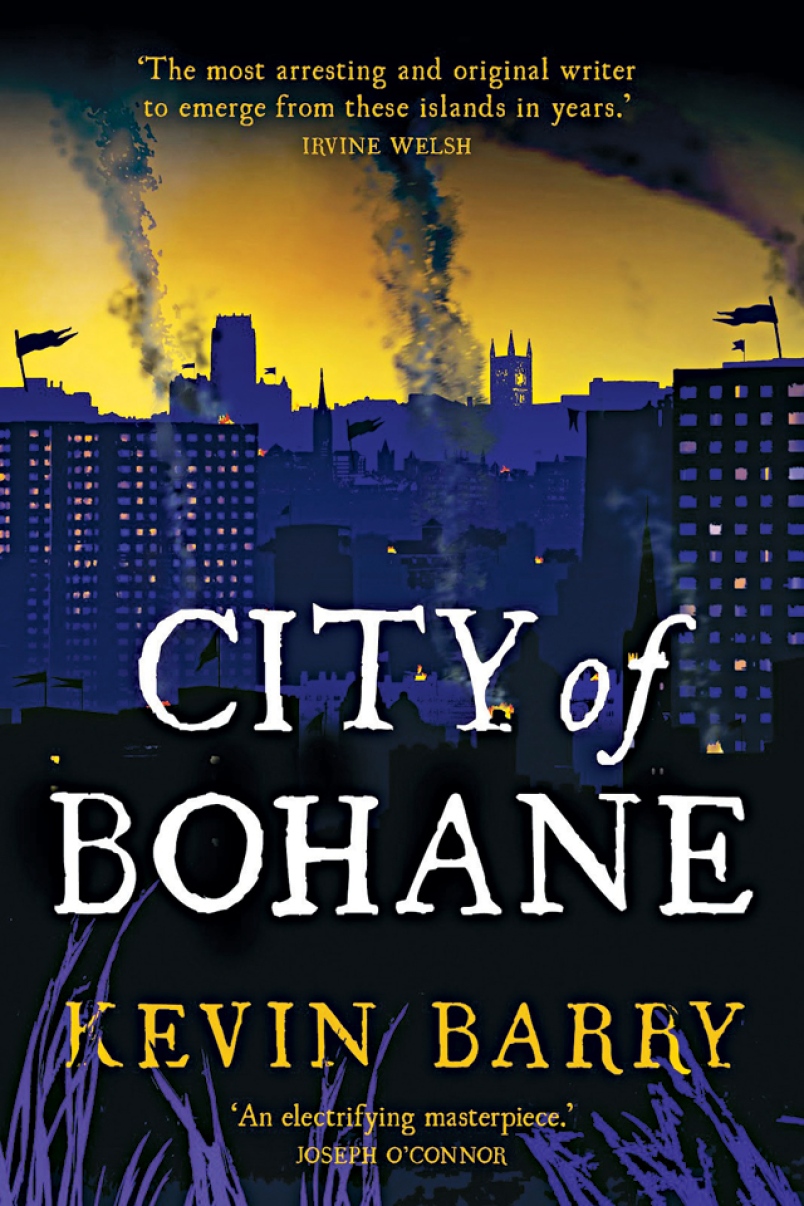
Kevin Barry’s first novel, The City of Bohane is channeling Burgess big time.  Set in a dystopian future, in what could be an unrecognizable Dublin of 2053, it is full of violence, sex, drugs, and turf wars. And again, the language  is at the forefront. Here is Barry describing DeValera Street:
[DeValera Street] leases are kept cheap and easy– bucksee enterprises appear overnight and fold as quick. There are soothsayers,. There are purveyors of goat’s blood cures for marital difficulties. There are dark caverns of record stores specialising in ancient  calypso 78s –oh we have an old wiggle to the hip in Bohane, if you get us going at all. There are palmists. There are knackers selling combination socket wrench sets. Discount threads are flogged from suitcases mounted on bakers’ pallets, there are cages of live poultry, and trinket stores devoted gaudily to the worship of the Sweet Baba Jay. There are herbalists, and veg stalls, and poolhalls. Such is the life of DeValera Street… .

Here again is Barry introducing Girly Hartnett, the 90-year old matriarch of the major family:

Here was Girly, after the picture show, drugged on schmaltz, in equatorial heat beneath the piled eiderdowns, a little whiskey-glazed and pill-zapped, in her ninetieth–Sweet Baba help us–Bohane winter, and she found herself with the oddest inclination.

I always found the world of A Clockwork Orange to be too sterile, too sharp-edged, even the thugs were dressed in sparkling white.  Bohane City is many things, but sterile it is not.  There is a richness of detail, texture, smell. Even in memory, Alex and his droogies seem too slick compared to the denizens of Bohane. For in this dystopic future, the world has not been re-shaped by technology–in fact, technology is surprisingly absent.  There is an elevated train, but no cars. Communication is done face-to-face…and at times angry-face-to-angry-face. Newspaper writers get their stories in pubs or brothels; the hunchback photographer pegs his developing photos in a morbid array across a room.  Although this is the future, it is not one overrun with gadgets!

The violence is real–but somehow not graphic. The economy runs on sex, alcohol, and drugs. There is an outer world, beyond the pale, but it doesn’t intervene, seemingly content to let Bohane run its own violent course.

And it is so, so visual.

Here’s a description of the major characters as they prepare for the momentous battle at the center of the novel:

“Logan Hartnett [the albino leader of the Bohane Trace] suavely walked the ranks and he offered his smiles and his whispers of encouragement. There was confidence to be read in the sly pursing of his lips, and atop a most elegant cut of an Eyetie suit he wore, ceremonially, an oyster-grey top hat.”

“Fucker Burke was bare-armed beneath a denim waistcoat and wore his finest brass-toed bovvers.”

“Jenni Ching carried a spiked ball on a chain and swung it over her head. She wore an all-in-one black nylon jumpsuit, so tightly fitted it might have been applied with a spray-can, and she smoked a black cheroot to match it, and her mouth was a hard slash of crimson lippy.”

“Wolfie Stanners, however, was widely acknowledged to have taken the prize. Wolfie was dressed to kill in an electric-blue ska suit and white vinyl brothel-creepers with steel toecaps inlaid. Four shkelps were readied on a custom-made cross-belt.”

[Macu–Logan’s wife–wore] “a pair of suede capri pants dyed to a shade approaching the dull radiance of turmeric, a ribbed black top of sheer silk that hugged her lithe frame, a wrap of golden fur cut from an Iberian lynx…and…an expression unreadable.”

My god, look at the attention to clothing–not futuristic, Buck Rogers’ one-pieces, but clothing that has been taken from a vibrant past.  It is as if the costume designers from Game of Thrones, Gangs of New York, and My Fair Lady got together to outfit the cast for this rumble.

And what City of Bohane also has that A Clockwork Orange doesn’t  is a love story.  Granted it is a story of disappointed love and jealous love and abandoned love, but the emotions of these characters are real and painful and poignant. For  while Logan Hartnett and his antagonist, the Broderick Gant, may have run the machinery of their town with brutality and violence, they are both bowed when set against the forces of love.

Now there’s something to pass on to Alex and his droogies!

Hugh MacDiarmid, Robert Burns and My Father

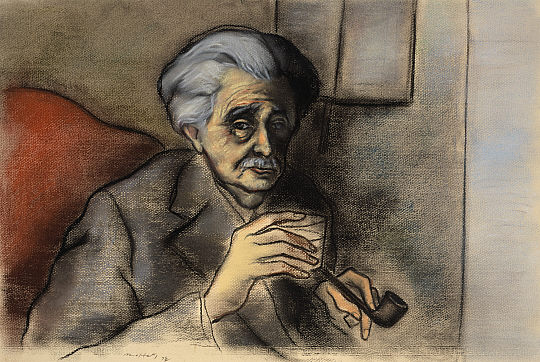
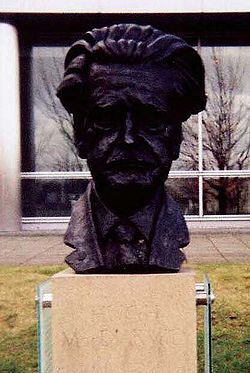
Hugh MacDiarmid

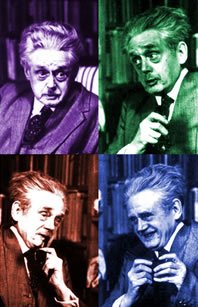
Hugh MacDiarmid times 4

No’ wan in fifty kens a wurd Burns wrote
But misapplied is a’body’s property
And gin there was his like alive the day
They’d be the last a kennin’ haund to gi’e–

Croose London Scotties wi’ their braw shirt fronts
And a’ their fancy freen’s, rejoicin’
That Simlah gatherings in Timbuctoo,
Bagdad — and Hell, nae doot–are voicin’

Burns’ sentiments o’ universal love,
In pidgin English or in wild-fowl Scots,
And toastin’ ane wha’s nocht to them but an
Excuse for faitherin’ Genius wi’ their thochts.

A’ they’ve to say was aften said afore
A lad was born in Kyle to blaw aboot.
What unco fate mak’s him the dumpin’-grun’
For a’ the sloppy rubbish they jaw oot?

Mair nonsense has been uttered in his name
Than in ony’s barrin’ liberty and Christ.
If this keeps spreedin’ as the drink declines,
Syne turns to tea, wae’s me for the Zeitgeist!

Rabbie, wad’st thou wert here–the warld hath need,
And Scotland mair sae, o’ the like o’ thee!
The whisky that aince moved your lyre’s become
A laxative for a loquacity.

from “A Drunk Man Looks at the Thistle” (lines 41-64)
Hugh MacDiarmid (1892-1978)

I got involved with this poem yesterday–a poem that I had long forgotten and had once loved dearly.  A student of a friend of mine got in a bit of trouble with it and an art project he was doing. Just a few bad decisions.

Anyway, he was also out of his depth. The poem is nearly a hundred pages long, close to 3000 lines long, and written in the Scots dialect. In it MacDiarmid is bemoaning the present state of the world ( (“Rabbie, wad’st thou wert here–the warld hath need”) and calling for a certain national identity through a link to the past. And of course, as a early-twentieth century Scots poet, for Hugh MacDiarmid that link is Robert Burns.

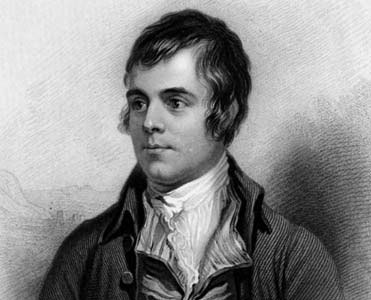
I have always had an affinity for Burns.  We share the same birthday and hit some of life’s milestones at the same time. But my introduction to him was from my father. My father was not a academic man; he had finished high-school and then out to work. But he had always been a wide-ranging and voracious reader.  And he had a extraordinary memory for the poems he had read in school. Even in old age, he could recite poems that he had learned as a youth.  The one I remember most was Robert Burns’ “To A Louse.”  I remember it because it was his way of teaching humility, of teaching his children not to become too full of themselves.  As a child, I loved the poem because it dealt with the humorous situation of spying a louse crawling in the wig of the elegant lady in front of him at church.  Her social airs and superciliousness are punctured by the creature burrowing through her hair, unknown to her but visible to those in the pew behind.

But making fun of the rich lady was not the point.  The lesson my father was offering was directed to us.  Burns ends the poem with a prayer:

O wad some Power the giftie gie us
To see oursels as ithers see us!

How perfect.  How humbling. What an antidote to hubris!

I grew older, life went by, and I began reading seriously on my own. Suddenly, many of the pieces that my dad had recited came back into my life.  And I took to Burns. (Even, his most anthologized–”To A Mouse, on Turning up her Nest with a Plough”–is a plea for empathy and understanding among all creatures, not only between humans, although that too certainly is implied. And it was there that I first recognized my father’s oft recited quote about the frequent ruinations of the “best laid plans.”)

In the section of Hugh MacDiarmid’s poem above, the speaker laments the caricature that has been made of Robert Burns over the years. The Burns’ suppers held around the world, the saccharine versions of “Auld Lang Syne” that punctuate each passing year (and that omit most poignant verses), the iconic being that he has been puffed up as, emptied of all the genius, vitality, politics and love that made him what he was.

Instead, MacDiarmid yearns for that great lover of liberty,  the lover of life, the lover of Scotland. For instance, here is Burns simply singing the praises of his love–and stating that even death would not sever its bond:

Fair and lovely as thou art,
Thou hast stown my very heart;
I can die–but canna part,
My bonie dearie.
(“Ca’ the Yowes,”  lines 20-24)

Here in 1792–70 years before the American Emancipation Proclamation–Burns writes about the anguish of a Senegalese leaving his home on a slave ship for the shores of Virginia.  It is not the politics that are most important here (although they are important) it is the humanizing of a black man in 1792, the compassion and empathy for the slave’s lot. One can feel the slave’s weariness. One can feel his “bitter tear.”

The Slave’s Lament

It was in sweet Senegal that my foes did me enthral,
For the lands of Virginia,-ginia, O:
Torn from that lovely shore, and must never see it more;
And alas! I am weary, weary O:
Torn from that lovely shore, and must never see it more;
And alas! I am weary, weary O.

All on that charming coast is no bitter snow and frost,
Like the lands of Virginia,-ginia, O:
There streams for ever flow, and there flowers for ever blow,
And alas! I am weary, weary O:
There streams for ever flow, and there flowers for ever blow,
And alas! I am weary, weary O:

The burden I must bear, while the cruel scourge I fear,
In the lands of Virginia,-ginia, O;
And I think on friends most dear, with the bitter, bitter tear,
And alas! I am weary, weary O:
And I think on friends most dear, with the bitter, bitter tear,
And alas! I am weary, weary O:

But for me, it is the love poems that stand out. While some here in the 21st century might bash his promiscuity,  I see it as his inordinate zeal and love of life. I believe the truth of his love poems–they are not simply lines to bed a willing lass–and I see them as some of the tenderest poems ever written. Here is one in which he has been played false…and his heart is breaking:

Ye banks and braes o’ bonnie Doon

Ye banks and braes o’ bonnie Doon,
How can ye bloom sae fair!
How can ye chant, ye little birds,
And I sae fu’ o’ care!

Thou’ll break my heart, thou bonnie bird
That sings upon the bough;
Thou minds me o’ the happy days
When my fause Luve was true.

Thou’ll break my heart, thou bonnie bird
That sings beside thy mate;
For sae I sat, and sae I sang,
And wist na o’ my fate.

Aft hae I roved by bonnie Doon
To see the woodbine twine,
And ilka bird sang o’ its love;
And sae did I o’ mine.

Wi’ lightsome heart I pu’d a rose
Frae aff its thorny tree;
And my fause luver staw the rose,
But left the thorn wi’ me.

From a boy in trouble in a friend’s school, to a poem by Hugh MacDiarmid, to Robert Burns, to my dad.  The mind shifts easily from one thing to another. This is not a scholarly piece–my dad would find no worth in that–but a post about things I love and loved.

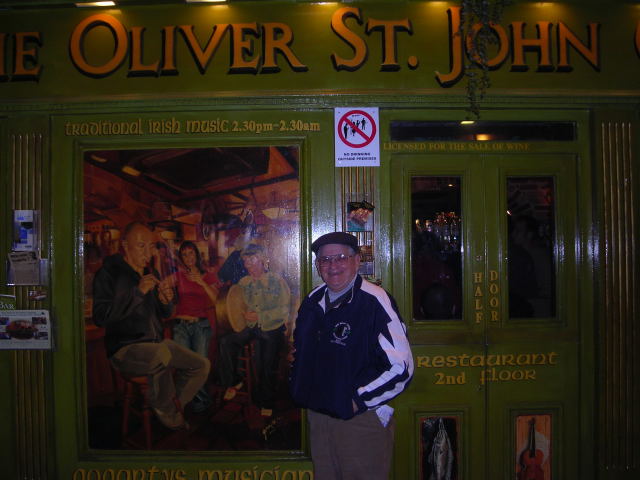
My father outside a pub in Dublin

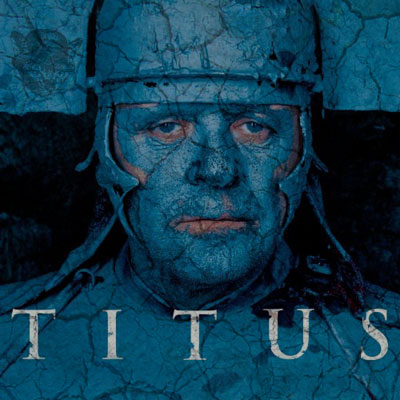
Titus Andronicus…A Shakespearean Bloodbath!

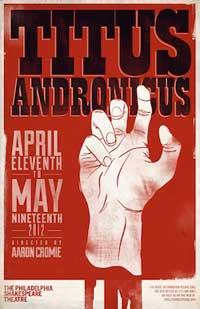
I had never seen it before.  I had never read it before. But I got cheap tickets to see Titus Andronicus Wednesday night at The Philadelphia Shakespeare Theater.

Not knowing anything about it, I took out my Penguin Collected Plays to read the editor’s introduction. Here’s what it said:

Titus Andronicus is a ridiculous play. This gallimaufry of murders, rape, lopped limbs, and heads baked in a pie, lavishly served with the rich purple sauce of rhetoric, may have been to the taste of the Elizabethans, but what is one to make of it to-day?”

Another comment I saw said to imagine it as if Shakespeare had written Pulp Fiction.

My god, what did I get myself into…all because of the lure of a $10 ticket.

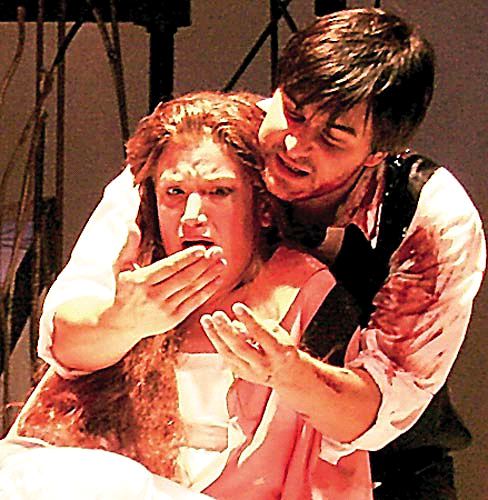
The performance was electrifying. A group of seven actors who were engaging and competent, a dozen or so hand puppets, shadow-puppets, and lots and lots of blood presented what resembled a petite guigonol more than what we think of when we think of a Shakespearean play.

Some say that Hamlet is Shakespeare’s deadliest play, but it pales next to Titus, and the violence here is so much more gratuitous than the violence in the former play. To give you an idea, lying about the stage at the end of the last scene are an evil queen murdered by Titus,  her emperor husband murdered by Titus’ brother,  Titus’ daughter–who Titus kills shockingly by breaking her neck–and Titus himself. Yet the body count doesn’t even begin to describe the depravity.  The queen and emperor are dead, but only after Titus had fed them a pie made with the bones and entrails of the queen’s sons whom Titus has killed. He has slain these two sons because they  had raped his daughter, cut out her tongue, and cut off both her hands.

Had enough?  It is even stranger.  In an earlier scene, Titus is a broken man. His poor daughter sits next to him, unable to speak of or point at her attackers. Her husband has been murdered by the queen as well, and her two brothers (Titus’ sons) have been set up and charged with the crime.  In this particular scene, the queen’s henchman makes a deal with Titus.  He will return the sons to their father in exchange for his hand.  Titus chops off his hand and gives it to the man, who promptly returns with three bell jars, one containing Titus’ hand, the other two containing the heads of his sons.  As the scene ends, Titus leaves the stage with one of the containers that holds his son’s head, his brother (who has found Titus in this pitiful condition) carries the other, and his poor daughter, with no hands of her own, carries the container holding her father’s hand in her mouth. This is perhaps the only pitiful scene in the play because the rest is so “over-the-top” violent that it become cartoonish.  (I tried to count the number of dead, but kept losing track.  Not counting his twenty-one dead sons that Andronicus is returning to the family grave in Rome when the play begins, I come up with 14 corpses, three dismembered limbs and two beheadings. Geeesh!)

Titus Andronicus comes early in Shakespeare’s career. It is his first attempt at tragedy, and he was capitalizing on the Elizabethan penchant for these bloody, revenge tragedies.  And he was learning on the job. There seems to be little of the “interiority” in the characters, that self-awareness that will come later and that makes the characters of Hamlet, Macbeth, and Lear so human, and so tragic.  He is working through the language, the germs of genius are evident, but he has not yet the confidence to take the linguistic leaps that he demonstrates as early as a year later.

As I walked out of the theater, I mentioned to the usher that I couldn’t believe that I was chuckling and smiling after what I had just witnessed.  Maybe there IS something cathartic about it…but I don’t think so. Maybe it was the sheer boldness, the cleverness of the production, the wit of the design.  I don’t know.  I do know it was a very good night of theater and the Philadelphia Shakespeare Theater should be quite proud.

Later, when I got home I discovered that the play had  been made into a film by Julie Taymor, Titus. I vaguely remembered this now.  I guess it will be next on my movie list.  But then that poses a question: Why?

Why, in recent years, has there been a major motion picture by a major director? Why does a small local theater choose to do a Shakespeare play that very few people are aware of?  It had been all but forgotten until the mid-20th century when Peter Brooks famously staged it for the RSC with Vivian Leigh as the put-upon daughter, and then it took on a new life. In recent times, there have been many productions in the UK, in the US, in Japan, productions that emphasize the political…ones that emphasize the family dysfunction.  (Click here for an interesting article on the history of the play’s performances.)

But the question remains: why? Why has it been reborn in our time?

Have we become inured to violence? Completely desensitized?  Or does the extreme violence of the play now reflect our own violent world? Our own shattered realities?  I wonder about my own experience at the performance–the violence of the play was not upsetting or revolting; it was, in fact, silly–and I am a person who for the most part shies away from violence in the films and books that I choose. As I said, the production was cartoonish and even slapstick.  But then what does that say about us?

If  art is supposed to make us think beyond our initial reaction, then my experience with Titus Andronicus was a success.  I can’t get it out of my head.

Ethical versus Moral

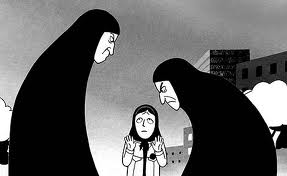
I had a conversation the other day with a woman who is teaching Marjane Satrapi’s  graphic-novel Persepolis. Our discussion revolved around the differences between ethics and morality. Neither of us are professional philosophers, but I like to think that we are thoughtful, intelligent people. And so, we must answer the questions: What is ethical? What is moral?

From the dictionaries I learned that morals are “a person’s standards of behavior or belief’s concerning what is and is not acceptable for them to do” and that ethics are “moral principles that govern person’s or group’s behavior.”

Yet that seems backwards to the way that I have always viewed it. I had viewed morals as being proscribed by a particular group and ethics as being a more personal, individual code of living.  Perhaps my association of “groups” with morals  is coming from the preponderance of fundamentalists–in all religions–who attempt to press their moral code on all. Ethics to me, on the other hand, is the system of right and wrong, just and unjust, developed individually.

Is this a case where I am just wrong, outright?

So, I went to a man who teaches philosophy. His distinction was this: ethics is a system of right and wrong behavior derived from rationality. Morals is a system derived from religious belief.  Yes, many times they overlap. But sometimes they do not.

Yup, that seemed to clear some things up.  And I didn’t seem completely off in my understanding.

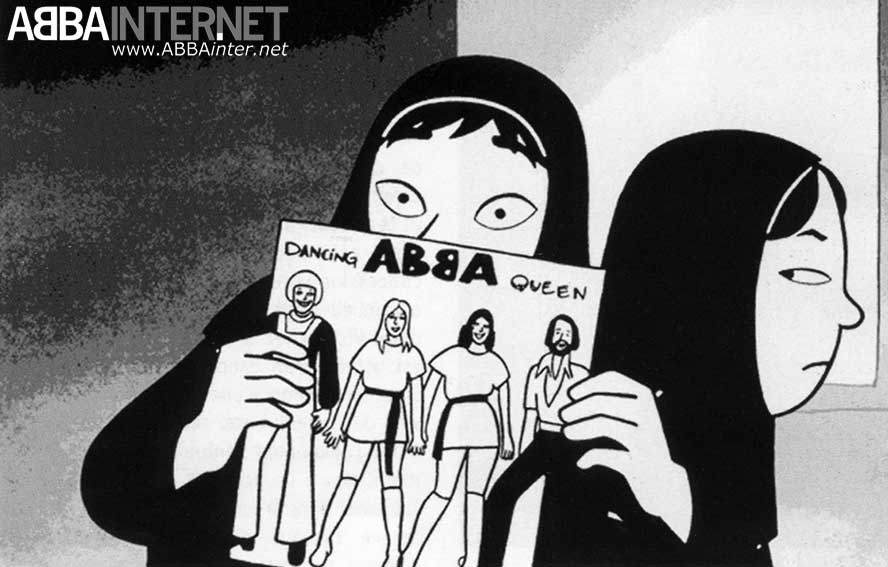
For instance, according to the religious belief group in charge in the picture above, it is IMMORAL to listen to ABBA. (We are talking ethics and morals here, not musical discernment.) Yet it is hardly UNETHICAL to do so.

So think of the things that are proscribed by particular groups and weigh them in light of ethical or moral. For some, it is marrying outside one’s group (unethical or immoral?); for others, it is believing in evolution (unethical or immoral?); and still for others, it is having men and women sit on the same side of a room (unethical or immoral?).

In the States, we are going through an election season (doesn’t it always seem like an election season) and, in the political debate, social issues always seem to force their way to the top–or at least garner the most attention. Issues of sexuality, women’s reproductive rights, marriage get a lot of discussion.  Are these ethical issues or moral issues?  In a system that supposedly separates church from state, are the morals of a particular belief system muddying the ethics of a rational system?  In other words, I might not want to listen to ABBA but should you tell me I can’t?

I listened to a man speak two weekends ago who suggested that members of the U.S. Congress should read more poetry. He noted that the poet Adrienne Rich once called poetry, in all its ambiguity,  the “perfect antidote to moral certainty.” I keep thinking about that and worrying about governmental moral certainty.  Other governments have tried it–and it ain’t pretty.

It’s been a while since I read Persepolis or Persepolis 2, and I have never seen the film version. I remember both books as being quick reads, but I have lasting memories of them. Maybe, I’ll go through them again this weekend.

Movie Review: The Footnote: fathers and sons, parents and children

Juliet being bullied by her father

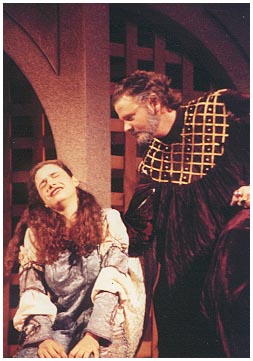
I have always been fascinated by the importance of parent/child relationships in Shakespeare. As school children, one of the first plays we read is Romeo and Juliet and aside from the love story, the second major story is Juliet’s relationship with her parents. The mother is cold and aloof and the father, while seemingly sensible in the beginning, shows himself an insensitive brute. Then there is Hamlet–a psychiatrist’s field-guide to dysfunctional parenting. In the histories, there is Henry IV, parts 1 and 2; the tragedies also give us King Lear–a tragedy of parenting if ever there were one; the romances give us The Tempest with the sorcerer Prospero manipulating his daughter’s–and everyone else’s–life. Throughout the canon, there are lovers blocked by parents, young nobles obeying the edicts of  fathers, and even a childless woman declaring what violence she would wreak on her children if she had them.

Hamlet berating his mother

And then I thought how much all of literature is tied in with this theme. From the earliest fairy-tales like Snow White, Cinderella, and Rumpelstiltskin to the Greek plays–where does one begin with Oedipus?–the dynamic between parent and child is in the foreground. As for the great epics: The Odyssey is really a tale of a son trying to find his father, as is its modern counterpoint, Ulysses,where “fatherless” Stephen is cared for by Bloom who mourns the death of his own infant son; and what is Paradise Lost but a father punishing his errant children?  In Great Expectations Pip is orphaned and raised by a beastly sister and her kind and understanding husband. In Huck Finn, Huck is trying to survive in spite of the obstacles that the disreputable Pap has put in his way. And even a modern potboiler like the Girl with the Dragon Tattoo trilogy is founded on several perverse father/child relationships.

Lisbeth Salander and her father from The Girl With the Dragon Tattoo

So I thought of all of this as I left the theater Sunday after watching The Footnote. An Israeli film, The Footnote follows a father and son, both Talmudic scholars through their strained relationship. The father’s career–rightly or wrongly–stalled early in its course. The son, on the other hand, is immensely successful. The film opens with an award ceremony where the son is being inducted into the Academy of Sciences. In his thank-you speech, the son focuses on what an inspiration and model his father was, but the father is so filled with envy, anger, and bile that he walks out of the theater.

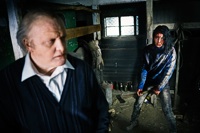
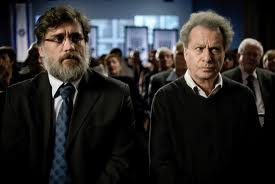
Son and father from The Footnote

Later, the father receives a telephone call informing him that he has won the prestigious Israeli Prize, an award given by the President of Israel to an important scholar. The call is actually a mistake and was intended for the son who naturally has the same last name.  The son is informed of the mistake and told that he must be the one to tell his father. What ensues is riveting, heartwrenching, and sad.

The soured relationship between the two is echoed with the son’s strained relationship with his own adolescent child. At times, it seems the women are holding things in place, but I am not completely sure. There is a lot of dishonesty, a terrible lack of communication, and an underlying egoism that is poisoning the family dynamic.

The film is very good.  It is one of those films that you talk about long after, and think about much longer than that.