Harold Lloyd, Buster Keaton and the weekly coincidences

I have been going through a noticeable streak of coincidences lately. In a particular ten days to two weeks, I will repeatedly see, hear, read about something that I hadn’t noticed or thought of in a long time. It might be a friend who has moved away…a movie I hadn’t seen in decades…a book that I had forgotten that suddenly is being cited everywhere.

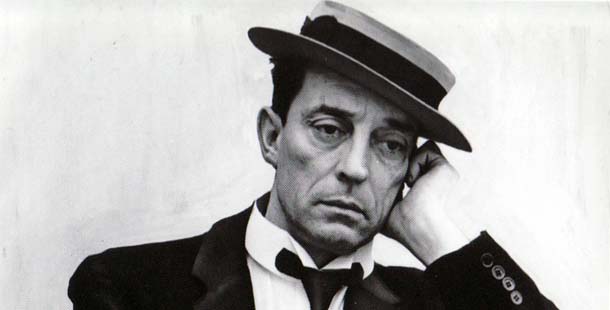
Anyway, this week it has been Harold Lloyd and Buster Keaton.  I knew who Keaton was, had always preferred Chaplin, but respected his enormous role in the history of movies. I knew little about Lloyd except for his famous clock scene.

And now Keaton seems to be everywhere. I wonder if, like so many things in modern culture, it is simply Keaton’s turn to be the object contemporary interest. (Contemporary interest has a very short life and while it might be Keaton in 2012, the focus could as easily turn to Jacques Tati for 2013, or Mack Sennett by July.) Who knows when it will be Lloyd’s turn?

Film connoisseurs have long praised Keaton.  Orson Welles called his The General “the greatest comedy ever made…and perhaps the greatest film every made.” And Roger Ebert called Keaton “arguably the greatest actor-director in the history of movies.”  Lloyd’s reputation is not as high-flying.  Part of this came from Lloyd’s demanding such a prohibitive price for television broadcast of his films–and so his work is generally less known than either Chaplin or Keaton.

One of his most famous scenes is this:

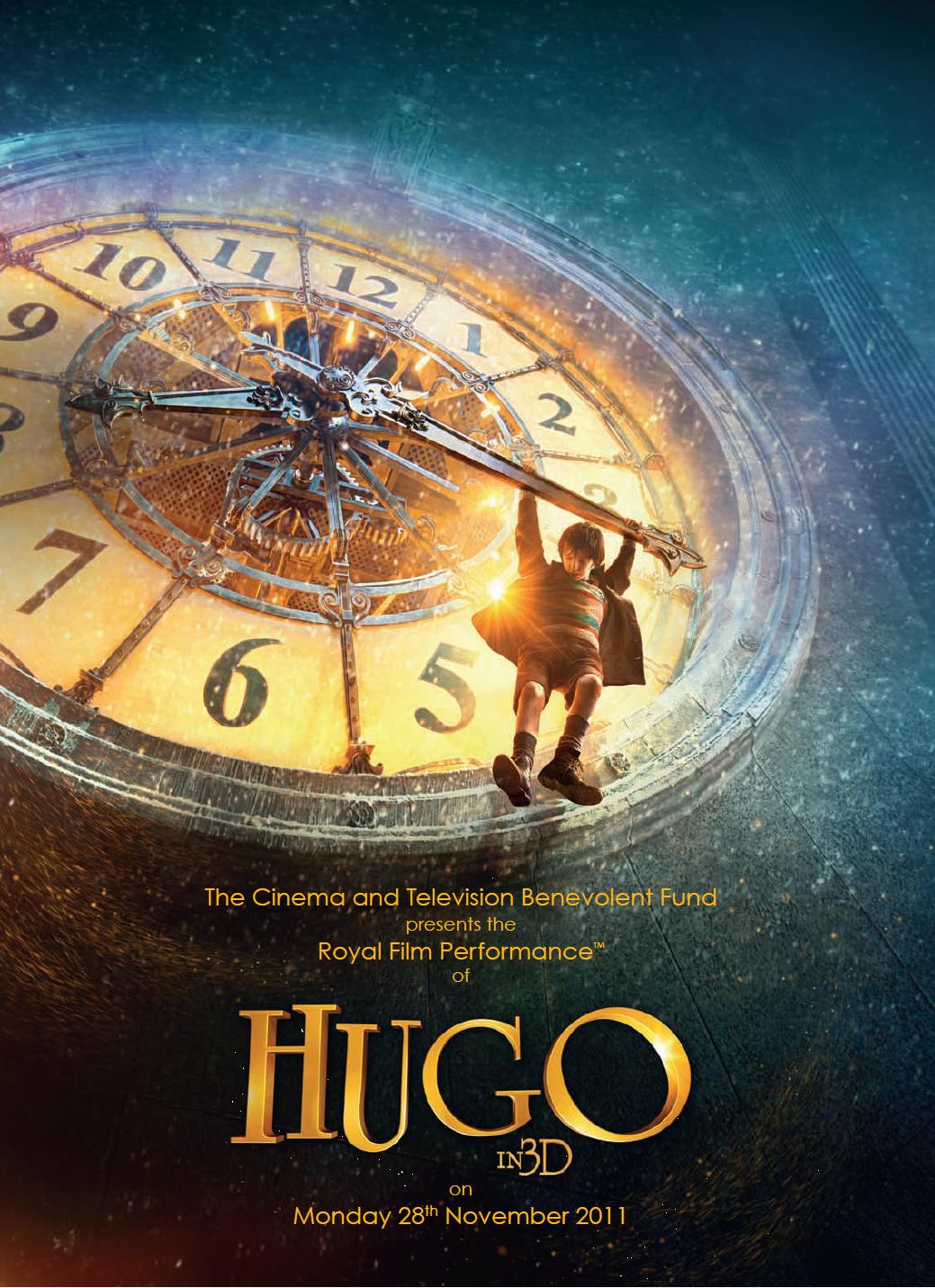
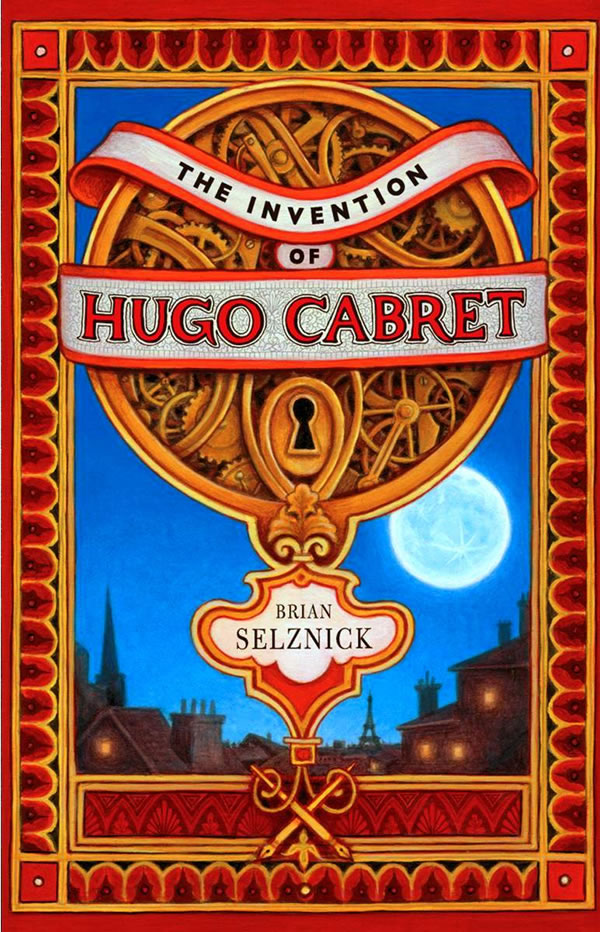
Indeed this  scene is very obviously alluded to in the 2011 film  Hugo, based on the Brian Selznik book The Invention of Hugo Cabret.
In the story, the young boy Hugo lives in the clock tower of a Parisian train station in the 1930s. During the course of the film, he sneaks his new friend Isabelle into a movie house. She has never seen a motion picture before and the film they watch is Harold Lloyd’s Safety Last! with its famous “hanging from the clock” scene.

Later on, young Hugo himself must escape some danger by hanging from the clock hands and moving along to safety.  In a story that is basically about the birth of cinema, the nod to Lloyd’s  iconic clock scene is both appropriate and deserved.

A photo of Lloyd hanging from the clock is in the book. And the film clip is shown in the movie.

And this is where the coincidences really start!

On Friday,  I am in a coffee shop, minding my business and reading the novel The Wonder Boys by Michael Chabon.  Two guys in the table next to me are having a friendly argument and the argument is about Harold Lloyd’s hanging from the sprung clock. The one guy is insisting that the actor is Buster Keaton; the other insists it is Harold Lloyd.  I am especially proud of myself for not inserting myself  into the discussion–as is often my wont.

Yet it goes further. About an hour later, I am still reading and I come to a passage in the novel where the narrator introduces one of his writing students to his wife who has left him the day before and who he–and the student–have followed to her parents’ house, in a slap-stick sort of way that would have made these early film directors proud.
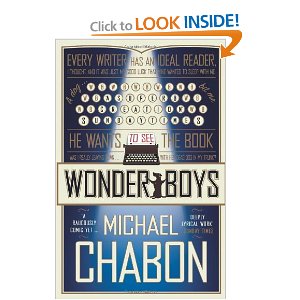
“This is James Leer. From workshop.”…
“The movie man,” she said. “I’ve heard about you.”
“I’ve heard about you, too,” said James.
I thought for a moment that she might ask him about Buster Keaton, one of her idols. but she didn’t.

Did I just read that right? “I thought…she might ask him about Buster Keaton“? Okay, simple coincidence. An hour after overhearing the Lloyd/Keaton conversation, but a simple coincidence.

So it is Tuesday, and exams are over, and I am getting out of work around 11:15. I check to see what is playing, because I particularly love going to the movies when rest of the world is at work.  There is a film called The Fairy (le fee) with an enchanting poster that I know nothing about. I go online to read what it is about.  Here’s what they say to begin with:

The Belgian-based trio of Dominque Abel, Fiona Gordon and Bruno Romy (The Iceberg) write, direct and perform absurdist comedies in the tradition of Buster Keaton and Jacques Tati. The Fairy is a candy-colored romp set in Le Havre—a non-stop string of hilarious sight gags and madcap chases. 
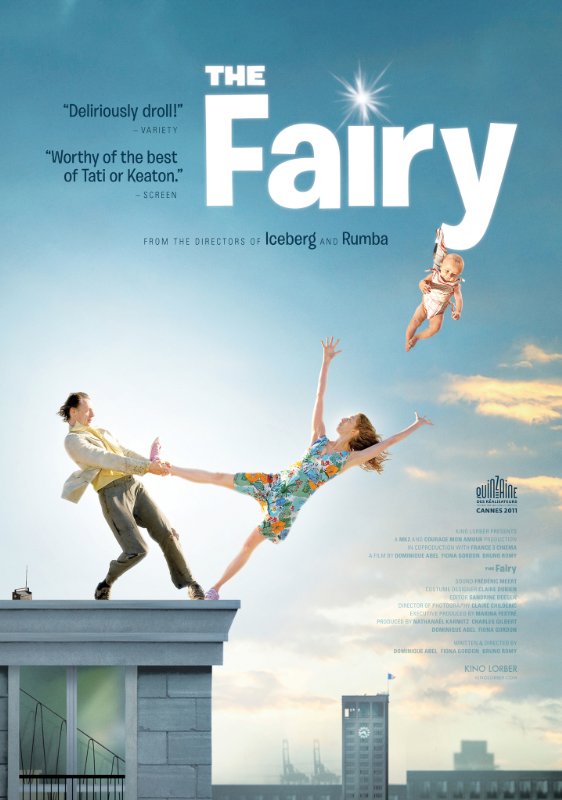
More Keaton.  It’s as if he’s following me…or I unconsciously am following him. Even the movie poster alludes to its Keatonesque qualities.

So I am off to see The Fairy this afternoon. Off to see slapstick and physical humor from this Belgian trio, but I hope that it rises above that.  The slapstick of Keaton and Lloyd and Chaplin, as well, was always more than pratfalls. It always said something true about the human heart. Something important about all of us.
Clockwork Orange and City of Bohane

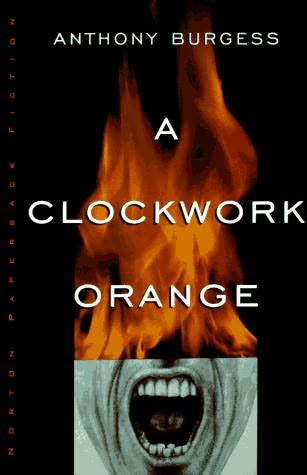
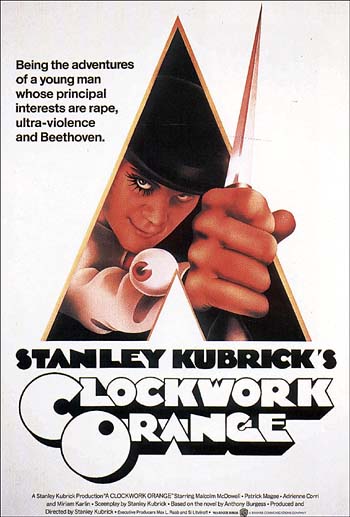
The Guardian had an article today noting the 50th Anniversary of Anthony Burgess’s A Clockwork Orange. Mind you, it is the anniversary of the book not Stanley Kubrick’s iconic movie, which has taken on a life of its own.

I first read the novel when I was seventeen. I read it a month later when I learned there was an edition with a glossary in the back. The glossary didn’t enhance the read that much; everything could be inferred from context  without too much trouble. (I had heard the glossary was only in the American edition, but I am not positive of that.) Anyway, what I remember most was the language: it was playful, edgy, smart, and alive. It was a mixture of joycean word play, street jive, cockney, rhyming, Slavic slang. And it was what set me off reading a lot of Burgess, from the Enderby novels to the majestic Napoleon’s Symphony to the various autobiographies.

The movie was another thing.  I was hitch-hiking across Canada from Vancouver to Toronto and winter was coming on a lot earlier than it came where I was from. It was only the last week of August, but we woke up under a thin sheet of snow in Regina.  Earlier, to stay out of the cold, and since nothing seemed to be coming along Canada’s Highway 1, we went into the town of Regina and bought tickets to see Kubrick’s A Clockwork Orange. It was very stylish and engrossing, with a narrative that I already knew.  I don’t remember now being struck by the ultra-violence. I do remember the music and the Skinner-like experiments and the tragic ending.  

But anyway, today, in their piece on the 50th anniversary of the book, the Guardian said this:

Fifty years ago today, Anthony Burgess published his ninth novel, A Clockwork Orange. Reviewing it in the Observer, Kingsley Amis called the book “the curiosity of the day.” Five decades later there is still nothing like it.

I beg to differ.

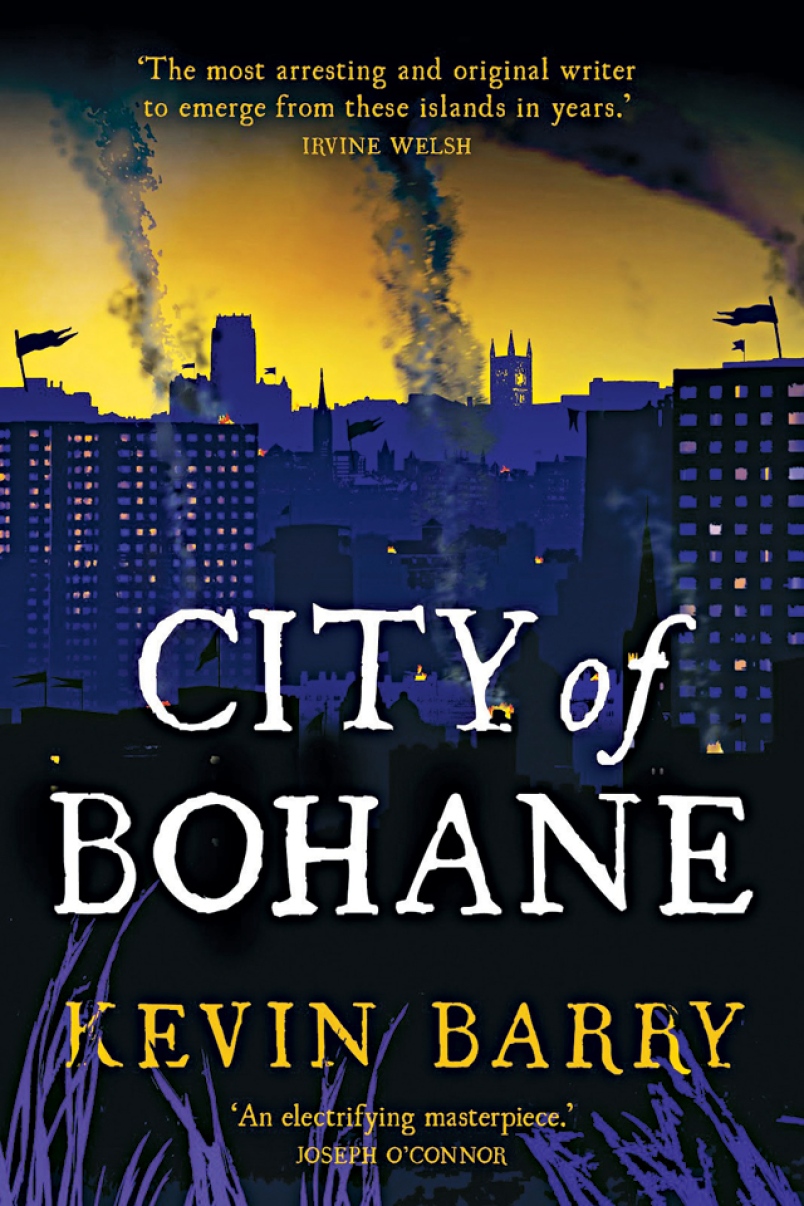
Kevin Barry’s first novel, The City of Bohane is channeling Burgess big time.  Set in a dystopian future, in what could be an unrecognizable Dublin of 2053, it is full of violence, sex, drugs, and turf wars. And again, the language  is at the forefront. Here is Barry describing DeValera Street:
[DeValera Street] leases are kept cheap and easy– bucksee enterprises appear overnight and fold as quick. There are soothsayers,. There are purveyors of goat’s blood cures for marital difficulties. There are dark caverns of record stores specialising in ancient  calypso 78s –oh we have an old wiggle to the hip in Bohane, if you get us going at all. There are palmists. There are knackers selling combination socket wrench sets. Discount threads are flogged from suitcases mounted on bakers’ pallets, there are cages of live poultry, and trinket stores devoted gaudily to the worship of the Sweet Baba Jay. There are herbalists, and veg stalls, and poolhalls. Such is the life of DeValera Street… .

Here again is Barry introducing Girly Hartnett, the 90-year old matriarch of the major family:

Here was Girly, after the picture show, drugged on schmaltz, in equatorial heat beneath the piled eiderdowns, a little whiskey-glazed and pill-zapped, in her ninetieth–Sweet Baba help us–Bohane winter, and she found herself with the oddest inclination.

I always found the world of A Clockwork Orange to be too sterile, too sharp-edged, even the thugs were dressed in sparkling white.  Bohane City is many things, but sterile it is not.  There is a richness of detail, texture, smell. Even in memory, Alex and his droogies seem too slick compared to the denizens of Bohane. For in this dystopic future, the world has not been re-shaped by technology–in fact, technology is surprisingly absent.  There is an elevated train, but no cars. Communication is done face-to-face…and at times angry-face-to-angry-face. Newspaper writers get their stories in pubs or brothels; the hunchback photographer pegs his developing photos in a morbid array across a room.  Although this is the future, it is not one overrun with gadgets!

The violence is real–but somehow not graphic. The economy runs on sex, alcohol, and drugs. There is an outer world, beyond the pale, but it doesn’t intervene, seemingly content to let Bohane run its own violent course.

And it is so, so visual.

Here’s a description of the major characters as they prepare for the momentous battle at the center of the novel:

“Logan Hartnett [the albino leader of the Bohane Trace] suavely walked the ranks and he offered his smiles and his whispers of encouragement. There was confidence to be read in the sly pursing of his lips, and atop a most elegant cut of an Eyetie suit he wore, ceremonially, an oyster-grey top hat.”

“Fucker Burke was bare-armed beneath a denim waistcoat and wore his finest brass-toed bovvers.”

“Jenni Ching carried a spiked ball on a chain and swung it over her head. She wore an all-in-one black nylon jumpsuit, so tightly fitted it might have been applied with a spray-can, and she smoked a black cheroot to match it, and her mouth was a hard slash of crimson lippy.”

“Wolfie Stanners, however, was widely acknowledged to have taken the prize. Wolfie was dressed to kill in an electric-blue ska suit and white vinyl brothel-creepers with steel toecaps inlaid. Four shkelps were readied on a custom-made cross-belt.”

[Macu–Logan’s wife–wore] “a pair of suede capri pants dyed to a shade approaching the dull radiance of turmeric, a ribbed black top of sheer silk that hugged her lithe frame, a wrap of golden fur cut from an Iberian lynx…and…an expression unreadable.”

My god, look at the attention to clothing–not futuristic, Buck Rogers’ one-pieces, but clothing that has been taken from a vibrant past.  It is as if the costume designers from Game of Thrones, Gangs of New York, and My Fair Lady got together to outfit the cast for this rumble.

And what City of Bohane also has that A Clockwork Orange doesn’t  is a love story.  Granted it is a story of disappointed love and jealous love and abandoned love, but the emotions of these characters are real and painful and poignant. For  while Logan Hartnett and his antagonist, the Broderick Gant, may have run the machinery of their town with brutality and violence, they are both bowed when set against the forces of love.

Now there’s something to pass on to Alex and his droogies!