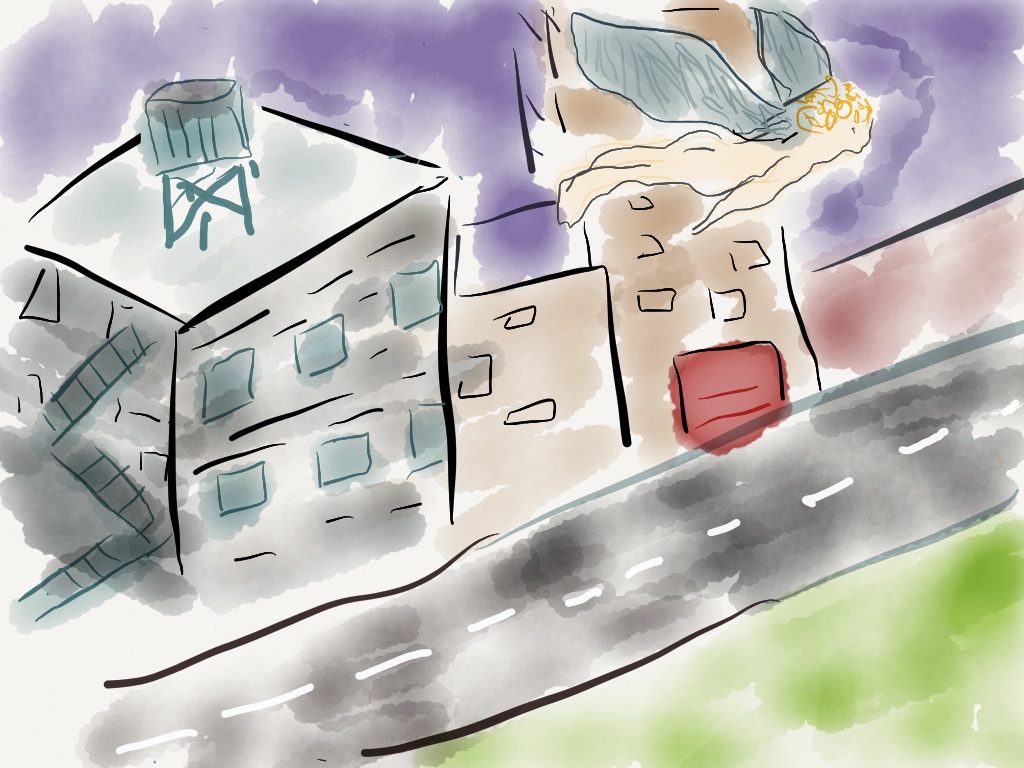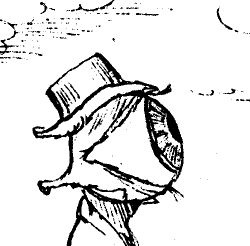
Illustration of Emerson’s “Transparent Eyeball” that accompanied the essay “Nature”
In his essay “Nature,” Ralph Waldo Emerson famously said:
“I become a transparent eyeball; I am nothing; I see all; the currents of the Universal Being circulate through me; I am part of God.”
I know of Ralph Waldo Emerson’s “transparent eyeball” and his essay “Nature,” but it is not my area of expertise. (Although I confess, it is the illustration that accompanied the “transparent eyeball” passage in Emerson’s essay “Nature” that I recall most readily. It is a wonderful illustration.)
If I remember correctly, in “Nature,” Emerson is propounding a way of looking at the Universe in general and Nature in particular. It is Emerson’s “transcendental” way of finding communion with a divine being through observing the “scripture” that is Nature.
But lately I have been thinking of the “transparent eyeball” in a different way.
On a Monday in mid-April, I was reading a piece by a woman named Yoon Soo Lim. In it, she mentioned that she had taken up a challenge of keeping a photo journal , in which one photograph was uploaded each day of the year. The site was called blipfoto.
I didn’t think much of it, until my walk home through the city. I started seeing possible “photo ops” everywhere: a funky display in an art gallery, a shadowy alley with a latticework of fire-escapes, a graphic advertisement for a boxing studio. I had become an “eye” and had begun seeing things that I passed every single day and had never seen, or at least never paid much attention to.
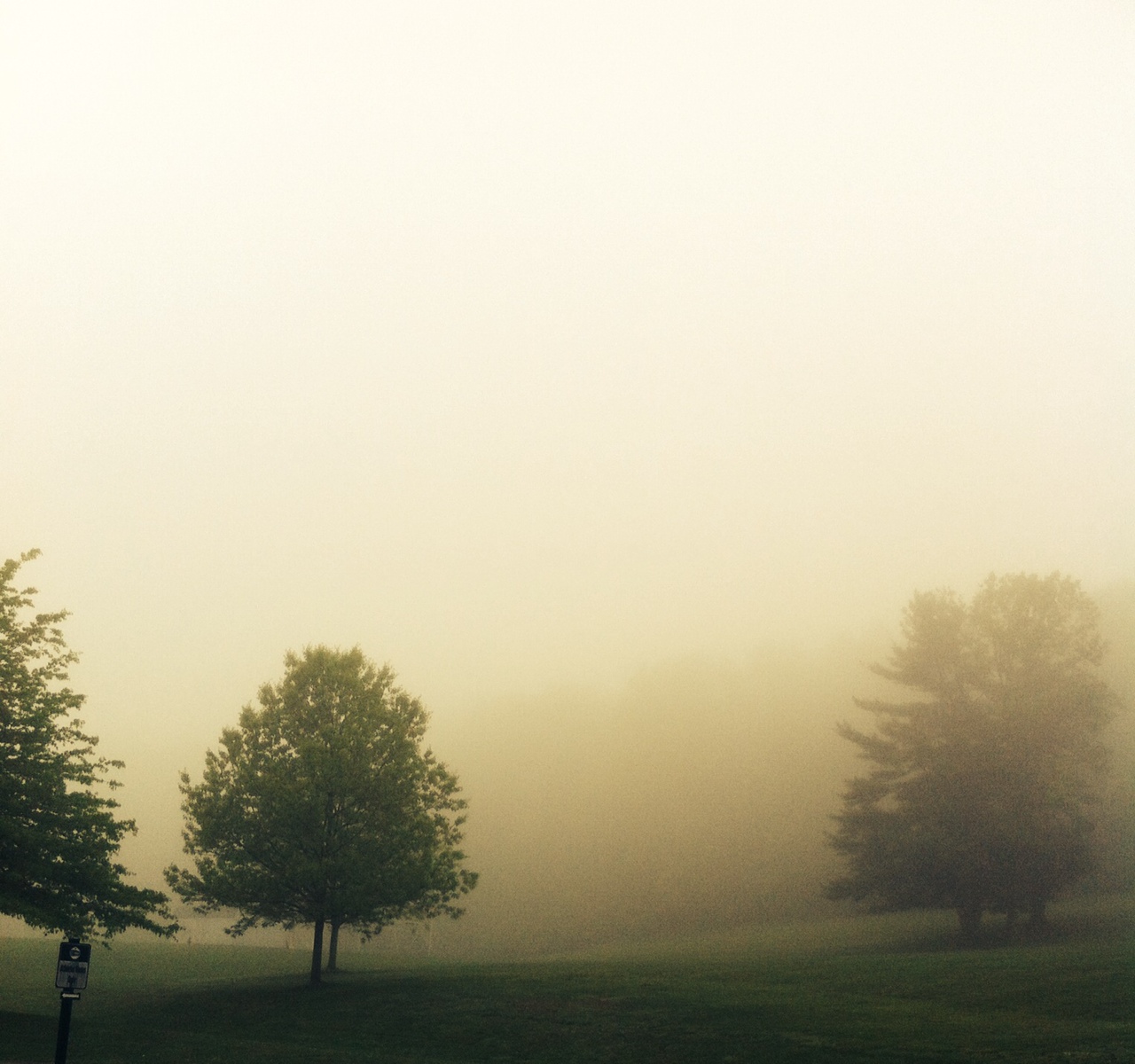
Fog Rolling In 2014 jpbohannon
I took up the photo challenge myself. And it has changed the way I look at things.
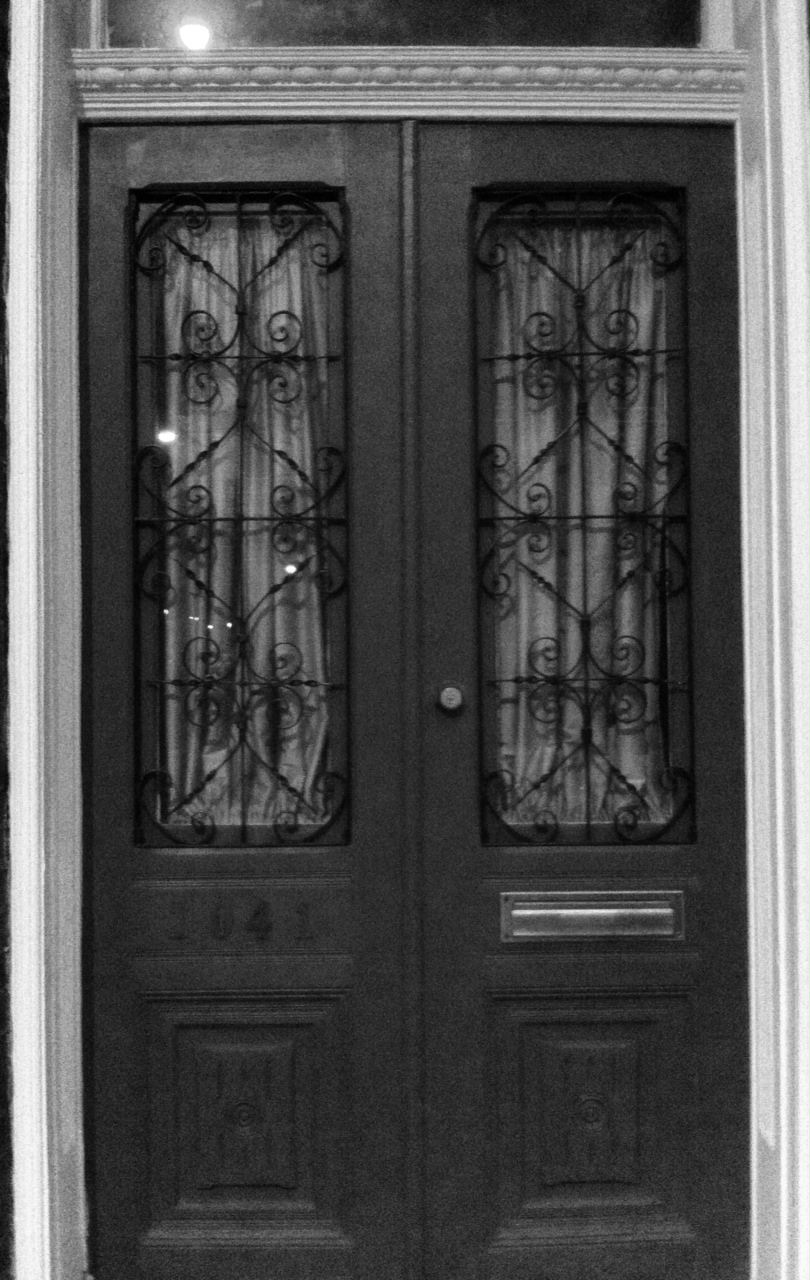
Doors on N. 4th Street 2014 jpbohannon
No longer do I walk aimlessly from the bus to my door, from the street to the train station, from my desk to the cafeteria. I walk now with a purpose…the purpose of seeing.
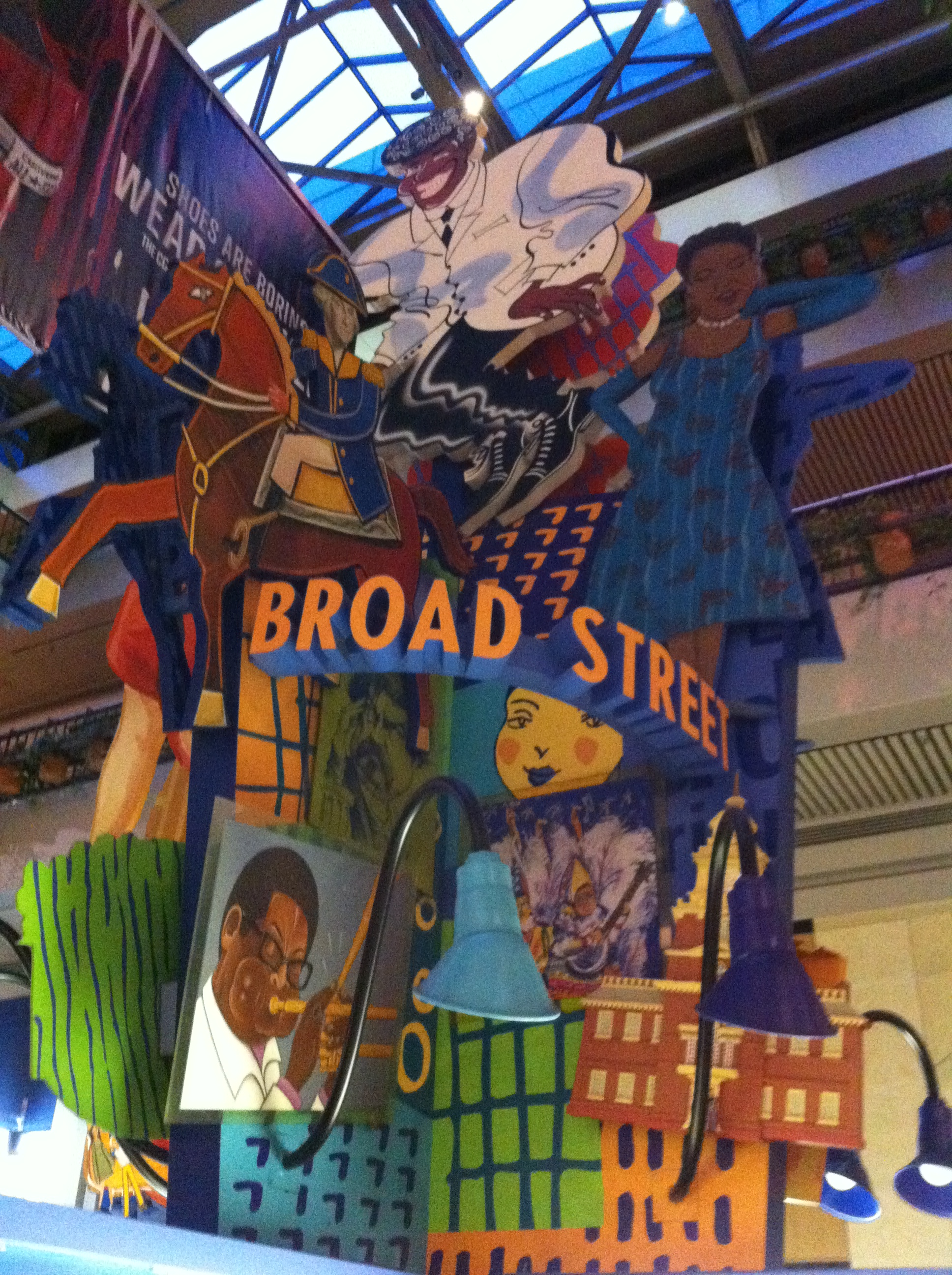
Sculpture at Market East Train Station 2014 jpbohannon
I am not sure why, but this leaves me feeling very alive. I feel that I am “seeing deliberately”—a term that echoes Emerson’s disciple Thoreau who advised us all to “live deliberately.” I am excited to see things, to find things, to re-discover things that had been invisible for so long, behind the cloak of daily routine.
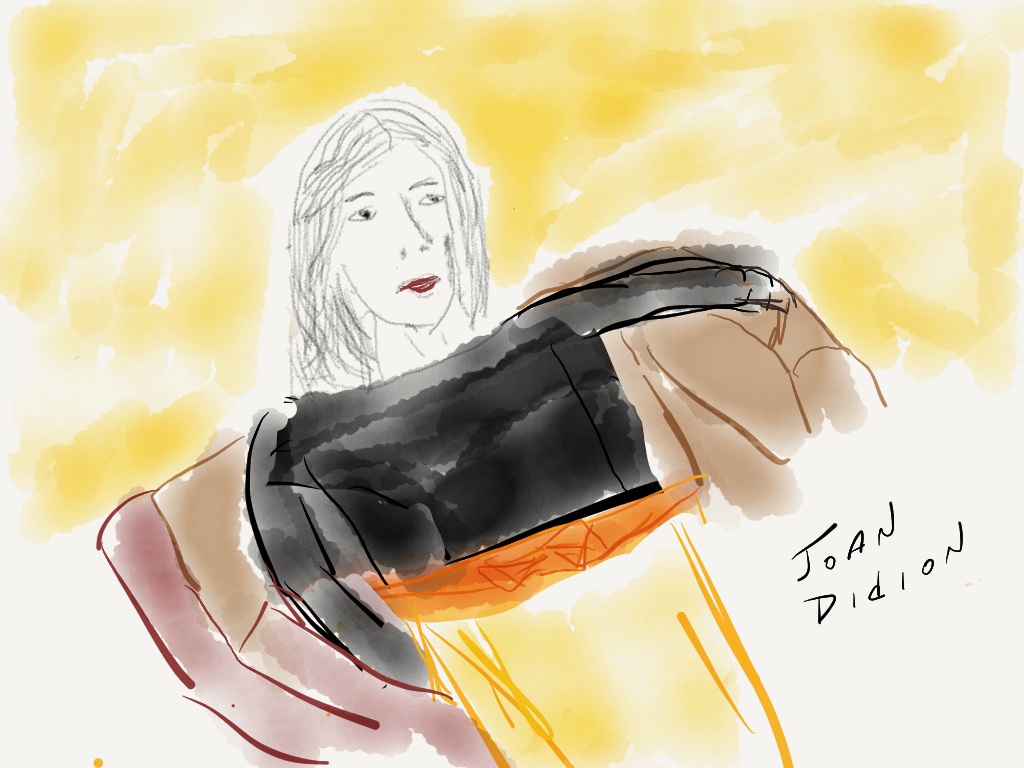
Joan Didion. illustration 2013 jpbohannon based on portrait by Lisa Congdon for Reconstructionists project
“I’m not telling you to make the world better, because I don’t think that progress is necessarily part of the package. I’m just telling you to live in it. Not just to endure it, not just to suffer it, not just to pass through it, but to live in it. To look at it. To try to get the picture. To live recklessly. To take chances. To make your own work and take pride in it. To seize the moment. And if you ask me why you should bother to do that, I could tell you that the grave’s a fine and private place, but none I think do there embrace. Nor do they sing there, or write, or argue, or see the tidal bore on the Amazon, or touch their children. And that’s what there is to do and get it while you can and good luck at it.”
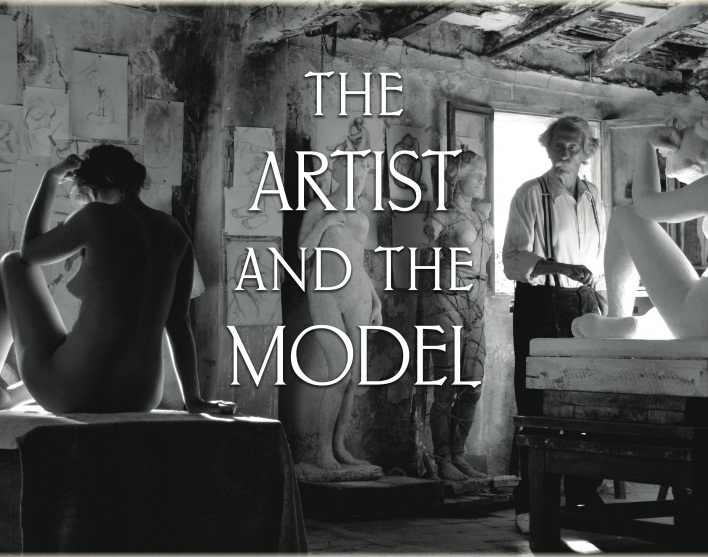
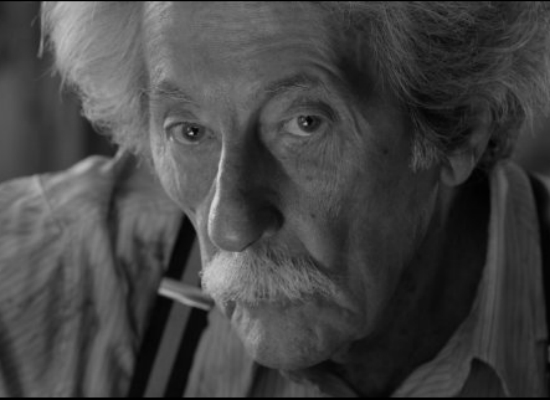
Trueba’s The Artist and the Model is the art of film raised to the highest level. Its story is poignant, its intelligence is palpable, its cinematography is mesmerizing, its acting is subtle and powerful and its beauty is breathtaking. And in a film that addresses life and art and beauty and work, it is the very face of the artist Marc Cros (Jean Rochefort) that comes to represent them all, a face that Trueba closes in on with love and craftsmanship, a face that seems to contain the very themes of the film itself.
Jean Rochefort as the sculptor Marc Cros in The Artist and the Model.
An elderly sculptor (Rochefort) has isolated himself in a small village apart from the business of war in Occupied France during World War II. One day, his wife (Claudia Cardinale) discovers a Spanish refugee (Aida Folch) sleeping rough and washing herself in the village’s fountain, She brings the girl home to her husband to be his next (and last) model, to be the muse for him that she had once first been.
In exchange, the young woman, Mercè, receives room and board and a salary. Awkward at first, their relationship–the artist and the model– grows into a symbiotic one: she inspires the sculptor and he transforms her into his masterpiece. In their life together, she is joyous and he is crotchety. She is young and he is wise. She is involved in the war and he is trying to keep it at bay.
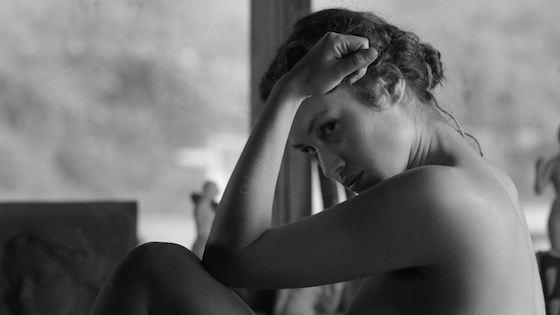
Aida Folch as Mercè in The Artist and the Model
The film is shot in black and white. But to merely say “black and white” does not capture the luminous beauty of the photography. Each scene has a shimmering silver light that imbues the film with both beauty and gravitas. Each scene seems as if a Richard Avedon portrait had come to life. I do not exaggerate when I say that this may be the most beautiful film I have ever seen.
The slow rhythm of the film may be off-putting to some, but it should not. We are watching something very special here. The creative process has always been a difficult one to portray, and a slew of films have done it badly. But not this. This comes as close as is probably possible in capturing the artistic process: idea, incubation, trial, and execution.
And aside from our watching the process, there is the sculptor’s instruction for his model. At one point, he tells her his version of creation. God, he says, having created the beauty of the universe, wanted someone to share it with and so he created woman. (He believes the female body and olive oil are God’s greatest creations.) Together, God and the woman, had a son Adam.
At another time, he takes a scribbled pen-and-ink drawing of Rembrandt’s and explains to Mercè what the artist was doing. In a simple three minutes of film, he gives a master class in art–and one that any art student should attend to.
We learn more about the artist when a Nazi officer drives up to his mountain studio. Mercè–who at that point is hiding a wounded Resistance fighter–is naturally on alert. But the Nazi is there to discuss the biography he is writing on the artist. (He already has some 400 pages.) After the two discuss the book, the Nazi departs, telling Cros that he has been transferred to the Russian Front. We get the idea that he’ll never live long enough to finish his book.
The stories surrounding the making of The Artist and the Model are a lesson in creativity as well. Based loosely on the sculptor Aridste Maillol and his final model, Trueba began working on the script in 1990, intending to collaborate with his brother the sculptor Maximo. But Maximo’s young and sudden death, put Trueba off the project. It was not until, Rochefort, whom Trueba had already considered to play his sculptor, told him he was retiring that Trueba decided to go ahead with it.
It is undoubtedly, the high point of Trueba’s career so far, as it probably is also for Jean Rochefort. Indeed, like the sculptor that he plays, Rochefort’s finest performance–in a long and celebrated career–is here in this his final performance.
Certainly, there is much good art around. There is very little great art. The Artist and the Model falls into the second category.
“If you want to live your life in a creative way, as an artist, you have to not look back too much. You have to be willing to take whatever you’ve done and whoever you were and throw them away.”
“Build a good name. Keep your name clean. Don’t make compromises, don’t worry about making a bunch of money or being successful — be concerned with doing good work and make the right choices and protect your work. And if you build a good name, eventually, that name will be its own currency.”
Patti Smith (remembering advice she got from William S. Burroughs)
I was up and about the other night, unable to sleep, not ready to start a new book, and mindlessly checking out things on-line. I checked my e-mails, paged through my Zite selections, spun through scores of Twitter and Tumblr postings. And I came upon this very intriguing headline:
Romanian investigators have found the remains of paint, canvas and nails in the oven of a woman whose son is charged with stealing masterpieces from a Dutch gallery in October last year.
(click headline to read original article)
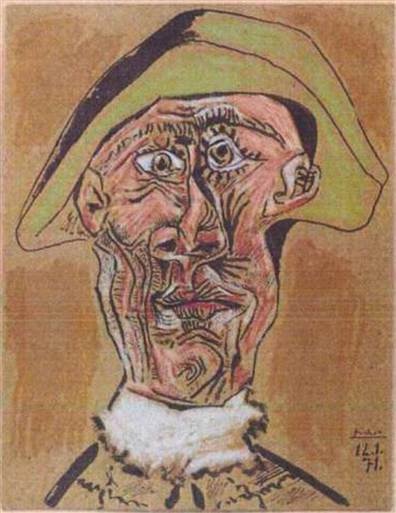
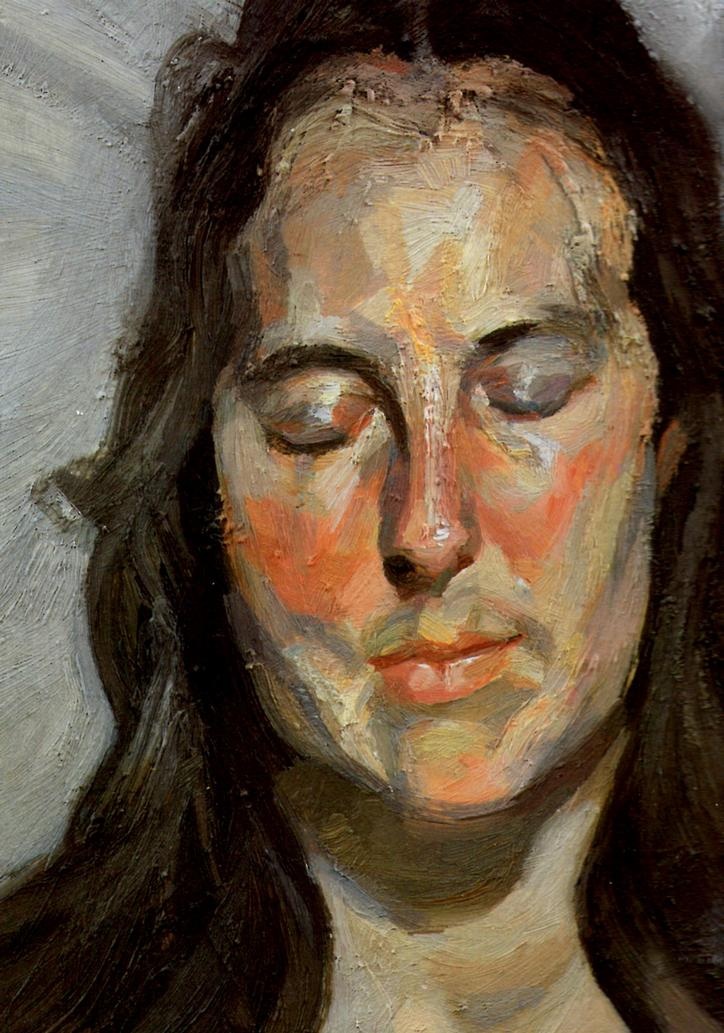
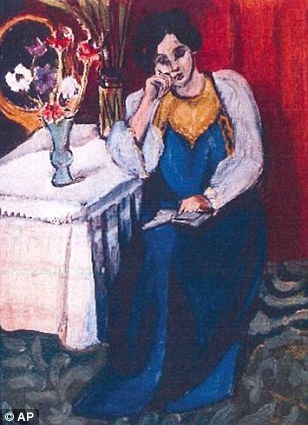
Authorities believe that these are the remains of a cache of paintings that were stolen from a Dutch museum in October 2012 and which included Picasso’s Harlequin Head, Monet’s Waterloo Bridge, Mattise’s Reading Girl in White and Yellow, and Lucien Freud’s Woman with Eyes Closed.
The burnt remains–pigments, bits of wood, nails–were found in the home of a Romanian woman whose son had been arrested in connection with the heist.The woman, Olga Dogaru, told authorities that she had burned the paintings to destroy any evidence that linked her son to the theft. The paintings, which are valued between $130 and $250 million, have not yet been officially identified with the remains in Mrs. Dogaru’s oven, but the likelihood is great.
And so I began thinking and wondering.
In a small house in Romania, we have fragments of painting primer, paint, wood, canvass and nails. In a way, these famous paintings have been “deconstructed” to their most basic elements. What element is missing? Genius? Kind of nebulous. Inspiration? Maybe even more so. Certainly execution and vision.
But what was once one thing is now something else. (In many ways, isn’t that a way of defining art itself.)
One of the officials working on the case stated that if these oven remains are indeed the paintings they are looking for then Olga Dogaru’s actions are a “crime against humanity.”
Come on, now. After the horrors of the Holocaust, the crimes of Pol Pot, various tribal genocides, corporate environmental rape, the atrocities of the twentieth century and the new horrors of the young twenty-first, I think calling this a “crime against humanity” is a bit overstated and a bit overdramatic.
Don’t get me wrong. I am no philistine. I love art. It is a very important and crucial part of my life, day in and day out. I love amateurish, clunky student art and exquisite paintings by the Old Masters. I love rough draft architectural models and elegant Brancusi Birds in Space. I love the avant garde and the mainstream.
And yet, my life is not appreciably diminished by the loss of these individual paintings. There are paintings that I love, that I am lucky to be able to visit often. But if they were gone, life would go on. For me, as well as most of the other 7 billion people on earth.
Undoubtedly, it is a shame that these paintings are gone forever. (A bit amusing that they were destroyed by a mother trying to protect her ne’er-do-well son and probably unaware of the magnitude of her actions.) The monetary loss is arbitrary…and irrelevant. And the fact they they will never be seen in the original is regrettable.
But the entire story has me thinking hard about Art. What is it? What is it for? What is its relationship with society? What are the tiers? And what and who determines them?
To be honest, I don’t know the answers. But they are important questions to ask.
"Here is my secret. It is very simple: It is only with the heart that one can see rightly; what is essential is invisible to the eye.."- Antoine de Saint Exupéry