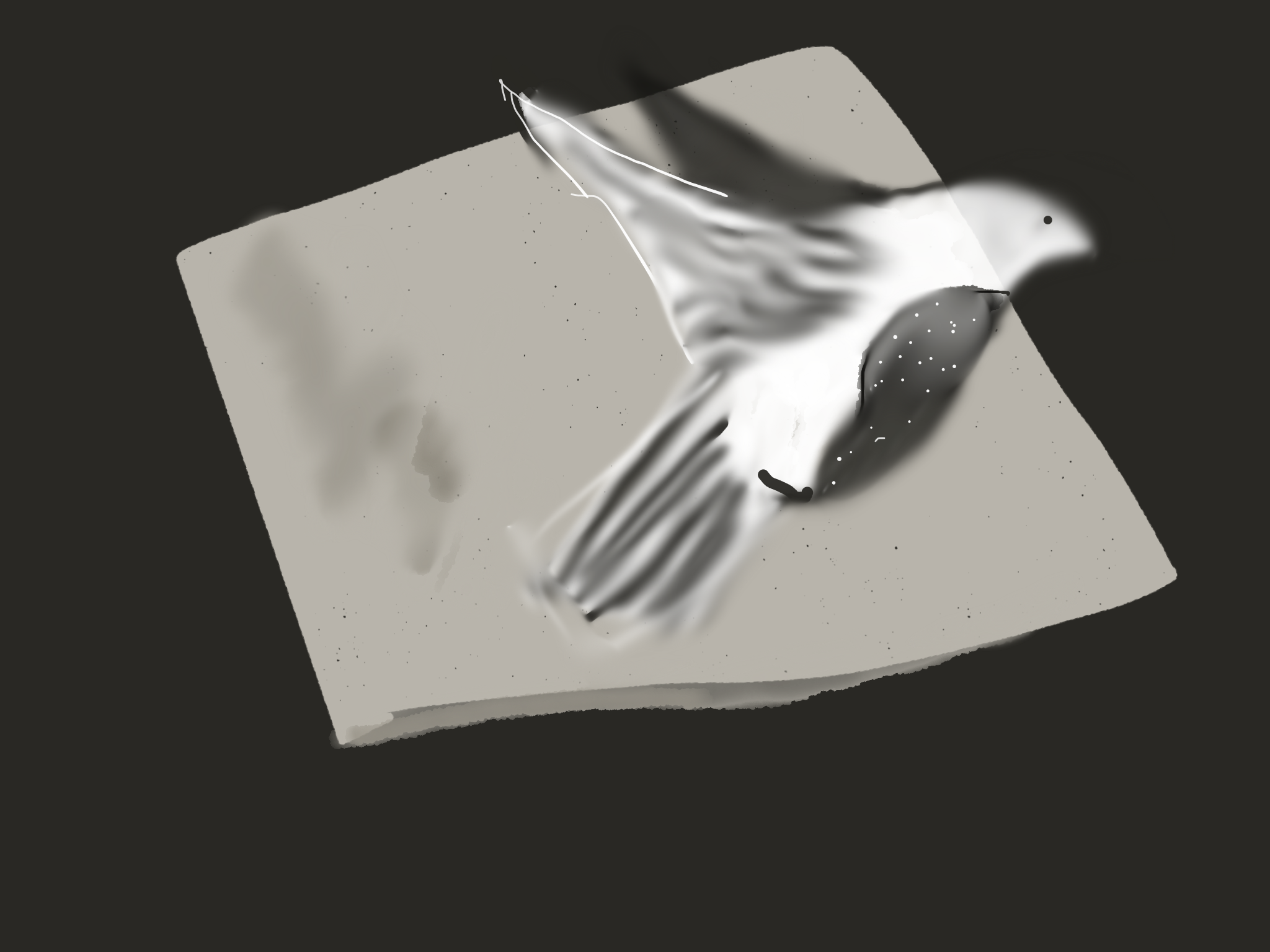
RIP: Leonard Cohen (illustration 2016 by jpbohannon)
About a month ago, a coworker sent me a YouTube link of the title track of Leonard Cohen’s upcoming album, You Want It Darker. She wanted me both to hear it and to help her make sense of it.
And it was dark. It was almost a challenge to a god that has allowed humanity to do what it has in the course of human history. It was punctuated by the opening prayer of Rosh Hashana, “Hineni, Hineni.” (Here I am, Lord). And then it was followed by Cohen’s line: “I am ready, Lord.”
(Perhaps, Cohen shouldn’t have issued the challenge when he did. For in the week that he died, the world indeed became darker in many ways for many of us.)
There have been many wonderful obituaries written over the past week, articles that celebrated his music, his poetry, his novels, obits that detailed his fully-lived life, both the loves and the disappointments, the treacheries and the successes. (Here is The London Times’ obituary.)

Cohen in London in 1978 (SIPA PRESS/REX/Shutterstock)
And, of course, there were the inevitable comparisons to Dylan. Over the past several weeks, both have been rightly acclaimed as momentous poets of our times–death and international prizes undoubtedly will do that–but too many of the commentators positioned it as some sort a race, a competition.
It isn’t. It never is.
Certainly, they were both poets, but they are greatly different. Dylan’s words, he claims, come easy; Cohen struggled long and hard on his. (He claims that “Hallelujah” took him five years to write.) But they both brought to their work an elevated sense of language and imagery, a modern sensibility far removed from the insipid themes of most popular music of the time.
I learned about both of them when I was a very, young boy. When I was eleven, my eighteen-year old cousin and I both got guitars for Christmas. So we learned together, except he was 18 and much more part of the world and the emerging folk scene. Consequently, what I first learned on guitar was the Dylan songbook and the folk music published in SingOut magazine.
My first songs were Dylan’s “Hollis Brown” (one chord, E-minor, throughout) and “To Romana” (two chords, C and G). Before too long I moved on to Cohen’s “Suzanne.” In the small and insulated world of folk music, the song “Suzanne” was everywhere, as everyone it seemed was covering it. ( I mainly knew Judy Collins’ version. I can’t imagine my cracking adolescent voice trying to imitate her beautiful soprano. But oh well, …)
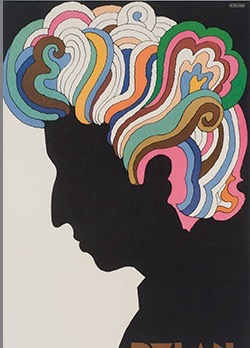
Milton Glaser’s iconic poster of Bob Dylan
My fascination with Cohen, however, came much later. Dylan was Dylan and, if I had a musical idol, it was certainly he. For most of my adult life. But as I grew older, Cohen seemed to speak to me more readily. Oddly, Dylan’s writing began to seem overly specific, whereas Cohen was speaking to me individually and universally.
And as I grew older, his disappointments were more understandable. In a October 17, 2016 profile in The New Yorker, Cohen stated that “I am ready to die.”
I have been thinking about my own death a lot recently. One learns only gradually that one is not immortal, or at least the understanding of that comes on gradually. Cohen knew that, but he still kept creating; at 82, two weeks before he died, he put out this last album.
It is serious and resigned and thoughtful.
It is beautiful. And sometimes funny.
And it is wonderful to listen to.
 j. p. bohannon