Book Review: Submergence by J. M. Ledgard

image

“submergence” illustration 2014 by jpbohannon


There are some novels that do more than just examine a life, dissect a relationship, recount an adventure. They tell you things you do not know, often things you could not know. J. M. Ledgard’s Submergence is such a novel.

James More is a secret operative for the Secret Inteligence Service , dropped into Somalia under the guise of a water engineer and captured by al-Qaeda jihadists. Tortured–physically, mentally, and psychologically–he survives by remembering his past and observing keenly his present.  A very big part of his past is a recent love affair that he had the previous year in France with Danielle (Danny) Flinders, a bio-mathematician and a renowned expert in life at the bottom of the ocean. While More is submersed in chaotic Somalia, Flinders is on a dangerous diving expedition off Greenland where she will take the submersible, Nautilie,  into an oceanic fault to get samples of the microbiotic, chemosynthetic life that exists there.

More–an ancestor of Sir Thomas More, his father was Thomas More XVI–is an Englishman who is very fond of his native home. His memories of the stone walls and green fields, the beautiful churches and the glorious music are often set against the stark, impoverished sites that his captives periodically move him to.  Flinders, part French, part Australian, is more of a free spirit, a rootless and rogue scientist, whom this affair with More has seemingly tamed. Her thoughts are perhaps larger, going beyond the current events of Muslim Africa and modern conflicts, and contemplating human origins–and extinction, the primeval soup that is the ocean, and the mythic and cosmic implications of the studies she runs.

The actual love affair itself is quick and remembered periodically by James and Danny, as he is subjected to the harsh world of jihadists on the run and she on the prehistoric world of the ocean deeps.  But although it is quick–a week or so at Christmas–it creates a lasting–and perhaps permanent–bond for the both of them.
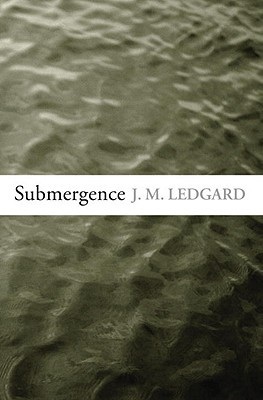
cover of the hardback edition of Submergence

cover of the hardback edition of Submergence

But then James is taken.

In the novel–informed so greatly by current events- we learn much about jihadists–about their training camps, their dreams, their aspirations, their hatreds, their violence. We see the extreme depredations that allows young boys to decide that the promise of Paradise to martyrs is much more attractive than the life they actually live.  We see primitive societies and their primitive justice. And we see the harsh landscape of Somalia.  We see the jihadists’ voiced hatred of things Western, yet their fascination with it at the same time. (Once very popular, Rambo fighting alongside the Afghans against the Soviets has been replaced by Disney animation. The leader of James’ captors sees Bambi as an allegory of the “Crusader” in the Muslim world.)

We learn about Islam, about the djinn and the promises of Paradise.  More’s education allows him to intelligently compare Islam with Christianity, for both good and bad, to discuss literature and his ancestor’s Utopia, and to give insight into the covert maneuvers of both sides in the “war on terror.”

And we learn much about violence.

We also learn a great deal about the ocean’s floor and the creatures that live there and the (few) people who explore it.

None of this is pedantic, however.  In fact, it is fascinating. It is couched in James More’s adventure story: his struggle to survive day in and day out propels the story forward. His memories and thoughts are what tie it together. Her memories and knowledge add to the banquet.

In all it is a wonderful read.

J. M. Ledgard

J. M. Ledgard

J.M Ledgard is a journalist who has been the political and war correspondent for the Economist. He now lives in Africa, where he consults developing countries on technology and risk.  His first novel Giraffe (2006) was inspired by the slaughter of 49 giraffes at a zoo in Czechoslovakia in 1975, which Ledgard uncovered in 2001 when he was working there as a correspondent.  Submergence is his 2nd novel.
Book Review: A Farewell to Arms by Ernest Hemingway

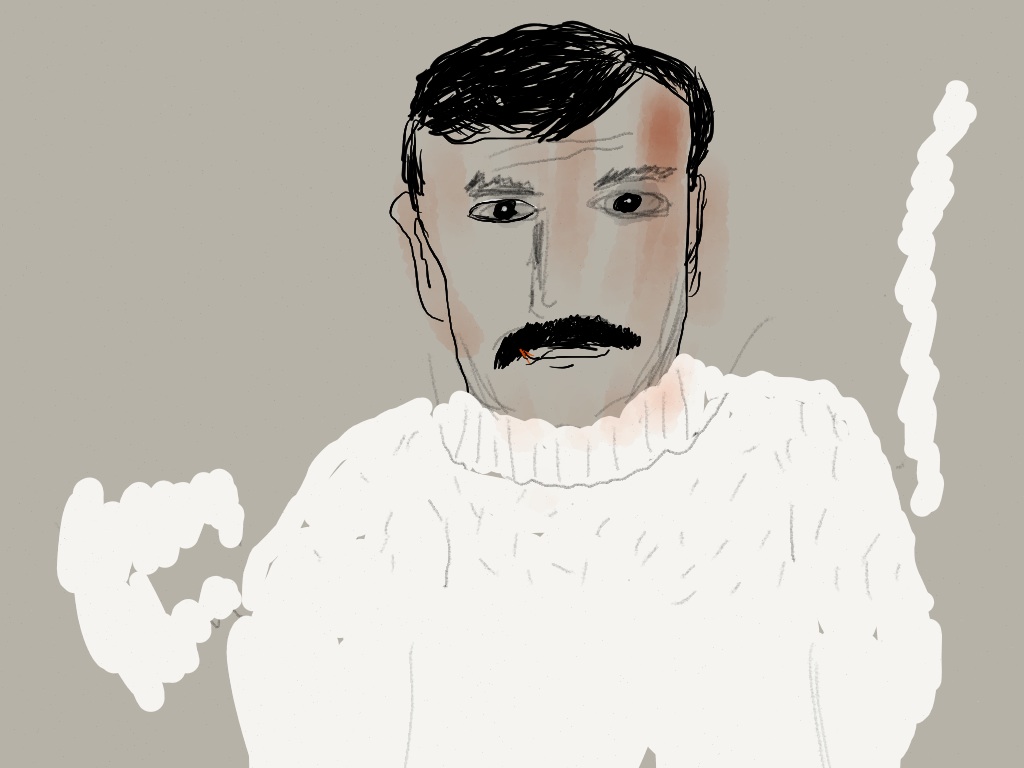
Hemingway as a young man.   illustration 2014 by jpbohannon

Hemingway as a young man.
illustration 2014 by jpbohannon

The most gaping hole in my formal education is a lack of courses in American Literature. In undergraduate and graduate school combined, I had taken only one course in American lit. My understanding is mostly self-directed–and often spurred on by the requirements of teaching American Lit survey courses for many years. Certainly, I know the school classics: The Great Gatsby, Huck Finn, The Scarlet Letter, The Old Man and the Sea, The Sound and the Fury.

And as a reader, I have discovered on my own Vonnegut and Pynchon, Heller and Elison, Mailer, Roth and Updike. And from my friends I have learned to love DeLillo, Wallace, and Johnson.  But I know there are gaps.

I took a tour, a few weeks back of Ernest Hemingway’s home in Key West. I respect and admire Hemingway’s short stories–and often teach them in writing classes for their craft–and have fond memories of reading The Sun Also Rises and A Moveable Feast,  but I never read much else. Anyway, the tour guide told us that it was here in the Key West house that Hemingway wrote a large portion of his work, in particularly A Farewell to Arms, which he stated is considered Hemingway’s greatest work. (Remember, he is a tour-guide, not a literary critic.)

And so I decided to give it a try. And to be truthful, in the beginning, it was slogging read at times.

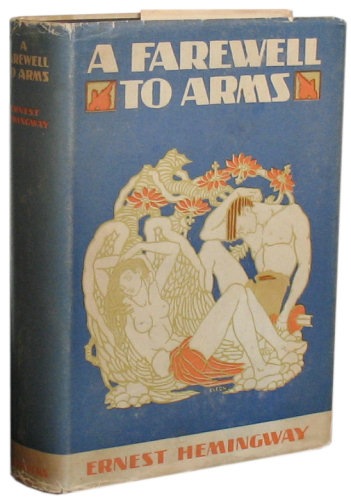
First Edition of A Farewell to Arms

First Edition of A Farewell to Arms

In brief, the novel is the semi-autobiographical story of an American ambulance driver, Frederic Henry, working for the Italian army during World War I, who is wounded, falls in love with his nurse, impregnates her and sneaks across the border with her into neutral Switzerland. There are pieces that are perfect Hemingway: the army’s long retreat, the Swiss countryside in winter, the view from a hotel room. These passages are clear and distinct and one can almost imagine Hemingway speaking them himself.

What one cannot imagine is anyone speaking the dialogue that Hemingway has given his characters to speak. The dialogue among the soldiers is stilted–but I thought perhaps that was intentional as the narrator is an American and the conversation is between him and his Italian comrades. But the conversation between the lovers–between Frederick and Catherine–is downright embarrassing.

Perhaps, it is dated. But I do not believe so. The dialogue in Fitzgerald’s Gatsby published four years earlier in 1925 is not as silly or inane. This can’t be how people talked 75 years ago. Perhaps, Hemingway is trying to capture the coded, playful language that lovers often engage in privately. Well if so, it should have remained private. While Catherine Barkley is a strong woman–a British nurse working in the Italian theater of war–when she speaks she sounds infantile and ditzy, hardly the type that Henry would fall for.

But then, perhaps, it is just me, the reader, far past the ages of the protagonists, a little bit wiser (one hopes) and a little bit more jaded.

And yet, having said all that, the slogging read and the cloying dialogue are more than made up for in the last chapter. It is here that Hemingway elevates the novel to something different, something larger. It succeeds not merely because of the drama–which in lesser hands would have become melodrama–but because of  the craft. The language is pared down–like Joyce had taught him–and there is simply life, death, man and woman. It doesn’t get more basic than that. In the end we admire Frederic Henry more than before–I found him hard to like or take seriously throughout much of the book– and we admire Hemingway too. We admire what he is doing and we understand how this novel placed Hemingway in the pantheon of American authors.

Hemingway famously once claimed that he rewrote that last chapter 39 times. Well, then it is a good advertisement for revision, for it is so superior to everything else.

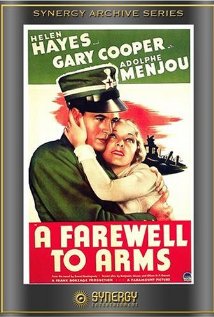
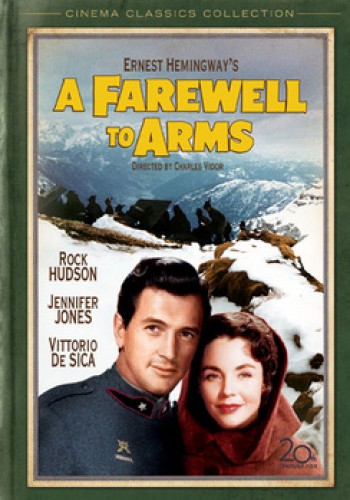
The novel was an instant–and huge–success.  Within a year of its publication a dramatization was staged and in 1932 Hollywood released a major film of the novel, featuring Gary Cooper and Helen Hayes.  In 1957, a second film was made, this time starring Rock Hudson and Jennifer Jones.

I have seen neither, and I won’t search for them. It is Hemingway’s language and style that is the star of A Farewell to Arms, not the story.  And much of that would be lost in film.

Movie Poster for 1932 film

Movie Poster for 1932 film

Movie Poster for 1957 film

Movie Poster for 1957 film

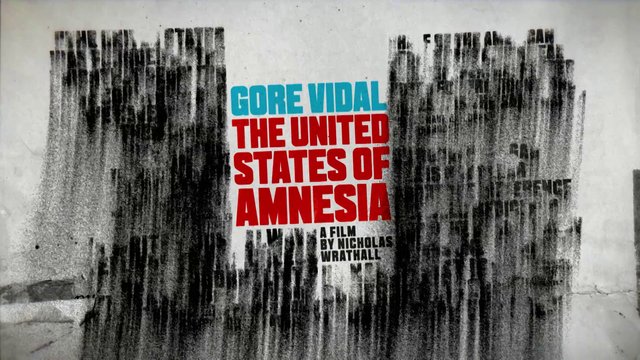
Gore Vidal: The United States of Amnesia

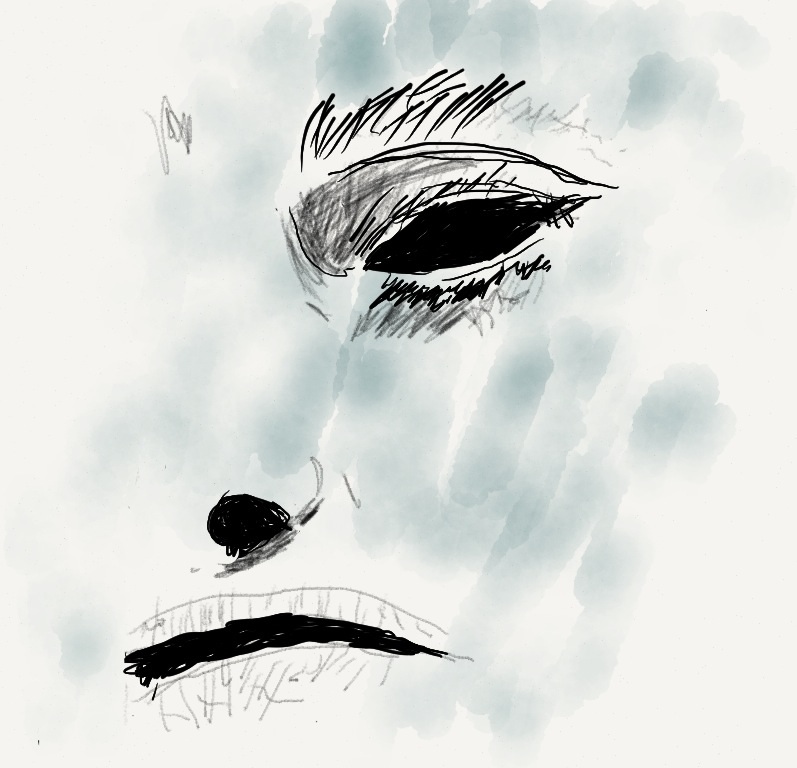
Gore Vidal Illustration 2014 by jpbohannon

Gore Vidal
Illustration 2014 by jpbohannon

The United States was founded by the brightest people in the country…and we haven’t seen them since.” Gore Vidal

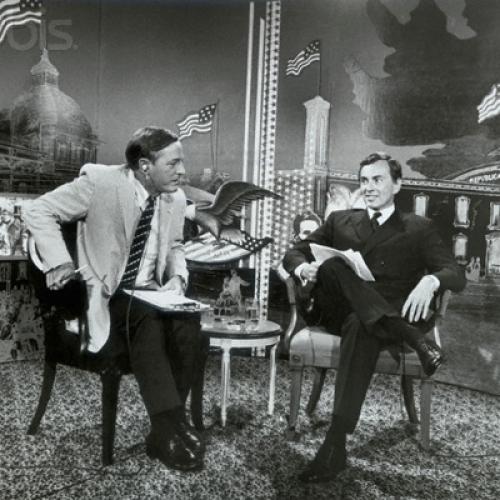
Gore Vidal is perhaps one of the U.S.’s most under-appreciated writers, certainly was one of its most vocal political intellects, and truly one of its most fascinating personalities. Novelist, screenwriter, playwright, essayist, he parlayed his wit and intelligence–and his knowledge of the backrooms of politics– into becoming a favorite choice when looking for a liberal spokesman for televised debate (most famously with William F. Buckley), a panel member, or talk show guest.

vidal6

The infamous of their many debates where Buckley called Vidal a “queer” and Vidal called Buckley a “crypto-Nazi.” They were discussing police brutality in Chicago during the 1968 Democratic Convention.

Nicholas D. Wrathall’s documentary, Gore Vidal: The United States of America attempts to capture the wit, the acerbity, the political thought and the literary presence of Vidal, but at last, Vidal is really simply large a figure to truly pin down in little less than two hours. So it focuses on the political.

The film tries to be chronological but it is not really historical, moving ahead and back indiscriminately in chapters set off by one of Vidal’s aphorisms.

“I heard bad news on the way over here: the Ronald Reagan Presidential Library was just destroyed by fire, and, tragically, both books were a total loss. Worse yet, he wasn’t finished coloring the second one.” Gore Vidal to the National Press Club on Ronald Reagan

The United States of Amnesia is primarily focused on Vidal’s political thought–and his ultimate pessimism about the reality of the United States. The biographical part moves rather quickly. He was raised primarily by his blind grandfather, the U.S. Senator from Oklahoma, Thomas Gore, for whom he acted as page and guide, and for whom he would read out loud the senator’s voluminous reading list of philosophy and political thought. The political ideas and conversations that his grandfather was interested in had to come first through the mouth of his young grandson, and gave the young man an invaluable schooling. Vidal–who was christened Eugene Luther Gore Vidal–took the grandfather’s last name as his own and became Gore Vidal.

Even as a child, Vidal was surrounded by the powerful and famous. Not only did Vidal walk the august halls and back offices of the U.S. Senate with his grandfather, but his father was a close adviser to FDR and was, according to one biographer, the great love affair of Amelia Earhart. His mother married four times, once to Henry Auchincloss, the step-father of Jacqueline Bouvier, the future Mrs. Kennedy. Vidal also reported that she had a long “on-again, off-again” affair with the actor Clark Gable.

After service in the navy during World War II, Vidal published–at the age of twenty-one– the novel, Williwaw. Based on his military experiences, the novel was highly successful. His second novel published two years later The City and the Pillar, caused a furor of controversy because of its matter-of-fact portrayal of homosexuality. So outraged was the mainstream press, that the editor of The New York Times, Orville Prescott, refused to “read or review” any subsequent Vidal novels.  (Vidal got around this to a small degree by writing under the pseudonym  Edgar Box.)

“What is in question is a kind of book reviewing which seems to be more and more popular: the loose putting down of opinions as though they were facts, and the treating of facts as though they were opinions.  Gore Vidal

With his books banned from review from the national “papers of record,”  Vidal set out to become a screen writer in Hollywood. He wrote several television plays–the most notable being The Best Man–and several feature films, including the rewrite of the script for Ben-Hur.  

In the 1960s, Vidal returned to fiction, writing three  novels Julian, Washinton, D.C. and Myra Breckinridge. In a way, these three encompass the themes of all his later fiction–ancient history, Washingtonian politics, and broad comedic social commentary.  Importantly,  also in the 1960s, Vidal moved to the Amalfi coast in Italy.  He was not the first writer to believe he can see and comment on his native country better from a distance…and that is what he did.

Vidal’s targets were many:  American foreign policy, the militarization of America, the role of big business in American politics, the growth of religion in government.  In journals such as The New Statesman, The Nation and The New York Review of Books, Vidal spoke his mind in well-crafted, observant and illuminating essays. Indeed, it is the essays for which Vidal is most celebrated.  Always witty, always incisive, and always confident in his beliefs, the tendencies of his political thought still harkened to the populist politics of the grandfather who raised him.

It is difficult to capture all of Vidal in a movie.  In Gore Vidal: The United States of Amnesia, we have film clips of the famous debates and talk show appearances, we have photographs of the famous and celebrated who attended his many parties, and we have talking heads reminiscing about Vidal.  Perhaps, the most rewarding of the bits is when Vidal himself remembers particular moments. An adept storyteller–often supplying different accents–he tells us of a shooting party with him, JFK and Tennessee Williams, of an encounter between Paul Neuman and William F. Buckley following the legendary “crypto-Nazi” debate, and of the pain of ultimately packing up his beloved home in Italy when he became to feeble to stay there himself.
vidal-image

Poster for Nicholas Wrathall’s documentary on Gore Vidal.

The film begins with Vidal visiting the tombstone where his life long partner Howard Austen was buried and where his name is etched waiting for him to join. It ends there as well, a full circle.  It is an enjoyable two hours, filled with insight and humor and not a small bit of nostalgia for a time when non-conformist ideas and opinions were voiced in the mainstream and not lost in a sea of cable channels and internet sites.

“All in all, I would not have missed this century for the world.”  Gore Vidal

The Hemingway House, Key West

Hemingway House, Key West Illustration 2014 jpbohannon

Hemingway House, Key West
Illustration 2014 jpbohannon

I have always had a love/hate relationship with Ernest Hemingway. For a long time, all the machismo got in my way: the big game hunting, the bull fighting, the boxing, the boasting, the egoism, all seemed to be compensating for something, a sense of insecurity perhaps, to put it in simplest terms.

And yet, I love his writing. It is pure and clean and powerful and elemental. I can still feel the the visceral punch in  “Indian Camp” when the father removed the blanket from the young husband in the upper bunk. Or, the pared-down, gradual dawning of realization in reading “Hills Like White Elephants” or the existential abyss yawning at the end of a “A Clean Well Lighted Place.”

It’s been a while since I read one of the novels. I remember A Sun Also Rises fondly. The damaged romanticism of  Jake Barnes, the alluring aloofness of Brett Ashley, the thirsty landscape of Spain are all still vivid in my mind despite how long ago I last read it. And while critics claim A Farewell to Arms to be the better written novel, The Sun Also Rises remains more important to me.  (A colleague just last month called it the worst novel written in English! Oh well.)

And so, with this ambivalence about Hemingway, I visited his home while in Key West in early June.

The home is extraordinary–and rich in story and history.

photo

The front of the Hemingway House on Whitehead Street in Key West. Photograph 2014 jpbohannon

In the 1930s, Hemingway moved to Key West with his second wife–Pauline Pfeiffer–whose uncle purchased the house on the corner of Whitehead and Olivia Streets. And although, Hemingway claimed that he was “restless” in Key West, at this house he wrote a great deal of what would be his most important work.

The house is a two level structure built in 1851 by Asa Tift, a successful architect and salvager, and the Hemingways bought it in 1931.  Today, the home is an Historic Site and remains filled with the Hemingways’ furniture and artifacts.  Throughout each room are both original furnishings and memorabilia–posters of movies made from his novels, photos of Hemingway at various stages of his life, of his family, and of various celebrities and writers. The bed in the master bedroom is actually two double beds that Hemingway wired together and the headboard is a gate made of Spanish mahogany that Hemingway and his wife had seen in a monastery in Spain.  A bench in the foyer is from the same monastery.

Hemingway's Writing Studio in Key West Photograph 2014 jpbohannon

Hemingway’s Writing Studio in Key West
Photograph 2014 jpbohannon

Behind the main house is a “carriage house” in which Hemingway had built a writing studio on the second floor.  In order to ensure his privacy, Hemingway had a wrought-iron catwalk stretched across the patio from the bedroom to his studio.  This was the only means in and out.  Today, the catwalk has been taken down and there is a narrow stairway from the patio to the studio door.  It is an ideal working space.

The house also has a large pool–the first ever in Key West.  Hemingway and Pauline had wanted to build a pool, but cost was prohibitive.  They had bought the house for $8000 dollars, but building a pool in the remote Keys was expensive. Instead, Hemingway built a regulation sized boxing ring. Much to Pauline’s dismay, her dream of lounging poolside had given way to a ring side seat to her husband’s sparring bouts.

However, Pauline got her way (and ultimately the house itself).  Hemingway had started an affair with the writer Martha Gelhorn, and the two of them had met up in Spain to cover the Spanish Civil War.  When Pauline caught wind of the tryst, she promptly had a over-sized pool built–at the cost of $20,000, two and half times the cost of the house.

When Hemingway returned he was none too pleased.  In one gesture of comeuppance, he dragged a urinal from what was then Sloppy Joe’s (and is now Captain Tony’s) which had been thrown curbside during renovations, and brought it home as a watering trough for his many cats. As he told his wife, “you have your pool, and now I have mine.”

And it is the cats that retain their residency.  Hemingway loved cats, particularly 6-fingered, “polydactyl” cats. He believed them to be good luck. There are countless photos of Hemingway with them–while he wrote and while he lounged. (Apparently, they were the only others who had access to his studio.) Today, all of the 48 or so cats on the property are descendants of Hemingway’s cats–and all of them carry the gene for the polydactyl mutation.

One of the many six-fingered cats on the Hemingway Huse property. photograph 2014 by jpbohannon

One of the many six-fingered cats on the Hemingway Huse property.
photograph 2014 by jpbohannon

But after the cats and the pools and the writing studios, after the womanizing, the wives, and the bluster, after the houses and the legends and the suicide, what we are left with in the end is the writing.  As I said earlier, it is pristine and clear and purposeful.  Hemingway was a great reviser, mostly paring down and paring down to the very essence of what he wanted to say. As he famously told an interviewer, the hardest part is getting the words right:

Interviewer: How much rewriting do you do?
Hemingway: It depends. I rewrote the ending of Farewell to Arms, the last page of it, 39 times before I was satisfied.
Interviewer: Was there some technical problem there? What was it that had stumped you?
Hemingway: Getting the words right.
(Ernest Hemingway, “The Art of Fiction,” The Paris ReviewInterview, 1956)

Book Review: Beautiful Losers by Leonard Cohen

illustration 2014 by jpbohannon

illustration 2014 by jpbohannon

A few weeks back I saw a photograph of Jonathan Letham’s favorite books.   Among the titles on the row of spines,  I noticed a book by Leonard Cohen called Beautiful Losers.

Now, I am a big Cohen fan.  I listen to and play his music frequently–both new and old– and I am well aware of his  poetry, so I assumed Beautiful Losers was one such poetry collection.

I was wrong. It was a novel, first published in 1964–several years before the release of his first album, The Songs of Leonard Cohen.

And so I thought, what the hell.

Beautiful Losers is very much a work of its times. Frenetic and speeding. Erotic and rambling. Big-hearted and narcissistic.

It is the story of an unnamed narrator whose other two partners in a odd love-triangle –his wife and an elusive shaman-like man named F.–are dead. (His wife committed suicide in the unconventional way of sitting at the bottom of an elevator shaft and having the elevator crush her. F. is a member of the Canadian Parliament.) The other object of his love/lust is also dead but she’s been dead for 300 years and is up for canonization by the Catholic Church, Catherine Tekakwitha, the virgin of the Iroquois.

There are betrayals and reversals and climaxes and re-unions.  There is sex and loneliness and more sex.  There is 17th-century genocide and 20th-century nationalism and separatism. (This is early 1960s Montreal, after all.)  There are Joycean lists and Henry Miller-like rhapsodies, but all and all the whole thing seemed to me to be very much a part of the 60’s gestalt. (One of my favorite scenes is when the naked narrator watches his wife and her/his lover shoot up, only to discover later that they are injecting an odd mix of heroin and Lourdes water. He found the advertisement/receipts for the Lourdes water in his wife’s dresser drawer)

The whole thing reminded me more of late Ken Kesey or even Gilbert Sorrentino than it reminded me of Joyce or Miller (which connection the book jacket blurbs go on and on about). The attempt seemed old and tired…but maybe because  the energy of those times seems so old these days as well.  True, it is a pastiche of Joyce–but then again how many young artists were trying the same at the time.

But more than anything else, Beautiful Losers is the announcement of a unique and individual voice.  That that voice ultimately decided to be heard through poetry and song rather than through fiction was a decision that the artist himself made.

And I for one believe it was a right decision.

In a very early poem, Cohen wrote:

So you’re the kind of vegetarian

Who only eats roses

Is that what you meant

with your beautiful losers?”

I’m not sure if this is where Cohen got the title for his novel or precisely what these lines might mean, but it reflects the  word usage and mindset of the novel.

Book Review: The Black-Eyed Blonde by Benjamin Black

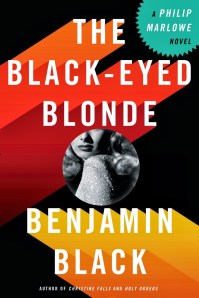
In 2006, with the release of Christine Falls, the Booker-Prize-winning novelist John Banville began publishing “crime fiction” under the pen name Benjamin Black.  Like his “literary novels,” these crime novels are psychologically astute, intensely plotted, and keenly aware of language.The Black-Eyed Blonde

With The Black-Eyed Blonde, however, Banville decided to try something new:  to write a novel using Raymond Chandler’s most famous private detective, Philip Marlowe.

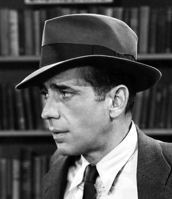
While Chandler’s fiction is read and esteemed, and his influence on detective fiction in particular and American literature in general widely acknowledged, his detective’s presence is mostly ingrained in the American consciousness through film and television.  There have been several television series featuring the L.A. detective and many movies.  Dick Powell and Robert Mitchum both played Marlowe, and successfully, but undoubtedly, the most iconic incarnation of Phillip Marlowe is that played by Humphrey Bogart. So pervasive are the film renditions of Chandler’s L.A., that I found myself casting the characters while reading The Black-Eyed Blonde.  Sure enough there was a role for all the usual suspects: there is a creepy, effeminate Peter Lorre type, an enormous, gang-lord Sydney Greenstreet, a fetching Lauren Bacall character, and, of course, there is Bogart as Marlowe.

Humphrey Bogart as Phillip Marlowe in The Big Sleep

Humphrey Bogart as Phillip Marlowe in The Big Sleep

Banville himself is certainly aware of the hold that film has on the literary characters and early in the book he gives a winking nod to Bogart. Marlowe is sitting in the offices of a fancy country-club. There are cigars and brandy, chintz armchairs and fine china. Marlowe says:

“At that point, I wouldn’t have been surprised if some fruity type in white shorts and a blazer had come bounding through the door, inquiring with a lisp if anyone was for tennis.”

This is Banville’s joke, and nod to Bogart.  Before he played tough guys in film, Bogart played in drawing-room comedies on Broadway. A long-lived story is that Bogart’s first professional line as an actor was as a young dandy, bouncing onto stage with his tennis whites and tennis racquet and inquiring “Tennis, anyone?”  That Bogart also had a slight lisp, makes Banville’s nod even more on target.

But The Black-Eyed Blonde is not a film, it is a novel, and a highly readable one at that. The title is one of several possibilities that Raymond Chandler had filed away and which Banville received permission to use from The Raymond Chandler Estate.  From there, somehow, Banville began channeling Chandler, because what he has created is an exceptional mirroring of Chandler’s style: the rapid-fire dialogue, the lyrical similes, and the sprawling, frenetic plot and subplots.

The plot is typical: the eponymous blonde, Clare Cavendish, enters Marlowe’s office and hires him to find a “friend”  who has gone missing.  When Marlowe discovers that the friend was killed and cremated two months earlier but that Cavendish had seen him just a few days ago, things get complicated.  There are betrayals, murders, cover-ups, flirtations, and deceptions.  And throughout it Marlowe maintains a strict code of honor–the characteristic that always set Marlowe apart from the rest. He protects his clients’ confidences, he takes no joy in the violence that is visited upon the deserving, he cannot be bought no matter what the price, and, while he can empathize with those on both sides of the law, he believes in justice.  It is this chivalric honor that became the hallmark of the American noir hero.

But always, when reading Chandler–and now Banville posing as Chandler–the story seems secondary.  It is the evocation of 1930s-40s Los Angeles, the elaborate metaphors (“He smelled like an over large man who had lain in the bath too long.”), the snappy dialogue that conjures up an entire world–a fictional world, perhaps, but one that we are very familiar with through both reading and film. And with The Black-Eyed Blonde, Banville re-captures that world perfectly,  note for note.

The Black-Eyed Blonde is a fun, a quick, and a memorable read.


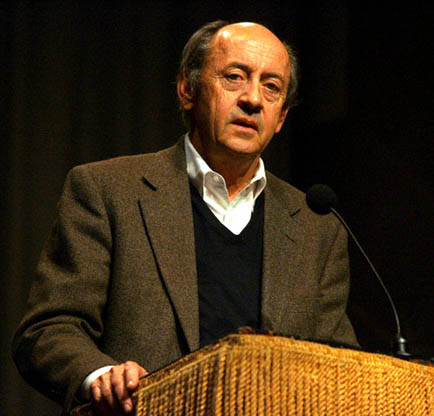
Billy Collins … and how to think better of poetry

Billy Collins

Billy Collins

The other night I went to see the poet Billy Collins deliver a lecture. It was a pretty fancy event–I’d been given the tickets– held in the  beautiful Verizon Hall at the Kimmel Center in Philadelphia. As Billy Collins remarked, it is like standing inside an enormous cello.

Verizon Hall at the Kimmel Center, Philadelphia, PA

Verizon Hall at the Kimmel Center, Philadelphia, PA

Anyway, I don’t know a lot of Collins’ poetry, except maybe two or three poems, but I always use his poem “Introduction to Poetry” at the beginning of any course I teach in poetry.  In it, Collins claims:

I ask them to take a poem
and hold it up to the light
like a color slide

or press an ear against its hive.

I say drop a mouse into a poem
and watch him probe his way out,

or walk inside the poem’s room
and feel the walls for a light switch.

I want them to waterski
across the surface of a poem
waving at the author’s name on the shore.

But all they want to do
is tie the poem to a chair with rope
and torture a confession out of it.

They begin beating it with a hose
to find out what it really means.

It is those last five lines that are important. They describe why poetry is met with such an “ugh” from people whose only experience with it has been in classes where the well-intentioned teacher urged them to “find the meaning.”

I tell my students that human beings are innately wired to respond positively to poetry (think infant lullabies, toddlers’ picture books, nonsense riddles, jump-roping songs). It is the English teachers who teach students to dislike it. To think of it as something to fear and dread.

And that is a shame.

For last night, Collins (who repeated what I said about poetry being innate) was as entertaining as could be. He told the audience a bit of his life and his term as Poet Laureate of the U.S.  He spoke of his influences and literary influences in general. He spoke of the death of humor in poetry–he blames the Romantics who he said “replaced sex and humor with landscape.” And he spoke of the difficulty for some people used to hearing formalist poetry to hear the acoustics of what is commonly called free verse. (He doesn’t like the term.)
He also read several of his poems, although half of what he read came from others. Here is a wonderful two line poem by Howard Nemerov called “Bacon and Eggs”:

The chicken contributes,
But the pig gives his all.

See it’s good to laugh.  And have fun in poetry.

And so he spoke of the importance of humor and used a poem by Ruth L. Schwartz to demonstrate how humor can be used as a transition point, moving from light to darkness (or vise versa). He got a laugh on the line “look at that DUCK,” which is how he wanted it to be:

The Swan at Edgewater Park

Isn’t one of your prissy richpeoples’ swans
Wouldn’t be at home on some pristine pond
Chooses the whole stinking shoreline, candy wrappers, condoms
in its tidal fringe
Prefers to curve its muscular, slightly grubby neck
into the body of a Great Lake,
Swilling whatever it is swans swill,
Chardonnay of algae with bouquet of crud,
While Clevelanders walk by saying Look
at that big duck!
Beauty isn’t the point here; of course
the swan is beautiful,
But not like Lorie at 16, when
Everything was possible—no
More like Lorie at 27
Smoking away her days off in her dirty kitchen,
Her kid with asthma watching TV,
The boyfriend who doesn’t know yet she’s gonna
Leave him, washing his car out back—and
He’s a runty little guy, and drinks too much, and
It’s not his kid anyway, but he loves her, he
Really does, he loves them both—
That’s the kind of swan this is.

But the most effecting poem that he read was the one that he read last. It is his beautiful poem about the love between a mother and son–told with sweet humor:

The Lanyard
by Billy Collins

The other day I was ricocheting slowly
off the blue walls of this room,
moving as if underwater from typewriter to piano,
from bookshelf to an envelope lying on the floor,
when I found myself in the L section of the dictionary
where my eyes fell upon the word lanyard.

No cookie nibbled by a French novelist
could send one into the past more suddenly—
a past where I sat at a workbench at a camp
by a deep Adirondack lake
learning how to braid long thin plastic strips
into a lanyard, a gift for my mother.

I had never seen anyone use a lanyard
or wear one, if that’s what you did with them,
but that did not keep me from crossing
strand over strand again and again
until I had made a boxy
red and white lanyard for my mother.

She gave me life and milk from her breasts,
and I gave her a lanyard.
She nursed me in many a sick room,
lifted spoons of medicine to my lips,
laid cold face-cloths on my forehead,
and then led me out into the airy light

and taught me to walk and swim,
and I, in turn, presented her with a lanyard.
Here are thousands of meals, she said,
and here is clothing and a good education.
And here is your lanyard, I replied,
which I made with a little help from a counselor.

Here is a breathing body and a beating heart,
strong legs, bones and teeth,
and two clear eyes to read the world, she whispered,
and here, I said, is the lanyard I made at camp.
And here, I wish to say to her now,
is a smaller gift—not the worn truth

that you can never repay your mother,
but the rueful admission that when she took
the two-tone lanyard from my hand,
I was as sure as a boy could be
that this useless, worthless thing I wove
out of boredom would be enough to make us even.

At Swim-Two-Birds, Guinness, and Finn McCool’s Arse

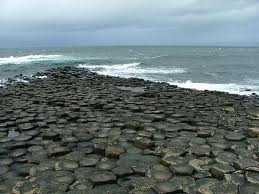
Giant's Causeway

The Giant’s Causeway
–Carved out by Finn McCool

In the mid-nineties, the Guinness company ran a contest that entailed writing an advertisement within a certain number of words.  First prize for the winning ad was a pub in Ireland, and you could see the pubs themselves on-line. (Winning this prize is the impetus of the plot of the novel The Night Swimmer)

Anyway, I remember my entry and remember loving its major image…150 orphans playing handball against the wide girth of Finn McCool’s arse.

Obviously I didn’t win. (I arrogantly told myself that I didn’t win the contest because it was run by American advertisers who didn’t pick up on the allusion!)

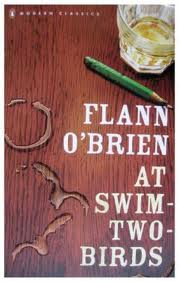
ATSWIMTWOBIRDS And I remembered that ad because the image came from Flann O’Brien’s novel,  At Swim-Two-Birds. And last week I began a post with a poem “The Workman’s Friend” that came from the same novel. That post got me nostalgic for O’Brien’s work. A man of many pseudonyms, O’Brien is best known for the comic novel At Swim-Two-Birds, although my funnest memories are of The Third Policeman and The Poor Mouth, the latter which O’Nolan wrote in Irish as  An Beal Bocht under the pen name Myles na Gopaleen. (And both of which I first read in Connemarra and Sandymount respectively.)

At Swim Two-Birds is a rich novel of basically three stories, a meta-fiction in which a character created by the protagonist writes a novel from which his characters gang together with other characters in the novel to avenge their creator.  It starts with a university student, who spends more time in his bed and in the pubs than in the classroom. Besides drinking, the student is also writing a novel about a man named Dermot Trellis, a middling writer of Westerns. It is his characters who intermingle with each other, who plot against him, and who attempt to live their lives apart from their author’s intentions, after they drug him.

All of this is mixed with a great deal of Irish mythology and ancient poetry (wryly translated by O’Brien himself). From McCool to Mad King Sweeney, from pookas to fairies, an entire ancient world enters this most modern of novels and interacts with O’Brien’s and Trellis’s fictional creations.

To say there is a circularity to the plot is perhaps inaccurate, and certainly understated.  It is more like a mobius strip in another dimension.  One thing turns on another to make way for other things that reflect on something else. This jibes very much with the Greek epigraph which translated means “For all things change, making way for each other.”  For yes, indeed, one character after another makes way for one other character after yet another.

But most memorably, it is laugh-out-loud funny.

So I began re-reading At Swim-Two-Birds again this week and  I started thinking of comic novels in general.

I feel they are best enjoyed by the young.

Think The Gingerman and Catch-22. Think Tom Jones and Confederacy of Dunces. Think Lucky Jim and Reuben, Reuben.  Each presents a hero who is outrageously set up against the straight-laced establishment, whether it be the military bureaucracy, the world of academia, or society in general.  And each hero takes part in the most outrageous antics–antics that only a young soul could aspire to and believe in.  It was once said that an uncle of mine in the army tried to received a medal buck naked, much like–and before–Yossarian in Catch-22. (Unlike Yossarian, he was thrown in the brig.) For my 21st birthday, a good friend of mine wanted to rent a kangaroo suit for me to go bar hopping in, as Sebastian Dangerfield did in The Gingerman.  I still chuckle at the peccadilloes that the Scottish poet Gowan McGland gets himself into in the uptight Connecticut suburbs in Reuben, Reuben. (Apparently, the plot was based on Dylan Thomas’s drunken stay in the town in the 1950s.)

But these antics and nose-thumbings are the actions (and dreams) of younger men.  And, also, the world has changed.  I remember once reading The Gingerman on a bus and being accosted by a woman who yelled that Sebastian Dangerfield was the most misogynistic character in all of literature.  I had to admit she was right. In fact, I’d go one further: he is one of the most despicable anti-heroes of all time.  Yet, he is still extraordinarily funny.

But, young or old,  the truth of  all comedy is a certain sadness mixed with the high-jinx. Perhaps the perception of each changes with age–but they both are undoubtedly there. They both need each other.

And so, once more I am churning through At Swim-Two-Birds, and I am still laughing out loud.  I just hope that there is no one on my bus protecting the interests of characters who are thought up by characters who are thought up by characters.  Cheers.

Thanksgiving, mothers, food and unspoken love

Ancestors' Song by Maria Mazziotti Gillan

Ancestors’ Song by Maria Mazziotti Gillan

A friend of mine went to a conference in New York City a few weeks back, where she saw the poet, Maria Mazziotti Gillan.  When she returned, she had thoughtfully brought me back a copy of Gillan’s latest collection, Ancestors’ Song, with a lovely note on the title page (which I didn’t discover until I had read most of it two or three times.)

The poems are powerful. They are heart-wrenching and thought provoking and memory inducing.

Anyway, I thought I would share one with you. (I hope that Ms. Gillan does not mind.)

Even if you claim not to like poetry, read this one anyway. It is not a thanksgiving day poem, but a poem about mothers and food and abundance and unspoken love, things that are often intertwined during this holiday which so heavily focuses on the kitchen and table.

Enjoy it:

Conjuring Up My Mother

Why this morning, twenty years after my mother died,
do I conjure her up in her basement kitchen, clear
as if I had seen her yesterday? Watch her lift the roasting
pan out of the oven, the chicken browned and sizzling,
the oven-roasted potatoes, sliced and quartered, brown
and gold. Watch her pull out the stuffed artichokes, dark
green leaves holding homemade breadcrumbs that have formed
a crust while the artichokes cooked. She places the food carefully
as an artist on serving platters in the basement dining room
where 16 of us sit around three tables placed end to end
to form a long row. The chicken and artichokes are the third
course she has served this Sunday, as she does each Sunday, her
children and grandchildren laughing and talking, take for granted
the aroma of tomato sauce and homemade ravioli, meatballs, bowls
of olives and walnuts, huge salads from her garden, the entire meal
ending with her special lemon cake and bowls of fruit and cookies
and espresso. Such bounty presented to us each week as though it
would go on forever, my mother happy to be cooking for hours before
we arrived from our morning coffee and NYTimes and sleeping in, happy
to see us all together at her table, the way we came to believe we deserved
to be served, came to believe she would always be there. Even now, I imagine
I can see the crispy skin of that chicken, long since eaten, the crusty potatoes,
the artichoke leaves, the bread stuffing, that I could drive to her house
and she’d be waiting for me, and not as I do now, each day, all the voices
that surrounded me vanished, only this memory to comfort me in my empty
house where too often, I eat alone.

“Conjuring Up My Mother,” by Maria Mazziotti Gillan.  In Ancestors’ Song, Bordighera Press, 2013.

Quote of the Week #24: October 13, 2013

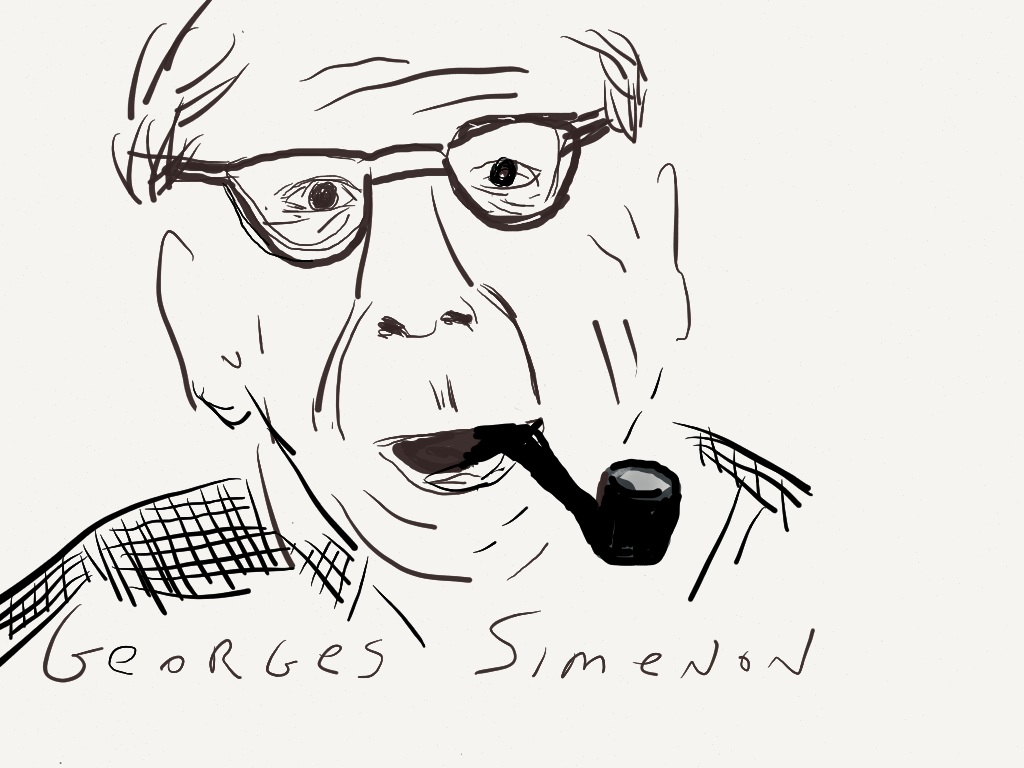
Georges Simenon illustration 2013 by jpbohannon

Georges Simenon
illustration 2013 by jpbohannon

“If your vision of the world is of a certain kind you will put poetry in everything, necessarily.”

Georges Simenon