A Chance Meeting: MK Asante on public radio

I rarely drive, so I rarely listen to the radio. That might not make sense for many, but I know that some will understand. The radio is simply not part of my home life.

But anyway,there were reasons for my being behind the wheel this past Thursday and I was listening to RadioTimes on Public Radio (Marty Moss-Coane on WHYY in Philadelphia.) The guest was MK Asante, a hip-hop singer, filmmaker,  writer and creative-writing/film teacher at Morgan State University.

I was blown away.buckautographed
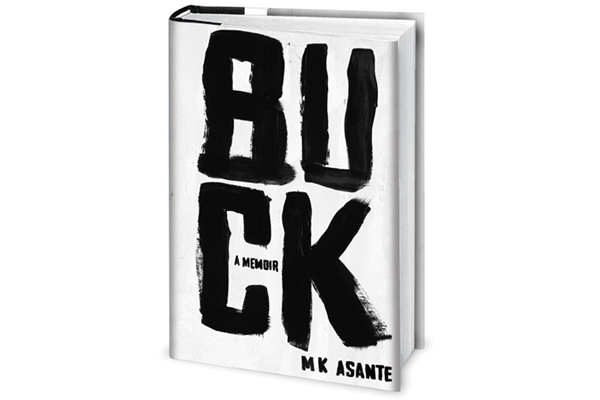
Asante was plugging his new book, Buck: A Memoir about his life in “Killadelphia” during the 1990s.  At the same time it is the story of his family’s breaking apart and then coming back together.

Asante was born in Zimbabwe and raised in Philadelphia.  His parents’ marriage disintegrated, his idolized brother had a series of run-ins with the law and was imprisoned, his mother suffered from clinical depression, and he grew up in the “hood” full of anger, confusion, and energy.

This coming-of-age story is probably more familiar than it ever should be, but, oh, the language itself is extraordinary. Like nothing you ever heard.

Here is the first paragraph of the book: (Asante reads it in the interview attached below):

The Fall

      The fall in Killadelphia. Outside is the color of corn bread and blood. Change hangs in air like sneaks on the live wires behind my crib. Me and my big brother, Uzi, in the kitchen. He’s rolling a blunt on top of the Source, the one with Tyson on the cover rocking a kufi, ice-grilling through the gloss. Uzi can roll a blunt with his eyes closed.

     Cracks, splits, bits.

     The rawest crews in Philly are all three letters,“  he tells me. I read the cover through the tobacco guts and weed flakes:  “The Rebirth of Mike Tyson: ‘I’m Not Good.  I’m Not Bad. I’m Just Trying to Survive in this World.’”

Awakening crews in a rude fashion
On they ass like Mike Tyson at a beauty pageant•

      I do this–spit lyrics to songs under my breath–all day, every day. The bars just jump out of me no matter where I am or what I’m doing. It’s like hip-hop Tourette’s.

     Dumps, spreads, evens.

    “JBM–Junior Black Mafia. Of course us,  UPK–Uptown Killaz.  PHD–Play Hero and Die.”

     Tears, licks, wraps.

    “HRM–Hit Run Mob. EAM–Erie Ave. Mobsters.  ABC–Another Bad Creation.”

    Folds, rolls, tucks. Another perfect blunt, jawn looks like a paintbrush.

    Jawn  can mean anything–person, place, or thing. Sometimes if we’re telling a story and don’t want people to know what we’re talking about, we’ll plug in jawn in for everything. The other day I was at the jawn around the corner with the young jawn from down the street. We get to the jawn, right, and the ngh at the door is all on his jawn, not nowing I had that jawn on me. Man, it was about to be on in that jawn.

“ Wreck Your Ears (Can Do),” The B.U.M.S. (Brothers Under Madness), 1965

This is language at its most alive, its most energetic. (To hear him read it is even more electrifying.)

Asante mentions in the interview that the first book that turned him on was Jack Kerouac’s On the Road. Besides the plot of the novel–drugs, sex, wildness–which he was surprised to learn could be the focus of serious literature, it was the style of the writing that attracted him, the energy, the speed, the exuberance.  As he said, from it he learned he didn’t have to worry about commas.

photo of MK Asante from the L.A. Times

photo of MK Asante from the L.A. Times

MK Asante’s journey from the hood to plugging his books on national radio is one story. But it is a minor story.  The true story is the language of this memoir. It is hypnotizing, energetic, alive and present.  It puts me to shame.

In two more weeks I begin teaching a class in creative writing. My students are quite a distance from the world that MK Asante grew up in.  Nevertheless, I am opening class with readings from the book.  It is a lesson in being true to oneself, in being true to one’s voice, in being able to plumb one’s life for the story we all need to tell.

Here is the interview in its entirety: (this is Radio Times web site and will feature the day’s current show. Scroll down to the middle of the page to hear MK Asante on yesterday’s show. As time passes, the 8/22/2013 show will be placed in the easily accessed archives. And check out MK Asante’s web page, above, to see trailers, past works, etc.)
RADIO TIMES INTERVIEW WITH MK ASANTE

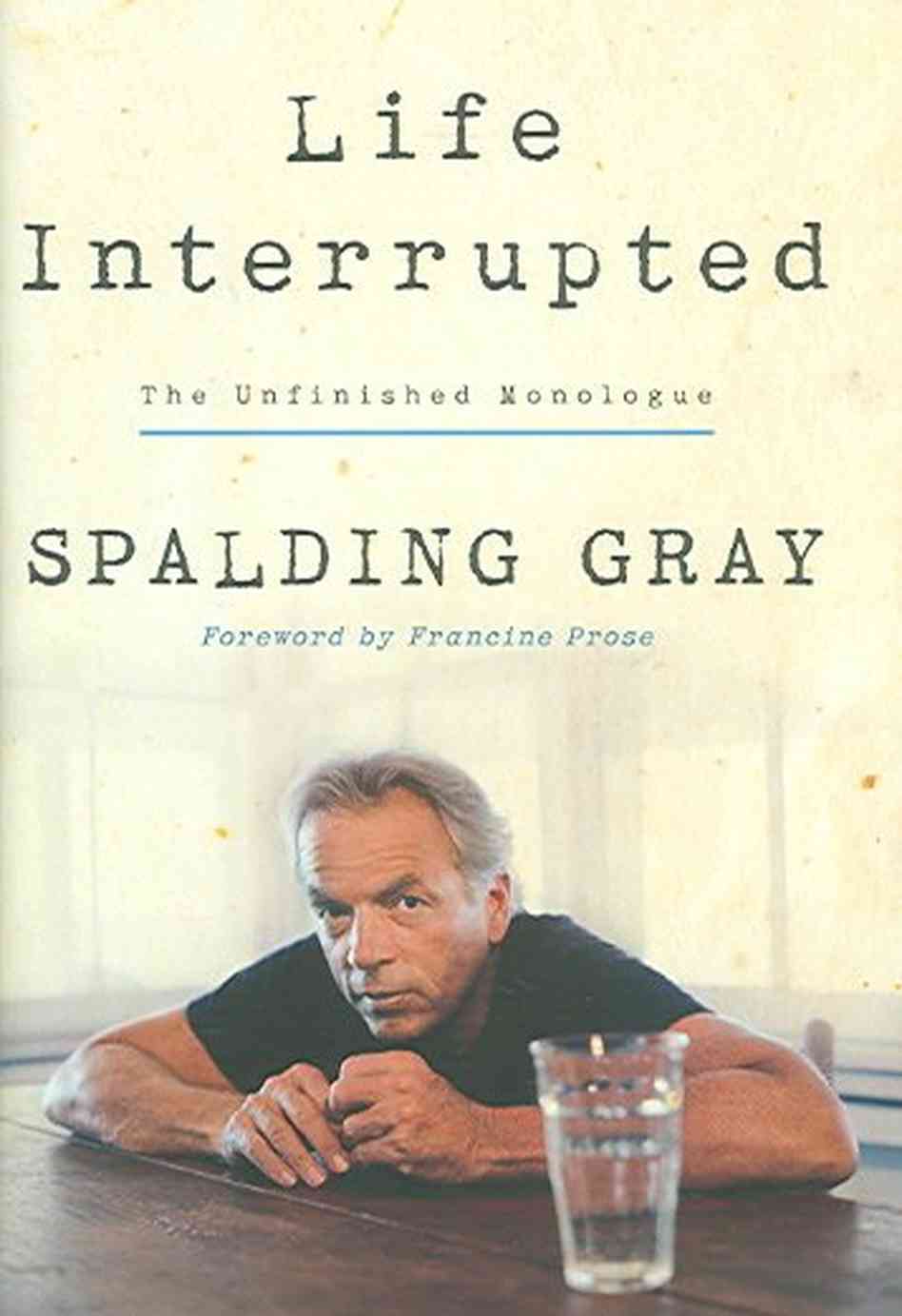
Book Review: Life Interrupted: An Unfinished Monologue by Spalding Gray

A friend of mine, who had read my post on worrying about too much fiction in my reading diet, met me for coffee the other day with a bag full of books.  Some he gave to me. Others he lent.  I started the first one yesterday around 5:00 and finished it before finally turning the lights out on the day.

Cover of Life Interrupted/i>

Cover of Life Interrupted/i>

(By the way, my worries were groundless: Out of the last seventeen books I read, 7 were fiction, 6 were non-fiction, 3 were collections of poetry and 1 was a play.)

Anyway, Life Interrupted is a wonderful collection that includes the title monologue plus two small companion pieces by Spalding Gray.  These were the last pieces Gray was working on, still writing and ironing out, before ending his life in 2004. Filling out the volume is a series of remembrances given at two separate memorials to Gray, remembrances by fellow actors and writers, agents, producers, friends, and family. These are sincere, warm, and humorous reflections on a man who himself was sincere, warm and humorous.

The centerpiece, “Life Interrupted” recounts the horrible car accident and subsequent hospital stay that Gray experienced in Ireland in the summer of 2001. His account of the events before the accident seem to presage (at least to him) that death was everywhere: they were in the town of Mort in County Offaly, next to a monastery where gravediggers were stopping for a cigarette break, in the home of a host who himself had died two weeks earlier and from which, on his walk that morning through the surrounding countryside, Gray had encountered a dying calf.

He had tempted fate, he felt, because he told people he was content–happily married and enjoying fatherhood.  His work had always revolved around anxieties, fears, conflicts, disasters. Now, he told someone  that morning, he’d have nothing to write about. He was simply too happy.

Boy was he wrong about having nothing to write about.

His stay in the hospital, his transference to another, and then to another is close to slapstick. His detailed observations of his Irish fellow-patients, of his care-givers (a large transvestite with emerald green fingernails comes through the wards offering tea and toast), of the facilities themselves is wickedly funny, especially if you are not yourself experiencing it.

But the injuries were quite debilitating.  A smashed hip caused him transference to one hospital. A large dent in his head sent him to another. There it was discovered he had a shattered orbital bone which was  allowing open passage to his brain. A plate needed to be inserted and the bone fragments removed from his brain.  He chose to fly back to New York for that procedure.

If all this sounds morbid, it is not. Like Gray’s more famous monologues, Swimming to Cambodia, Gray’s Anatomy, The Terrors of Pleasure, it is trenchant in its observation of life and life’s quirks. And extraordinarily funny.

The other two pieces, “The Anniversary” and ” DearNew York City” are much shorter. The first typical of his rambling, tangential style. The second a sweet paean to New York City in the aftermath of the attacks on the twin towers.

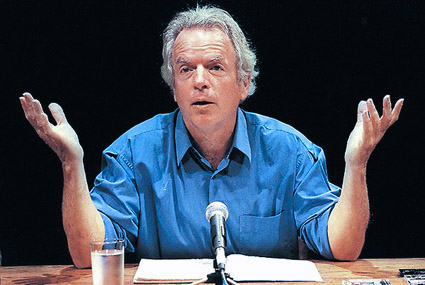
Spalding Gray and his entire stage setting

Spalding Gray and his entire stage setting

But by then, Spalding was in intractable pain–psychically and emotionally. He had returned from the accident in Ireland a changed man, and the demons he once tempered through his art were getting the better of him.  On January 10, 2004 he was reported missing. In March, his body was found in the East River.

But again, this is never a morbid book. Gray’s pieces are funny and clever, and every reader will find him or herself nodding in agreement at the outrageous details that Gray observes.

And even the memorial speeches that finish the book are more upbeat than not. They recount Gray’s generosity, his curiosity, his love of fatherhood, and his kindness. Each speaker genuinely feels that he or she has been blessed to be considered Spalding Gray’s friend, to have spent time with this gregarious and wonderful man.

In a way, reading the book, one gets to experience the same.

In 2010, six years after Spalding Gray’s death, the director Steven Soderbergh put together a documentary on Gray and his art entitled And Everything is Going Fine. It is a wonderful introduction to the man who was a consummate storyteller, an entertaining man to spend an evening with.  Here is the trailer:

Movie Review: Before Midnight (Richard Linklater, dir.)…verisimilitude in film

“Verisimilitude” is a word I know from movie criticism and from literary criticism. I define it as a strict faithfulness to the truth of reality. And it is a concept that the movie director, Richard Linklater, has striven for in his triology, Before Sunrise, Before Sunset, and Before Midnight. In many ways he has succeeded.

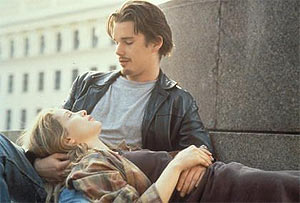
For those who don’t know, in 1995, Linklater cast his stars Julie Delpy and Ethan Hawke in the first movie, Before Sunrise, as young twenty-somethings who meet on a train from Budapest to Vienna, who spend a day and night together and go their separate ways. (That the day is June 16th, the day that James Joyce met his life partner Nora Barnacle and the day that his novel Ulysses takes place is one of the many Joycean allusions in the triology.)

Celine (Julie Delpy) and Jesse (Ethan Hawke) in Before Sunrise

Celine (Julie Delpy) and Jesse (Ethan Hawke)
in Before Sunrise (1995)

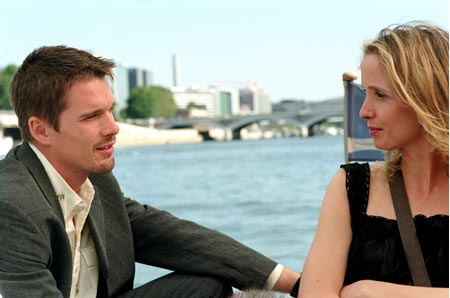
To be truthful to his quest for truthfulness, Linklater nine years later, cast the same two actors to play the same characters who happen to meet again nine years later. This time Hawke’s Jesse is on a book tour in Paris when Delpy’s Celine meets him. His book–which fictionalizes the day they had spent together a decade ago–is a success. They spend this second time together walking through Paris before he must fly back to America. (Because the film takes place in mid-afternoon, Linklater only shot at that time to get the light exactly right. This is verisimilitide. )

Jesse and Celine (Ethan Hawke and Julie Delpy) in  Before Sunset2004

Jesse and Celine (Ethan Hawke and Julie Delpy) in
Before Sunset 2004

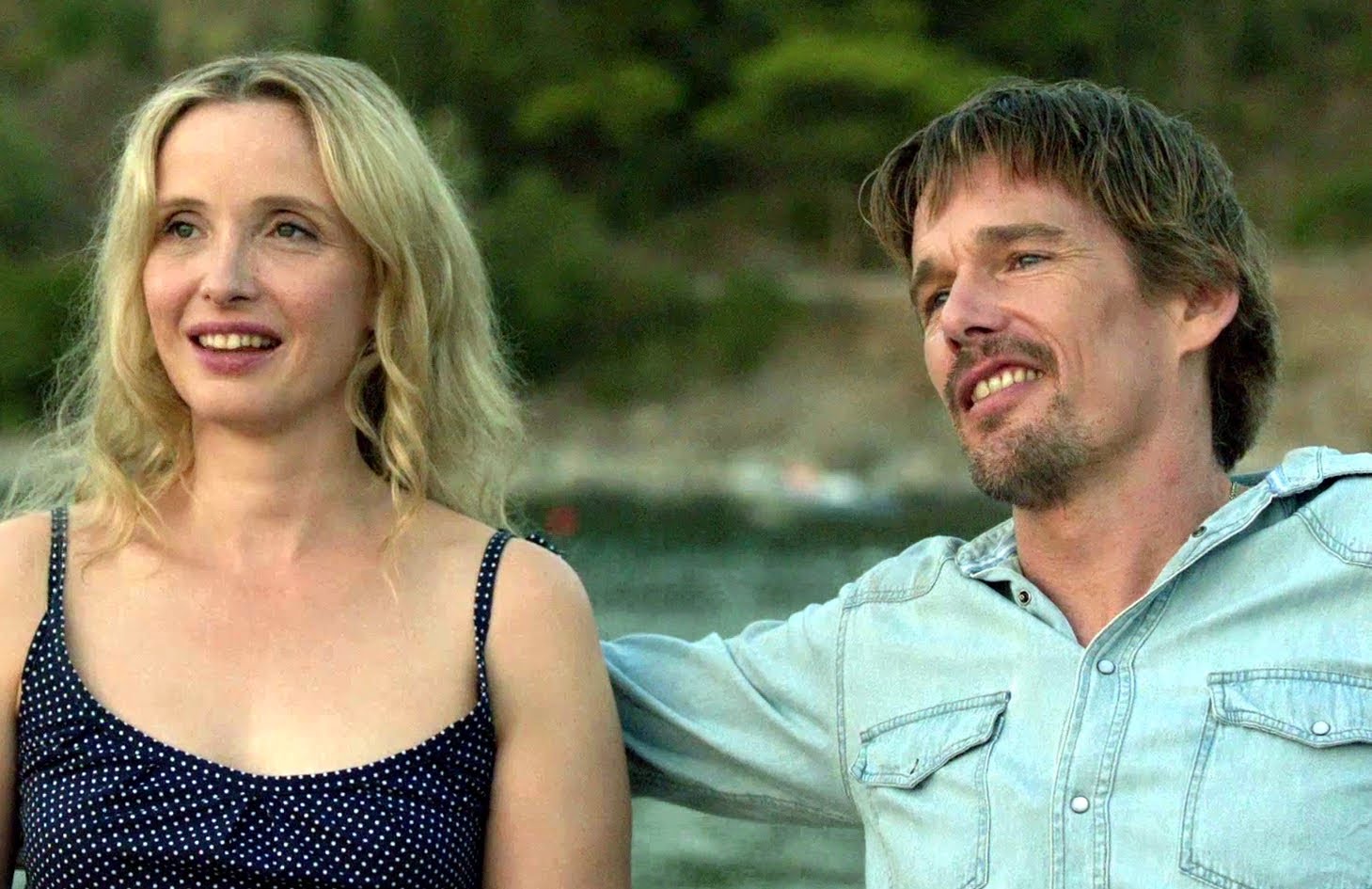
Now in the summer of 2013, we catch up once more with Jesse and Celine. As it is with the actors, it is with the characters–nine more years have passed for both. Now, in Before Midnight, Celine and Jesse have been together for nearly a decade. They have twin girls, and Jesse’s son with his ex-wife, now a young boy going into high-school, has spent the summer with his father and his new family in Greece.

In fact, as the film begins, Jesse is dropping his son off at the airport for the return flight home. Jesse is now a very successful novelist, having written two critically and commercially acclaimed novels (both based on the events that we saw in the previous two movies.) However, he is unhappy about his distance from his son and is toying with the idea of moving his European family to Chicago to be closer to the boy.

The film is divided into three basic scenes: the trip to the airport, a dinner at the villa they are sharing, and a night at hotel together without their daughters (a gift from their friends at the villa.) In the first scene, we see Jesse struggling with saying farewell to his son, Celine announcing that she has the opportunity to change jobs, and the two bantering amicably in the car, both daughters asleep in the back seat. However, Celine does not like the idea of a move to America or the prospect of refusing the career opportunity that has just now cropped up.

Celine and Jesse (Julie Delpy and Ethan Hawke) in Before Midnight (2013)

Celine and Jesse (Julie Delpy and Ethan Hawke)
in Before Midnight (2013)

The second scene is at their villa where the males sit outside discussing literature while Celine and the women prepare the dinner. It is light, gregarious, and beautiful–but you feel the emotion lying low within Celine. The dinner itself is wonderful. At turns, amusing, intelligent, and poignant, the conversation is witty and enjoyable. There is a tad of acid in some of Celine’s comments, but for the most part, it is a dinner which I very much would have liked to have joined.

As a gift, their friends have bought them a child-free night in a hotel in the local town. After dinner, the two walk into town, talk, reminisce, and plan for the future. In the lobby, Jesse is recognized and asked to sign a book. Celine is also asked, as the reader assumes (correctly) that she is the woman whom Jesse writes about. She reluctantly agrees.

The night however does not go exactly the way they had planned.

Like its predecessors, Before Midnight is wonderful because it seems real. (There’s that “verisimiltude” again.) People talk, plan, argue, hurt, and enjoy. There are no cataclysmic disasters pushing them into conflict, no terrorists to fight, no snarky humor to overcome. It is simply two people at a patch in their relationship that is proving a little rough. In their forties now (both the actors and the characters), they are looking at life differently and with more cognizance of its quick passing. If I have problem, it is that Celine’s outburst–while we anticipate its coming–still seems to come out of nowhere. But it is wonderfully honest and wonderfully real.

But, maybe that’s the truth of life–and the truth of relationships–we know little of the turmoil going on in a partner’s soul. Maybe that’s the truth of the movie.

And while Hawke and Delpy have comfortably grown into their parts for the past two decades and while the small supporting cast is more than excellent (Walter Lassally as the aging writer with whom they are staying, Xenia Kalogeropoulou as his widowed friend, and Yiannis Papadopoulos and Athina Rachel Tsangari as the couple who present them with the child-free night), it is the setting that struck me most. Filmed on the southern Peloponnesian coast, it is filled with gorgeous coastline, quaint villages, memorable sunsets, and illuminating sunlight. When I got home from the film, I spent the next two days searching real-estate in the area.

I spent two weeks there once. I wouldn’t mind spending more.

Here’s the trailer, if you want:

Quote of the Week #18: August 18, 2013

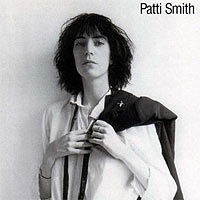
Iconic photo of Patti Smith by Robert Maplethorpe

Iconic photo of Patti Smith
by Robert Maplethorpe

“Build a good name. Keep your name clean. Don’t make compromises, don’t worry about making a bunch of money or being successful — be concerned with doing good work and make the right choices and protect your work. And if you build a good name, eventually, that name will be its own currency.”

Patti Smith (remembering advice she got from William S. Burroughs)

Roasted Picasso, Braised Mattise, Charred Freud: Art in the Oven

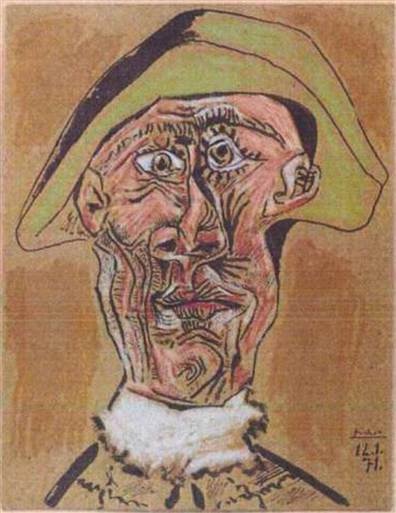
Harlequin's Head

Picasso’s Harlequin’s Head

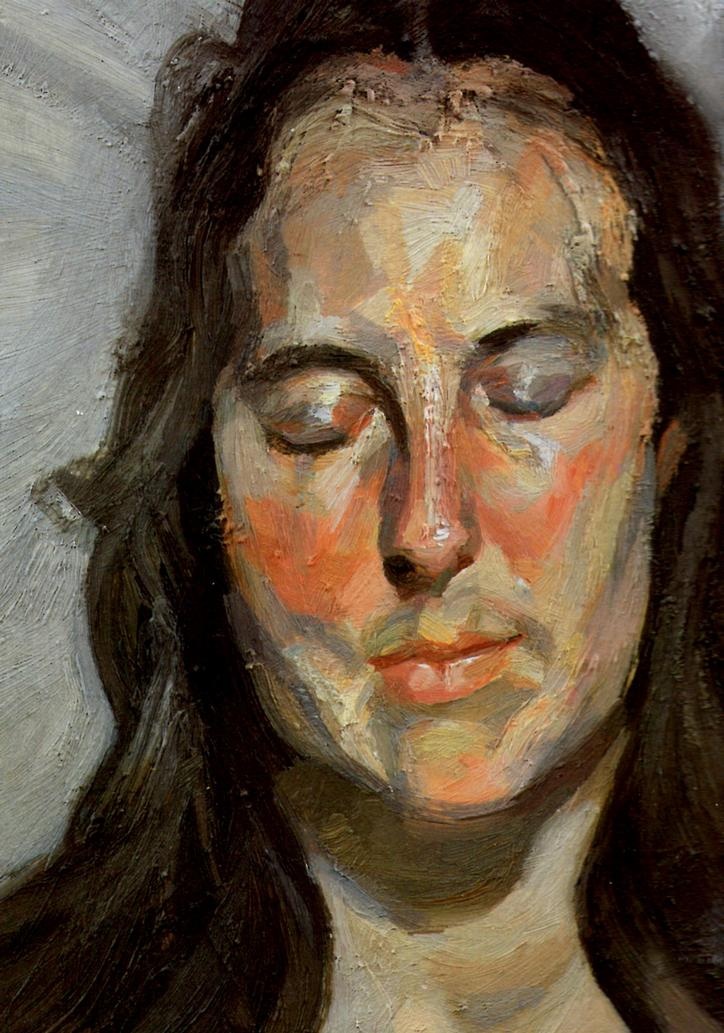
Woman with Eyes Closed

Woman with Eyes Closed

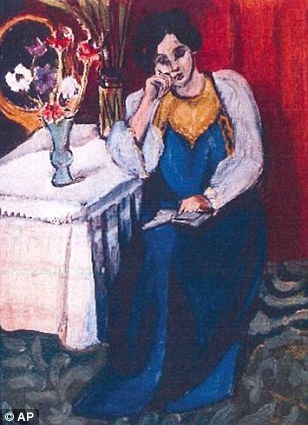
Reading Girl in White and Yellow

Reading Girl in White and Yellow

I was up and about the other night, unable to sleep, not ready to start a new book, and mindlessly checking out  things on-line. I checked my e-mails, paged through my Zite selections, spun through scores of Twitter and Tumblr postings. And I came upon this very intriguing headline:

Stolen Picasso and Monet art ‘burned’ in Romanian oven 

And the lead paragraph read thus:

Romanian investigators have found the remains of paint, canvas and nails in the oven of a woman whose son is charged with stealing masterpieces from a Dutch gallery in October last year.

(click headline to read original article)

Authorities believe that these are the remains of a cache of paintings that were stolen from a Dutch museum in October 2012 and which included Picasso’s Harlequin Head, Monet’s Waterloo Bridge, Mattise’s  Reading Girl in White and Yellow, and Lucien Freud’s Woman with Eyes Closed.

The burnt remains–pigments, bits of wood, nails–were found in the home of a Romanian woman whose son had been arrested in connection with the heist.The woman, Olga Dogaru, told authorities that she had burned the paintings to destroy any evidence that linked her son to the theft. The paintings, which are valued between $130 and $250 million, have not yet been officially identified with the remains in Mrs. Dogaru’s oven, but the likelihood is great.

image

 And so I began thinking and wondering.

In a small house in Romania, we have fragments of painting primer, paint, wood, canvass and nails. In a way, these famous paintings have been “deconstructed” to their most basic elements. What element is missing? Genius? Kind of nebulous. Inspiration? Maybe even more so. Certainly execution and vision.

But what was once one thing is now something else. (In many ways, isn’t that a way of defining art itself.)

One of the officials working on the case stated that if these oven remains are indeed the paintings they are looking for then Olga Dogaru’s actions are a “crime against humanity.”

Come on, now.  After the horrors of the Holocaust, the crimes of Pol Pot, various tribal genocides, corporate environmental rape, the atrocities of the twentieth century and the new horrors of the young twenty-first, I think calling this a “crime against humanity” is a bit overstated and a bit overdramatic.

Don’t get me wrong. I am no philistine. I  love art. It is a very important and crucial part of my life, day in and day out.  I love amateurish, clunky student art and exquisite paintings by the Old Masters. I love rough draft architectural models and elegant Brancusi Birds in Space.  I love the avant garde and the mainstream.

And yet, my life is not appreciably diminished by the loss of these individual paintings. There are paintings that I love, that I am lucky to be able to visit often. But if they were gone, life would go on.  For me, as well as most of the other 7 billion people on earth.

Undoubtedly, it is a shame that these paintings are gone forever. (A bit amusing that they were destroyed by a mother trying to protect her ne’er-do-well son and probably unaware of the magnitude of her actions.) The monetary loss is arbitrary…and irrelevant. And the fact they they will never be seen in the original is regrettable.

But the entire story has me thinking hard about Art. What is it? What is it for? What is its relationship with society? What are the tiers?  And what and who determines them?

To be honest, I don’t know the answers. But they are important questions to ask.

Book Review: The Changeling by Kenzaburo Oe

Kenzburo Oe

Kenzburo Oe

My knowledge of Japanese literature is very limited. I know a few poets–mainly ancient masters of the haiku–and I knew two novelists: Yukio Mishma, who many of my generation would know as the author of The Sailor Who Fell From Grace with the Sea,  and the contemporary novelist Haruki Murakami, whose critically acclaimed novels such as Kafka on the Shore, Norwegian Wood, and The Wind-up Bird Chronicles have been international best sellers as well.

Well this summer, I was introduced to a new one–Kenzaburo Oe.  (It is evidence of my ignorance that Kenzaburo Oe won the 1994 Nobel Prize for Literature, but nevertheless unknown to me.)  I was introduced to him by a wonderful writer, reader, traveler and photographer who writes the erroneously named blog francescannotwrite and who spoke about picking up the novel in Geneva last year, having known nothing about it or the author either. Her comments on it stressed the intelligence of Oe and her fascination with the plot.  And it sent me searching for it.

She was right on both accounts.

The Changeling tells the story of an aging writer Kogito whose boy-hood friend is now his brother-in-law and a giant in the Japanese film industry. The brother-in-law, Goro, had once sent Kogito a tape-deck with a collections of tapes that he had made. These first tapes were of overheard (and recorded) conversations, eavesdropped moments, unsettling sounds that Goro collected to help Kogito put out of mind the vindictive journalist who has been hounding him.  Fifteen years later, Goro sent him a new collection of tapes, tapes that were, in his voice,  lectures, rants, philosophical  queries, friendly advice and mentoring, and most importantly–the announcement of his suicide.

Book cover for The Changeling

Book cover for The Changeling

In fact, it is on an early tape that Kogito learns of his friend’s death:

“So anyway, that’s it for today–I’m going to head over to the Other Side now,” Goro said casually. …”But don’t worry,” Goro went on, “I’m not going to stop communicating with you.”

And the rest of the tapes are Goro’s communication–from the Other Side. Each night Kogito listens, pauses the tapes, responds, pushes play again, responds again. In fact, each night after Goro’s death, Kogito has full-out conversations with his dead friend. Conversations that are filled with intelligence, logic, debate and argument and that are seeped in a great deal of memory.

After a while, Kogito’s wife–and Goro’s sister–asks him to stop. His loud conversations are upsetting both her and their disabled son.

Kogito does stop and accepts a guest teaching spot in Berlin. But Goro speaks to him in other ways there as well. There is a mysterious woman who claims to have known him, claims to know the real reason for Goro’s suicide. (The Japanese tabloids have been running with a scandalous story.)  But most importantly there are Kogito’s memories, which, alone in Berlin, he can recount, examine and analyze with much greater attention to detail.  Memories of Goro’s life, of his own, and of the two’s together.

We learn that Goro had been attacked and badly beaten by the henchman of Japanese organized crime (he had made an unflattering film about them), but then we learn that the left-leaning Kogito had years earlier been attacked  several times by right-wing groups. Goro’s attack made international news and he is fighting the thugs in court; Kogito never reported his assaults.

We also learn a disturbing secret of the two men’s shared childhood.  A secret that–when faced–shines much light on Kogito’s memories and the inward journey that Goro’s suicide precipitated.

Frances, of “francescannotwrite” mentions the intelligence with which the novel is imbued. And she is right.  The conversations between Goro and Kogito, one dead and one alive, are heady and range from art and politics to society and life, from French literature and Japanese gangsterism to the War and their childhoods.  In his tapes, Goro seems–from “the Other Side”–to be pushing his friend to a clarity that his life requires.

And it is a wonderful read. Like the art of Hokusai, where there are minimal lines but great power, Oe’s story is rich and dense and intelligent but it never feels that those things are in the foreground. The power is there in the conversations, the allusions, the references, but In the foreground is the fascinating history of Kogito and his dead friend.

It is a memorable story and a memorable novel.  So now, I need to find some others.

Movie Review: Bonjour Tristesse (dir. by Otto Preminger)–Jean Seberg and the weight of sadness

"Bonjour Tristesse" illustration 2013 by jpbohannon based on image from film credits.

“Bonjour Tristesse”
illustration 2013 by jpbohannon
based on image from film credits.

Bonjour Tristesse (1958) was Jean Seberg’s second movie and her second one with the director Otto Preminger. The first, St. Joan, was a commercial flop and roundly criticized, as was Seberg’s performance in it. But it wasn’t really her fault: Preminger had let the nineteen year old naif vulnerably out on her own and she was unprepared. In fact, she had “won” the major role when, unknown to her, a neighbor had entered her name in a raffle that Preminger had famously set up to pick his St. Joan. The young girl from Iowa was in no way prepared to carry the load of Preminger’s version of George Bernard Shaw’ play.

As a gesture of faith (and apology), Preminger cast Seberg in his next film, Bonjour Tristesse, based on the novel by Francois Sagan. Set in Paris and on the French Riviera, Seberg plays Cecile, the daughter of widowed playboy, Raymond (David Niven). Present day scenes are set in Paris and shot in black-and-white. As she flits from bohemian jazz club to high-society, pre-opera dinners,  Seberg’s voice narrates a voice-over explaining her present ennui. Her memories, on the other hand–the events that have caused this sadness–take place on the French Riviera and are filmed in brilliant, sun-soaked color.

While on the Riviera, Raymond abandons his young, scatter-brained girlfriend for an old friend, the more sophisticated, more mature and more serious Anne Larson (Deborah Kerr). The two quickly get engaged and the new fiance is serious about curbing the young Cecile’s carefree life.  It doesn’t end nicely.

bonjourtristessecast

Jean Seberg, Deborah Kerr, and David Niven in Bonjour Tristesse

The film is a bit dated now, but Seberg’s charm is still infectious and her waif-like beauty fetching. But again, the film was pilloried by the critics. She was a younger, spunkier Audrey Hepburn (whom Preminger had considered), but she simply did not have the acting experience…yet.

Her next film, The Mouse that Roared with Peter Sellers was much more warmly received, but by then Seberg had already decided on a life in France. (She had by then married François Moreuil, a French man she had met while filming Bonjour Tristesse.)  Her career in France skyrocketed, and she soon became the female face of the French New-Wave–most notably starring in Jean-Luc Godard’s Breathless–and an international sensation.

Jean Seberg in Bonjour Tristesse

Jean Seberg in Bonjour Tristesse

But around then, her personal life was already under scrutiny by the FBI. Her financial support and vocal support of civil rights organizations and Native American organizations brought her to the attention of J. Edgar Hoover and the  U.S. government, and she quickly became one of the more celebrated objects of the FBI’s COINTELPRO program. Its surveillance of her, its rumor-mongering, and its harassment were unceasing. And damaging.

In the end, it was too much, and Jean Seberg killed herself at the age of 40 in 1979. (Although even this is questionable, and the circumstances of her death are more than suspicious.)

In, Bonjour Tristesse, Seberg played a young woman stumbling under the weight of immense sadness (the sadness works much better in the novel.) Her career from that point on would likewise embrace much sadness but also much happiness. Celebrated in Europe, blacklisted (probably) in Hollywood, and hounded by the U.S. government, the young gamine-like beauty became a film icon…and a large footnote in the annals of FBI malfeasance.

Quote of the week #16: August 11, 2013

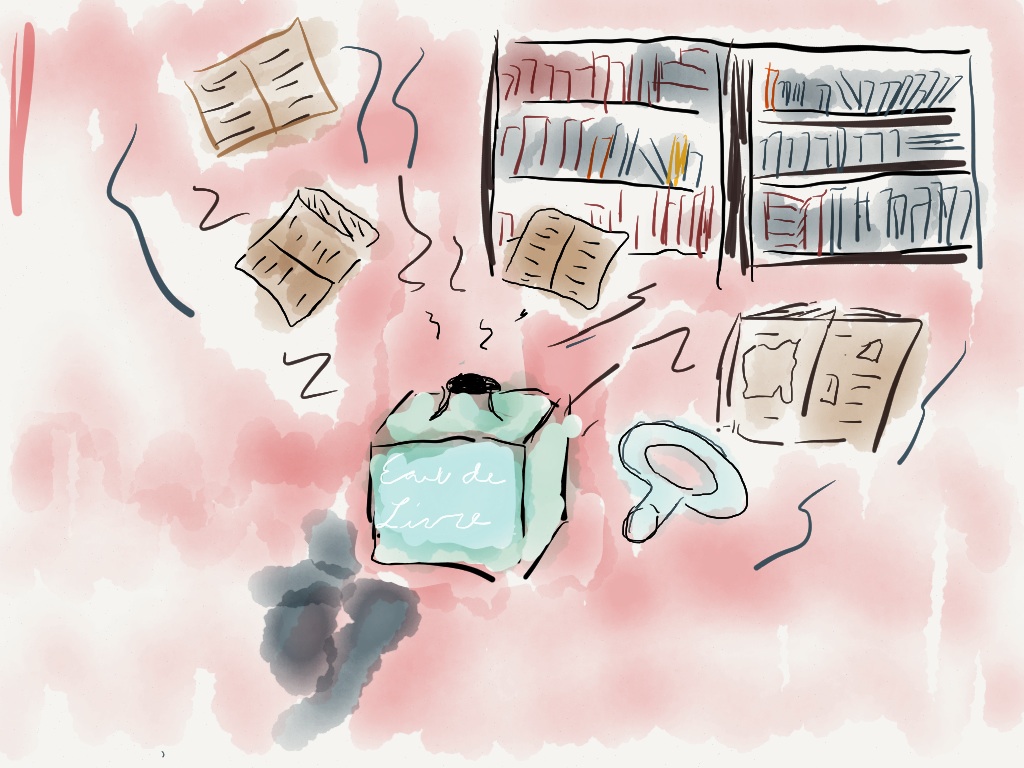
“I stepped into a bookshop and breathed in that perfume of paper and magic that strangely no one had ever thought of bottling.”

Carlos Ruiz Zafón
The Angel’s Game

Eau de Livre illustration 2013 jpbohannon

Eau de Livre
illustration 2013 jpbohannon

Big Brother IS Watching: 1984 and Summer Reading 2013

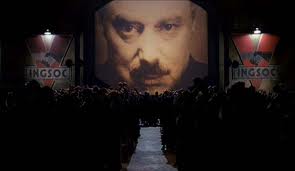
bigbrother

In the two weeks before the opening of school I have the students who will be entering my class read George Orwell’s 1984. It is the perfect prequel to the first two books we read in class, Brave New World and A Handmaid’s Tale. (We start out with a big dose of dystopia.)

Well, one of my more ambitious students has already done all his summer reading and e-mailed me about 1984. Orwell was pretty clever, he wrote, but he doesn’t think that that kind of thing could really ever happen.

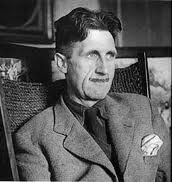
George Orwell

George Orwell

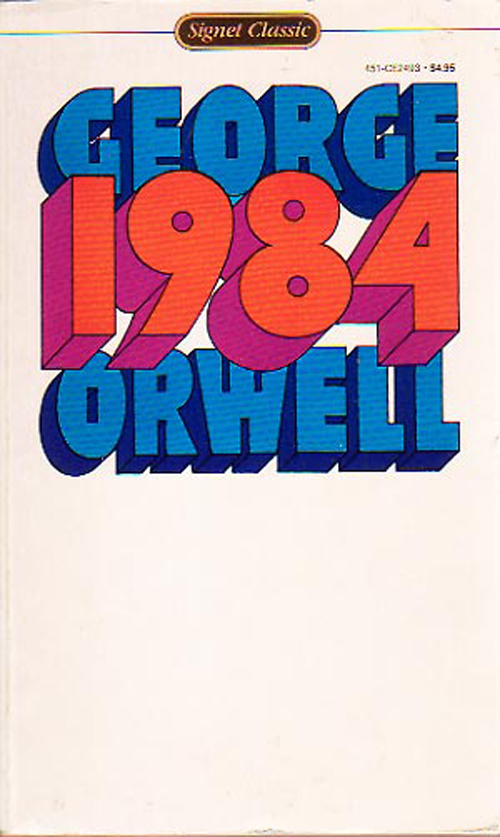
Signet Classic's cover of 1984

Signet Classic’s cover of 1984

Boy, did he pick the wrong summer to make that statement.

The other day, I saw the trailer for a film, Closed Circuit (see bottom of post). It is a terrorist-mole-investigative reporting-shady government department type of thing. And it looked very good. But, as I was telling a friend, one of the major players in the film is the network of 1.85 million close circuit cameras mounted throughout Britain. (http://www.theguardian.com/uk/2011/mar/02/cctv-cameras-watching-surveillance). That is roughly one camera for every 32 people. Of course, that ratio is a lot smaller in urban areas than in rural.

George Orwell saw it coming.

And then of course, the major news story of the summer was the Snowden leaks. (As Yossarian said in Catch-22, “Where are the Snowdens of yesteryear?”) For many, the actions of Snowden, his search for asylum, the international posturing and subsequent tensions have been the most riveting part of the story. What seems to have trouble staying in the foreground, however, is the fact that the U.S.government has been spying on its citizens, collecting data from their e-mails, their texts, their cell-phones, and their search engines. The citizens have been assured that the NSA is not going to use this data, but is simply archiving it. “For what?” is a sensible question.

George Orwell would have certainly asked it.

And the technology just gets better and better. Even the most naive teenager knows that his computer searches and activity are catalogued and sold to marketers. So it is not surprising that if the day after you search on-line for an umbrella for your father, you see umbrella advertisements popping up on your screen. (And depending who you are, where you are, and how often you searched, the price for the same umbrella will fluctuate.)

Well now this same marketing scheme has been adapted by the brick and mortar stores through face-recognition technology. Higher-end stores are testing facial-recognition technology which will alert store clerks immediately when someone (usually a celebrity) walks into the store and what his or her buying preferences are. At the moment the focus is on celebrities because their photos are already available in their databanks.

But it won’t be long. Walk into your favorite department store, spend some time in the men’s shoe department, and you might find an advert for men’s shoes pop up the next time you click on your device. They already know what you think you want.

Google has the technology for you to snap a photo of someone on the street, upload it, and learn everything you want about them. They have refrained from releasing it so far, mainly due to the legal tangle that Facebook is finding itself in.  Facebook’s ‘”tagging” photos capabilities is a subtle way to create an enormous facial-recognition database. And that database is available not only to you and your friends.

As Facebook founder Mark Zuckerberg once famously claimed, privacy is no longer a “social norm.”

George Orwell would find it all familiar.

If things go right, the first few days in school should have a lot of interesting discussions.

I hope so.

Here’s the trailer to Close Circuit. It looks like it could be good.

Book Review: Black Aperture by Matt Rasmussen

“Sponsored by the Academy of American Poets, the Walt Whitman
Award is given annually to the winner of an open competition
among American poets who have not yet published a book of poems.”

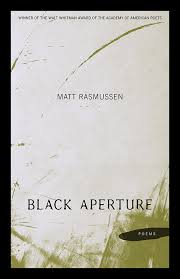
black aperture

Black Aperture by Matt Rasmussen

Each year the Academy of American Poets sends its members a copy of that year’s winning volume. This year the title was Black Aperture by Matt Rasmussen. And if good poetry is meant to rattle in your head, nestle there a while in the corners of your mind, and then come unbeckoned to the forefront of your consciousness, then Rasmussen’s poems pass the test and the Academy made an excellent choice.

Within the collection, there are poems about deer hunting and bird hunting: “when cleaning a grouse,/puncture the crop/to release the scent/of fresh clover.” (from “O”). There are poems that re-imagine the creation:

The animals gathered
and having cried enough

would never again.
God knew he had

asked too much. He threw himself

into the sun and burnt
into white ash. It fell

from the sky and covered
the mountains. The animal

who named everything
called it snow. (from “And God Said”)

And there are poems about poetry itself: “Through the mirror, it saw a house/of air falling inward. The poem heard/the poet calling and jumped.” (from “I am not a poem”)

But the overriding theme is the suicide of a brother.

There are three separate poems called “After Suicide” and one poem, “Reverse Suicide,” which takes the events in reverse to when both the speaker and his dead brother are once again raking and bagging leaves. In truth, the majority of poems take this momentous act as its subject. And those that don’t address it specifically are tinged with the shadow of it, a shadow that hovers over every poem.

Yet the poetry is not maudlin or morbid. It is, in fact, a source of liberation, as the speaker attempts to clarify through language both the act and his reactions, both his grief and his understanding of it, both his dead brother and his relationship with him.

Midway through the book, Ramussen places a poem called “Chekhov’s Gun.” Chekhov’s theory is that if a loaded gun appears in a play in Act 1, it must be fired by Act 5. Rasmussen begs to differ:

Nothing ever absolutely has to happen. The gun
doesn’t have to be fired. When our hero sits

on the edge of his bed contemplating the pistol
on his nightstand, you have to believe he might

not use it. … (from Chekhov’s Gun”)

It is a clever argument within the Black Aperture, because that gun–not only loaded but already fired–is present from the very beginning of the collection. The possibility of “not firing” that he posits in the Chekhov poem, is no longer a possibility. The speaker circles the once possible act of not-firing, while coming to grips with the already accomplished fact. That he does so with clarity, compassion, understanding and brilliance raises Matt Rasmussen’s Black Aperture from a mere elegy for a dead brother into something much more universal and accessible to us all.