Book Review: Colorless Tsukuru Tazaki by Haruki Murakami

colorless I used to think that it was only Americans who were so caught up with the experience of  “High School.”  I had believed it was an American construct, an over-idealized rite of passage that had spawned too many bad television series and “coming of age” films. I had believed it was strictly an American thing.

I’ve known many men for whom those “high school” years were the very pinnacle of their lives. It is those days that they keep referring to, those days by which they measure all others.  I mean I know men in their 40s and 50s, in their 60s and 70s, even in their 80s whose conversation invariably turn to the high-jinks and glories of their high-school days.

But I was wrong.

Haruki Murakami’s novel Colorless Tsukuru Tazaki and His Years of Pilgrimage revolves around five Japanese high school friends and the long-lasting effects of the decisions they made when they were twenty years old.  They are now in their mid-thirties; two are living in their hometown, one has moved to far-away Finland, one to cosmopolitan Tokyo, and the fifth one is dead, murdered.  The one-time connectedness of these five high-school friends haunts the hero, Tsukuru Tazaki.

Tsukuru–whose name is the only one the five which does not have a color attached and who believes himself to be “colorless–was abruptly dropped from the group when he was a sophomore in college in Tokyo. And he never was given an explanation, just the order to never contact them again.  The separation caused Tsukuri months of suicidal depression and then years of self-doubt, wonder, and the inability to relate to people. For Tsukuru, the five high school friends were an unprecedented harmony of spirits.  And yet there were several cracks in this group which he was too nice to notice.

Tsukuru’s name in Japanese means “one who makes things,” and indeed, that’s what he does. He makes railroad stations.  And in Japan, railroad stations are a very big deal and making connections is an intrinsic part of Tokyo life. Yet his treatment by his high-school friends has left him unable to make connections with people. There have been several romantic liaisons, but nothing serious and nothing he wished to pursue further. There was a friendship–tinged with a touch of homo-eroticism–that ended as abruptly as his friendship with his high-school mates. He was simply abandoned one day, his friend moving away from Tokyo with no forewarning and no intention of staying in touch.

And so we follow “colorless” Tsukuru as he tries to make his way in the world.

I needed a novel like Colorless Tsukuru Tazaki. There had been too few novels lately that gripped me from the beginning and made me read obsessively until I was finished. And Murakami has done that for me before. While I can’t remember the exact plots of his Kafka on the Shore or NorwegianWood, I do remember the obsessiveness with which I read them.  I can remember jotting down notes, following up allusions, taking notes. I remember protagonists who were like Tsukuru Tazaki: thoughtful, introspective, aware young men, burdened by what they cannot change in the past and fearful of the uncertainties of the future. And I remember getting caught up in their sadness and their serious attempts to make sense of their world. Murakami’s novels are both thoughtful and fascinating, outwardly exotic and inwardly philosophic.

And also I remember the fascinating side-trips of information. In Colorless Tsukuru Tazaki, there is an odd but brief discussion of the genetic dominance of a sixth finger; there is a continual look at the music of Listz, particularly the “Le Mal du Pays” section of his suite “The Years of Pilgrimage.”  It is a piece that the young murdered friend played often when they all were together, and it is a record that his friend Haida had coincidentally left at Tsukuru’s apartment before he had left him. Towards the end of the novel, Tsukuru visits one of his old high-school friends–still seeking enlightenment as to why he was so unceremoniously dropped–and the friend has the piece in her pile of CDs. The two reach some reconcilliation listening to Listz.

Watching the trains

Watching the trains

Watching the people

Watching the people


And then finally there is the subject of trains and of Tokyo’s public transportation. When Tsukuru needs time alone, when he is filled with angst and confusion, he goes to the train platforms and watches the trains and the people. There is a certain peace he finds in the uniformity and the precision which such a place exhibits, against what seems impossible odds. (Shinjuko Station handles 3.5 million passengers a day!)

I had skipped Marukami’s novel before this, 1Q84, for a variety of reasons. It was a mistake on my part and one I will rectify shortly.


You can listen to the very recording of Listz that Tsukura played on his stereo in his apartment here:
Heaney and Plath: Two Poems about blackberry picking

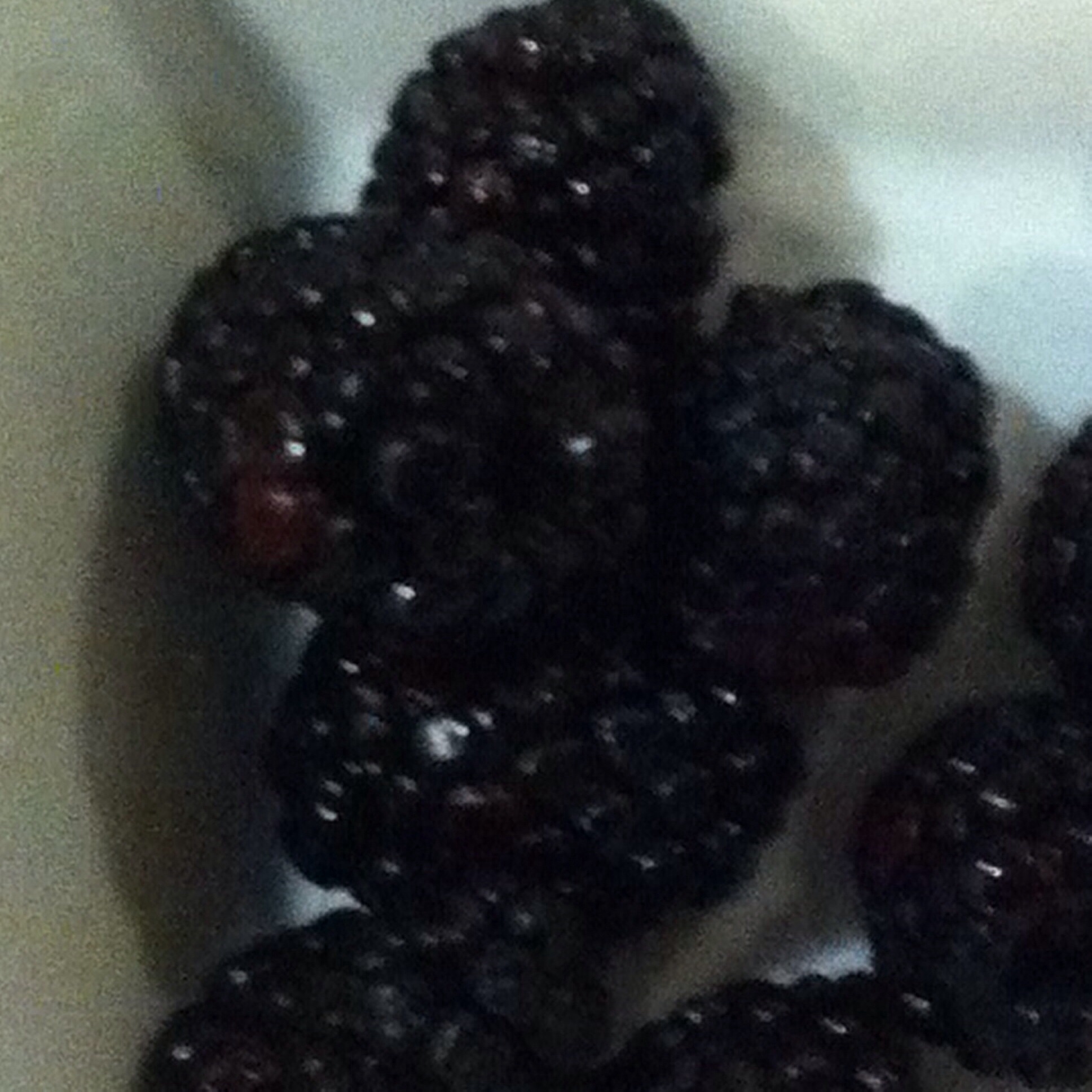
Blackberries in a white bowl.

Blackberries in a white bowl.

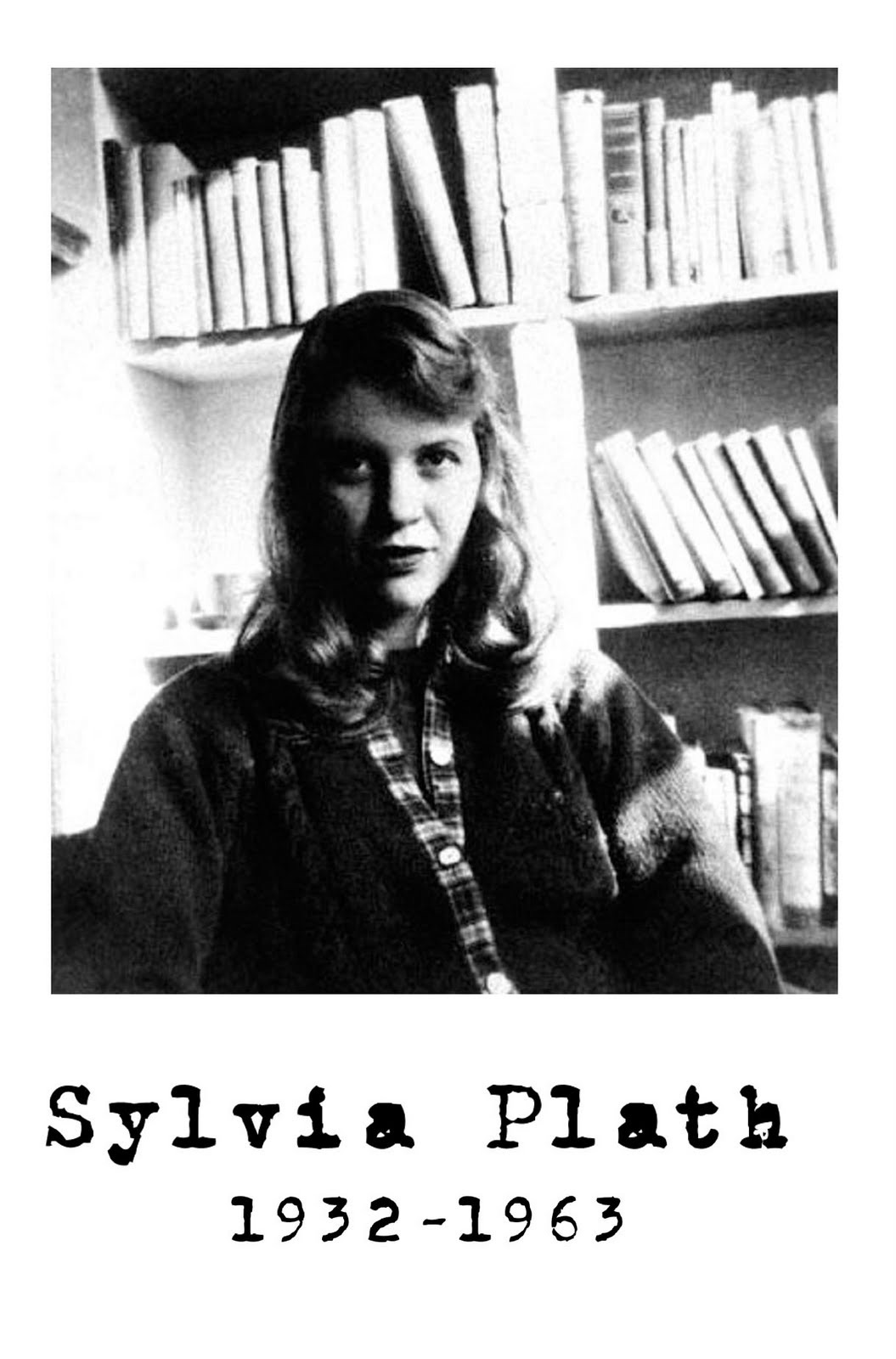
We read two poems about Blackberries the other day. One by Seamus Heaney, one by Sylvia Plath. While both are dark, the latter is much darker. I did not tell them the facts of Plath’s life or how near in time the poem was written before her suicide. I will let them find that out on their own. (We try to downplay the biographical.)

Here is Heaney’s poem:

Blackberry-Picking by Seamus Heaney

Late August, given heavy rain and sun
For a full week, the blackberries would ripen.
At first, just one, a glossy purple clot
Among others, red, green, hard as a knot.
You ate that first one and its flesh was sweet
Like thickened wine: summer’s blood was in it
Leaving stains upon the tongue and lust for
Picking. Then red ones inked up and that hunger
Sent us out with milk cans, pea tins, jam-pots
Where briars scratched and wet grass bleached our boots.
Round hayfields, cornfields and potato-drills
We trekked and picked until the cans were full
Until the tinkling bottom had been covered
With green ones, and on top big dark blobs burned
Like a plate of eyes. Our hands were peppered
With thorn pricks, our palms sticky as Bluebeard’s.

We hoarded the fresh berries in the byre.
But when the bath was filled we found a fur,
A rat-grey fungus, glutting on our cache.
The juice was stinking too. Once off the bush
The fruit fermented, the sweet flesh would turn sour.
I always felt like crying. It wasn’t fair
That all the lovely canfuls smelt of rot.
Each year I hoped they’d keep, knew they would not.

And here is Heaney reading it:

What we have are the thrills and joys of nature’s bounty, of love, of lust, followed by its ultimate disappointment, and capped by the human facility to continue even with the knowledge that disappointment is almost always assured.

But that last line is hopeful despite the odds: “Each year I hoped they’d keep, knew they would not.”

*     *     *     *     *     *

Hopeful is what Sylvia Plath’s poem is not! It too holds the gathering of blueberries in awe, is humbled by their abundance and their promise, but in the end there is nothing. Though that should not be a surprise. The first line itself drums in that nothingness, repeating the words “nothing,” “nothing,” “nobody.”

Blackberrying by Sylvia Plathimage

Nobody in the lane, and nothing, nothing but blackberries,
Blackberries on either side, though on the right mainly,
A blackberry alley, going down in hooks, and a sea
Somewhere at the end of it, heaving. Blackberries
Big as the ball of my thumb, and dumb as eyes
Ebon in the hedges, fat
With blue-red juices. These they squander on my fingers.
I had not asked for such a blood sisterhood; they must love me.
They accommodate themselves to my milkbottle, flattening their sides.

Overhead go the choughs in black, cacophonous flocks—
Bits of burnt paper wheeling in a blown sky.
Theirs is the only voice, protesting, protesting.
I do not think the sea will appear at all.
The high, green meadows are glowing, as if lit from within.
I come to one bush of berries so ripe it is a bush of flies,
Hanging their bluegreen bellies and their wing panes in a Chinese screen.
The honey-feast of the berries has stunned them; they believe in heaven.
One more hook, and the berries and bushes end.

The only thing to come now is the sea.
From between two hills a sudden wind funnels at me,
Slapping its phantom laundry in my face.
These hills are too green and sweet to have tasted salt.
I follow the sheep path between them. A last hook brings me
To the hills’ northern face, and the face is orange rock
That looks out on nothing, nothing but a great space
Of white and pewter lights, and a din like silversmiths
Beating and beating at an intractable metal.

The speaker, who is traveling downward on a path lined with blackberry bushes, believes that there is something at the end–the sea. Earlier, when she sees a swarm of flies satiated with blackberry juice she states that the flies “believe in heaven.” (Is her statement that “they believe in heaven” an implication that she does not?)

Perhaps the flies believe they have found it.

For the speaker, however, no reward awaits. The sea–to which she had looked forward to throughout her journey–is a pale wasteland. Again there is the repetition of the word “nothing”: “…that looks out on nothing, nothing but a great space” and from within this void she hears the “Beating and beating of an intractable metal.”

That ‘beating and beating” reminds me of the sea in “Dover Beach” where:

you hear the grating roar
Of pebbles which the waves draw back, and fling,
At their return, up the high strand,
Begin, and cease, and then again begin,
With tremulous cadence slow, and bring
The eternal note of sadness in.

It’s that eternal note of sadness that Plath’s speaker also hears, an empty, pale silence. After her walk, after her hoping to be loved, after her wanting a heaven, she comes to this cliff. And this is what she hears.

Perhaps we’ll do “Dover Beach” next.

Series: The Deadly Sins–Gluttony

"Consumerism is the new Gluttony" photo-collage 2015 by jpbohannnon

“Consumerism is the new Gluttony”
photo-collage 2015 by jpbohannon

“He who is not contented with what he has, would not be contented with what he would like to have.”   ― Socrates

“The things you own end up owning you.”  — Tyler Durden, Fight Club

Series: The Deadly Sins–Sloth


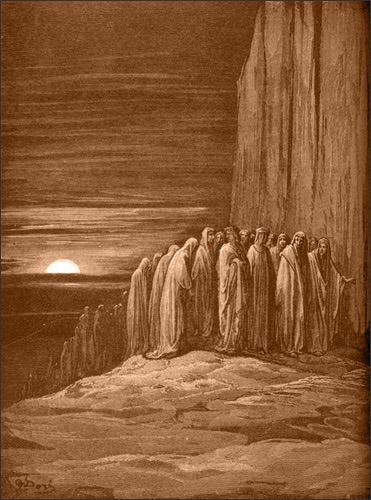
Gustave Doré Slothful Penitents (Abbot of St. Zeno)

Gustave Doré
Slothful Penitents (Abbot of St. Zeno)

“In the world sloth … is the sin that believes in nothing, cares for nothing, seeks to know nothing, interferes with nothing, enjoys nothing, loves nothing, hates nothing, finds purpose in nothing, lives for nothing and remains alive only because there is nothing it would die for. We have known it far too well for many years.”

Dorothy Sayers, “The Other Six Deadly Sins”

Series: The Deadly Sins–Greed

"Gordon Gecko" Silkscreen 2015 by jpbohannon

“Gordon Gecko”
Silkscreen 2015 by jpbohannon

But let me briefly make my purpose plain,
I preach for nothing but for greed of gain,
And use the same old text, as bold as brass,
Radix malorum est cupiditas.

Chaucer, “The Pardoner’s Tale”

Series: The Deadly Sins–Lust

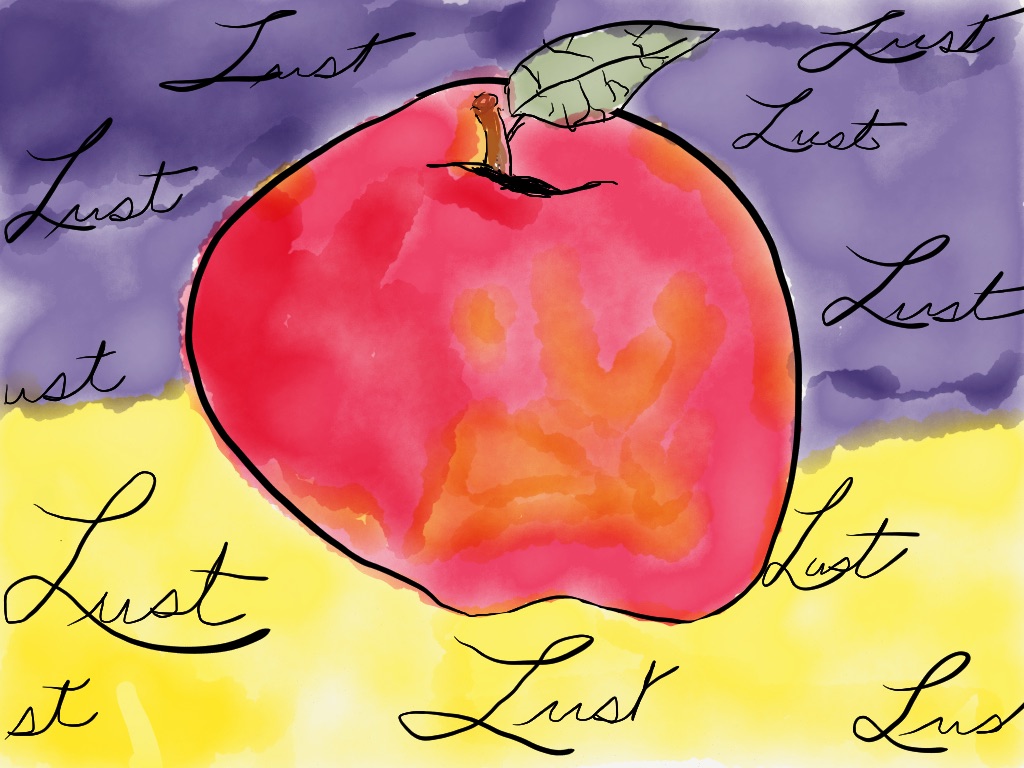
"Lust" illustration 2015 by jpbohannon

“Lust”
illustration 2015 by jpbohannon

“And there we lay. Not speaking, not stirring until finally I moved my face across hers, and kissed her. And at last the age-old ritual possessed us, and I bit and tore and held her, round and round. . . . Later there would be time for the pain and pleasure lust lends to love. Time for body lines and angles that provoke the astounded primitive to leap delighted from the civilised skin, and tear the woman to him. There would be time for words obscene and dangerous.”

Josephine Hart, Damage

Series: The Deadly Sins–Anger

"Anger" illustration 2015 by jpbohannon

“Anger”
illustration 2015 by jpbohannon

“One night I accidentally bumped into a man, and perhaps because of the near darkness he saw me and called me an insulting name. I sprang at him, seized his coat lapels and demanded that he apologize. He was a tall blond man, and as my face came close to his he looked insolently out of his blue eyes and cursed me, his breath hot in my face as he struggled. I pulled his chin down sharp upon the crown of my head, butting him as I had seen the West Indians do, and I felt his flesh tear and the blood gush out, and I yelled, “Apologize! Apologize!” But he continued to curse and struggle, and I butted him again and again until he went down heavily, on his knees, profusely bleeding. I kicked him repeatedly, in a frenzy because he still uttered insults though his lips were frothy with blood. Oh yes, I kicked him! And in my outrage I got out my knife and prepared to slit his throat, right there beneath the lamplight in the deserted street, holding him by the collar with one hand, and opening the knife with my teeth — when it occurred to me that the man had not seen me, actually; that he, as far as he knew, was in the midst of a walking nightmare! And I stopped the blade, slicing the air as I pushed him away, letting him fall back to the street. I stared at him hard as the lights of a car stabbed through the darkness. He lay there, moaning on the asphalt; a man almost killed by a phantom. It unnerved me. I was both disgusted and ashamed.”

Ralph Ellison, Invisible Man

Series: The Deadly Sins–Envy

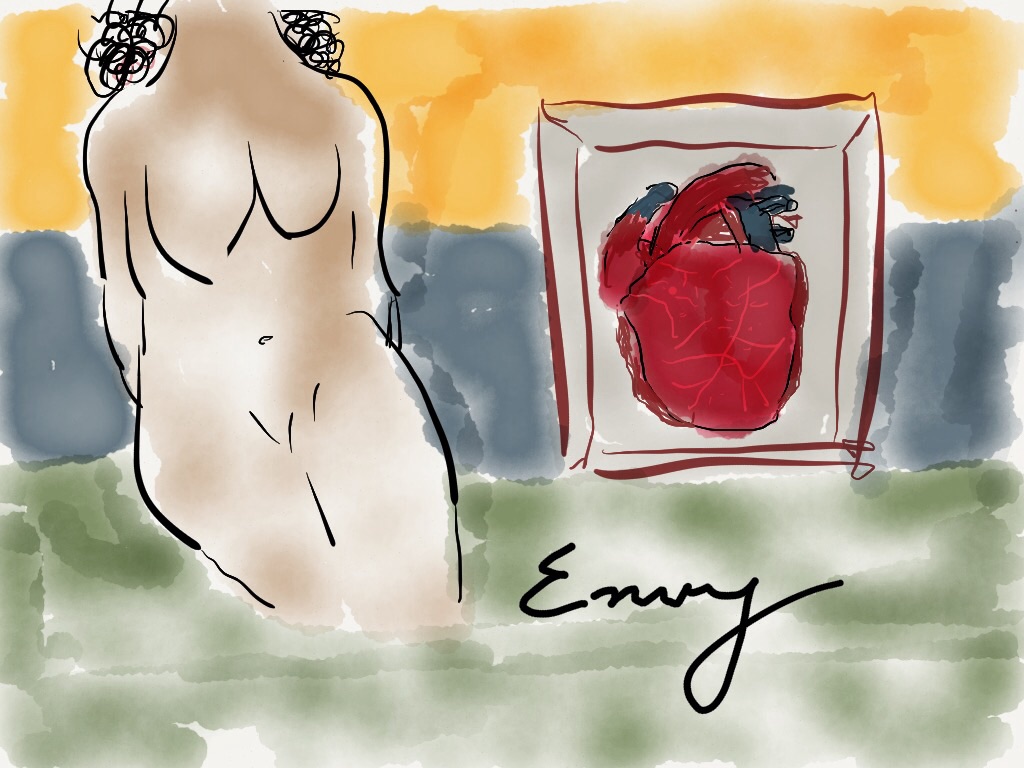
"ENVY"   illustration 2015 by jpbohannon

“ENVY”
illustration 2015 by jpbohannon

“In this dream, though, he burned with desire for a woman. It wasn’t clear who she was. She was just there. And she had a special ability to separate her body and her heart. I will give you one of them, she told Tsukuru. My body or my heart. But you can’t have both. You need to choose one or the other, right now. I’ll give the other part to someone else, she said. But Tsukuru wanted all of her. He wasn’t about to hand over one half to another man. He couldn’t stand that. If that’s how it is, he wanted to tell her, I don’t need either one. But he couldn’t say it. He was stymied, unable to go forward, unable to go back.”

Haruki Murakami
Colorless Tsukuru Tazaki and His Years of Pilgrimage

Series: The Deadly Sins–Pride

Silkscreen 2015 by jpbohannon

“PRIDE”
Silkscreen 2015 by jpbohannon


“But what will not ambition and revenge
Descend to?”
― John Milton, Paradise Lost

Review: Oscar: “Bugger! Queer! Sodomite!” sang the chorus.

The East-Coast Premier of Oscar

The East-Coast Premier of Oscar

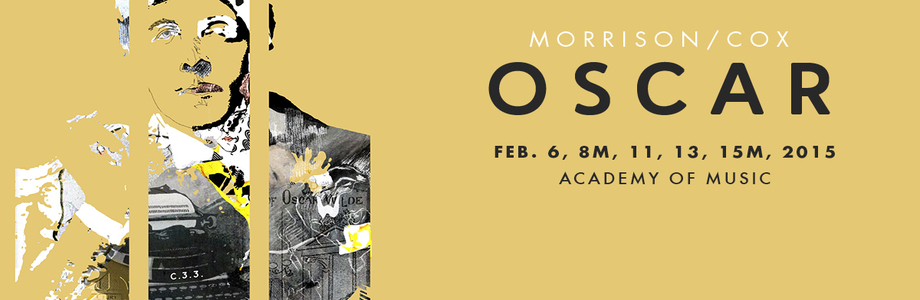
On an extremely cold Sunday afternoon in February, I attended the Philadelphia Opera Company’s production of the opera Oscar.  There has been a lot of enthusiasm about this production beyond  the expected buzz that a premier would cause. Recently, the Free Library of Philadelphia discovered three unknown manuscripts of Wilde in its basement as it was in the long-going process of digitizing its collection. Because of this find–academics and scholars are quite astounded–and the accompanying exhibit at the Rosenbach Museum, which houses a good deal of Wilde paraphernalia, the arrival of an opera based on the Irish playwright, poet and bon-vivant seemed particularly timely.

I don’t attempt to be any sort of expert on opera.  I know the stories of several of the most famous and can recognize the melody of several of the more familiar arias, but other than that seeing an opera is basically always a jump into the unknown for me.

And perhaps because of my inexperience, I found the music to be the least memorable part of a very memorable performance.

First the story itself is a mesmerizing tragedy–a tragedy in the literal sense of a great man falling and a tragedy in the “man-on-the-street”  sense of a heartbreaking story.  Wilde, one of the most famous personalities of his time, is brought into court for crimes of “gross indecency”–which in 19th century England meant homosexuality.  And while his friends arrange for him to escape to France before the trial commences, Wilde believes its the honorable thing to stay and fight the case in court.  And of course, Wilde loses.  He is found guilty and his years of hard labor at Reading Gaol, make up the second half of the performance.

And secondly, the staging and the sets were extraordinary.

The opera begins when the orchestra finishes the overture and the house applauds. During this applause, Oscar Wilde makes a curtain call, coming through the curtains,

Oscar Wilde taking a curtain call at the opening scene of Oscar

Oscar Wilde taking a curtain call at the opening scene of Oscar

accepting the applause–which has now been combined with recorded applause–to thank the house for its generous reception to Lady Windemere’s Fan. We then move quickly to Wilde talking with his friends about his options in the celebrated court case. (There is a bit of slapstick with two Keystone-Kop type henchmen that are busy poisoning Wilde’s name among innkeepers so he cannot get a room anywhere. He ends up hiding at his friend Ada Leverson’s house.)

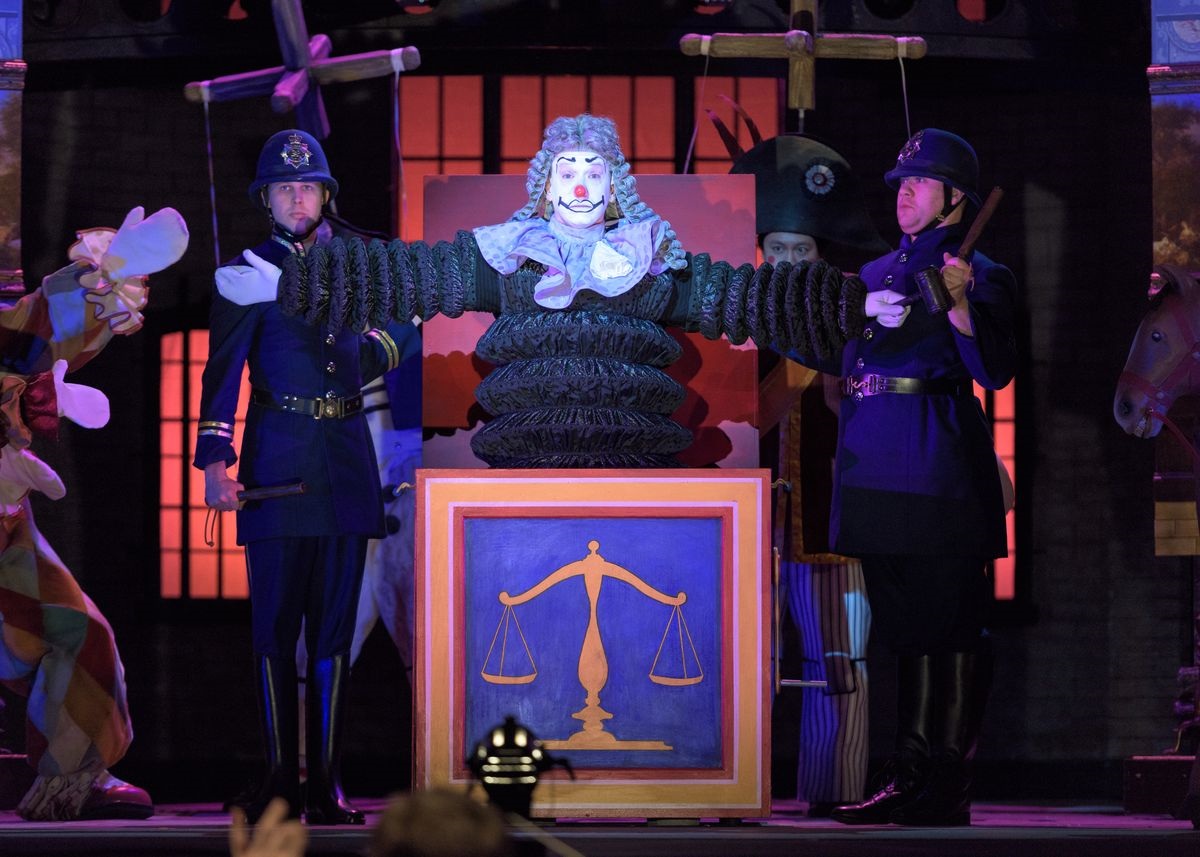
The court case–a circus in itself–was mounted as a Fellini-esque carnival with the jury represented as so many toys from a child’s toy box. There were tumblers and rocking horses, clowns and rag-dolls.  The judge, when he appeared, popped out as a jack-in-the-box, all loose-limbed and spineless with a simpleminded smile on his face. The scene closes the first act.

The judge at the Oscar Wilde trial.

The judge at the Oscar Wilde trial.

As bizarre and surreal as the court-room scene, the next scene is stark and daunting. Wilde is given his prison clothes and his hard labor. And throughout he is haunted by the presence of his beloved Bosie, Lord Alfred Douglas whose father initiated the criminal action. (Actually, Bosie’s father’s initial action was leaving a calling card for Wilde that called him a “posing sodomite.”  addressing him.  Against the advice of his friends, Wilde charged him with libel.  It was during this libel case that evidence of Wilde’s homosexuality came to light and allowed the crown to prosecute him for “gross indecency.”)

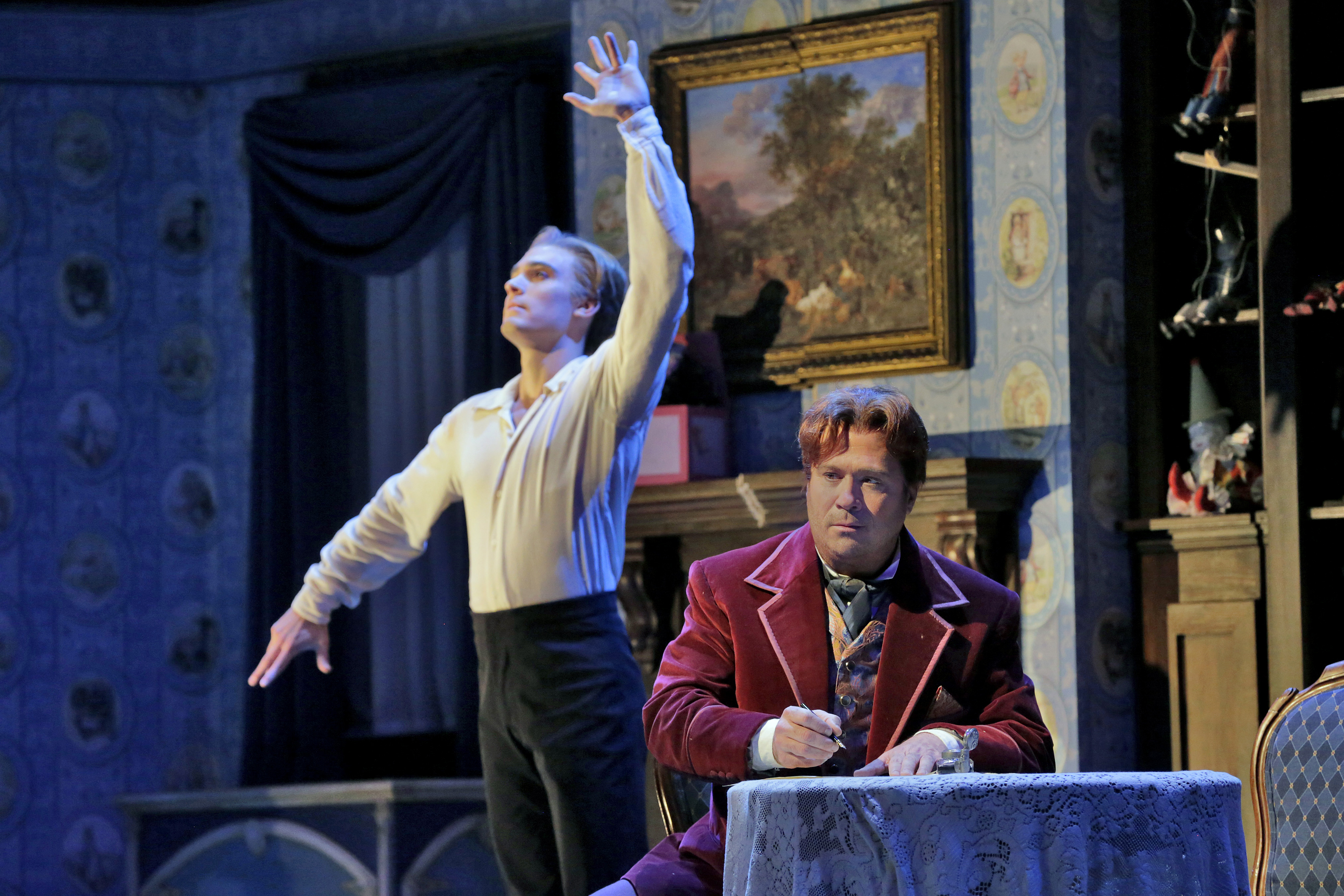
In the opera, Bosie has no lines or any singing.  He is simply an ethereal character who throughout both acts flits into Wilde’s memories. He is played by Reed Luplau, a dancer whose sinuous moves are both graceful and haunting. In prison, he climbs upon Wilde’s prison bars like some avenging angel.

Bosie--Lord Alfred Douglas--haunting Wilde before the trial.

Bosie–Lord Alfred Douglas–haunting Wilde before the trial.

When Wilde is released, he is a broken man. He left England for the continent and spent three years in poverty before dying in a shabby Paris Hotel. Oscar Wilde was 46 years old.

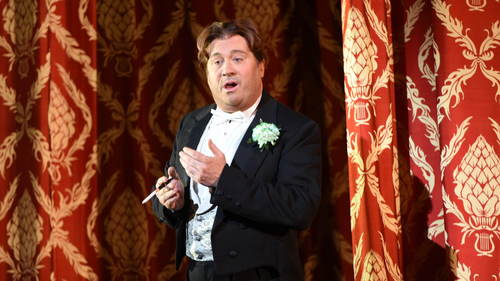
The opera has been reported as being written by Theodore Morrison (with John Cox as co-librettist) with the countertenor David Daniels expressly in mind. And the visual is a very good one, for Daniels at times looks very much like Wilde.  As a countertenor, however, the voice to me seemed much, much too high–almost a falsetto at times–and off-putting. Contemporaries had noted that Wilde had a “lilting” voice, but I don’t know if that accounts for  high pitch.  Wilde was a relatively big man and that voice does not seem to fit the body.  An acetate (of dubious authenticity) of Wilde recording Reading Gaol at the Paris Exhibition in 1900 replicates a higher-pitch voice, but that–it can be argued–could be a result of recording speed and early technology.  Nevertheless, to me it seemed unreal, at odds with those around him–including his friends.

The music itself was atonal and the lyrics seemed pedestrian. One would expect more wit coming from the mouth of Wilde.

*     *     *     *     *     *     *     *     *     *

whitman

Dwayne Croft as Walt Whitman in Oscar

In front of the desk where I write there are two bookcases. The one holds volumes of poetry. The other biographies.  I happened to look up–for assurance–to see if my Oscar Wilde biography was there and was pleased to see that it sat next to Justin Kaplan’s life of Walt Whitman. For I forgot that Whitman’s ghost is also a character in Oscar. As a narrator–he mentions that the events of the trial and imprisonment took place five years after Whitman had died and fifteen years after he had met Wilde in America– he seems to serve as the maitre ‘d to the pantheon of literary greats that line the wall in the first and final scenes. His brilliant white suit and steely-grey beard at a touch of gravitas, that seems to rise above the nonsense of British legality and the circus of Wilde’s trial.

In the end, Wilde dies and enters the halls of literary greatness, escorted by Whitman himself.