Marvelous bodies…rebellious bodies and Winter Journal by Paul Auster

What a piece of work is a man! how noble in Reason!
how infinite in faculties!  in form and moving
how
express and admirable! in action how like an Angel!
in apprehension how like a god!  the beauty of the world,
the paragon of animals. and yet to me, what is

this quintessence of dust?

            Hamlet, Act II, Scene ii

And it’s true. The human body is an extraordinary piece of work, a marvelous machine inside and out. Just look at the accomplishments of this summer’s Olympic athletes–the speed, the agility, the grace, the strength.

And while most of us do not have–and never will– the bodies of an Olympian, we do have something very much in common:  our bodies will ultimately rebel against all of us.

I have spent the recent past with bodies that are failing to various degrees. My mother’s body–stricken with Parkinson’s disease for the past fifteen years–was continually at war with itself, the brain sending damaged impulses to the rest of her body. Uncontrollable tremors, catatonic staring, personality changes, rapid mood swing, fevers, chills, labored breathing–these were the mutinies that the disease in her body raised against its very host. And in the end, the disease won.

On a much lesser scale, my own body is now wearing down. Aches and pains are common enough, but then my knee screamed out, began to fail. So a surgeon goes in–part of the extra-ordinariness of that piece of work that is man!–and some things are cut out, scraped out and removed, damaged pieces all due to the passage of time, to the ordinary wear and tear.

And then, again, my body foments a small uprising against the surgery itself.  There are some complications after the surgery, some minor concerns with my leg.

And so for the first time in two weeks, I read a book.  A marvelous book and one that I enjoyed immensely.

Paul Auster’s Winter Journal is a beautiful piece of writing–beautiful in the way that all of Paul Auster’s writing is beautiful: clear, intelligent, imaginative and clever.
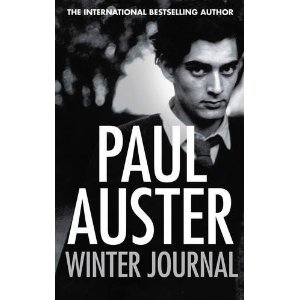
The premise of the book–is it a novel, a memoir, a journal? the genres are often cloudy in Auster’s writing–is that on a particularly day, one month exactly to his 64th birthday, a writer sits down and writes a journal addressing his aging body.

The book is told in the second person–a technique I don’t particularly like but which here provides a close intimacy with the physical, emotional, and psychological body he is addressing. And yet there is a myriad of voices–a chorus of voices made up of the writer’s body at the various moments in his life

Throughout, the writer addresses his body in certain phases of his life. He examines the physical scars that have added up over an active boyhood: when he is five a playmate hits him in the head with a metal rake; when he is three-and-a-half he slides into a protruding nail and has much of his face ripped apart; as a ten year old baseball player he is smacked into by another player as he looks up to catch a ball and splits his head open.
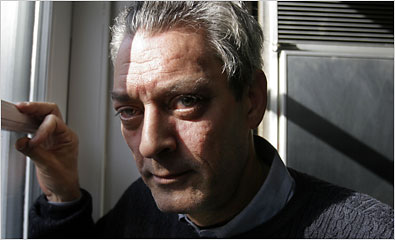
But the scars are not only physical.  There is the death of his mother, the panic attacks, the cessation of driving after he and his family survive a near fatal car accident.

He remembers when as a little boy in a tub the wondrous surprise of an erection and as a grown man the various women he has loved both in late adolescence and in manhood.  He recounts the unshakeable love that he and his wife share. He remembers the exhaustion of producing a film in Dublin and the clarifying epiphany that metamorphosed him into a serious writer.  There are memories of women he has loved and men he admires.  Of situations, in Arles, in Dublin, in Brooklyn where he learned–and retained–a certain self-knowledge about himself.
And overall, it is the pleasure he remembers his body enjoying, much more than the pain.  When, at the age of five, he was hit by the rake, he was lying on the ground examining an ant-hill. And it is his boyhood fascination with those ants that he remembers more than the delivered blow which literally raked his head.  When he is cracked in the head by the fellow teammate, it is the joy of following an arcing baseball, of angling to bring it into one’s mitt that he remembers more than the bloodying crash.

And now at this juncture of his life,  it is always the pleasure not the pain that his aging body (and mind) remembers most clearly.

Winter Journal is –perhaps surprisingly–an uplifting book.  A man, growing old but not nearing what he calls “advanced old age,” seems somewhat content with the life that he has lived so far. There is still a boy’s joy with a winter snowstorm, a lover’s appreciation of his longstanding wife, a satisfaction with the things he has accomplished–and a recognition of the many that never made it to the age he is now approaching.

In many ways,  Winter Journal is a fine, fine book…a fine, fine way of looking at a life.

Brueghel, Auden, and the death of my mother

My mother died yesterday.

She was a simple, quiet, sweet woman whose last few months were horrible. And while it might sound cold-hearted, I can honestly say she is better off today than she was the past few weeks. For better or worse, at least she is now at peace.

And while I have a good number of siblings and a large network of friends and relatives with whom to share the loss, privately I turn to Art with a capital “A.”

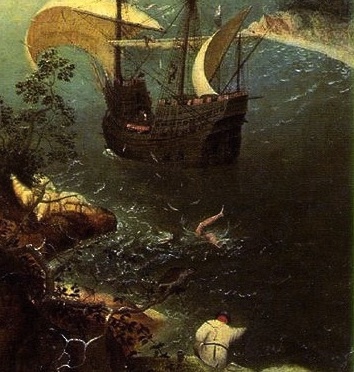
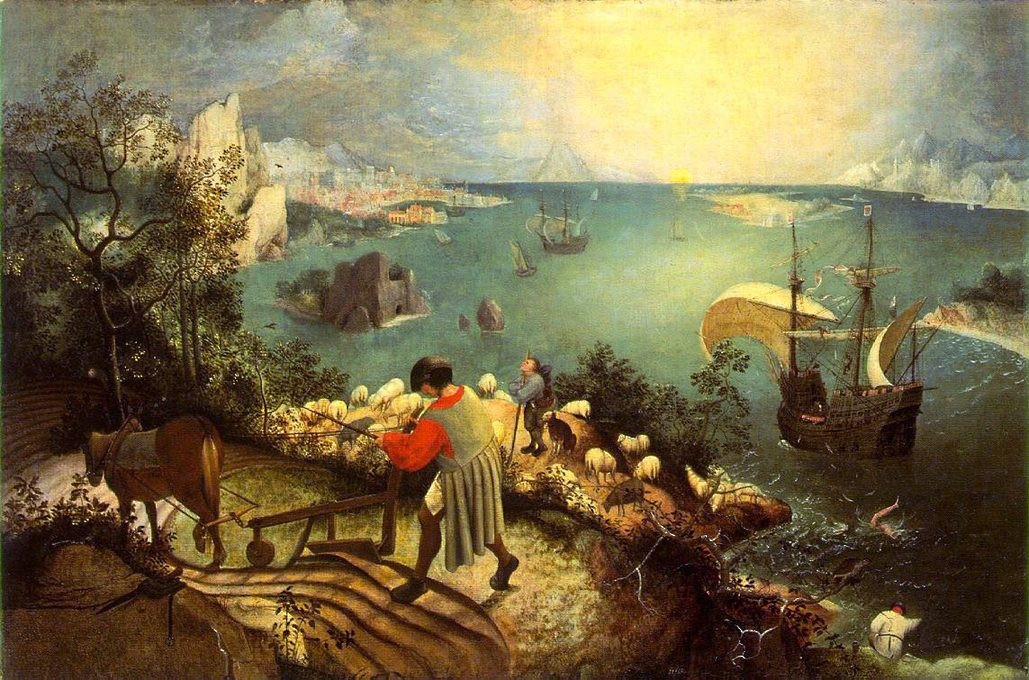
The picture above is of a painting by Pieter Brueghel. Entitled Landscape with the Fall of Icarus, it depicts the legendary fall of Icarus, who (in one story) famously disobeyed his inventive father and flew too close to the sun. The sun melted the wax holding together the wings that his father had fashioned, and he crashed into the sea.  Through the ages, Icarus has become a two-sided symbol for artists: he is either a symbol of blatant disobedience akin to Eve or Pandora or Deidre or a symbol of great striving, of “flying to the sun,” of grabbing all the gusto one can.  I usually lean to this second interpretation and see Icarus as an example of risking it all in pursuit of one’s dreams.

Anyway, this painting is one of my very favorites because

detai from painting: Icarus’ two legs in the water

Brueghel has depicted this grand, mythic tragedy as happening amidst the pedestrian goings-on of daily life.  If you look closely,  you can see Icarus’ legs darting into the water in the right hand corner of the canvas. If you are not looking for them –and did not have the title of the painting to clue you toward Icarus–you might miss them entirely in the busyness of the entire painting. There is a shepherd, a ploughman, a single fisherman, a stately ship and a far-away city, but the boy falling out of the sky barely registers on their existence.
A very famous painting, Landscape with the Fall of Icarus also has been the subject of several poems, most notably by Auden and William Carlos Williams.

Below is W.H.Auden’s poem about the painting which now hangs in the Musées Royaux des Beaux-Artes Belgique in Brussels:

Musée des Beaux Arts by W. H. Auden

About suffering they were never wrong,
The old Masters: how well they understood
Its human position: how it takes place
While someone else is eating or opening a window or just walking dully along;
How, when the aged are reverently, passionately waiting
For the miraculous birth, there always must be
Children who did not specially want it to happen, skating
On a pond at the edge of the wood:
They never forgot
That even the dreadful martyrdom must run its course
Anyhow in a corner, some untidy spot
Where the dogs go on with their doggy life and the torturer’s horse
Scratches its innocent behind on a tree.

In Brueghel’s Icarus, for instance: how everything turns away
Quite leisurely from the disaster; the ploughman may
Have heard the splash, the forsaken cry,
But for him it was not an important failure; the sun shone
As it had to on the white legs disappearing into the green
Water, and the expensive delicate ship that must have seen
Something amazing, a boy falling out of the sky,
Had somewhere to get to and sailed calmly on.

So yesterday, after the mortician took my mother’s body away, after my brother and sisters and I cleaned out her personal effects and donated her clothes to the needy, I drove away and stopped at a convenience store for a sandwich. The store was extra crowded, there was a particularly annoying man in line, and the cashier herself was particularly surly.  I wanted to yell to them, to say, “Hey, don’t you know my mother just died?!” But of course I didn’t and of course they couldn’t have. They were simply going about their normal Saturday routines.

Instead I thought of Brueghel and Auden and Landscape with the Fall of Icarus.

Yet, Auden missed another part of the equation.  While it is true that the world goes on despite, and during, moments of personal tragedy, it also does the same in moments of great personal triumph. We tend to think that much of this existence is about us, about our heartbreaks and our victories–and very little of it really is.

Anyway, my world is different today than it was yesterday.  I must meet with siblings to arrange funeral services, arrange affairs at work for missed time, try to find a wearable suit for the funeral…and the entire time the great big world will go spinning along, unaware of what any of us are dealing with.

As Auden said, “they were never wrong,/The Old Masters.”

Margaret (Peggy) Bohannon

nee McNeila

1929-2012

Requiescat in pace

1984Brave New World…and Phillip K. Dick????

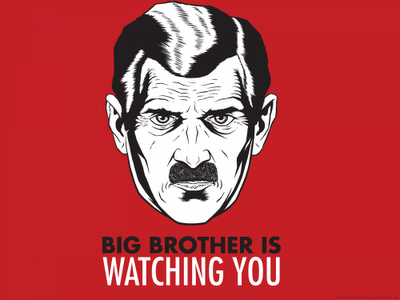
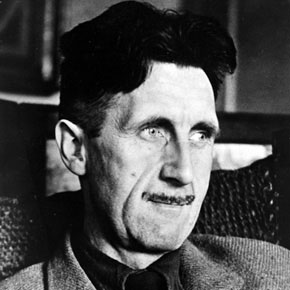
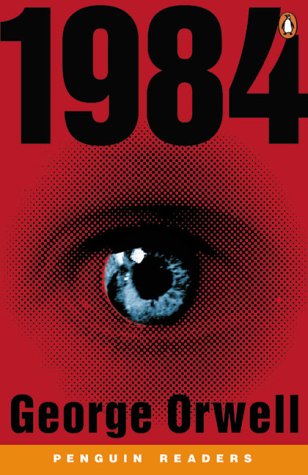
It is perhaps the most iconic novels of the 20th century.  George Orwell’s 1984 is the dystopian novels of all dystopian novels.  We all know the phrases “Big Brother,” “doublethink,” “thought-police”; their ominous overtones and insinuations are recognized even by those who have never read the book. The deadening conformity and mind-control that Orwell writes about are the fears often invoked by those who fear totalitarianism in any form–in governments or corporations.

Apple–now a mighty corporation in itself–famously advertised its new Macintosh computer by pitting itself against the corporate giants of the computer world in a magnificent television commercial that echoed the world of 1984–and Apple’s defiance to its conformity.  (The ad was seen only once on television during the American Superbowl and then subsequently was shown in theaters.)

The novel is bleak and that bleakness is broken only briefly by a wonderful love affair and the main character’s misplaced hope.  Indeed, my favorite image from the book is one that perfectly captures the grime, the incompetency, the substandard level of life, when Winston Smith, the protagonist, goes to unclog a sink in a neighbor’s apartment. As he looks at her, he notices the dust that has gathered in the lines of her face.  I always remember that–a pretty powerful image.

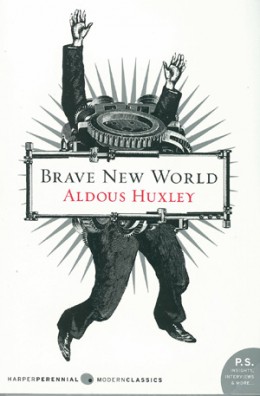
Orwell wrote his novel in 1948 (that’s really the only significance of the novel’s title: it’s the year he wrote it reversed). But nearly a quarter century earlier, another British writer also wrote a powerful dystopic novel: Aldous Huxley’s Brave New World.

And where Orwell’s world is one in which a film of oil lies on the gin and ready-made cigarettes fall apart in your hand and where sex is frowned upon (because one should really only love Big Brother), Huxley’s novel is the opposite.

Huxley saw his dystopia as a world in which people are perfectly happy–indeed where they are conditioned to be happy. There is no disgruntlement–people have been conditioned to accept and love their station in life. (A station that has been pre-decided by the artificial generation process.) Promiscuity is greatly encouraged and sex is varied and plentiful. And if for some reason, one might feel a little blue, there is SOMA, a mood-enhancing drug that is given out in vast quantities to all the classes.
The society works efficiently and happily. Yet Huxley sees the snake in the garden–the lack of freedom to be wrong, to be sad, to disagree. Even to be alone.  It is when a “savage” is brought back from a reservation in the southwestern part of the U.S. is the society and its beliefs challenged–but not for long.

♦     ♦    ♦    ♦    ♦    ♦

By the way, click here for a letter that Huxley wrote to Orwell upon first reading 1984. It is this very discussion of dystopia comprising great suffering or constant happiness:

Huxley to Orwell letter

♦     ♦    ♦    ♦    ♦    ♦

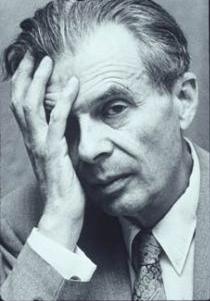
Aldous Huxley

I teach Brave New World as the first book of the new school year.  I will have thirty very bright 18-year-old students enrolled in my class. I know that half of them read 1984 last year with the one teacher they had. The other half did not. (And 1984 is such a great companion piece to any discussion of Brave New World.) So I assigned it as “summer reading.” But only to half of them. I looked for another “dystopian” novel to give the class that had already read Orwell’s novel.
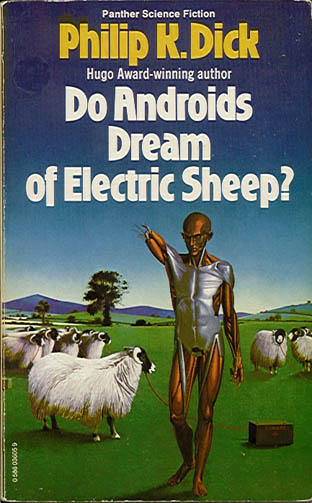
And so I assigned Phillip K. Dick’s Do Androids Dream of Electric Sheep?

Now, I have never been a big fan of science-fiction. I have just never gotten into it. In fact, I have never seen a Star Wars movie!

I’ve read some of the standards–Bradbury, Welles, Asimov, and, if we are stretching, Vonnegut.  But it’s something I just never made a connection with.

And Dick’s novel did nothing to change my mind!? Despite it being anointed a “classic” by so many and being the source for the beloved film, Blade Runner, it left me very flat.
Again we are dealing in a world different than our own–a post-apocalyptic earth where most of the able bodied people have emigrated to Mars.  Nuclear fallout from World War Terminus has made much of Earth inhabitable. The government’s enticement for people to emigrate is a free android that will work as their personal servants.

However, some of these androids have returned to earth and must be killed. And the only way to distinguish between the androids and the humans is the lack of empathy in the androids–a lack that can be tested.

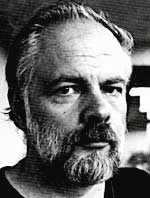
Phillip K. Dick

The plot, entails the main character, Rick Deckhard–an android bounty hunter–attempting to increase his bounty numbers so that he can buy some real animals, instead of the “electric sheep” he now owns. Animals, he feels, encourage empathy in humans.
I am not sure how I will squeeze this into our discussions of Brave New World and 1984.  I am not sure if it can be squeezed into dystopic literature.  Post-apocalpytic maybe–most of my kids have read or seen The Road and I am Legend–but it doesn’t really fit in with totalitarianism and its evils.

And then, maybe it won’t be all that important to the discussion anyway. Or better yet, maybe it’ll throw us all in a different direction completely.

Anesthesia–the perfect vacation

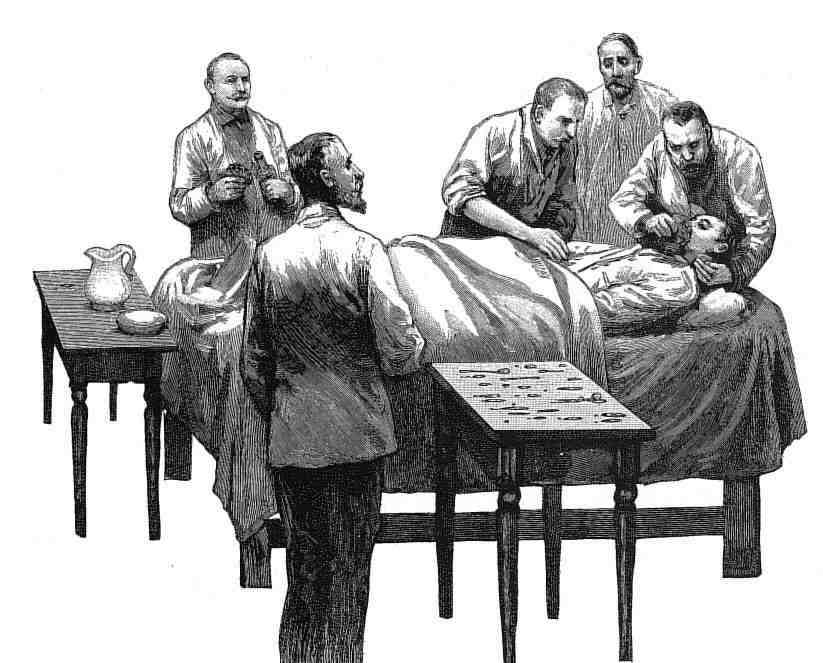
I had to get some work done on my knee this week and in order to do it, the doctors had to give me general anesthesia.

God I love it.  It is the perfect vacation.

To start with, an anesthesiologist gave me a light anesthetic and then wheeled me into the operating room where I would be administered a more powerful anesthetic.  I remember her wheeling me towards the operating room, I remember her saying to someone else that the bed had to be turned around because I had to go into the room head first.

And I remember nothing else.  I awoke a little more than an hour later in the recovery room.  How great is that!

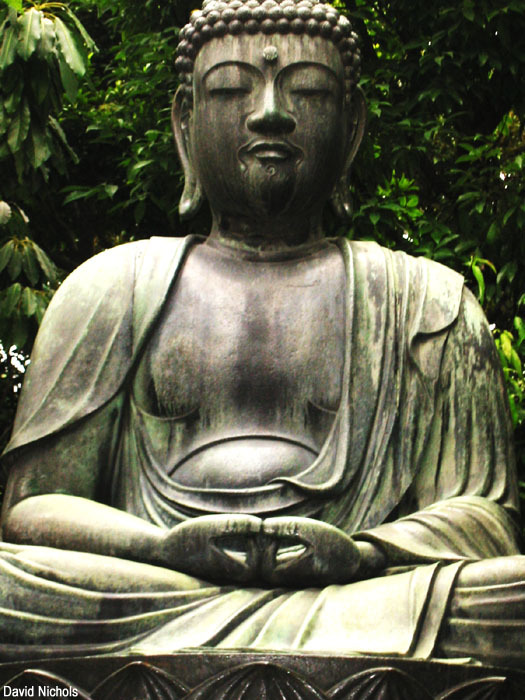
For that short interim, I had no worries about bills, no stresses about work, no fretting about family, no anguish, no responsibilities, no obligations, nothing.  I desired nothing, feared nothing, was attached to nothing.  It is the very definition of Nirvana.  And I experienced it without hours of meditation!

The word “nirvana” has been misrepresented by Westerners as a simple synonym for “paradise,” for an existence of pure pleasure and perfection. Nothing can be further from the truth. In Eastern thought, “nirvana” is the final stage of enlightenment, a state where there is NO pleasure and NO pain. One has NO desires nor regrets.  There is no suffering, no joy, no self.  One is completely separated from the pulls, the demands, the pains, joys, wants, and urges of modern existence.

Wow, that certainly sounds like  the perfect vacation to me. Or a lethe-like morning of general anesthesia.

(Or at least until the painkillers wear off. Hah!)

A simple and wonderful book for westerners to read as an introduction to the Buddha,

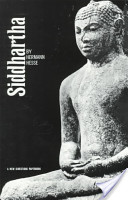
Siddhartha by Herman Hesse

to nirvana and the path towards it is Herman Hesse’s Siddhartha. It is a short, beautiful,
inspiring novel of Gotama Buddha, written by German author for the western mind.
One cannot finish the book without feeling some sense of peace. I used to give it out
quite often as a gift.

If you have never read it, try to find it. You can read it in one sitting.
If you have already read it, pick it up again. Those same good feelings will return.

Book Review: Disgrace by J. M. Coetzee

A new acquaintance of mine asked if I had ever read the book Disgrace by J. M. Coetzee.  I hadn’t, though I had read several others by the South African writer.  We talked about many things that morning, and, to be truthful, I had forgotten all about the book until about a week later, when a package arrived in the mail with a gift-wrapped book. Inside was a copy of Disgrace with the note: “I hope you enjoy this half as much as I did.”

And so I began.

Disgrace is the story of David Lurie, a 52 year-old, twice-divorced, white South African professor of Communications and Romantic poetry.  Quite early in the novel he is forced to resign from his university under the disgrace of having sex with one of his students.  As Lurie  rationalizes to himself, the sex itself was not rape, but it certainly wasn’t completely consensual.  He admits guilt but not contrition–which infuriates even those trying to help him.

In disgrace, hounded by reporters, and bereft of his job, Lurie leaves town and drives out into the eastern countryside of the Cape. There his daughter has some land where she raises flowers and kennels dogs.  He is there presumably to write an opera on Byron, Byron’s mistress Teresa, and her husband.  But it is not the most conducive area for such refined creation: it is a hard land and an area still simmering in the afterbirth of the post-apartheid era.

As Lurie settles into the rhythms of country-life, of physical labor and simple pleasures, even volunteering in an animal shelter, his life is once again shattered when he and his daughter are attacked by three men.  All the dogs are slaughtered, Lurie is doused in alcohol and set on fire, and his daughter is gang-raped (and impregnated) by the three men.  The very crime for which Lurie was censured has been visited trebly on his daughter.  The very world he has known–the power he has always arrogantly assumed for himself–has been violently wrenched away.

As both father and daughter try to come to terms with the horrors that have visited them, as they learn more and more about the identity of their attackers and their relations to people they know, and as they struggle with the essential character of each other’s personalities, Lurie comes to better realize the nature of the world around him.  His views on racism, on feminism, even on animal rights, must be examined and re-calibrated.  The world he has known is, simply, no longer.

I knew nothing of the book when I opened it. I thought it was contemporary, not published in 1999–a mere five years after the historic elections in which the African National Congress overwhelmingly won and from which apartheid’s demise can best be dated. The difficulties that Lurie has in understanding the new order, the distrust, fear and violence among the various peoples, even the “modernization” of the University all make better sense. (Lurie’s teaching of Communication is in itself ironic–Communication skills are what this country and its people are badly in need of.  An expert in the British romantic poets–those type of courses are considered fluff in the new university structure–Lurie teaches both Communications 101 and Communications 201. The one Romantic Poets course he teaches is a salve that the administration gives its older professors.) In many ways the novel is a reflection of the birth pangs of the new country: it is violent, bloody, and at times deadly.

Does everything get resolved?  Of course, not.  Is Lurie a better person at the end?  I’m not sure.  I think he is. Early in the novel when a tribunal is questioning Lurie on his womanizing, he states that he believes that every woman he has bedded has “enriched” him in some way.  The question at the end of the novel then must be  “has the violence and catastrophe that he has suffered also enriched him?”  Again, I don’t know. But he is a different man than he was at the beginning of the novel.

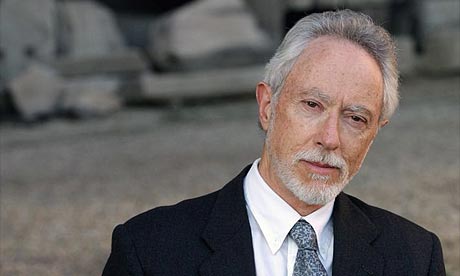
J.M. Coetzee

And while the summary of the plot seems rather dark, the novel itself is quick moving and understated.  It is a very subtle but easy read, and it sucks you into its disparate worlds–the urbane world of the university and the stark world of the South African countryside–quite easily.

And so much dovetails together within the novel: the womanizing man of letters writing about that grand literary womanizer Byron; the mirrored rapes; his evolving attitudes towards women underpinning his new understanding of animals; his role as both teacher and father. It all comes together seamlessly and wonderfully, not like a patchwork quilt, but a beautifully woven cloth–like the Ashanti patterned bedspread that Lurie’s daughter presents to the woman living on her land.

J.M. Coetzee won the Booker Prize for Disgrace in 1999, four years before winning the Nobel Prize for Literature in 2003. His writing is succinct and accessible. In many ways he is a quiet writer, not at all flashy. (Not surprising, considering that his dissertation was on Beckett.)  Intelligent, subtle, and layered, the writing is satisfying and rewarding from the very first, and ages richly with subsequent reading.

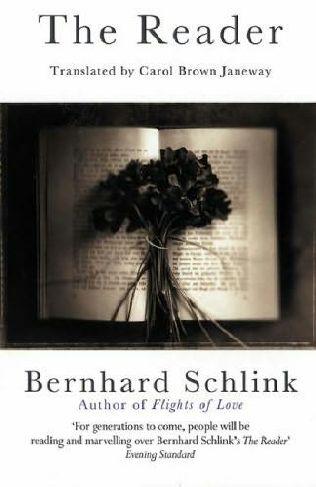
Book Review: The Reader by Bernhard Schlink

Cover of Bernhard Schlink’s book.

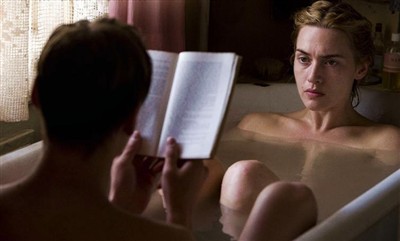
A scene from Stephen Daldry’s film, The Reader

The old question of the book and the movie: Can a film ever do a novel justice?  Or should we look at them as entirely separate works of art and not make the comparison at all?  Just the parameters of a roughly  two hour viewing experience seriously limits what a film maker can do with his source, a source that usually comprises a multi-hour/multi-day experience for a reader.

Certainly there are films that are more successful than others in capturing the essence of a novel. And just as certain there are real travesties. But the successes are such because they capture the spirit of the novel rather than getting lost in trying to relate every detail.  I am thinking of Mike Nichols Catch-22 based on the Joseph Heller novel.  The film works because it perfectly captures the inanity of bureaucracy, the numbness of war, and the black humor of Heller.  It is a large novel, non-linear in its arc, and Nichols captures its essence without getting bogged down in trying to capture every character and sub-plot.

I saw the film The Reader when it was released in 2008 and only got to reading the book in 2012. (I had two friends who refused to see the film because they had loved the novel so much.)  Regardless, it was a compelling film with a maddening and dramatic twist.  A young school boy (Michael) has an affair with a older woman who insists that he reads to her every time before they have sex.  He reads her all the classics–The Odyssey, War and Peace, etc. But she seems oddly aloof, and at the end we realize why. The boy, on the other hand, grows into an unfeeling man, and his coldness and inaction when needed is what is infuriating.

The novel–by its very nature–is quite different. First, it is much more internal, narrated by the boy who often questions and analyzes his own thoughts and his own actions. There are ruminations on the ethical choices made by ordinary citizens during the Holocaust, on the responses of the following generations on the actions of their own mothers and fathers. (These scenes take place in 1966, two decades after the war.) And yet while the narrator weighs, dissects, conjectures about these ethics, his own actions–many years after the war–must also be examined.  His coldness, his lack of human kindness, his decision not to act is all quite similar to that which he condemns in the female guards who are on trial in the second half of the novel.

When Hannah (the older woman) confesses to a crime she did not commit rather than reveal a secret she is much more ashamed of, she is given life imprisonment. Michael has information that could acquit her that he does not reveal.

To me, the ending is insignificant, despite the attempt to redeem Michael. Yes, he does reach out to Hannah, he does realize his own hardness, and he does try to do right.  But it is all too late. I had grown to dislike him so much by then that his redemption was all but impossible for me.

Most of the details of the plot remained the same from  book to  film but the internal voice was missing–or at least adulterated. The novel also starts out quite erotic which simply cannot be captured adequately on film with the same impact–words seem always more intimate and immediate than soft-lit actors and actresses.

The old question of book and movie?  In the case of The Reader, both.  They are two different things, two very good experiences, two separate ways of engaging a reader/viewer.

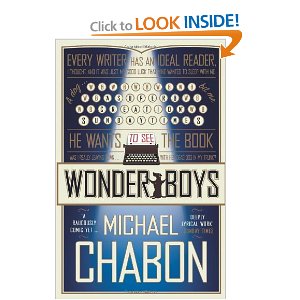
Tuesday Book Review: Wonder Boys by Michael Chabon

I read Wonder Boys last week.  I had read it previously, at least twenty years ago, and, boy, had I misremembered it.  As a younger man, I found inspiration in the “wunderkind” writing student and was fascinated by the famous writing teacher who is famously blocked with his novel (also called Wonderboys) that is going on past 2600 pages long.  This time around I did not have the same reactions.

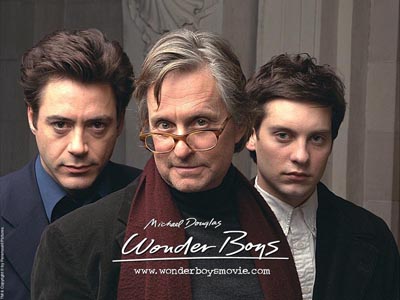
Part of the problem is also that I could not get the film adaptation out of my head– a film I had seen in the long interim between readings.  In the film, the famous writing teacher is played by Michael Douglas, his cynical, jaded literary agent by Robert Downey, Jr., and the fabulous writing student by Tobey Maguire.  And while I remember enjoying the movie greatly–and understand why marquee actors are used–I think  it was terribly miscast.

Grady Tripp is the dissolute writing teacher.  He smokes way too much dope, he is cavalier in his relationships, and he is always looking out to score. In the novel, he is over-large, a big hulking bear of a man.  In one scene, when he is spiraling into what might be a catastrophic relationship with a young student who rents a room in his basement, he notices his reflection in the mirror. He sees a middle-aged, bearish man slumped down over this young college girl as they slow dance together. It is a moment of self-awareness–aided by a large quantity of pills, dope, and alcohol enhanced by pounding adrenelain after a slapstick night of antics. The man he sees in the mirror no way is the stylish professor played by Michael Douglas.

The young writing student is a-social and painfully awkward which Tobey Maguire captures but he is not nearly dark enough. In the novel, James Leer is very dark, in a long overcoat of indeterminate material and age.  And Robert Downey Jr. did not match my vision either. I know that most people quibble with the casting of books they’ve read when they are made into movies.  And this is my quibble: the cast is too handsome.

But enough about the movie…

The novel starts out on a rollicking tear. On the night that the novel begins Grady Tripp finds a note from his wife saying she has left him, he picks up his agent and the transvestite he met on the plane, his mistress–Chancellor of the school and wife of his Department Chairman–tells him she is pregnant, he gets bit in the leg by a dog, and he is traveling around with a tuba, a dead dog, the coat Marilyn Monroe wore at her wedding to Joe DiMaggio and a student who may or may not be suicidal…or truthful.  It reminded me of John Irving at his best.

An academic farce, there are set scenes of college gatherings and festival lectures. There are Tripp’s musings on the requirements of good writing, his praise for James Leer’s young but promising work, and insights into a truly blocked artist–one who comes to no longer believe in the work he is doing.

The female characters, his wife, his mistress, the student living in his house, however, are very shallow–cardboard figures created for Tripp to act or react against.

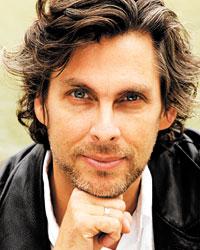
Michael Chabon

That the novel famously echoes Chabon’s early writing life makes reading it this much later in his career offer its own rewards.  Like James Lear, the young student, Chabon received a book contract for The Mysteries of Pittsburgh when his writing professor–unknown to Chabon–passed the manuscript on to his own literary agent.  And like Grady Tripp, Chabon worked years on a follow-up novel–a novel that grew enormously large before he himself destroyed it.

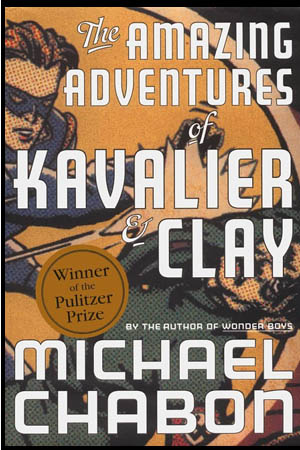
Since The Mysteries of Pittsburgh and Wonderboys, Chabon has continued to win great praise and loyal readership.  His novel, The Adventures of Kavalier and Clay won the Pulitizer Prize for fiction in 2000 and his 2007 novel The Yiddish Policemen’s Union won the Hugo, Nebula, Sidewise and Ignotus awards. (An aside–I was in Quebec city one week and needed something to read. There was primarily only French book stores. In one that I stepped into there was a small rack with about a dozen books written in English. It was there that I bought the Yiddish Policemen’s Union.)

And while his first novel–The Mysteries of Pittsburgh–and the novels following Wonderboys deal directly with Jewishness and Judaism, it is a very minor theme in Wonderboys.  There are touches of it when Tripp and James go visit his Korean ex-wife for Passover Seder and bumps against it when James’ own history is revealed, but it is not forefront in the novel.

Instead this is very much a novel about writing–or not writing as is Tripp’s case.  It is academic because it takes place on a university campus and deals with chancellors and professors and students and chairmen, but there is no scenes within a classroom. It tries to be a novel about love and contentment–but Tripp’s long road there, it is his third wife that leaves him and his tentative gestures towards his pregnant mistress are filled with doubt and fear.

All in all, though, Wonderboys is a wonderful read.  The beginning is peerless–quick moving, deft character sketches, and hilarious plotting. If the second-half seems to suffer from a bit of a hangover, it is because nothing could keep up with the original momentum. The novel must switch rhythms to mirror Grady Tripp’s more thoughtful musings, fears, and discoveries.

Do read Wonderboys or, if you want, rent the film.  Both are very enjoyable.  Just don’t do both too close together. And when you finish with those give Chabon’s other titles a try. Any of them are well worth the time spent.

A quibble with electronic publishing

I’m a little worried.

Just a little worried.

The majority of things I’ve had published are in print. They  haven’t earned me a fortune–five dollars here, twenty dollars there–but a least I have a copy of them. Actually, two copies of them, because most of the ” legitimate” small journals pay in copies. They publish your story, poem, essay and pay you with two copies of the issue in which you appear. Two copies placed with the others in a chest at the foot of my bed.

And then along comes the Internet. Instant gratification. Electronic submissions. Electronic responses. Usually much quicker than traditional ways.

The best story I think I’ve ever wrote was published on line. “Nadja and the Dream of Teeth” first appeared through the Dublin Writer’s Workshop in the journal The Electric Acorn.

Then it was published electronically by The Richmond Review (UK). The editor at The Richmond Review was wonderful. She asked questions, made good suggestions, and, overall, made me tighten things up.  All through e-mails. From across the pond. This was the internet at its best.

And then it appeared electronically. It was beautiful. Nice layout. Clean font. Well done. I was proud of the story and proud of its being out there.

Now several years later, the site is down. Just a blank white page. Try it. Google “Richmond review uk” and you’ll find the link.  And then a pure white page. Where is my story? Not there. Not archived. Nowhere. And it was a legitimate journal!

Sort of the same thing with another story– “Pierced.” Except the journal it appeared in didn’t disappear; it sold its domain name to a Japanese company. Try to find my story and you’ll be staring at a beautiful chrysanthemum surrounded by Japanese writing. I am pretty sure that it is not my story translated into Japanese.

So. No big deal. Two short stories that meant something to me but certainly not to anyone else. Vanished. Pouf! But what if this was important material? Is there a fear that important things might simply disappear after a given time?

I know the saying that nothing ever disappears in cyberspace, but will future researchers, historians, students all have the tools necessary to recover those things that have?

Granted there is much that is superfluous, so much that is ephemeral on the Web. Much of it–my own scribblings included– really doesn’t deserve a long shelf life. But, by caching materials away so easily are we also tossing away things of lasting value.  I don’t mean the works of a future Shakespeare or a document of “Declaration of Independence” import.  I mean things like the novelist Rick Moody’s music reviews on Rumpus or Margaret Atwood’s book reviews for The Guardian or the Scottish poet Robin Robertson’s powerful reading of “At Roane Head.”  My fear is that this stuff–which is important stuff, important aspects of our culture, glimpses into who we are–will someday disappear.  Without a trace.  Without record.
Is it the nature of blogging or on-line writing in general to be ephemeral? Is that what is the draw? Do we read it not expecting ever to go back to it.  I don’t know.

But it does worry me at times.

Summer Reading

Image

It is traditional in the U.S. for schools to give students a list of books to read during the summer.  The concept is twofold: one, keeping a student’s mind engaged while absent from most intellectual interaction; and two, trying to excite a student to the pleasure of reading.  So the trick is to find titles that are both stimulating and enjoyable and thoughtful.

So in the school I work at, the “Summer Reading List” has just been published. Here are the titles:

For 9th Graders:

The Hunger Games by Suzanne Collins
Enders’ Game by Orson Scott Card
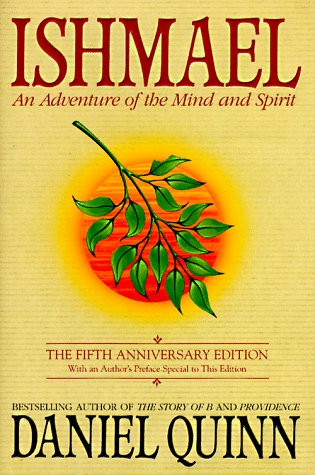
Ishmael: An Adventure of Mind and Spirit by Daniel Quinn

For 10th Graders:

Four mandatory short stories by Nathaniel Hawthorne and four other Hawthorne stories of the student’s choosing.
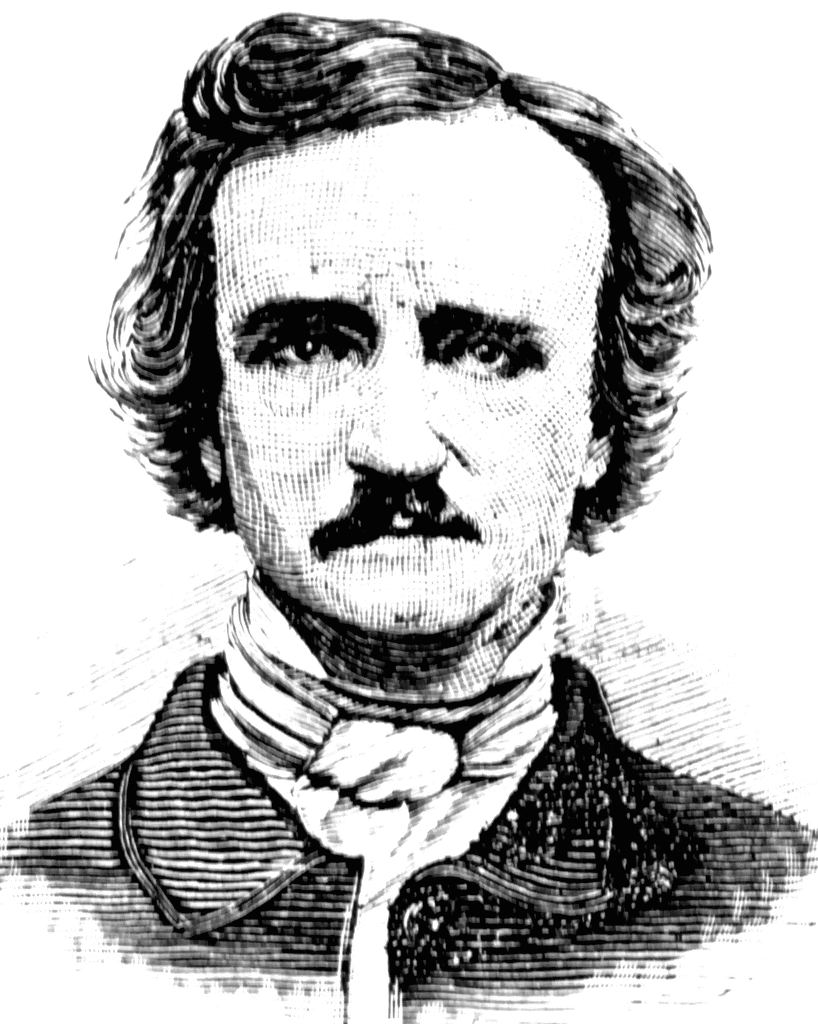
Four mandatory short stories by Edgar Allan Poe and four other Poe stories of the student’s choosing.

For 11th Graders:  There are two levels of books. The first level has a wide choice. They MUST read the first two and then choose ONE of the remaining six:

Don’t Look Now: Selected Stories of Daphne Du Maurier   by Daphne DuMaurier and Patrick McGrath
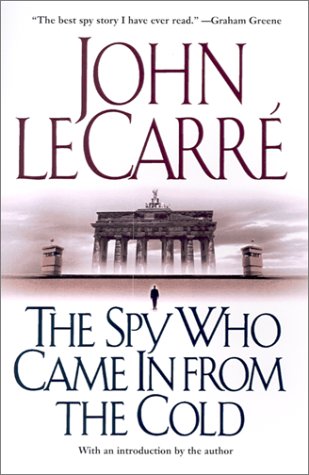
The Spy Who Came in from the Cold by John Le Carre

Here’s Looking at Euclid by Alex Bellos  (HOW GREAT A TITLE IS THIS!!!!!)
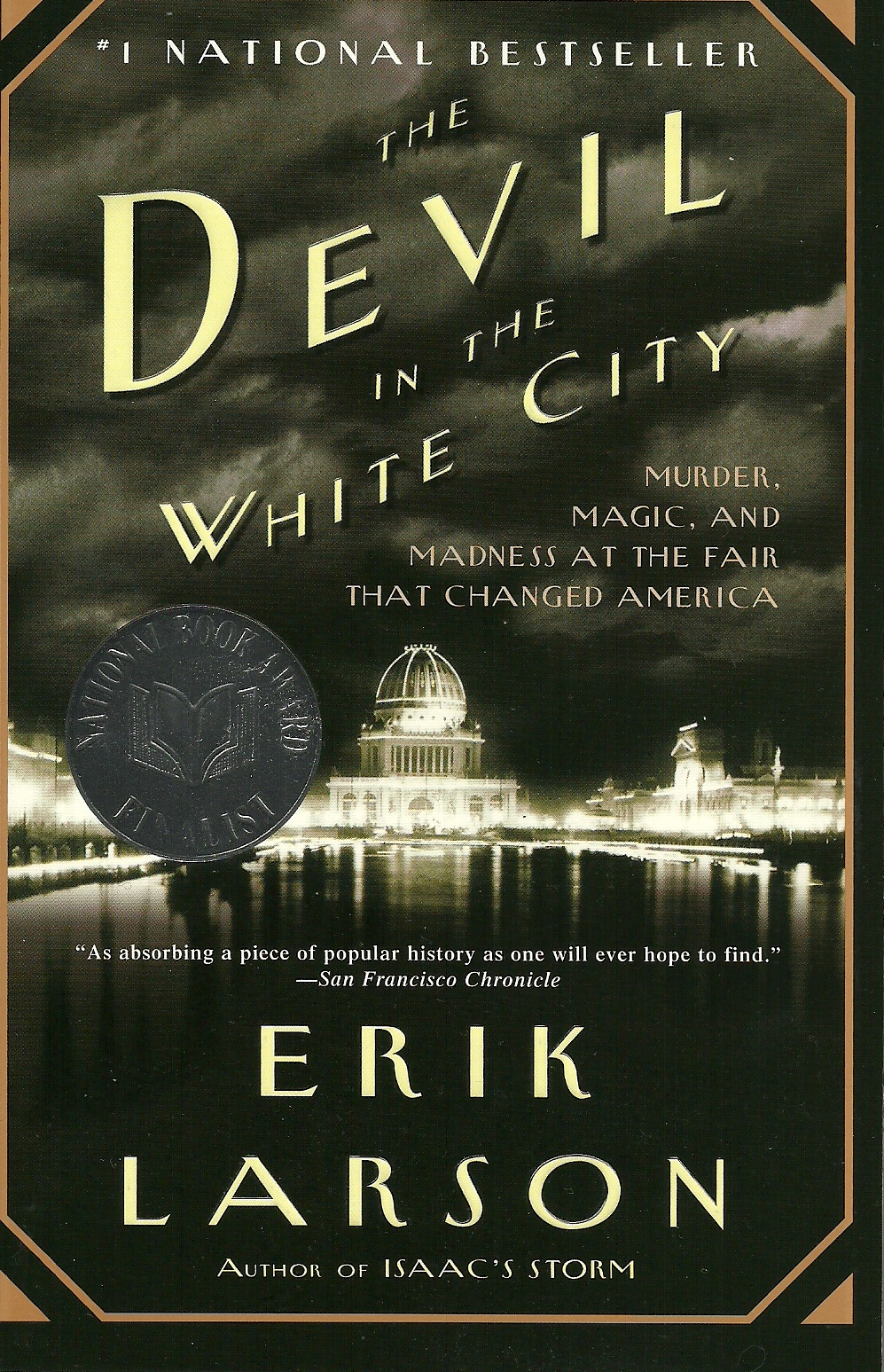
The Devil in the White City  by Erik Larson
The Omnivore’s Dilemma by Michael Pollan
Mutants: On Genetic Variety and the Human Body by Armand Marie Leroi
The Professor and the Madman by Simon Winchester
The Disappearing Spoon by Sam Kean

The other group of 11th graders read these:

Watership Down by Richard Adams
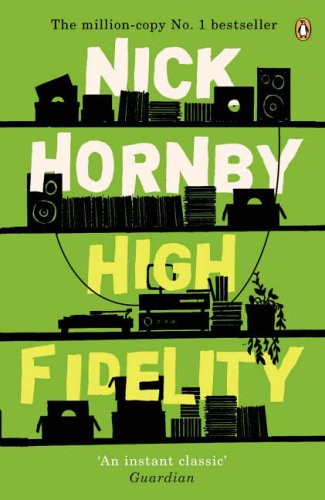
HIGH FIDELITY by Nick Hornby
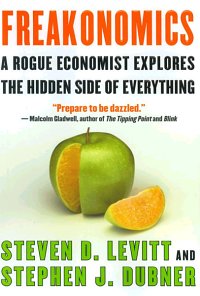
Freakonomics by Stephen Dubner and Steven Levit

Those in 12th Grade read:

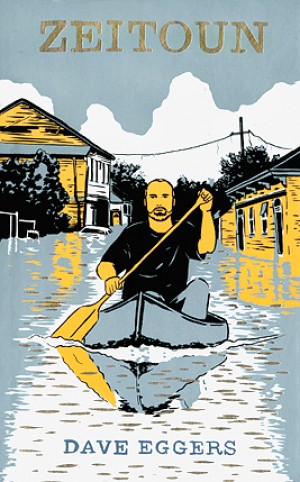
Zeitoun by David Eggers
Like You’d Understand Anyway by James Shepherd

Those in Advanced Placement 12th Grade have a large list to choose from. Some are mandatory and some are choice, but they end up reading 5 titles in all (and for one, reading the book AND watching the film.) They are:

Ragtime by E.L. Doctorow
The Wonder Boys by Michael Chabon
1984 by George Orwell
Do Androids Dream of Electric Sheep? by Phillip K. Dick
On the Beach by Nevil Shute
A Plague of Doves by Louise Erdrich
Brighton Rock by Graham Greene
Player Piano by Kurt Vonnegut
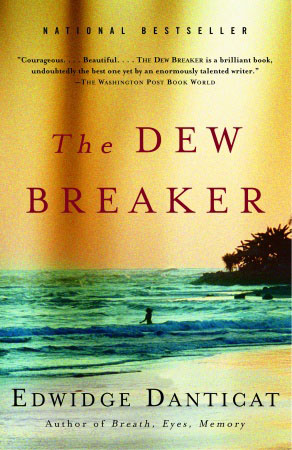
The Dew Breaker by Edwidge Danticat
Demian by Hermann Hesse
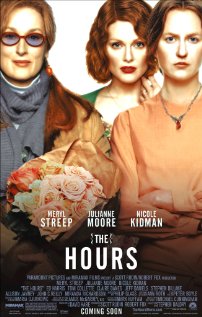
The Hours by Michael Cunningham
Obasan by Joy Kogawa

King Lear by William Shakespeare and the 1985 Akira Kurosawa film Ran
Educating Rita by Willy Russell and the1983 film by the same name
The House of the Spirits by Isabel Allende and the 1994 film by the same name
The Commitments by Roddy Doyle and the 1991 film by the same name
High Fidelity by Nick Hornby and the 2000 film by the same name
Equus by Peter Shaffer and the 1977 film by the same name
The Day of the Locust by Nathaniel West and the 1975 film by the same name
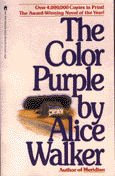
The Color Purple by Alice Walker and the 1985 film by the same name
Beloved by Toni Morrison and the 1998 film by the same name
The Good Earth by Pearl Buck and the 1937 movie by the same name
The Reader by Bernhard Schlink and the 2010 movie by the same name

I must admit, I haven’t read (or watched) all of these titles, but I have read most. It’s a pretty eclectic list…and certainly stimulating. I have my own favorites–Zeitoun for anger, The Commitments for fun, The Hours for tears, The Color Purple for the extraordinary… I could go on, but won’t.  Have fun. Choose something for yourself, if you have the time.

So whether it’s been one year since you’ve been out of high-school or fifty-one years, give the list a look over and maybe you’ll find something to get you through the hot summer days that are already well on their way.

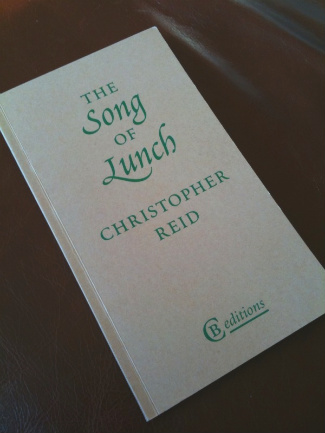
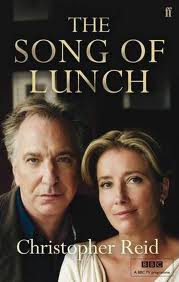
Poetry on TV: The Song of Lunch by Christopher Reid

Farewell to long lunches
and other boozy pursuits!
Hail to the new age
of the desk potato, …

Sometimes, though, a man needs
to go out on the rampage,
throw conscientious time-keeping
to the winds,
kill a few bottles
and bugger the consequences.

Ah, I too miss those boozy lunches. I worked for more than a decade in an in-house advertising agency, and some of our Friday lunches were both epic and legendary.  But I ultimately left advertising for the more sedate, sober world of academia–or at least the more sedate, sober lunches of academia.

The man who is lamenting the lost tradition of long lunches above is the rather bitter and sarcastic subject of Christopher Reid’s The Song of Lunch. Yet on this particular day he sticks a note on his computer screen saying that he is headed out to lunch and that indeed it is going to be a long one.

Probably, unwisely, he has arranged to meet an ex-lover for lunch at one of their old haunts. He, a copy-editor at a famous publishing house; she, the wife of an extremely successful novelist, living in Paris. The novelist is also the man she left the narrator for.

He isn’t sure what he expects from this rendezvous but little of it goes the way he hopes.

Lunch has never been more poetic, or sexier, or frustrating.  The dance of tension and attraction between the two begins immediately.

There! she says, and smiles
Lips, eyes, eyebrows
and the new lines in her forehead
fill out the harmony.

Here! he replies.

She has just entered with “There” and he counters with “Here.”

He bemoans the fact that “their” restaurant has changed so much in the fifteen year interim: the menu features:

pizzas by the yard.
More pizzas than there should be.
And too much designer pizazz.

He turns it over:
choose the right wine
and have it ready breathing
for when she arrives.

There’s a mid-price Chianti,
which won’t come plump
in tight straw swaddling,

byt will do for auld lang syne.

In fact, it is for the “auld lang syne” that he is here, crumpled by the present, dashed in his literary hopes, and obsessed with a long-gone love.  This lunch is very much not the best idea of his.

But she on the other hand is charming.  Personable, open, interested, determined to enjoy the day.  But he cannot. When she asks about his life he goes on a rant about modern publishing:

Confessions of  Copy Editor ,
chapter 93.
It;s an ordinary day
in a publishing house
of ill repute.

Another moronic manuscript
comes crashing down the chute
to be turned into art.
This morning it was Wayne Wanker’s
latest dog’s dinner
of sex, teenage philosophy,
and writing-course prose.

In contrast, she is accepting and pleased with her life as:

Me? Oh, the good wife,
and loving mother.
That keeps me occupied.
I’ve no complaints.
And Paris is a fabulous city.
You really should visit.

(He has by the way, visited. Stalked her a while back but lost the nerve to ring the bell when he was at her door.)

Throughout the lunch, he observes her every move. He watches her daub her mouth with a napkin,  slice into her ravioli, ask the waiter for advice. And all of these observations are described in a rich language filled with a keen ache, for he remembers every whorl of her knuckles, every dilation of her pupil, every crinkle of her lips.

To deal with his ache, his confusion, his lust, he drinks.  Far too much.  Much more than she.

She had arrived at the lunch full of good will and charm, but his sarcastic, bitter demeanor pushes her away.

But, it is a narrative poem–it tells a story–so I won’t spoil the ending.

Now, in 2010, the BBC did something extraordinary.  Rather than digging in the vaults of the classics (there is an endless list of Dickens and Austen productions) or dramatizing the latest Scandinavian thriller or Scottish mystery, they decided to do something quite different.  They decided to dramatize a contemporary work of poetry.  And they did it well.

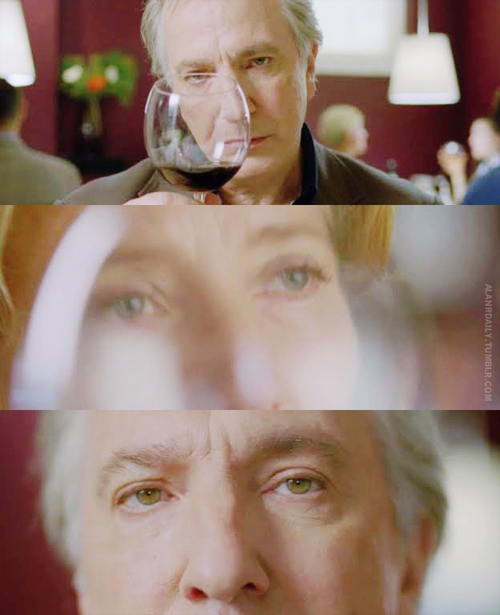
The BBC2’s production of The Song of Lunch–made to celebrate National Poetry Day in Britain– was genius simply in the choice of the actors.  Alan Rickman and Emma Thompson.  For who can better play a put-upon man, dour and drunken, and rising with lust and regrets better.  I cannot think of anyone else.  And Emma Thompson, literally shines in the role–literally that is. In one scene where Rickman is looking at her through his half empty wine glass she is glimmering.  There is a fresh aura of rightness about her that works in perfect contrast to the curmudgeonly Rickman.

The Song of Lunch is a strange one for me, for I saw the film production before I read the book.  In fact, it was BECAUSE of the dramatization that I got the book. “Making words come alive” is such a cliche, yet in this case it is very much true.  The tiny narrative of Reid’s is served quite well when animated by Rickman and Thompson.

I’ve read the poem several times now, finding something new to enjoy each time.  I You-tubed the BBC production and watched a few scenes, but the BBC came in and took certain “chapters” off, so one loses the continuum.

I do remember those long boozy lunches.  Though I wish at the time I was as observant as Christopher Reid.  His The Song of Lunch is as rich as the carpaccio and pumpkin ravioli that were ordered for appetizers and as heady as the grappa that finished the meal.