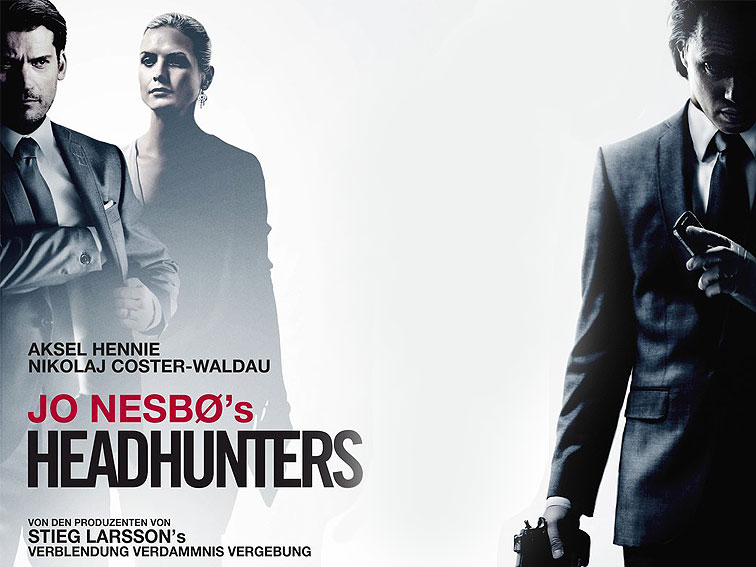
Sunday Movie Review: Headhunters

It used to be when I thought of Scandinavia, I thought of crystal-blue fjords, aromatic forests, statuesque blondes, and a palatable wholesomeness.

That’s before Stieg Larson gave us his girl with the dragon tattoo, and Jo Nesbø, his various riffs on Scandinavian violence.  Now when I think of Scandinavian, it seems a place of outrageous torture, imaginative violence, and not a little repressed fascism.

Headhunters (Hodejegerne) is Mortin Tyldum’s adaptation of Jo Nesbø’s slick, stylish novel of a professional headhunter who is also a major art-thief.
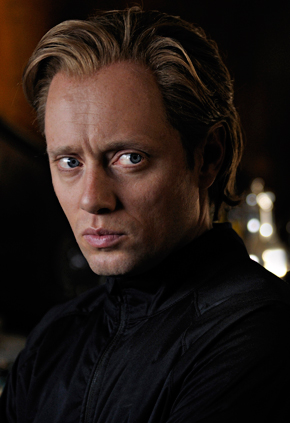
Roger Brown (played by Aksel Hennie who has a striking resemblance to a young Christopher Walken) is a very successful headhunter–he brings talent to very powerful and influential corporations.  In interviewing potential clients, he discovers their routine, the artworks they own, and whether they have a dog.  In this way, he is able to case his next heist in the luxury of his offices. Roger tells us that he is only 1.6 meters tall (about 5’3″) and that he has to “compensate.”  He does this by buying his stunningly beautiful wife (Synnøve Macody Lund ) everything he thinks she desires: A house right out of the glossiest of architectural magazines, expensive and rare jewelry, an art gallery to run.  He can afford none of this–which is why he must steal art, and even that income is proving to be too little.

We begin by seeing him steal a lithograph by Munch.  (Is it just me or is Munch the most stolen artist of our time?  I don’t know how many versions of The Scream have been stolen in the past thirty years.)  Anyway, the print that he steals is called “The Broach” but it looked very much like one of Munch’s Madonna paintings.
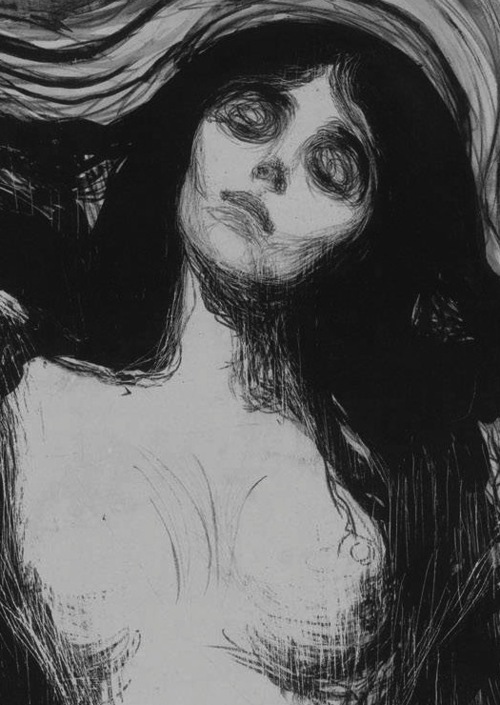
Munch’s lithograph “Madonna”

But even the Munch is not enough to silence Roger’s creditors, so he has to go after a really big score–a long lost Rubens that is in the apartment of a man who he is recruiting for a major position.  In the interview, we learn that the man, Clas Greve, (Nikolaj Coster-Waldau) is a former mercenary, a world expert at tracking people and deposing of them–aha, the plot is setting itself up. He is also ruthlessly ambitious.  We also soon learn that he is sleeping with Roger’s wife.

I will not spoil how it all plays out except to say that there is an enormous amount of bloodletting and creative violence. We move from Roger’s sleek house to Appalachian-like cabins, where the patina of civilization has been long ripped off.

Headhunters is very taut, fast moving, and exciting.  It works very well as a slick thriller, a clever heist movie, with surprising twists and tense, rapid moments.  It also aspires, it seems, to be a good-old-fashion “slasher movie.”  This is where it fails.  The blood is overdone.

And along with trying to be a heist movie, a thriller, a slasher-movie, it also makes periodic stabs at being comedic.  There are very fat twin cops protecting Roger’s hospital room who bungle everything–although their very large size might be what saves Roger’s life.  There is a nonsensical bit with a Russian prostitute and Roger’s partner in crime (which has to be introduced for a technical reason, but it is mostly nonsensical and more irrelevant than essential.)  Heist, thriller, slasher, comedy–perhaps Tyldum is trying to juggle too many balls at once.

In truth, however, Headhunters is a very good way to spend an hour and forty minutes.  Fast-paced, handsome, and clever, if it does nothing else, it is sure to drive more people to reading Jo Nesbø.  And that’s a good thing.

Check out the trailer below:

Next Post

I thought this was an interesting post. She seems an intelligent and thoughtful writer, and I am going to try to track down her book.

phdincreativewriting's avatarph.d. in creative writing

As writers, we live double lives: lived once in the world of others, and again, in the quiet of our own minds. It takes a certain amount of will and courage to leave with regularity the circle of humanity in order to enact a kind of theft, which is one aspect of what the writing life seems to be.

Anne Germanacos is the author of the short story collection In the Time of Girls (BOA Editions). Born in San Francisco, she has lived in Greece for over thirty years. Together with her husband, Nick Germanacos, she ran the Ithaka Cultural Studies Program on the islands of Kalymnos and Crete, and taught writing, literature, and Modern Greek. She holds an MFA from the Bennington Writing Seminars. Her work has appeared in over eighty literary reviews and anthologies, including Dzanc’s Best of the Web 2009. She and her husband have four…

View original post 1,063 more words

Dark Sisters: Polygamy, Broken Women and Song

I am going to try to write this without disparaging any religion. (Although I maintain my right to think that certain things are more than ridiculous. This is America, though, and one can usually worship however one pleases.) I am tolerant of most things as long as no one is hurt  And that is the litmus test that this particular sect fails. A sect that still believes in polygamy, in “perfect obedience” from wives, in children brought to marriage as they reach puberty–this is wrong-minded, de-humanizing and abusive.

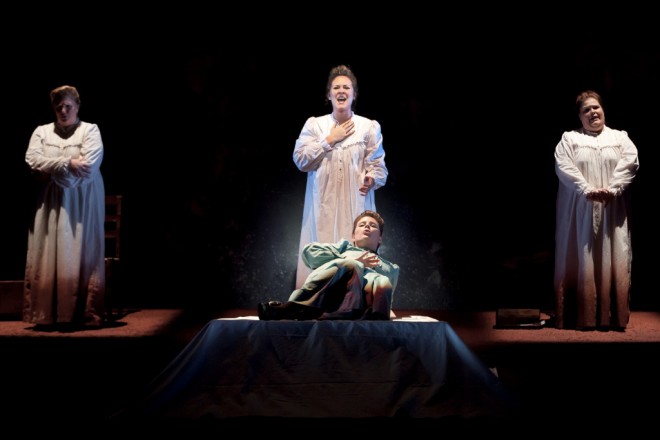
I went to an opera Friday night–a friend’s niece was in a starring role. The opera was entitled Dark Sisters and dealt with a fictional raid on a polygamist ranch by government officials.  The raid closely paralleled similar raids that took place in the late 20th-century in southwest United States.

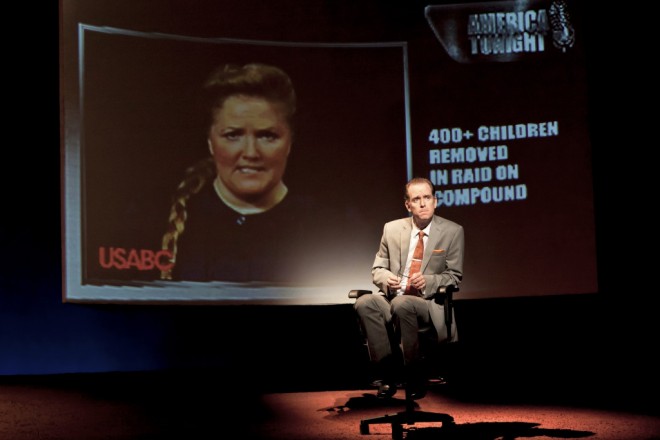
Written by Nico Muhly and Steven Karam, Dark Sisters opens with five wives mourning their children who have been taken from the ranch by the government. (Four hundred plus children have been removed.) The Father–the husband of these women and a supposed Prophet of God–tells them they must not mourn. They must “keep sweet.”  One of the wives, Eliza, bristles under her husband’s commands, worries for her children, and begins to doubt the rightness of their religion.

Another wife, Ruth,  is teetering on the edge of sanity. Her two young boys have died and Father has forbidden her to mourn. It is God’s will he explains. He also refused to allow her to seek medical care for the second son. (There is a hint that male children are unwanted and often put out of the compound. Sons are not breeders like the girl children and often can grow into rivals for the patriarchs.)

When Father goes out into the desert to pray, Eliza tries to make the other women realize what has happened. They refuse to believe her–although they almost come to her side–and see her as an apostate, a tool of the devil. For them the abuse, the sadness, the pain is the price they must pay in order to gain their heavenly reward where–significantly enough–they speak of joining their mothers and grandmothers, women who for generations have been part of this structure.

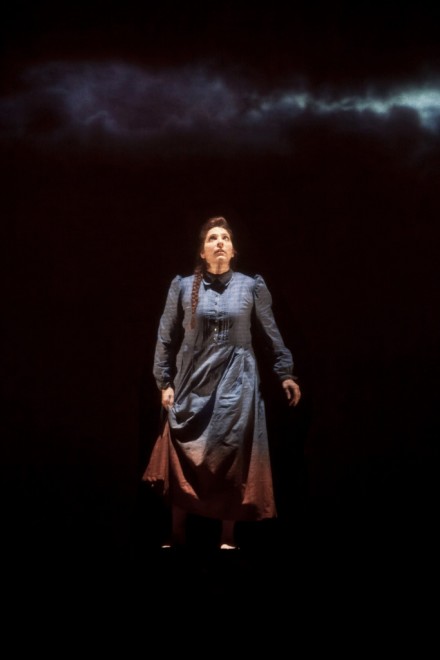
Eliza’s determination is hardened completely when she discovers that Father has arranged for the marriage of her fifteen year old daughter, Lucinda. She vows to speak the truth.

The second act begins with a news-magazine show covering the government’s raid on the ranch and interviewing the five wives.  The wives all parrot the beliefs of Father and their religion, proclaiming they are more free than the women in the real world, which they have never seen but only heard about from Father.  Only Eliza and Ruth dissent.  Eliza tries to speak her truth while Ruth’s testimony shows how dangerously fragile her psyche is becoming.

When the Supreme Court decides that the children must be returned to the ranch, life goes back to “normal” except for Eliza who has left.

Ruth decides-if that’s the right word in her distraught state–that she has had enough.  She climbs the mountain and throws herself off the cliff. (Eliza had hidden herself on the very same mountain as a girl on her wedding day before being found)

The last scene is Ruth’s funeral. Father and his five wives–he has replaced Eliza with a new favorite, her fifteen year old daughter–surround the grave. As they mouth their pieties, Eliza appears in modern but modest dress. She tries to convince them all of the truth of their imprisonment, but her arguments fall flat.

At last even her daughter,  whom she has tried so hard to liberate, turns against her. Taking Father’s hand, the young girl leaves her mother alone at the grave of the dead Ruth.

I know little about opera, and nothing about opera in English.  The story was riveting.  The set designs, the video pieces, the special effects were mesmerizing. And the music was beautiful and provocative.  I was not impressed with the lyrics, however. Maybe hearing an opera in English–instead of in French or in Italian or in German–takes something away from the magic and romance for a native-English speaker.  But many of the lyrics–while advancing the story–seemed artless. Commonplace. Perhaps it is simply the language.

Nevertheless, Darkest Sisters is an important piece.  For some reason, recent years have seen a surge of interest in polygamy.  There is the HBO series Big Love on television about a man and his wives and a reality-show Sister Wives that deals with a man and his four wives and combined children. Both shows deal with the difficulties of living in such large extended families, but neither really touches on the underside.

Dark Sisters does.  This is not a work debating the rightness or wrongness of government intrusion into private lives. That is not the focus of this piece.  Perhaps that is the subject for another piece. Dark Sisters focuses on a religious system where women are completely subservient, completely powerless, and –to my mind–completely brainwashed.

I don’t think anyone’s god should condone that.

Sarah Bones: Photographing the Other Side

I have a friend, Sarah Bones, who is an award-winning photographer.

Sarah takes photographs for NGOs in some of the most devastated parts of the world–the other side of what we know. She has photographed the wreckage of the great tsunami in India from a few years back, a refugee camp in Tanzania, the horrors of Sierra Leone and Rwanda.

Here’s the biography from her web site:

Sarah S. Bones saved for her first 35mm camera at age 13, in 1969. She immediately hitchhiked into Philadelphia so that she could photograph the lives and circumstances of people living on the street. As a professional photographer, her passion and courage in documenting people in need continued and has carried her to Africa, across Asia, Guatemala, Cuba and locally, into prisons, homeless shelters and the intensity of political campaigns. She uses her camera and vision to tell the stories of men, women, and children around the world who are voiceless and too often ignored by the popular media.

Sarah is a self-taught, award winning photographer based outside of Philadelphia who works in both digital and film. Her photographs have been exhibited both nationally and internationally. When not on an assignment she has a successful freelance business in the Philadelphia area.

Recently she mounted an exhibit in Malvern, PA.  It is a small show with maybe thirty or forty prints detailing life in the slums of Dhaka, Bangladesh.

In this particular show, the photographs focus on the birthing center in the busy Karail slum in Dhaka, Bangladesh. In her notes to the photographs, she mentions that “Bangladesh is on track to meet the 2015 deadline for U.N. Millennium Development Goal 5 (50 percent reduction in maternal deaths).” It is an extraordinary program that tries to save mothers who give birth in some of the most primitive conditions.

Those photographs which are not focused on the birthing center looks at Dhaka itself. Dhaka has a small industry of dismantling great ships, and the photos show young boys of 7 and 8 years old, barefoot and wide-eyed, working in the scrap yards where metal is being smelted, parts disassembled, everything salvaged. Like the birthing center, this is by no means a tech-savvy industry, but simply subsistence salvaging taking place in the most dire environment.

The photographs are stunning.  Not only for the subjects–which are more than provocative and more than memorable–but for their beauty.  Colors scream out in brilliance against the drab background of the Karail slum and the dramatic black-and-whites are beautifully lit, lending a wisdom and dignity to her subjects. One photo of a building streaked with rust and grime from which bright Bangladesh clothes hung to dry was my favorite.  It reminded me of an abstract painting–with so much more invested within.

The photographs are all copyrighted and cannot be posted.  But they are visible on her web site.  Do try to check it out. There are photographs there that you may never forget. Click here for Sarah’s web-site

Movie Review: The Fairy (Le Fée)

I went to the movies this afternoon.  There is something decadent about going to a 1:00 movie on a Wednesday afternoon.  The sky was blue, the sun was shining, the temperature was perfect.  And I wanted to sit in a dark theater.

There is something even more decadent about being the only person in the theater. It was like a private showing just for me!

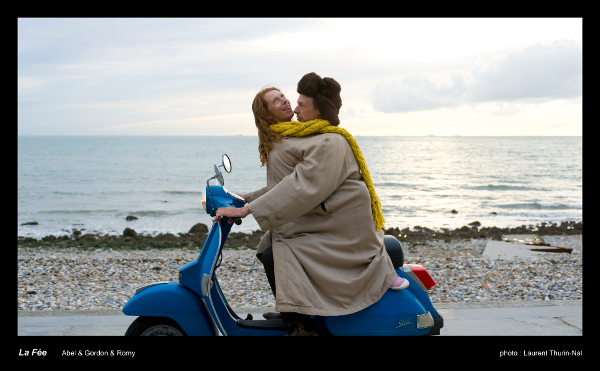
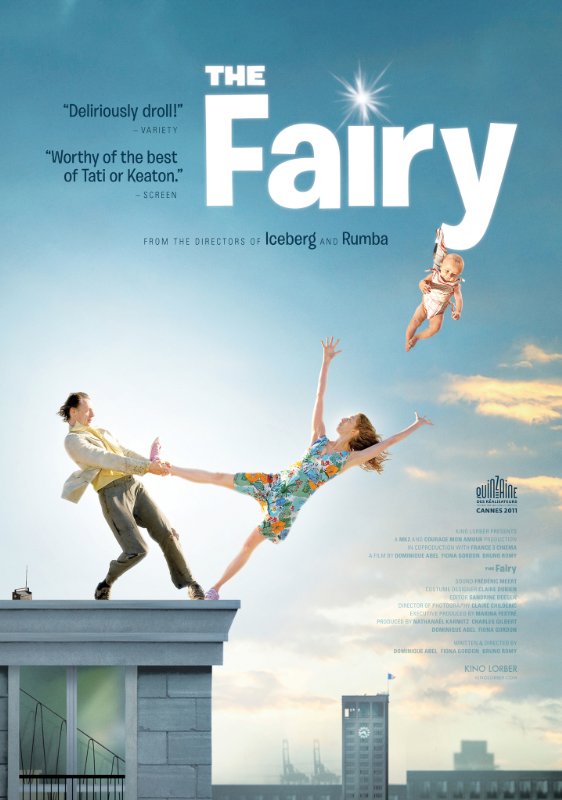
Anyway, I went to see the movie The Fairy.  I really hadn’t known anything about it until Monday when I looked it up on-line. The on-line plot summary referenced Tati and Keaton (see yesterday’s post) and it looked solid enough, despite the twee title. Written and directed by the Belgium based trio of Dominique Abel, Fiona Grant, and Bruno Romy, it is very broad in its humor. It is both light and sweet, but it feels very amateurish, which it isn’t.  Abel, Grant and Romy are veteran comics, and are the acclaimed forces behind two other well-received films, Iceberg (2005) and Rumba (2008)

But The Fairy was slight.  The story is thin and much of the physical comedy has been done before.

Very early in the movie, Dom (Dominique Abel), a sad-sack concierge in a hotel in Le Harve is trying to eat a sandwich. He sits, turns on the TV, and goes for his first bite when the front bell rings. He clicks off the television, puts down his sandwich, and takes care of business.  This sequence repeats itself  four more times, with Dom’s frustration rising each time.

The last two interruptions were by Fiona (Fiona Gordon), a disheveled woman who takes a room in the hotel but only after announcing that she is a fairy and that Dom has three wishes.

Later, when Dom finally gets to his sandwich, he swallows the cap to his ketchup–which we knew was in the sandwich and which adds some comic tension to every interruption of Dom’s meal…will  he bite it now or not? It is Fiona who saves him.  She performs an unusual heimlich manuever by sitting him on the front desk and running across the room before head-butting him in the chest. The lid to the ketchup bottle comes flying out.

And the caliber of the physical comedy has been set.

It is as Dom lies recovering on the lobby floor that Fiona once again announces that Dom has three wishes.  He can only think of two: a motor scooter and a life time of free gas for it.

By the next morning, Fiona has delivered both.

Many of the gags have been done before: The valise that is holding a lap dog and which shuttles across the lobby floor…the falling down of several flights of steps…the turning a corner on a scooter and then reappearing with the driver chasing the riderless vehicle…the nearsighted waiter (Bruno Romy) who walks into things and repeatedly misses the table or the glass with his service…bumbling police.  For me, much of it felt old. I had seen much of the same in films from the ’20s and ’30s.

And while Dominique Abel’s mugging and pratfalls are amusing, it is Fiona Grant’s physicality that carries the movie.  She is a lithe as a ballerina (her bare feet seem as disfigured as a dancer’s) and as angular as a young Jerry Lewis (of whom she reminded me.) She runs awkwardly (there are several chase scenes reminiscent of the Keystone Kops) and dances more than oddly.  There is an underwater dance scene (where Dom impregnates her inside a giant clam shell) and a Marx Brothers’ style phone session.  And in it all, she is spectacular.

Perhaps the most amazing stunt is a late kiss. Dom and Fiona are being pulled away by two different groups of police. As they kiss, the police pull each of them away, but their lips remained locked. Finally, they are completely parallel to the ground, their bodies stretching in the air across a sizable space, holding each other up (I can only guess) with the force of their kiss while the police hold them by their lower legs.  If it the scene isn’t computer generated, it is truly a great physical stunt–incredibly strenuous while seeming so casual and perfect.

Throughout the film, Dom and Fiona repeat a conversation:

Fiona: Dom, have you thought of what your third wish will be?
Dom:   No.
Fiona:  Well take your time.”

This snippet occurs three or four times, but at the end, when Dom, Fiona and their baby walk into the sunset (having once more eluded everyone who is chasing them) and Fiona asks her question, we feel that Dom has already received his third wish–his very unusual family.

Overall, it wasn’t a wasted day. But The Fairy wasn’t the movie I was looking for.  Cute, inventive, and smile inducing.   It just seemed very old-hat.

Harold Lloyd, Buster Keaton and the weekly coincidences

I have been going through a noticeable streak of coincidences lately. In a particular ten days to two weeks, I will repeatedly see, hear, read about something that I hadn’t noticed or thought of in a long time. It might be a friend who has moved away…a movie I hadn’t seen in decades…a book that I had forgotten that suddenly is being cited everywhere.

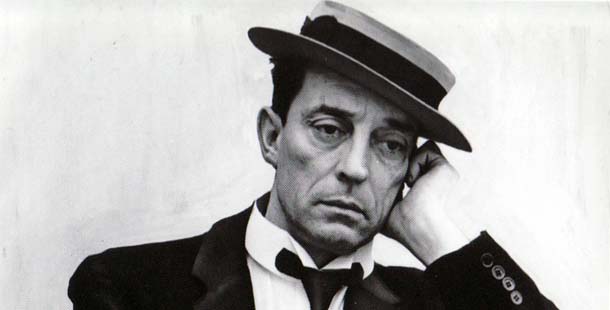
Anyway, this week it has been Harold Lloyd and Buster Keaton.  I knew who Keaton was, had always preferred Chaplin, but respected his enormous role in the history of movies. I knew little about Lloyd except for his famous clock scene.

And now Keaton seems to be everywhere. I wonder if, like so many things in modern culture, it is simply Keaton’s turn to be the object contemporary interest. (Contemporary interest has a very short life and while it might be Keaton in 2012, the focus could as easily turn to Jacques Tati for 2013, or Mack Sennett by July.) Who knows when it will be Lloyd’s turn?

Film connoisseurs have long praised Keaton.  Orson Welles called his The General “the greatest comedy ever made…and perhaps the greatest film every made.” And Roger Ebert called Keaton “arguably the greatest actor-director in the history of movies.”  Lloyd’s reputation is not as high-flying.  Part of this came from Lloyd’s demanding such a prohibitive price for television broadcast of his films–and so his work is generally less known than either Chaplin or Keaton.

One of his most famous scenes is this:

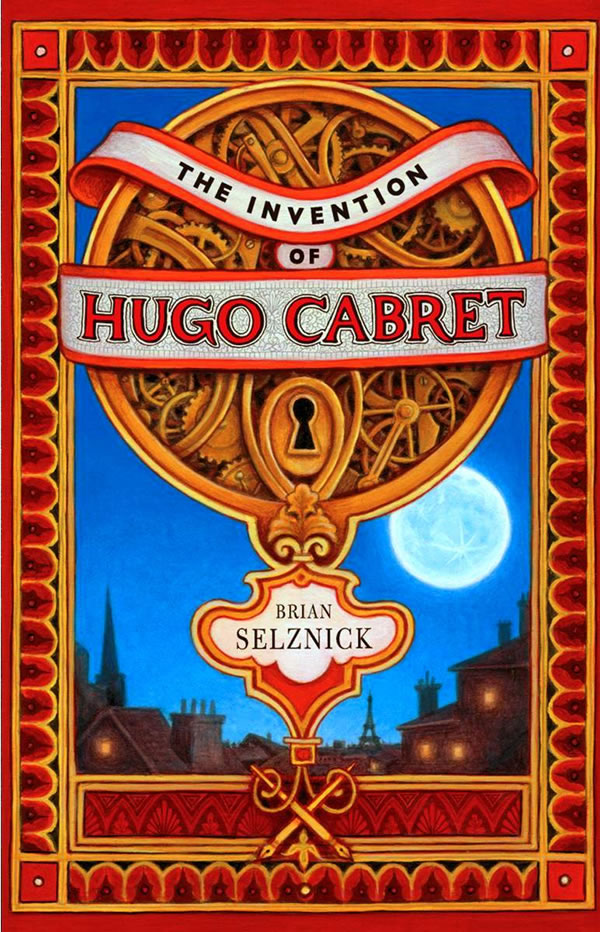
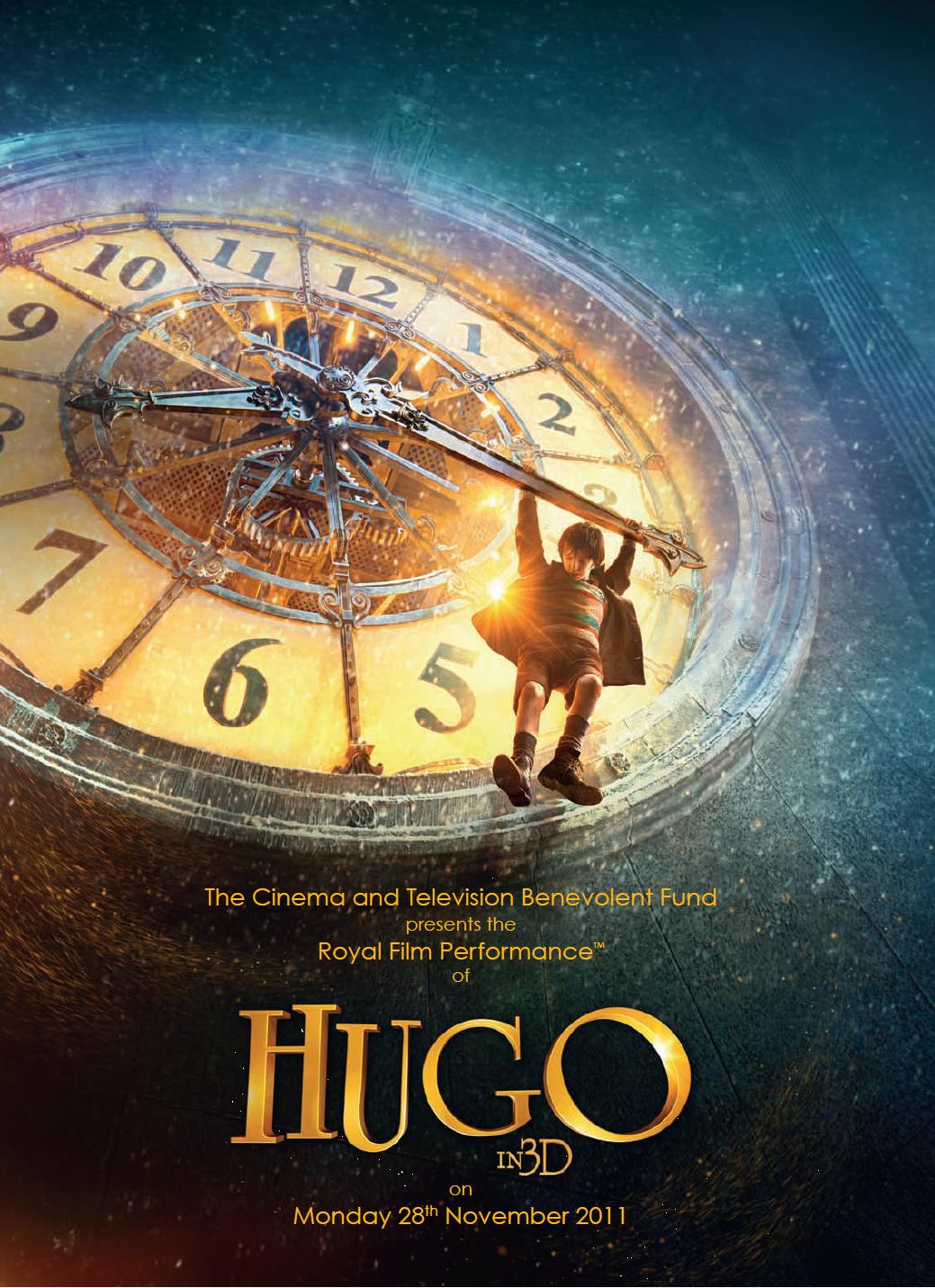
Indeed this  scene is very obviously alluded to in the 2011 film  Hugo, based on the Brian Selznik book The Invention of Hugo Cabret.

In the story, the young boy Hugo lives in the clock tower of a Parisian train station in the 1930s. During the course of the film, he sneaks his new friend Isabelle into a movie house. She has never seen a motion picture before and the film they watch is Harold Lloyd’s Safety Last! with its famous “hanging from the clock” scene.

Later on, young Hugo himself must escape some danger by hanging from the clock hands and moving along to safety.  In a story that is basically about the birth of cinema, the nod to Lloyd’s  iconic clock scene is both appropriate and deserved.

A photo of Lloyd hanging from the clock is in the book. And the film clip is shown in the movie.

And this is where the coincidences really start!

On Friday,  I am in a coffee shop, minding my business and reading the novel The Wonder Boys by Michael Chabon.  Two guys in the table next to me are having a friendly argument and the argument is about Harold Lloyd’s hanging from the sprung clock. The one guy is insisting that the actor is Buster Keaton; the other insists it is Harold Lloyd.  I am especially proud of myself for not inserting myself  into the discussion–as is often my wont.

Yet it goes further. About an hour later, I am still reading and I come to a passage in the novel where the narrator introduces one of his writing students to his wife who has left him the day before and who he–and the student–have followed to her parents’ house, in a slap-stick sort of way that would have made these early film directors proud.

“This is James Leer. From workshop.”…
“The movie man,” she said. “I’ve heard about you.”
“I’ve heard about you, too,” said James.
I thought for a moment that she might ask him about Buster Keaton, one of her idols. but she didn’t.

Did I just read that right? “I thought…she might ask him about Buster Keaton“? Okay, simple coincidence. An hour after overhearing the Lloyd/Keaton conversation, but a simple coincidence.

So it is Tuesday, and exams are over, and I am getting out of work around 11:15. I check to see what is playing, because I particularly love going to the movies when rest of the world is at work.  There is a film called The Fairy (le fee) with an enchanting poster that I know nothing about. I go online to read what it is about.  Here’s what they say to begin with:

The Belgian-based trio of Dominque Abel, Fiona Gordon and Bruno Romy (The Iceberg) write, direct and perform absurdist comedies in the tradition of Buster Keaton and Jacques Tati. The Fairy is a candy-colored romp set in Le Havre—a non-stop string of hilarious sight gags and madcap chases. 

More Keaton.  It’s as if he’s following me…or I unconsciously am following him. Even the movie poster alludes to its Keatonesque qualities.

So I am off to see The Fairy this afternoon. Off to see slapstick and physical humor from this Belgian trio, but I hope that it rises above that.  The slapstick of Keaton and Lloyd and Chaplin, as well, was always more than pratfalls. It always said something true about the human heart. Something important about all of us.